
Published: October 2025 | Last updated: May 2026 | Editorial review and quality control: Martina N.
If you are trans, nonbinary, or gender-diverse, you have probably had at least one healthcare visit where the questions you were asked did not match the body you have or the sex you actually have. You may have been told you were “low risk” because you didn't disclose vaginal or anal sex, or that the lingering sore throat was “probably just a cold” rather than something worth testing for, like chlamydia.
This article is for the reader who gave or received oral sex and is now wondering whether the scratchy throat means anything. It is also for the reader who has felt overlooked in a clinic and wants a calm, evidence-based answer about oral chlamydia: how it spreads, what testing options exist, and where the testing system tends to fail trans patients.
Key Takeaways
- Chlamydia can infect the throat from oral sex even without ejaculation, and most pharyngeal infections produce no symptoms at all.
- Routine clinic chlamydia tests usually sample only genital sites; if you've had oral exposure, ask specifically for a throat (pharyngeal) NAAT swab.
What Oral Chlamydia Is, and How It Reaches the Throat
Chlamydia is a bacterial sexually transmitted infection caused by Chlamydia trachomatis. It infects mucous membranes, most commonly in the genitals, but it can also colonize the throat (oropharynx), rectum, and eyes. Throat infection happens when a person performs oral-genital or oral-anal contact on a partner whose tissues are carrying the bacteria. The organisms attach to the back of the throat and tonsillar tissue, where they tend to sit silently.
The infection does not require ejaculation to transmit. Pre-ejaculate, vaginal fluids, and rectal fluids can all carry the bacteria. A short oral encounter without orgasm can still seed bacteria onto throat tissue. CDC guidance treats oral sex as a real route of STI transmission, not a “safer” alternative to penetrative sex (CDC: STI risk and oral sex).
For trans and gender-diverse people whose voices may already shift due to hormone therapy, or whose throats already get cleared often for other reasons, an early oropharyngeal symptom is easy to miss or attribute to something else. That is part of why screening matters more than waiting for a feeling to convince you.
How pharyngeal chlamydia is transmitted
- Acquired through oral-genital or oral-anal contact with an infected partner.
- Ejaculation is not required; pre-ejaculate, vaginal fluids, and rectal fluids can all carry the bacteria.
- The bacteria colonize the back of the throat and tonsillar tissue, often without producing symptoms.
Why Trans and Nonbinary Patients Get Missed in Routine Screening
Many clinics still use intake forms that ask only about “vaginal sex” or “anal sex” framed in narrow gendered ways. If a patient does not specifically disclose receptive vaginal or receptive anal contact, providers may skip chlamydia screening entirely, or test only the genital site. Pharyngeal screening (a throat swab) is rarely a default and usually has to be requested by name.
The CDC's STI Treatment Guidelines specifically recommend extragenital screening at the throat and rectum for people who report oral or anal sex, but uptake in primary care and urgent care remains uneven (CDC STI Treatment Guidelines: Chlamydia). When trans patients are not asked about specific sex acts in non-judgmental terms, the screening gap widens.
Consider a transmasculine reader who arrives at urgent care with a sore throat. The provider sees an “M” on the ID, hears about possible allergies, and writes a script for antihistamines. No sexual-history questions, no throat swab. The reader leaves still potentially carrying bacteria, and partners stay unaware. Common patterns of how this happens are summarized below.
| Where the screen fails | What happens | Why it matters |
|---|---|---|
| No throat swab is offered | Pharyngeal infection goes undetected | Infection persists silently and can be passed to partners |
| Screening assumes binary anatomy or sex acts | Trans patients are under-tested | Patient leaves with a false sense of safety |
| Symptoms are dismissed as a cold or reflux | No STI test is ordered | Diagnosis and treatment are delayed |
What Oral Chlamydia Feels Like, When You Feel Anything at All
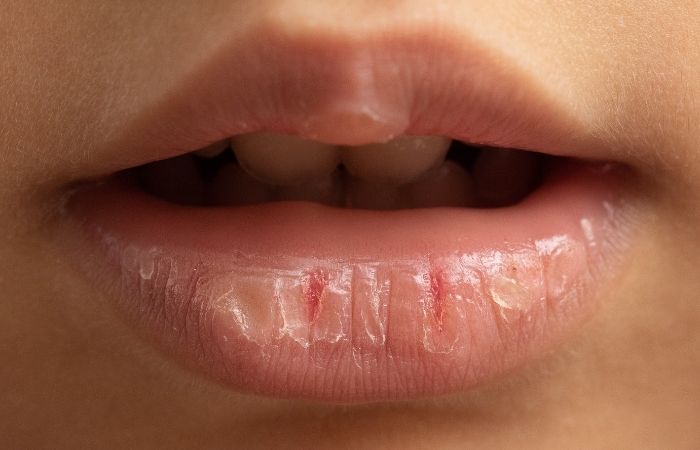
Most cases of pharyngeal chlamydia are asymptomatic. People who carry the infection in their throat often feel nothing, and only learn about it through partner notification or a routine extragenital screen ordered for the right reasons. When symptoms do appear, they are typically mild and easily mistaken for a viral upper-respiratory infection or strep throat.
Reported features include:
- A scratchy or sore throat that lasts more than a few days
- Mild burning when swallowing
- Redness at the back of the mouth or on the tonsillar pillars
- Tender or swollen lymph nodes in the neck
- Occasional white patches on the tonsils that look like strep but do not respond to typical strep treatment
These signs are nonspecific. Most people simply ride the discomfort out and assume a virus is to blame. If symptoms persist beyond a week or do not respond to typical viral-care measures, and you have had recent oral sex, raise the possibility of an STI cause with your provider explicitly. The conversation is faster and more accurate when you bring it up first.
Chlamydial infections of the pharynx may occur after oral exposure and are usually asymptomatic; they may be detected on screening of persons who report oral sex with infected partners.
Who Is at Risk: Anatomy and Exposure, Not Gender Identity
Chlamydia transmission depends on which tissues come into contact with which fluids. It does not check gender identity or pronouns at the door. If your mouth contacts genital or rectal mucosa carrying chlamydia, you can acquire pharyngeal infection regardless of how you identify.
This means risk applies to:
- Trans women who give oral sex to a partner with a penis
- Trans men who receive oral sex on the front (genitals) from an infected partner
- Nonbinary and gender-diverse people of any anatomical configuration who engage in oral-genital or oral-anal contact
- Anyone sharing sex toys without barriers or cleaning between users
The cultural narrative that “only cis women” or “only receptive anal partners” need to worry about chlamydia is outdated and contributes to undertesting in trans populations. It also fuels reinfection cycles, since partners are frequently not co-treated when one of them is overlooked.
| Sex act | Pharyngeal chlamydia risk | Requires ejaculation? |
|---|---|---|
| Giving oral on a penis | Higher (if partner is infected) | No |
| Giving oral on a vulva | Moderate (if partner is infected) | No |
| Rimming (oral-anal) | Moderate (if partner is infected) | No |
| Sharing toys without cleaning between users | Possible | No |
How to Actually Get Tested for Oral Chlamydia
For pharyngeal chlamydia specifically, the gold-standard test is a clinician-collected nucleic acid amplification test (NAAT) on a throat swab. This is what sexual-health centers, Planned Parenthood clinics, and many primary-care offices can run. If you ask for it directly, most providers will perform the test even when their default order set does not include it.
What to ask for: “I had oral sex and want to be screened for chlamydia and gonorrhea at my throat. Please add a pharyngeal NAAT to my order.” That single sentence solves most of the routing problems described above.
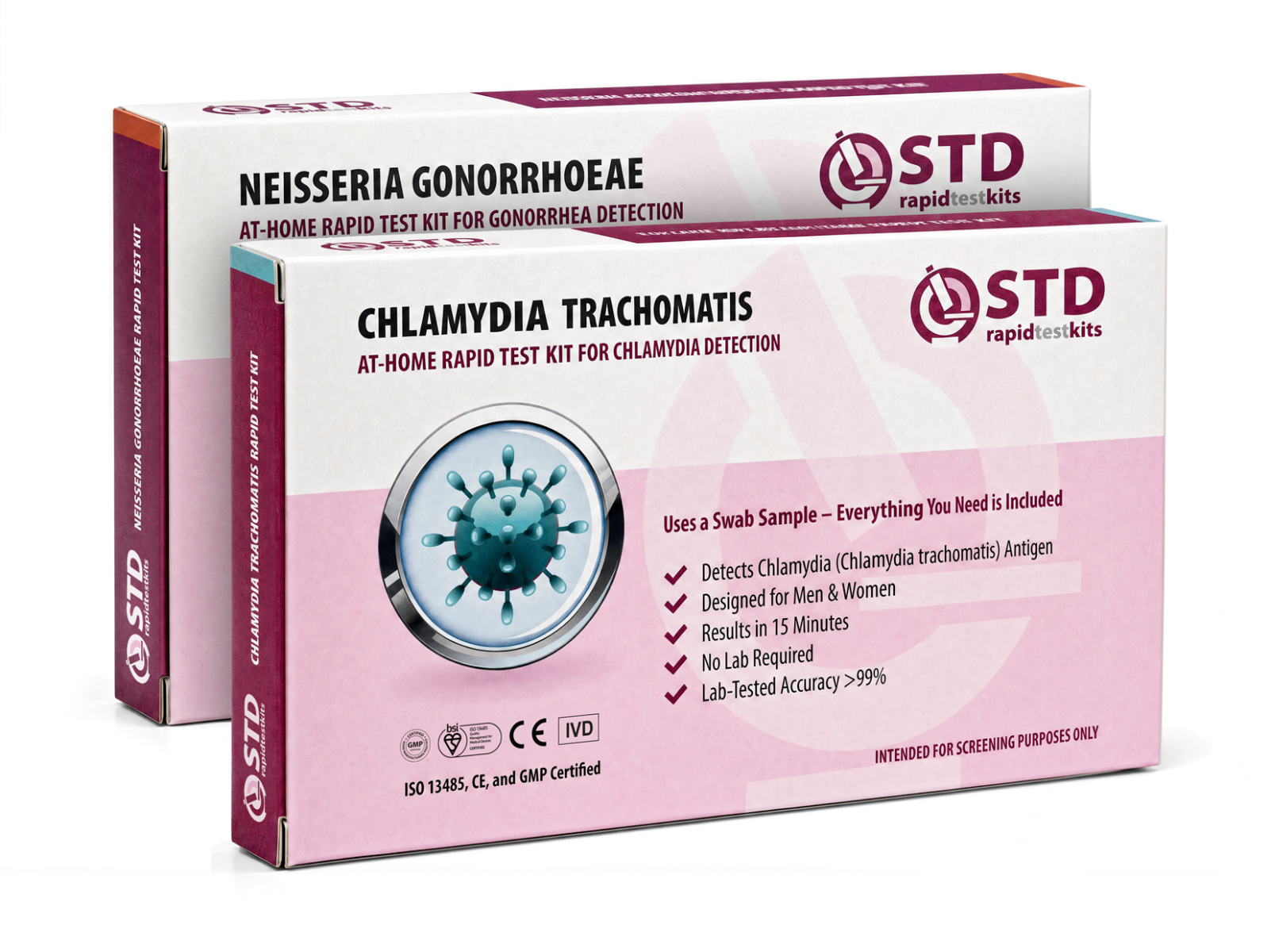
Some mail-in laboratory services in the United States and Europe offer self-collected throat-swab kits that ship samples to a lab for NAAT testing. Those mail-in lab services are not the same product category as the rapid lateral-flow home tests sold on this site. The rapid kits this site sells use a self-collected genital swab or a fingerstick blood sample (depending on the infection) and are validated for genital and bloodborne sites, not the throat. If your specific concern is oral chlamydia, the definitive test you need is a clinician throat swab or a mail-in lab NAAT throat kit; this site does not sell pharyngeal swab tests.
That said, an oral exposure rarely happens in isolation. The same partner contact that transmitted oral chlamydia may also have transmitted genital chlamydia, gonorrhea, HIV, or syphilis. People with a positive throat result frequently also have positive genital results on the same visit, and people whose throats are negative may still have a genital infection from the same partner. A combined screen catches more, which is where home rapid kits are useful as a complement to the clinic visit.
| Test type | Detects oral (pharyngeal) chlamydia? | Sample type | Turnaround |
|---|---|---|---|
| Rapid lateral-flow home kit (this site) | No, genital or blood sample only | Self-collected vaginal or penile swab, or fingerstick blood depending on the infection | About 15 minutes |
| Mail-in laboratory service (with throat-swab option) | Yes | Self-collected throat swab plus optional genital or urine | 2 to 5 days after mailing |
| Clinic NAAT or PCR test | Yes | Clinician-collected throat swab and other sites as ordered | 1 to 3 days |
What Happens If You Test Positive
A positive oropharyngeal chlamydia result is a routine, treatable finding. It does not say anything about your character or how careful you have been. It says you have a bacterial infection that responds to antibiotics, and that you and your partners now know to act.
Current CDC treatment guidance for oropharyngeal chlamydia is doxycycline 100 mg orally twice a day for 7 days. Single-dose azithromycin is no longer the first-line option, primarily because doxycycline shows higher cure rates at extragenital sites including the throat (CDC STI Treatment Guidelines: Chlamydia). If you cannot tolerate doxycycline, for example during pregnancy, your clinician will discuss alternatives.
Tell your provider where the infection was found. The antibiotic is the same, but the location matters for follow-up testing and partner notification. Most clinics can prescribe directly. Some at-home test services include a telehealth follow-up; if not, bring your result to your usual provider and say plainly: “I tested positive for chlamydia at the throat and need treatment.” You do not owe anyone a detailed sexual history beyond what is medically relevant.
Partner notification is part of treatment. Recent partners (typically those in the past 60 days) should be told they may have been exposed and offered testing. Anonymous partner-notification services let you do this by text or email if a direct conversation is too uncomfortable; the goal is to give the partner the information they need to protect themselves, not to assign blame.
If you test positive: the four practical steps
- Take doxycycline 100 mg orally twice daily for 7 days, per current CDC guidance.
- Tell your provider the infection was found at the throat so the result is logged at the correct site.
- Notify recent partners (typically the last 60 days) so they can be tested and treated.
- Retest at approximately 3 months after treatment to catch reinfection.
Reinfection: Why Retesting Matters
Successful treatment does not produce immunity. Chlamydia can come back if a partner was not treated at the same time, or if you have a new exposure. The CDC recommends repeat testing approximately three months after treatment, regardless of whether you believe your partner was treated, because reinfection rates are high in real-world data (CDC: About Chlamydia).
For trans and nonbinary readers who may face inconsistent care or providers who skip extragenital follow-up, that three-month retest is your safety net. If symptoms recur earlier or you have a new exposure, retest sooner; you do not have to wait if circumstances change.
Hormone therapy and gender-affirming surgery do not directly raise or lower chlamydia risk. They can change how symptoms feel and which sample types are most clinically useful (vaginal-canal sensation in someone who has had vaginoplasty differs from natal vaginal tissue, for example).
Can trans people get chlamydia from oral sex?
Yes. Pharyngeal chlamydia is acquired through oral-genital or oral-anal contact and does not depend on gender identity. Most cases produce no symptoms, so testing is the only reliable way to know. The definitive test is a clinician-collected throat swab (NAAT) or a mail-in lab kit that includes a throat-swab option. Rapid home test kits sold on this site cover genital and bloodborne co-screening, not the throat itself.
Bottom Line: Anatomy and Exposure, Not Identity
Chlamydia is indifferent to your gender. The healthcare system, unfortunately, often is not. Provider assumptions and intake-form blind spots mean trans and nonbinary patients who have given or received oral sex are routinely under-screened for oropharyngeal infection. Closing that gap is mostly about being explicit, asking for the throat swab by name, and pairing the clinic visit with at-home screening for the genital and bloodborne risks that often travel alongside oral exposure.
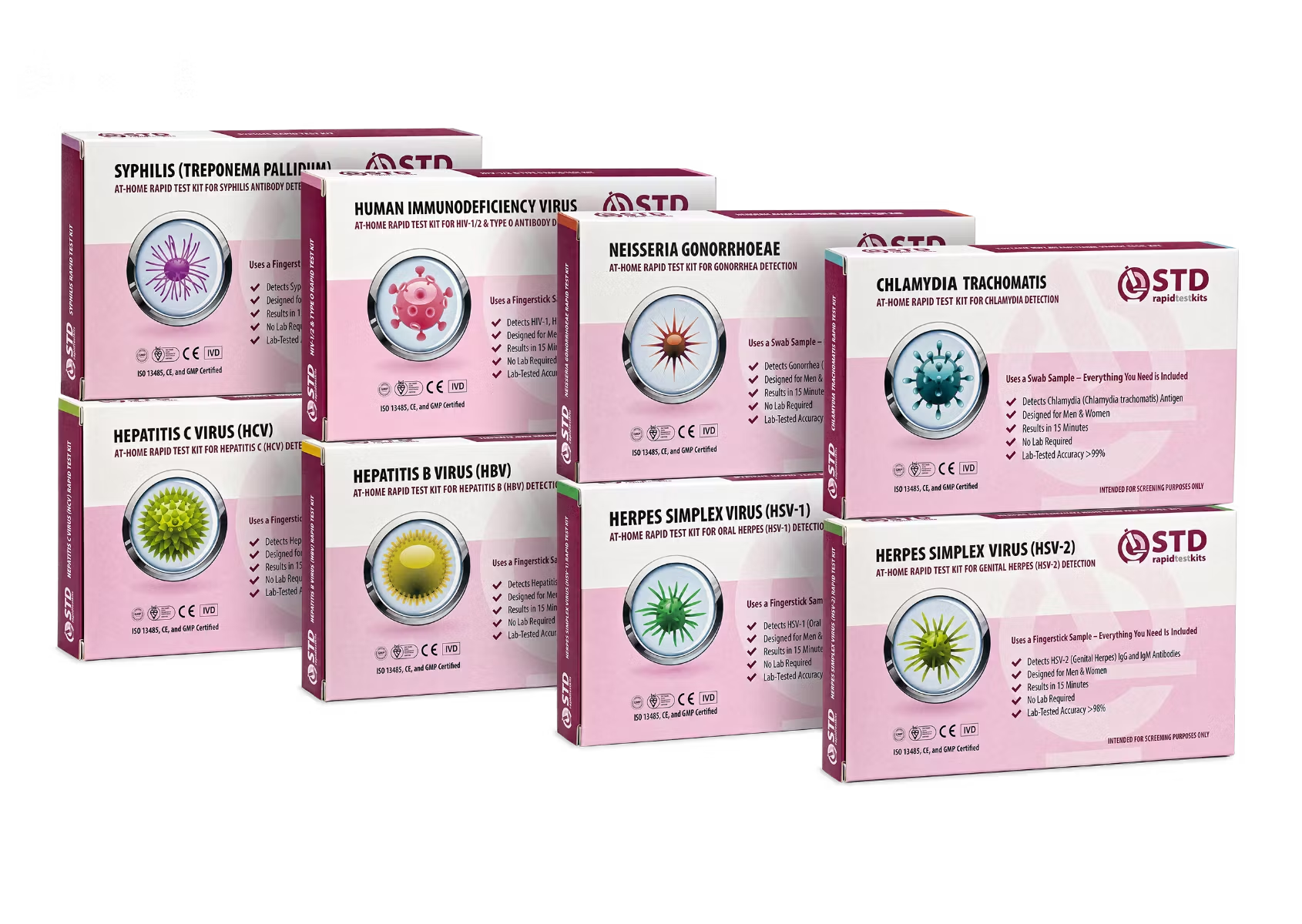
If you are investigating an exposure or following up after a partner notification, a broader rapid screen is a useful complement to a clinic throat swab. Multi-infection home panels test for genital chlamydia, gonorrhea, syphilis, HIV, and hepatitis exposures that frequently coexist with the oral risk you are already worried about, so you do not leave a related infection silently in place while only one site gets cleared.
Frequently Asked Questions
- Can someone really get chlamydia in their throat from oral sex alone?
- Yes. Pharyngeal chlamydia is well-documented in the medical literature and does not require ejaculation. Pre-ejaculate, vaginal fluids, and rectal fluids can all carry the bacteria, and a short encounter is enough to seed organisms onto throat tissue.
- What does oropharyngeal chlamydia feel like?
- Most cases produce no symptoms at all. When symptoms appear, they tend to be mild: a lingering scratchy throat, slight burning when swallowing, or tender lymph nodes in the neck. The pattern is hard to distinguish from a viral cold or strep, which is why testing matters more than waiting for a clear feeling.
- Is this only relevant to cisgender people?
- No. Pharyngeal chlamydia depends on which tissues had exposure, not on gender identity. Trans men, trans women, and nonbinary people are all at risk if they have had oral-genital or oral-anal contact with an infected partner.
- I tested negative on a urine chlamydia test; am I in the clear for the throat?
- Not necessarily. Urine and genital swabs detect only genital infection. A pharyngeal infection requires a throat swab to detect, so if you have had oral exposure, ask specifically for a pharyngeal NAAT.
- Can I test for oral chlamydia at home?
- You can use a mail-in laboratory service that includes a self-collected throat-swab kit (samples ship to a lab for NAAT). The rapid lateral-flow tests sold on this site are not validated for throat samples; they cover genital chlamydia and gonorrhea plus bloodborne STIs.
- How long after oral sex should I wait before testing?
- Wait at least 1 to 2 weeks after the exposure for chlamydia testing, since the bacteria need time to reach detectable levels. A test taken much sooner than that can produce a false-negative; if symptoms or concern persist, retest after the window.
- Can I get oral chlamydia again after treatment?
- Yes. Treatment does not produce immunity. The CDC recommends a follow-up test approximately three months after treatment, particularly if there is any chance the partner was not treated or if you have a new exposure.
- Does taking estrogen or testosterone change chlamydia risk?
- Hormone therapy does not directly increase or decrease chlamydia infection risk. It can affect tissue characteristics and how symptoms feel, which is one more reason to test based on what tissue had exposure rather than on identity or hormone status.
This article was assembled from current public-health guidance from the CDC, WHO, and NHS, peer-reviewed clinical literature on extragenital chlamydia, and inclusive sexual-health resources for trans and gender-diverse readers. We translated the clinical recommendations into plain English without giving individual diagnoses; for a clinical decision about your specific case, see a licensed provider.
- U.S. Centers for Disease Control and Prevention. About Chlamydia: overview, transmission, treatment, and retesting recommendations.
- U.S. Centers for Disease Control and Prevention. STI risk and oral sex: which infections transmit through oral exposure and what testing approaches apply.
- U.S. Centers for Disease Control and Prevention. STI Treatment Guidelines: Chlamydial Infections, including extragenital screening and the doxycycline-first treatment recommendation.
- World Health Organization. Sexually transmitted infections (STIs) fact sheet: global epidemiology, transmission routes, and screening guidance.
- National Health Service (UK). Chlamydia: symptoms, diagnosis, and treatment overview.
- National LGBTQIA+ Health Education Center, Fenway Institute. Inclusive sexual-history taking and STI screening guidance for trans and gender-diverse patients.
- Planned Parenthood. Patient education on chlamydia symptoms, testing options, and partner notification.
