Can Oral Sex Give You an STD? What Spreads From Mouth to Genitals
Oral sex is widely treated as the lower-risk option, and biologically it usually is. But several STIs do travel from mouth to genitals, including HSV-1, gonorrhea, and syphilis. Here is what actually spreads, why throat infections are easy to miss, what symptoms to watch for, and when testing makes sense.




- HSV-1 (the cold-sore virus), gonorrhea, and syphilis are the STIs that most commonly travel from mouth or throat to genitals during oral sex; chlamydia and certain HPV strains can also spread this way, just less efficiently.
- Throat infections frequently cause no symptoms, so a partner can carry and pass an STI without realizing it. Testing on a sensible schedule is the only reliable way to know your status after a possible exposure.
Published: September 2025 | Last updated: May 2026 | Editorial review and quality control: Martina N.
Oral sex sits in an odd spot in most people's mental map of sexual health. It feels safer than vaginal or anal sex, and statistically it usually is. But "safer" and "no risk" are different categories. Several common sexually transmitted infections can travel from someone's mouth or throat to a partner's genitals: herpes simplex virus type 1, gonorrhea, syphilis, and (less efficiently) chlamydia and certain strains of HPV.
This guide walks through what actually spreads from mouth to genitals during oral sex, why throat infections are easy to miss, what symptoms can appear afterward, and when testing makes sense. The goal here is clear information you can act on. Most readers will not have a problem; the smaller share who do have very fixable options.
Key Takeaways
- HSV-1 (the cold-sore virus), gonorrhea, and syphilis are the STIs that most commonly travel from mouth or throat to genitals during oral sex; chlamydia and certain HPV strains can also spread this way, just less efficiently.
- Throat infections frequently cause no symptoms, so a partner can carry and pass an STI without realizing it. Testing on a sensible schedule is the only reliable way to know your status after a possible exposure.
The Short List: STIs That Can Spread From Mouth to Genitals
If a partner carries an infection in their mouth or throat, certain bacteria and viruses can transfer directly to genital skin or mucous membranes during oral sex. The mouth, throat, gums, and tongue all contain soft mucous tissue, which is a comfortable home for many of the same pathogens that live in the cervix, urethra, or rectum.
Some infections move this direction frequently. Others are technically possible but uncommon. The table below sorts the main ones by how often clinicians see oral-to-genital transmission in routine practice.
| STI | How transmission happens | How common this route is |
|---|---|---|
| Herpes (HSV-1) | Saliva or active cold-sore contact during oral sex transfers virus to genital skin | Very common; a recognized route for new genital herpes today |
| Gonorrhea | Throat-carrying bacteria pass to a partner's urethra, vagina, or penis during oral sex | Common; pharyngeal gonorrhea is often silent |
| Syphilis | Direct contact with a primary syphilis sore (chancre) on the lip, tongue, or mouth | Less common but documented, especially when oral sores are present |
| Chlamydia | Oral or throat infection contacts genital tissue | Possible; less efficient than vaginal or anal transmission |
| HPV | Skin-to-skin and mucosal contact transfers viral particles | Possible; most relevant for oropharyngeal HPV |
Which STIs spread from mouth to genitals through oral sex?
The most common are HSV-1 (the cold-sore virus), gonorrhea, and syphilis. Chlamydia and certain HPV strains can spread this way too, just less efficiently. Throat-based infections often cause no symptoms, so a partner can pass them without realizing it. After a possible exposure, testing on a sensible schedule is more reliable than waiting for symptoms.
Why the Mouth and Throat Can Carry STIs
Most sexually transmitted infections are not picky about location. They thrive anywhere the body has soft, moist tissue. The throat, gums, inner cheeks, and tongue are all built from mucous membranes that resemble cervical, urethral, and rectal tissue closely enough that the same bacteria and viruses can colonize either site.
When an infection lives in the throat rather than the genitals, clinicians call it an oropharyngeal infection. The terminology shifts, but the biology does not. A pharyngeal gonorrhea infection, for example, is the exact same bacterium that causes urethral or cervical gonorrhea; the immune response and symptom profile just look different in the throat.
Throat tissue is also less reactive than genital tissue to many of these pathogens, so an oropharyngeal infection often feels like mild dryness, faint scratchiness, or nothing at all. The U.S. Centers for Disease Control and Prevention describes throat-based gonorrhea and chlamydia as commonly asymptomatic, which is part of why post-exposure screening rather than symptom-watching is the recommended approach.
Pharyngeal gonorrhea and chlamydia infections commonly cause no symptoms at all in the throat, even when the same bacteria would produce clear discharge or burning urination at a genital site. CDC, WHO, and NHS guidance all converge on the same practical conclusion: after oral contact with a partner whose STI status is unknown, screening on a sensible schedule is more reliable than waiting to feel sick.
Herpes Simplex Virus Type 1: The Dominant Oral-to-Genital STI
If one infection dominates the oral-to-genital transmission picture, it is herpes simplex virus type 1 (HSV-1). HSV-1 is the virus most people know as the cause of cold sores or fever blisters. A large share of adults carry it, often picked up in childhood from non-sexual contact such as sharing utensils or being kissed by a relative with an active sore.
For most of the twentieth century, HSV-1 was treated almost entirely as an oral infection. That has shifted. As oral sex has become a more routine part of adult sexual behavior, HSV-1 has emerged as one of the recognized routes for new genital herpes diagnoses. The CDC genital herpes page confirms that oral HSV-1 can spread to the genitals during oral sex, which is why some cases of genital herpes are caused by HSV-1 rather than HSV-2.
Transmission usually happens through one of three routes: direct contact with an active cold sore, contact with saliva or tissue containing virus, or contact with skin that is asymptomatically shedding virus. That last route is the one that surprises people the most. Even without a visible cold sore, someone with oral HSV-1 can occasionally have virus on their lip and oral mucosa, which is enough to seed a new genital infection if there is a small break in the recipient's skin.
Genital HSV-1 tends to cause fewer outbreaks per year than genital HSV-2, and the initial outbreak can be milder. That can feel like good news; it can also delay diagnosis, because someone with a single mild outbreak may dismiss it as razor burn, an ingrown hair, or general skin irritation.
Gonorrhea, Syphilis, Chlamydia, HPV, and HIV From Oral Sex
Gonorrhea. Pharyngeal gonorrhea is one of the quietest STIs around. The World Health Organization STI fact sheet lists gonorrhea among the four bacterial STIs tracked as global priority infections, and throat-based gonorrhea is increasingly detected in routine screening. Most people with pharyngeal gonorrhea feel completely fine; a few notice a mild sore throat or scratchiness. The bacterium can pass to a partner's urethra, vagina, or penis during oral sex and then cause classic genital gonorrhea symptoms (discharge, burning urination) several days later.
Syphilis. Syphilis can spread orally when the infectious partner has a primary chancre, a painless ulcer that appears on the mouth, lip, or tongue at the site where the bacterium entered the body. Chancres usually contain large numbers of bacteria, so even brief contact can transmit. The NHS syphilis page notes that syphilis sores can appear in the mouth or on the lips, which contributes to them being overlooked.
Chlamydia. Throat-based chlamydia is real but less efficient at moving than gonorrhea. It does happen, especially in people who have receptive oral contact with multiple partners. Like gonorrhea, throat chlamydia often produces no symptoms, so people typically learn about it from screening rather than from feeling unwell.
HIV. Per-act HIV transmission risk from oral sex is much lower than from vaginal or anal intercourse, and lower still when a partner living with HIV is on effective antiretroviral therapy that suppresses viral load. The risk is not zero, though. Factors that raise it include open mouth sores or ulcers, bleeding gums, recent dental work, ejaculation into the mouth, and a partner with a high circulating viral load. Per the CDC, fourth-generation antigen-antibody tests detect most HIV infections by about 45 days after exposure, which is the standard testing window after any possible HIV exposure.
HPV. Human papillomavirus can pass through oral-genital contact in both directions. The clinical concern from oral-to-genital spread is mostly about HPV reaching genital skin; the reverse concern (genital-to-oral) is what has been driving the rise in oropharyngeal HPV-related cancers that public-health bodies have been tracking for two decades. Per ACIP guidance in the United States, routine HPV vaccination is recommended through age 26, with shared clinical decision-making for adults aged 27 through 45 who may benefit based on individual risk factors.
Pharyngeal gonorrhea is the silent workhorse of oral-to-genital transmission: most carriers feel fine and only learn about the infection through screening. HPV's biggest oral-route concern flows the opposite direction, from genitals to mouth, which is what underlies the rise in oropharyngeal cancer rates and what HPV vaccination is most effective against.
Symptoms That Can Show Up After Oral Transmission
Symptoms depend on which infection moved and where it landed. Some people notice changes within days. Many notice nothing at all, which is part of why STI guidelines emphasize testing rather than symptom-watching.
The table below pairs common post-exposure symptoms with the likely culprit STI. None of these patterns is diagnostic on its own; only a test can confirm what is actually going on.
| Symptom | Likely STI culprits |
|---|---|
| Painful clustered blisters or sores on the genitals | Herpes (HSV-1 or HSV-2) |
| Burning or stinging during urination | Gonorrhea, chlamydia |
| Unusual penile or vaginal discharge | Gonorrhea, chlamydia |
| Painless ulcer (chancre) on the genitals | Syphilis (primary stage) |
| Genital warts (small flesh-colored bumps) | HPV |
| No symptoms at all | Common with chlamydia, gonorrhea, HPV, and early syphilis |
What Raises the Risk During Oral Sex
Not every oral encounter carries the same risk. A few factors meaningfully shift the odds upward, mainly by giving pathogens easier access to mucous tissue or by raising the viral or bacterial load present at the point of contact.
The biggest risk amplifier is visible sores. Cold sores, syphilis chancres, or irritated and bleeding gums concentrate large numbers of viral or bacterial particles at the site of contact, and even small lesions can transmit. Recent dental work, mouth ulcers, periodontal disease, and active throat infections all raise the chance that an oral pathogen finds an entry point into a partner's tissue.
The genitals can also be more receptive than they look. Tiny abrasions from shaving, friction, recent hair removal, or normal skin micro-tears are routes that an infection only needs once. Sexual-health educators sometimes summarize the picture this way: oral sex is lower risk, but it is not no risk, and a few practical conditions tip the scale further.
A large share of new chlamydia and gonorrhea cases produce no symptoms in the first weeks or months, and pharyngeal infections are especially likely to be quiet. "I feel fine" is not a reliable indicator that nothing has been transmitted, which is why the CDC, WHO, and NHS recommend testing after new partners or possible exposures rather than waiting for symptoms.
What to Test For After a Possible Oral-Sex Exposure
If you are worried about a possible STI from oral sex, testing is the most reliable way to get clarity. Different infections have different detection windows; some show up on a test within days, others take a few weeks for the immune system to produce detectable antibodies. Testing too early returns false reassurance.
Healthcare guidance from the CDC and the NHS typically recommends covering the same core panel after a meaningful oral exposure to a partner with unknown status:
- Chlamydia: usually detectable about one to two weeks after exposure.
- Gonorrhea: usually detectable within one to two weeks.
- Syphilis: antibody tests typically reliable from three to six weeks; a primary chancre can sometimes be confirmed sooner by direct swab in a clinic.
- Herpes (HSV-1 and HSV-2): antibody tests typically reliable from six to twelve weeks; an active sore can sometimes be confirmed earlier by direct swab.
- HIV: fourth-generation antigen-antibody tests detect most infections by about 45 days after exposure.
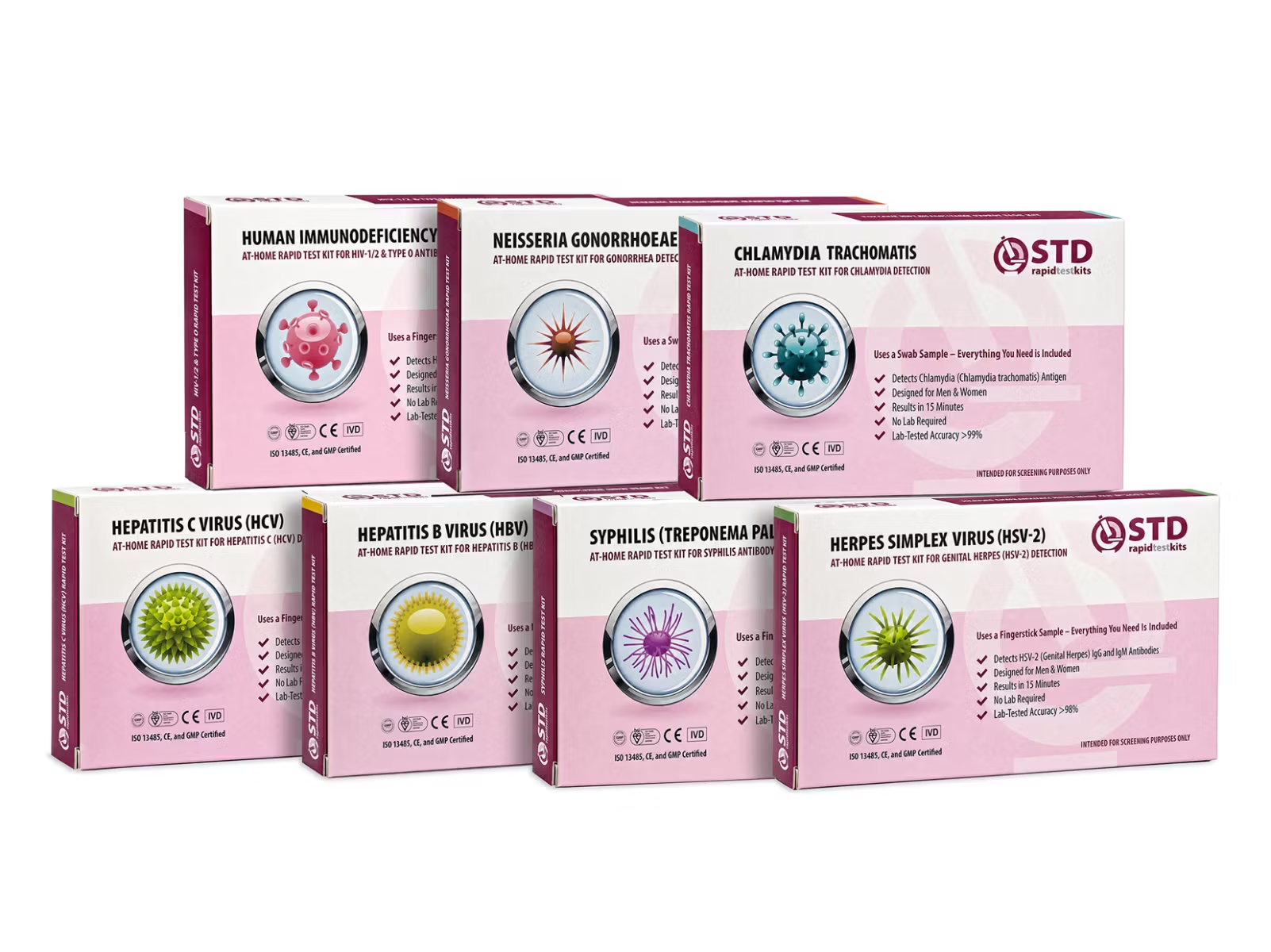
At-home rapid tests use lateral-flow chemistry on a self-collected swab or a fingerstick blood drop. A positive at-home result is worth confirming with a clinic lab test for the highest analytical sensitivity, but for screening after a worry, a quick at-home result can move you from speculation to evidence within minutes.
Quick disclosure: stdrapidtestkits.com sells the rapid at-home test kits linked below. We recommend kits based on fit for the reader's specific concern, not commercial benefit.
Reducing Risk Without Avoiding Oral Sex
Understanding oral-to-genital transmission helps you make smarter, lower-cost choices about intimacy. For most encounters between partners with no active sores and no current STI, oral sex carries little risk anyway. What awareness adds is the ability to spot the situations where it matters more (active sores, recent dental work, a new or untested partner), and to take a few simple steps in those moments.
Barrier methods are the most direct lever. Condoms during fellatio and dental dams (or a cut-open condom) during cunnilingus or anilingus reduce direct skin and fluid contact between the mouth and the genitals. They are not perfect; an exposed cold sore on the lip can still touch skin above the condom, for example. But used consistently they substantially cut the chance that bacteria or viruses move between partners.
Other practical steps include waiting until any cold sore or oral lesion is fully healed before giving oral sex, getting up to date on HPV vaccination per ACIP age guidance, and routine STI screening every three to twelve months depending on number of partners. None of these are perfect on their own, but together they meaningfully shift the math.

When to Test and What the Results Tell You
Testing windows matter because tests do not detect an infection the day it happens. Each STI needs a minimum amount of time after exposure before a test can pick it up reliably. An early negative result on the day after exposure tells you almost nothing.
For most people worried after an oral encounter, the practical schedule looks something like this: a baseline test about two weeks out catches early chlamydia and gonorrhea; a four-to-six-week follow-up catches most syphilis and early HIV; a twelve-week follow-up confirms HIV and herpes antibody status. If symptoms appear at any point, test sooner and do not wait for the full window. The CDC STI fact sheets cover symptom timing and testing intervals for each infection in more detail.
This is the kind of timing public-health bodies publish openly so people can act on it without guessing. The CDC, in describing recommended STI screening, frames the value of testing this way:
STIs often have no symptoms. The only way to know if you have an STI is to get tested.
Bottom Line: Oral Sex Is Safer, But Not Risk-Free
Oral sex is generally lower risk than vaginal or anal intercourse, but it is not immune from STI transmission. Herpes (especially HSV-1), gonorrhea, and syphilis move from mouth to genitals regularly enough that they belong in any honest conversation about sexual health. Chlamydia and HPV can move this way too, just less efficiently. HIV transmission through oral sex is uncommon, but the risk is not zero when oral sores, bleeding gums, or high viral load enter the picture.
Awareness works better than fear here. Knowing how these infections actually spread, paying attention to symptoms (and to silence, which is more common), using barriers when it fits the situation, getting the HPV vaccine if eligible, and testing after a possible exposure are the routine moves that turn a fuzzy worry into a concrete answer.
If something feels off after oral sex (unusual irritation, sores, discharge, or a nagging sense of uncertainty), testing is the easiest way to remove the guesswork. Most STIs are very treatable when caught early; the cost of finding out is small, the cost of not knowing can be much larger.
Common questions about STIs from oral sex
- Can oral sex really give you an STI?
- Yes. Oral sex is often treated as the safer alternative, and statistically it is lower-risk than vaginal or anal intercourse, but infections like herpes, gonorrhea, and syphilis can move from the mouth to the genitals. Chlamydia and certain HPV strains can spread this way too. It does not mean every encounter is risky; it means the mouth and throat can carry infections just as readily as the genitals can.
- Which STI most commonly spreads from oral sex?
- Herpes simplex virus type 1 (HSV-1) is the leader. HSV-1 is the same virus most people know as the cold-sore virus, and a meaningful share of new genital herpes cases today start with oral sex from a partner who has oral HSV-1. The CDC confirms that oral HSV-1 can spread to the genitals during oral sex, which is why some cases of genital herpes are caused by HSV-1 rather than HSV-2.
- Am I still at risk if my partner does not have a visible cold sore?
- Sometimes, yes. HSV can shed from skin asymptomatically, meaning the virus is occasionally present on the lips or oral mucosa without any visible sore. The risk is lower without a visible lesion, but it is not zero.
- Can gonorrhea really live in someone's throat?
- Most people with pharyngeal gonorrhea feel completely fine, and many notice nothing at all in the throat. A few report a faint scratchiness that comes and goes. The bacterium can still pass to a partner's genitals during oral sex even when no symptoms are present, which is why throat swabs are part of routine STI screening when oral exposure is involved.
- What symptoms could appear after oral sex if I caught something?
- Herpes blisters typically appear within 2 to 12 days of exposure. Gonorrhea and chlamydia symptoms (burning urination, unusual discharge) usually surface within one to two weeks. Syphilis can show up as a painless ulcer at the contact site in the first three to four weeks. A large share of cases cause no symptoms at all in the early stage, which is part of why testing is more reliable than symptom-watching.
- How long after oral sex should I wait before testing?
- Different infections have different detection windows. Chlamydia and gonorrhea are usually detectable about one to two weeks after exposure. Syphilis antibody tests are typically reliable from three to six weeks. HIV fourth-generation antigen-antibody tests detect most infections by about 45 days. Herpes antibody tests usually need six to twelve weeks. If you have symptoms, test sooner and do not wait for the full window.
- Do condoms and dental dams help with oral sex?
- Yes. Barrier methods reduce direct contact between the mouth and the genitals, which lowers the chance that bacteria or viruses move between partners. They are not perfect, especially when sores extend beyond the covered area, but they meaningfully reduce risk and are recommended by the CDC and NHS as part of routine safer-sex practice.
- Is oral sex still safer than vaginal or anal sex?
- Generally, yes. The per-act risk for many infections, including HIV, is lower with oral sex than with vaginal or anal sex. But "lower risk" is not the same as "no risk," especially when one partner has oral sores or an untreated throat infection.
- U.S. Centers for Disease Control and Prevention: Sexually Transmitted Infections (overview, fact sheets, screening recommendations, and testing-window guidance).
- World Health Organization: Sexually Transmitted Infections (STIs) fact sheet covering chlamydia, gonorrhea, syphilis, herpes, HIV, and HPV transmission and prevention.
- U.K. National Health Service: Sexually transmitted infections (STIs) topic page, including condition-specific information on chlamydia, gonorrhea, syphilis, and herpes.
- U.S. Centers for Disease Control and Prevention: Genital Herpes, including HSV-1 versus HSV-2 transmission and oral-to-genital spread.
- U.K. National Health Service: Syphilis condition page, including oral and genital chancre presentation and transmission.
- U.S. Centers for Disease Control and Prevention: STI Prevention, including barrier-method guidance for oral, vaginal, and anal exposures.