Can I Get an STD from Licking an Anus? Anilingus Risks Explained
What rimming actually exposes you to, and when to test.




- Hepatitis A and pharyngeal or rectal gonorrhea show up after rimming far more often than HIV does. Hep A is vaccine-preventable, so check whether you've had the shot before worrying about more exotic risks.
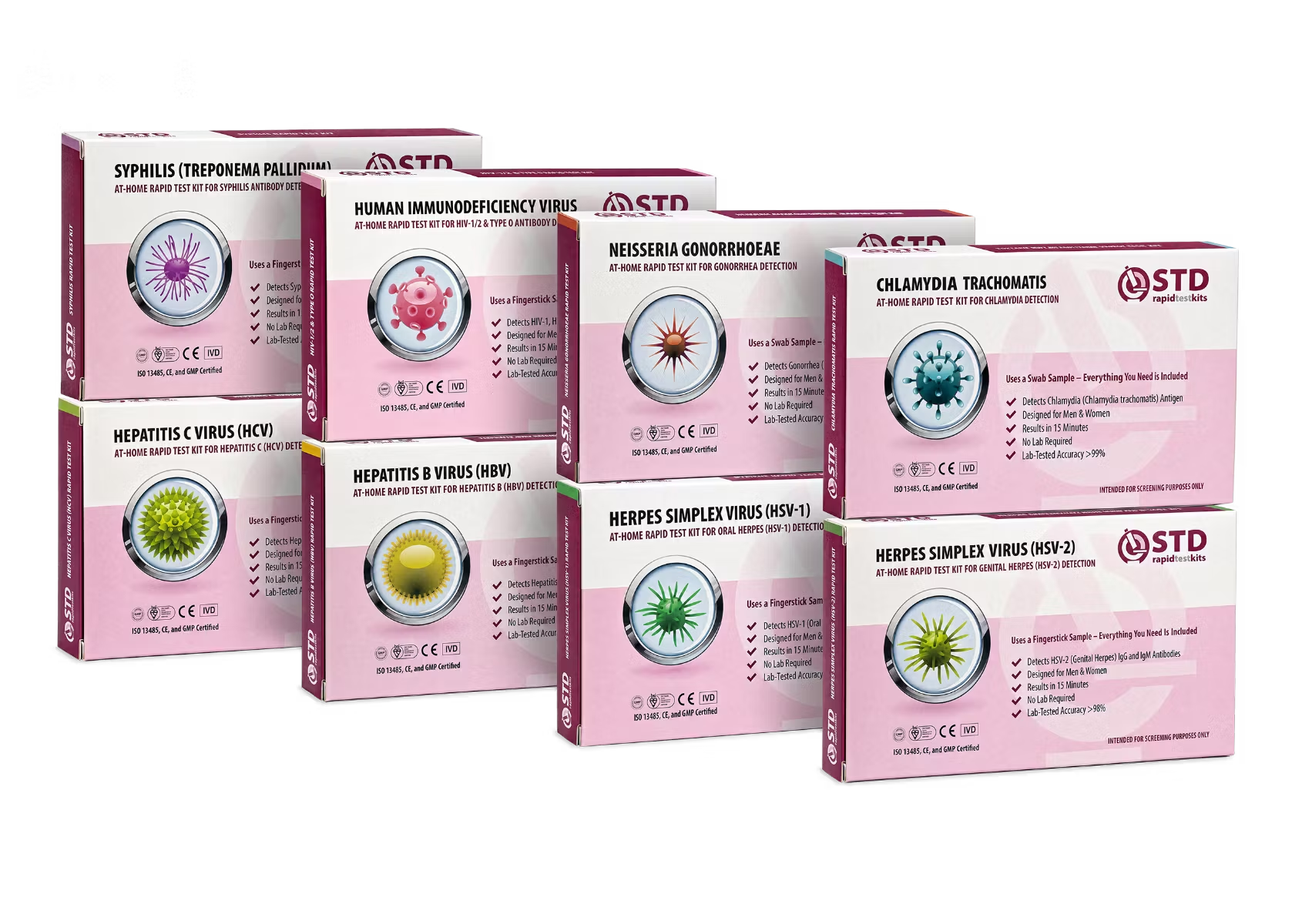
- Throat and rectal infections are the typical post-rimming concern, but they need clinician-collected swabs from those sites. Our home rapid tests cover the bloodborne follow-up (HIV, syphilis, hep B, hep C, herpes antibodies) and our genital swabs, not pharyngeal or rectal sampling.
Published: July 2025 | Last updated: May 2026 | Editorial review and quality control: Martina N.
Anilingus, or rimming, means mouth-to-anus contact during sex. It is more common than people admit on surveys, and yes, several infections can pass either direction during the act. The risks aren't evenly distributed though, and that detail matters when you are deciding what to test for and when. The infections people worry about most are usually not the ones that show up after rimming, and the ones that do show up most often are easy to miss because the symptoms can sit in your throat or rectum where you don't think to look.
This guide walks through what is actually transmissible through oral-anal contact, which routes pose the most risk, what the symptoms look like, when you can test (at home and at a clinic), and how to lower your odds. The framing is calm and specific: most rimming events do not end in an infection, but a few specific exposures do warrant a follow-up, and a vaccine you may already have removes one of the most common risks entirely.
Key Takeaways
- Hepatitis A and pharyngeal or rectal gonorrhea show up after rimming far more often than HIV does. Hep A is vaccine-preventable, so check whether you've had the shot before worrying about more exotic risks.
- Throat and rectal infections are the typical post-rimming concern, but they need clinician-collected swabs from those sites. Our home rapid tests cover the bloodborne follow-up (HIV, syphilis, hep B, hep C, herpes antibodies) and our genital swabs, not pharyngeal or rectal sampling.
Yes, oral-anal contact transmits infections, but not equally
Pathogens spread from rimming through three different routes, and the route shapes what is actually at risk. Knowing the route makes the rest of the article easier to follow.
The first is oral-fecal: tiny amounts of stool on the perianal skin can carry hepatitis A virus, gut bacteria, and intestinal parasites. The receiving partner doesn't need to see anything on the skin for the virus or organism to be present. This is the route that dominates real-world rimming transmission and is by far the most under-discussed.
The second is mucosa-to-mucosa: the lining of the mouth and the perianal skin and rectum are both mucosal tissues, and several bacteria and viruses can pass directly between them when one side is colonized. Pharyngeal gonorrhea, pharyngeal chlamydia, and oral herpes from genital HSV-2 contact all travel this route.
The third is blood and small mucosal breaks: HIV, hepatitis B, and syphilis can transmit when there is a breach in mucous membranes. The chance of this happening during rimming is real but small, mostly because the receiving partner's intact oral mucosa is a decent barrier and because most fluid exchange in rimming is shallow. The CDC categorizes HIV transmission through oral routes specifically as extremely rare (CDC, How HIV Is Transmitted).
The next sections walk each major infection through these routes, in roughly the order of how often each one actually shows up after rimming.
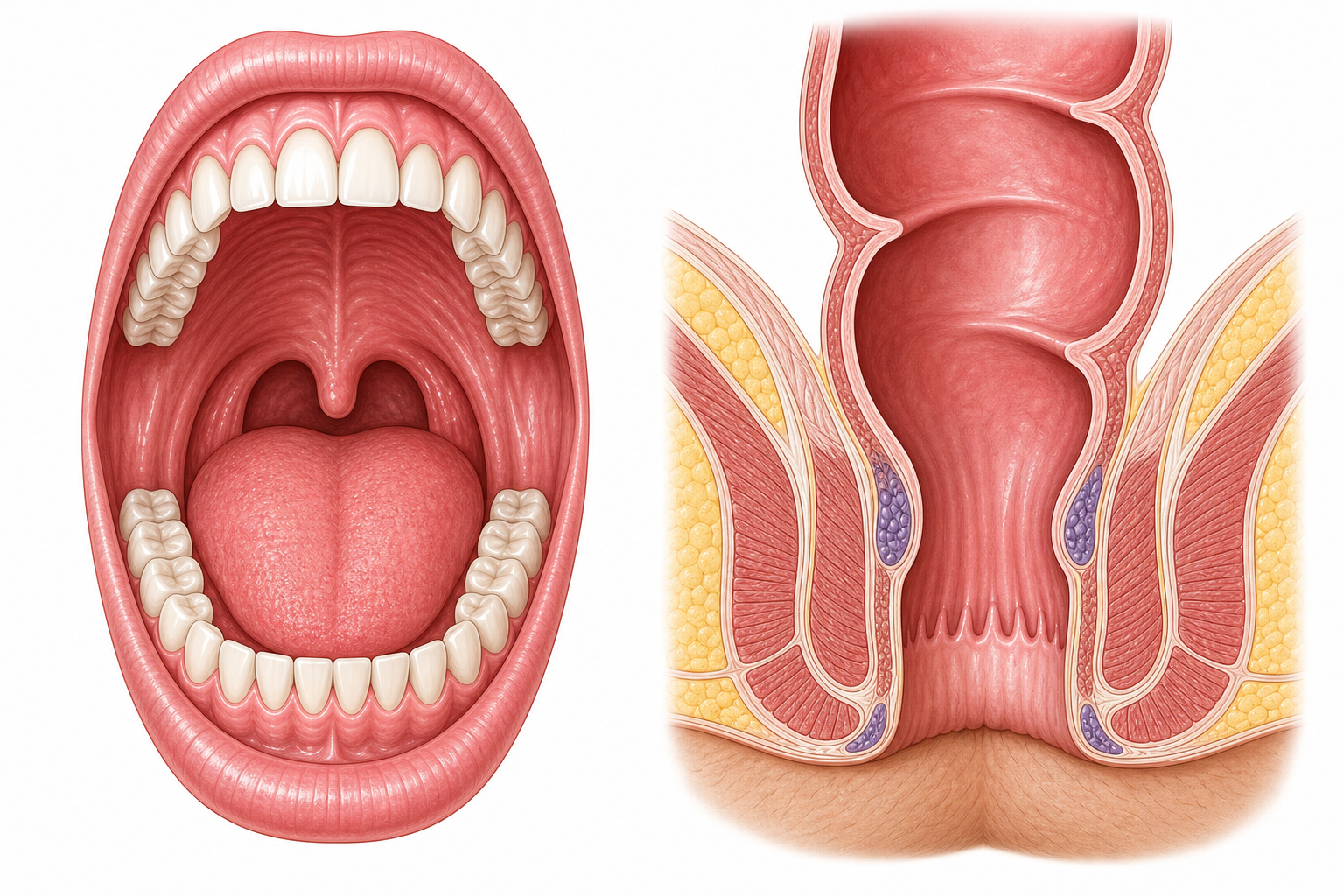
Hepatitis A: the most common rimming-specific risk
Hepatitis A is the infection that most reliably tracks with oral-anal contact, and most readers don't expect it on this list. The virus shed in stool can persist on perianal skin and pass to the mouth during rimming even when both partners have showered, because the infectious dose is small and you cannot wash microscopic fecal particles entirely off skin. The U.S. has seen repeated outbreaks of person-to-person hepatitis A transmission tied to sexual networks, including among men who have sex with men (CDC, About Hepatitis A).
The good news: there is a highly effective two-dose vaccine. The U.S. has recommended routine childhood hepatitis A vaccination since 2006, so anyone born after roughly 2005 in the U.S. has likely already received it. If you were born earlier or grew up outside a country with universal hep A vaccination, ask your provider for a quick antibody check and the catch-up series. Two doses given six months apart provides protection thought to last at least 25 years and probably for life.
If you have not been vaccinated and have had a recent rimming exposure with a partner whose hep A status you don't know, the incubation window is typically 2 to 7 weeks (CDC, About Hepatitis A). Symptoms, when they appear, are flu-like at first (fever, fatigue, nausea, abdominal pain), and only later progress to the jaundice most people associate with hepatitis (yellowing of the eyes and skin, dark urine, pale stool). Many adult cases are silent or so mild they get mistaken for a stomach bug. A blood test for hep A IgM antibodies confirms acute infection and is widely available at primary care offices, clinics, and labs (but not at home, since hep A is rarely included in consumer rapid kits).
Adult hepatitis A is usually self-limiting, meaning you recover without antiviral medication, but recovery can take weeks to months and a small percentage of cases progress to severe liver inflammation. The vaccine is the much easier path.
The CDC recommends hepatitis A vaccination for adults at increased exposure risk, including men who have sex with men, people experiencing homelessness, people who use or inject drugs, and people with chronic liver disease (<a href="https://www.cdc.gov/hepatitis-a/prevention/index.html">CDC, Hepatitis A Prevention</a>). That at-risk grouping covers a meaningful share of people who engage in oral-anal sex. Two intramuscular doses, six months apart, and you are protected for decades. Your primary care provider, most pharmacies, and most sexual health clinics offer it at low cost or covered by insurance.
Herpes simplex virus (HSV-1 and HSV-2)
Disclosure: stdrapidtestkits.com sells the at-home tests linked in this article. We recommend products based on fit-for-purpose for your concern, not commercial benefit, and are explicit about when home testing isn't the appropriate option.
HSV is two related viruses with overlapping homes. HSV-1 historically lived in the mouth and caused cold sores; HSV-2 historically lived in the genital region and caused genital outbreaks. Those compartments have blurred significantly. Today a meaningful share of new genital herpes infections in young adults are actually HSV-1 acquired through oral sex, and a smaller fraction of oral herpes is HSV-2 acquired the same way.
For anilingus specifically: HSV-2 sheds asymptomatically from skin around the anus and genitals more often than people realize, so an oral partner contacting the perianal area can pick up HSV-2 in the mouth. The infection there is often mild or unnoticed, because oral HSV-2 doesn't reactivate as reliably as oral HSV-1, but seroconversion still happens and the person can pass it on later.
Symptoms, when they appear, are clusters of small fluid-filled blisters that crust over (around the lips for oral, around the anus or genitals for genital), often with a tingling or burning warning sensation a day or two before. Many first episodes also produce fever and swollen lymph nodes. Plenty of new HSV infections produce no recognizable outbreak at all, which is the main reason the virus spreads so silently.
Testing: clinicians prefer PCR swabs of an active lesion when one is visible (most accurate, distinguishes HSV-1 from HSV-2). When there is no lesion, type-specific blood antibody testing can confirm whether you have ever been infected with HSV-1 or HSV-2, but it cannot tell you where on your body the virus lives or whether a specific symptom is from herpes. Blood antibody testing is what our home combined herpes test covers.
Treatment doesn't cure herpes (the virus stays dormant in nerve roots), but daily or episodic antiviral medication (acyclovir, valacyclovir, famciclovir) shortens outbreaks and reduces transmission to partners.
Most people who carry HSV-1 or HSV-2 have no visible outbreak on the day they pass the virus to a partner. Asymptomatic viral shedding from the lips, mouth, anus, or genitals happens on a meaningful share of days throughout the year and is the dominant route of new infections. A partner with no current sore can still be infectious, which is why blood antibody testing for diagnosis and daily antiviral suppression for known carriers are the two clinical tools that actually move transmission numbers.
Gonorrhea and chlamydia: pharyngeal and rectal infection
Gonorrhea and chlamydia are the two most common bacterial STIs in the U.S., and both can colonize the throat (pharyngeal) and rectum independently of the genitals. Pharyngeal infection is usually picked up through oral-genital sex; rectal infection through receptive anal contact. Either can show up after rimming when the receiving site (throat or rectum) gets exposed to the bacterium living on the other partner's skin or in their secretions.
The catch is that pharyngeal and rectal gonorrhea and chlamydia are often silent. Most pharyngeal infections produce no symptoms at all, and a minority cause only a mild sore throat or scratchy feeling that nobody attributes to an STI. Rectal infection sometimes produces discharge, itching, or discomfort, but more often it sits silent. This is why the CDC's 2021 STI Treatment Guidelines recommend periodic site-specific screening for sexually active people who engage in oral or anal sex, not just genital testing (CDC, STI Treatment Guidelines, 2021).
Here is the honest scope problem: the only accurate test for pharyngeal or rectal gonorrhea and chlamydia is a nucleic acid amplification test (NAAT) run on a swab collected from the throat or rectum specifically. A self-collected vaginal or penile swab does not detect throat or rectal infection. Our at-home rapid kits use genital self-collection and are not validated for pharyngeal or rectal sampling. For a post-rimming concern about throat or rectal gonorrhea or chlamydia, the right path is a clinic visit (sexual health clinic, STI clinic, or PCP) where they can collect site-specific swabs and send them for NAAT. Many U.S. cities have free or low-cost STI clinics that do this routinely.
Treatment is straightforward when caught: a single intramuscular dose of ceftriaxone for gonorrhea (the CDC updated this from oral cefixime years ago because of rising antibiotic resistance), and a course of doxycycline for chlamydia.
Syphilis
Syphilis transmission requires direct contact with an active syphilitic lesion or chancre. The chancre is a painless ulcer that appears at the spot where the bacterium (Treponema pallidum) entered the body. It can show up on the lips, mouth, anal area, or perianal skin, depending on where the contact was.
For rimming, the relevant scenario is a chancre on the receiving partner's mouth or lips (after rimming someone with a perianal chancre), or a chancre in the giving partner's anal or perianal area (transmitted earlier and now potentially infectious to anyone who rims them). Chancres are painless and small, so people often miss them entirely.
Untreated syphilis progresses through stages over months and years, with a secondary stage (rash that often involves the palms and soles, flu-like symptoms) and a latent and tertiary stage (potentially serious neurologic, cardiovascular, and ocular complications years later). U.S. syphilis rates have climbed sharply over the past decade, including congenital cases, which is why screening has been expanded in many jurisdictions.
Testing is a blood draw. Two-stage serology (a screening test like RPR or treponemal EIA, then a confirmatory test) is the standard. Our home rapid syphilis blood test uses fingerstick blood and detects treponemal antibodies. A positive should always be confirmed at a clinic because antibody-based tests can stay positive for life after a treated infection, and ongoing infection is distinguished by the non-treponemal titer.
Treatment in early syphilis is one intramuscular dose of benzathine penicillin G, which fully cures it. Treating later-stage syphilis takes longer courses, but penicillin remains the cure.
CDC surveillance for 2024 reports that overall syphilis cases are 13 percent higher than a decade ago, and congenital syphilis (transmitted from pregnant person to newborn) is nearly 700 percent higher over the same period, with cases rising for the twelfth year in a row (<a href="https://www.cdc.gov/sti-statistics/annual/index.html">CDC, STI Statistics Annual Report</a>). If you're sexually active with multiple or new partners, syphilis screening at least annually is part of standard preventive care, and pregnant people should be screened at first prenatal visit, third trimester, and at delivery in higher-prevalence settings.
HIV: real risk, low frequency
HIV transmission through rimming specifically is uncommon. The CDC describes HIV transmission via oral routes as extremely rare, and most documented oral transmission cases involve receptive oral sex with ejaculation in the presence of oral cuts or bleeding gums, rather than oral-anal contact (CDC, How HIV Is Transmitted). HIV is not present in the anal mucosa itself in any particular concentration; what matters is whether blood or genital secretions get into the oral cavity through a mucosal break.
That said, rimming is rarely a single-act exposure. Most rimming happens during a session that includes other contact (oral-genital sex, penetrative anal or vaginal sex), and the higher-risk activities in that session drive the overall HIV exposure. The honest framing is that rimming as an isolated act has very low HIV transmission risk, but the broader sexual encounter often does not.
If you have had a recent exposure event that included higher-risk activities, post-exposure prophylaxis (PEP) is a 28-day course of antiretroviral medication that, when started within 72 hours of exposure and ideally within 24, reduces HIV acquisition risk dramatically. PEP is available at sexual health clinics, emergency rooms, and some urgent care centers. For ongoing risk, pre-exposure prophylaxis (PrEP) is the long-term tool: a daily pill or every-other-month injection that reduces the risk of getting HIV from sex by about 99 percent when taken as prescribed (CDC, PrEP for healthcare providers).
Home testing for HIV uses a fingerstick blood sample. The relevant detail is the window period: fourth-generation antigen-antibody tests turn positive most commonly around 18 to 45 days post-exposure, with most infections detectable by 45 days and virtually all by 90 days. Our home rapid HIV test detects antibodies, with a window typically of 23 to 90 days. A single test at three months after exposure covers most of the bloodborne suite with high confidence.
If a rimming session also included receptive anal sex, condom failure, or any other higher-risk HIV exposure with a partner whose status you don't know or who is known to be HIV-positive without viral suppression, post-exposure prophylaxis (PEP) is the tool. PEP is a 28-day course of antiretrovirals taken daily, and it must start within 72 hours of the exposure to be effective; the earlier within that window, the better. Sexual health clinics, emergency rooms, and many urgent care centers can prescribe it. Don't wait for symptoms; don't wait to test; if you might need PEP, go now.
HPV (human papillomavirus)
HPV is the most common STI in the U.S. by far, and oral or anal HPV from rimming is medically real. The CDC notes that HPV can spread through vaginal, anal, or oral sexual contact (CDC, About HPV). Most HPV infections in healthy adults clear on their own within a year or two, but a small fraction of high-risk types (particularly 16 and 18) can persist and, over many years, cause cancers of the cervix, anus, penis, vulva, vagina, and oropharynx.
The vaccine (Gardasil 9) covers nine HPV types responsible for most HPV-related cancers and genital warts. The CDC recommends routine HPV vaccination starting at ages 11 to 12, with catch-up doses available through adolescence and young adulthood. Adults older than the routine schedule should discuss catch-up vaccination with their clinician based on individual risk and exposure history. The vaccine is most effective when given before sexual debut but still offers protection later.
Testing scope is the part most people get wrong. There is no FDA-approved test for oral or anal HPV available outside research or specialty clinic settings. Cervical HPV is tested routinely via Pap and HPV co-testing in clinical pelvic exams. Our home at-home HPV rapid test is validated for self-collected vaginal swabs only and is therefore appropriate for women checking for cervical/vaginal HPV. It does not test oral or anal HPV in any person, and we do not sell a male-compatible HPV home test. For a rimming-specific HPV concern, the realistic answer is to keep up with HPV vaccination if eligible, and for anal HPV screening in higher-risk groups (people with HIV, men who have sex with men), to ask your clinician about anal Pap testing.
Our at-home HPV rapid kit is a self-collected vaginal swab, validated for female anatomy only. It does not detect oral HPV in any person, does not detect anal HPV in any person, and we do not sell a male-compatible HPV home test. If your concern is specifically oral or anal HPV after rimming, the realistic next step is a clinician visit; anal Pap screening is offered in some clinics to people in higher-risk groups (people living with HIV, men who have sex with men, people who have had cervical precancer or cancer). For everyone, staying current on the Gardasil 9 vaccine series is the single biggest lever.
Enteric infections you should know about (not strictly STIs)
Beyond the named STIs, rimming can transmit ordinary gastrointestinal organisms that the body usually keeps inside the gut. These don't always get listed in STI educational material, but they show up in clinic surveillance and they cause real symptoms.
These infections are diagnosed through stool testing at a clinic or lab, not at home, and most resolve with targeted antibiotics or antiparasitics. If you develop persistent diarrhea or stomach symptoms within a few weeks of a rimming exposure, mention the exposure to your provider so they can test the right pathogens; standard stool panels don't always include the full enteric STI workup unless you ask.
Enteric pathogens that spread through rimming
- Shigella: a bacterium that causes bloody diarrhea, fever, and cramping. Has spread in waves through sexual networks, particularly among men who have sex with men, and antibiotic-resistant strains are emerging.
- Giardia: a protozoan parasite that causes prolonged greasy diarrhea, gas, and weight loss. Treatable with metronidazole.
- Entamoeba histolytica: an amoeba that causes intestinal infection and occasionally liver abscess. Less common in the U.S. but documented in sexual transmission clusters.
- Cryptosporidium: a parasite causing watery diarrhea, particularly severe in people with weakened immune systems.
Symptoms to watch for after oral-anal contact
Most rimming exposures produce no symptoms at all, either because no transmission happened or because the infection is silent. The symptoms below are the ones that, when they appear within weeks of a rimming event, are worth getting checked.
- Sore throat that lasts more than a week, especially with mild swallowing pain, no cough, and no obvious cold. Pharyngeal gonorrhea and chlamydia are the most common causes after oral sex of any kind.
- Flu-like symptoms (fever, fatigue, body aches, swollen lymph nodes) 2 to 4 weeks after exposure. Possible acute HIV seroconversion, acute hepatitis A or B, or secondary syphilis.
- Jaundice (yellowing of the eyes or skin), dark urine, light-colored stool, abdominal pain in the upper right. Possible acute hepatitis (A or B).
- Blisters or sores around the mouth, lips, anus, or perianal area. Possible HSV outbreak or syphilitic chancre.
- Rectal symptoms: anal pain, discharge, itching, bleeding, or feeling of incomplete bowel emptying. Possible rectal gonorrhea, chlamydia, herpes, or syphilis.
- Persistent diarrhea or stomach upset for more than a week. Possible enteric infection (shigella, giardia, cryptosporidium, amoebiasis).
- Painless ulcer anywhere on the body that doesn't heal in two weeks. Possible syphilitic chancre.
Any of the above warrants a clinic visit. The combination of timing (within 2 to 12 weeks of exposure) and pattern usually points the clinician toward the right test.
Testing after a rimming exposure: what to do at home, what to do at a clinic
The right testing strategy splits cleanly along two lines: site-specific swabs of the throat or rectum (clinic territory) versus bloodborne infections and genital sampling (home or clinic). Here is the honest breakdown for what we can and can't help with.
What our at-home rapid kits cover after a rimming event:
- HIV (fingerstick blood antibody test; window 23 to 90 days)
- Syphilis (fingerstick blood antibody test; window 3 to 12 weeks)
- Hepatitis B (fingerstick blood test for surface antigen; window 4 to 10 weeks)
- Hepatitis C (fingerstick blood antibody test; window 8 to 11 weeks; transmission via rimming is rare but the test is part of broader screening)
- Herpes (fingerstick blood antibody test for HSV-2 and our HSV-1 single test; window 12 to 16 weeks for reliable seroconversion)
- Genital chlamydia and gonorrhea (self-collected vaginal or penile swab; window 14 days for chlamydia, 5 to 7 days for gonorrhea)
What requires a clinic visit, not us:
- Pharyngeal (throat) gonorrhea and chlamydia (provider-collected throat swab, NAAT)
- Rectal gonorrhea and chlamydia (provider-collected rectal swab, NAAT)
- Hepatitis A (blood IgM, not in consumer rapid panels)
- Enteric pathogens (shigella, giardia, amoebiasis, cryptosporidium): stool sample at a clinic or lab
- Oral or anal HPV: no validated home test exists; specialty clinic anal Pap may be offered to higher-risk groups
A practical sequence for someone who had a recent rimming exposure and wants to be thorough: a clinic visit for site-specific swabs and a hep A IgM if not vaccinated, followed by home rapid testing of the bloodborne suite at the appropriate window. The two-step approach catches what each method does best.
How to lower your risk during anilingus
Total risk elimination isn't a realistic goal for most sexually active adults, and the framing of safer sex is about reducing the most common risks to something you are comfortable with. A few specific steps move the dial more than the rest.
Get the hepatitis A and hepatitis B vaccines. These two vaccines together remove the two most relevant viral hepatitis risks from rimming entirely. Hep A vaccination is two doses; hep B is two or three doses depending on the formulation. Most U.S. adults under 40 already have the hep B series from infancy.
Use a barrier when feasible. A dental dam is a thin square of latex or polyurethane placed over the anus during rimming. It physically separates oral and anal mucosa and blocks most pathogen transfer. Plastic kitchen wrap (the non-microwave kind) is a commonly cited improvisation when a dental dam isn't on hand. Lubricant on the receiving side, with the dam between, makes the act more comfortable and reduces movement that can break the seal.
Time sex away from active gut symptoms. Don't rim a partner who currently has diarrhea, recent GI illness, or a known stool-borne infection. The viral or bacterial load on the perianal skin is meaningfully higher during these periods.
Stay current on STI screening. The CDC recommends sexually active people with multiple partners screen for chlamydia, gonorrhea, syphilis, and HIV at least annually, and more frequently for higher-risk patterns. Pharyngeal and rectal screening is part of comprehensive STI screening for people who have oral or anal sex.
Talk to partners about status. Brief, factual conversations about recent testing and any known infections move the risk picture from unknown to managed. Most clinics will give you a printed or emailed test result you can share if asked.
| Infection | Risk after rimming | Best test | Where to test |
|---|---|---|---|
| Hepatitis A | Common, the dominant rimming risk if unvaccinated | Hep A IgM blood test | Clinic / PCP (not at home) |
| Pharyngeal gonorrhea / chlamydia | Common after oral-genital and oral-anal contact | NAAT on throat swab | Sexual health clinic |
| Rectal gonorrhea / chlamydia | Common in receiving anal contact | NAAT on rectal swab | Sexual health clinic |
| HSV-1 / HSV-2 | Real, especially asymptomatic shedding | PCR of lesion if present, or HSV blood antibody panel | Clinic for lesion swab; home kit for antibody |
| Syphilis | Possible, requires chancre contact | Treponemal blood antibody test | Clinic or at-home blood rapid test |
| HIV | Extremely low for rimming alone, higher for the broader encounter | Fourth-generation Ag/Ab test or rapid antibody | Clinic or at-home blood rapid test |
| Hepatitis B | Real, included in standard sexual screen | HBsAg blood test | Clinic or at-home blood rapid test |
| Shigella / giardia / amoebiasis | Real, more common in higher-frequency partners | Stool culture or PCR | Clinic or lab |
| HPV (oral / anal) | Real, mostly clears | Anal Pap in higher-risk groups; no validated oral test | Specialty clinic |
More than 30 different bacteria, viruses and parasites are known to be transmitted through sexual contact, including vaginal, anal and oral sex.
Frequently asked questions
- Can I get HIV from rimming?
- HIV transmission from rimming alone is extremely rare. The CDC categorizes oral-route HIV transmission as extremely rare. The bigger concern is that rimming often happens in the same session as higher-risk activities like receptive anal sex, and the overall session is what drives HIV exposure. If you've had a recent higher-risk exposure, post-exposure prophylaxis (PEP) within 72 hours can prevent HIV; talk to a sexual health clinic or ER.
- What is the most common STD from rimming?
- Hepatitis A (when the rimming partner isn't vaccinated) and pharyngeal or rectal gonorrhea and chlamydia are the most commonly transmitted infections in clinic data on oral-anal contact. None of these is the one most people worry about first, which is part of why pre-emptive vaccination and routine screening matter.
- How long after rimming should I get tested?
- Different infections have different window periods. For pharyngeal or rectal chlamydia and gonorrhea, testing is reliable from about 14 days. For HIV, fourth-generation testing is most reliable from 4 to 6 weeks, with confirmatory testing at 3 months. For syphilis, 3 to 12 weeks. For herpes antibody, 12 to 16 weeks. A single test at 3 months covers most of the bloodborne suite at high confidence.
- Can I test for pharyngeal gonorrhea at home?
- No. Pharyngeal (throat) and rectal gonorrhea and chlamydia testing require a healthcare provider to collect a swab from the throat or rectum and send it for NAAT. Our at-home swab kits collect from genital sites and are not validated for throat or rectal sampling. A sexual health clinic or PCP visit is the right path for site-specific testing.
- Does a dental dam fully prevent STI transmission?
- A correctly used dental dam covers the perianal area and creates a barrier between mouth and anus, blocking most pathogens. It is not 100 percent effective: skin contact at the edges, slipping during the act, and microscopic damage to the latex can still allow some exposure. Used consistently it meaningfully reduces risk for most rimming-transmissible infections.
- Should I get the hepatitis A vaccine if I engage in rimming?
- Probably yes if you aren't already vaccinated. The CDC recommends hepatitis A vaccination for adults at increased exposure risk, including men who have sex with men, people experiencing homelessness, people who use or inject drugs, and people with chronic liver disease (see CDC's Hepatitis A Prevention page at https://www.cdc.gov/hepatitis-a/prevention/index.html). A meaningful share of people who engage in oral-anal sex fall into one of these groups. It's a two-dose vaccine, six months apart, and protection is thought to last 25 years or longer. Hepatitis A is the single most preventable rimming-transmitted infection.
- How accurate are home STI tests?
- Home rapid lateral-flow tests for HIV, syphilis, hep B, hep C, and herpes antibody report sensitivity and specificity in the mid-to-high 90s when used inside the appropriate window period. They are screening tools, not diagnostic confirmation. A positive home result should always be confirmed at a clinic, and a negative result inside an early window should be repeated at the end of the window. Lab-based NAAT remains the analytical gold standard.
- U.S. Centers for Disease Control and Prevention. STI Treatment Guidelines, 2021. Evidence-based recommendations for screening, diagnosis, and treatment, including site-specific screening for sexually active people who engage in oral or anal sex.
- U.S. Centers for Disease Control and Prevention. About Hepatitis A. Covers transmission (including person-to-person and oral-fecal routes), the 2-to-7-week incubation window, symptoms, and outbreaks in adult sexual networks.
- U.S. Centers for Disease Control and Prevention. Hepatitis A Prevention. Explicitly lists adults recommended for hepatitis A vaccination, including men who have sex with men, people experiencing homelessness, people who use or inject drugs, and people with chronic liver disease.
- U.S. Centers for Disease Control and Prevention. How HIV Is Transmitted. Detail on transmission by activity type, including the classification of oral-route HIV transmission as extremely rare.
- U.S. Centers for Disease Control and Prevention. PrEP information for healthcare providers, including the figure that PrEP reduces the risk of getting HIV from sex by about 99 percent when taken as prescribed.
- U.S. Centers for Disease Control and Prevention. About Human Papillomavirus (HPV). Transmission routes including oral and anal sex; routine vaccination starting at ages 11 to 12 with catch-up options through adolescence and young adulthood.
- U.S. Centers for Disease Control and Prevention. STI Statistics Annual Report. Surveillance data showing overall syphilis cases 13 percent higher than a decade ago and congenital syphilis nearly 700 percent higher, with congenital cases rising for the twelfth consecutive year.
- World Health Organization. Sexually transmitted infections (STIs) fact sheet. Global STI burden estimates and the statement that over 30 pathogens are sexually transmissible through vaginal, anal, or oral sex.