Published: December 2025 | Last updated: May 2026 | Editorial review and quality control: Martina N.
An at-home STD test kit looks straightforward from the outside. A foil pouch, a plastic cassette, a swab or a lancet, and a small bottle of buffer fluid. What is happening inside that cassette is anything but simple. Carefully calibrated antibodies and reactive proteins sit on a thin membrane, waiting for a specific marker of infection. Those proteins are fragile. Heat, cold, and moisture can shift their behavior long before any visible damage shows up on the strip.
That fragility raises an honest question for anyone who has ever found a delivery sitting in a hot mailbox, left a kit in the car between errands, or stored one in a steamy bathroom cabinet for a week. Can heat or humidity actually ruin an STD test kit? The short version: yes, but conditions and duration matter more than a single warm afternoon. The longer version covers what real damage looks like, when to retest, and how to read a result you are no longer sure you can trust.
Key Takeaways
- Heat above 104°F or freezing temperatures can degrade the chemistry inside a rapid test long before the cassette looks damaged, and the most common failure mode is a quiet false negative.
- If your kit endured extreme heat, freezing, sustained humidity, or arrived with a compromised seal, retesting with a fresh kit stored at room temperature is the safest path to a result you can trust.
This Is About Accuracy, Not Just Storage
At-home STD test kits use lateral flow technology. The same chemistry sits inside home pregnancy tests, rapid COVID-19 tests, and most over-the-counter strip-based diagnostics. A sample is mixed with buffer, applied to the cassette, and pulled across a membrane by capillary action (the natural wicking of liquid through a narrow material). Along the way it passes a band of conjugated antibodies that bind to a target marker, then a test line where bound complexes are captured and become visible, and finally a control line that confirms the strip ran properly.
Each step depends on protein structure. Antibodies are folded chains of amino acids held in shape by weak chemical bonds. Heat unfolds those bonds. Once the shape changes, binding affinity drops. The cassette still looks intact, but the chemistry inside it is no longer doing the same job.
Humidity damages the strip differently. The nitrocellulose membrane is engineered to wick fluid at a predictable rate. Moisture absorbed before testing changes how the sample migrates across the strip. Lines may be uneven, faint, or shifted in timing. Some kits become impossible to read with confidence.
Both problems share a common failure mode. The cassette still runs. A control line still appears. The user follows the instructions, reads the result, and walks away with an answer they cannot actually rely on. A damaged rapid test rarely fails loudly. It fails quietly, with the appearance of a clean result.
A heat- or humidity-damaged rapid test usually does not look broken. The cassette runs, the control line appears, and the result reads as valid. The sensitivity has simply dropped, which means a true infection can be missed without any warning sign on the strip itself.
What the Manufacturer Temperature Range Really Means
Most at-home rapid STD test kits list a storage range somewhere between 36°F and 86°F (2°C to 30°C). That range is not marketing copy. It reflects the conditions under which the kit's reagents were validated for the sensitivity figures printed on the box. Storing the kit outside that range does not flip a switch from working to broken. It pushes the chemistry past the limits the manufacturer tested.
The U.S. Food and Drug Administration regulates how home-use diagnostic tests are validated and labeled (see general FDA guidance at fda.gov). When a label says "store at 2°C to 30°C," the performance data behind that label assumed that storage condition. Step outside it for long enough, and the validation no longer applies to your specific kit.
The table below summarizes how typical exposure scenarios stack up. Tolerances vary slightly between manufacturers, but the underlying chemistry behaves the same way.
| Temperature Range | Duration of Exposure | Likely Impact on Test Accuracy |
|---|---|---|
| 36°F to 86°F (2°C to 30°C) | Continuous storage | Optimal stability and labeled sensitivity |
| 87°F to 104°F (31°C to 40°C) | Short-term, under 24 hours | Minor possible degradation; usually still functional |
| Above 104°F (40°C and up) | Several hours to days | Increased risk of reagent breakdown and false negatives |
| Below 32°F (0°C) | Any significant duration | Freezing may permanently damage the strip and membrane |
Heat and Humidity Damage Tests in Different Ways
Heat and humidity both reduce test accuracy, but the mechanism behind each is different, and so is the warning sign you might notice.
Heat accelerates chemical degradation. Antibodies lose their three-dimensional shape. Conjugated reporter molecules (the colored beads or gold particles that produce a visible line) can clump or break free of their carrier proteins. The end result is reduced sensitivity. A test that was designed to catch low concentrations of a target marker stops detecting them reliably. In plain language: a higher chance of a false negative.
Humidity is subtler. The nitrocellulose strip inside the cassette is engineered to pull sample fluid across the test and control zones at a specific rate. When ambient moisture penetrates the foil pouch or the cassette housing, the strip pre-absorbs water. Pre-wetted membranes wick unevenly. Sample fluid may move too quickly past the antibody bands without time for binding, or it may stall and pool. Faint lines, uneven lines, and lines that appear and then fade are all consistent with humidity damage.
Consider a pattern reported in customer questions and lateral-flow stability research. A sealed kit stored above a regularly-used shower for several weeks shows no outer damage, but produces a faint negative result that does not match a user's persistent symptoms. Retesting with a kit stored in a bedroom drawer produces a clearly positive line for chlamydia. The first kit did not fail visibly; it failed at the sensitivity level the box advertised, which is the failure mode worth checking for whenever a result feels off.
When to Replace Your Kit Instead of Trusting the Result
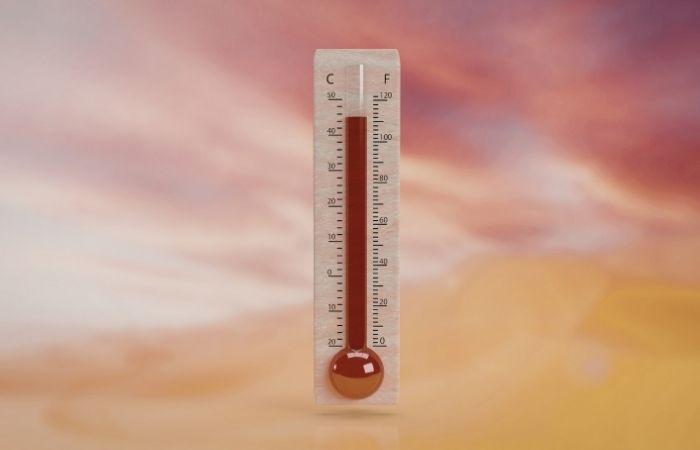
Not every warm box is ruined. A delivery van on a 75°F afternoon is fine. A delivery van baking on a steel doorstep at 105°F for eight hours is a different question. The signal to retest is rarely a single threshold. It is a combination of how hot or cold the kit got, how long it sat there, and whether the packaging itself stayed intact.
The decision guide below covers common scenarios reported in customer questions and manufacturer FAQs. Where the table shows "retest," the trigger is usually a combination of suspect storage history and a negative result that does not match symptoms or exposure timing. Use the table as a starting point, then apply the four-point packaging check in the next section before relying on any result.
| Scenario | Result Obtained | Recommended Action |
|---|---|---|
| Left in a hot car for several hours (100°F or above) | Negative | Retest with a new kit stored properly |
| Stored in a steamy bathroom cabinet for weeks | Negative | Consider retesting if any symptoms or recent exposure |
| Brief mailbox heat exposure under six hours | Negative | Likely acceptable; retest if anxious or symptomatic |
| Test visibly damaged, warped, or desiccant saturated | Any result | Discard and replace immediately |
| Result positive after any storage stress | Positive | Treat as preliminary; confirm with lab-administered test |
Shipping in Summer and Winter, What Actually Reaches Your Door
There is a layer of this anxiety that gets less attention than it deserves: the kit's journey from warehouse to mailbox. Anyone who has watched the delivery alert ping at 11:42 a.m. while still at work knows the feeling. How hot is that porch right now? How long has the box been in the sun?
Reputable at-home STD test manufacturers design packaging with reasonable transit conditions in mind. Foil pouches contain desiccant. Outer cartons add some insulation. Stability testing during product validation includes simulated temperature swings of the kind that happen in normal shipping. A few hours of mild summer heat during transport does not automatically invalidate a sealed kit.
Sustained extreme exposure changes the calculation. A package on a metal doorstep in 98°F direct sunlight for eight hours is well outside the conditions any home-use test was validated for. A box that sat in a dropbox above 100°F for a full afternoon may still test correctly, but the buffer between rated performance and unreliable performance has narrowed.
What to check when the package arrives:
- The outer carton: dry, intact, not visibly warped or melted
- The foil pouch inside: sealed, with no tears or punctures
- The desiccant packet inside the pouch: dry, not swollen or saturated
- The cassette itself: housing not warped, viewing window clear, not fogged
If all four pass inspection, the kit is almost always still usable. If any of the four show damage, replace it before testing.
Disclosure: stdrapidtestkits.com sells at-home rapid STI tests; the kits linked in this article are our own products.
Expiration Dates Stack with Temperature Stress
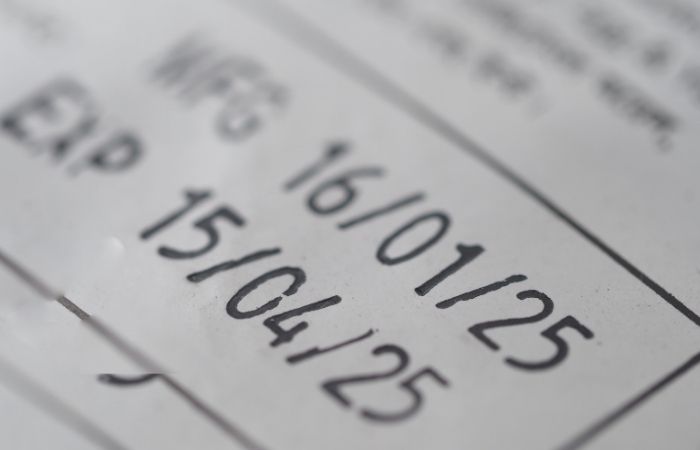
Heat damage and expiration are related effects. Both reduce reagent stability over time. An expired STD test does not suddenly stop working at midnight on the printed date, but the chemistry has been gradually losing potency for months before. Combine an aging kit with a hot shipping run, and the stressors stack on top of each other.
Consider a kit that is three months from expiration and then spends two days in a hot vehicle. Each stressor on its own might leave enough sensitivity buffer for an accurate result. Together, the buffer disappears. Performance margin is finite. Each insult chips away at it.
The table below shows how expiration and environmental stress interact in practice. The right column reflects general lateral-flow performance research rather than any specific kit's tolerance, so the individual kit label should always be checked.
| Condition | Effect on Sensitivity | False Negative Risk |
|---|---|---|
| Within expiration date, properly stored | Full expected sensitivity | Low when used at the correct testing window |
| Within expiration, brief moderate heat exposure | Slight possible reduction | Low to moderate depending on duration |
| Near expiration, exposed to high heat | Noticeable potential degradation | Moderate |
| Expired and heat-exposed | Unpredictable performance | Elevated |
The False Negative Trap When Timing and Storage Compound
Storage is one accuracy gate. Timing is another. A false negative is not always the kit's fault. Sometimes it is a question of when the test was used.
Every infection has a window period. That is the interval between exposure and the point at which a test can reliably detect the marker the kit screens for. Antibody-based tests need time for the body to mount a measurable immune response. Antigen-based tests need detectable levels of the infectious agent itself. Testing inside that window produces a true negative even though infection is present (CDC STI screening recommendations).
A common pattern looks like this. Someone tests five days after an unprotected encounter, well inside the window period for several STIs. The kit had also spent a hot afternoon in a mailbox during a heat wave. The result is negative. Symptoms appear two weeks later. A properly stored follow-up test at the recommended testing window returns positive for gonorrhea.
Two variables compounded. The window was too short, and the kit's sensitivity was already pushed by heat. Either factor alone might have produced an accurate result. Stacked together, they produced a missed infection.
The practical takeaway: when the kit's storage history is questionable and the test was taken earlier than the recommended window for the target infection (chlamydia and gonorrhea typically need at least two weeks after exposure, HIV antibody tests longer), retesting after the proper window with a fresh kit is the safest move. Storage and timing are not interchangeable variables. Each is a separate gate, and a result needs to pass both.
How to Store Your Kit at Home Without Worry
The simplest prevention strategy is boring, and boring is the goal. Store your test in a cool, dry, climate-stable place inside your home.
What works:
- A bedroom drawer away from windows and radiators
- A hallway linen closet
- A kitchen cupboard that is not near the stove, dishwasher, or refrigerator coils
- A bathroom cabinet only if the room is reliably ventilated and rarely steamy
What does not work:
- A car glove compartment or trunk in summer or winter
- A bathroom shelf above a regularly-used shower
- A windowsill that catches direct afternoon sun
- A garage or shed without climate control
In winter, bring delivered packages inside promptly. Freezing damages the membrane in ways that warming back up does not reverse. If a kit was left in a freezing mailbox overnight, treat it like a damaged kit and replace it.
Before opening a kit that has been somewhere cool, let it sit at room temperature for about thirty minutes. The sealed pouch reaching room temperature prevents condensation from forming on the cold cassette when the pouch is opened. Condensation introduces unwanted moisture at the moment the strip is most sensitive.
When the Doubt Is Louder Than the Evidence
Sometimes everything checks out: the seal is intact, the desiccant is dry, the exposure was brief, and the result is clear. And the doubt still will not go away.
That doubt is common, and it is not irrational. Anxiety about sexual health does not operate on chemistry alone. It operates on what-ifs, near-misses, and the cost of being wrong. Retesting with a fresh, properly stored kit is a reasonable response, even when the first kit was probably fine.
Clinical guidance from the U.S. Centers for Disease Control and Prevention recognizes that testing decisions involve both probability and psychological clarity (CDC STI treatment guidelines). A second properly stored test that confirms the first is information. A second test that disagrees with the first is also information. Either result gives you something you can rely on.
Home-use diagnostic tests are validated under the storage conditions printed on the label. Conditions outside that range can affect the reliability of the result.
What This Comes Down To
Heat and humidity can ruin an STD test kit. Not always, not instantly, and not without leaving plausible-looking results behind. Prolonged exposure outside the labeled storage range raises the risk of false negatives by reducing the kit's working sensitivity. Brief mild warmth during shipping or in-home storage is usually tolerated by sealed, intact packaging.
What matters when deciding whether to trust a result:
- How extreme the exposure was (mildly warm versus above 104°F)
- How long it lasted (an hour versus a full afternoon)
- Whether the foil seal and desiccant stayed intact
- How the result lines up with your symptoms and exposure timeline
When all four answers favor the kit, the result is probably reliable. When any one of them raises real doubt, retesting is cheaper than carrying a question forward. Testing is about getting information accurate enough to act on, for yourself and for anyone you share intimacy with.
FAQs
- I left my STD test in a hot car for hours. Did the heat ruin it?
- A hot car in summer can hit 120°F to 130°F inside, which is well above the storage range any home-use STD test is validated for. A few minutes during a quick errand is rarely a problem. Several hours baking in direct sunlight is. If the kit was sealed, dry, and felt only mildly warm, it is often still usable. When the kit was clearly hot to the touch, sat for hours, or the foil pouch shows any sign of stress, the safer call is to replace it. Confidence in the result matters more than saving one kit.
- If the pouch is intact and the desiccant is dry when I open it, is the kit still usable after sitting in a steamy bathroom?
- Usually yes. The four-point check is the practical rule: outer carton intact, foil pouch sealed, desiccant dry, cassette housing not warped or fogged. A kit that passes all four after weeks in a humid bathroom is almost always within tolerance. If the desiccant looks swollen, clumpy, or damp, or the foil pouch was opened early, replace the kit before testing. Visible damage to any of the four elements is the decision point, not the room itself.
- What worries me more in terms of a wrong result: heat damage or testing too early?
- Testing too early is the bigger driver of false negatives. Every infection has a window period between exposure and detectability, and even a perfectly stored kit cannot detect a marker the body has not produced yet. Heat exposure reduces sensitivity, which compounds with an early test. The cleanest fix is retesting after the recommended window with a properly stored kit.
- Can heat cause a false positive instead of a false negative?
- Heat is much more likely to cause a false negative than a false positive. When reagents degrade, they typically lose sensitivity, meaning they miss true infections rather than invent fake ones. A clear positive line on a kit that was warm should not be dismissed as a temperature glitch. Confirm with a clinic-administered lab test and act on the result.
- The box felt warm when I opened it, but it was not blazing hot. Does that matter?
- Slight warmth is rarely a problem. Delivery vehicles, mailrooms, and porches are not refrigerators. What matters is prolonged extreme heat. If the kit was sealed, dry, and structurally intact, brief warmth at delivery is usually within tolerance. Warm from a delivery truck is very different from a full afternoon on a sunlit dashboard.
- My kit froze overnight in the mailbox during winter. Is freezing worse than heat?
- Freezing can be just as damaging. Ice crystals can disrupt the nitrocellulose membrane inside the test strip. Warming the kit back up does not undo any structural change. If the kit was clearly below 32°F for an extended period, replacement is the safest move.
- My result was negative but my symptoms have not gone away. Could storage be the reason?
- Possibly, but it is rarely the only explanation. Testing too early, low marker levels at the time of testing, or storage stress can each produce a false negative. Persistent symptoms outrank a single negative strip. Burning, unusual discharge, sores, or pelvic discomfort are reasons to see a clinician for evaluation and lab-based testing.
- How can I tell if humidity actually got inside the test before I used it?
- Look at the desiccant packet inside the foil pouch first. It should feel dry and intact. A swollen, damp, or compromised desiccant is a clear warning sign. Also check for warped plastic or a foggy window on the cassette itself. Rapid tests are simple, but they are not invincible. Visible damage means the kit should not be used.
How We Sourced This Article: Our editorial team summarized current public-health and regulatory guidance on home-use diagnostic test storage, expiration handling, and accuracy. Specific guidance was drawn from the U.S. Centers for Disease Control and Prevention, the U.S. Food and Drug Administration, the U.K. National Health Service, Mayo Clinic, and the World Health Organization. Where lateral-flow chemistry is discussed, the description reflects general manufacturer guidance on rapid diagnostic test handling. This article is not a substitute for evaluation by a licensed clinician.
- U.S. Centers for Disease Control and Prevention. STI Treatment Guidelines. Background on diagnostic accuracy, screening, and laboratory confirmation standards.
- U.S. Centers for Disease Control and Prevention. STI Screening Recommendations. Guidance on appropriate testing timing and follow-up.
- U.S. Food and Drug Administration. Root domain for regulatory guidance on at-home diagnostic tests, labeled storage conditions, and accuracy considerations.
- Mayo Clinic. Root domain for patient-facing guidance on STI testing, when to test, sample types, and confirmatory testing.
- U.K. National Health Service. Sexually Transmitted Infections (STIs). Overview of testing options, symptom guidance, and follow-up recommendations.
- World Health Organization. Sexually Transmitted Infections (STIs) Fact Sheet. Global guidance on screening, testing, and surveillance.
