
Published: October 2025 | Last updated: May 2026 | Editorial review and quality control: Martina N.
Burning, itching, or pain in the genital area can absolutely be caused by chlamydia. But the same symptoms show up with urinary tract infections, yeast infections, and bacterial vaginosis, and chlamydia is sometimes present alongside one of them. Chlamydia tends to produce internal burning during urination, thin yellow or white discharge, and mild pelvic discomfort; intense external itching with thick white discharge points more toward a yeast infection. The conditions overlap enough that no single symptom confirms a diagnosis, which is why testing matters more than guessing.
Here's the part most people don't expect: chlamydia usually doesn't announce itself at all. When symptoms do show up, they're easy to dismiss as something less serious, which is exactly why the infection spreads so efficiently. The burning, the itching, the vague pelvic pressure all blur together with other common conditions. Until a test gives you a definitive answer, the next best thing is understanding what chlamydia tends to feel like, what else it might be, and which signs should prompt action.
Burning when you urinate, persistent itching around the genitals, or a dull ache you can't quite explain are the kinds of symptoms that send people straight to Google at 2 AM. Sometimes it's chlamydia. Sometimes it's a yeast infection, BV, or a UTI. And quite often, it's chlamydia presenting alongside something else entirely. These conditions share a lot of the same surface-level signs, which is why symptom-matching alone rarely gives you a definitive answer.
Key Takeaways
- Most chlamydia infections produce no clear symptoms; clinical references describe over 80% of women with chlamydial cervicitis as asymptomatic or only mildly symptomatic, and asymptomatic carriage is common in men too. Feeling fine after a possible exposure is not reassurance.
- Symptom-matching alone cannot reliably tell chlamydia apart from a UTI, yeast infection, or BV; an at-home test taken 14 or more days after exposure is the fastest way to get a real answer.

Is Burning or Itching Down There a Sign of Chlamydia?
Chlamydia often feels like nothing at all. NCBI StatPearls notes that over 80% of women with chlamydial cervicitis are asymptomatic or have only mild symptoms such as vaginal discharge, bleeding, or dysuria; asymptomatic carriage in men is also common, with patients frequently described as silent reservoirs of the disease. The infection can settle into the urethra, cervix, or rectum and cause real damage without producing a single noticeable sign. The assumption that you'd know if something were wrong is exactly what catches most people off guard.
When symptoms do appear, they tend to show up one to three weeks after exposure, though some people don't notice anything for weeks or even months. For women, the most common symptomatic experiences include a burning sensation during urination, unusual vaginal discharge that may be white, yellow, or gray, pelvic discomfort, pain during sex, and itching or irritation in and around the vagina. For men, the picture looks slightly different: a burning sensation when urinating, discharge from the penis that is clear, cloudy, or slightly yellow, and burning or itching specifically around the opening of the urethra. Testicular pain or swelling is less common but does occur.
From a biological standpoint, the reason these symptoms happen comes down to inflammation. Chlamydia trachomatis, the bacterium responsible, triggers an inflammatory response in the tissues it infects, typically the urethra in both sexes and the cervix in women. That inflammation produces the burning during urination: the urethra is irritated, and passing urine over irritated tissue creates the discomfort. The itching, when it occurs, comes from a similar inflammatory process affecting the skin and mucosal lining around the genitals. It's not the infection itself you're feeling, exactly, it's your body's response to it.
| Symptom | Women | Men |
|---|---|---|
| Burning during urination | Common | Common |
| Unusual discharge | White, yellow, or gray vaginal discharge | Clear, cloudy, or yellow penile discharge |
| Genital itching | Internal vaginal/urethral itching | Burning/itching at urethral opening |
| Pelvic or abdominal pain | Dull pelvic pain or cramping | Rare; testicular pain if epididymitis develops |
| Pain during sex | Possible | Uncommon |
| Bleeding | Spotting between periods or after sex | Not typical |
| No symptoms at all | Frequently (most cases) | Frequently (a large share of cases) |
Is It Chlamydia or a Yeast Infection? The Itch Is Different
One symptom that chlamydia does not typically cause is intense external vulvar itching. That maddening, surface-level itch is far more characteristic of a yeast infection. Chlamydia's itching, when present, tends to be internal, at the urethral opening, rather than on the surrounding skin. The distinction matters, and it's one of the few reliable clues in an otherwise murky symptom picture.
It's common for people to grab a yeast infection treatment when they have an itchy vagina. Statistically the instinct isn't unreasonable; yeast infections affect roughly 75% of women at some point in their lives. But itching alone doesn't mean a yeast infection, and treating the wrong thing wastes time while the real problem gets worse.
Yeast infections result from an overgrowth of Candida, and they have a distinctive set of symptoms: severe external itching and irritation around the vulva and vaginal opening, thick white discharge often likened to cottage cheese, redness and swelling of the vulva, and a burning sensation that tends to worsen during sex or urination. The itch is typically external and surface, the kind you feel on the skin itself rather than inside.
Chlamydia's itching signature is different. It tends to be internal, felt at the urethral opening or inside the vaginal canal, rather than on the outer skin. Chlamydia usually does not produce the thick white discharge associated with yeast, nor does it usually cause the intense external vulvar irritation that makes yeast infections so unmistakable. If you have a lot of surface itching and clumpy discharge, chances are it's a yeast infection. If the discomfort is more inside, with burning when you pee, thin watery or slightly yellow discharge, or pelvic discomfort, then chlamydia or BV rise up the list of possibilities.
The complicating factor is that both can be present at the same time. Taking antibiotics for a UTI, for example, can disrupt vaginal flora enough to trigger a yeast infection. Chlamydia can be present alongside a yeast infection without either one masking the other. Treating symptoms rather than testing for the real cause often sends people in circles. Clearing one infection doesn't mean the other disappears. If you've treated a yeast infection and still have symptoms, or if you've had a recent STI exposure, testing for chlamydia is a smart next step.
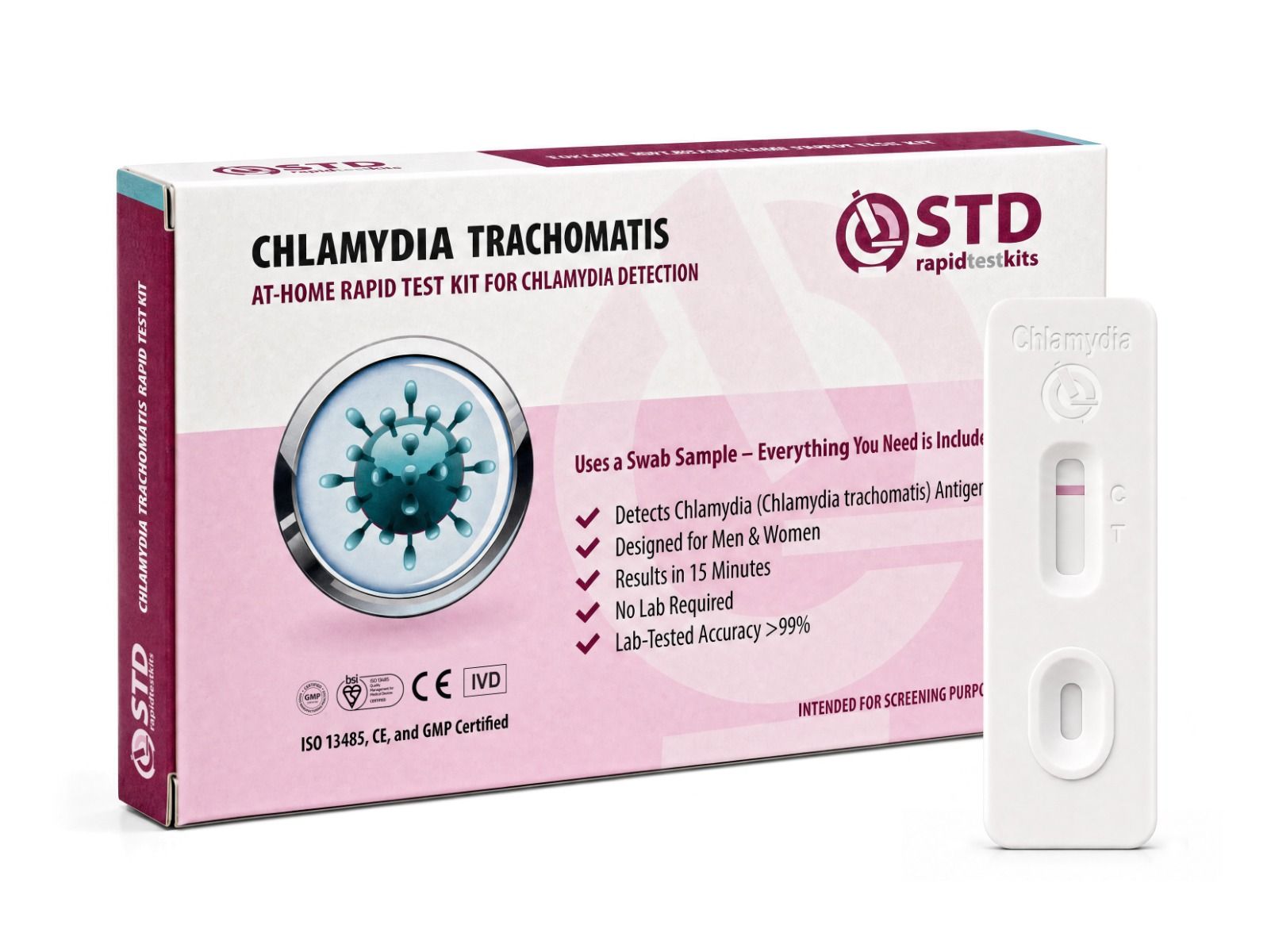
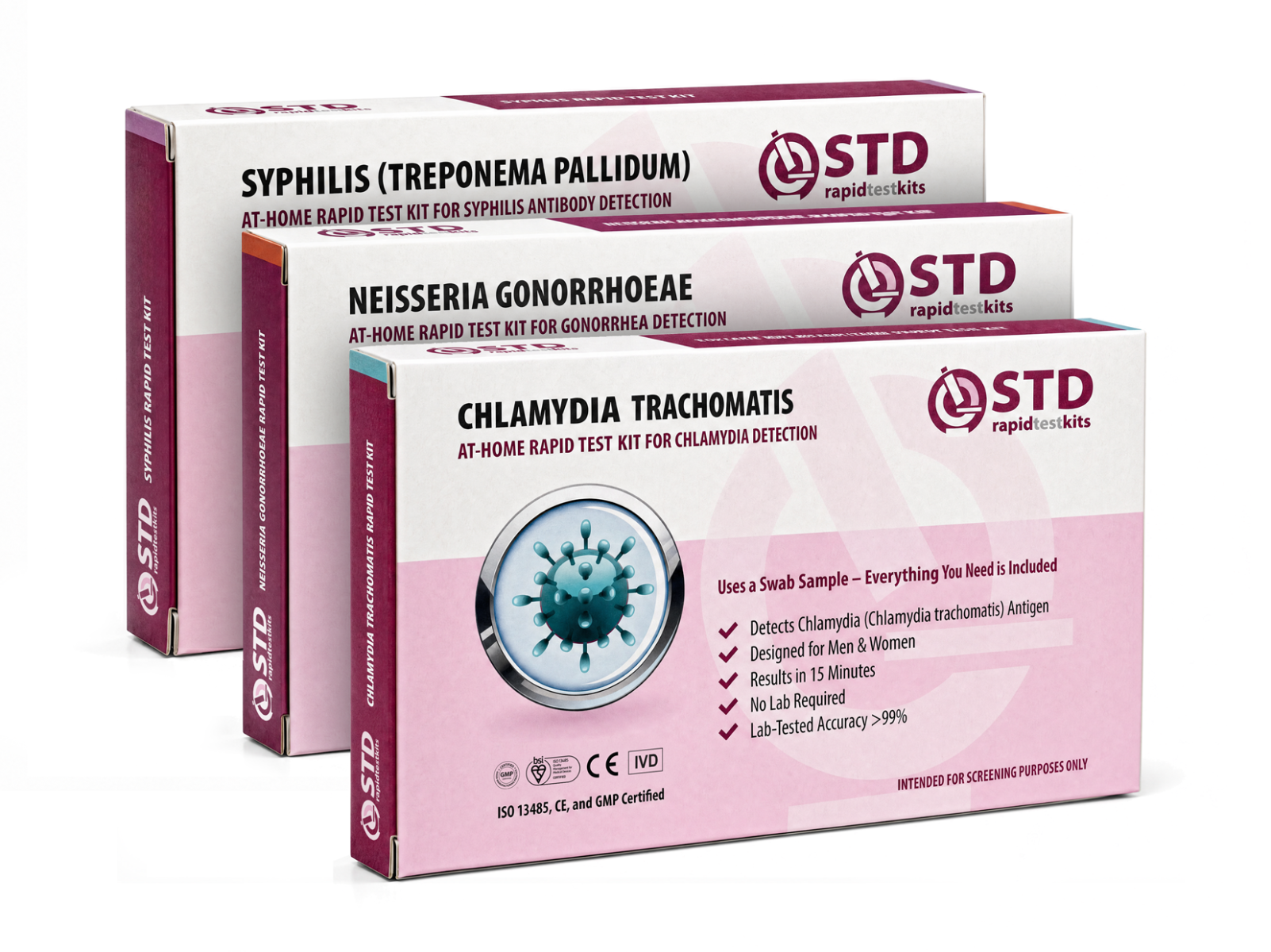
STD Rapid Test Kits sells the at-home testing products linked in this article. We recommend tests by fit-for-purpose for the reader's concern, not commercial benefit.
Is It Chlamydia or BV? When Discharge Is the Clue
Bacterial vaginosis (BV) is another condition that shares enough of the symptom landscape with chlamydia to cause real confusion. BV occurs when the natural balance of bacteria in the vagina shifts and "bad" bacteria crowd out the protective lactobacilli that keep the vaginal environment healthy. It's not a sexually transmitted infection in the traditional sense, though sexual activity can trigger or worsen it. And it produces symptoms that can look and feel a lot like chlamydia on the surface.
The clearest distinguishing feature between BV and chlamydia is the discharge. BV typically causes a thin, watery, grayish or off-white discharge with a distinct and often strong fishy odor, particularly noticeable after sex. That fishy smell is the hallmark of BV, caused by the specific metabolic byproducts of the bacteria involved. Chlamydia discharge, by contrast, does not typically have that same characteristic odor. It may be white, yellow, or gray, but the smell is generally absent or mild. Itching and burning can accompany BV, though the itching in BV is often external, around the vulva, and accompanied by that telltale odor.
The challenge is that BV and chlamydia can and do co-occur. The presence of one doesn't rule out the other, and neither can be reliably identified based on symptom description alone. Research summarized in NCBI StatPearls confirms that chlamydia's frequent asymptomatic presentation makes it especially difficult to distinguish from other vaginal conditions without laboratory testing. If you're dealing with unusual discharge, discomfort, and any recent sexual exposure, testing is the only way to know what you're actually treating.
BV discharge: thin, watery, grayish or off-white, with a strong fishy odor (especially after sex).
Chlamydia discharge: white, yellow, or gray, with mild or no odor.
Both can be present at the same time, and neither can be diagnosed by smell or appearance alone.
Is It Chlamydia or a UTI? How to Tell the Difference
If you've ever had a UTI, the description of chlamydia symptoms probably sounds very familiar. Burning when you pee. Increased urgency to urinate. Discomfort in the pelvic area. The overlap is real, and it's one of the main reasons chlamydia gets misdiagnosed, or self-diagnosed incorrectly, so often. People reach for a UTI remedy from the pharmacy, feel temporary relief, and assume the problem is solved. If it was actually chlamydia, the infection is still very much present.
The key biological difference lies in where each infection originates. A UTI is a bacterial infection of the urinary tract, typically the bladder (cystitis) or urethra (urethritis), caused by bacteria like E. coli traveling up the urethra. Chlamydia is a sexually transmitted infection caused by Chlamydia trachomatis, which also infects the urethra but enters through sexual contact rather than from bacteria outside the body. Both inflame the urethra. Both produce that signature burning sensation during urination. A UTI, however, is generally not an STI, while chlamydia absolutely is.
There are a few distinguishing features that can point you in one direction, though none are definitive enough to skip testing. UTIs tend to cause a more urgent, frequent need to urinate, that feeling of needing to go constantly even when very little comes out. They can also cause cloudy or blood-tinged urine and pain in the lower back if the infection has reached the kidneys. Chlamydia, by contrast, is less likely to produce urinary urgency and more likely to involve discharge, pelvic discomfort, or symptoms in the genital tissues rather than the urinary tract specifically. Because the symptoms overlap so substantially, testing for both is often the smart move, especially after a sexual encounter where exposure was possible.
Chlamydia can also cause a form of urethritis that is clinically indistinguishable from a simple UTI without laboratory testing. The two are frequently confused, and standard UTI treatments will do nothing to clear a chlamydia infection. The bacteria that cause chlamydia require a different class of antibiotics entirely, which is why accurate diagnosis matters, not a best guess based on symptoms.
| Symptom | Chlamydia | UTI | Yeast Infection | BV |
|---|---|---|---|---|
| Burning during urination | Yes | Yes (primary symptom) | Possible | Possible |
| External itching | Uncommon | No | Yes (intense) | Mild to moderate |
| Internal itching | Possible | No | Possible | Possible |
| Discharge type | Yellow/white/gray, mild odor | Cloudy urine only | Thick, white, odorless | Thin, watery, fishy smell |
| Urinary urgency/frequency | Mild or absent | Yes (prominent) | No | No |
| Pelvic pain | Possible | Possible (kidney involvement) | No | Rare |
| Sexually transmitted | Yes | No | Not typically | Not directly |
| Can be asymptomatic | Very commonly | Rarely | Mild cases only | Sometimes |
Is It Normal Irritation or a Chlamydia Warning Sign?
Not every burning sensation is an STI. Not every itch needs a chlamydia test. The genital area is sensitive, reactive tissue, and it responds to friction, soap ingredients, laundry detergent, synthetic fabrics, shaving, hormonal shifts, and a dozen other things that have nothing to do with infection. Knowing the difference between ordinary irritation and a genuine warning sign saves both unnecessary anxiety and the more dangerous mistake of dismissing something real.
It's probably just irritation if: the burning or itching appeared shortly after using a new product (soap, lubricant, condom, detergent); it clears up within 24 to 48 hours with no other symptoms; it's confined entirely to the outer skin with no discharge and no internal discomfort; and there has been no sexual exposure that could constitute an STI risk. Friction rashes, contact dermatitis, and mild pH disruption from things like swimming pools or scented products are extremely common and resolve on their own once the irritant is removed.
It's worth testing for chlamydia if: the burning persists beyond a few days with no obvious environmental cause; there is new or unusual discharge alongside the discomfort; there's been a new sexual partner or unprotected sex in the past few weeks; a recent partner has disclosed an STI; or the discomfort is internal rather than surface-level. Even one of these factors shifts the equation. Chlamydia doesn't always produce dramatic symptoms, and the mildness of the early signs is precisely what makes it dangerous to ignore.
Chlamydia often has no symptoms, but it can cause serious health problems, even without symptoms. If symptoms occur, they may not appear until several weeks after having sex with a partner who has chlamydia. Even when chlamydia has no symptoms, it can damage a woman's reproductive system.

When Is Chlamydia Burning or Itching a Warning Sign?
Most burning and itching has a mundane explanation: a new soap, a synthetic fabric, friction from exercise, or hormonal fluctuations that temporarily disrupt vaginal pH. The human body sends a lot of signals, and not all of them mean something serious is happening. Knowing when to act versus when to wait is genuinely useful information.
The symptoms that should push you toward testing sooner rather than later include: burning that persists for more than a few days after ruling out obvious irritants; discharge that is new, unusual in color or smell, or significantly heavier than your baseline; pelvic or lower abdominal pain that doesn't resolve; new pain during sex; bleeding between periods or after sex; or any combination of these symptoms following a sexual encounter where you were unsure of a partner's STI status. Any one of these on its own could have an innocent explanation, but in combination, or alongside recent exposure, they're worth investigating.
For men, the warning signs to take seriously include: any discharge from the penis outside of normal pre-ejaculate; burning at the tip of the penis or along the urethra; and any pain or swelling in the testicles, which can indicate that chlamydia has progressed to epididymitis, a more serious complication that requires prompt treatment. The window from infection to complication isn't always long, which is why waiting to see if symptoms resolve on their own is rarely a good strategy with chlamydia specifically.
The harder truth is that the absence of symptoms is not reassurance. Chlamydia is known in public health circles as a "silent" infection precisely because so many people carry it without any detectable signs. CDC provisional STI surveillance data for 2024 recorded more than 2.2 million combined chlamydia, gonorrhea, and syphilis cases in the United States, with chlamydia accounting for the largest share. The undetected burden is almost certainly higher, because most asymptomatic cases simply don't get reported.
Warning signs that should trigger a test
- Burning or itching that lasts more than a few days after ruling out obvious irritants
- New or unusual discharge in color, smell, or volume
- Pelvic or lower-abdominal pain that doesn't resolve
- New pain during sex or bleeding between periods
- Any recent unprotected sex, new partner, or partner who has disclosed an STI
How Do You Know If It's Chlamydia or Something Else?
Symptom comparison is useful for narrowing down possibilities, but it was never designed to replace a test result. Here's the most practical framework for thinking through what you might be dealing with, before you get that definitive answer.
Start with the discharge. Is it thick and white with no odor? Yeast infection is the most likely candidate. Thin and watery with a fishy smell? BV moves to the top of the list. Yellow, gray, or slightly odorous without the strong fishy note? Chlamydia or gonorrhea become more relevant, especially if there was recent sexual activity. No discharge at all but burning when you urinate? UTI or chlamydial urethritis are both in play.
Then consider the location of the discomfort. Is the itching primarily external, on the skin of the vulva or around the labia? Yeast infection or contact dermatitis are the more likely culprits. Is it internal, felt at the urethral opening or deep inside? Chlamydia or UTI are more probable. Is there pelvic pressure or a dull ache in the lower abdomen, separate from typical menstrual cramping? That warrants more urgency, as it can signal that a chlamydia infection has progressed to the upper reproductive tract.
Finally, factor in your exposure history. If you've had a new sexual partner, unprotected sex, or a partner who later disclosed an STI, chlamydia needs to be on the table regardless of how minor the symptoms feel, or even if you have no symptoms at all. The biology of chlamydia doesn't require you to feel sick to be infectious or to sustain internal damage over time.
1. What does the discharge look like? Thick white and odorless points to yeast; thin watery with fishy odor points to BV; yellow/gray with mild odor (or no discharge but burning) points to chlamydia, gonorrhea, or UTI.
2. Where is the discomfort? External vulvar itching suggests yeast or contact dermatitis; internal burning at the urethra or deep pelvic pressure suggests chlamydia or UTI.
3. Has there been recent sexual exposure? A new partner, unprotected sex, or a partner who disclosed an STI moves chlamydia and gonorrhea to the top of the list regardless of how minor the symptoms feel.
Testing for Chlamydia at Home, Exactly When and How
This is where the guessing game ends. At-home rapid chlamydia testing has become accurate, discreet, and genuinely straightforward, and it's the fastest route from uncertainty to a real answer. You don't need a doctor's appointment or a clinic visit to find out whether what you're experiencing is chlamydia or something else.
The most important detail when it comes to timing is that testing too early can produce a false negative result. Chlamydia tests detect the actual bacteria, not your body's antibody response, so there needs to be enough of the pathogen present for the test to pick it up. The window that matters: test from 14 days after exposure for chlamydia. Testing before that window gives the bacteria insufficient time to replicate to detectable levels, which can give you a falsely reassuring result even when the infection is present.
If you're dealing with symptoms that could be chlamydia, gonorrhea is also worth ruling out at the same time. The two infections frequently co-occur, they share symptom profiles almost entirely, and a negative chlamydia test does nothing to tell you about gonorrhea. If you've had a new partner or unprotected sex with an uncertain status, testing for gonorrhea at the same time makes sense, since the two infections share nearly identical symptoms and frequently co-occur. The Chlamydia & Gonorrhea 2-in-1 Rapid Test Kit tests both infections simultaneously from a single sample, so you get a complete picture rather than a partial answer. If you're testing for chlamydia only and the result comes back negative but symptoms persist, a gonorrhea test should be your next move.
A negative result inside the testing window (before 14 days post-exposure) should be followed by a confirmatory test once you're past that point. A negative result after the window has passed, in the absence of ongoing symptoms or new exposures, is genuinely reassuring. A positive result means treatment is available and effective, and your healthcare provider can guide you through the next steps.

What Happens If Chlamydia Goes Untreated
The reason this infection gets so much public health attention isn't because the symptoms are severe. It's because the long-term consequences of untreated chlamydia are disproportionately serious relative to how mild the early signs feel. For women especially, chlamydia that isn't diagnosed and treated can progress silently from the cervix to the fallopian tubes and ovaries, causing pelvic inflammatory disease (PID). PID is a significant cause of ectopic pregnancy, chronic pelvic pain, and infertility, and a disturbing number of women who develop it had no idea they were carrying chlamydia in the first place.
For men, untreated chlamydia can spread to the epididymis, the tube that carries sperm, causing epididymitis, which presents as testicular pain and swelling and in rare cases can affect fertility. There's also a condition called reactive arthritis (formerly known as Reiter's syndrome), which can develop as a systemic response to untreated chlamydial infection and involves joint inflammation, eye inflammation, and skin changes. It's uncommon, but it's a reminder that an STI doesn't always stay confined to the genitals.
The good news is that chlamydia is entirely curable with appropriate treatment. The damage it causes happens gradually, over time, when the infection is left unaddressed, not from a single episode of exposure. Catching it early, treating it, and confirming clearance is genuinely straightforward once you know you have it. The problem is that too many people don't find out until complications have already begun, precisely because the early symptom picture is so easy to dismiss or misattribute. Testing, not symptom-watching, is the standard of care for sexually active people, especially those under 25 or with multiple partners.
One detail worth knowing: completing treatment doesn't make you immune to reinfection. Chlamydia doesn't produce lasting immunity the way some other infections do. If an untreated partner transmits the infection back to you after you've been treated, which is common, you can become reinfected immediately. This is why partner notification and treatment is considered a standard part of chlamydia management, not an optional courtesy. Getting treated while a partner remains untreated is one of the most common reasons people deal with what feels like a recurring infection.
Women: infection ascends from cervix to fallopian tubes, causing pelvic inflammatory disease (PID), then ectopic pregnancy risk, chronic pelvic pain, and infertility.
Men: infection spreads to the epididymis, causing epididymitis with testicular pain and swelling, and in rare cases reduced fertility.
Either: reactive arthritis is a rare systemic complication that affects joints, eyes, and skin.
Should You See a Doctor or Test at Home First?
At-home testing is an excellent first step, and in many cases it's the most efficient path to an answer. But there are situations where going directly to a healthcare provider is the smarter call, and it's worth being clear about what those look like.
See a doctor promptly if you are experiencing severe pelvic pain, the kind that's sharp, persistent, or accompanied by fever, chills, or nausea. These can be signs that an infection has progressed to PID or epididymitis, both of which require immediate clinical evaluation and treatment. Similarly, if you're pregnant and concerned about STI exposure, a clinical test and in-person care are more appropriate than an at-home screen given the complexity of pregnancy management. If you've tested positive at home, the next step is a healthcare provider to confirm the result and begin treatment; at-home rapid tests are a highly accurate screening tool, but treatment requires a prescription.
For everyone else, the person with low-level burning and itching, uncertainty after a new partner, or a recent exposure without symptoms, an at-home test is a completely appropriate starting point. It's private, accurate, and delivers results quickly. Testing at home doesn't replace a doctor, but it gives you real information to act on rather than waiting in uncertainty or making treatment decisions based on symptom-guessing. If the result is positive, you see a provider. If it's negative after the window and symptoms persist, you also see a provider; the choice between paths is logistical, not diagnostic.
One practical note: at-home rapid lateral-flow tests for chlamydia are designed as screening tools and use the same swab sample type as the laboratory NAATs that primary care providers use. Laboratory NAAT remains the analytical gold standard for confirmation; rapid lateral-flow chemistry is complementary, not equivalent. The main difference between home testing and clinic testing isn't usually accuracy so much as what happens next: a positive clinic result gets followed up in the same visit, while a positive home result requires you to initiate that follow-up yourself.
FAQs
- Can chlamydia cause itching without any other symptoms?
- Yes, it can. Itching at the urethral opening or inside the vagina can be the only noticeable sign of a chlamydia infection, though it's more common for chlamydia to cause no symptoms at all. If you're experiencing unexplained itching after a possible sexual exposure, testing is the only way to know whether chlamydia is the cause.
- How do I know whether the burning when I pee is chlamydia or a UTI?
- You can't tell from the symptoms alone; the overlap is too significant. UTIs tend to be more severe with urgency and frequency, while chlamydia is more likely to involve discharge or pelvic pain alongside the burning. The only way to be sure is to test, because they require different antibiotics.
- Does chlamydia burning go away on its own if it goes untreated?
- Surface symptoms can come and go, or fade entirely. This is part of what makes chlamydia so dangerous when untreated. More concerning is the internal progression upward from the urethra or cervix into the fallopian tubes or epididymis, which can happen with little to no outward change in how you feel. Symptoms easing off is not the same as the infection clearing.
- Can you have chlamydia itching and still test negative?
- Yes, a test performed within 14 days of exposure may come back negative even if you are infected. Rapid chlamydia results are not reliable inside that window. If you test outside the window and the result is still negative but symptoms persist, see a healthcare provider to investigate other causes.
- Is chlamydia itching usually external or internal?
- Typically internal, felt at the urethral opening or inside the vaginal canal, rather than on the outer skin of the vulva. Intense external itching is more characteristic of a yeast infection. If your itch is primarily on the outer skin and accompanied by thick white discharge, chlamydia is less likely, though testing is still reasonable if there's been potential exposure.
- Can men get chlamydia itching?
- Yes. Men can experience burning and itching specifically around the urethral opening, the tip of the penis where urine exits. It's one of the more recognizable chlamydia symptoms in men, though discharge and burning during urination tend to be more common. As with women, a large share of men with chlamydia have no symptoms at all.
- How quickly do chlamydia symptoms appear after exposure?
- Testing from day 14 post-exposure is the reliable step regardless of whether anything has appeared. For people who do develop symptoms, they usually emerge between one and three weeks after exposure, and a large share never notice anything at all. Feeling fine a month later does not rule out infection; only a test does.
- I treated a yeast infection, but the itching came back. Could it be chlamydia?
- Yes, persistent or returning symptoms after yeast infection treatment are a real signal that something else may be going on. Either the original diagnosis was incorrect, the yeast infection recurred, or a separate infection like chlamydia was never addressed by the antifungal. Testing for chlamydia at this point is a logical next step.
Our article was constructed based on current advice from the most prominent public health and medical organizations, and then molded into simple language based on the situations that people actually experience, such as treatment, reinfection by a partner, no-symptom exposure, and the uncomfortable question of whether it "came back." In the background, our pool of research included more diverse public health advice, clinical advice, and medical references, but the following are the most pertinent and useful for readers who want to verify our claims for themselves.
- U.S. Centers for Disease Control and Prevention. About Chlamydia, public information page covering symptoms, transmission, and testing.
- U.S. Centers for Disease Control and Prevention. Sexually Transmitted Infections Surveillance, 2024 (Provisional), national STI case counts.
- NCBI StatPearls. Chlamydia trachomatis: clinical presentation, asymptomatic carriage, and diagnostic difficulty.
- Cleveland Clinic. Chlamydia: causes, symptoms, treatment and prevention; patient-facing clinical overview.
- NHS. Chlamydia: symptoms, testing, and treatment overview.
- NHS. Bacterial vaginosis (BV): causes, symptoms, and discharge characteristics.
