
Published: November 2025 | Last updated: May 2026 | Editorial review and quality control: Martina N.
The question hits hardest in the first hour after a positive result, after a partner's text, or after a search at 2am. People do not really want to know what STI they might have. They want to know whether it is something that goes away or something that stays. The answer is more reassuring than most worst-case Google searches suggest. Many sexually transmitted infections are completely curable with a short course of antibiotics. Others stay in the body but stay quiet most of the time. A handful, once thought of as lifelong, now have full cures available.
This guide walks through what is curable, what is manageable, what changed in the last decade, and what each diagnosis really means for day-to-day life. The categories matter, because they decide what to do next.
Key Takeaways
- Bacterial STIs (chlamydia, gonorrhea, syphilis, trichomoniasis) are fully curable with antibiotics. Hepatitis C, once permanent, is now also curable in over 95% of cases with direct-acting antivirals.
- Viral STIs that remain in the body (HSV, HPV, HIV, chronic hepatitis B) are managed rather than cured. Most spend the majority of their time inactive, and modern HIV treatment achieves U=U: undetectable equals untransmittable.
The Split That Decides Everything: Bacteria vs Viruses
The single most useful question to ask about any STI is whether it is bacterial or viral. Everything else follows from that one detail.
Bacterial STIs are caused by organisms your body and modern medicine can fully clear. Chlamydia, gonorrhea, syphilis, and trichomoniasis fall into this group. A short antibiotic course eliminates the pathogen entirely. Once treatment finishes and a confirmatory test is clean, you are no longer infected. According to the CDC's STI treatment guidance, these four infections respond predictably to first-line antibiotic regimens when caught and treated correctly.
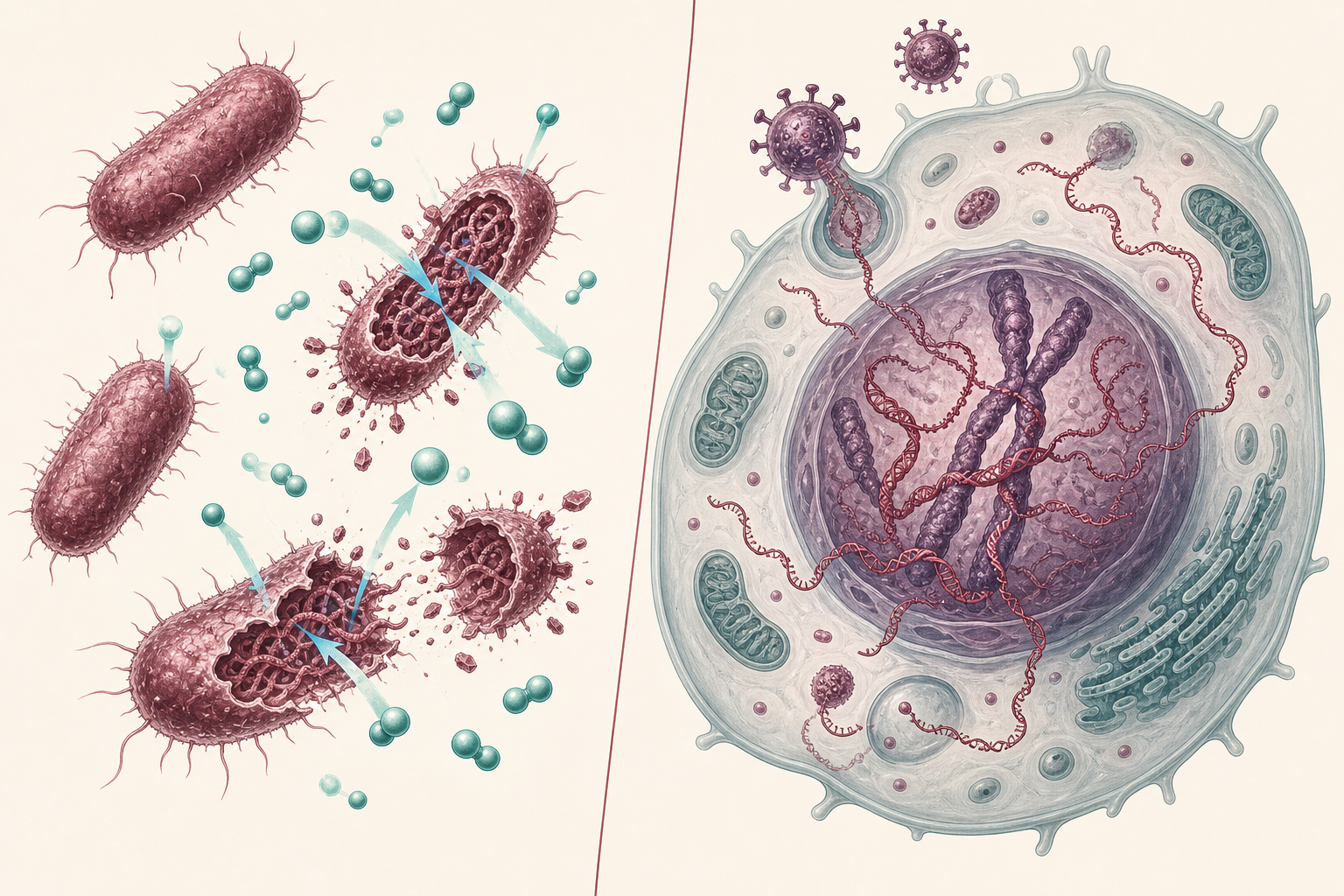
Viral STIs work differently. Viruses replicate inside your own cells, often integrating into the host cell's machinery. Antibiotics do nothing against them, and the immune system cannot always fully evict the virus once it sets up shop. This is the category that traditionally includes herpes (HSV-1 and HSV-2), HPV, HIV, and hepatitis B. The WHO's STI fact sheet still describes four classically incurable infections that public-health policy specifically tracks for this reason.
One important asterisk has been added in the last decade: hepatitis C, also a virus, is now considered curable in most cases thanks to direct-acting antivirals. More on that below.
| Bacterial (curable) | Viral (long-term, mostly managed) |
|---|---|
| Chlamydia | HSV-1 and HSV-2 (herpes) |
| Gonorrhea | HPV |
| Syphilis | HIV |
| Trichomoniasis | Chronic hepatitis B |
The STDs You Can Cure Completely
For most of the most-searched STIs, the answer to "is this forever?" is no. The bacterial four come off the body cleanly with standard treatment, and one viral surprise has joined the list.
Chlamydia
First-line treatment is doxycycline (typically 100 mg twice daily for 7 days) per current CDC treatment guidelines. Cure rates are high when the full course is completed. Reinfection from an untreated partner is the most common reason chlamydia appears to "come back," not treatment failure.
Gonorrhea
Treated with a single intramuscular dose of ceftriaxone. Resistance has been rising globally, which is why dosing recommendations have been updated in recent years. Treatment still works, and follow-up testing (test of cure) is more important than it used to be, especially for pharyngeal infections that are harder to clear.
Syphilis
Treated with penicillin (specifically benzathine penicillin G), an old drug that still works reliably. The number of doses depends on whether the infection is in its early, late, or unknown-duration stage. Cure rates are excellent for early syphilis. Damage already done by untreated late or tertiary syphilis is not always reversible by the cure.
Trichomoniasis
Treated with metronidazole or tinidazole. Recent guideline updates moved from a single 2-gram dose to a 7-day course for women based on better outcome data.
Hepatitis C (the surprise addition)
For decades, hepatitis C was classified as an incurable chronic infection. That changed with direct-acting antivirals (DAAs) in the mid-2010s. Per the CDC's hepatitis C overview, cure rates with modern DAA regimens exceed 95% across an 8- to 12-week treatment course. This shift is one of the largest single changes in STI prognosis in the last 30 years, and it is still under-known.
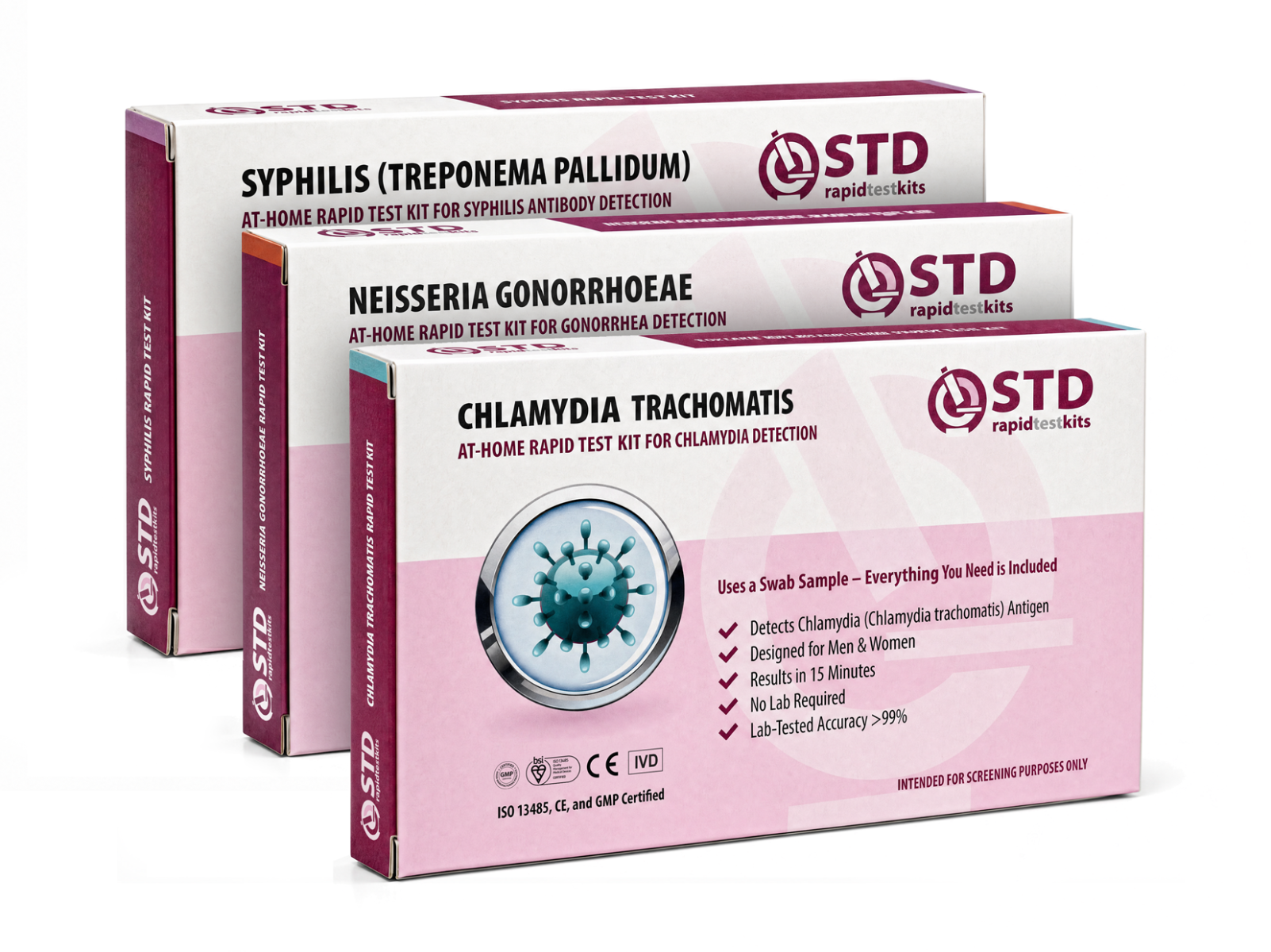
Disclosure: stdrapidtestkits.com sells rapid at-home tests for the bacterial three. The product link below goes to our 3-in-1 panel; we recommend it because it fits the article's curable trio, not because of commercial benefit.
Five Curable STIs at a Glance
- Chlamydia: 7-day course of doxycycline 100 mg twice daily.
- Gonorrhea: single intramuscular dose of ceftriaxone.
- Syphilis: benzathine penicillin G; dose count depends on stage.
- Trichomoniasis: 7-day course of metronidazole or tinidazole.
- Hepatitis C: 8 to 12 week direct-acting antiviral course; over 95% cure rate.
When "Curable" Does Not Mean "Harmless"
Curable infections are not optional infections. The cure resolves the active infection. It does not always reverse damage that built up while the infection was untreated.
Untreated chlamydia and gonorrhea can ascend into the upper genital tract and cause pelvic inflammatory disease (PID), one of the leading preventable causes of tubal-factor infertility, ectopic pregnancy, and chronic pelvic pain in women. The CDC has tracked this association for decades. In men, the same infections can cause epididymitis, with rare but real impacts on fertility. Catching these infections early is the difference between a short antibiotic course and a potentially permanent complication.
Untreated syphilis is the most striking example. Early syphilis is straightforward to treat. Late-stage syphilis, left for years without treatment, can affect the cardiovascular system, the central nervous system, and the eyes (ocular syphilis). The penicillin cure clears the bacterium, but neurological or cardiovascular damage from years of unchecked infection is not erased by treatment.
The cure remains effective across bacterial STIs. What changes is how much collateral damage has accumulated by the time treatment starts.
The Viral STIs That Stay (But Stay Quiet Most of the Time)
This is the category that causes the most emotional weight at diagnosis, and the most distance between fear and reality. "Stays in the body" is medically accurate. "Disrupts daily life" usually is not.
Herpes (HSV-1 and HSV-2)
After the first infection, the virus retreats into nerve cells (sensory ganglia) and stays there. It can reactivate periodically, causing outbreaks. For most people, outbreaks become less frequent over time. Antivirals like acyclovir, valacyclovir, and famciclovir can shorten outbreaks and reduce transmission risk to partners. Many people with herpes go months or years between outbreaks, and a substantial proportion are diagnosed only through testing because they never had a noticeable outbreak at all.
HPV
Most HPV infections clear on their own. Per CDC HPV information, the immune system clears the majority of HPV infections within two years. A small minority persist and can cause cervical, anal, oropharyngeal, or other cancers years to decades later. This is why screening (Pap smears and HPV co-testing) matters more than tracking the initial infection.
HIV
HIV remains incurable in the sense that the virus cannot be eliminated from the body's reservoirs. What changed dramatically is what living with HIV looks like. Daily antiretroviral therapy suppresses the virus to undetectable levels in the blood, and at that point the science is settled: an undetectable viral load means zero risk of sexual transmission to partners. The CDC's official position on U=U (Undetectable = Untransmittable) is unambiguous. Life expectancy for people on consistent treatment now approaches the general-population average.
Hepatitis B
Hepatitis B is the trickiest of the group. Most adults who acquire hepatitis B clear it within six months. A minority develop chronic hepatitis B, which is managed with antivirals to suppress viral replication and protect the liver. Vaccination prevents the infection entirely and is part of routine childhood immunization in most countries.
For most people with HSV-2, outbreaks become less frequent after the first year. People on daily suppressive antiviral therapy often go years between episodes, and a substantial number of seropositive adults are diagnosed only through testing because they never had a noticeable outbreak in the first place.
HPV: The Big Asterisk on the Incurable List
HPV deserves its own section because of how widely it is misunderstood. The immune system clears it more often than people expect.
HPV is the single most common STI on the planet. The lifetime cumulative exposure across the sexually active population is very high, and the vast majority of those infections come and go without the person ever knowing. CDC HPV data shows the immune system clears most HPV infections within two years.
The reason HPV is medically important is the small fraction of persistent infections, particularly with high-risk strains (HPV-16 and HPV-18 most prominently), that can drive precancerous and cancerous changes over a 10- to 20-year horizon. This is why cervical screening (Pap smears and HPV co-testing) exists. Detection of precancer is the actual win, because precancer can be treated long before cancer develops.
Vaccination has changed the prognosis dramatically. The 9-valent HPV vaccine covers the strains responsible for most HPV-related cancers. Per guidance from ACIP (the Advisory Committee on Immunization Practices), routine vaccination is recommended through age 26 in the United States, with shared clinical decision-making through age 45. Catch-up vaccination in adulthood is increasingly common and effective.
U=U: HIV Transmission Has Been Redefined
One of the most important shifts in STI care does not get talked about enough. People diagnosed with HIV today are not on the same trajectory as people diagnosed in the 1990s. The drugs are different, the science is different, the numbers are different.
U=U stands for Undetectable = Untransmittable. The CDC's position, supported by over a decade of cohort studies (HPTN 052, PARTNER, PARTNER2, Opposites Attract), is that a person living with HIV who maintains an undetectable viral load on consistent antiretroviral therapy has effectively zero risk of transmitting HIV sexually to partners.
This is the basis on which serodifferent couples (one partner HIV-positive, one HIV-negative) build sexual relationships, plan pregnancies, and live full lives without HIV transmission. PrEP (pre-exposure prophylaxis) for the HIV-negative partner adds an additional layer of protection and is still recommended in many cases.
Daily antiretroviral therapy generally has manageable side effects and a single-pill option for most patients. Long-acting injectable formulations (every 1 to 2 months) have arrived for stable patients who prefer not to take a daily pill.
None of this makes HIV "easy." Diagnosis is still emotionally significant, treatment adherence still matters, and access to care is still uneven, and the disease trajectory of 1995 no longer applies to anyone receiving modern care.
People who get and keep an undetectable viral load (or stay virally suppressed) have effectively no risk of transmitting HIV to an HIV-negative partner through sex.
When Symptoms Disappear But the Infection Doesn't
This is the gap between feeling fine and being fine. Symptom resolution is not the same as infection resolution, and bacterial STIs are particularly known for going quiet without going away.
Chlamydia is the textbook case. The majority of women and a large share of men with chlamydia have no symptoms at all, and those who do have symptoms often see them fade within a couple of weeks even without treatment. The infection continues in the meantime, often spreading silently into the upper genital tract.
Gonorrhea is similar, with a larger proportion of symptomatic cases in men but often silent infections in women, especially at extra-genital sites like the pharynx or rectum.
Syphilis follows its own pattern. The primary chancre (a painless sore) heals on its own within a few weeks, regardless of treatment. The infection then enters a secondary stage (rash, flu-like symptoms) which also resolves on its own. Untreated, it then enters a latent stage that can last years, only to emerge as late-stage disease much later. At every stage, the disappearance of symptoms is misleading.
Confirmatory testing is the only way to know an infection has actually cleared, both for ruling out a current exposure and for test-of-cure after treatment.
The primary syphilis chancre, a painless sore at the site of infection, heals on its own within 3 to 6 weeks regardless of whether treatment has been given. The bacteria stay in the body whether the sore does or not. A healed lesion tells you the surface inflammation resolved; it tells you nothing about whether the underlying infection cleared. Only a blood test can confirm that.
How Testing Replaces Guessing
Almost all of the anxiety around STIs lives in the gap between possible exposure and a real result. Symptoms suggest, exposure history suggests, what a friend said suggests, and only a test moves the question from "maybe" to "is" or "isn't."
The window period matters. Different infections become detectable at different points after exposure. Chlamydia and gonorrhea are typically detectable around 14 days post-exposure. Syphilis blood tests reliably detect antibodies around 3 to 6 weeks, though they can take up to 90 days in some cases. HIV with a fourth-generation antigen-antibody test is detectable around 18 to 45 days. Herpes antibody tests typically need 12 weeks to be reliable, since seroconversion can take that long.
Once the window has cleared, a negative test rules out infection from that exposure with high confidence. A positive test points to next steps: treatment for the curable infections, a management plan for the others.
At-home rapid lateral-flow testing has changed access. People who would not otherwise drive to a clinic, sit in a waiting room, or have an awkward conversation can use a fingerprick or self-collected swab and confirm a clean status or pick up an infection early. Home rapid tests are screening tools, complementary to lab NAAT confirmation when a result is positive.
How long after exposure each common STI becomes reliably detectable:
- Chlamydia and gonorrhea: around 14 days post-exposure.
- Syphilis blood test: 3 to 6 weeks, occasionally up to 90 days.
- HIV (4th-generation antigen-antibody test): 18 to 45 days.
- Herpes antibody test: typically 12 weeks for reliable seroconversion.
Living With a "Lifelong" STI Looks Different Than You Think
The lived experience of an "incurable" diagnosis tends to differ sharply from the diagnosis-day fear. The fear assumes constant symptoms, constant transmission risk, constant disclosure, and constant identity disruption. The reality is usually much quieter.
For most people with HSV-2, outbreaks are infrequent and become less frequent over the years. Daily suppressive antiviral therapy is an option for people who experience frequent outbreaks or who want to reduce transmission risk to a partner. Many people on suppressive therapy go years without an outbreak.
For most people with HPV, the infection clears within two years and never causes a clinical issue. Cervical screening picks up the minority of persistent infections that need monitoring.
For people with HIV on consistent treatment, life expectancy approaches population average, daily life is largely unchanged, and U=U eliminates transmission risk to sexual partners.
For people with chronic hepatitis B, regular monitoring and (when indicated) antiviral therapy keep the infection suppressed long-term.
None of this is to minimize the emotional weight of a diagnosis. The first weeks after testing positive for any chronic infection are genuinely hard. The day-to-day shape of the years that follow is almost always smaller and quieter than the worst-case scenario the diagnosis day implied.
What clarity looks like in practice
The two questions worth replacing "is this forever?" with are simpler. First: is what I might have curable or manageable? Second: do I know my status with enough certainty to act on it? For bacterial infections, "curable" means a defined treatment plan, a defined follow-up test, and a closed case. For the curable viral exception (hepatitis C), the path is longer but the endpoint is the same. For viral STIs that stay in the body, "manageable" means a small set of practical questions about reactivation frequency, available medication, and partner conversation. Testing converts a worst-case guess into a specific diagnosis: a short treatment course if it is bacterial, a practical management plan if it is viral.
Frequently Asked Questions
- Are all STDs permanent?
- No. Bacterial STIs (chlamydia, gonorrhea, syphilis, trichomoniasis) are fully curable with antibiotics. Hepatitis C, although a virus, is now curable in over 95% of cases with direct-acting antivirals. The infections that stay in the body (HSV, HPV, HIV, chronic hepatitis B) are managed rather than cured, and most spend the majority of their time inactive.
- Which STDs can be cured completely?
- The four bacterial infections (chlamydia, gonorrhea, syphilis, trichomoniasis) plus hepatitis C. Treatment for the bacterial four is a short course of antibiotics. Treatment for hepatitis C is an 8- to 12-week course of direct-acting antivirals. Cure is confirmed by a follow-up test of cure.
- Is herpes really lifelong?
- Yes. The virus stays in the body after the first infection by retreating into nerve cells. That does not mean constant symptoms. Outbreaks become less frequent over time for most people, and daily suppressive antivirals can reduce both outbreak frequency and transmission risk to partners.
- Does HPV ever go away on its own?
- Yes, in most cases. Per CDC data, the immune system clears most HPV infections within two years. The minority that persist (particularly high-risk strains like HPV-16 and HPV-18) are what cervical and other cancer screening is designed to catch and monitor.
- Is HIV still incurable in 2026?
- HIV cannot currently be eliminated from the body's reservoirs. What has changed is treatment. Daily antiretroviral therapy suppresses the virus to undetectable levels, at which point sexual transmission risk to partners drops to zero (U=U, Undetectable = Untransmittable). Life expectancy on consistent treatment approaches the general-population average.
- Can hepatitis C be cured now?
- Yes. Direct-acting antiviral medications introduced in the mid-2010s cure over 95% of hepatitis C infections in an 8- to 12-week course, per CDC guidance. This is one of the most significant changes in STI prognosis in the last 30 years and is still under-known by the general public.
- How do I know an STI is gone after treatment?
- A follow-up test (called a test of cure) confirms it. Symptoms resolving is not enough on its own. Timing varies by infection, but typically the test is done 3 to 4 weeks after completing treatment.
- Can STIs go away without treatment?
- Some viral STIs (HPV in most cases, acute hepatitis B in most adult cases) clear on their own through immune response. Bacterial STIs do not reliably resolve without treatment. Feeling better does not mean the infection has cleared. Bacterial STIs in particular are known for going quiet without going away, and a test of cure is the only reliable confirmation.
How we sourced this article: Our article was constructed based on current advice from the most prominent public health and medical organizations, and then molded into simple language based on the situations that people actually experience. CDC treatment guidelines, WHO STI fact sheets, and NHS condition pages were used directly. Where the science has shifted in the last decade (direct-acting antivirals for hepatitis C, U=U for HIV), we used the most current published positions of the CDC.
- U.S. Centers for Disease Control and Prevention. STI treatment guidelines and overview of bacterial and viral sexually transmitted infections.
- World Health Organization. Sexually transmitted infections fact sheet, including the WHO position on the four classically incurable viral STIs.
- U.S. Centers for Disease Control and Prevention. HPV overview, immune clearance data, and vaccination guidance.
- U.S. Centers for Disease Control and Prevention. HIV treatment as prevention and the U=U (Undetectable = Untransmittable) position.
- U.S. Centers for Disease Control and Prevention. Hepatitis C overview and direct-acting antiviral cure rates.
- NHS. Sexually transmitted infections overview and treatment pathways.
