Published: November 2025 | Last updated: May 2026 | Editorial review and quality control: Martina N.
A new bump on your face usually has a boring explanation: acne, irritation, or a clogged pore from sweat and product residue. Only rarely does it turn out to be an STD-related rash, and even then the pattern is usually recognizable once you know what to look for. If you are staring at the mirror trying to figure out which one you are dealing with, this guide will help you sort it out without spiraling into the worst-case scenario.
The fastest path to clarity is to compare three things: how the bump looks, how it behaves over 48 to 72 hours, and how it sits against your recent exposure history. Most of the time those three signals line up clearly toward acne. When they do not, an at-home rapid test settles the rest of the question. This article walks through what acne looks like on facial skin, what an STD rash on the face can look like (mostly herpes, with a few exceptions), why the timing of your symptoms usually rules out the scenario you are imagining, and when a rapid test gives a clear answer.
Key Takeaways
- Most new facial bumps are acne, irritation, or another non-STD skin issue. Herpes is the only STD that realistically overlaps with the appearance of facial acne, and it follows a clearly different timeline.
- Bumps that appear within 24 hours of sex are almost never STD-related; a first herpes outbreak typically appears within about 2 days to 2 weeks of infection (MedlinePlus), so the timing alone usually points away from a new infection.
Why Facial Bumps Trigger Instant STD Anxiety
You are at the bathroom mirror, leaning in closer than you probably should, trying to decide whether the bump on your cheek or near your mouth is just a clogged pore or the start of something worse. Facial skin is visible, emotionally loaded, and easy to overread, which is why a new bump can turn into a 2 AM Google spiral within minutes. Your brain skips past the ordinary explanations and lands on herpes, syphilis, or some mystery infection you wish you had never searched for.
The face also happens to be one of the busiest neighborhoods on your body in skin terms. Oil glands are highly active, pores clog easily, shaving and waxing irritate the surface, cosmetic products can trigger inflammation, friction from masks and pillowcases adds up over the week, and the area around the mouth shares territory with the lips, where cold sores live. So when a bump shows up, the meaningful question is not just how it looks. It is how it started, how fast it is changing, what it feels like, and where exactly it is sitting.
The internet does not make any of this easier. Image searches surface the most dramatic textbook examples, which look very little like the average case. A single inflamed pimple gets interpreted as herpes. A patch of dry, irritated skin gets interpreted as syphilis. A healing cold sore gets interpreted as cystic acne. The fear comes from the fact that several skin problems can look similar in a static photo while behaving very differently over a few days. Skin tells its story through pattern and timing, not just appearance, and that is what the rest of this article will walk through.
- How did the bump start: gradually, or with a tingling or burning warning in the same spot?
- How is it changing over the first 48 to 72 hours: forming a whitehead, or moving through clear blistering and crusting?
- When was the possible exposure: yesterday, or roughly 4 to 12 days ago?
What Acne Looks Like on the Face
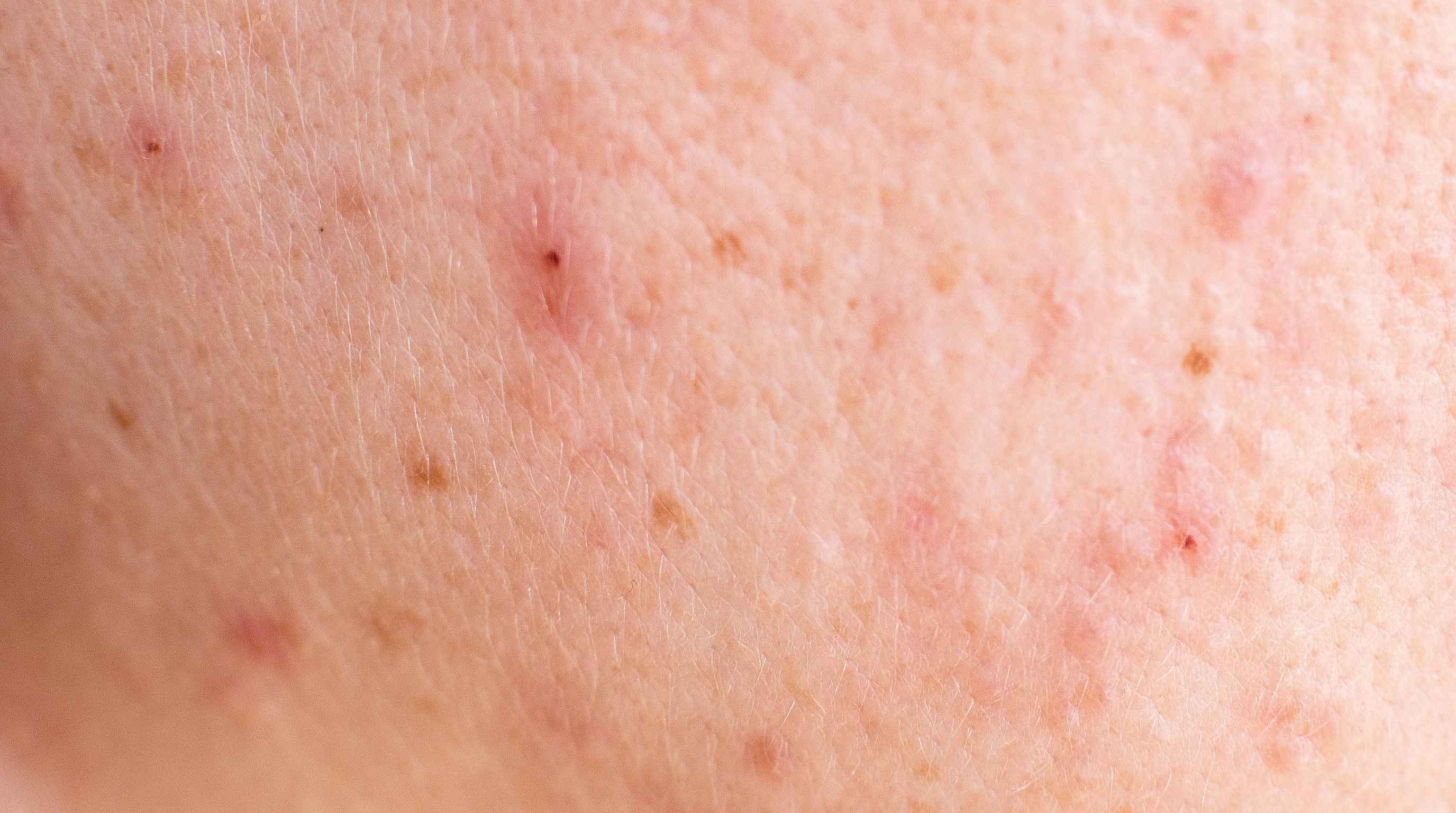
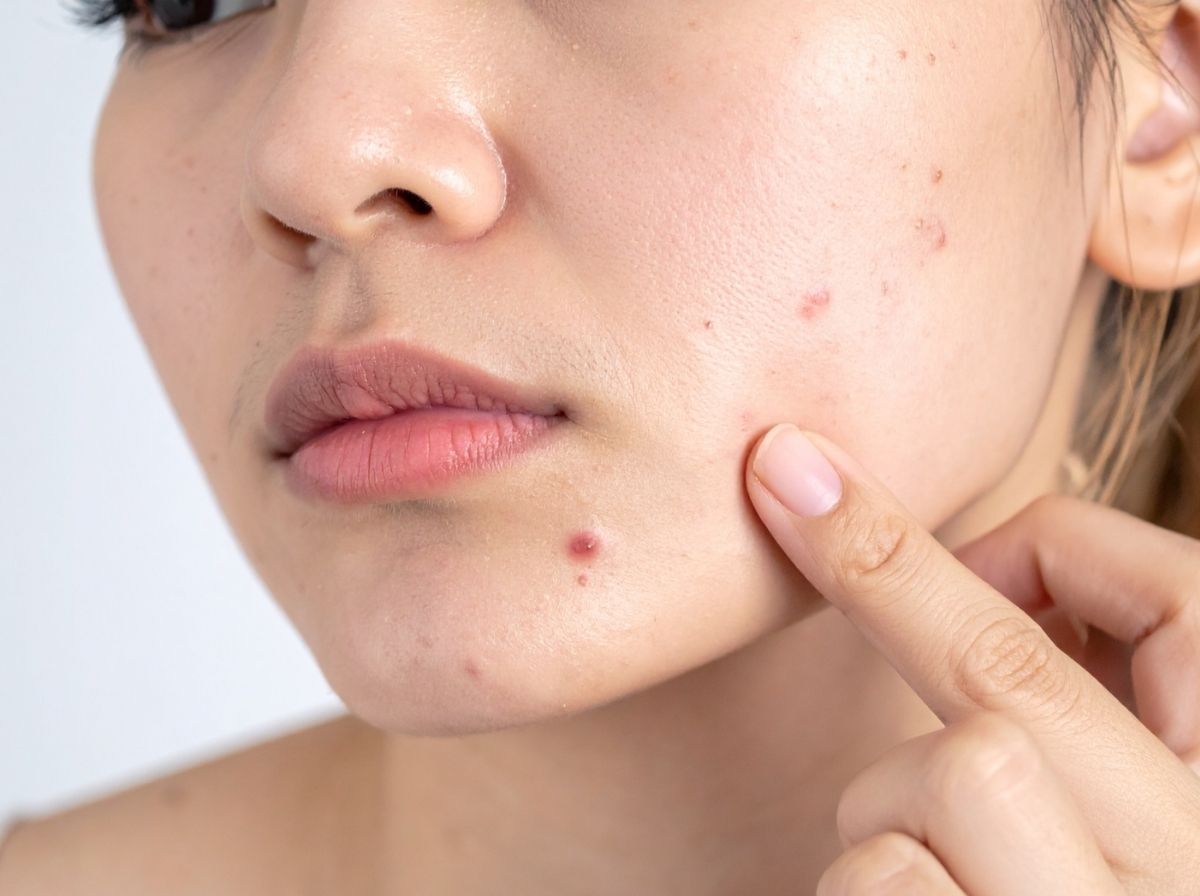
Acne forms when a hair follicle and its oil gland get blocked by sebum and dead skin cells. Once that plug forms, the pore can stay closed and become a whitehead, stay open and darken into a blackhead, or become inflamed and turn into a red, swollen bump. When bacteria inside the clogged follicle multiply and the immune system reacts, the area becomes more tender, more raised, and more obvious. Per the NHS acne overview, the inflammation pattern is driven by oil, dead skin, and bacterial overgrowth inside the follicle. None of that has anything to do with sexual contact.
On the face, acne follows the oil-rich zones: forehead, nose, chin, jawline, and cheeks. Sebaceous glands are most active in those areas, which is why repeated bumps in the same general region lean strongly toward acne rather than an STD rash. Acne also tends to come with company. One bump might show up first, but it is common to see nearby clogged pores, blackheads, tiny flesh-colored bumps, or older healing spots in the same zone. Herpes does not behave that way.
Texture is another tell. A pimple usually feels like a defined bump on or under the skin. It can be sore when pressed, but it does not typically begin with tingling or burning before you can see anything, and it does not usually turn into a cluster of small clear-fluid blisters. If a bump comes to a white or yellow head over a day or two, that points to inflammation inside a follicle, which is the acne pathway, not a viral lesion on the skin surface.
Timing matters too. Acne can build gradually over several days because the pore has to clog, swell, and inflame before it becomes visible. Hormonal shifts, stress, sweating, makeup, beard products, sunscreen, friction from masks, and shaving all raise the odds. You may not notice the earliest stage and then suddenly spot the breakout once it has become raised and red, which is why acne can feel sudden even when the biology has been building quietly for longer than you realized.
Facial acne also tends to repeat familiar patterns. Someone who breaks out around the chin during stress, around the mouth after using occlusive lip products, or along the beard line after shaving is dealing with a skin-behavior pattern, not a one-off mystery. If your skin has done versions of this before, the odds shift further toward acne, irritation, or folliculitis rather than anything sexually transmitted. One more thing people miss: acne does not need sexual contact to explain itself. It needs pores, oil, inflammation, and the right trigger. If your only reason for suspecting an STD is recent sex, that alone is not enough to flag the bump as suspicious.
| Feature | What it usually suggests |
|---|---|
| Whitehead, blackhead, or red inflamed bump | Blocked pore with inflammation, which fits acne more than an STD lesion |
| Several bumps in the same oily area | Pattern consistent with acne-prone skin rather than a single exposure-related lesion |
| Jawline, chin, cheeks, forehead, or beard area | Classic acne distribution because these zones have active oil glands |
| Bump becomes pustular over 1 to 3 days | Typical follicle inflammation pattern seen with acne |
| No tingling, burning, or itching before the bump appeared | Leans away from herpes, which usually announces itself with a nerve-related warning sensation |
| Bump persists for over a week without changing | More consistent with acne or a cyst than with herpes, which moves through stages within 7 to 10 days |
What an STD Rash on the Face Can Look Like
The reality is that very few STDs show up on the face, and when they do they follow specific biological patterns. The main one people worry about is herpes (HSV-1 mostly, with HSV-2 possible after oral contact), because it can be transmitted through kissing or oral sex and can affect the lips, the area immediately around the mouth, or nearby facial skin. CDC guidance on genital herpes notes that mild herpes symptoms are often mistaken for other skin conditions like a pimple or ingrown hair, which is exactly why this kind of confusion is so common.
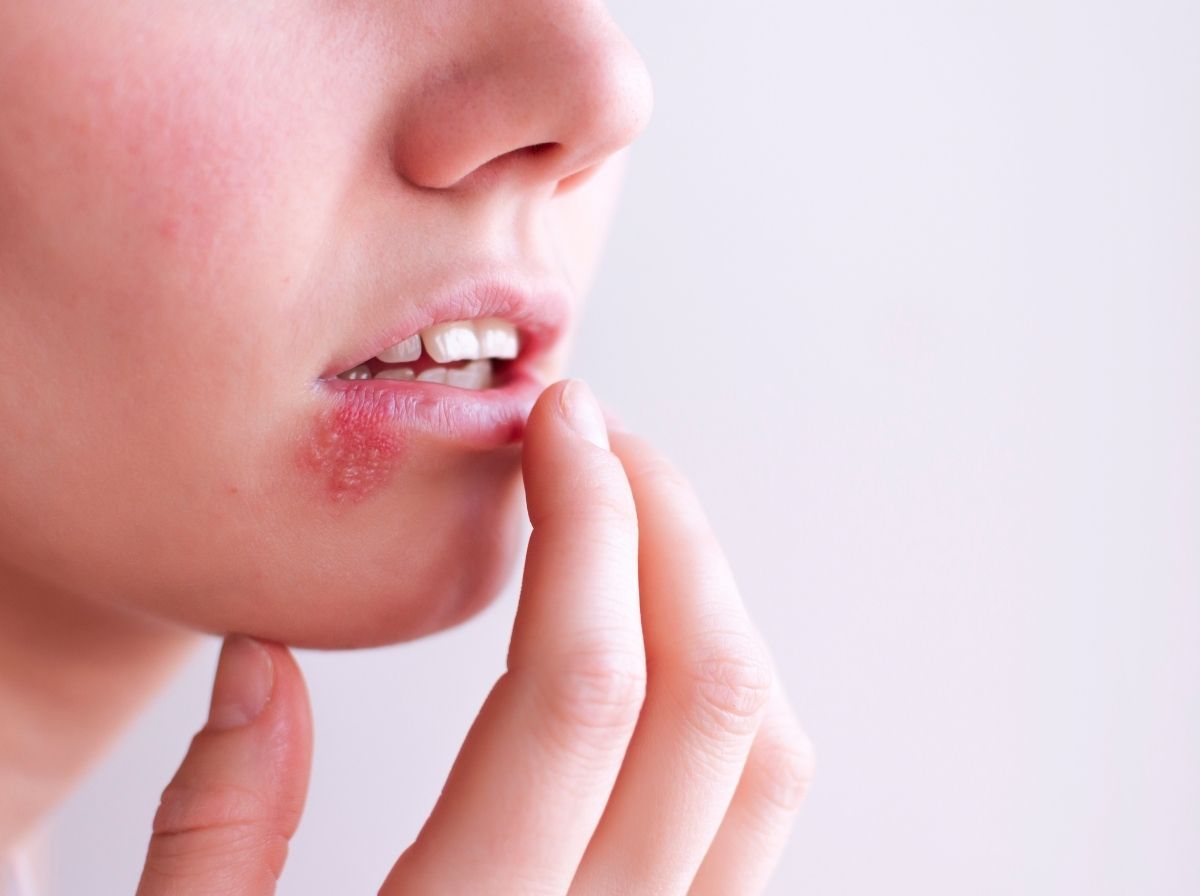
Herpes behaves very differently from acne because it is a virus that lives in nerve cells. Before anything visible appears, the virus can reactivate along a nerve pathway, which is why many people feel a tingling, itching, or burning sensation in a very specific spot first. According to MedlinePlus on herpes simplex, “Before the blisters appear, there may be tingling, burning, itching, or pain at the site where the blisters will appear.” That sensation typically shows up first, followed by small fluid-filled blisters that cluster together. Acne does not cluster into clear blisters like that, and it does not start with nerve-related tingling.
The blisters usually evolve quickly. Within 24 to 72 hours they can break open, release fluid, and then crust over into a scab before healing over the following week or so. This progression is one of the biggest clues. Acne tends to swell, form a head, and slowly resolve over a similar timeframe but without the blistering and crusting stage. Herpes moves through clear stages: sensation, blister, rupture, crust, healing. If what you are seeing follows that pattern, it leans strongly away from acne.
Location behavior also separates them. Herpes around the face most often appears on or around the lips, sometimes extending slightly beyond the lip border, but typically staying localized to one area during an outbreak. Acne, by contrast, tends to appear across broader zones like the cheeks, chin, or forehead, often with multiple unrelated bumps at once. Recurrence is another important difference; herpes tends to come back in the same spot because the virus lives in the nerve next to it, so if the same patch keeps flaring with the same warning sensation, that pattern is more consistent with herpes than acne.
Other STDs are less likely culprits for facial bumps. Syphilis can cause a rash, but during its secondary stage it typically appears on the palms of the hands and soles of the feet rather than the face. HPV can cause warts, but facial involvement is uncommon and looks more like raised, rough, flesh-colored growths than inflamed pimples or fluid-filled blisters. That leaves herpes as the only STD that realistically overlaps with facial acne in appearance, and the next section breaks down how the herpes timeline differs in practice.
Why Timing and Behavior Matter More Than Appearance
This is where people either calm down or spiral further, depending on how they interpret timing. You had a sexual encounter, and within a day or two you notice something on your face. The instinct is to connect the two immediately, but biologically that connection usually does not hold up. Per MedlinePlus on herpes simplex, a first herpes outbreak “most often happens within 2 days to 2 weeks of being infected,” and the same page notes that tingling, burning, itching, or pain at the future blister site often comes first. A bump appearing the very next morning is almost certainly unrelated acne or irritation rather than a fresh herpes lesion.
Acne does not follow exposure timelines at all. It follows skin conditions. A pore can clog from sweat, oil buildup, friction, or product use, and the visible bump can appear hours to a few days later. That is why acne often feels random or badly timed; it shows up when the skin environment allows it, not when your sexual activity calendar suggests it should.
Behavior over time is the strongest single differentiator. If a bump stays relatively stable, possibly forms a head, and then slowly fades over several days, that is classic acne behavior. If it rapidly evolves over 24 to 72 hours, forms grouped clear-fluid blisters, breaks open, then crusts into a yellow-brown scab, that pattern points to herpes. Watching what happens over the first 48 to 72 hours after noticing the bump tells you more than any single mirror inspection.
Attention bias is also worth naming. Once you are worried, you scan your face more closely than usual and notice bumps you would normally ignore. The fix is the same either way: give any new bump 48 to 72 hours to show its pattern before drawing conclusions from a 2 AM inspection.
When to Test (And Which Test Gives You a Clear Answer)
If you are stuck between “this is probably acne” and “what if it is an STD,” testing is what ends the guessing. But the timing of your test matters more than most people realize. Testing too early can return a false negative, which feels reassuring but is not reliable. Different infections need different waiting windows because the body needs time to either grow enough of the pathogen for direct detection or to produce enough antibodies to be measurable.
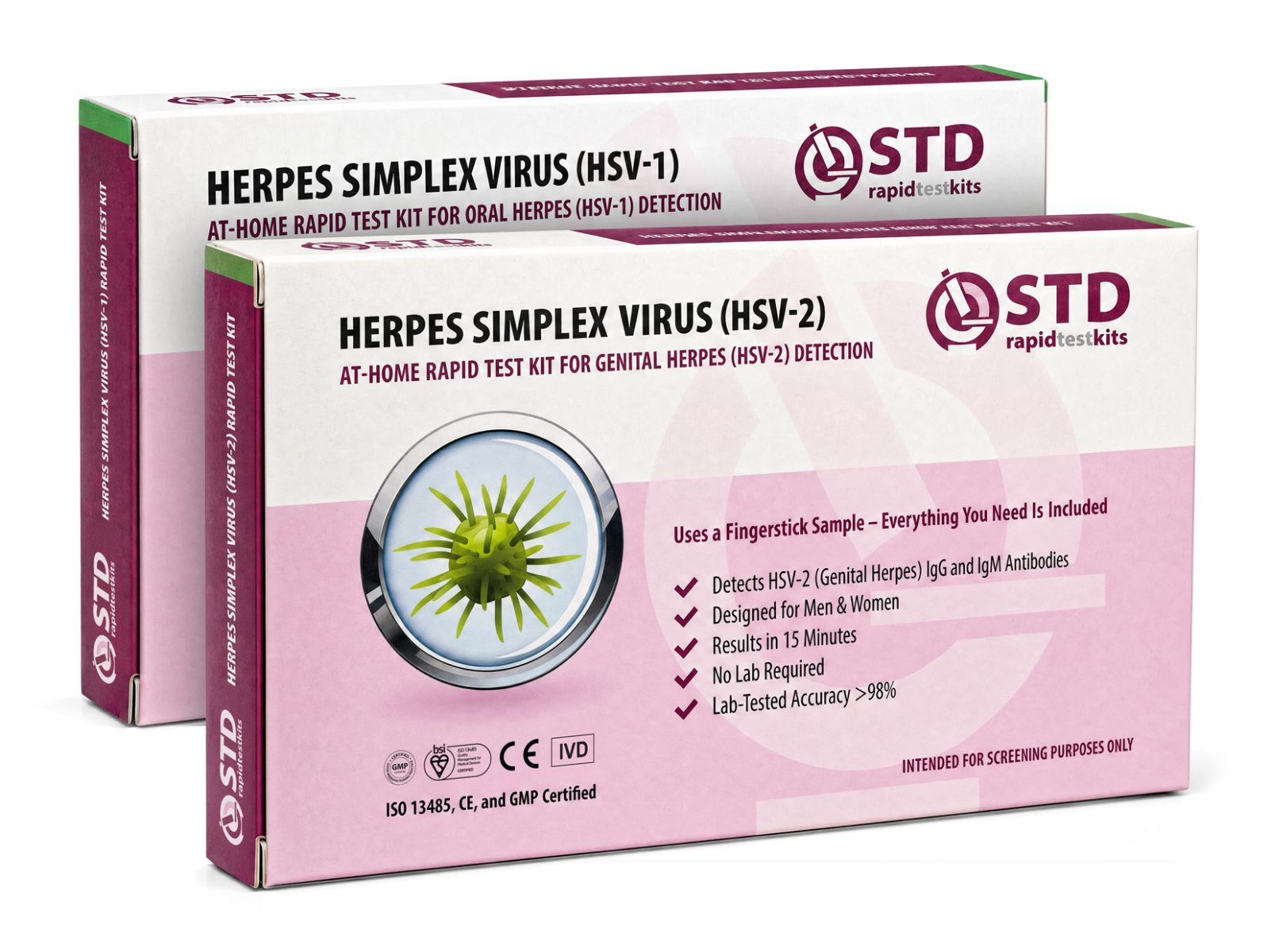
If your concern is a facial bump, herpes is usually the main STD in question. For a fresh blister that is actively producing fluid, a clinician can swab it for a lab PCR test, but most people are testing weeks after the exposure and any blister has long healed. In that case, a blood antibody test is the appropriate route. (Disclosure: stdrapidtestkits.com sells the at-home rapid kits described below; the guidance here is about when those kits give a reliable answer and when a clinic visit makes more sense, not a blanket endorsement of self-testing over clinical care.) Our home tests are rapid lateral-flow antibody screens; they share the same sample chemistry as in-clinic rapid antibody tests, and a positive result is worth confirming with a clinical lab. Lab NAAT and PCR offer higher analytical sensitivity than lateral-flow chemistry. The two are complementary, not equivalent.
Standard rapid-test product inserts and per-disease CDC guidance support the following window-period ranges for at-home antibody screening. Each disease links to its CDC overview for the underlying public-health context:
- Chlamydia (swab-based screen): test from about 14 days after exposure.
- Gonorrhea (swab-based screen): test from about 3 weeks after exposure.
- Syphilis (rapid blood antibody): test from about 6 weeks after exposure.
- HIV (rapid blood antibody): first reliable indicator at 6 weeks; retest at 12 weeks for full certainty.
- Herpes HSV-1 and HSV-2 (rapid blood antibody): test from 6 weeks; antibodies can take up to 12 to 16 weeks in some people, so a 12-week retest is the safest way to rule out a recent infection.
- Hepatitis B (rapid blood antibody): test from about 6 weeks after exposure.
- Hepatitis C (rapid blood antibody): test from about 8 to 11 weeks after exposure.
If you test before these windows, the infection can be present but invisible to the test, which is what creates false reassurance. If you are in the in-between stage with unclear symptoms and uncertain timing, a combo screen lets you check several infections at once from home rather than chasing one possibility at a time. For exact validated timing on any specific kit, the product page and package insert are the authoritative source.
Reading the result is straightforward once the timing is right. A negative within the correct window is strong reassurance. A negative before the window is not reliable and should be repeated after the appropriate timeframe. A positive needs follow-up with a healthcare provider for confirmation and a treatment plan.
Mild symptoms may go unnoticed or be mistaken for other skin conditions like a pimple or ingrown hair. Because of this, most people do not know they have a herpes infection.
What to Do Next If You Are Still Not Sure
If you are still standing in front of the mirror unsure, here is the grounded approach. First, watch the behavior of the bump over 48 to 72 hours. Does it slowly form, possibly develop a whitehead, and then start to fade? Or does it rapidly change, form clear-fluid blisters, rupture, and crust? The first pattern is acne. The second pattern is the herpes timeline.
Second, think about sensation. Acne is usually tender when you press on it, but it does not announce itself with tingling, burning, or stinging before anything is visible. Herpes is more likely to feel active even without pressure, because the underlying biology involves nerve endings, not just surface inflammation.
Third, consider your own history. If your skin has done a version of this before in similar areas, your odds heavily favor acne again. If something feels completely new, behaves differently, and aligns with a realistic exposure window of about a week or more, then testing becomes the sensible next step.
Final Reality Check: Most Facial Bumps Are Not STDs
The overlap between acne and STD-related facial symptoms exists, but it is not equal. Acne is extremely common. STDs that visibly affect facial skin are relatively uncommon, and when they do show up they follow recognizable patterns. Evaluating a bump by how it behaves rather than how it looks in one panicked moment gives a more reliable answer.
Skin tells a story over time. Acne builds, inflames, and resolves. Herpes signals, blisters, ruptures, crusts, and heals in a different rhythm. Those patterns are your best guide. If your bump fits an acne pattern, it almost certainly is acne. If it does not, or if the anxiety is not settling on its own, an at-home antibody test gives you a definitive answer either way. Skip the panic and skip the brush-off, and read what your skin is telling you with clarity instead of fear.
Triage in three lines
- Appearance check: a single whitehead in an oil-prone zone fits acne; grouped clear-fluid blisters on the lip border fit herpes.
- Behavior check: slow swell and fade over a week fits acne; sensation, blister, rupture, crust within 24 to 72 hours fits herpes.
- History check: if your skin has broken out this way before, acne is the safer bet; if it is brand-new behavior aligned with a 4 to 10 day exposure window, test.
FAQs
- Can acne really look like an STD on the face?
- Yes, especially around the mouth, and that is why so many people end up worrying. The quickest tell is not how the bump looks but what you felt before it appeared. A tingling or burning sensation in the same spot before anything was visible fits herpes. Feeling nothing until you noticed the bump fits acne. Watching the next 48 hours sharpens the picture further: acne develops a head and fades, herpes goes through clustered blisters and crusting.
- How do I tell a cold sore from a pimple before it fully develops?
- Pay attention to what you felt before you saw anything. Cold sores usually announce themselves with tingling, itching, or burning in a very specific spot, sometimes hours before any visible change. Pimples do not do that. If you felt nothing and then noticed a red bump that gradually swelled, that fits acne. If you felt a clear warning sensation followed by tiny grouped clear-fluid blisters, that fits herpes.
- I got a bump within a day of having sex. Does that mean it is an STD?
- Almost certainly not. A first herpes outbreak most often appears within about 2 days to 2 weeks of infection, per MedlinePlus, so the timing of a next-morning bump rules out a fresh herpes lesion. What you are seeing is far more likely acne, irritation from friction, or a pore that was already on its way. The time to pay attention is the roughly 4 to 14 day window after a potential exposure, not the first morning after.
- Do STD-related facial bumps hurt differently than acne?
- Yes, the type of pain is different. Acne is mostly tender when you press on it because the inflammation sits in the follicle near the surface. Herpes lesions can feel active without pressure: burning, tingling, or stinging, often before anything is even visible. That difference comes from biology. Acne is a surface inflammation; herpes involves nerve endings in the skin.
- Can oral sex give me bumps on my face?
- It can, but only along a specific pattern. HSV-1 (and less often HSV-2) can transmit through oral contact and produce a localized cluster of vesicles on or near the lips that follow the warning-sensation, blister, crust, heal sequence. A breakout that looks and behaves like ordinary acne, especially in zones where you usually break out, is far more likely to be acne. Timing is also a check: a first herpes lesion typically needs at least 2 days from exposure to appear, and usually longer.
- At what point should I stop watching the bump and just get tested?
- If you have spent more than two or three days analyzing the bump and you still cannot decide, that is the signal to test. Testing is not panic; it is the fastest exit from the loop. For a herpes worry specifically, a rapid blood antibody test is reliable from about 6 weeks after exposure, with a 12-week retest for full certainty. If symptoms do not match acne patterns at all, do not wait the full window staring at the mirror; book the test, set the date on your calendar, and stop checking until then.
- Should I pop it to see what is inside?
- No. Popping a bump destroys your ability to read what was happening. You turn one defined bump into a red, raw, infected-looking patch, and now every other potential clue (clear fluid, pus, blister fluid, no fluid) is gone. Popping also raises the risk of scarring and can spread bacteria or virus to adjacent skin. Leave it alone and let it show its hand.
- What if I test and the result is negative but I am still worried?
- Two things matter before drawing conclusions. Did the test happen inside the correct window period? A negative herpes antibody test before 6 weeks is not reliable, and even a 6-week negative benefits from a 12-week confirmatory retest. Are your current symptoms still producing an STD pattern such as blistering, crusting, or same-spot recurrence? If both questions point away from infection, the negative result combined with an acne-pattern bump is strong reassurance. If the symptom pattern persists, see a clinician for an in-person evaluation.
- U.S. Centers for Disease Control and Prevention. About Genital Herpes — supports the claim that mild herpes symptoms are often mistaken for a pimple or ingrown hair and that most people who carry herpes do not know they have it.
- MedlinePlus (U.S. National Library of Medicine). Herpes simplex (article 000857) — supports the 2-days-to-2-weeks first-outbreak timing and the prodromal tingling/burning/itching sensation before blisters appear.
- U.S. Centers for Disease Control and Prevention. STI Treatment Guidelines, Genital Herpes section — supports the prodromal-symptoms language and clinical management context for healthcare providers.
- U.S. Centers for Disease Control and Prevention. About Syphilis — supports the secondary-stage rash distribution on palms and soles rather than the face.
- NHS. Acne overview — supports the description of follicular inflammation driven by oil, dead skin, and bacterial overgrowth as the mechanism behind facial acne.
- MedlinePlus (U.S. National Library of Medicine). Herpes Simplex topic page — general patient-facing background on oral and genital HSV.
