
Published: November 2025 | Last updated: May 2026 | Editorial review and quality control: Martina N.
Most STD warning signs in men are quiet. No discharge, no burning, no obvious flag that something is off. That silence is part of how these infections behave, especially in the first weeks after exposure. The U.S. Centers for Disease Control and Prevention reports that chlamydia often causes no symptoms in men, and the same silent pattern shows up with gonorrhea, trichomoniasis, and the early phase of HIV. Feeling fine and being clear are two different questions, and only a test answers the second one.
Key Takeaways
- Per CDC guidance, chlamydia and gonorrhea often cause no symptoms in men, especially in the early weeks after exposure.
- Routine testing matched to your exposure history is the only reliable way to catch what your body cannot tell you it has.
The Cost of Feeling Fine
If you've Googled something like "STD but no symptoms" or "burning after sex no discharge," you are already past the first hurdle. You're paying attention. The harder part is what comes next. A lot of men talk themselves out of testing because nothing dramatic has shown up yet. No fever. No discharge. No pain when urinating. The internal logic goes: how bad could it really be?
The silent stretch is exactly when the math works against you. The CDC notes that chlamydia often causes no symptoms, and during that quiet phase the bacteria can still pass to a partner with every unprotected encounter. The infection can also progress to epididymitis, an inflammation of the small tubes behind the testicles that carry sperm, with potential downstream effects on fertility. A female partner can develop pelvic inflammatory disease (PID), the umbrella term for upper-genital-tract infection in women, from an organism you never noticed yourself carrying.
Per the CDC, chlamydia often causes no symptoms in men during the early weeks. The bacteria can still transmit to partners and can progress locally to epididymitis, with downstream effects on sperm transport and fertility.
What Subtle Signs Look Like When Discharge Doesn't Show
Discharge gets attention because it's visible and hard to ignore. It's also the sign that doesn't reliably appear in early infections, especially in men. When something does show up in those first weeks, it tends to be small enough to misread as something benign.
A faint itch at the tip of the penis after sex feels like dry skin or a friction issue from a condom. A dull ache or heaviness in the testicles gets blamed on tight underwear or a long bike ride. A patch of dry, slightly red skin on the shaft looks like a soap reaction or a bit of heat rash. Burning during urination without discharge often gets chalked up to dehydration, alcohol the night before, or an acidic meal. None of those patterns rule in an STD on their own. None of them rule one out, either. The table below is a cheat sheet for the symptoms that get filed under "probably nothing" when they're worth a closer look.
| Subtle symptom | Why it gets dismissed |
|---|---|
| Itching or tingling at the tip of the penis | Mistaken for dry skin, shaving irritation, or heat rash |
| Mild testicular ache or heaviness | Attributed to tight underwear, prolonged sitting, or exercise |
| Tiny red spots or dry patches on the shaft | Confused with eczema, sweat irritation, or soap reaction |
| Burning after sex or urination without discharge | Blamed on friction, alcohol, or dehydration |
| Low-grade fever, fatigue, or swollen lymph nodes after a new exposure | Filed under stress or a passing flu |
| A small painless sore on the penis, scrotum, or anus that heals on its own | Mistaken for an ingrown hair or shaving nick; this can be a primary syphilis chancre |
Why Some STDs Stay Quiet in Men
The biology favors silence in men more often than in women. Vaginal tissue is more reactive to inflammation and irritation, which is why women with chlamydia often notice unusual discharge or pelvic discomfort within a couple of weeks. The male urethra and external genitals are less reactive in the early stages, so a low-grade infection can sit in the urethra without producing the textbook symptoms doctors learn to look for.
Herpes follows a similar pattern. The first outbreak in men can be so mild it gets confused with chafing or a small ingrown hair. In some men there is no recognizable outbreak at all. HPV, among the most widespread STIs globally, usually shows nothing visible in men unless genital warts develop, and not everyone with the infection will get them. HPV is also linked to oropharyngeal, penile, and anal cancers in men, though most HPV infections clear on their own within two years without causing cancer. The strains most associated with cancer risk differ from those that cause genital warts; vaccination before initial exposure, which the CDC recommends through age 26, provides protection against the highest-risk strains. Trichomoniasis, which infects millions of people each year per WHO surveillance, is silent in most men but can quietly contribute to urethritis and prostate irritation over time.
Public-health researchers call these "silent infections" for a reason. A body that doesn't flag a low-grade infection is doing what bodies often do.
It means your nervous system isn't flagging anything dramatic right now. It does not mean your body is uninfected. The two are different questions, and only a test answers the second.
What Untreated Infections Actually Do to Your Body
Asymptomatic infections cause harm gradually, accumulating damage well before any symptom appears. Untreated chlamydia or gonorrhea can travel from the urethra into the epididymis, where the resulting inflammation can scar the tubes that move sperm. The acute pain of epididymitis is uncomfortable; the chronic version, and the fertility effects that can follow, are worse.
Untreated syphilis progresses through several stages, and the late stages can affect the heart, the nervous system, and vision years after the initial chancre quietly healed on its own. HIV, when caught early, is highly treatable with antiretroviral therapy that can keep the virus suppressed and undetectable, with normal life expectancy as the realistic expectation per current CDC guidance. Left untreated for years, the same virus erodes the immune system from the inside until ordinary infections become serious. Hepatitis B and C can quietly damage the liver for decades before producing symptoms severe enough to drive someone to a doctor.
How Window Periods Affect Your Testing Decisions
A test only works if your body has had enough time to produce what the test looks for. That delay is called the window period, and it's different for every infection. Testing before the window closes can produce a falsely reassuring negative, which is one of the most common ways men miss a real infection.
Chlamydia and gonorrhea show up reliably on lab nucleic acid amplification testing (NAAT) about 14 days after exposure, with some experts shortening that to roughly a week for high-quality NAAT. HIV detection windows per the CDC depend on the test type: a fourth-generation lab antigen-antibody test typically detects HIV from 18 to 45 days after exposure, antibody-only tests can take 23 to 90 days, and rapid antibody tests skew toward the longer end of that window. Syphilis serologic testing typically becomes positive 3 to 6 weeks after exposure. Hepatitis B and C antibody tests can take a couple of months to read positive after a new infection.
If you test the day after a worrisome encounter, a negative result is not yet meaningful. Wait for the window to close, then test, and retest if your initial test was very early. The retest cadence below is what most clinicians use.
| Infection | When to retest after exposure | Why timing matters |
|---|---|---|
| Chlamydia / Gonorrhea (NAAT) | About 14 days | Earlier tests can miss infections still building bacterial load |
| Syphilis (serologic) | 6 weeks, then 3 months if still suspected | Antibody response takes weeks to climb to detectable levels |
| HIV (4th-gen antigen/antibody, lab) | 18 to 45 days | Combines p24 antigen with antibody for an earlier window |
| HIV (rapid antibody, fingerstick) | 3 months for confirmatory negative | Antibody-only tests miss the very early acute phase |
| Hepatitis B / C (antibody) | 8 to 11 weeks for hepatitis C; up to 9 weeks for hepatitis B antibodies | Antibody seroconversion is slow; consult a clinician for high-risk exposures |
| Trichomoniasis | 3 to 4 weeks | Often silent in men, so retest even without symptoms |
Five Myths That Keep Men From Testing
The reasons men skip testing are usually emotional rather than informational. They sound like reasoning, though they often track closer to ego protection. The same five patterns show up in clinic intake forms, online forums, and post-hookup text exchanges. Each is a misread of how these infections actually work.
| Myth | What actually happens |
|---|---|
| If I don't feel symptoms, I'm fine. | Most chlamydia and gonorrhea infections in men cause no symptoms in the early weeks. |
| STDs only happen to other people. | STIs are infections, not moral verdicts. One unprotected encounter is enough. |
| Condoms make me bulletproof. | Condoms cut risk significantly but do not fully prevent skin-contact infections like herpes and HPV. |
| Oral doesn't count. | Gonorrhea, herpes, syphilis, and chlamydia can all transmit through oral sex. |
| I tested last year, so I'm covered. | Testing reflects exposures up to that point. New partners and unprotected exposures reset the clock. |
How At-Home Testing Fits Into Real Life
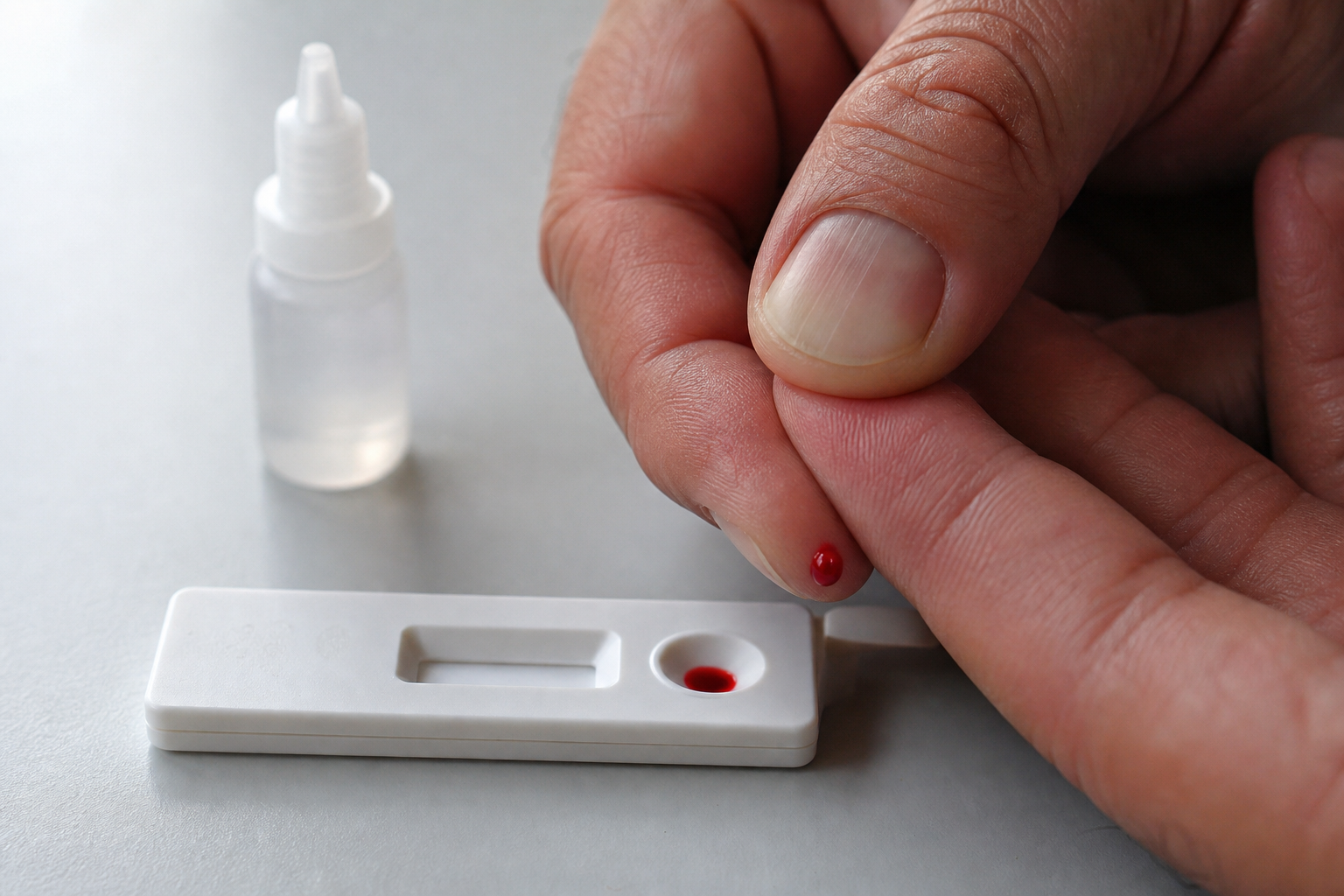
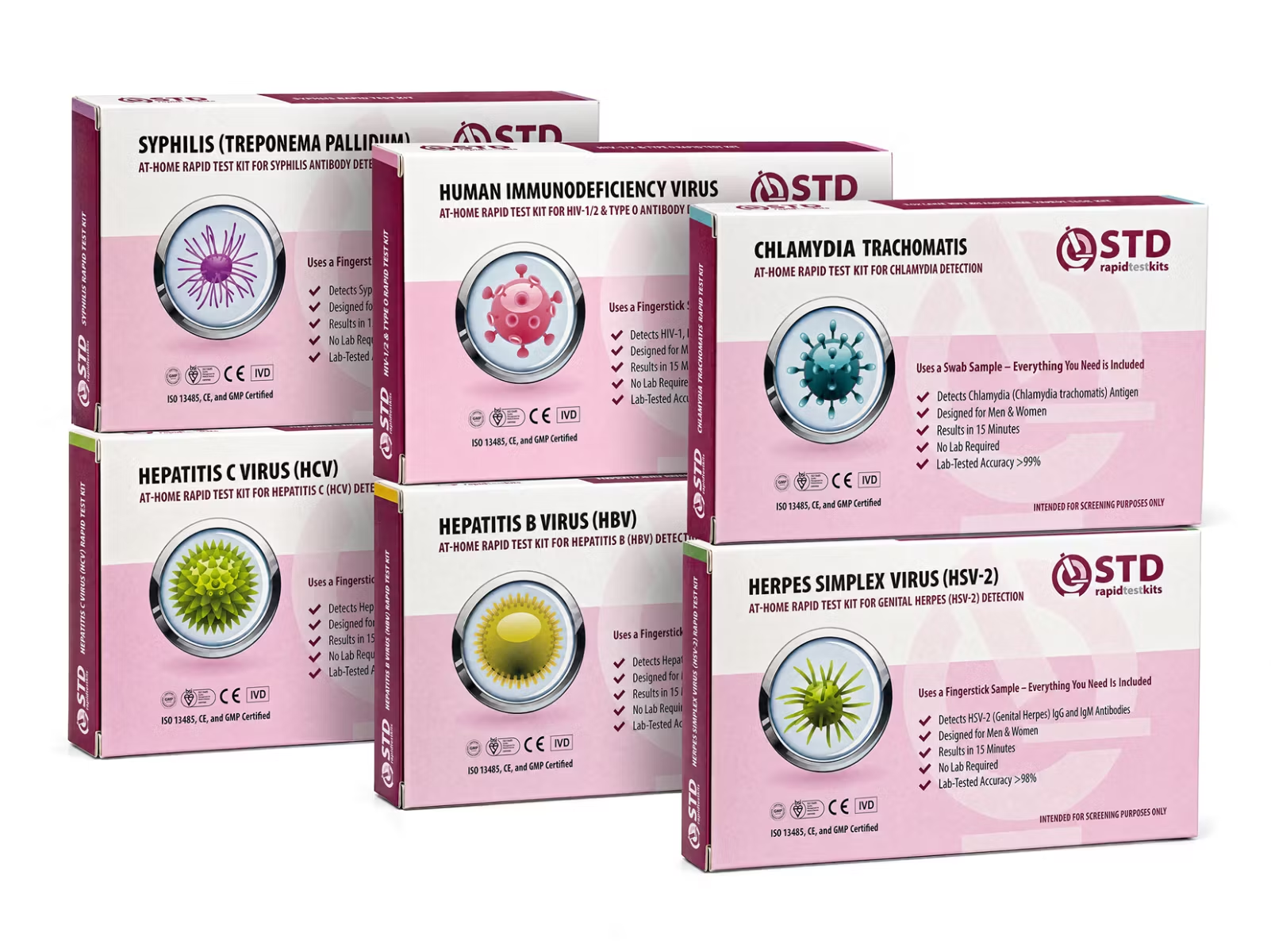
For a lot of men, the hardest part of clinic-based testing is logistical and emotional rather than medical. Time off work. Sitting in a waiting room. Saying out loud to a stranger why you're there. Rapid lateral-flow tests at home strip most of that friction out of the process. Blood-based tests, which include HIV, syphilis, hepatitis B, hepatitis C, and herpes, use a small fingerstick sample. Swab-based tests, which include chlamydia, gonorrhea, trichomoniasis, and HPV, use a self-collected genital swab. Most rapid kits read in about 15 minutes.
The chemistry behind these kits is the same lateral-flow immunoassay format used in many other consumer rapid tests. They are a real screening tool, with sensitivities and specificities reported on each product's data sheet, and they are not a replacement for laboratory NAAT, which remains the analytical gold standard for confirming an infection or guiding treatment, particularly when symptoms are present. The two are complementary. The home test answers the screening question quickly and privately, while the lab confirms a positive and supports clinical care. This article is published by stdrapidtestkits.com, which sells at-home STI testing kits; we recommend products based on fit-for-purpose for the reader's concern, not commercial benefit.
Many people who have a sexually transmitted infection have no signs or symptoms. Without testing, you can't know for sure whether you or your partner has an STI.
When to Retest, by Situation
Retesting is how routine sexual-health care works, and the right cadence depends on your situation rather than a single rule. Whether you've had one partner this year or several, the relevant question is what exposures have happened since your last test. The list below is the cadence most clinicians follow when counseling sexually active adult men.
- After any unprotected sex with a new or non-monogamous partner, once the relevant window periods have closed.
- If a partner tests positive for an STI, even if you have no symptoms.
- At least once a year for any sexually active adult, per CDC general screening guidance.
- Every 3 to 6 months if you have multiple partners or are in a non-monogamous relationship.
- After completing treatment for chlamydia or gonorrhea, to confirm the infection cleared, on the schedule your clinician sets.
- Before starting a new sexual relationship that you and your partner expect to be exclusive.
How accurate are at-home rapid STD tests, and when should I trust the result?
Most at-home rapid lateral-flow STI tests report sensitivity and specificity in the mid-90s to high-90s percent range when used after the appropriate window period, with exact figures listed on each product's data sheet. The result is most reliable when you wait until the window closes for that specific infection (about 14 days for chlamydia and gonorrhea NAAT, 18 to 90 days for HIV depending on the test type). A positive screening result should be confirmed with a laboratory test before treatment decisions. A negative result taken too early should be repeated.
Why Privacy Matters With Testing
Privacy is the practical lever that turns "I should test" into "I tested." At-home kits arrive in plain shipping packaging with no clinical branding on the outside. You don't need to take a half-day off work, rehearse what you'll say at intake, or sit in a waiting room hoping not to see someone you know. You read the result alone, in your own time.
If the result is negative and you've waited the right window, you have the answer you came for. If the result is positive, you know what to bring to a clinician for confirmatory testing and treatment, which for most bacterial STIs is a short course of antibiotics. None of that involves explaining your weekend to anyone you didn't choose to.
Plain shipping packaging with no clinical branding on the outside. Self-collection in your bathroom on your own schedule. No waiting room, no required disclosure to anyone you didn't choose to tell.
What Real Prevention Looks Like
Prevention is built from small, repeatable acts of attention. Testing belongs in the same maintenance category as a dental cleaning, on a schedule that matches how these infections actually behave rather than how you wish they did. The list below is the practical cadence most clinicians recommend; pick the items that match your situation and run them on repeat.
- Notice patterns: track when symptoms (yours or a partner's) line up with new exposures rather than dismissing them in isolation.
- Use protection on the encounters where you have the option, especially with new or non-monogamous partners.
- Test on a sensible schedule that matches the partners and exposures you've actually had.
- Confirm any positive home screening result with a clinician-ordered laboratory test before starting treatment.
- Notify recent partners after a confirmed positive so they can test and prevent the infection from passing back and forth between you.
FAQs
- Can I really have chlamydia or gonorrhea without any discharge?
- Yes, and it's the rule rather than the exception in men. The CDC reports that chlamydia often causes no symptoms, and a similar pattern shows up with gonorrhea. The infection is doing its biological work in the urethra whether or not your nervous system flags it as a problem. If you've had a new or unprotected exposure, the only way to confirm or rule out an infection is a test taken after the window period has closed.
- If I feel completely fine, do I still need to test?
- If you've had a new partner or an unprotected encounter, yes. Most early-stage STIs in men are asymptomatic. Symptoms are an unreliable trigger to test, the same way that high blood pressure being asymptomatic doesn't mean it isn't damaging your arteries. The point of routine testing is to catch what your body cannot tell you about.
- Is itching at the tip of the penis always an STD?
- Not always. Friction, sweat, a new soap, a change in laundry detergent, or condom material sensitivity can all cause local irritation. The pattern that should prompt testing is irritation that started shortly after a new exposure, lasts more than a few days, or comes with any other symptom on the table above. When in doubt, test, because ruling an STI out is faster than wondering.
- Can I get an STD from oral sex?
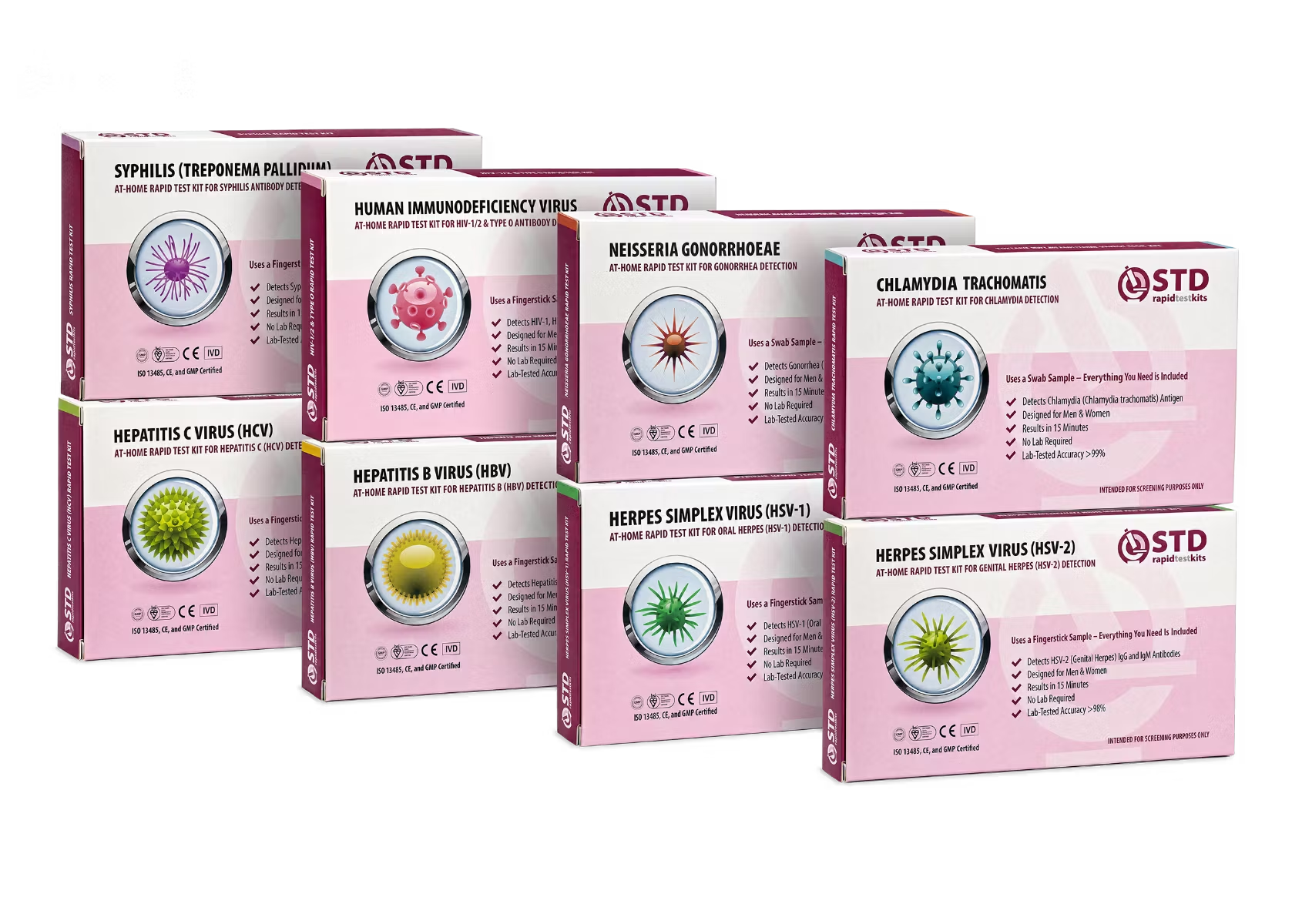
- Yes. Gonorrhea, chlamydia, syphilis, and herpes can all transmit through oral contact, especially if there are small breaks in the mucous membrane. Pharyngeal (throat) infections in particular often have no symptoms. We do not currently sell a pharyngeal swab kit; if your concern is a throat-based exposure, see a clinic for that specific swab. Our rapid panel above covers the adjacent genital and bloodwork risks from the same exposure event.
- How long should I wait to test after a worrisome encounter?
- It depends on the test. Chlamydia and gonorrhea NAAT becomes reliable around 14 days. Fourth-generation HIV antigen/antibody lab tests typically detect infection from 18 to 45 days, while antibody-only and rapid antibody tests can take up to 90 days for a confirmatory negative. Syphilis serology takes 3 to 6 weeks. If you test very early and get a negative, plan a follow-up test after the longer window to be sure.
- How accurate are at-home rapid tests compared to lab tests?
- Lab nucleic acid amplification testing (NAAT) for chlamydia and gonorrhea has higher analytical sensitivity than home lateral-flow strips, especially in asymptomatic low-load infections where bacterial DNA is sparse. Sensitivity for home rapid kits varies by product and infection and is listed on each data sheet, typically in the mid-to-high 90s percent range. A positive home result warrants confirmatory lab testing before treatment; a negative taken before the window period closes should be repeated.
- What do I do if my test is positive but I have no symptoms?
- Take a breath, then plan two next steps. First, contact a clinician (your primary care doctor, a sexual health clinic, or a telehealth service) for a confirmatory laboratory test and a treatment plan. Most bacterial STIs are treated with a short course of antibiotics. Second, plan to notify recent partners so they can test as well. Doing this protects them and prevents reinfection from passing back and forth between you.
- How often should I test if I'm sexually active?
- Per general CDC screening guidance, at least once a year if you are sexually active. Every 3 to 6 months if you have multiple partners or are in a non-monogamous relationship. Outside of those baselines, test after any new partner once the window closes, after any unprotected exposure, and any time a partner tells you they tested positive. The right schedule reflects your actual exposures, not the ones you wish you'd had.
How we sourced this article: We combined current guidance from the U.S. Centers for Disease Control and Prevention and the World Health Organization with peer-reviewed clinical literature on STI screening and asymptomatic infection in men. Window periods, screening cadences, and complication risks are drawn from the public-health sources cited in the references below. We do not provide individual clinical diagnosis. For symptoms that concern you, see a licensed provider.
- U.S. Centers for Disease Control and Prevention. About chlamydia: includes information on asymptomatic chlamydia infection and complications such as epididymitis.
- U.S. Centers for Disease Control and Prevention. Overview of sexually transmitted infections (STIs), including general screening guidance.
- U.S. Centers for Disease Control and Prevention. HIV testing window periods and recommended retest schedules by test type.
- U.S. Centers for Disease Control and Prevention. About syphilis, covering the natural staged progression and late-stage complications including neurosyphilis and cardiac involvement.
- World Health Organization. Sexually transmitted infections (STIs) fact sheet, with global prevalence figures including trichomoniasis.
- U.S. Centers for Disease Control and Prevention. STI treatment guidelines for chlamydia, including post-treatment retest recommendations.
