Published: October 2025 | Last updated: May 2026 | Editorial review and quality control: Martina N.
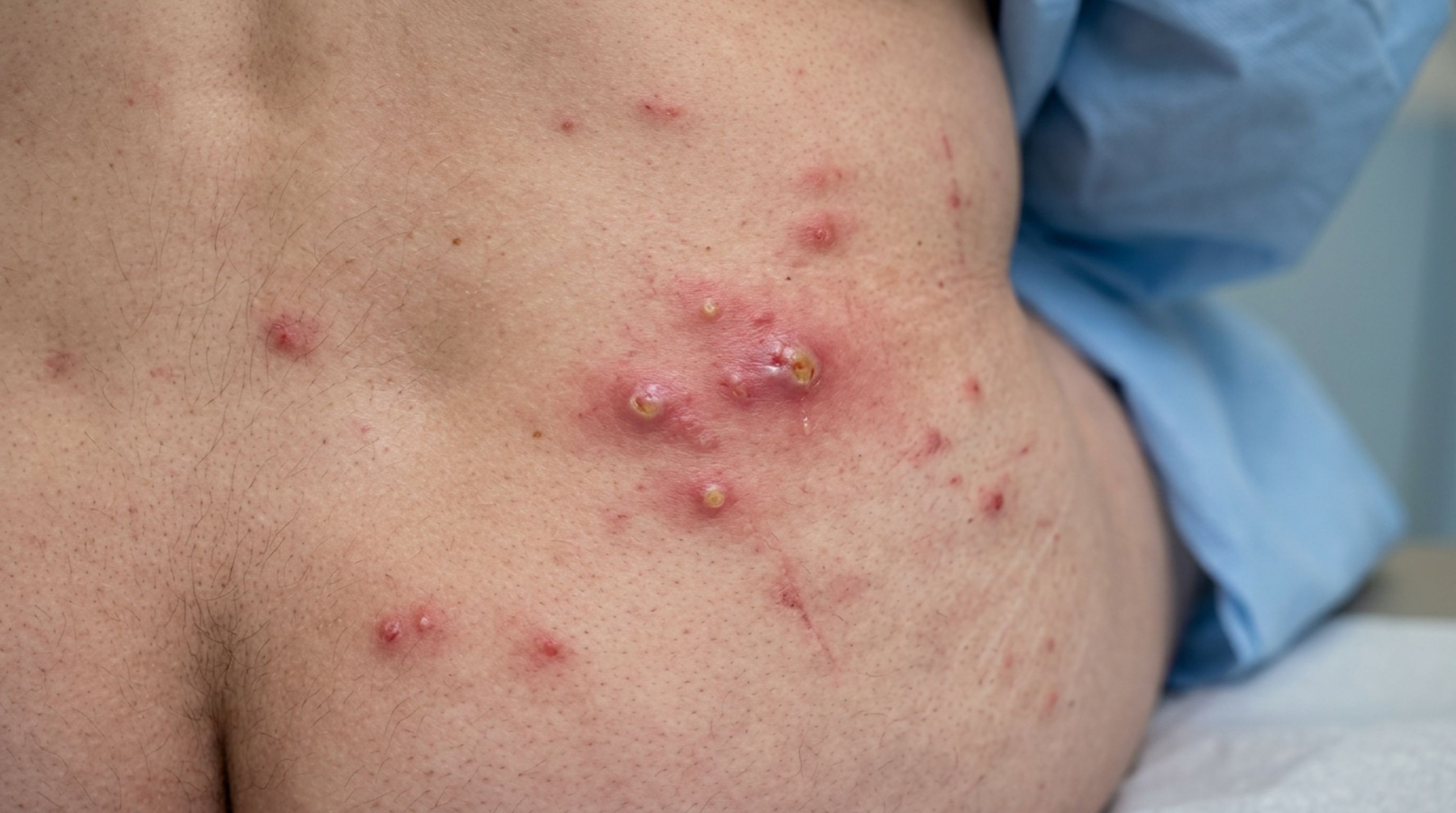
A bump on the buttocks is one of those discoveries that sends people straight to a midnight Google spiral. The internet rarely helps. It either insists the bump is definitely herpes or floats a dozen unrelated possibilities ranging from shingles to chickenpox. The clinically useful truth sits somewhere quieter: most buttock bumps are not sexually transmitted. A smaller share are, and the difference matters because the conditions involved respond very differently to waiting versus testing.
This guide walks through what an STI bump on the buttocks actually looks like, how it behaves over time, and how to tell it apart from the far more common non-STI explanations. Where testing is the right next step, we point at the specific at-home option that fits the pattern you have, and where it isn't, we say so.
Key Takeaways
- Statistically, a buttock bump is far more likely to be folliculitis, an ingrown hair, or body acne than any sexually transmitted infection.
- If the bump appeared with no shaving or friction trigger, especially within weeks of unprotected sex, herpes (HSV-2) and syphilis are the two STIs worth ruling out with a blood test.
What STDs Can Actually Cause Bumps on the Buttocks?
Not every sexually transmitted infection produces visible skin changes, and of those that do, only a few commonly affect the buttock area. Understanding how each behaves is the first step to narrowing down what you're looking at.
Genital herpes (HSV-2) is the leading STI explanation for bumps on the buttocks. The virus travels along the sacral nerve roots, the same pathway that supplies the lower back, buttocks, and posterior thighs. Outbreaks therefore don't have to appear directly on the genitals. They can show up on the lower buttocks, the upper thigh, or near the tailbone. Per U.S. CDC NHANES data (2015 to 2016), HSV-2 prevalence among Americans aged 14 to 49 was 11.9% (about one in eight), and a large share of those people have never received a formal diagnosis.
Syphilis is the second contender, and an underestimated one. The first sign of primary syphilis is a sore called a chancre, which forms wherever the bacterium entered the body. After receptive anal sex with an infected partner, that entry site can be near the anus or on the adjacent buttock skin. The chancre is typically painless and firm, which is why it's frequently missed. In the secondary stage, a non-itchy rash spreads more widely and can include the buttocks. Per CDC STI surveillance data, U.S. syphilis cases are 13% higher than they were a decade ago, and congenital syphilis has risen for 12 years in a row, which makes it more clinically relevant than it was twenty years ago.
HPV (human papillomavirus) can cause anogenital warts on perianal skin, including the buttock crease. Per the CDC's STI treatment guidelines on anogenital warts, around 90% of these warts are caused by low-risk HPV types 6 or 11. They look flesh-colored and soft, sometimes with a cauliflower-textured surface, and they don't come and go in the way herpes does.
Molluscum contagiosum is not classified as a traditional STI in every context, but it can spread through skin-to-skin sexual contact. The bumps are small, round, and dome-shaped with a characteristic dimpled (umbilicated) center, which helps tell them apart from herpes or warts.
What Each STI Bump Looks Like: A Visual Identification Guide
One of the more frustrating things about online symptom checking is that most descriptions are vague. "Blisters," "sores," "bumps" doesn't tell you what distinguishes one from another. The table below pulls the differentiating features into one place.
The headline distinctions to remember: herpes sores are painful and grouped on a red inflamed base. Syphilis chancres are typically single, painless, and firm. HPV warts are soft, persistent, and grow gradually rather than erupting and resolving. Folliculitis bumps are scattered and centered on hair follicles.
| Type of bump | Most likely cause | Key visual features | Other symptoms to look for |
|---|---|---|---|
| Small fluid-filled blisters that burst and leave shallow raw sores | Herpes (HSV-2) | Grouped on a red base; sores crust over within days; appear in clusters, not singly | Tingling or burning before blisters appear; muscle ache in thighs; possible flu-like symptoms with the first outbreak |
| Single firm painless ulcer with raised edges | Syphilis (primary chancre) | Usually solitary; smooth clean base; firm rolled indurated border; 1 to 2 cm; does not itch or hurt | Swollen lymph nodes in the groin; often goes completely unnoticed |
| Widespread rough red or brown spots, flat or slightly raised | Syphilis (secondary rash) | Symmetric; can appear on buttocks, palms, soles; non-itchy; blotchy or papular texture | Fatigue, sore throat, headache, hair loss; flu-like symptoms |
| Soft flesh-colored growths, flat or cauliflower-like clusters | HPV anogenital warts | Soft to touch; single or multiple; flesh, grey, or whitish color; sometimes stalk-like base | Usually painless; occasionally itchy; may bleed if irritated |
| Small round bumps with a dimpled center | Molluscum contagiosum | Dome-shaped; flesh-colored or pearly; central pit (umbilication); typically 2 to 5mm | Mild itching; may spread by scratching |
| Red inflamed bumps centered on hair follicles | Folliculitis (not an STI) | Each bump has a hair in the center; may have white or yellow pus tip; scattered across the skin | Mild tenderness; triggered by friction, shaving, or sweat |
| Curved ingrown bump with visible trapped hair | Ingrown hair (not an STI) | Reddish bump with a curved hair visible under the skin; appears after shaving or waxing | Localized tenderness; may develop a small pus pocket |
Which STD causes bumps on the buttocks?
The most common STI explanation for bumps on the buttocks is genital herpes (HSV-2), which produces clustered fluid-filled blisters along the sacral nerve pathway. Syphilis is the second consideration, presenting as a single painless firm ulcer that appears around three weeks after exposure. HPV-related warts can show up on perianal skin, and molluscum contagiosum is a less common skin-contact possibility. That said, most buttock bumps are not STIs at all. Folliculitis, ingrown hairs, razor burn, and body acne are statistically far more likely.
When Do These Bumps Appear After Exposure?
Timing is one of the most useful clues when sorting out what a bump might be. If you've had unprotected sex recently and a bump has appeared, the gap between exposure and symptoms tells you a lot.
With herpes, the first outbreak typically appears within 2 to 12 days of exposure, although some people don't notice symptoms for weeks or months, or ever. The first episode tends to be the most severe. After that, the virus settles into the sacral nerve roots and reactivates periodically, which is why later outbreaks can appear on the buttocks with little warning. A tingling, itching, or aching feeling in the thighs, lower back, or buttocks often precedes an outbreak by a day or two.
With syphilis, the primary chancre typically appears 10 to 90 days after exposure, with most people noticing it around three weeks after contact. It heals on its own within three to six weeks, but the bacteria remain in the body. If untreated, secondary syphilis follows weeks to months later, with a widespread rash that can cover the buttocks, palms, and soles. The chancre's tendency to be painless and self-resolve is the reason syphilis is sometimes called the great imitator. The skin sign goes away even though the infection has not.
With HPV-related warts, the timing is famously unpredictable. Warts can appear anywhere from a few weeks to several months after exposure, occasionally years later. The virus can remain dormant in the skin long after the contact that transmitted it, which is why pinpointing exactly when or from whom you contracted it is often impossible.
| Infection | Typical onset of skin symptoms | Pattern over time |
|---|---|---|
| Herpes (HSV-2) | 2 to 12 days for the first outbreak; can be longer | Recurring outbreaks; later episodes often milder; tingling prodrome common |
| Syphilis (primary chancre) | 10 to 90 days; median around 21 days | Single ulcer heals on its own in 3 to 6 weeks; secondary rash follows weeks to months later if untreated |
| HPV anogenital warts | Weeks to several months; sometimes years | Persistent; warts may grow or multiply without treatment; do not appear and disappear like herpes |
| Molluscum contagiosum | 2 to 7 weeks after exposure | Gradually increases in number; individual bumps may self-resolve over months |
Most Buttock Bumps Are Not STIs at All
Statistically, a bump on the buttocks is more likely to be folliculitis, a razor bump, an ingrown hair, or simple acne than any sexually transmitted infection. The buttocks are a high-friction area covered most of the day, prone to sweat, and frequently shaved or waxed. All of these are ideal conditions for non-STI skin irritation.
Folliculitis is inflammation of the hair follicle, and it's extremely common on the buttocks. Each bump appears around a follicle and may develop a small white or yellow pus tip. Unlike herpes, folliculitis bumps are scattered rather than clustered in one tight group, and each bump sits centered on a hair. They typically resolve on their own and have nothing to do with sexual contact.
Razor burn and ingrown hairs produce a similar picture: red, bumpy irritation that appears after shaving or waxing. The telltale sign is a curved hair visible just under the skin surface. These bumps tend to follow shaving direction, not the tight cluster pattern of a herpes outbreak.
Body acne on the buttocks is also more common than most people realize. It tends to appear as deeper firm bumps that can be tender when pressed. They lack the fluid-filled clustered look of herpes blisters and aren't preceded by burning or tingling. Heat, friction, and sweat all flare it.
The practical test: if the bump appeared after shaving, after wearing tight synthetic fabric, or during a sweaty stretch, think non-STI first. If the bump appeared with no obvious mechanical trigger, especially within weeks of unprotected sex, and especially if there was burning or grouped blister formation, testing is the cleaner answer.
If you can trace the bump to a recent shave, a long sweaty workout, a new pair of jeans, or a high-friction day, the odds strongly favor folliculitis or a razor bump rather than an STI. The two flags that change the calculus are: (1) the bump appeared with no mechanical trigger you can identify, and (2) you've had unprotected sexual contact in the last few months. Either flag, on its own, is enough reason to test rather than wait.
Genital Herpes (HSV-2): The Basics That Matter Here
Genital herpes is caused by the herpes simplex virus, which exists as two types: HSV-1 and HSV-2. HSV-2 is the primary driver of genital herpes, including outbreaks that affect the buttock area. Per the American Sexual Health Association's herpes overview, a large majority of people with HSV-2 don't know they carry it, and transmission frequently happens with no visible symptoms on the part of the transmitting partner.
The virus establishes itself permanently in the sacral ganglia, nerve clusters at the base of the spine. That is why outbreaks occur in the genital, anal, and buttock areas. Herpes sores on the buttocks don't indicate anything different about how the infection was transmitted. They simply reflect the nerve pathway the virus is using. A new outbreak can be triggered by stress, illness, immune suppression, hormonal change, or localized friction. Some people have a single recognized outbreak in their lifetime; others have several a year.
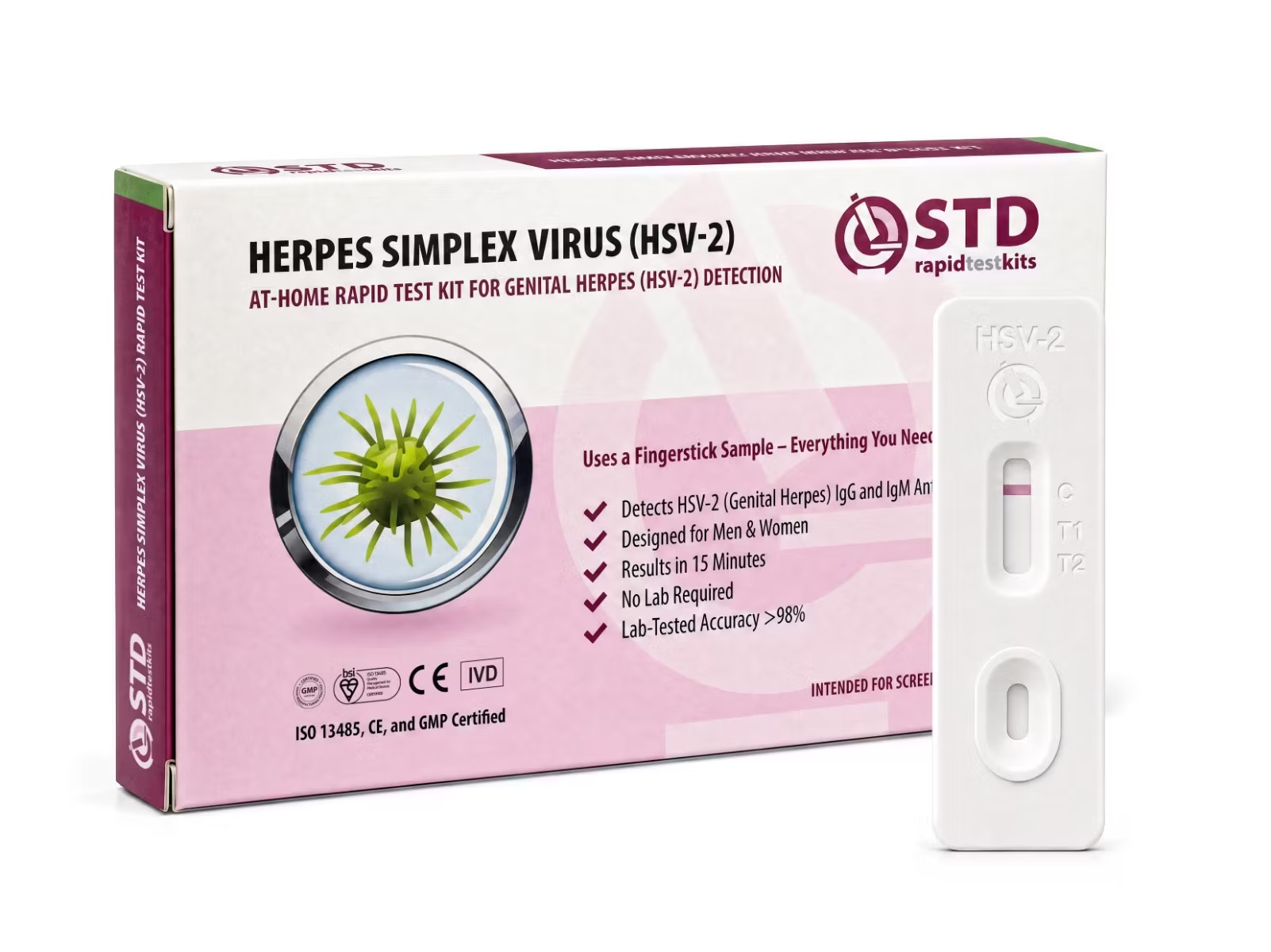
One of the most practically important facts is that transmission can occur even when no sores are visible, through a process called asymptomatic viral shedding. ASHA notes that in studies, people with herpes were completely unaware of lesions about one third of the time the virus was active in the genital area. Penetrative sex is not required for transmission. Skin-to-skin contact in the genital or buttock area is sufficient. The CDC's summary of this dynamic is the clearest available statement.
Disclosure: this site sells at-home rapid antibody tests for HSV-2 and syphilis, among others. We recommend tests based on what fits the reader's concern, not commercial benefit.
Most people infected with herpes don't know it. Genital herpes can be spread even when the infected person has no signs of infection.
Syphilis on the Buttocks: Why It Gets Missed
Syphilis deserves a section of its own because it's genuinely underestimated as a cause of buttock skin changes, and because missing it carries more serious long-term consequences than missing most other STIs at this stage. Per the CDC's annual STI surveillance data, U.S. syphilis cases are 13% higher than they were a decade ago, and reported congenital syphilis cases have risen for 12 consecutive years, with nearly 4,000 reported in 2024 alone. That makes it meaningfully more relevant today than it was twenty years ago.
The primary chancre forms wherever the Treponema pallidum bacterium entered the body. After receptive anal sex with an infected partner, that entry site can be around the anus or on the perianal skin, and the surrounding buttock region can be involved. The chancre is typically a single, firm, round ulcer with clean edges and no discharge. The detail that makes it most deceptive is that it's painless. People notice sores because they hurt. A painless sore in an area that's already hard to see is easy to dismiss as a minor irritation, sit on, and forget about, especially since it resolves on its own within a few weeks.
The resolution of the chancre does not mean the infection has resolved. Without treatment, syphilis progresses to the secondary stage, in which the bacteria have spread through the bloodstream. The secondary rash, which can appear on the buttocks, trunk, palms, and soles, is accompanied by systemic symptoms including fatigue, swollen lymph nodes, and low-grade fever. After the secondary stage, syphilis enters a latent phase with no visible symptoms, potentially for years, before potentially progressing to tertiary syphilis with serious organ involvement. Per the CDC's primary and secondary syphilis treatment guideline, the recommended regimen for early-stage adult syphilis is benzathine penicillin G 2.4 million units IM in a single dose; later stages require longer regimens and cannot reverse cardiovascular or neurological damage already done.
Folliculitis going away on its own is reassuring. A syphilis chancre going away on its own is the trap, because the bacteria are still in the bloodstream and the infection continues progressing. If you noticed a single painless firm ulcer roughly three weeks after sexual contact, even one that has since resolved, syphilis is worth testing for. Test at least 6 weeks after the exposure for a reliable antibody result.
How Herpes Outbreaks Behave Over Time
Understanding the pattern of herpes outbreaks helps make sense of why bumps on the buttocks can appear, disappear, and reappear, and why the absence of active sores doesn't mean the infection isn't there. After the initial infection, HSV-2 travels to the sacral nerve ganglia and establishes lifelong latency. It can stay dormant indefinitely or reactivate in response to triggers.
The first outbreak is usually the most severe. Blisters typically appear in a cluster on a red inflamed base. They're often painful or burning, and the first episode may include flu-like symptoms, swollen glands in the groin, fatigue, and muscle aches in the thighs and lower back. After the blisters rupture they leave shallow raw sores that crust and heal over one to four weeks. Recurrent outbreaks tend to be shorter and milder than the first, although this varies considerably from person to person.
A feature that distinguishes herpes from many other skin conditions is the prodrome, the warning signs that often precede an outbreak by one to two days. These typically present as tingling, itching, or burning in the affected nerve area before any sores are visible. On the buttocks, this might feel like an unexplained ache in the tailbone or upper thigh. A consistent pattern of tingling followed by a small cluster of sores in the same location is a fairly specific signal.
Outbreaks tend to surface when the immune system is under load. The most commonly reported triggers are emotional or physical stress, illness or fever, immunosuppression, hormonal shifts including menstruation, and friction or irritation in the affected area. Sun exposure is sometimes implicated for orolabial outbreaks. Tracking personal triggers in a simple log can help some people anticipate episodes and start antiviral therapy at the prodrome stage, which tends to shorten the outbreak.
How HSV-2, Syphilis, and HPV Spread
A common misconception about STIs that cause skin symptoms is that transmission only happens when visible sores are present. For herpes and syphilis specifically, this is wrong, and understanding why explains how people contract these infections from partners who had no idea they were infectious.
HSV-2 spreads through direct skin-to-skin contact, and transmission can occur during asymptomatic viral shedding. The virus lives in surface skin cells across the affected nerve area, not only in visible lesions or bodily fluids, which is why genital or buttock skin contact during sex can transmit it without intercourse. ASHA's herpes overview notes that people with the virus are often unaware of viral activity, with studies finding lesions go unrecognized about one third of the time the virus is active.
Syphilis spreads through direct contact with a syphilis sore or rash during sexual activity. During the primary stage, the chancre is highly infectious. It contains large numbers of bacteria in its serous fluid. During the secondary stage, the rash, including any that appears on the buttocks, is also infectious. Once the visible signs resolve, transmission through sexual contact becomes less likely, although the infection itself persists.
HPV spreads through skin-to-skin contact in the anogenital area. A partner can transmit HPV with no visible warts, and the virus can be present in skin without producing any visible growth. Once warts do appear, they indicate active HPV and are directly infectious through contact.
Condoms cut HPV transmission risk substantially, but they cannot bring it to zero, because HPV can be present in skin areas a condom does not cover (the base of the genitals, the inner thigh, the buttock crease, the perianal skin). This is one of the practical reasons HPV vaccination is recommended in addition to barrier protection, not as a replacement for it.
What Undiagnosed or Untreated Infections Lead To
Most people who find a bump and decide to wait and see are acting on the reasonable instinct that most things resolve on their own. For folliculitis or a razor bump, that instinct is correct. For HSV-2 or syphilis, the math is different. The reason is not that these infections are necessarily dangerous in the short term. The reason is that they have longer-term implications that waiting doesn't address.
Undiagnosed HSV-2 means continued transmission to partners who may not know they're being exposed, and it raises the recipient's risk of acquiring HIV during unprotected sex with an HIV-positive partner. Per the CDC's genital herpes overview, herpes infection can cause sores or breaks in the skin and lining of the mouth, vagina, and rectum, which provides a way for HIV to enter the body. Epidemiological research consistently shows genital HSV-2 increases per-act HIV acquisition risk meaningfully above baseline, which is why an HIV test belongs in any panel ordered after a possible herpes exposure. For pregnant people, undiagnosed HSV-2 also carries the risk of neonatal herpes, a serious condition that requires specific precautions during delivery.
Untreated syphilis progresses through stages that become harder to manage. The latent stage may last for years with no symptoms while the infection continues to cause systemic damage. Tertiary syphilis affecting the heart, brain, and other organs is rare today because most cases are caught earlier, but it remains a risk in people who go undiagnosed for extended periods. Congenital syphilis transmitted from parent to fetus during pregnancy has seen a troubling resurgence in the U.S. Per the CDC's primary and secondary syphilis treatment guideline, primary and secondary syphilis respond to a single 2.4 million-unit intramuscular dose of benzathine penicillin G; tertiary syphilis treatment can stop further organ damage but cannot undo what has already happened.
Long-term progression at a glance
- HSV-2 stays in the body for life and can be transmitted during asymptomatic shedding, even between visible outbreaks.
- Open herpes lesions provide an easier entry point for HIV during sexual contact, so undiagnosed HSV-2 also raises HIV-acquisition risk.
- Untreated syphilis progresses through latent and tertiary stages that can damage the heart, brain, and other organs over years.
- Congenital syphilis (passed from parent to fetus) has been rising in the U.S. and is preventable with timely diagnosis and treatment.
- Primary and secondary syphilis are typically cured with a single benzathine penicillin G injection; later-stage treatment stops further damage but cannot reverse it.
Which Test Fits Which Pattern, and When to Take It
Testing is the only way to know for certain. Visual identification can give you a working hypothesis. It cannot give you a definitive answer, and the consequences of misidentifying syphilis as a random sore or mistaking herpes for folliculitis are significant enough that guessing isn't worth it.
If the bumps look like fluid-filled blisters, especially clustered, burning, or preceded by a tingling prodrome, the priority test is for HSV-2 antibodies. The at-home rapid test is a fingerstick blood antibody test, not a swab of the lesion itself. Lesion swabs use PCR and are typically clinic-administered. The home antibody test is reliable from about 6 weeks after exposure, the window the immune system needs to produce a detectable antibody response. Testing earlier than that risks a false negative even when infection has occurred. If you test negative before 6 weeks, retest at the 6-week mark, and consider a second test at 12 weeks for added confidence in a negative result.
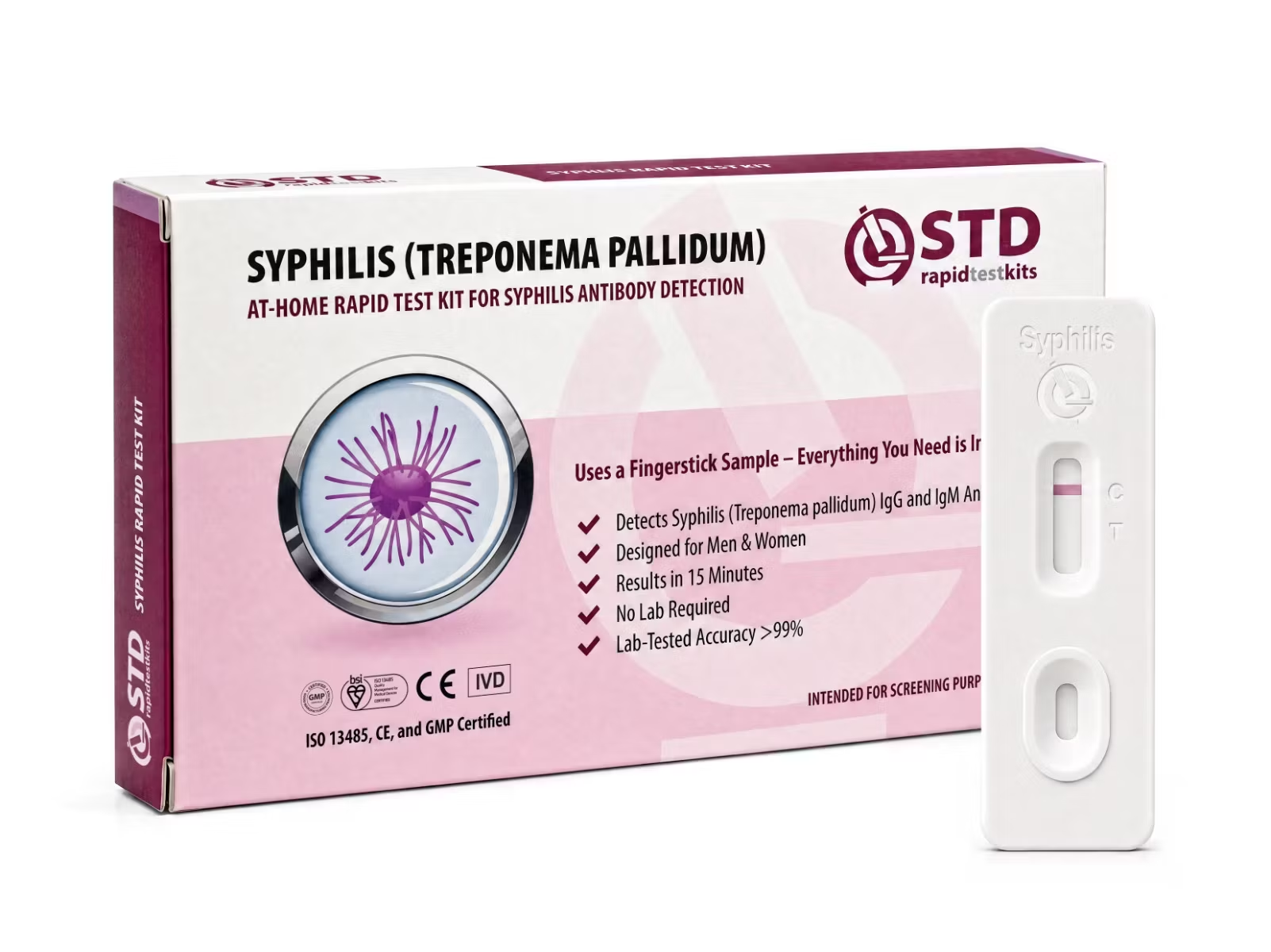
If the bump looks like a single painless firm-edged ulcer, especially if it appeared around 3 weeks after sexual contact, syphilis should be on your radar. The at-home rapid syphilis test is also a fingerstick blood antibody test. As with herpes, the reliable testing window starts at about 6 weeks after exposure. The chancre's tendency to resolve on its own is exactly why testing is important here. The visible sign disappears, the infection does not, and untreated syphilis is more consequential to miss than most other STIs.
If you're unsure which infection you're dealing with, or you've recently had unprotected sex and want a fuller picture, a combination kit covers more ground in one go. Our 6-in-1 rapid panel combines blood antibody tests with the relevant swab test in a single order, and a 3-in-1 covers chlamydia, gonorrhea, and syphilis when gonorrhea is a specific concern alongside the others. The right choice depends on the exposures you're worried about.
One technical note that matters: at-home rapid kits are lateral-flow antibody tests, which is meaningfully different from the lab NAAT or PCR tests a clinic runs. The lab options have higher analytical sensitivity, particularly in the early window. The home rapid tests are excellent for screening and for repeat testing once you're past the window. They are not equivalent to a lab NAAT, and a positive home result is worth confirming with a clinician for clinical management.
| Symptom pattern | Priority test | Reliable from |
|---|---|---|
| Clustered fluid-filled blisters, often with tingling prodrome | HSV-2 rapid antibody test (fingerstick blood) | 6 weeks after exposure; retest at 12 weeks for added confidence |
| Single painless firm-edged ulcer (especially around 3 weeks after sex) | Syphilis rapid antibody test (fingerstick blood) | 6 weeks after exposure |
| Recent unprotected sex; uncertain symptom pattern or multiple concerns | Combination panel (6-in-1 broad coverage, or 3-in-1 if gonorrhea is in play) | 6 weeks after exposure for blood antibody tests; the chlamydia swab can be used from around 2 weeks |
Frequently asked questions
- Can herpes really appear on the buttocks and not on the genitals?
- Yes, and it's more common than most people expect. HSV-2 establishes lifelong latency in the sacral nerve ganglia at the base of the spine, which means outbreaks can occur anywhere those nerve pathways run, including the lower buttocks, upper thighs, and tailbone area. The location of the outbreak doesn't indicate anything different about how the infection was acquired.
- How do I tell the difference between a herpes sore and a pimple on my buttocks?
- Herpes sores tend to appear in small clusters on a red inflamed base, often with burning or tingling beforehand. They're fluid-filled at first, then rupture and crust over. A pimple or folliculitis bump is typically a single bump centered on a hair follicle, may have a white tip, and is not preceded by tingling. Visual diagnosis isn't definitive even for clinicians, so a blood antibody test is the most reliable way to settle it.
- Is a painless sore on my buttocks always syphilis?
- A painless, firm, clean-edged ulcer that appeared around three weeks after sexual contact fits the textbook description of a primary syphilis chancre and warrants testing. Other painless lesions exist (molluscum bumps, for example). The combination of timing, firmness, and a single-lesion presentation makes syphilis the priority to rule out. Test at least 6 weeks after the relevant exposure for a reliable antibody result.
- I had bumps that went away on their own. Does that mean it wasn't an STI?
- Not necessarily. Syphilis chancres heal within a few weeks while the bacteria continue progressing in the bloodstream, and herpes sores heal between outbreaks while the virus stays latent in the nerves. If you noticed an unexplained skin change after sexual contact, testing is worthwhile even after the symptom resolves.
- How long after unprotected sex should I wait before testing for herpes?
- For a reliable antibody result, wait at least 6 weeks after the exposure you're concerned about. At-home rapid tests detect HSV-2 antibodies, and the immune system needs that time to produce a detectable response. Testing earlier risks a false negative even when infection has occurred. If your first test is negative and you're under the 6-week mark, retest at 6 weeks. A follow-up test at 12 weeks can add confidence to a negative result.
- Can I get syphilis on my buttocks without having anal sex?
- Syphilis transmits through direct contact with a syphilis sore during any sexual activity. If a partner's chancre is on a body region that contacted your buttock skin during sex, transmission is possible without anal sex specifically. The chancre forms wherever the bacteria entered, and perianal and buttock skin contact happens in a range of sexual activities.
- I have bumps on my buttocks but I've never had genital sores. Could I still have herpes?
- Yes. For some people, HSV-2 outbreaks occur exclusively on the buttocks or thighs and never produce sores on the genitals themselves. Many people with HSV-2 also never experience clearly recognized outbreaks at all. The absence of classic genital sores does not rule out HSV-2 infection. A blood antibody test is the way to know for certain.
- Are genital warts and herpes the same thing?
- No. They're caused by entirely different viruses. Herpes is caused by HSV-1 or HSV-2. Anogenital warts are caused by certain low-risk strains of human papillomavirus, primarily HPV 6 and HPV 11. Herpes produces fluid-filled blisters that heal and recur. Warts from HPV are soft flesh-colored growths that don't appear and disappear in outbreak cycles. They tend to persist or multiply unless treated. Different viruses, different appearance, different management.
- U.S. Centers for Disease Control and Prevention. About genital herpes: transmission routes, asymptomatic shedding, and how herpes lesions can provide a way for HIV to enter the body.
- U.S. CDC National Center for Health Statistics, Data Brief 304. Prevalence of HSV-1 and HSV-2 in the United States, 2015 to 2016 NHANES data, ages 14 to 49 (HSV-2 prevalence 11.9%).
- U.S. Centers for Disease Control and Prevention. Annual STI surveillance data: U.S. syphilis case-count trends, including 13% higher overall cases versus a decade ago and 12 consecutive years of rising congenital syphilis.
- U.S. CDC STI Treatment Guidelines. Anogenital warts: 90% caused by low-risk HPV types 6 or 11, presentation, and clinical management.
- American Sexual Health Association. Genital herpes overview: studies showing people are unaware of lesions about one third of the time the virus is active.
- U.S. CDC STI Treatment Guidelines. Primary and secondary syphilis: recommended adult regimen of benzathine penicillin G 2.4 million units IM in a single dose.
- U.K. National Health Service. Genital herpes: symptoms, recurrence patterns, and pregnancy considerations.
