What Is Doxy-PEP and How Does It Prevent STIs?
One antibiotic dose after sex can sharply lower the odds of syphilis and chlamydia, and in 2026 both the WHO and Europe's disease agency weighed in. Here is how doxy-PEP works, who the guidelines say it is for, what it can't protect against, and why regular STI testing stays part of the plan.



- A single 200 mg doxycycline dose taken within 72 hours after sex lowered syphilis and chlamydia by more than 70% in major trials, with smaller and less reliable effects on gonorrhea.
- Doxy-PEP only works on bacteria, so it offers no protection against HIV, herpes, or HPV, and people using it are advised to test for STIs and HIV every 3 to 6 months.
Published: October 2026 | Last updated: October 2026 | Editorial review and quality control: Editorial Team
What is doxy-PEP?
Doxy-PEP means taking a single 200 mg dose of the antibiotic doxycycline, ideally within 24 hours and no later than 72 hours after condomless sex. Trials found it cut syphilis and chlamydia by more than 70% and gonorrhea by about half. It is recommended mainly for gay and bisexual men and transgender women with a recent bacterial STI.
Doxy-PEP is short for doxycycline post-exposure prophylaxis. In plain terms, it is a morning-after antibiotic for bacterial STIs: a person takes one dose of doxycycline in the day or so after sex, and the drug knocks out syphilis, chlamydia, or gonorrhea bacteria before they can settle into an infection. It is an old, cheap, widely used antibiotic being put to a new use.
The idea has moved quickly from research to guidelines. The U.S. Centers for Disease Control and Prevention published formal clinical guidelines in June 2024 (CDC MMWR, June 2024). Europe's disease agency, ECDC, followed with more cautious public-health guidance in January 2026 (ECDC, 19 January 2026). The World Health Organization issued its first recommendation on 28 May 2026 (WHO, May 2026).
If you are reading because a friend mentioned it or you saw it on social media, you can relax a little: doxy-PEP is an optional extra layer of protection for a fairly specific group of people. It does not replace condoms, HIV prevention, vaccines, or regular at-home STI test kits and clinic screening. (stdrapidtestkits.com, which publishes this article, sells at-home STI test kits.) Most guidelines pair doxy-PEP with testing every few months, because no prevention tool is perfect.
Medically reviewed by Aikaterini Maragkou, MD.
Key Takeaways
- A single 200 mg doxycycline dose taken within 72 hours after sex lowered syphilis and chlamydia by more than 70% in major trials, with smaller and less reliable effects on gonorrhea.
- Doxy-PEP only works on bacteria, so it offers no protection against HIV, herpes, or HPV, and people using it are advised to test for STIs and HIV every 3 to 6 months.
How doxy-PEP works in the body
Doxycycline belongs to the tetracycline family of antibiotics. It stops bacteria from making the proteins they need to grow and multiply. When someone is exposed to syphilis, chlamydia, or gonorrhea during sex, only a small number of bacteria are usually present at first. A dose of doxycycline taken soon afterward reaches the tissues and can stop that small population before it grows into an established infection.
That timing is what makes it post-exposure prophylaxis: prevention taken after a possible exposure, rather than before it. The same principle sits behind HIV PEP, although HIV PEP uses entirely different drugs and a 28-day course. Doxy-PEP is a single dose tied to a specific sexual encounter, and people take it only when they need it.
Three bacterial infections are the target: syphilis (caused by Treponema pallidum), chlamydia (Chlamydia trachomatis), and gonorrhea (Neisseria gonorrhoeae). Doxycycline is already a standard treatment for chlamydia and for some stages of syphilis, so its activity against these organisms is well understood. Gonorrhea is the weak point, because many gonorrhea strains have already learned to resist tetracyclines, which we cover in the evidence section below.
Doxy-PEP at a glance
- Drug: doxycycline, a tetracycline-class antibiotic in use for decades.
- Dose: 200 mg once, never more than 200 mg in any 24-hour period.
- Timing: as soon as possible, ideally within 24 hours and no later than 72 hours after condomless oral, anal, or vaginal sex.
- Targets: syphilis and chlamydia most reliably; gonorrhea less consistently.
- Does not cover: viral infections such as HIV, herpes, HPV, and hepatitis B or C.
How to take it: the 24 to 72-hour window
The CDC recommends 200 mg of doxycycline, taken ideally within 24 hours and no later than 72 hours after condomless sex, and the dose should not exceed 200 mg every 24 hours (CDC 2024 doxy-PEP guidelines). WHO uses the same single 200 mg dose and the same timing in its 2026 guidance (WHO doxycycline PEP guidance).
Sooner is better. The bacteria have less time to multiply when the dose comes early, so the 24-hour mark is the target and 72 hours is the outer limit. If several sexual encounters happen over a few days, the 24-hour cap still applies: a person takes one dose per day at most, however many partners they have.
A few practical steps make the dose easier on the body. The CDC's clinician page advises taking doxy-PEP with at least 8 ounces of water and food, not lying down for an hour afterward, and using sunscreen or covering up while taking it (CDC doxy-PEP clinical overview). The NHS gives similar advice for doxycycline in general: swallow it whole with a glass of water while sitting or standing up, and avoid lying down for at least 30 minutes (NHS doxycycline guide). Those steps protect the food pipe, because doxycycline can irritate it if a tablet sits there.
Doxy-PEP needs a prescription. Tell the prescriber about every other medicine and supplement you take, and whether you are pregnant, could be, or are breastfeeding, so they can check that doxycycline suits you.
One doxy-PEP cycle, from sex to follow-up testing
- Day 0 Condomless sex
Possible exposure to syphilis, chlamydia, or gonorrhea bacteria
- Day 1 Ideal dose time
Take 200 mg as soon as possible, ideally within 24 hours
- Day 3 Latest dose time
72 hours is the outer limit; later doses are not part of the regimen
- Month 3 First routine screen
STI and HIV testing every 3 to 6 months, starting at the earlier end for many
- Month 6 Latest routine screen
Do not let more than 6 months pass between screens while using doxy-PEP
The dose works best early; routine STI and HIV testing continues every 3 to 6 months.
How well doxy-PEP prevents STIs
The evidence comes from randomized trials, the strongest type of clinical study. Summarizing three large trials, the CDC reports that 200 mg of doxycycline taken within 72 hours after sex reduced syphilis and chlamydia infections by more than 70% and gonococcal infections by approximately 50% (CDC guideline full text, NIH PubMed Central).
The best-known of those studies, the U.S. DoxyPEP trial, enrolled 501 gay and bisexual men and transgender women who were either living with HIV or taking HIV PrEP. Among the PrEP group, the relative risk of chlamydia was 0.12 and of gonorrhea 0.45, meaning far fewer infections in the doxycycline arm than in the comparison arm (CDC MMWR trial summary). In the French IPERGAY sub-study, chlamydia fell by 70% and syphilis by 73%, while gonorrhea showed no significant difference.
WHO's 2026 evidence review pooled the data and reached a similar picture. It rated the reductions for syphilis and chlamydia as high certainty, and noted that gonorrhea reductions vary by setting and depend on local tetracycline resistance (WHO doxycycline PEP guidance). In Europe, ECDC reported tetracycline resistance in 58.4% of circulating gonorrhea strains in 2023, and said that if countries use doxy-PEP it should focus mainly on preventing syphilis (ECDC guidance).
One trial did not show a benefit. A study of 449 cisgender women in Kenya found no significant reduction in bacterial STIs, and hair testing suggested only 29% of women in the doxycycline arm had actually taken the drug, so poor adherence may explain the result (CDC MMWR). Whether doxy-PEP works for women remains an open research question.
Doxy-PEP effect by infection
| Feature | Syphilis | Chlamydia | Gonorrhea |
|---|---|---|---|
| CDC summary of three trials | More than 70% fewer infections | More than 70% fewer infections | About 50% fewer infections |
| WHO pooled relative risk | 0.20 (high certainty) | 0.15 (high certainty) | 0.52 (moderate certainty) |
| Consistency across settings | Consistent | Consistent | Varies with local tetracycline resistance |
| ECDC view for Europe | Primary focus if doxy-PEP is used | Secondary to syphilis | 58.4% of strains tetracycline-resistant (2023) |
Figures from the CDC 2024 guideline, WHO 2026 guidance, and ECDC January 2026 guidance. A relative risk of 0.20 means about one-fifth the infections.
Who doxy-PEP is recommended for
Guidelines target the groups in which the trials showed clear benefit. The CDC recommends that providers counsel gay, bisexual, and other men who have sex with men, and transgender women, who have had at least one bacterial STI (syphilis, chlamydia, or gonorrhea) in the past 12 months about the benefits and harms of doxy-PEP (CDC 2024 guidelines). For everyone else, including cisgender women, heterosexual men, transgender men, and nonbinary people assigned female at birth, the CDC says clinical data are limited and decisions rest on individual risk.
In the U.S., many sexual-health clinics and PrEP providers now raise doxy-PEP routinely with people in the main guideline group. A recent bacterial STI diagnosis is often the point at which the conversation starts.
Signs doxy-PEP may be worth discussing with a clinician
A clinician weighs benefits, side effects, and resistance concerns with you before prescribing.
- You are a gay or bisexual man, or a man who has sex with men, or a transgender woman Common
- You have had syphilis, chlamydia, or gonorrhea in the past 12 months Common
- You have had repeated bacterial STIs, especially syphilis Common
- You take HIV PrEP or are living with HIV and already see a provider every few months Less common
- You belong to another group but have ongoing high STI risk (individual decision, limited data) Rare
How WHO and European guidance differ
WHO's 2026 recommendation covers men who have sex with men and transgender women, offered as part of a wider sexual-health package. WHO says implementation should prioritize people with recent or recurrent STIs, particularly syphilis, and that it does not currently recommend doxy-PEP for other populations or doxycycline as a daily PrEP-style pill (WHO guidance).
ECDC takes the most conservative line. It does not recommend doxy-PEP as a population-level intervention and advises that decisions be made individually, based on a clinician's assessment of risk (ECDC guidance). So where you live shapes how easy it is to get a prescription. In parts of Europe, you may need to ask for it yourself.
WHO encourages countries and partners to work together to scale up implementation of this recommendation to ensure that these important key populations at increased risk can benefit from evidence-based prevention options.
What doxy-PEP does not protect against
Doxycycline is an antibiotic, and antibiotics act on bacteria. Viruses work differently, so doxy-PEP has no effect on HIV, herpes simplex virus, human papillomavirus (HPV), hepatitis B, hepatitis C, or mpox. Someone who already has symptoms, such as a sore, discharge, or burning when peeing, needs a test and, if positive, a full treatment course; a single prevention dose will not clear an established infection.
Doxy-PEP does nothing to lower HIV risk. The tools that do are HIV PrEP (daily or long-acting medication taken before exposure), HIV PEP (a daily medicine taken for 28 days that must start within 72 hours of a possible exposure, per the CDC's PEP guide), condoms, and, for partners living with HIV, a sustained undetectable viral load. Someone using doxy-PEP who is HIV-negative and not on PrEP is precisely the person who should ask about PrEP at the same appointment. The CDC advises HIV screening for people on doxy-PEP according to current recommendations, and its clinician page says patients should test for STIs and HIV every 3 to 6 months as appropriate (CDC doxy-PEP overview).
Vaccines fill some of the remaining gaps. HPV, hepatitis B, and mpox all have effective vaccines, and a doxy-PEP visit is a natural time to check whether you are up to date.
Common misconceptions about doxy-PEP
Myth: Doxy-PEP is an STI morning-after pill that covers everything.
Fact: It targets bacterial STIs only. HIV, herpes, HPV, and hepatitis need separate prevention such as PrEP, condoms, and vaccines.
Myth: If I take doxy-PEP, I can stop getting tested.
Fact: Guidelines pair doxy-PEP with STI and HIV testing every 3 to 6 months, because infections can still get through, especially gonorrhea.
Myth: Taking a dose after every partner gives extra protection.
Fact: The cap is 200 mg in any 24-hour period. Extra doses add side-effect risk with no added protection.
Myth: Doxy-PEP is the same as daily doxycycline PrEP.
Fact: Doxy-PEP is taken after sex. WHO does not currently recommend doxycycline as a daily preventive pill.
Side effects and the antibiotic resistance question
For most people, a single 200 mg dose is well tolerated. The CDC lists photosensitivity (sunburning more easily) and gastrointestinal symptoms, including irritation or ulcers of the esophagus, as the adverse effects most linked with doxycycline (CDC MMWR). The NHS lists headaches, nausea, vomiting, and rash among common side effects (NHS). Taking the dose with food and water and staying upright cuts down most of these problems.
The bigger debate is about resistance, at the level of whole communities. Every time bacteria meet an antibiotic, the ones that happen to survive it get a chance to spread. Researchers worry about three things: gonorrhea becoming even more resistant to tetracyclines, common skin and nose bacteria such as Staphylococcus aureus picking up resistance, and changes to the gut and skin microbiome. In the DoxyPEP trial, tetracycline-resistant S. aureus rose from 5% to 13% of samples in the doxycycline arm, and tetracycline resistance among gonorrhea isolates also edged up (CDC MMWR resistance data).
Concern about resistance is why WHO strongly encourages countries to monitor antibiotic resistance as part of any doxy-PEP program, and why ECDC prefers individual prescribing over broad rollout. Each person using doxy-PEP can help by taking it as prescribed, for the period agreed with their clinician, and reviewing at each check-up whether they still need it.
Many gonorrhea strains already resist tetracyclines. In Europe, ECDC reported resistance in 58.4% of circulating strains in 2023. A person on doxy-PEP can still catch gonorrhea, and it may cause few or no symptoms, so regular swab testing matters even with good adherence.
Why testing every 3 to 6 months is part of the plan
Testing is part of the doxy-PEP regimen itself. The CDC states that people prescribed doxy-PEP should have bacterial STI testing at anatomic sites of exposure at baseline and every 3 to 6 months afterward (CDC guideline, PubMed Central). There are two reasons. First, breakthrough infections happen, gonorrhea most of all, and many are silent. Second, testing is how clinicians and public-health teams spot resistance early.
For people who have oral or receptive anal sex, testing every exposed site means throat and rectal swabs too. A clinic collects those and sends them for lab NAAT testing, the most sensitive method for chlamydia and gonorrhea.
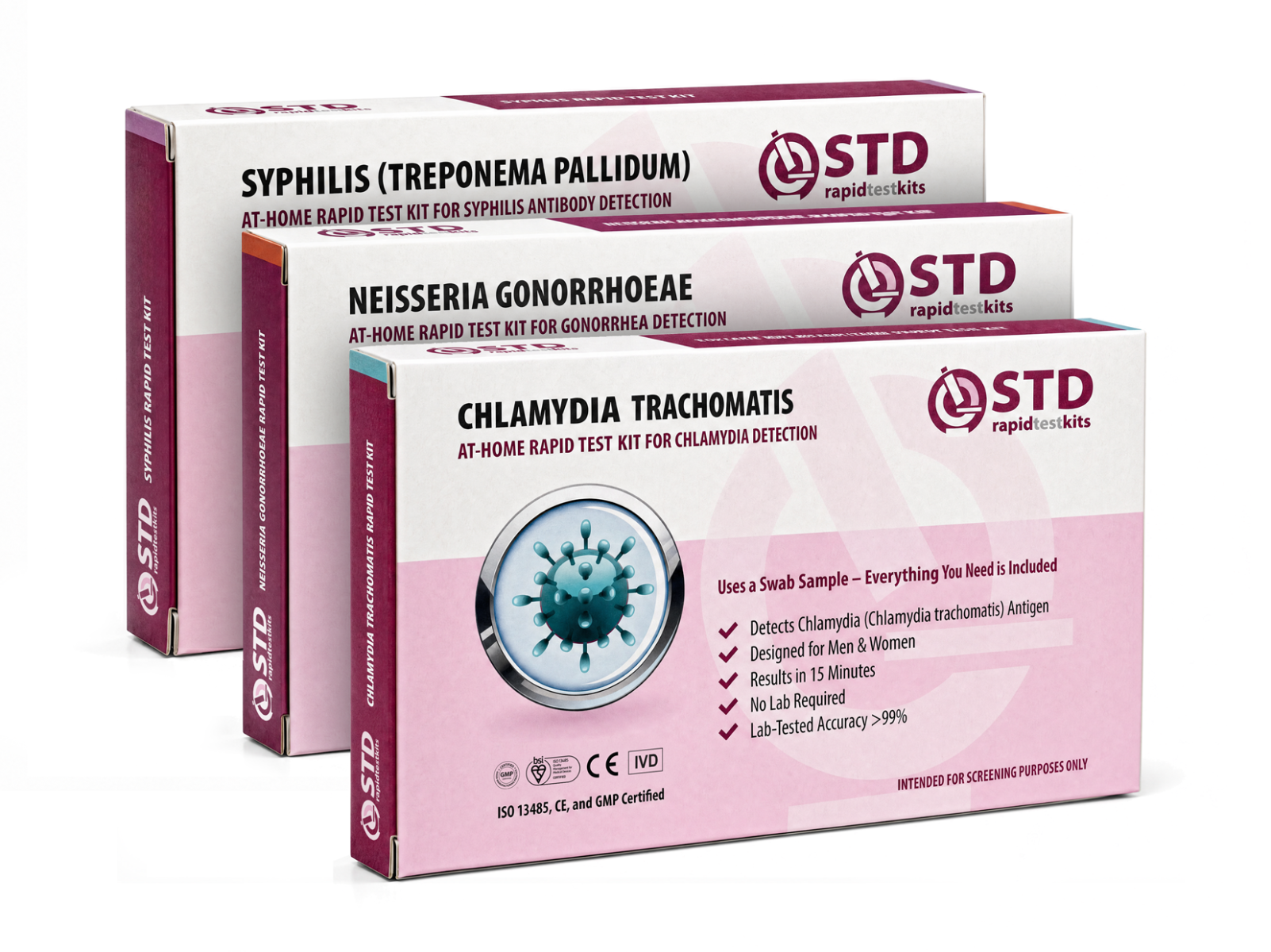
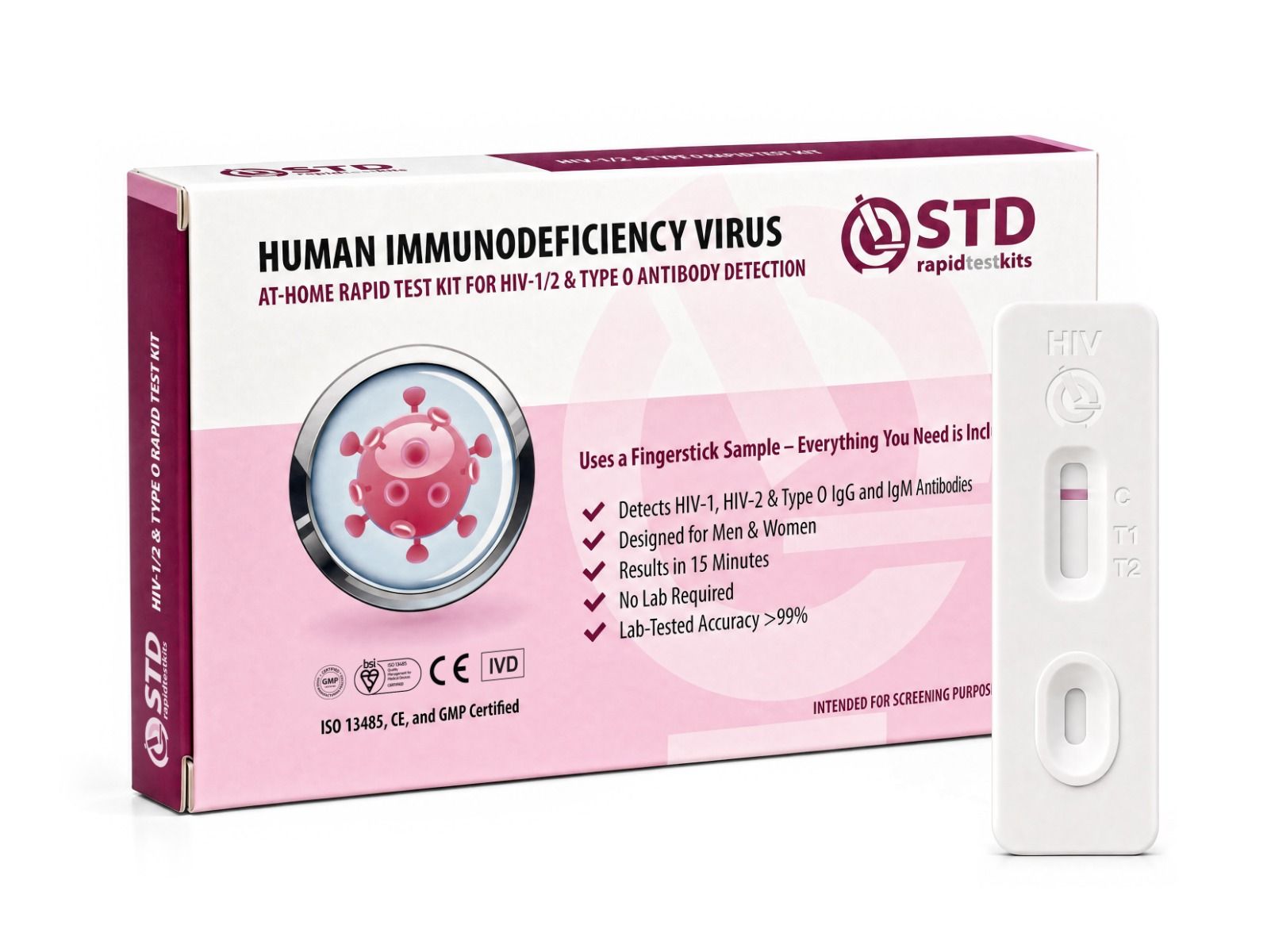
Between clinic visits, at-home rapid tests can add a private, quick check. Our kits use lateral-flow chemistry: genital swabs for chlamydia and gonorrhea, and fingerstick blood for syphilis and HIV, with results in about 15 minutes. They are screening tools, and a positive result should be confirmed with a clinician and a lab test before treatment. Syphilis antibody tests usually stay reactive for life after a past infection, even after successful treatment (CDC syphilis treatment guidelines). If you have had syphilis before, an at-home syphilis test will likely read positive regardless, so you need a clinic blood test that measures current activity.
Our rapid chlamydia and gonorrhea tests use a genital swab. We don't sell throat or rectal swab tests, so if you have oral or receptive anal sex, get those sites checked at a clinic. If you have had syphilis before, use clinic testing for syphilis, since antibody tests usually stay positive.
Keeping HIV testing on the calendar
Because doxy-PEP leaves HIV risk unchanged, HIV testing belongs in the same 3 to 6-month rhythm. Many people on doxy-PEP are already on PrEP, which comes with its own lab HIV tests at each refill. For those who are not, a regular HIV test is one of the most useful things they can do, and a positive result found early means treatment can start early.
HIV tests have a window period, the time after exposure before a test can reliably detect infection, and fingerstick antibody tests need the longest window of the main test types. A routine rapid test works well for regular screening; a very recent exposure calls for a different plan, outlined below.
If the exposure was within the last 72 hours, HIV PEP is time-sensitive, so contact a clinic or emergency department straight away instead of waiting to test. If it was within the past few weeks, repeat a negative rapid result after the window period closes, or ask a clinic about an earlier-detecting lab test.
How to bring up doxy-PEP with a clinician
Asking for doxy-PEP is a normal sexual-health conversation. It helps to go in with a short summary: any STIs you have had in the past year, the kinds of sex you have (oral, anal, vaginal), roughly how often you have new or casual partners, and whether you take PrEP or are living with HIV. Bring a list of your other medicines and supplements so the prescriber can check for interactions.
Good questions to ask include how many doses you should keep on hand, how often you will be tested and at which body sites, what side effects to watch for, and when you should review whether you still need it. If your clinician decides doxy-PEP isn't right for you, ask what they would suggest instead, such as more frequent testing or vaccines you may be missing. The quick decision guide below can help you sort out what to do first.
Is doxy-PEP something to ask about?
Do you have symptoms right now, such as a sore, discharge, or burning when you pee?
Yes: Doxy-PEP is not a treatment. Get tested and see a clinician for a diagnosis and a full treatment course.
Did you have a possible HIV exposure in the last 72 hours?
Yes: Contact a clinic or emergency department about HIV PEP now. Doxy-PEP does not protect against HIV.
Are you a man who has sex with men or a transgender woman who has had syphilis, chlamydia, or gonorrhea in the past 12 months?
Yes: You fit the main guideline group. Ask a sexual-health clinic or PrEP provider about doxy-PEP and a testing plan every 3 to 6 months.
No: Evidence for other groups is limited. Keep up regular STI and HIV testing, and discuss your personal risk with a clinician.
Guidance only. A clinician can advise based on your health history and local guidance.
FAQs
- How soon after sex do I take doxy-PEP?
- As early as you can. Aim for the first day after sex, with 3 days as the outer limit. Several encounters in one day still mean a single 200 mg dose for that day.
- Does doxy-PEP prevent HIV?
- No. It is an antibiotic and has no effect on viruses. For HIV, the proven tools are PrEP, PEP started within 72 hours, condoms, and a partner's undetectable viral load. Keep testing for HIV every 3 to 6 months.
- Can women use doxy-PEP?
- The one trial in cisgender women, in Kenya, found no significant benefit, possibly because few participants took the doses. CDC says data for women are limited, so any use is an individual decision with a clinician.
- Does doxy-PEP work against gonorrhea?
- About half as many gonorrhea infections occurred in trials, a weaker and less predictable effect than for syphilis or chlamydia. Where resistant strains are common, the benefit shrinks, which is why gonorrhea swab tests stay on the schedule.
- Is doxy-PEP causing antibiotic resistance?
- It remains the main open question. Trials saw more tetracycline-resistant Staphylococcus aureus and some rise in resistant gonorrhea. WHO and ECDC call for resistance monitoring wherever doxy-PEP is used.
- Do I still need STI tests if I take doxy-PEP?
- Yes. Guidelines recommend STI testing at every body site you expose at the start and every 3 to 6 months after. At-home rapid kits can add checks between visits, but throat and rectal sites need a clinic.
- Can I buy doxy-PEP without a prescription?
- No. Doxycycline is a prescription medicine. Sexual-health clinics, PrEP providers, and some telehealth services can assess whether it suits you and set up the testing schedule that goes with it.
- U.S. Centers for Disease Control and Prevention. Clinical Guidelines on the Use of Doxycycline Postexposure Prophylaxis for Bacterial STI Prevention, MMWR Recommendations and Reports, June 2024 (full text also on NIH PubMed Central, PMC11166373). Supports the 200 mg dose and 24 to 72-hour timing, eligibility, the more than 70% and approximately 50% reductions, trial results, testing every 3 to 6 months at exposed sites, side effects, and resistance data.
- CDC. Doxy PEP clinical overview for providers, December 2024. Supports advice on taking the dose with water and food, sun protection, and STI and HIV testing every 3 to 6 months.
- World Health Organization. Doxycycline PEP guidance page, July 2026, and the 28 May 2026 news release announcing the first recommendation. Supports pooled relative risks, variable gonorrhea effect, populations covered, no recommendation for other populations or as PrEP, resistance monitoring, and the WHO director's quote.
- European Centre for Disease Prevention and Control. Guidance on doxycycline for STI prevention, 19 January 2026. Supports the 58.4% gonorrhea tetracycline resistance figure, the syphilis focus, and the individual-level prescribing stance.
- CDC. Syphilis, STI Treatment Guidelines, reviewed October 2024. Supports the statement that treponemal antibody tests usually remain reactive for life after treatment.
- NHS. Doxycycline medicine guide, reviewed September 2025. Supports common side effects and advice to swallow with water while sitting or standing and avoid lying down for at least 30 minutes.