Can You Have an STD With No Symptoms? Why Silent Infections Hide for Years
A surprising share of common STIs run silent for months or years. Chlamydia is asymptomatic in roughly 70 percent of women and half of men. HIV can stay clinically quiet for 8 to 10 years untreated. Around half of genital herpes infections never produce a textbook outbreak. Here is what hides longest, why your body is a poor smoke detector for these infections, and when to retest after a negative result.




- Most chlamydia, gonorrhea, and HSV-2 infections produce symptoms too mild to prompt testing. CDC screening guidelines treat asymptomatic infection as the default assumption for sexually active adults under 25.
- A single negative test is a snapshot in time. Testing windows vary by infection (chlamydia roughly 1 to 2 weeks, HIV up to 3 months for antibody-only assays), so retesting after a new exposure is what makes screening reliable.
Published: October 2025 | Last updated: April 2026 | Editorial review and quality control: Martina N.
Can an STI really go undetected for years?
Yes. The CDC notes that most chlamydia infections cause no noticeable symptoms, and HIV can stay clinically silent for 8 to 10 years on average before late-stage signs appear. Herpes, HPV, latent syphilis, and trichomoniasis all have well-documented asymptomatic windows that span months to decades. Feeling fine is not a substitute for testing once you have had any new partner or any unprotected exposure.
Key Takeaways
- Most chlamydia, gonorrhea, and HSV-2 infections produce symptoms too mild to prompt testing. CDC screening guidelines treat asymptomatic infection as the default assumption for sexually active adults under 25.
- A single negative test is a snapshot in time. Testing windows vary by infection (chlamydia roughly 1 to 2 weeks, HIV up to 3 months for antibody-only assays), so retesting after a new exposure is what makes screening reliable.
Feeling fine has never been the same as being uninfected, and for sexually transmitted infections that gap is wider than most readers realize. Several common STIs run a long course of low-grade or zero symptoms in their early phase, and a portion stay quiet for years while still spreading to partners or quietly damaging tissue. Routine screening exists precisely because the body is unreliable as a smoke detector here.
This article walks through which infections stay silent longest, why a clean self-check is not the same as a clean test result, the difference between latency, the testing window, and incubation, and what to do if a result years later does come back positive.
Why Symptoms Are Not a Reliable Signal
Most readers learn to monitor their bodies for signs of illness. That instinct serves well for the flu or food poisoning. It serves badly for sexually transmitted infections, because most of the common ones either produce no recognisable signs or produce signs easily mistaken for something else.
The CDC reports that the majority of chlamydia infections cause no noticeable symptoms, with figures of roughly 70 percent of women and around half of men carrying it without knowing (CDC chlamydia overview). Trichomoniasis behaves similarly: an estimated 70 percent of infected people have no symptoms (CDC STI homepage). And the WHO has documented that more than two-thirds of adults under 50 worldwide carry HSV-1, the great majority of them without ever experiencing an outbreak (WHO herpes fact sheet).
Even when symptoms do appear, they are easy to misread. A herpes lesion can look like a small cut, a razor nick, or an ingrown hair. Gonorrhea may produce a brief mild burning during urination that fades on its own. HPV typically shows nothing at all until a cervical screening flags abnormal cells. Early syphilis often presents as a painless sore in a place the patient never sees, healing on its own while the infection moves into a latent phase. None of these will reliably push a person toward a clinic.
In practice, the body is a poor screening device for asymptomatic STIs, and routine testing scheduled around the right exposure window is what fills the gap.
Which STIs Most Often Stay Silent
Any STI can go unnoticed, but a handful are notorious for it. The pattern matters because these are also the infections most likely to cause real downstream harm if missed: chronic pelvic inflammation, infertility, cervical and oropharyngeal cancers, immune compromise. The table below summarises the asymptomatic profile of the major culprits.
| Infection | Asymptomatic rate | Can it stay dormant? | Risks if missed |
|---|---|---|---|
| Chlamydia | Around 70 percent of women, 50 percent of men | Yes, especially in the female reproductive tract | Pelvic inflammatory disease, tubal infertility, ectopic pregnancy |
| Gonorrhea | 50 to 80 percent (varies by anatomic site) | Yes, particularly pharyngeal and rectal infection | PID, disseminated gonococcal infection, joint inflammation, infertility |
| HSV-1 / HSV-2 | About half of genital herpes infections are clinically silent | Yes, lifelong residency in nerve ganglia | Onward transmission, painful flares triggered by stress or illness |
| HIV | Often 8 to 10 years to AIDS-defining illness without treatment | Yes, in resting CD4+ cells | Progressive immune suppression, increased susceptibility to other infections and cancers |
| HPV | Most infections produce no signs | Yes, integrated into host cells | Cervical and oropharyngeal cancers, anogenital warts |
| Trichomoniasis | Around 70 percent of infected people have no symptoms | Yes, especially in men | Increased HIV acquisition risk, adverse pregnancy outcomes |
| Syphilis | Latent stage is asymptomatic by definition | Yes, can persist undetected for a decade or more | Tertiary disease affecting heart, brain, and nervous system |
How Long Can These Infections Stay Dormant?
The popular myth is that an STI either announces itself or eventually goes away on its own. The clinical record is harsher. Some infections enter a true latent phase, others persist at low levels of replication, and several quietly damage host tissue throughout. The longest documented asymptomatic chlamydia case runs past five years; for syphilis, more than a decade in the latent stage; for HPV-driven cervical change, ten to twenty years between infection and cytologic abnormality.
That timescale is why a single test in your twenties is not a permanent answer. If you became sexually active in college and have not tested since, the relevant statistic for you is not your current discomfort. It is the latency curve.
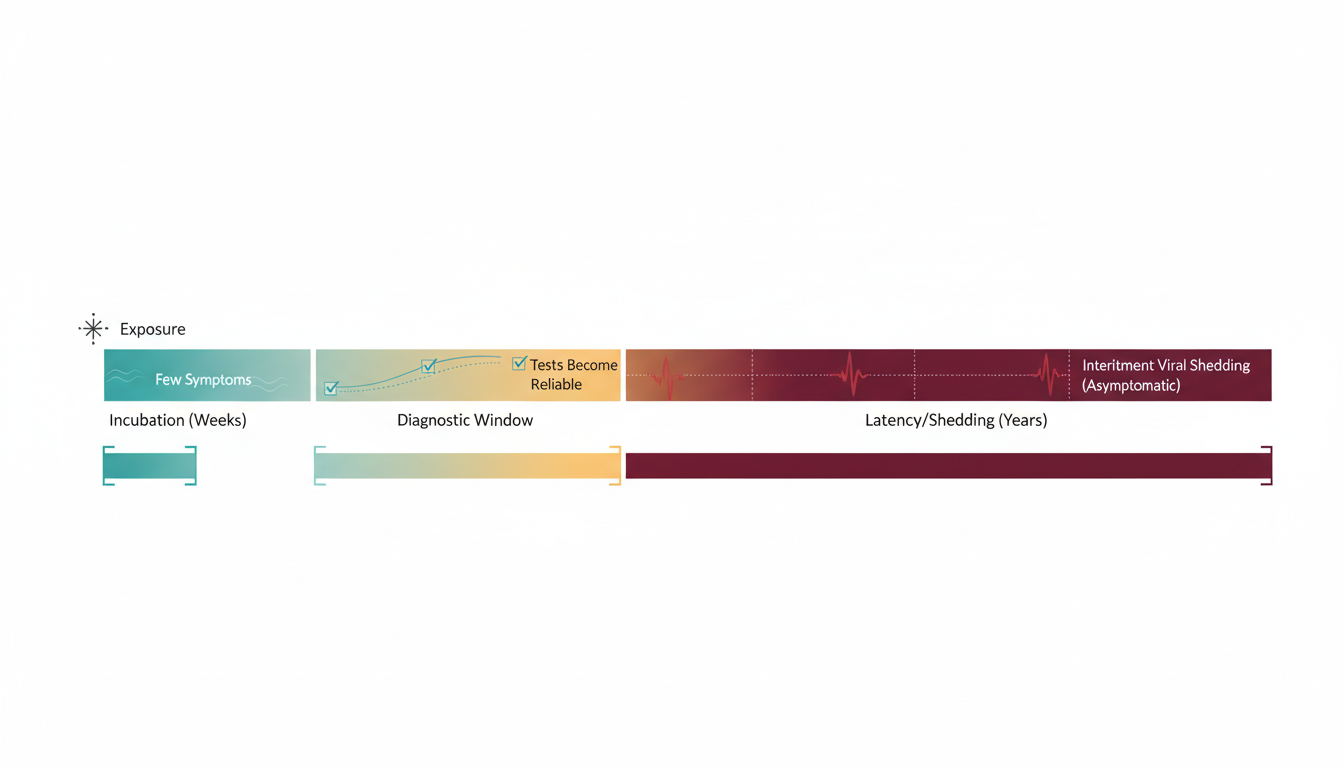
Latency, Window Period, and Incubation: Three Different Timelines
Three terms get muddled often enough to be worth separating cleanly.
Incubation is the gap between exposure and the first symptoms, if symptoms ever appear. For gonorrhea this is typically 2 to 7 days; for chlamydia, 1 to 3 weeks; for HIV acute retroviral syndrome (when it shows at all), 2 to 4 weeks; for the syphilis primary chancre, 10 to 90 days. None of these guarantee that symptoms will arrive at all.
Window period is the gap between exposure and the point at which a test can reliably detect the infection. This is the timeline that matters most for testing decisions. Modern fourth-generation HIV combination tests detect most infections within roughly 18 to 45 days post-exposure; antibody-only HIV tests can take up to three months for a definitive negative (CDC HIV testing). Chlamydia and gonorrhea become reliably detectable within roughly 1 to 2 weeks once enough bacteria are present at the sample site. HSV antibody assays may need 12 to 16 weeks to seroconvert reliably.
Latency is what happens after that, when the infection is established but not actively producing symptoms. Herpes, HIV, syphilis, and HPV all have well-defined latent phases. The infection is real, often transmissible, and frequently damaging, even though the calendar shows no flare-up.
Confusing these three is how people end up testing in the first 72 hours after a panicked encounter, getting a negative, and assuming the conversation is over. It is not.
You Can Pass on an STI Without Knowing You Have It
This is the part of the conversation most readers skip. Onward transmission of asymptomatic STIs is the main way these infections spread, not the exception.
Herpes is the textbook case. HSV sheds intermittently from skin and mucosal surfaces between visible outbreaks, and the carrier may have no flare-up at all. The WHO estimates that roughly half a billion people worldwide carry HSV-2, the majority of whom have never had a symptomatic episode (WHO herpes fact sheet). Condom coverage helps but does not fully prevent skin-to-skin transmission at sites condoms do not cover.
Chlamydia and gonorrhea behave similarly when colonising the throat or rectum. Pharyngeal gonorrhea is overwhelmingly asymptomatic, and published infectious-disease research has documented that asymptomatic pharyngeal infection transmits readily during oral sex. HIV is most transmissible during the acute phase, weeks before the immune system has produced the antibodies an average rapid antibody-only test can detect. The peak infectious period overlaps the peak undiagnosable period, which is why repeat testing matters more than a one-shot result.
Anatomy adds another asymmetry. Infections in the female reproductive tract often sit deeper and produce fewer immediate signs than equivalent infections elsewhere, which is part of why CDC screening guidance recommends annual chlamydia and gonorrhea testing for sexually active women under 25 even when no symptoms exist (CDC STI screening recommendations).
Timing Your Test After an Exposure
If you had an unprotected encounter, or you learned that a past partner tested positive, the most useful question is not whether to test but when. Testing too early returns a false negative that reads as relief and forecloses follow-up. Testing in the right window catches the infection while it is still highly treatable.
Reasonable defaults, drawn from the CDC and major lab references:
- Chlamydia and gonorrhea swabs: wait at least 1 to 2 weeks after the exposure event for adequate bacterial load. A swab in the first 72 hours can miss it.
- HIV (fourth-generation combination test): reliable from about 18 to 45 days post-exposure. Antibody-only home tests need a longer wait, up to 90 days for a definitive negative.
- Syphilis: wait 3 to 6 weeks for early treponemal antibodies; some clinicians repeat at 12 weeks.
- HSV antibody: 12 to 16 weeks for reliable seroconversion, though a primary outbreak (if one occurs) can be swabbed earlier for direct virus detection.
If symptoms do appear before the window closes, test anyway. A symptomatic positive result is more useful than a too-early negative.
A negative test taken within days of a worrying encounter is one of the most common reasons adults walk around carrying an undiagnosed STI. The infection is there; the bacterial or viral load is below the assay's detection threshold. If your test was within a week of a high-risk exposure, treat the negative as preliminary and retest at 30 days for bacterial STIs and at 12 weeks for HIV and HSV.
Why a Single Negative Does Not End the Conversation
Retesting is what separates real screening from theatre. Three situations in particular call for a second test:
- You tested early, inside the diagnostic window for the infection in question.
- You have had a new exposure since the previous test.
- You tested negative the first time, then developed any symptom that could plausibly be STI-related.
Repeat testing is also part of standard CDC guidance after treatment. Following confirmed chlamydia or gonorrhea infection, a follow-up test about three months later catches reinfection, which is common and usually (again) asymptomatic (CDC: next steps after a positive chlamydia or gonorrhea test).
A single test is a snapshot in time. Consistent screening, taken at sensible intervals and around relevant exposures, is what protects you and your partners over the long run.
Testing at Home Without Walking Into a Clinic
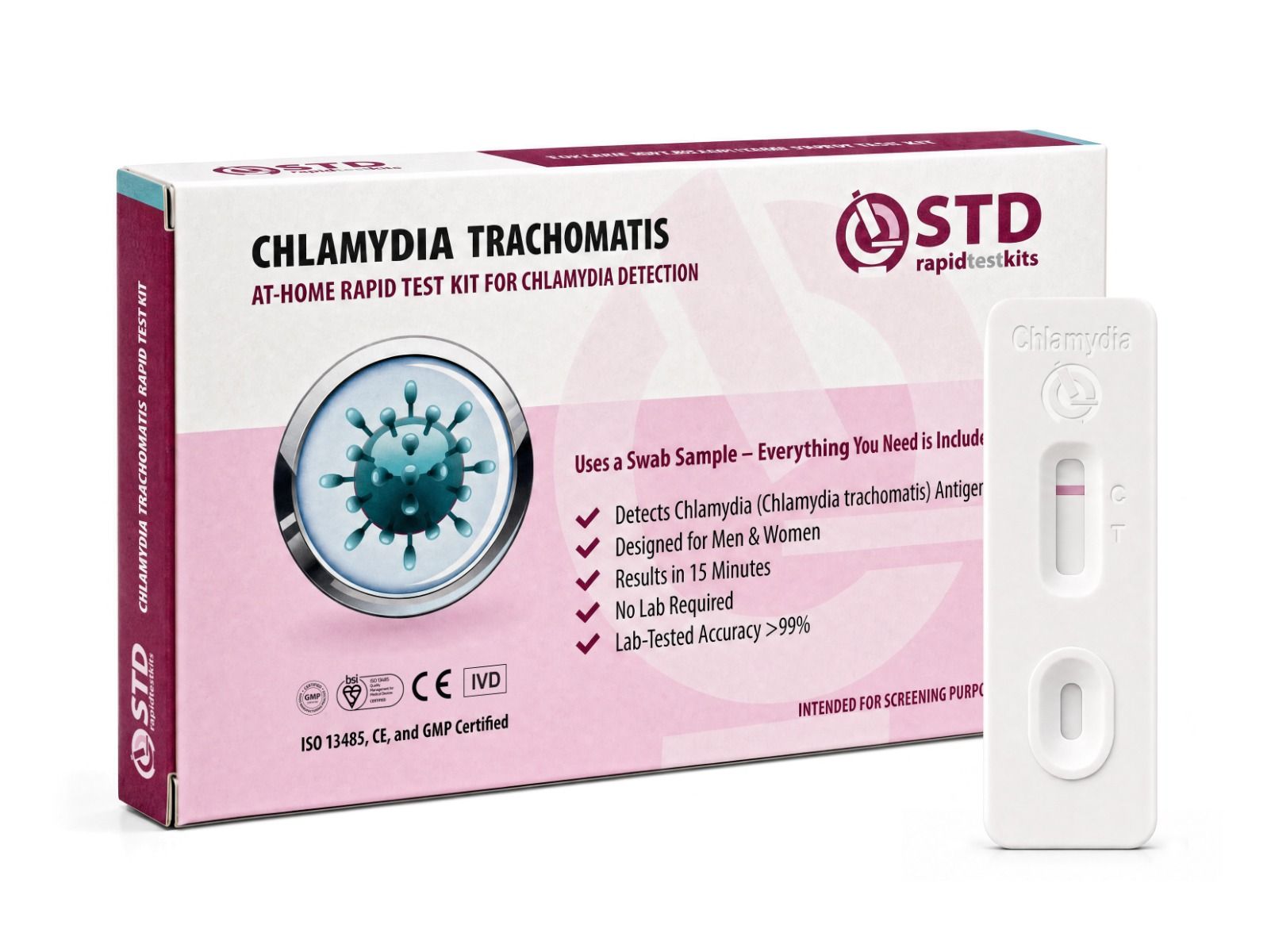
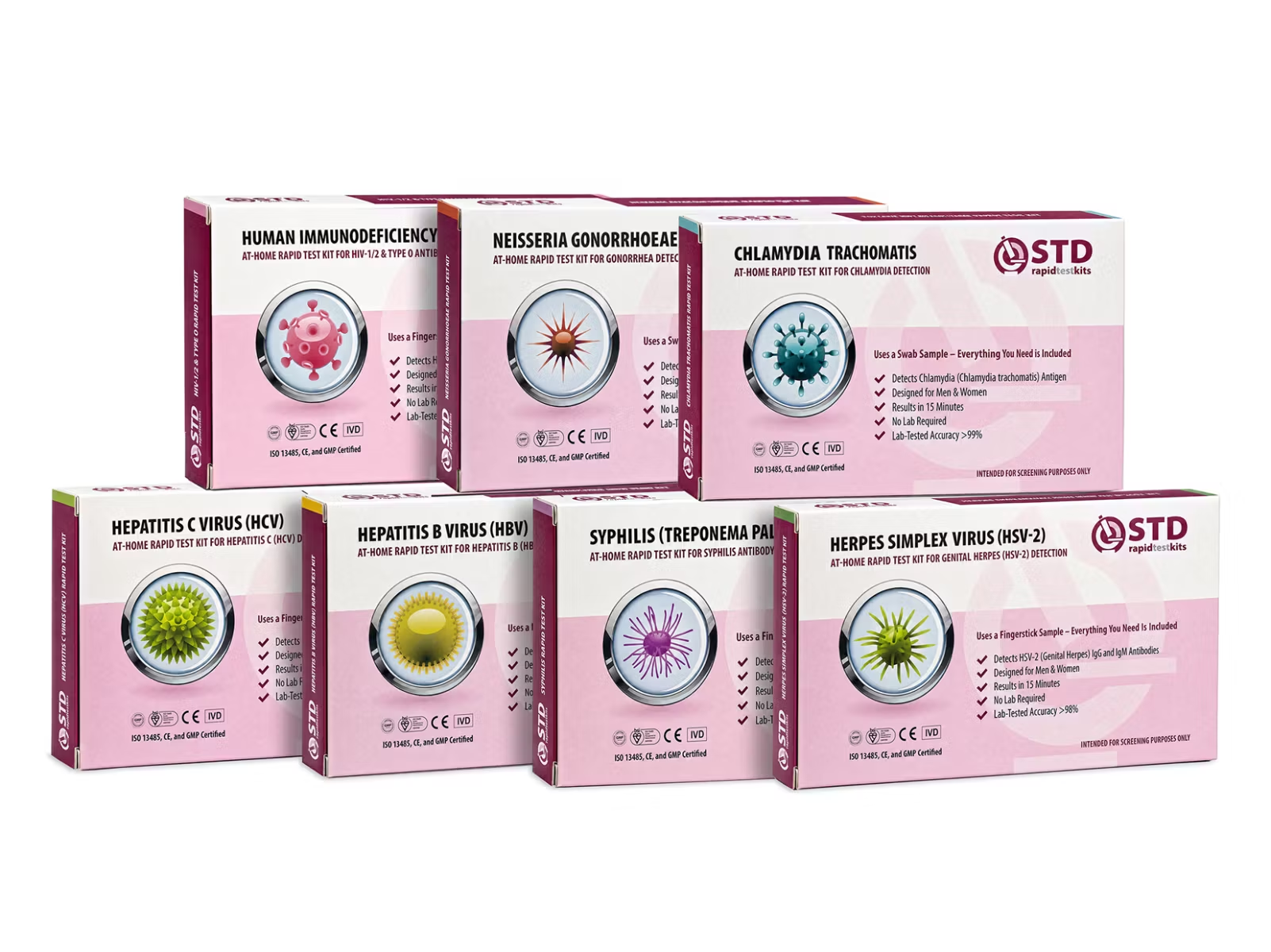
The biggest barrier to STI testing is rarely money or science. It is friction: the awkwardness of asking a primary care provider, the time off work, the waiting-room exposure, the feeling of being judged. Mail-order home test kits remove most of that friction, which matters more for asymptomatic screening than almost any other clinical category, because the readers most likely to skip testing are precisely the ones with no symptoms to push them through it.
What home rapid kits do well: they screen quickly and privately at lower cost than a clinic visit, using lateral-flow chemistry similar to what powers most pharmacy COVID tests and pregnancy tests. They suit a routine personal-screening cadence (every 6 to 12 months for most sexually active adults, more often if you have multiple partners) and follow-up after a known exposure once the diagnostic window has opened.
What home rapid kits do less well: they are screening tools, not laboratory NAAT or PCR. A positive home result is real and worth acting on, but a negative result, especially one taken near the edge of the diagnostic window, is best treated as preliminary. Confirmation through a clinic-administered NAAT panel is appropriate before starting treatment for a positive result.
Used the right way, home testing is the difference between annual screening as an aspiration and annual screening as something that actually happens.
A Positive Result After Years of Silence Is Information, Not a Verdict
The most common reaction to a positive STI result, particularly after years of feeling fine, is some version of catastrophizing the diagnosis. The reality is more useful. The result gives you actionable information after months or years during which the infection was acting on you unobserved.
The treatment landscape is more forgiving than the cultural narrative suggests. Chlamydia, gonorrhea, and trichomoniasis are bacterial or parasitic and curable with short courses of antibiotics or antiparasitics. Early syphilis clears with a single penicillin injection. HIV today is a managed chronic condition; people on consistent antiretroviral therapy reach undetectable viral loads, which the CDC and global research consensus describe as untransmittable to sexual partners (CDC HIV basics). Herpes is lifelong but well-controlled with daily suppressive antivirals that reduce flares and onward transmission. HPV often clears on its own; the cancers it can cause are detected early through cervical screening and treated.
Partner notification is the harder conversation, and it is the one that closes the chain of silent transmission. State health departments offer anonymous partner-notification services in many regions. Online tools and message templates exist for those who want to handle it directly. Most partners, given the framing that asymptomatic infection is genuinely common and not a sign of betrayal, take the news better than expected.
Approaching the diagnosis as a clinical fact about a microorganism rather than a personal identity makes the rest of the work manageable.
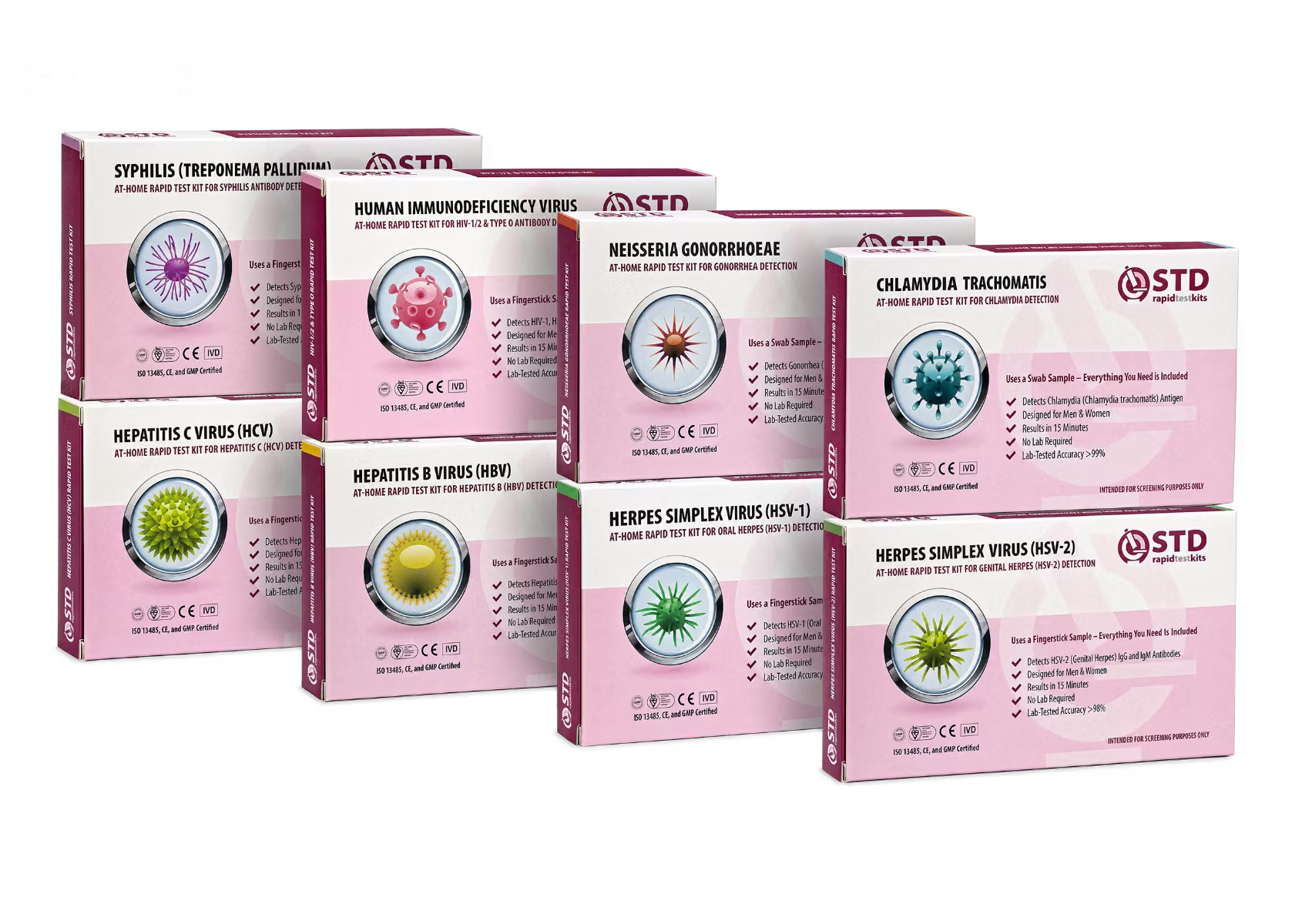
Most people who have chlamydia have no symptoms, and most people with chlamydia do not know they have it.
Frequently Asked Questions
- Can you really have an STI for five years and not know it?
- Yes, and it is not unusual. Chlamydia, herpes, HPV, and HIV all have well-documented multi-year asymptomatic phases. The longest documented asymptomatic chlamydia cases run past five years; HPV cervical changes can take 10 to 20 years to surface; untreated HIV averages 8 to 10 years before late-stage symptoms. Most people who carry one of these infections feel nothing for the entire interval.
- Which STIs are most likely to stay silent?
- Chlamydia leads, with around 70 percent of women and roughly half of men reporting no symptoms. HPV produces no signs in most cases unless caught on cervical screening. Around half of genital herpes infections are clinically asymptomatic. Trichomoniasis is silent in about 70 percent of cases, especially in men. Latent syphilis, by definition, has no symptoms. HIV is silent for most of its untreated course.
- Can I pass an STI to a partner if I have no symptoms?
- Yes. Asymptomatic transmission is the dominant route for several STIs. Herpes sheds virus from skin and mucosal surfaces between outbreaks. Chlamydia and gonorrhea transmit during oral, vaginal, and anal sex regardless of whether the carrier feels anything. HIV is most infectious during the acute phase, weeks before the average rapid antibody-only test turns positive. Feeling fine is not protective for partners.
- If I feel healthy, will my immune system clear the infection on its own?
- Sometimes for low-risk HPV strains, the immune system does clear the infection. For most other STIs, no. Chlamydia, gonorrhea, syphilis, HIV, herpes, and trichomoniasis persist until treated. The body containing them is not the same as the body curing them, and untreated bacterial STIs can quietly progress to pelvic inflammatory disease, infertility, or systemic spread.
- How often should I test if I have no symptoms?
- CDC screening guidance recommends annual chlamydia and gonorrhea testing for sexually active women under 25 and for older women with risk factors, plus at least once-in-a-lifetime HIV screening for all adults aged 13 to 64. For people with multiple partners or inconsistent condom use, every 3 to 6 months is reasonable. A recurring calendar reminder works better than waiting for symptoms to prompt testing.
- I tested negative, but I am still worried. Can the test miss something?
- Yes, if you tested too early. The diagnostic window is the period after exposure when an infection is present but not yet detectable. Chlamydia and gonorrhea typically need 1 to 2 weeks; HIV antibody-only tests can take up to three months; HSV antibodies need 12 to 16 weeks. Retesting at the right interval after a worrying exposure is how a preliminary negative becomes a meaningful one.
- Do home rapid tests work if I have no symptoms?
- Yes. Home lateral-flow tests detect the bacteria, virus, or antibody response, not the symptoms. They work the same way regardless of whether the carrier feels anything. The caveat is the diagnostic window: a home test is only as accurate as its timing relative to the exposure. Use the right window, retest if you are inside the early window, and treat any positive result as worth confirming via a clinic NAAT before starting treatment.
- I have been in a long-term relationship for years. Could I still be carrying something from before it began?
- Yes, and this is one of the more common scenarios behind a surprise positive result. STIs do not run on relationship calendars. Latent infections from a partner several years ago can surface on a routine screen long after the relationship that caused them ended. A positive result inside a long-term relationship is not, on its own, evidence of recent infidelity.
- U.S. Centers for Disease Control and Prevention. Chlamydia overview, including data on asymptomatic infection rates in women and men.
- U.S. Centers for Disease Control and Prevention. Sexually transmitted infections homepage with current screening guidance and surveillance data.
- U.S. Centers for Disease Control and Prevention. STI screening recommendations, including age- and risk-based testing intervals for chlamydia, gonorrhea, HIV, and syphilis.
- U.S. Centers for Disease Control and Prevention. HIV testing landing page covering test types and diagnostic window information for fourth-generation and antibody-only assays.
- U.S. Centers for Disease Control and Prevention. Next steps after testing positive for chlamydia or gonorrhea, including the recommended three-month retest interval.
- World Health Organization. Herpes simplex virus fact sheet covering global HSV-1 and HSV-2 prevalence and the high asymptomatic share of infections.
- World Health Organization. Sexually transmitted infections fact sheet, including the high prevalence of asymptomatic STIs globally.
- NHS. Sexually transmitted infections overview, with patient-facing symptom and screening guidance.