

Published: November 2025 | Last updated: April 2026 | Editorial review and quality control: Martina N.
Most untreated sexually transmitted infections do their worst damage quietly. Chlamydia scars fallopian tubes before any pain shows up. Syphilis goes dormant for years before reappearing in the brain or heart. Certain HPV strains take a decade to become cervical or throat cancer. None of this is rare, and almost all of it is preventable when an infection is caught and treated early.
This guide walks through what each common STI does in the body when it goes unchecked, why so many people do not realize they are infected, and where the testing window changes the outcome. Almost every worst-case scenario covered below shares the same prerequisite: time between infection and diagnosis. Closing that gap is the practical takeaway.
What happens if you don't treat an STI?
Untreated STIs can cause infertility, chronic pelvic pain, organ damage, neurological problems, certain cancers, and in rare cases death. Most of these outcomes take months or years to develop and most show no obvious symptoms in the early stages. The single biggest factor is time between infection and diagnosis. Routine testing, even when you feel fine, prevents nearly every worst-case outcome described below.
Key takeaways
- Most STIs cause no obvious symptoms in the early stages, which is why CDC screening guidance is built around routine testing rather than waiting for symptoms.
- Almost every serious complication of an untreated STI is preventable when the infection is caught early, often with a single course of antibiotics or antivirals.
Why so many STIs go undetected for years
The phrase "asymptomatic infection" sounds reassuring. The reality is that the infection is doing something the person cannot feel yet. The CDC's STI overview notes that millions of new STI infections occur in the United States every year, and the agency repeatedly emphasises that most cases never trigger symptoms strong enough to push someone toward testing.
The pattern is consistent across infections. Many cases of chlamydia in women produce no symptoms, which is why CDC guidance recommends annual chlamydia screening for sexually active women under 25 regardless of how anyone feels. Roughly half of male chlamydia cases are also silent. Gonorrhea behaves similarly, especially when the infection sits in the throat or rectum, where it tends to cause no obvious local symptoms at all.
HPV is the extreme version of this pattern. Most genital HPV infections clear on their own without any symptom. The few that persist can take ten or fifteen years to become cancer. HIV, after the brief flu-like phase that many people miss, can stay clinically quiet for years. Syphilis is almost designed to be missed: a painless sore that disappears, then a long latent period, then late-stage damage that can resemble dementia or stroke.
Feeling fine is not the same as being uninfected. Routine screening exists precisely because the people who most need testing usually have nothing visible pushing them toward it.
Most people who test out of caution come back negative. The right move when you have had a possible exposure is the same as when you have not: book or order a screening test that fits your situation. Testing exists precisely because symptoms are not a reliable signal, and a negative result is information rather than luck.
Chlamydia and gonorrhea: the fertility threat
Chlamydia and gonorrhea are the two most reported bacterial STIs in the United States. Both are easily curable with antibiotics when caught. Both can do permanent reproductive damage when they are not.
The mechanism in people with female reproductive anatomy is pelvic inflammatory disease, or PID. Untreated chlamydia or gonorrhea travels up from the cervix into the uterus and fallopian tubes, where the body's inflammatory response causes scarring and adhesions. Per CDC PID guidance, about 1 in 8 women with a history of PID will have difficulty becoming pregnant, and many cases of PID develop without the sharp pelvic pain people expect.
Tubal scarring also raises the risk of ectopic pregnancy, a medical emergency in which a fertilized egg implants in a damaged fallopian tube instead of the uterus. Chronic pelvic pain is the third common downstream effect, and it can persist long after the original infection has been cleared.
In people with male reproductive anatomy, untreated chlamydia or gonorrhea can travel from the urethra to the epididymis. Epididymitis presents as testicular pain and swelling, but it can also be subtle. When the inflammation is repeated or prolonged, it can scar the ducts that carry sperm, occasionally enough to affect fertility.
None of this requires the worst case to be the typical case. Catching either infection during a routine screen and finishing the prescribed antibiotic course resolves the infection and stops the downstream cascade in nearly all situations.
The at-home kits linked below and elsewhere in this article are sold by this site. They are rapid lateral-flow tests that return results in about 15 minutes without a lab visit, and we recommend the kit that fits the reader's concern rather than the highest-margin option.


HPV: when a common virus turns into cancer
HPV is the single most common STI in the United States. CDC tracking shows that nearly all sexually active people will get at least one HPV infection in their lifetime, and the immune system clears the majority of those infections within one to two years without any treatment.
The risk lives in the small fraction of infections that persist. About fourteen HPV types are classified as high-risk by the National Cancer Institute and the CDC. Two of them, HPV-16 and HPV-18, account for the large majority of HPV-attributable cancers. Persistent high-risk HPV infections can become cervical, anal, oropharyngeal, penile, or vaginal cancer over the course of a decade or more.
The clinical picture is what makes HPV dangerous. There is no acute illness, no rash that prompts a doctor visit, no fever. The first sign of trouble for many HPV-driven cancers is when the cancer is already established. Screening is structured around catching cellular changes long before they become invasive disease through cervical Pap tests, HPV co-testing, and increasingly, self-collected HPV swabs.
The HPV vaccine has changed this picture significantly. CDC and ACIP guidance recommends routine HPV vaccination at ages 11 to 12, with catch-up through age 26, and a shared decision-making conversation for adults aged 27 through 45 who were not previously vaccinated. Vaccination does not help an existing high-risk infection, and screening remains part of standard preventive care for vaccinated adults too.
At-home HPV self-swab kits are validated for vaginal sample collection, so the option in our catalog is a women-only test. Male readers concerned about HPV-related cancer risk should see a clinician for an oral, anal, or penile evaluation depending on the exposure context.
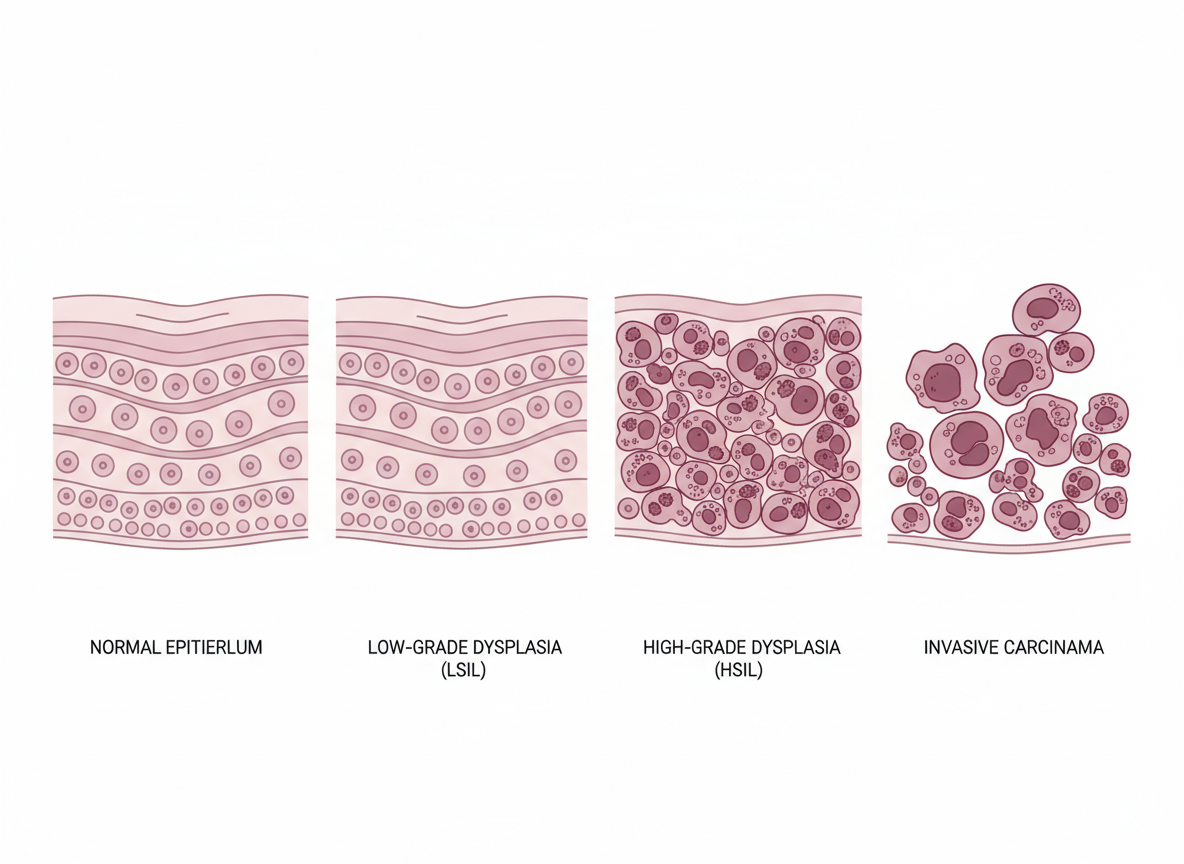
Persistent HPV infection drives cellular changes that progress slowly over years. Pap smears and HPV co-testing exist precisely because these changes are catchable long before they become cancer, and most are reversible at the early dysplasia stage with relatively minor outpatient treatment. The screening question is not whether HPV is present (most adults will encounter it) but whether persistent infection is producing dysplasia that needs attention.
Syphilis: the slow-moving brain invader
Syphilis is one of the few STIs whose late-stage damage was well documented before modern medicine, which is part of why CDC syphilis guidance treats it as one of the most consequential infections to catch early. U.S. syphilis cases have risen sharply over the past decade, including congenital syphilis cases passed from a pregnant person to a newborn.
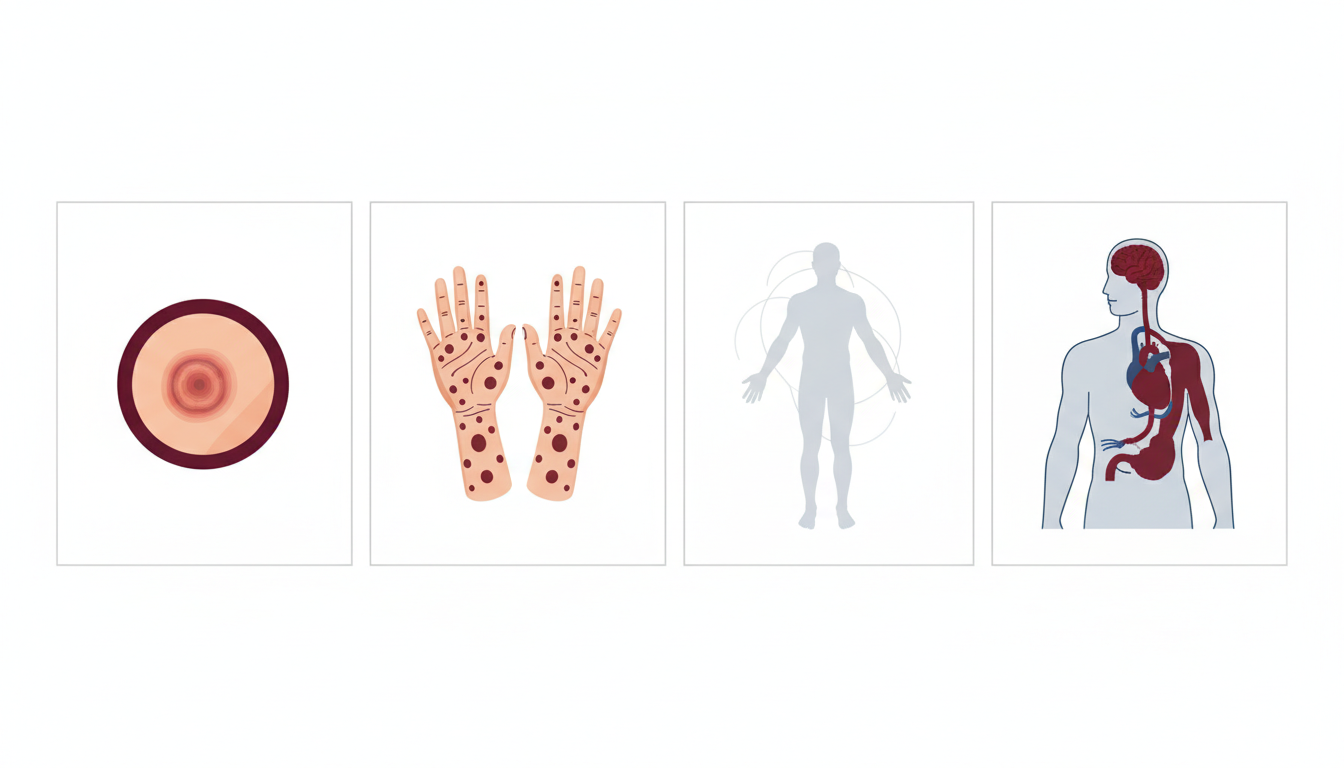
The infection moves through four stages. Primary syphilis is a single painless ulcer at the site of exposure, called a chancre. The chancre heals on its own in a few weeks, which is the first opportunity for the diagnosis to be missed. Secondary syphilis brings a body-wide rash, often on the palms and soles, plus fatigue and swollen lymph nodes. The rash also resolves on its own. Then comes a latent stage that can last years.
Late or tertiary syphilis is where the long-term damage shows up. The bacteria can reach the brain and spinal cord (neurosyphilis), the cardiovascular system, or organs throughout the body in the form of soft-tissue lesions called gummas. Neurosyphilis can cause memory loss, personality changes, vision and hearing loss, paralysis, and dementia-like symptoms. Cardiovascular syphilis can cause aortic aneurysm.
Treatment for early syphilis is straightforward: a single intramuscular dose of long-acting penicillin G in most cases, with a longer course for late or neurosyphilis. The catch is that treatment cannot reverse damage that has already occurred. Penicillin clears the bacteria. It does not rebuild a damaged aortic wall or restore lost neurons.
HIV: untreated and treated outcomes are now wildly different
The story of HIV in 2026 is very different from the one most people grew up with. Untreated HIV still progresses to AIDS over an average of 8 to 10 years, with steady CD4 T-cell decline, vulnerability to opportunistic infections, and eventual mortality. Treated HIV looks entirely different. CDC guidance affirms that people on effective antiretroviral therapy who maintain an undetectable viral load do not transmit HIV to sexual partners, and life expectancy for people who start treatment promptly approaches that of the general population.
The bridge between those two outcomes is testing. Acute HIV infection causes a brief flu-like illness in many people, but the symptoms are easily mistaken for any other viral illness, and a meaningful share of cases produce no acute symptoms at all. After that initial phase, HIV enters a clinically latent period that can last for years. Without a test, a person can transmit the virus and progress toward immune erosion the entire time.
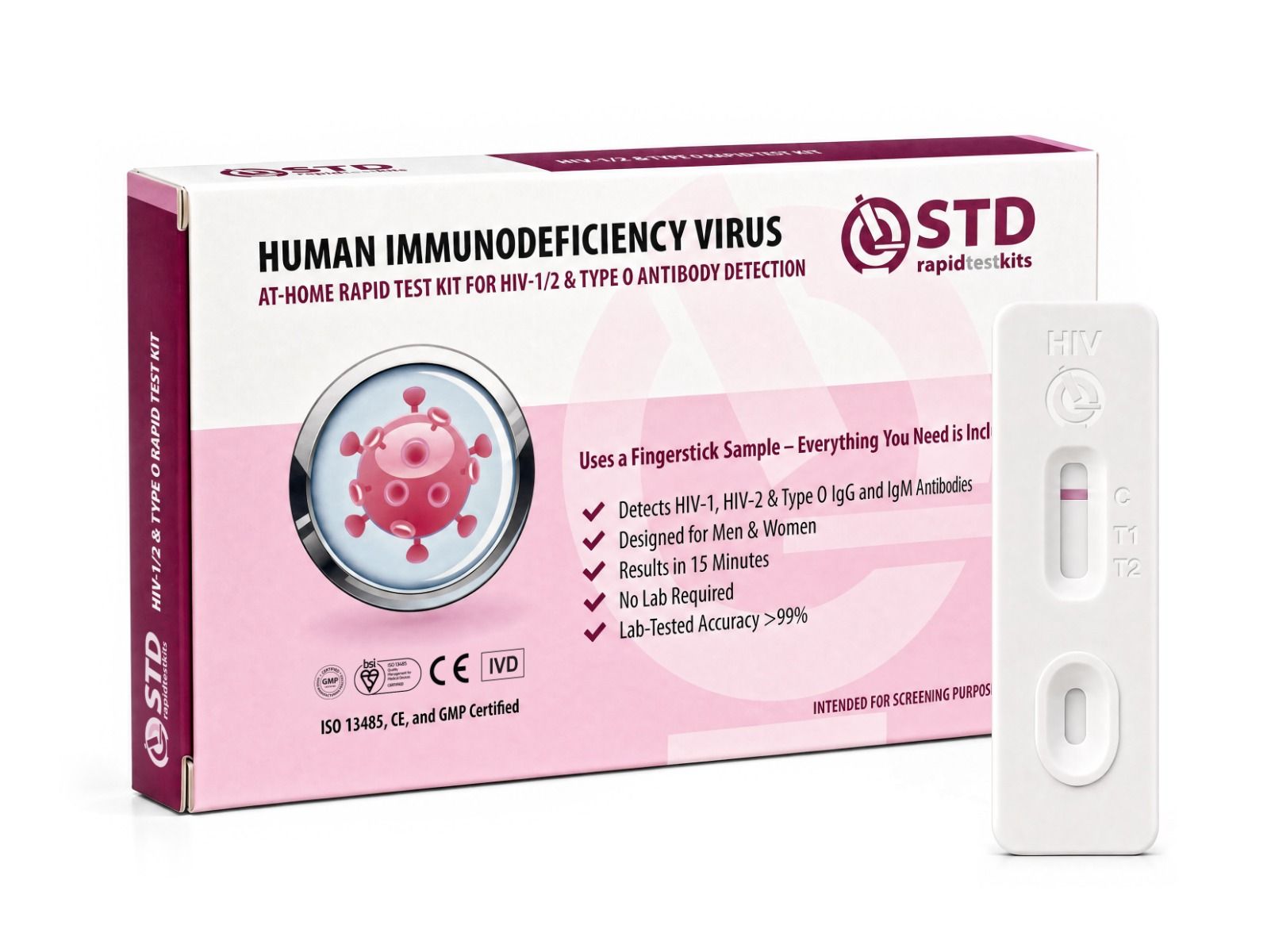
Antibody-based rapid HIV tests detect infection reliably from about three weeks to three months after exposure, depending on the assay. Combination antigen/antibody tests close the window slightly. Per CDC HIV testing guidance, any reactive antibody result, including from a self-test or community test, should be confirmed with a follow-up lab test before any treatment decision.
The practical implication is simple: there is no scenario in which knowing earlier hurts. Whether the result is negative (the typical outcome of testing) or positive, every action that follows is better with the test result in hand than without it.
Herpes: managing what cannot be cured
Herpes simplex virus comes in two types. HSV-1 is most often associated with oral cold sores but increasingly causes genital infections too. HSV-2 is most often genital. CDC herpes guidance estimates that the majority of people with genital herpes do not know they have it, partly because outbreaks can be mild or atypical and partly because the virus can shed when no sore is visible.
Untreated herpes does not cause the catastrophic organ damage that untreated syphilis or persistent HPV can. The realistic long-term picture is recurrent outbreaks, asymptomatic transmission to partners, and in rare cases more serious complications: herpes simplex encephalitis (a serious brain inflammation), neonatal herpes if a person gives birth during an active outbreak, and somewhat increased susceptibility to acquiring HIV.
Treatment is suppressive rather than curative. Daily antiviral therapy with acyclovir, valacyclovir, or famciclovir reduces outbreak frequency, shortens active outbreaks when they occur, and lowers transmission risk. Earlier diagnosis means earlier access to suppression.
The home-test option for herpes is a fingerstick blood antibody test. It detects systemic seroconversion, not the lesion itself, so it is most informative twelve or more weeks after a suspected exposure. For an active sore, a clinician swab and PCR is the more accurate test.
Daily antivirals reduce outbreak frequency, shorten active outbreaks when they occur, and lower the chance of transmission to a partner. None of this requires a severe outbreak history to be worth doing. Many people with HSV-2 take suppressive therapy specifically to reduce transmission risk to a long-term partner.
Trichomoniasis and other "mild" infections that are not always mild
Trichomoniasis is the most common curable non-viral STI worldwide and the one most commonly mislabeled as harmless. CDC trichomoniasis guidance estimates that about 70% of people with the infection have no symptoms, even though the parasite is doing the same work in both symptomatic and asymptomatic cases: causing low-grade inflammation in the urogenital tract.
The downstream effects are quieter than chlamydia or gonorrhea, but real. Persistent untreated trichomoniasis is associated with higher risk of acquiring HIV, with adverse pregnancy outcomes including premature birth, and with chronic genitourinary irritation. Treatment is a single course of metronidazole or tinidazole and clears the infection in nearly all cases.
Our at-home rapid trichomoniasis kit uses a vaginal self-swab and is validated for female anatomy only. Male readers concerned about trich exposure should see a clinician for testing, which typically uses a urethral swab or urine sample.
Hepatitis B and C: the slow path to liver damage
Hepatitis B and hepatitis C are blood-borne viruses that can be transmitted sexually, particularly through unprotected anal contact or in the presence of other STIs that cause mucosal disruption. Both are well known for chronic, often asymptomatic infection that progresses over decades to cirrhosis, liver failure, and hepatocellular carcinoma.
Hepatitis B has had a vaccine since the 1980s, and CDC now recommends universal adult hepatitis B vaccination for adults aged 19 to 59. Hepatitis C has no vaccine but is curable with direct-acting antiviral therapy in most cases. CDC clinical screening guidance for hepatitis C recommends at least one lifetime screening test for all adults aged 18 and older, except in settings with very low local prevalence.
The screening case for hepatitis is similar to the case for syphilis: a blood test, often included in a multi-infection panel, is the only reliable way to find chronic infection while it is still treatable and before liver damage accumulates.
Hepatitis B vs hepatitis C at a glance
- Hepatitis B has had a vaccine since the 1980s, and CDC recommends universal adult hepatitis B vaccination for adults aged 19 to 59.
- Hepatitis C has no vaccine but is curable in most cases with direct-acting antiviral therapy.
- Both are often asymptomatic for decades and are most reliably found through a blood test included in a multi-infection panel.
How long can each infection hide before causing damage
Roughly speaking, the more time an untreated infection has to run unchecked, the more downstream damage it can do. The window between infection and detectable serious complications varies from weeks to decades depending on the pathogen.
| Infection | Time before serious complications | What it can lead to |
|---|---|---|
| Chlamydia | Months to a few years untreated | PID, tubal scarring, infertility, ectopic pregnancy, epididymitis |
| Gonorrhea | Months to a few years untreated | PID, infertility, disseminated gonococcal infection (joints, bloodstream) |
| Syphilis | 1 to 30+ years through stages | Neurosyphilis, cardiovascular syphilis, congenital syphilis |
| HPV (high-risk) | 10 to 20 years for cancer | Cervical, anal, throat, penile, or vaginal cancer |
| HIV (untreated) | Average 8 to 10 years to AIDS | AIDS, opportunistic infections, mortality |
| Herpes (HSV-2) | Lifetime persistent | Recurrent outbreaks, neonatal herpes, rare encephalitis |
| Trichomoniasis | Months to years untreated | Pregnancy complications, increased HIV susceptibility |
| Hepatitis B/C (chronic) | 20 to 40 years | Cirrhosis, liver failure, hepatocellular carcinoma |
Why testing matters even when you feel completely fine
For most STIs, testing is what stops the symptoms from ever showing up. The major public-health screening guidelines are all built around that observation.
The CDC STI screening recommendations suggest annual chlamydia and gonorrhea screening for sexually active women under 25 and for older women with risk factors, lifetime HIV screening for all adults aged 13 to 64, hepatitis C screening for all adults over 18 at least once, and more frequent screening (every three to six months) for men who have sex with men, people with multiple partners, and people whose partner has a known STI.
The WHO STI fact sheet documents more than 1 million curable STIs acquired every day worldwide and notes that chlamydia, gonorrhea, syphilis, and trichomoniasis are generally curable with single-dose antibiotic regimens when diagnosed.
For most readers landing on an article like this one, the practical question is when they last got tested rather than whether they currently have a worst-case STI. If that answer is more than a year ago or never, the next screen is overdue.
More than 1 million curable sexually transmitted infections are acquired every day worldwide in people aged 15 to 49 years.
Frequently asked questions
- Can you have an STI for years without knowing?
- Yes. Chlamydia, gonorrhea, HPV, HIV, and syphilis can all sit in the body for months or years without producing noticeable symptoms. Asymptomatic infection is the rule rather than the exception for most of these pathogens, which is why CDC screening guidance is built around regular testing rather than waiting for symptoms.
- What is the most dangerous STI to leave untreated?
- There is no single answer because the risk profile differs by infection. Untreated HIV is fatal without treatment but is now manageable with antiretroviral therapy. Untreated syphilis can cause neurological and cardiovascular damage. Persistent high-risk HPV can cause several cancers. Untreated chlamydia and gonorrhea most often cause infertility through pelvic inflammatory disease. Each of these is largely preventable when caught early.
- Can an untreated STI really cause infertility?
- Chlamydia and gonorrhea are the primary culprits. CDC PID data puts the fertility-difficulty risk at roughly 1 in 8 among women with a prior PID diagnosis, because the inflammation scars the fallopian tubes and can also damage the ducts that carry sperm in male anatomy. Catching either infection with a routine screen and completing the antibiotic course prevents this almost entirely.
- Can an STI really cause brain damage?
- Late-stage untreated syphilis can affect the brain and spinal cord, a condition called neurosyphilis, which can cause memory loss, personality changes, vision and hearing loss, and paralysis. HIV-related neurocognitive complications can occur in advanced untreated HIV. Herpes simplex encephalitis is a rare but serious complication of HSV. Treatment in the early stages of any of these prevents the neurological progression.
- Which STIs can cause cancer?
- High-risk HPV strains are the leading STI-linked cause of cancer and are associated with cervical, anal, oropharyngeal, penile, and vaginal cancers. Chronic hepatitis B and hepatitis C infections raise the risk of hepatocellular carcinoma. HIV is associated with several cancers (Kaposi sarcoma, certain lymphomas, cervical and anal cancers), particularly in advanced or untreated disease.
- Can an STI affect my mouth or throat?
- Yes. Pharyngeal gonorrhea and pharyngeal chlamydia are common after oral sex and frequently produce no symptoms. Oral HSV-1 infections cause cold sores. HPV can colonize the oropharynx and is a leading cause of oropharyngeal cancer. Diagnosing these typically requires a clinician throat swab; the at-home kits in our catalog do not test pharyngeal samples, so a clinic visit is the right path for a suspected oral or throat infection.
- If I test negative, am I in the clear?
- It depends on timing. Each test has a window period: HIV antibody tests are reliable from about three weeks to three months post-exposure, syphilis serology from about three to six weeks, and herpes blood antibody tests from about twelve weeks. Testing too soon after a possible exposure can return a false negative. Repeat testing at the appropriate window is sometimes necessary.
- How often should I test if I am sexually active and feel fine?
- At minimum, once a year covers chlamydia, gonorrhea, and HIV for most sexually active adults. Every three to six months is the CDC-recommended cadence if you have multiple partners, a partner with a known STI, or you are a man who has sex with men. A clinician can help you calibrate the schedule to your specific situation.
- U.S. Centers for Disease Control and Prevention. Sexually transmitted infections in the U.S.: overview of national burden and asymptomatic-infection patterns.
- U.S. Centers for Disease Control and Prevention. Pelvic inflammatory disease (PID) and its long-term reproductive consequences, including the 1-in-8 fertility-difficulty estimate among women with a prior PID diagnosis.
- U.S. Centers for Disease Control and Prevention. Syphilis: stages, transmission, treatment, and complications including neurosyphilis and cardiovascular syphilis.
- U.S. Centers for Disease Control and Prevention. HIV basics: transmission, antiretroviral therapy, and the undetectable equals untransmittable (U=U) principle.
- U.S. Centers for Disease Control and Prevention. HIV testing: confirmatory follow-up testing after any reactive antibody screen.
- U.S. Centers for Disease Control and Prevention. HPV vaccines: ACIP recommendations covering ages 11-12 routine, catch-up to age 26, and shared decision-making for adults 27-45.
- U.S. Centers for Disease Control and Prevention. STI Treatment Guidelines screening recommendations: chlamydia, gonorrhea, HIV, hepatitis C, and MSM screening intervals.
- World Health Organization. Sexually transmitted infections fact sheet: global epidemiology, daily curable-STI acquisition rate, and curability of bacterial and parasitic STIs.
