

Published: October 2025 | Last updated: April 2026 | Editorial review and quality control: Martina N.
The most common STIs are also among the most manageable when caught early, which is the practical reason this guide exists. Sexually transmitted infections (STIs) are far more widespread than most people realize, and most of them cause no obvious symptoms at the time of infection. The World Health Organization estimates that more than one million curable STIs are acquired every day worldwide among people aged 15 to 49 (WHO STI fact sheet). That figure covers the four curable bacterial and parasitic infections (chlamydia, gonorrhea, syphilis, trichomoniasis); the major viral STIs add many millions more cases per year on top of that.
Eight infections do most of the work. Below is a calm walk-through of the eight worth knowing about: what causes each, who gets it, what to look for, and which can be tested at home. This article is published by stdrapidtestkits.com, which sells at-home STI testing kits. We recommend products based on fit-for-purpose for the reader's concern, not commercial benefit. Anything specific to your symptoms or exposure should be confirmed with a licensed clinician.
Which STIs are most common in men and women?
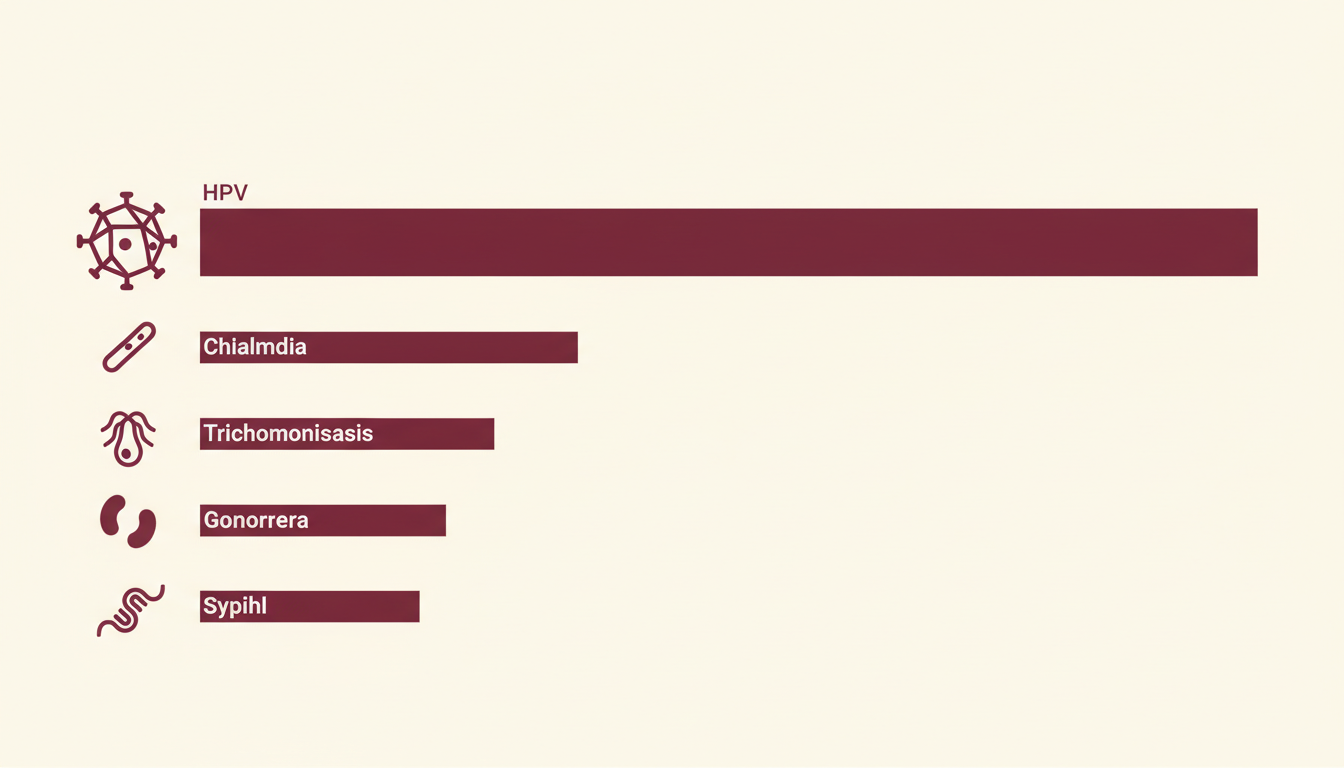
Across genders, HPV is the single most common sexually transmitted infection, with the CDC estimating that nearly all sexually active people will acquire it at some point. Chlamydia is the most reported bacterial STI in the United States, followed by gonorrhea and syphilis. Trichomoniasis is a common parasitic infection that affects people with vaginas more often than people with penises. Genital herpes is widely prevalent but often undiagnosed, with national survey data showing that about 12% of U.S. adults aged 14 to 49 carry HSV-2 (the strain most often responsible for genital herpes). HIV and viral hepatitis (B and C) are less common but carry higher long-term stakes if undetected.
Key takeaways
- Most STIs cause no symptoms in their early stages, which is exactly why routine testing matters more than waiting for something to feel wrong.
- HPV, chlamydia, and trichomoniasis together account for most new diagnoses, and all three are testable at home for women using the relevant rapid swab kit.
What "STI" actually means
An STI is any infection passed primarily through sexual contact: vaginal, anal, or oral. A few of the same infections can also pass through non-sexual routes such as direct skin-to-skin contact (genital herpes), shared injection equipment (hepatitis B and C, HIV), or from a pregnant person to their baby during birth (chlamydia, gonorrhea, syphilis, herpes, HIV).
You will see "STD" and "STI" used interchangeably in older articles. Public-health bodies have moved toward "STI" because not every infection causes a recognizable disease, and the wording is less stigmatizing for people who carry the infection without symptoms. The CDC and WHO both use "STI" in current guidance (CDC STI overview). The terminology change is real, but functionally the two terms describe the same thing.
The eight infections covered below are HPV, chlamydia, gonorrhea, trichomoniasis, genital herpes, syphilis, HIV, and viral hepatitis (B and C). They cover the overwhelming majority of new diagnoses globally, and they map directly to the home-testing options most readers ask about.
The CDC, WHO, and NHS all now use "STI" in current public-health guidance. The label change does not affect how any infection is diagnosed, treated, or tested for. If you see older articles using "STD" for the same conditions, the terminology is interchangeable.
The big picture: how common are STIs in 2026?
The numbers are bigger than most readers expect. The CDC's most recent annual STI Surveillance Summary reports more than 2.2 million combined cases of chlamydia, gonorrhea, and syphilis in a single year, and although the combined total declined modestly in the most recent reporting year, congenital syphilis remains nearly 700% higher than a decade ago (CDC STI Surveillance Summary). Many infections still go undiagnosed because they cause no symptoms, which is a meaningful share for chlamydia, trichomoniasis, and HPV in particular.
Globally, the WHO tracks four common curable STIs (chlamydia, gonorrhea, syphilis, and trichomoniasis) plus the major viral infections (HIV, HPV, HSV, hepatitis B). The "more than one million per day" curable-STI figure refers specifically to the four bacterial and parasitic infections in adults aged 15 to 49 (WHO STI fact sheet).
Two takeaways shape the rest of this guide. First, prevalence is highest in adults aged 15 to 30, but anyone sexually active can pick something up at any age, including monogamous partners during the early window of a new infection. Second, the absence of symptoms means almost nothing diagnostically. Asymptomatic carriage is normal for chlamydia, normal for trichomoniasis, normal for HPV, and entirely possible for HIV, herpes, and syphilis. Routine testing is the only way to actually know.
HPV (human papillomavirus): the most common STI across all genders
HPV is the single most prevalent sexually transmitted infection worldwide, in both men and women. The CDC estimates that nearly all sexually active people will acquire at least one HPV strain at some point, and that around 13 million new HPV infections occur in the United States each year (CDC HPV basics). HPV encompasses many strains, categorized into high-risk types linked to cancer and low-risk types associated with genital warts.
Most HPV infections clear on their own. The minority of persistent high-risk infections are what cause concern, because they can progress to cervical cancer, oropharyngeal (back-of-throat) cancer, anal cancer, vulvar cancer, vaginal cancer, or penile cancer. The strongest evidence base is for cervical cancer, where persistent high-risk HPV is found in nearly all cases.
There is good news on both prevention and detection. The HPV vaccine prevents infection by the strains responsible for the large majority of HPV-related cancers; the CDC's Advisory Committee on Immunization Practices (ACIP) recommends routine vaccination starting at ages 11 to 12, with catch-up vaccination through age 26 and shared clinical decision-making for adults aged 27 through 45 (CDC HPV vaccination). Regular cervical screening (Pap and HPV co-testing) catches the precursors to cervical cancer years before they become malignant, which is why staying on a Pap-test schedule remains one of the most protective preventive measures available to women.
One scope limit worth naming: our at-home HPV rapid swab is validated for vaginal self-swab only. We do not currently sell a male-compatible HPV home test, and there is no FDA-cleared at-home HPV test for men anywhere on the market. Men who want HPV-related screening should ask a clinician about anal cytology if they are at higher risk, or about visual exam for genital warts. For an active wart, a clinician's visual diagnosis is the standard.
About 9 out of 10 HPV infections clear naturally within two years without any treatment. Cervical screening picks up the small minority of persistent high-risk infections years before they could progress to cancer, which is why staying on a Pap-test schedule is the single most protective thing women can do (<a href="https://www.cdc.gov/hpv/about/index.html">CDC HPV basics</a>).
Chlamydia: the most reported bacterial STI in the U.S.
Chlamydia is caused by the bacterium Chlamydia trachomatis. It is the most reported bacterial STI in the United States, with roughly 1.5 million reported cases per year per the most recent CDC surveillance data (CDC STI Surveillance Summary). Actual incidence is higher than reported, because most chlamydia infections cause no symptoms.
When symptoms do appear, they tend to show up one to three weeks after exposure. In people with vaginas: abnormal vaginal discharge, burning during urination, bleeding between periods or after sex, and pelvic pain. In people with penises: clear or cloudy penile discharge, burning during urination, and sometimes painful or swollen testicles. Rectal infections (from receptive anal sex) can cause pain, bleeding, or discharge. Pharyngeal (throat) infections from oral sex usually cause no symptoms at all.
Chlamydia is curable with a single course of antibiotics, typically doxycycline taken for seven days. Untreated, it is the leading bacterial cause of pelvic inflammatory disease, ectopic pregnancy, and tubal-factor infertility in women, and it can cause epididymitis (painful inflammation of the testicle) in men.
For testing windows, lab-based NAAT testing is generally accurate from about 14 days after exposure. Rapid lateral-flow tests using the same swab sample type can screen for chlamydia at home, and a positive result is worth confirming with a lab NAAT when possible before starting treatment.
The CDC recommends annual chlamydia screening for all sexually active women under age 25, and for older women with new or multiple partners. Because chlamydia is silent in most cases, screening on a schedule rather than waiting for symptoms is what catches it before complications develop (<a href="https://www.cdc.gov/chlamydia/about/index.html">CDC chlamydia basics</a>).
Gonorrhea: bacterial, treatable, but increasingly resistant
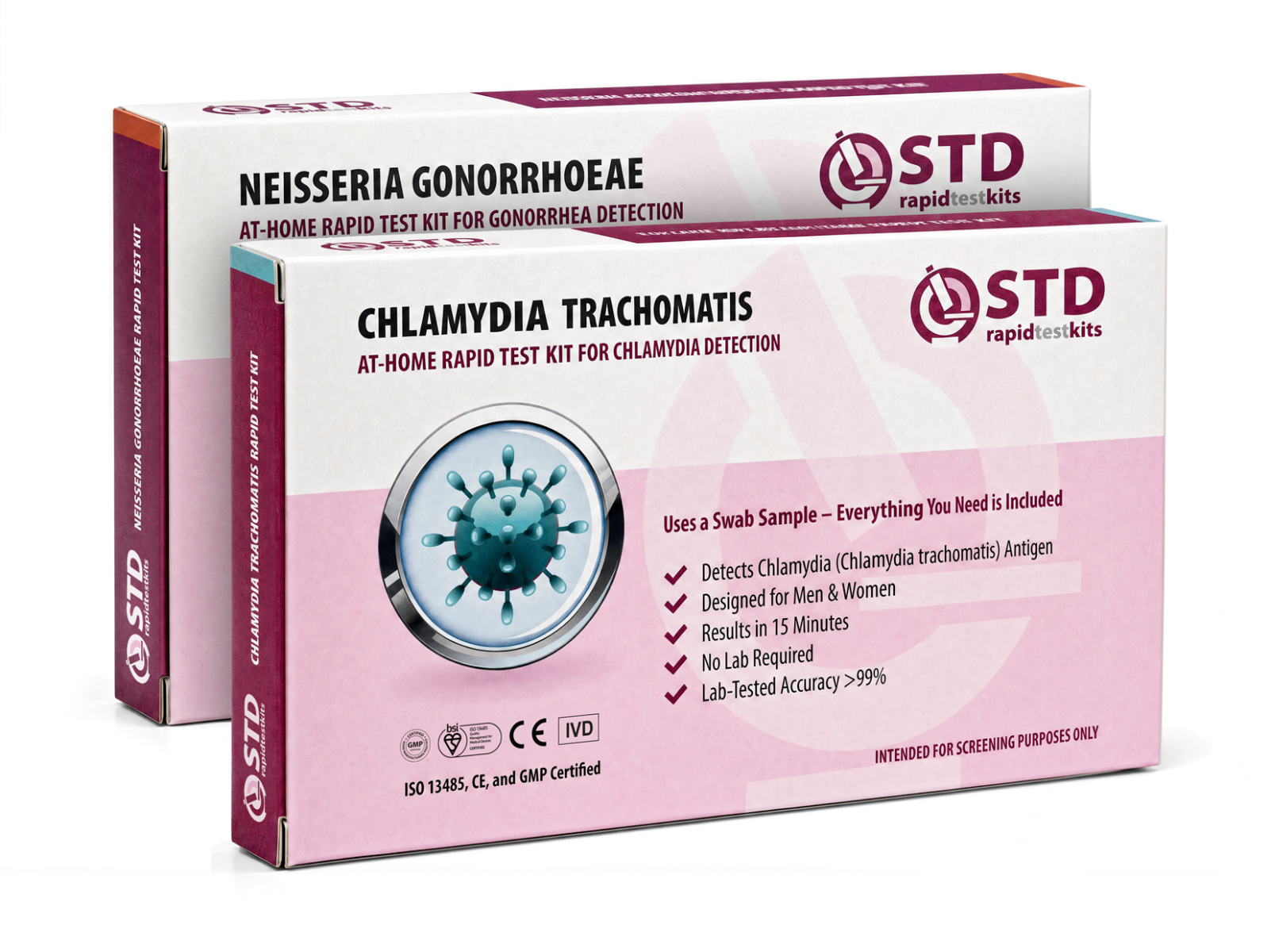
Gonorrhea is caused by Neisseria gonorrhoeae, a bacterium that infects mucous membranes of the genitals, rectum, and throat. It is the second-most-reported bacterial STI in the United States, with roughly 543,000 reported cases in the most recent annual surveillance year (CDC STI Surveillance Summary).
Symptoms, when they appear, show up two to fourteen days after exposure. In men: thick yellow or green penile discharge, painful urination, and sometimes painful swollen testicles. In women: increased vaginal discharge, painful urination, bleeding between periods, and pelvic pain. Throat infections often cause no symptoms or only mild soreness, which is one reason undiagnosed pharyngeal gonorrhea is common in people who do oral sex without barriers.
Gonorrhea is curable, but the bacterium has developed resistance to nearly every antibiotic class previously used. Current first-line treatment is a single intramuscular dose of ceftriaxone. Cases that do not respond require specialty consultation. The rising resistance is the main public-health reason behind the CDC's emphasis on routine testing for sexually active people, particularly men who have sex with men, who experience higher rates of pharyngeal and rectal gonorrhea.
One scope limit worth naming: our at-home rapid gonorrhea swab is validated for genital self-swab only. For pharyngeal or rectal gonorrhea (specific to oral or anal exposure), the appropriate test is a clinic-administered swab plus lab NAAT; we do not sell a pharyngeal or rectal home swab. Anyone whose only exposure was oral or anal should ask a clinician for the matching swab type rather than rely on a genital swab kit.
Gonorrhea has progressively developed resistance to penicillins, tetracyclines, fluoroquinolones, and earlier generations of cephalosporins. Ceftriaxone is now the only remaining first-line option in U.S. guidelines, and resistance to ceftriaxone has been documented in isolated cases globally. This is the public-health rationale for why routine screening matters even more than it used to: catching gonorrhea early keeps it on the treatable side of that resistance curve.
Trichomoniasis: the most common curable parasitic STI
Trichomoniasis ("trich") is caused by the protozoan parasite Trichomonas vaginalis. The CDC estimates more than two million trichomoniasis infections in the United States based on its 2018 estimates, with most cases in adults over age 30 (CDC trichomoniasis basics).
About 70% of people infected have no symptoms. When symptoms occur in women, they include frothy yellow-green vaginal discharge with a strong odor, vulvar itching or burning, and discomfort during urination or sex. In men, infection is usually asymptomatic; when symptoms occur, they involve mild urethral irritation or scant discharge.
Trich is curable with a single dose of metronidazole or tinidazole. Both partners need to be treated to prevent reinfection, even if one of them has no symptoms. Untreated trichomoniasis during pregnancy is associated with preterm delivery and low birth weight, which is why screening matters more than the symptoms might suggest.
Our at-home rapid trichomoniasis swab is validated for vaginal self-swab only. There is no FDA-cleared at-home trich test for men currently on the market, and the parasite is harder to detect in male urethral samples even in lab settings. Men needing a trich screen should request a urethral swab plus NAAT from a clinic. For mixed-couple testing, the practical approach is for the female partner to test at home, and if positive, both partners get treated together.
Because most men with trichomoniasis are asymptomatic carriers, treating only the symptomatic partner almost guarantees reinfection within weeks. Standard practice is to treat both partners simultaneously with a single dose of metronidazole or tinidazole, abstain from sex until the course is finished, and re-test in three months because reinfection is common.
Genital herpes: HSV-1 vs HSV-2, and why testing windows matter
Two herpes simplex viruses cause sexual-health concern. HSV-1 traditionally causes oral cold sores but increasingly causes genital herpes via oral-genital contact. HSV-2 is the classic genital strain. National survey data (NHANES 2015 to 2016) put HSV-2 seroprevalence at about 11.9% of U.S. adults aged 14 to 49, which works out to roughly one in eight adults in that age group (CDC NHANES Data Brief 304). Most people who carry either virus do not know they have it.
Primary outbreak symptoms include painful blisters or ulcers on or around the genitals, anus, or mouth, often accompanied by flu-like symptoms (fever, body aches, swollen lymph nodes). Recurrent outbreaks are usually milder. Many people have no recognizable outbreak at all, but they can still transmit the virus during periods of asymptomatic viral shedding, which is the main reason herpes spreads as widely as it does.
Herpes is not curable, but it is manageable. Antiviral medications (acyclovir, valacyclovir, famciclovir) shorten outbreaks, reduce recurrence frequency, and lower the chance of transmission to partners. Daily suppressive therapy is an option for people with frequent outbreaks or who want to reduce transmission risk in serodiscordant relationships.
Testing depends on whether you have an active lesion. With an active lesion, a swab plus PCR is the most accurate. With no active lesion, a blood antibody test (type-specific HSV-1 or HSV-2 IgG) detects past exposure. Antibody seroconversion takes time. The CDC's STI Treatment Guidelines specifically advise that for cases of recently suspected HSV-2 acquisition, repeat type-specific antibody testing 12 weeks after the presumed time of exposure is indicated, because false negatives are more frequent at early stages of infection (CDC STI Treatment Guidelines: Genital Herpes). Our HSV-1 and HSV-2 home tests are fingerstick blood antibody tests; they are appropriate for confirming past exposure 12 weeks or more after a possible exposure event, not for diagnosing an active lesion.
If you test too soon after a possible exposure, antibody levels have not had time to rise to detectable levels, and the test will return negative even when the virus is present. The CDC's STI Treatment Guidelines specifically recommend repeat type-specific antibody testing 12 weeks after suspected exposure for definitive ruling-out, because early-stage false negatives are common.
Syphilis: rising fast, treatable in early stages
Syphilis is caused by the bacterium Treponema pallidum. After more than a decade of decline, syphilis cases in the U.S. have risen sharply since 2014. CDC's most recent surveillance summary reports that overall STI cases (combining chlamydia, gonorrhea, and syphilis) are 13% higher than a decade ago, and congenital syphilis (passed to babies during pregnancy) is nearly 700% higher across the same window (CDC STI Surveillance Summary).
Syphilis progresses through stages if untreated. Primary stage: a single painless ulcer (chancre) at the site of infection, appearing about 21 days after exposure (range 10 to 90). The chancre heals on its own in 3 to 6 weeks even without treatment, which is part of why early infection is missed. Secondary stage: rough non-itchy rash on the palms and soles, fever, swollen lymph nodes, sore throat. Latent stage: no symptoms, but the bacterium remains. Tertiary stage (years to decades later, in untreated cases): cardiovascular, neurological, and gummatous complications.
Syphilis is curable in the early stages with a single intramuscular injection of benzathine penicillin G. Late or neurosyphilis requires longer treatment courses. The treatment is well-established and inexpensive; the public-health challenge is detection, because the primary chancre is painless and self-resolving.
Testing is done with blood antibody assays. Two-step protocols (treponemal plus non-treponemal) are the laboratory standard. Most antibody-based assays detect infection by 3 to 6 weeks post-exposure. Our rapid syphilis home test is a fingerstick blood antibody test using the same antibody-detection chemistry, suitable as a screening tool. Positive results should be confirmed and staged by a clinician before treatment.
Congenital syphilis is up nearly 700% over the past decade according to CDC surveillance, the steepest U.S. increase of any syphilis category. Routine prenatal screening at the first visit and again in the third trimester for higher-risk pregnancies is what catches it in time to treat before delivery. Anyone planning a pregnancy or actively pregnant should confirm a recent syphilis screen with their provider (<a href="https://www.cdc.gov/sti-statistics/annual/index.html">CDC STI Surveillance Summary</a>).
HIV: lower prevalence, higher long-term stakes
HIV is far less common than HPV or chlamydia in absolute numbers, but it carries the highest long-term stakes if undetected. The CDC reports tens of thousands of new HIV diagnoses per year in the U.S., with the majority of new diagnoses among men and most male transmissions occurring through male-to-male sexual contact (CDC HIV statistics). Heterosexual transmission accounts for roughly one in five new diagnoses, with women representing the majority of those.
HIV transmission risk varies dramatically by exposure type. Receptive anal sex carries the highest per-act risk; insertive vaginal and oral routes carry progressively lower risk. The presence of another untreated STI (especially syphilis or genital herpes) raises HIV transmission risk meaningfully because mucosal lesions provide an entry route. Consistent condom use, treatment-as-prevention (an HIV-positive partner with a sustained undetectable viral load does not transmit sexually), and pre-exposure prophylaxis (PrEP) all substantially reduce risk.
HIV is not curable, but modern antiretroviral therapy (ART) reduces viral load to undetectable levels, allows a near-normal lifespan, and prevents sexual transmission. Early diagnosis is the single biggest factor in long-term outcomes. The CDC recommends that everyone aged 13 to 64 be tested for HIV at least once as part of routine medical care, with more frequent testing for people with ongoing exposure risk.
Testing windows depend on the test type. Fourth-generation antigen-antibody lab tests detect HIV by about 18 to 45 days post-exposure. Rapid antibody-only tests typically have a window period of 23 to 90 days, with most people seroconverting by 4 to 6 weeks. Our rapid HIV home test is a fingerstick antibody test; reliable readings are available by 90 days post-exposure, with earlier results possible but worth re-confirming at the 90-day mark for definitive ruling-out.
Two HIV facts most people miss
- U=U: an HIV-positive partner who maintains a sustained undetectable viral load on antiretroviral therapy does not transmit HIV sexually. This is the strongest single transmission-prevention finding of the past decade.
- PrEP (daily oral or long-acting injectable pre-exposure prophylaxis) reduces HIV acquisition risk by approximately 99% when used as prescribed. Anyone with ongoing exposure risk should ask a clinician whether PrEP fits their situation.
Hepatitis B and C: blood-borne, often silent, both screen-eligible
Hepatitis B (HBV) and hepatitis C (HCV) are viral infections of the liver. Both can be transmitted sexually, but the larger transmission burden comes from shared injection equipment (HCV) or perinatal transmission (HBV). Many chronic infections go undiagnosed because acute illness is often mild or absent.
Most acute hepatitis B and C infections cause no obvious symptoms. When they do, symptoms include fatigue, abdominal discomfort, nausea, and jaundice (yellowing of the skin and eyes). The CDC reports that most people who get infected with HCV develop a chronic, lifelong infection if untreated, while a smaller fraction of adult-acquired HBV cases progress to chronic hepatitis B (CDC hepatitis C overview). Chronic infection in either virus raises the risk of cirrhosis and liver cancer over decades.
HBV is preventable by vaccination, and the universal hepatitis B vaccine for infants has dramatically reduced new cases. HCV has no vaccine but is curable with direct-acting antiviral medications taken for 8 to 12 weeks, with cure rates above 95% in clinical practice. The CDC recommends hepatitis C testing for all adults, plus screening during each pregnancy for both viruses. Our rapid HBV and HCV home tests are fingerstick blood antibody tests; they detect past exposure and infection but require lab confirmation and viral-load testing for active-infection workup before any treatment decisions.
Modern direct-acting antiviral medications cure more than 95% of patients with hepatitis C in 8 to 12 weeks of oral therapy. The CDC recommends hepatitis C testing for all adults, regardless of perceived risk, because the cure pathway is so effective once infection is detected (<a href="https://www.cdc.gov/hepatitis-c/about/index.html">CDC hepatitis C overview</a>).
How STI symptoms can present differently in men and women
Anatomy drives most of the difference. The vagina and cervix have a much larger mucosal surface than the male urethra, which means infections of the lower female genital tract often produce visible discharge, while equivalent infections in men produce only mild urethral symptoms or none at all. This is one reason men can carry chlamydia or trichomoniasis for months or years without realizing it, and why screening rather than symptom-watching is the public-health emphasis.
Some patterns worth knowing:
- Chlamydia and gonorrhea: women are more likely to have abnormal discharge or pelvic pain; men are more likely to notice penile discharge or testicular discomfort. Pharyngeal infections in either sex are usually silent.
- Trichomoniasis: women are more often symptomatic with frothy discharge and irritation; men are typically asymptomatic.
- Genital herpes: outbreaks are more often missed in women because lesions can occur internally on the cervix or vaginal walls; men are more likely to spot a lesion on the penile shaft or scrotum. Both sexes can have asymptomatic shedding between visible outbreaks.
- HPV: men rarely develop visible warts and have no equivalent of the Pap-smear screening women receive; high-risk strains in men are largely silent until oropharyngeal or anal cancer presents years later.
- Syphilis: the primary chancre is more often missed in women (cervical or vaginal location, painless and self-resolving) than in men (visible penile chancre); secondary-stage rash presents similarly in both sexes.
The takeaway is consistent across all eight infections: symptom watching is unreliable, and routine testing on a schedule that matches your activity level (every six to twelve months for sexually active adults with new partners, more often if you fit higher-risk categories) is what actually catches things in time to treat them simply.
| Infection | Pathogen type | Curable? | Home test we sell |
|---|---|---|---|
| HPV | Virus | No (most clear on their own) | Vaginal swab (women only) |
| Chlamydia | Bacterium | Yes (antibiotics) | Genital swab (any gender) |
| Gonorrhea | Bacterium | Yes (ceftriaxone) | Genital swab (any gender) |
| Trichomoniasis | Parasite | Yes (antibiotics) | Vaginal swab (women only) |
| Genital herpes | Virus | No (suppressible) | Fingerstick blood antibody |
| Syphilis | Bacterium | Yes (penicillin) | Fingerstick blood antibody |
| HIV | Virus | No (treatable with ART) | Fingerstick blood antibody |
| Hepatitis B | Virus | No (manageable) | Fingerstick blood antibody |
| Hepatitis C | Virus | Yes (DAAs, 8-12 weeks) | Fingerstick blood antibody |
When to test, where to test, and what kind of test
The right answer depends on three things: which infection you are testing for, how long it has been since the possible exposure, and what sample type the test requires. Window periods (the time before a test reliably detects infection) vary from about a week for trichomoniasis to several months for some viral antibody tests. The table below summarizes the practical numbers, drawn from CDC STI Treatment Guidelines and FDA-cleared assay labelling.
Sample type matters. Chlamydia, gonorrhea, trichomoniasis, and HPV use a swab (vaginal or penile depending on the kit). HIV, syphilis, herpes (antibody), hepatitis B, and hepatitis C use a blood sample (lab venipuncture or fingerstick rapid). Pharyngeal and rectal swabs require clinic collection; we do not currently sell home pharyngeal or rectal swab kits, so any oral or anal exposure that needs site-specific testing should go through a clinic.
Where to test. At-home rapid testing fits best when you are screening at a routine cadence, when privacy matters, or when symptoms are mild and you mostly want a quick answer. A clinic visit is the right call when symptoms are acute or worsening, when an exposure was high-risk and you want concurrent rapid plus lab confirmation, or when you need pharyngeal or rectal sampling. Lab NAAT remains the gold standard for confirmation; rapid lateral-flow home kits are a screening tool, not a diagnostic substitute.
For people with multiple recent partners or unknown exposure history, a comprehensive multi-infection panel is usually the most efficient first step. Single-infection tests are appropriate when you have a specific exposure or symptom in mind.
| Infection | Window period | Sample type |
|---|---|---|
| Trichomoniasis | About 7 days | Vaginal swab |
| Chlamydia | About 14 days | Genital swab |
| Gonorrhea | About 14 days | Genital swab |
| Syphilis (antibody) | 3 to 6 weeks | Fingerstick or lab blood |
| HIV (4th-gen lab antigen-antibody) | 18 to 45 days | Lab venipuncture |
| HIV (rapid antibody home) | 23 to 90 days; definitive at 90 | Fingerstick blood |
| Genital herpes (antibody) | 6 to 12 weeks; outer range to 16 | Fingerstick or lab blood |
| Hepatitis B and C (antibody) | 6 to 24 weeks | Fingerstick or lab blood |
| HPV | No defined post-exposure window | Cervical screening or visual exam |
Prevention basics
The shortest version of prevention is: barrier protection during every sexual encounter, vaccination where available, regular testing on a schedule, and treatment of partners when one of you tests positive.
Barriers: external condoms (latex or polyurethane) reduce transmission of every STI on this list to varying degrees, with the highest reductions for chlamydia, gonorrhea, syphilis, and HIV (transmitted via fluids) and partial reductions for herpes and HPV (transmitted via skin contact, including areas a condom does not cover). Internal condoms and dental dams cover oral-receptive and vaginal-receptive routes.
Vaccines: HPV (Gardasil 9 covers nine high-risk strains; ACIP-recommended through age 26 routine, ages 27 to 45 by shared decision-making) and hepatitis B (universal infant vaccination plus catch-up for adults at risk).
Pre-exposure prophylaxis (PrEP) for HIV: daily oral tenofovir/emtricitabine or long-acting injectable cabotegravir reduces HIV transmission risk by roughly 99% when used as prescribed. Anyone with ongoing exposure risk should ask a clinician whether PrEP fits their situation.
Post-exposure prophylaxis (PEP) for HIV: if a high-risk exposure has already occurred, PEP is available from urgent-care or emergency clinics and must be started within 72 hours of the exposure to be effective. Do not wait for a test result to seek PEP if the exposure was recent and high-risk.
Communication: an honest conversation about testing history with new partners is uncomfortable in the abstract and very normal once you start having it. The CDC's STI overview is a reasonable neutral starting reference if you want to point a partner at shared language (CDC STI overview).
Most STIs cause no signs or symptoms. The only way to know is to get tested.
Frequently asked questions
- What's the difference between an STD and an STI?
- For practical purposes, the two terms mean the same thing. The shift to STI happened because many of these infections never produce symptoms (and so technically never become a 'disease'), and public-health research suggested the older 'D' label discouraged people from testing. If you are reading guidance from before about 2020 you will see STD; current clinical guidance from CDC, WHO, and NHS uses STI for the exact same conditions.
- Which STIs are curable?
- Bacterial and parasitic STIs are curable: chlamydia, gonorrhea, syphilis, and trichomoniasis. Among the viral STIs, hepatitis C is curable with 8 to 12 weeks of direct-acting antivirals. The other viral infections (HPV, genital herpes, HIV, hepatitis B) are not curable but are manageable. Most HPV infections clear on their own within two years; herpes is suppressible with antivirals; HIV is controllable with modern antiretroviral therapy.
- How long after exposure should I wait to test?
- It depends on the infection. Trichomoniasis is detectable about 7 days post-exposure. Chlamydia and gonorrhea are reliable from about 14 days. Syphilis antibody tests typically work by 3 to 6 weeks. HIV antibody home tests need 3 to 13 weeks depending on test type, with definitive ruling-out at 90 days. Herpes antibody tests need 6 to 12 weeks for most people, with an outer range to 16 weeks. Testing too early returns false negatives, which is worse than not testing yet.
- Can I have an STI without symptoms?
- Yes, and most people who have an STI do not have symptoms. Asymptomatic carriage is normal for chlamydia, normal for trichomoniasis (about 70% of cases), normal for HPV, and entirely possible for HIV, genital herpes, and syphilis at various stages. Symptom-watching is unreliable; routine screening is what actually catches infections in time to treat them simply.
- Can men test for HPV at home?
- Not currently. There is no FDA-cleared at-home HPV test for men anywhere on the market, and our rapid HPV swab is validated for vaginal self-swab only. Men with concerns should ask a clinician about visual exam for genital warts, or about anal cytology if they fall into a higher-risk category. The 8-in-1 multi-STI kit for men and women includes the infections we can test for in both sexes, but HPV is not one of them.
- How accurate are at-home rapid STI tests?
- Performance figures are product-specific. Check the data insert for each kit you use, since sensitivity and specificity vary by infection and assay design. Lab NAAT remains the analytical gold standard, and a positive at-home result is worth confirming with lab testing before starting treatment. The pattern across well-designed lateral-flow kits is high specificity (very few false positives) with sensitivity that depends on viral or bacterial load at sampling.
- Which test should I take if I'm not sure what I was exposed to?
- A multi-infection panel is the most efficient choice when exposure is uncertain. The 6-in-1 and 8-in-1 home kits cover the highest-prevalence infections in one package. Single-infection tests are appropriate when you have a specific exposure or symptom in mind. If your exposure was oral or anal specifically and you want site-specific swabbing, a clinic visit is the right venue.
- Do I need to tell past partners if I test positive?
- Yes. For the curable bacterial STIs (chlamydia, gonorrhea, syphilis), the parasitic STI (trichomoniasis), and the curable viral infection hepatitis C, partner notification is standard public-health practice so they can test and get treated. For viral infections with no cure (HIV, genital herpes, hepatitis B), notification is also strongly recommended so partners can pursue testing and access ongoing treatment. Anonymous online notification services exist if you prefer not to do it directly.

- World Health Organization. Global STI fact sheet covering daily incidence of curable STIs, the major viral STIs, prevention, and treatment guidance.
- U.S. Centers for Disease Control and Prevention. STI Surveillance Summary annual report — chlamydia, gonorrhea, and syphilis case counts, year-over-year and decade-long trend statistics, including congenital syphilis.
- U.S. Centers for Disease Control and Prevention. NCHS Data Brief No. 304 — HSV-1 and HSV-2 prevalence in U.S. adults aged 14 to 49 from NHANES 2015 to 2016.
- U.S. Centers for Disease Control and Prevention. STI Treatment Guidelines, Genital Herpes section — type-specific antibody testing windows and interpretation of false-negative results in early infection.
- U.S. Centers for Disease Control and Prevention. HIV statistics page — annual U.S. diagnoses, transmission categories, and demographic distribution.
- U.S. Centers for Disease Control and Prevention. Hepatitis C overview — chronic-infection course, cure rates with direct-acting antivirals, and adult screening recommendation.
