
Published: September 2025 | Last updated: April 2026 | Editorial review and quality control: Martina N.
Chlamydia is one of the most common bacterial sexually transmitted infections in the world, and most people who carry it never feel a single symptom. That silence matters far beyond the infection itself. While chlamydia spreads undetected, it can inflame the tissues most exposed during sex, and that inflammation changes the math of HIV transmission. Public-health agencies have tracked the overlap for decades. The U.S. Centers for Disease Control and Prevention notes that untreated chlamydia may increase your chances of getting or giving HIV. The biology behind that link is well documented, the populations most affected are visible in surveillance data, and the practical steps to lower your risk are within reach.
This guide pulls together what current CDC, WHO, and HIV.gov guidance say about chlamydia as a co-factor for HIV, who carries the highest risk and why, and what to do if you have ever been treated for chlamydia and are weighing whether to test for HIV.
Does chlamydia really raise HIV risk?
Yes. Untreated chlamydia inflames mucosal tissue in the genitals and rectum, brings HIV target cells (CD4 T cells) to the surface, and creates microscopic openings where the virus can enter. The CDC notes that untreated chlamydia may increase the chance of getting or giving HIV; peer-reviewed reviews of STI-HIV coinfection have estimated a roughly 2 to 5 times increase in per-exposure transmission risk when an active STI is present. Chlamydia treatment plus a follow-up HIV test is the standard of care.
Key Takeaways
- Active chlamydia raises per-exposure HIV transmission risk through mucosal inflammation and CD4 immune-cell recruitment; peer-reviewed reviews estimate roughly a 2 to 5 times increase when an active STI is present.
- Anyone treated for chlamydia in the past 12 months should also test for HIV; CDC guidance includes routine HIV testing after a new STI diagnosis.
This article is published by stdrapidtestkits.com, which sells at-home STI testing kits. We recommend products based on fit-for-purpose for the reader's concern, not commercial benefit. Article content summarizes current CDC, WHO, and HIV.gov guidance and is not a substitute for clinical advice.
Why chlamydia stays silent for so many people
The CDC's chlamydia page is direct about the symptom picture: chlamydia often has no symptoms, but it can cause serious health problems even without symptoms. When symptoms do appear, they tend to be modest and easy to dismiss, including a slight burn during urination, a small change in vaginal or penile discharge, mild pelvic discomfort, or spotting between periods. People often brush these off as a urinary tract infection, a yeast issue, or a hormonal flux.
Asymptomatic infection has two consequences. The first is medical. The bacterium Chlamydia trachomatis can travel from the cervix or urethra into the upper reproductive tract, where it can cause pelvic inflammatory disease, scarred fallopian tubes, and reduced fertility. The second is epidemiological. People who do not know they are infected do not seek treatment, do not notify partners, and do not change behavior. Chlamydia therefore tends to circulate in a population longer than infections that announce themselves with early, obvious symptoms.
The same silence that drives transmission also drives the HIV co-factor effect. An infection no one knows about is also an infection no one is treating, which means the inflammation it triggers in genital tissue persists for weeks or months. Each new sexual exposure during that window encounters tissue that is more vulnerable to HIV than uninflamed tissue would be.
Medical damage: untreated chlamydia can ascend from the cervix or urethra to the upper reproductive tract, causing pelvic inflammatory disease, scarred fallopian tubes, and reduced fertility.
Epidemiological damage: people who do not know they are infected do not seek treatment, do not notify partners, and do not change behavior, so chlamydia keeps circulating quietly in a population, raising the chance of HIV exposure during inflamed-tissue windows.
How chlamydia biologically raises HIV risk
HIV needs two things to establish a new infection: access to vulnerable cells, and a path to reach them. Chlamydia improves both conditions in the tissues HIV is most likely to encounter during sex.
Three biological mechanisms drive the link, each documented in peer-reviewed work and summarized in WHO and CDC reports.
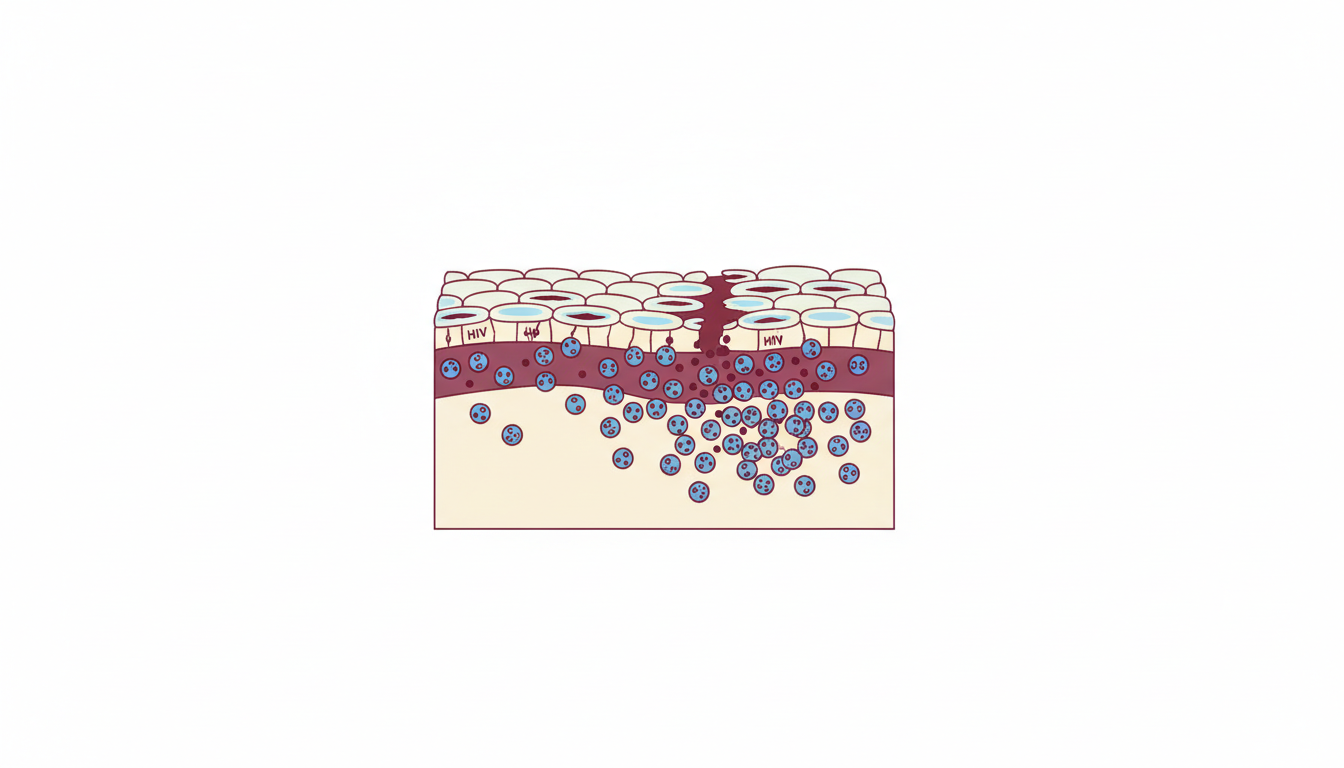
Mechanism one: mucosal disruption. Chlamydia infects the columnar epithelial cells lining the cervix, urethra, and rectum. The infection causes cell turnover, microscopic erosions, and increased permeability of the mucosal barrier that normally separates the bloodstream from the surface of the genital tract. HIV that would otherwise be cleared away by intact mucosa now has direct routes to deeper tissue.
Mechanism two: immune-cell recruitment. Inflammation pulls immune cells, including the CD4+ T lymphocytes HIV preferentially infects, toward the chlamydia infection site. The same cells the immune system sends to fight one infection are the cells HIV looks for to start another. The arithmetic is unfavorable: more target cells in one place means more chances for HIV to find a host.
Mechanism three: local microbiome shifts. Genital and rectal infections disturb the local bacterial ecology, particularly in women, where chlamydia can shift the vaginal microbiome away from a lactobacillus-dominant state. A disrupted microbiome is associated with higher inflammatory tone and reduced barrier function, both of which work in HIV's favor.
| Biological effect of chlamydia | Impact on HIV transmission risk |
|---|---|
| Microscopic disruption of mucosal lining | Easier viral entry into deeper tissue |
| Local inflammation and increased blood flow | More HIV target cells delivered to the surface |
| CD4+ T cell recruitment to infection site | More host cells available for HIV to infect |
| Disrupted vaginal or rectal microbiome | Reduced natural barrier function |
| Untreated or repeat infection | Prolonged window of higher vulnerability |
Who carries the highest risk, and why
Risk is not distributed evenly. Anatomy, age, hormones, and access to care all shape who experiences the chlamydia-HIV overlap most acutely.
People with vaginas. The cervix and vaginal walls offer a larger mucosal surface area for both chlamydia and HIV than the male urethra. Hormonal changes across the menstrual cycle, during pregnancy, and around menopause shift local immunity in ways that can either raise or lower vulnerability. Younger women, whose cervical anatomy includes more exposed columnar epithelium (a feature called cervical ectopy), are particularly susceptible to chlamydia. The CDC's chlamydia page recommends yearly testing for sexually active women under 25 for that reason.
Men who have sex with men. Rectal chlamydia is common, often asymptomatic, and biologically associated with elevated HIV risk because the rectal mucosa is thin and rich in HIV target cells. CDC surveillance data consistently show overlap between rectal chlamydia diagnoses and new HIV diagnoses in this population. Routine extragenital screening (rectal and pharyngeal swabs collected at clinics) is part of CDC guidance for sexually active gay and bisexual men.
Adolescents and young adults. WHO's chlamydia fact sheet notes that chlamydial infection is more common in young people. Combined with frequently lower access to confidential testing, this age group carries disproportionate risk for both infections.
Communities with limited healthcare access. Whether the barrier is geography, cost, insurance, or stigma, untreated chlamydia drives chronic inflammation, and chronic inflammation drives risk. CDC surveillance data document higher chlamydia and HIV rates in communities of color, in incarcerated populations, and in regions with reduced sexual-health infrastructure. Specific structural barriers, including the cost of an unsubsidized clinic visit, the absence of confidential testing options for adolescents in some states, and travel distance to the nearest sexual-health clinic, drive longer untreated windows and more onward transmission in these populations.
What the coinfection data actually shows
Coinfection means having more than one infection at the same time. In sexual-health surveillance, chlamydia and HIV coinfection is a tracked indicator because the overlap signals both biological vulnerability and gaps in screening.
WHO and the CDC publish surveillance numbers that track newly diagnosed HIV cases against existing or recent STI diagnoses. The patterns are consistent across reporting cycles. People who acquire HIV are substantially more likely than the general population to have a chlamydia diagnosis in the year before their HIV-positive test, particularly among MSM and young women. The WHO HIV/AIDS fact sheet identifies the presence of another STI as one of the factors that raises the risk of acquiring or transmitting HIV.
How much higher depends on the population, the anatomic site, and the interval between exposures. Peer-reviewed reviews of STI-HIV coinfection biology and epidemiology have estimated a roughly 2 to 5 times increase in per-exposure transmission risk when an active STI is present, with the upper end of that range applying to ulcerative infections such as syphilis and herpes and the lower-to-middle range covering inflammatory non-ulcerative infections such as chlamydia and gonorrhea. Public-health agencies including the CDC and WHO describe the co-factor effect qualitatively without committing to a single multiplier.
Two things make those numbers feel less abstract. The first is that they refer to per-exposure risk, not lifetime risk; risks compound across multiple exposures. The second is that the increase applies in both directions: a person with HIV and untreated chlamydia is also more infectious to a partner than the same person would be without the chlamydia, because genital inflammation raises HIV viral shedding at the mucosal surface.
The chlamydia-HIV link is not one-directional. A person who is HIV-positive and also has untreated chlamydia is more infectious to partners than the same person would be without the chlamydia, because genital inflammation raises HIV viral shedding at the mucosal surface. Treating chlamydia therefore lowers HIV risk on both sides of an exposure, for the person being tested and for their partners.
What happens inside the body when both infections are present
The coinfection picture is not just additive. Each infection changes the conditions for the other in ways that matter clinically.
When HIV enters tissue that is already inflamed by chlamydia, it encounters a high density of activated CD4 cells. Activated CD4 cells are easier for HIV to infect than resting cells because their cellular machinery is already turned on. The virus replicates faster early in infection, which raises the peak viral load during acute HIV. That peak viral load period is the highest-infectiousness window in HIV transmission, and inflammation amplifies it.
The traffic also runs the other way. Untreated HIV slowly degrades systemic immunity, which can change how the body handles bacterial infections including chlamydia. People with HIV who acquire chlamydia or gonorrhea may experience longer-lasting infections, more frequent reinfection, and more pelvic inflammatory disease. Treating one without screening for the other leaves a gap that future exposures will eventually find.
The clinical takeaway is simple. Chlamydia treatment plus an HIV test is the standard pairing in sexual-health clinics, and CDC guidance recommends the same approach in primary care settings. The treatment itself is short, usually a single dose or a one-week oral antibiotic course; the test pairing is what closes the loop on coinfection risk.
Chlamydia often has no symptoms, but it can cause serious health problems, even without symptoms. Untreated chlamydia may also increase your chances of getting or giving HIV.
Why HIV testing should follow a chlamydia diagnosis
If you have been diagnosed with chlamydia in the last year, current testing guidance points clearly toward an HIV test as well. The CDC's HIV testing page states that everyone between the ages of 13 and 64 should get tested for HIV at least once, and that people with ongoing risk factors should test at least annually. A new STI diagnosis falls inside that ongoing-risk category by design.
The right test depends on how recent your last possible exposure was, and on which test format you choose. Per HIV.gov's testing overview, the three main HIV test types in use have different window periods.
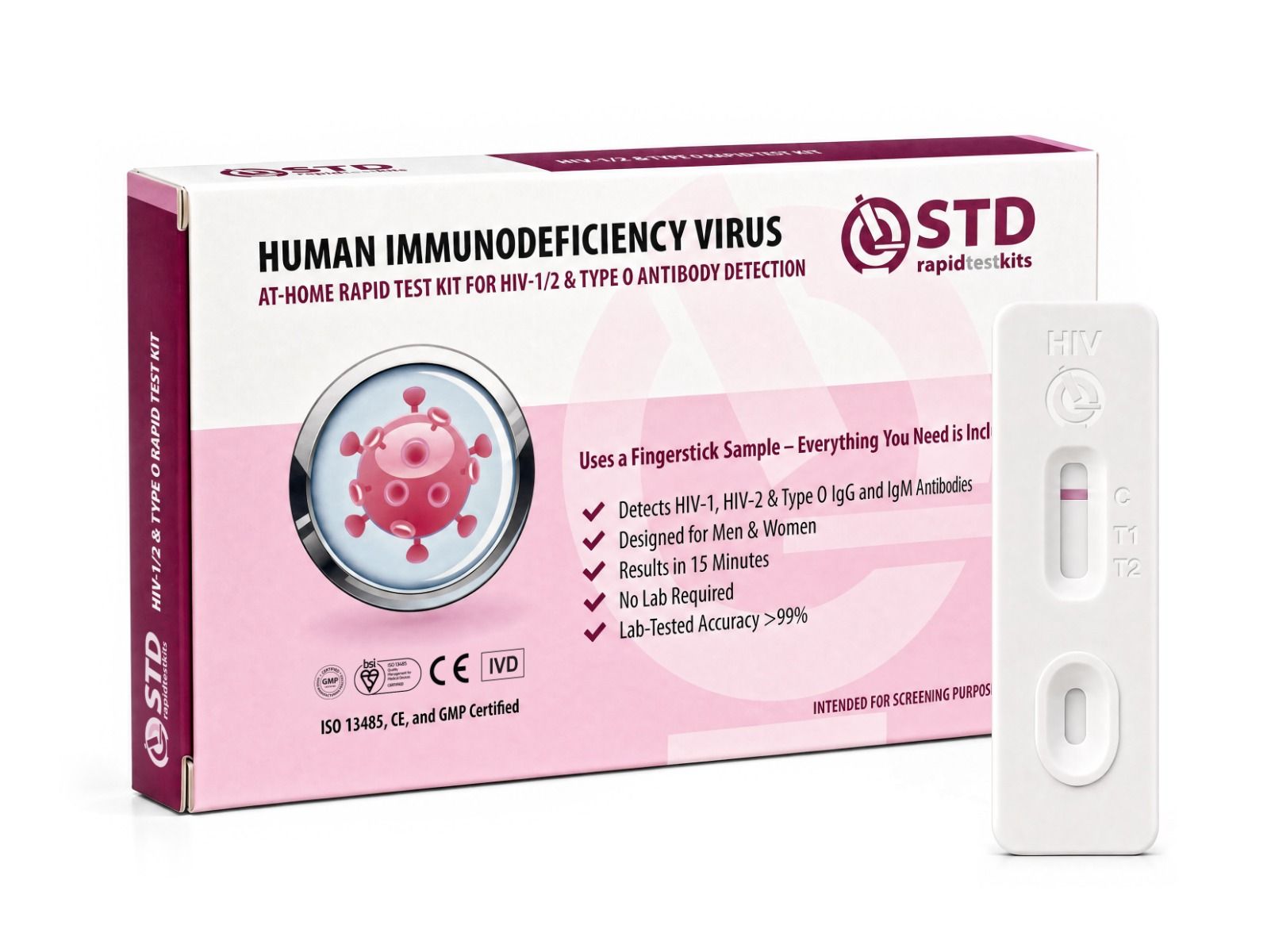
- Antibody/antigen rapid tests using a finger-prick blood sample (the at-home and many clinic rapid kits) can typically detect HIV from about 18 to 90 days after exposure.
- Antibody/antigen tests run by a laboratory on a venipuncture blood sample can usually detect HIV from about 18 to 45 days after exposure.
- Nucleic acid (NAT) tests can detect HIV as early as 10 to 33 days after exposure but are usually ordered only when there is a strong clinical reason to test very early, such as a known high-risk exposure with symptoms.
For most readers using an at-home finger-prick rapid test after a chlamydia diagnosis, a test taken at least 6 weeks after the most recent unprotected exposure is reasonable, with a follow-up test at 90 days for full window-period coverage. Modern HIV treatment is highly effective; the CDC's HIV treatment page states that a person with an undetectable viral load will not transmit HIV through sex, the principle known as Undetectable equals Untransmittable.
Lowering your HIV risk after a chlamydia diagnosis
Chlamydia treatment is fast and reliable when taken as prescribed. The HIV-risk piece is the longer game. After completing chlamydia treatment, the practical priorities are confirming clearance, reducing future exposures, and using HIV-prevention tools that match your risk profile.
Confirm chlamydia clearance. CDC guidance recommends a test of cure when chlamydia is treated during pregnancy. For non-pregnant adults, retesting at three months after treatment is recommended, because reinfection is common when partners are not also treated. Reinfection within months of an initial infection is one of the strongest signals that ongoing risk has not been addressed.
Treat partners. Most U.S. states allow expedited partner therapy, where the clinician treating you can also provide a prescription or medication pack for sexual partners without requiring them to attend a separate visit. Untreated partners are the most common source of reinfection.
Test for HIV at the right time window. Finger-prick antibody/antigen rapid tests reach reliable accuracy by 6 weeks after exposure for most people and 90 days for everyone. If your most recent possible exposure was within the last few weeks, a 6-week test plus a 90-day confirmation gives a high-confidence answer.
Update your screening rhythm. Anyone treated for chlamydia in the past year fits the CDC's higher-frequency HIV screening recommendation. Most sexual-health clinics will set you up for repeat STI and HIV testing every 3, 6, or 12 months depending on the number of partners and types of exposure.
PrEP, PEP, and condoms: the prevention toolkit
HIV prevention has more options now than at any point in the epidemic, and a chlamydia diagnosis is a useful prompt to reassess which of those options fit your life.
Pre-exposure prophylaxis (PrEP). The CDC's PrEP page describes PrEP as greatly reducing your chance of getting HIV from sex when taken as prescribed, with maximum protection reached at about 7 days of daily use for receptive anal sex and about 21 days for receptive vaginal sex. Two oral options (Truvada and Descovy) and one long-acting injectable (cabotegravir) are FDA-approved. PrEP is appropriate for anyone with ongoing HIV risk, including people with recent STI diagnoses, multiple partners, or partners whose HIV status is not confirmed.
Post-exposure prophylaxis (PEP). If you have had a recent unprotected exposure that you think carried HIV risk, PEP is medicine that prevents HIV after a possible exposure. The CDC's PEP page is explicit that PEP must be started within 72 hours (3 days) after a possible exposure, that you take it daily for 28 days, and that every hour counts. PEP is available at many emergency departments, sexual-health clinics, and through telehealth in some states.
Condoms. External and internal condoms remain the most accessible prevention tool against both HIV and chlamydia when used consistently and correctly. They are less effective against infections transmitted by skin-to-skin contact (such as herpes and HPV), but for HIV and chlamydia, which transmit through fluids and mucosal contact, they substantially reduce per-exposure risk.
Vaccines. No HIV or chlamydia vaccine is currently available. HPV and hepatitis B vaccines are part of routine sexual-health prevention; HPV vaccination is recommended through age 26 routinely, and through age 45 with shared clinical decision-making. Hepatitis B vaccination is now recommended for all adults aged 19 to 59.
Prevention toolkit at a glance
- PrEP: daily oral pill or long-acting injection. Greatly reduces HIV risk from sex per the CDC; maximum protection at about 7 days for anal, about 21 days for vaginal.
- PEP: 28-day antiretroviral course that must start within 72 hours of a possible exposure. Every hour counts.
- Condoms: substantially reduce per-exposure risk for HIV and chlamydia, both of which transmit through fluids and mucosal contact.
- Vaccines: no HIV or chlamydia vaccine available; HPV vaccination through age 26 routinely, hepatitis B vaccination for all adults 19 to 59.
Your next steps if you've had chlamydia
The actionable list is short and specific.
- If you have not yet completed chlamydia treatment, finish the prescribed course and abstain from sex for 7 days after a single-dose treatment or until completion of a multi-day course.
- Notify any partners from the exposure window so they can also be tested and treated, or use expedited partner therapy where available.
- Schedule an HIV test if you have not had one in the last 12 months. Choose a fourth-generation antibody/antigen test at 6 weeks post-exposure, with a confirmatory test at 90 days.
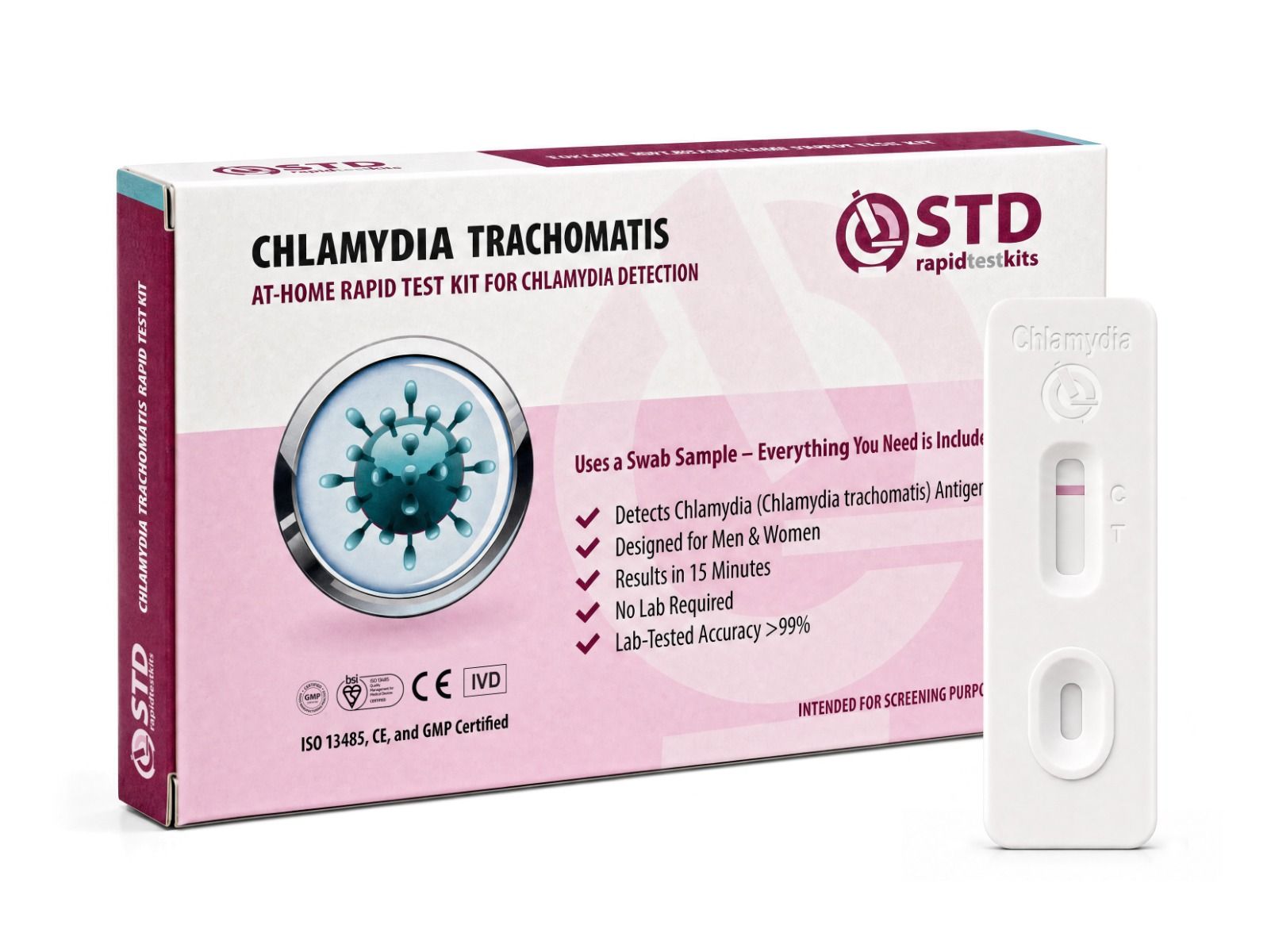
- Test for syphilis, gonorrhea, and viral hepatitis at the same visit if those have not been recently checked. A combination kit makes this practical at home.
- Have a conversation with your clinician about PrEP if you have ongoing HIV risk factors, including recurrent STI diagnoses or partners whose status you do not know.
- Set a personal screening rhythm for the next 12 months. Most clinicians recommend 3 to 6 month intervals for people with new STI diagnoses.
Most readers who complete this sequence will confirm a negative HIV status; those who do test positive can start antiretroviral therapy that typically reaches an undetectable viral load within a few months and prevents sexual transmission from that point onward.
FAQs
- Can chlamydia really make HIV easier to catch?
- Yes, and the link runs both ways. Chlamydia inflammation makes the genital mucosa more permeable and pulls CD4 target cells to the surface, which makes it easier for an HIV-negative partner to acquire HIV during exposure. It also raises HIV shedding in an HIV-positive partner with untreated chlamydia, making them more infectious. Treating chlamydia therefore lowers HIV risk on both sides of an exposure.
- I had chlamydia last year. Should I still get an HIV test now?
- Yes. CDC guidance recommends an HIV test for anyone with an STI diagnosis in the last 12 months. If your most recent possible HIV exposure was during the chlamydia window and you have not tested since, schedule a fourth-generation antibody/antigen test now.
- How long after a possible HIV exposure should I wait before testing?
- It depends on the test format. Per HIV.gov, finger-prick antibody/antigen rapid tests (including most at-home kits) detect HIV from about 18 to 90 days post-exposure, with high-confidence results at 6 weeks and full coverage at 90 days. Lab venipuncture antibody/antigen tests detect HIV at 18 to 45 days. NAT (RNA) tests detect HIV from 10 to 33 days but are usually only ordered in clinical settings with specific risk factors.
- Does treating chlamydia immediately erase the higher HIV risk?
- Treatment quickly clears the bacterial infection, but mucosal recovery takes additional time. Continue safer-sex practices during recovery and follow the standard HIV testing window before drawing conclusions about your status.
- What if my chlamydia test is positive but my partner won't test?
- Most U.S. states allow expedited partner therapy, where your clinician can provide a prescription or medication pack for partners without a separate visit. Talk to whoever treated you about whether your state allows it. Untreated partners are the most common source of reinfection.
- Does PrEP also protect against chlamydia?
- No. PrEP is HIV-specific. CDC guidance has begun including doxycycline post-exposure prophylaxis (doxy-PEP) for STI prevention in specific groups (men who have sex with men and transgender women with a recent bacterial STI), but for the general population, condoms and routine screening remain the main chlamydia prevention tools.
- Can I use a home rapid test for HIV after a chlamydia diagnosis?
- Yes. Finger-prick antibody/antigen home rapid tests are reliable when used inside the right window period (6 weeks for high-confidence, 90 days for full coverage). A reactive at-home result is always followed up with a confirmatory lab test, which is the same protocol used in clinics.
- What if I keep getting reinfected with chlamydia?
- Repeat infection is the strongest signal that ongoing risk has not been fully addressed. Talk to a clinician about PrEP, condom use, partner notification, and your testing rhythm. Recurrent STIs also raise the case for routine extragenital (rectal and pharyngeal) screening for chlamydia and gonorrhea.
- U.S. Centers for Disease Control and Prevention. About chlamydia, including symptom presentation, yearly screening recommendation for sexually active women under 25, and the verbatim note that untreated chlamydia may also increase your chances of getting or giving HIV.
- World Health Organization. Chlamydia fact sheet, including the note that chlamydial infection is more common in young people and the complications of untreated infection.
- World Health Organization. HIV and AIDS fact sheet, identifying an existing STI as one of the factors that raises the risk of acquiring or transmitting HIV.
- HIV.gov. HIV testing overview, including window-period guidance distinguishing finger-prick antibody/antigen rapid tests (18 to 90 days), laboratory venipuncture antibody/antigen tests (18 to 45 days), and nucleic acid (NAT) tests (10 to 33 days).
- U.S. Centers for Disease Control and Prevention. HIV testing recommendations, including the guidance that everyone between the ages of 13 and 64 should get tested for HIV at least once and that people with ongoing risk factors should test at least annually.
- U.S. Centers for Disease Control and Prevention. PrEP overview, including the framing that PrEP greatly reduces HIV risk from sex when taken as prescribed and the timing for maximum protection.
- U.S. Centers for Disease Control and Prevention. PEP overview, including the 72-hour initiation window, 28-day course, and every-hour-counts urgency message.
- U.S. Centers for Disease Control and Prevention. HIV treatment overview, including the Undetectable equals Untransmittable principle that a person with an undetectable viral load will not transmit HIV through sex.
