

Published: September 2025 | Last updated: April 2026 | Editorial review and quality control: Martina N.
Chlamydia is still the most-reported bacterial sexually transmitted infection in the United States. The CDC logged 1,515,985 cases in 2024, the most recent year of national surveillance data, with a rate of about 446 cases per 100,000 people. Cases dipped roughly 8% from 2023, the second annual decline in a row, but the headline number stays the same: this infection moves through dorms, marriages, casual hookups, and committed relationships at the same quiet pace it always has, because most people never feel it.
This guide is the calm version of the conversation. What chlamydia actually does inside the body, when to test (and when waiting wastes a window), what the current CDC treatment regimen looks like, why screening matters more than checking yourself for symptoms, and how to read at-home test results without panicking. Specific, sourced, and built around the questions readers actually ask before they decide whether they need to test.
What is chlamydia, and when should I test?
Chlamydia is a bacterial infection caused by Chlamydia trachomatis. It infects the cervix, urethra, throat, rectum, and (rarely) the eyes. The <a href="https://www.cdc.gov/chlamydia/about/index.html">CDC recommends annual screening</a> for all sexually active women under 25, women 25 and older with new or multiple partners, and sexually active gay or bisexual men. After a possible exposure, lab NAAT tests can typically pick up infection within about 1 to 2 weeks; symptoms (when they appear at all) can show up anywhere from a week to several months later, per the NHS.
Key Takeaways
- Chlamydia is the most-reported bacterial STI in the U.S., with 1,515,985 cases logged by the CDC in 2024.
- Most chlamydia infections cause no symptoms, so screening on a calendar matters more than waiting for warning signs.
What chlamydia actually is, and how it behaves in the body
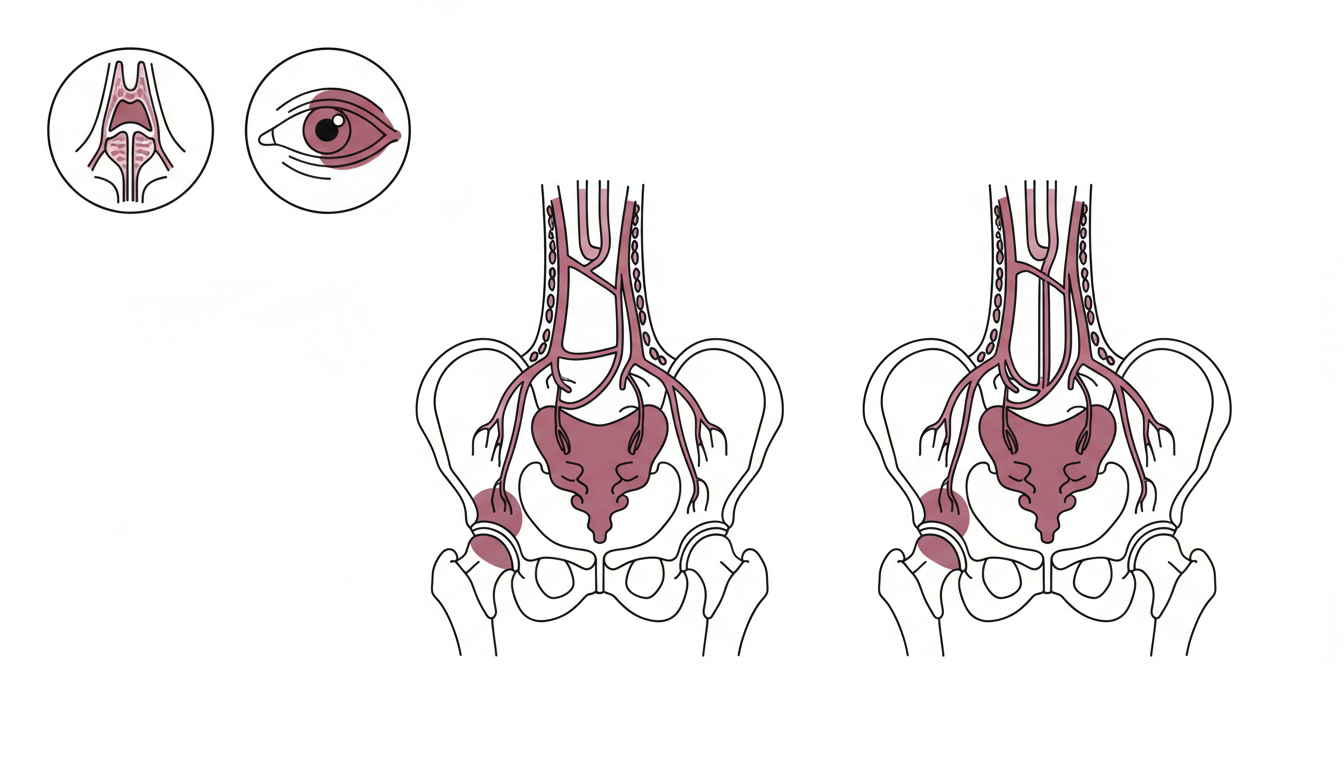
Chlamydia is caused by Chlamydia trachomatis, a small obligate intracellular bacterium that infects mucous membranes. The body sites that matter clinically are the cervix and urethra (urogenital infection), the rectum (anorectal infection), the throat (pharyngeal infection), and very occasionally the conjunctiva of the eye if infected fluids reach it.
Globally, the WHO estimated 129 million new chlamydia infections in 2020 among people aged 15 to 49, one of the four curable STIs the WHO tracks alongside gonorrhea, syphilis, and trichomoniasis. The U.S. share of that has been remarkably stable for two decades.
The clinically important behavior of chlamydia is that it climbs. In a person with a cervix, an untreated cervical infection can ascend through the uterus into the fallopian tubes and ovaries, producing pelvic inflammatory disease (PID). In a person with a penis, the infection can move from the urethra into the epididymis, the coiled tube that stores sperm, producing epididymitis. The bacterium also infects the throat and rectum without producing reliable warning signs at either site.
The other clinically important behavior is silence. The CDC's chlamydia fact sheet states plainly that chlamydia often has no symptoms, but it can still cause serious health problems. That single sentence is the reason most chlamydia screening recommendations are time-based rather than symptom-based.
Symptoms most people miss, and the ones that get misdiagnosed
Most chlamydia is silent. When symptoms do appear, they tend to look like something else, which is why so many infections get attributed to a yeast infection, a urinary tract infection, or a rough period before someone tests for chlamydia.
In people with a cervix, the typical signs (when present) include unusual vaginal discharge, burning during urination, bleeding between periods, bleeding after sex, pain during sex, and lower abdominal or pelvic pain. The first three on that list overlap heavily with thrush, UTIs, and hormonal cycle changes, which is part of why chlamydia is regularly diagnosed only after a partner tests positive or PID forces a workup.
In people with a penis, the typical signs are penile discharge (often white, cloudy, or yellow), burning during urination, and pain or swelling in one or both testicles. These are usually clearer than the female presentation, but still mild enough that many people wait them out and pass the infection on before they seek care.
Throat infections (from receptive oral exposure) are usually entirely silent. Rectal infections (from receptive anal exposure) can produce discharge, rectal pain, bleeding, or a constant urge to pass stool, but plenty of rectal chlamydia is also asymptomatic and only picked up by a screening swab.
| Body site | Most common signs (when present) | Often confused with |
|---|---|---|
| Cervix / vagina | Unusual discharge, intermenstrual bleeding, post-coital bleeding, pelvic pain, painful urination | Yeast infection, UTI, hormonal bleeding |
| Urethra (penis) | White or cloudy discharge, burning during urination, testicular pain or swelling | UTI, urethritis from another cause |
| Throat | Usually no symptoms; occasional mild sore throat | Viral pharyngitis |
| Rectum | Discharge, rectal pain, bleeding, urge to pass stool; often silent | Hemorrhoids, IBS flare |
How chlamydia spreads (and why condoms are not a perfect shield)
Chlamydia is transmitted through vaginal, anal, and oral sex with someone carrying the infection. Sharing sex toys without cleaning or a fresh barrier between partners is also a documented route. A pregnant person with untreated chlamydia can pass the infection to a newborn during vaginal delivery, causing conjunctivitis or pneumonia in the baby.
Casual contact does not transmit chlamydia. The bacterium does not survive on toilet seats, towels, or swimming pool water, and it does not pass through hugging, kissing, or sharing a sauna with someone who has it. Transmission requires direct mucosal contact with infected vaginal fluid, semen, or rectal fluids during sex.
Condoms meaningfully reduce transmission risk during vaginal and anal sex when they are worn correctly start to finish. They are imperfect for two reasons: real-world use includes breakage and slippage, and condom use during oral sex (which can transmit pharyngeal chlamydia) is much less consistent. Dental dams and barrier methods for oral sex exist but are rarely used.
One useful mental model: a condom is risk reduction, not risk elimination. Routine screening covers the gap between perfect-condom-world and the world most people actually live in.
Even when condoms are used consistently for vaginal and anal sex, oral exposure routes and imperfect real-world use leave gaps. Annual screening (more often if you have new or multiple partners) is the practical companion to barrier use, not an alternative to it.
What untreated chlamydia does over months and years
Most people with untreated chlamydia never develop noticeable symptoms and carry the infection without knowing it. The clinical worry is what the bacterium does in the months it is present. Untreated infections are not benign; they are quietly active.
Pelvic inflammatory disease (PID). When chlamydia ascends from the cervix into the uterus, fallopian tubes, and ovaries, it produces inflammation that can scar tubal tissue. Scarred fallopian tubes are the mechanism behind two of the most serious chlamydia complications: tubal-factor infertility (the embryo cannot reach the uterus) and ectopic pregnancy (a fertilized embryo implants in the tube, a life-threatening obstetric emergency). The CDC notes that subclinical PID, with no obvious symptoms, can still produce these structural changes.
Epididymitis. In people with a penis, untreated urethral chlamydia can spread to the epididymis, producing testicular pain and swelling. Epididymitis from chlamydia is treatable, but bilateral or repeated episodes are associated with male-factor fertility problems.
Reactive arthritis. A subset of patients develop reactive (post-infectious) arthritis weeks after a chlamydia infection, with joint swelling, eye irritation, and urethral inflammation. It is more common in men and can persist for months after the bacterial infection has been treated.
Pregnancy and newborn complications. Vertical transmission during vaginal delivery can cause neonatal conjunctivitis or pneumonia. Untreated chlamydia in pregnancy has also been associated with preterm birth and low birthweight, which is why prenatal screening for chlamydia is standard practice.
HIV co-infection risk. Genital inflammation from any STI, chlamydia included, increases susceptibility to HIV during a subsequent exposure. This is part of why public-health agencies treat STI screening as a component of HIV prevention.
Note: STD Rapid Test Kits sells the at-home rapid tests linked in this article. We recommend products based on fit-for-purpose for the reader's concern, not commercial benefit.
The CDC links untreated chlamydia to scarring of the fallopian tubes, increased risk of ectopic pregnancy, and tubal-factor infertility. The mechanism is structural damage from inflammation, and a meaningful proportion of cases produce no obvious symptoms before the damage occurs. This is the single strongest reason public-health agencies treat chlamydia screening as routine, not optional, for sexually active people under 25.
Why chlamydia keeps spreading in 2026
Year after year, chlamydia stays at the top of the U.S. STI surveillance numbers. Cases ticked down 8% in 2024, which is genuinely good news, but the structural reasons the infection keeps moving have not changed.
Asymptomatic carriers drive most transmission. The dominant transmission route is not someone with obvious discharge avoiding a clinic. It is someone who has no idea they are infected having sex normally with a partner.
Screening uptake is below recommended levels. The CDC and USPSTF both recommend annual screening for sexually active women under 25, but actual screening rates fall short of that target year over year. Men's screening guidance is narrower (sexually active gay and bisexual men annually; everyone else case-by-case), which leaves a larger silent reservoir in heterosexual men.
Cost and friction matter. Even people with insurance often hesitate to ask their primary care provider for an STI panel. People without insurance face a real cost barrier. At-home testing has cut into that friction in the past few years, but uptake is still building.
Sex education has gaps. A lot of adults do not know that chlamydia infects the throat or rectum, that you can be reinfected within weeks of finishing antibiotics, or that condom use during oral sex matters at all. Those gaps drive both transmission and delayed diagnosis.
Reinfection is the rule, not the exception. Most people retested at three months who test positive again were reinfected by an untreated partner, not failed by the antibiotics.
The CDC and USPSTF both recommend annual chlamydia screening for sexually active women under 25, but national HEDIS measure data shows screening rates remain well below that target year after year. Even with the 8% case decline in 2024, the absolute U.S. number is still over 1.5 million reported cases, and the true number is widely believed to be substantially higher because most infections are asymptomatic.
How to actually test for chlamydia (lab vs at-home)
Two test categories matter for most readers: laboratory NAAT and at-home rapid lateral-flow.
Lab NAAT (Nucleic Acid Amplification Test) is the laboratory gold standard. NAATs amplify and detect Chlamydia trachomatis DNA from a sample, with very high analytical sensitivity and specificity. The sample type depends on body site:
- First-catch urine for people with a penis (urogenital infection)
- Self-collected vaginal swab for people with a cervix (the CDC and most labs accept self-collection)
- Pharyngeal (throat) swab for people with receptive oral exposure
- Rectal swab for people with receptive anal exposure
NAAT has a window period of about 1 to 2 weeks. Testing earlier than that risks a false-negative result because the bacterial load is still below the detection threshold. Clinic results typically come back within 1 to 7 days.
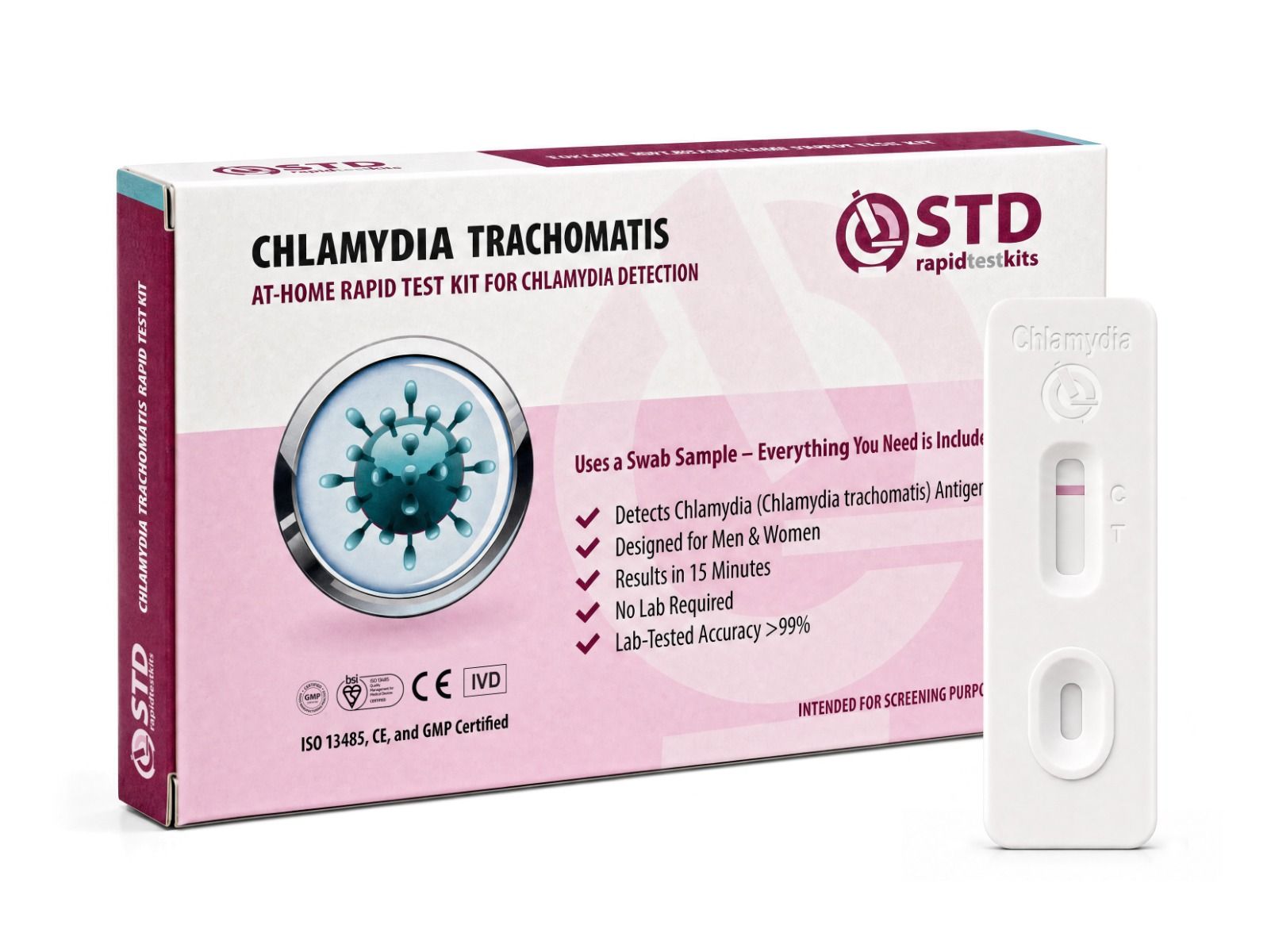
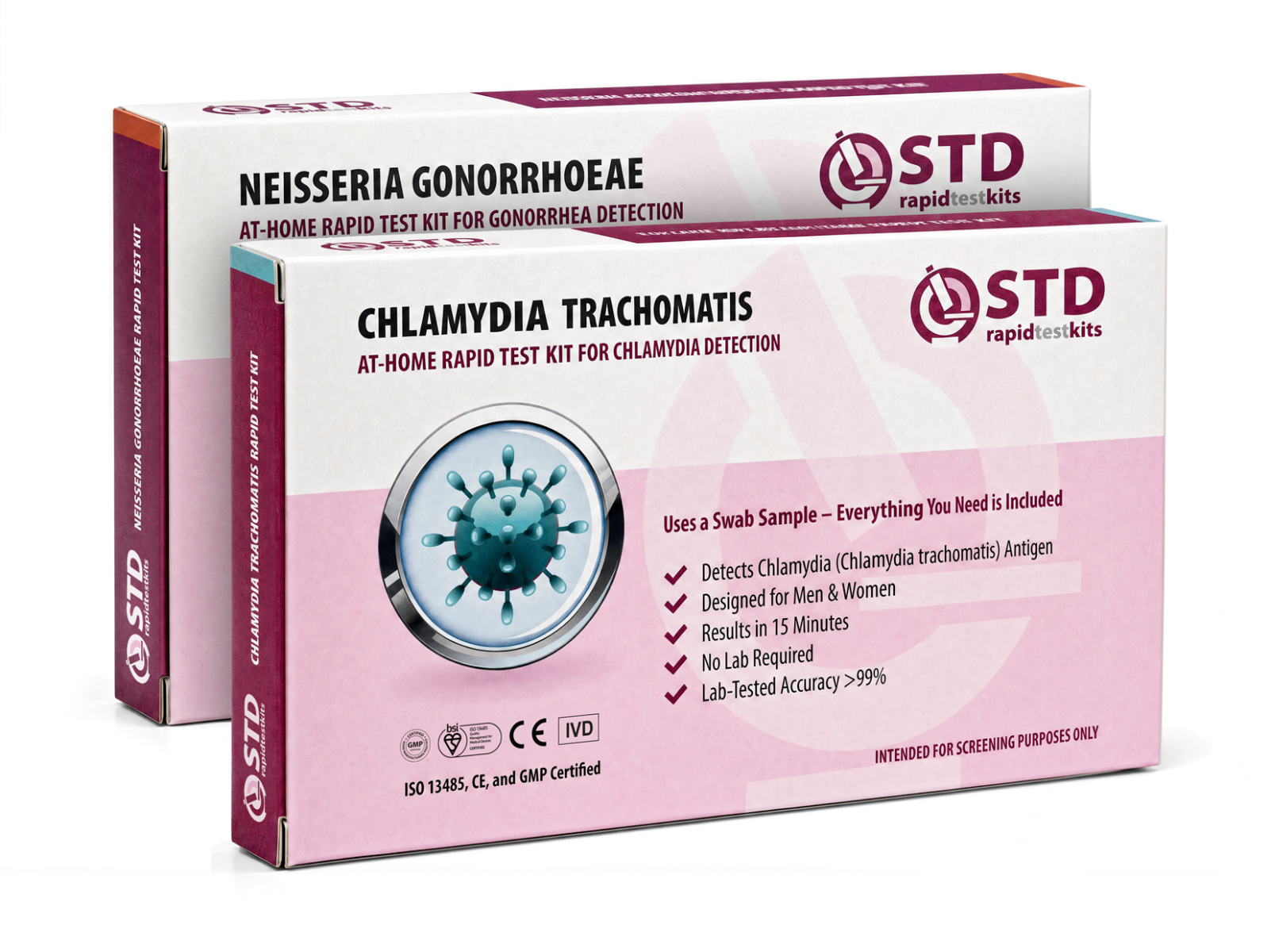
At-home rapid lateral-flow tests (the kits we sell) use the same self-collected swab sample type as a lab NAAT, but the on-cassette chemistry is lateral-flow rather than nucleic acid amplification. That means analytical sensitivity is lower than lab NAAT, but the workflow is private, takes about 15 minutes, and does not require a clinic visit.
The practical use case for at-home rapid kits: screening when clinic access is limited, when privacy matters, or when you want a fast preliminary answer before deciding whether to book a confirmatory NAAT. A positive lateral-flow result is worth confirming with a lab NAAT. A negative result with persistent symptoms is worth a clinic follow-up rather than a second home test.
If you test positive: the current CDC treatment plan
Chlamydia is curable. The current first-line regimen comes from the CDC's 2021 STI Treatment Guidelines, which remain the operational standard in 2026.
Preferred regimen for adolescents and adults: doxycycline 100 mg orally twice daily for 7 days. This is the recommended therapy for urogenital, rectal, and oropharyngeal chlamydial infection. Doxycycline replaced the older single-dose azithromycin as first-line because clinical evidence showed it cleared rectal and pharyngeal infections more reliably.
Pregnancy: azithromycin 1 gram orally as a single dose. Doxycycline is contraindicated in pregnancy.
Alternative regimens for non-pregnant patients: azithromycin 1 gram single dose, or levofloxacin 500 mg once daily for 7 days. These are reserved for cases where doxycycline is not tolerated or feasible.
Abstinence after treatment. Per CDC guidance, abstain from sex for 7 days after a single-dose treatment, or until you have completed the 7-day course and any symptoms have resolved. Resuming sex earlier risks reinfecting your partner or being reinfected if your partner has not finished their own treatment.
Partner notification. The CDC recommends referring sex partners from the 60 days preceding symptom onset or diagnosis for evaluation and treatment. The most recent partner should be evaluated regardless of timing, even if exposure was outside that window.
Rescreen at 3 months. Anyone treated for chlamydia should be rescreened approximately 3 months after treatment, regardless of whether you believe your partners were treated. This is for catching reinfection, not retesting whether the antibiotics worked.
First line (non-pregnant): doxycycline 100 mg orally twice daily for 7 days.
Pregnancy: azithromycin 1 g orally, single dose.
Abstain: 7 days after single-dose, or until 7-day course is complete and symptoms have cleared.
Notify partners: from the past 60 days.
Rescreen: at 3 months after treatment.
Preventing reinfection and staying ahead of it
Routine prevention has nothing exotic in it. The reason it works is consistency, not novelty.
- Use condoms consistently for vaginal and anal sex. They are not perfect, but they meaningfully reduce risk.
- Use barriers (condoms or dental dams) for oral sex if pharyngeal STIs are a concern, especially with new partners.
- Clean shared sex toys between partners, or use a fresh barrier per partner.
- Screen on a calendar, not on a feeling. Annual if you fit the CDC's risk profile, every 3 to 6 months if you have new or multiple partners.
- Talk to partners about testing as a normal pre-relationship conversation rather than an accusation. People respond to it better than most expect.
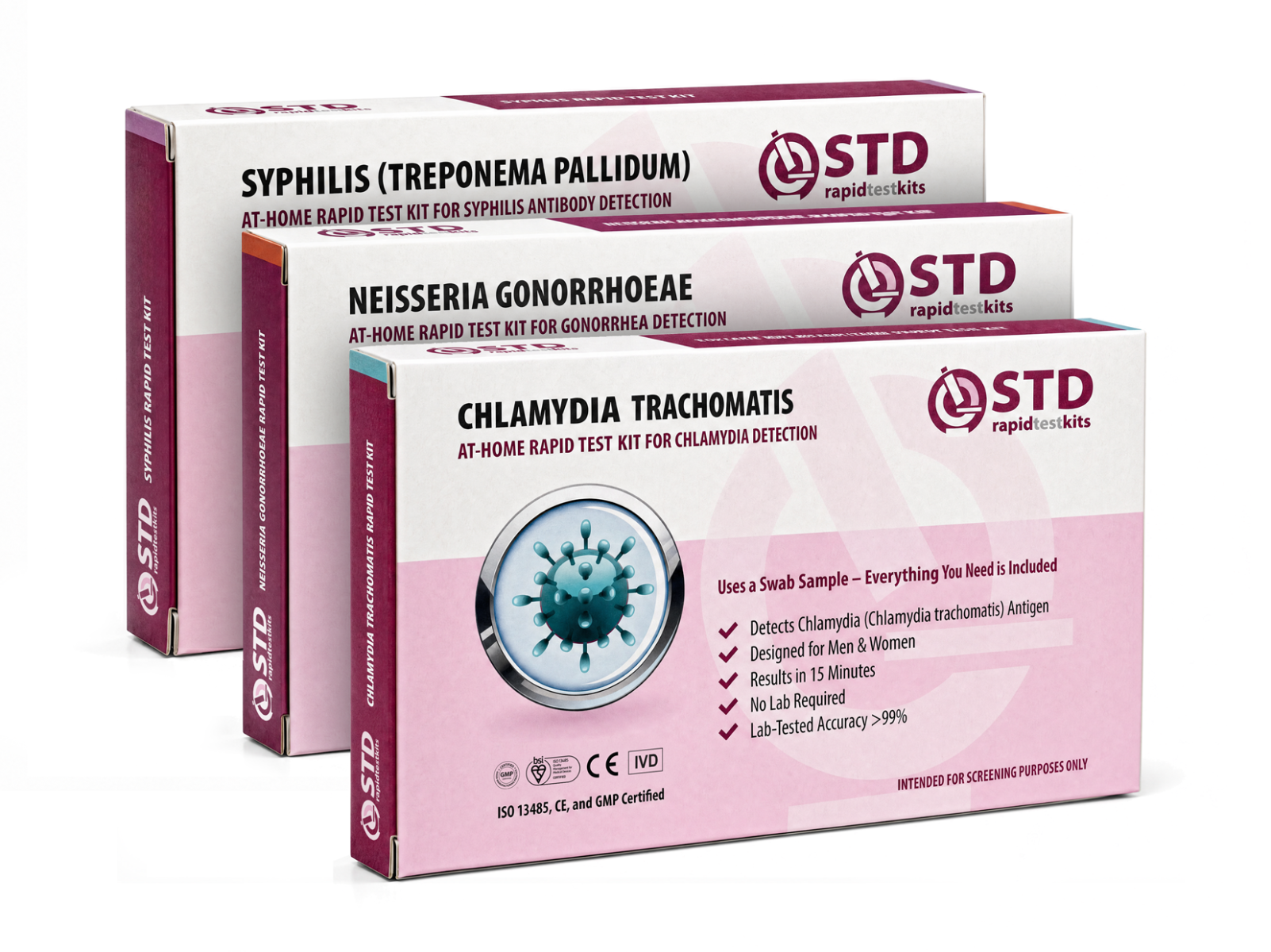
- Keep a couple of at-home tests on hand for the next "I'm not sure" moment. The friction of having to acquire a test is the thing that keeps most people from acting on a real concern.
Reinfection is the part that catches people off guard. Antibiotics clear the current infection without giving you any future immunity. If a partner was not notified or treated, you can be reinfected within days of finishing your course.
Chlamydia often has no symptoms, but it can cause serious health problems, even without symptoms.
Frequently asked questions
- How soon after exposure can I test for chlamydia?
- Lab NAAT tests can typically detect chlamydia about 1 to 2 weeks after exposure. Testing earlier than that risks a false-negative result because the bacterial load is below the detection threshold. If your possible exposure was within the last few days, schedule the test for around 14 days out and avoid new sexual contact in the meantime.
- Can chlamydia go away on its own without treatment?
- No. Chlamydia does not clear without antibiotics. Untreated infections can persist for months or longer, and the CDC's chlamydia fact sheet is explicit that even asymptomatic infections can cause permanent reproductive damage. The damage often happens before any symptoms appear.
- How accurate are at-home rapid chlamydia tests compared to a lab test?
- Home rapid lateral-flow tests screen effectively but have lower analytical sensitivity than lab NAAT. The practical decision rule: treat a positive home result as a strong signal to confirm at a clinic, and a negative result with ongoing symptoms as a reason to seek a lab test rather than retest at home. The sample type (self-collected swab) is the same as a clinic NAAT; it is the detection chemistry that differs.
- Do I need to retest after I finish my antibiotics?
- Yes. The CDC recommends rescreening about 3 months after treatment, regardless of whether you believe your partner was also treated. The 3-month retest is for catching reinfection, not for confirming the antibiotics worked. Reinfection from an untreated partner is the most common cause of a second positive.
- Can chlamydia infect the throat or rectum, not just the genitals?
- Yes. Pharyngeal chlamydia (throat) and rectal chlamydia are both common after receptive oral and anal exposure. Both are usually silent, and both require a swab at that specific site to detect. A urogenital test alone does not screen the throat or rectum.
- Can I get chlamydia again after I have been treated?
- Yes, easily. Treatment cures the current infection but leaves no future immunity. Reinfection is common, especially when partners are not notified and treated together. This is why the CDC recommends abstaining from sex for 7 days after treatment and rescreening at 3 months.
- Are at-home chlamydia tests private?
- Yes. At-home rapid kits ship in plain packaging, the swab is self-collected, and there is no clinic visit, no insurance claim, and no medical-record entry tied to the test itself. If your result is positive, you do still need a clinician to prescribe the antibiotics, but the screening step stays private.
- U.S. Centers for Disease Control and Prevention. About Chlamydia fact sheet, including symptom, screening, and treatment overview.
- U.S. Centers for Disease Control and Prevention. Sexually Transmitted Infections Treatment Guidelines, 2021. Chlamydial Infections chapter, including doxycycline regimen, partner notification window, and 3-month rescreening recommendation.
- U.S. Centers for Disease Control and Prevention. 2024 STI Annual Surveillance Statistics, including 1,515,985 chlamydia cases and the 8% year-over-year decline.
- U.K. National Health Service. Chlamydia condition page, covering transmission routes, symptom-onset window, and screening guidance.
- World Health Organization. Sexually Transmitted Infections (STIs) fact sheet, including the global 2020 estimate of 129 million new chlamydia infections among people aged 15 to 49 and the four-curable-STI grouping.
- U.S. Centers for Disease Control and Prevention. MMWR, Sexually Transmitted Infections Treatment Guidelines, 2021. Full document covering preferred and alternative regimens for chlamydia and other bacterial STIs.
