Published: September 2025 | Last updated: May 2026 | Editorial review and quality control: Martina N.
For most of the past two decades, syphilis carried a specific mental image: a disease concentrated in particular communities, easy to dismiss if you didn't fit a certain profile. That image is now wrong. New data and peer-reviewed research published in 2025 show that syphilis is actively shifting into populations who have historically had low infection rates, while slowly declining among the groups who have long carried the heaviest burden. If you've never once considered getting a syphilis test because it wasn't something that affected you, this article is specifically for you.
Syphilis is now spreading into populations with no traditional risk factors: people who aren't on PrEP, who don't identify with high-risk behaviors, and who have never had a reason to think about this infection. According to a 2025 study published in the American Journal of Preventive Medicine analyzing data from nearly 57 million US adults, syphilis incidence is rising in exactly these low-burden groups, even as it declines among populations who have historically accounted for the majority of cases. The infection doesn't know who you think you are. It only knows whether it has a route.
Key Takeaways
- U.S. syphilis cases reached more than 209,000 in 2023, the highest annual total in decades according to CDC surveillance, and 2025 research shows the rise is now concentrated in populations with no traditional risk factors.
- Test at 6 weeks after potential exposure: that is when antibody-based syphilis testing becomes reliable, and it is the only way to catch the silent latent phase before lasting damage occurs.
How Syphilis Became Someone Else's Problem, and Why That's No Longer True
The story of syphilis in America over the past 25 years is one of the more striking public health reversals on record. By the late 1990s, the CDC had launched an aggressive national elimination plan, and it was working. Cases hit historic lows in 2000 and 2001, and elimination, genuinely getting rid of syphilis as a public health concern in the US, seemed within reach. Then it all reversed. Cases climbed steadily through the 2000s and 2010s, concentrated primarily among men who have sex with men, while the broader public largely stopped paying attention because the numbers didn't seem relevant to them.
That selective attention created a blind spot that is now costing people. According to the CDC's annual STI Surveillance data, more than 209,000 total syphilis cases were reported in 2023, the highest annual total in decades, with cases more than tripling since 2010. Provisional 2024 data released by the CDC in September 2025 shows the trajectory continuing, with congenital syphilis alone reaching nearly 4,000 cases in 2024. The infection rate per 100,000 people now sits far above the elimination-era low of 2000 and 2001, when the CDC's national plan had nearly succeeded.
What makes the current moment different from any previous point in that rise is who is now being infected. For years, syphilis data told a consistent story: cases were concentrated among men who have sex with men, people living with HIV, and communities with limited access to sexual health services. Prevention efforts, testing programs, and public awareness were calibrated to those groups accordingly. What the 2025 data reveals is that this calibration is now leaving an entirely different population exposed.
Cases more than tripled between 2010 and 2023, reaching more than 209,000 reports in 2023 per CDC surveillance data. The CDC's September 2025 release adds nearly 4,000 congenital syphilis cases reported in 2024. The infection rate per 100,000 people now sits far above the elimination-era low of 2000 and 2001.
What the 2025 Research Actually Found
The shift being described here is not anecdotal. It is documented in peer-reviewed research published in 2025 in the American Journal of Preventive Medicine, using one of the largest real-world electronic health record databases in the United States. The study tracked monthly syphilis incidence across nearly 57 million US adults from January 2017 through October 2024. The finding is precise and alarming: while overall syphilis incidence peaked in July 2022 and has since declined, that decline is happening almost entirely among high-burden populations. Among low-burden groups, people without behaviors historically associated with STI acquisition, people not using PrEP, and people not living with HIV, incidence is still rising.
Think about what that means in practice. The prevention tools driving the decline in high-risk groups, expanded PrEP programs that require quarterly STI testing, doxycycline post-exposure prophylaxis, and increased awareness in communities with higher baseline risk, are working for the people they were designed for. They are not reaching the people who never thought they needed them. Someone who has never considered themselves at risk for syphilis is not asking their doctor for a syphilis test. Their doctor is probably not offering one either.
Even as headline primary and secondary syphilis counts have begun to dip, transmission within heterosexual networks remains a particular concern. Early-stage infections in women drive the congenital syphilis trajectory, because untested infections in pregnancy are what produce newborn cases. The infections happening in low-burden networks are often not being found until later, when they are harder to detect and more damage has already been done.
Who Is “Low Risk,” and Why That Label Is Doing Real Harm
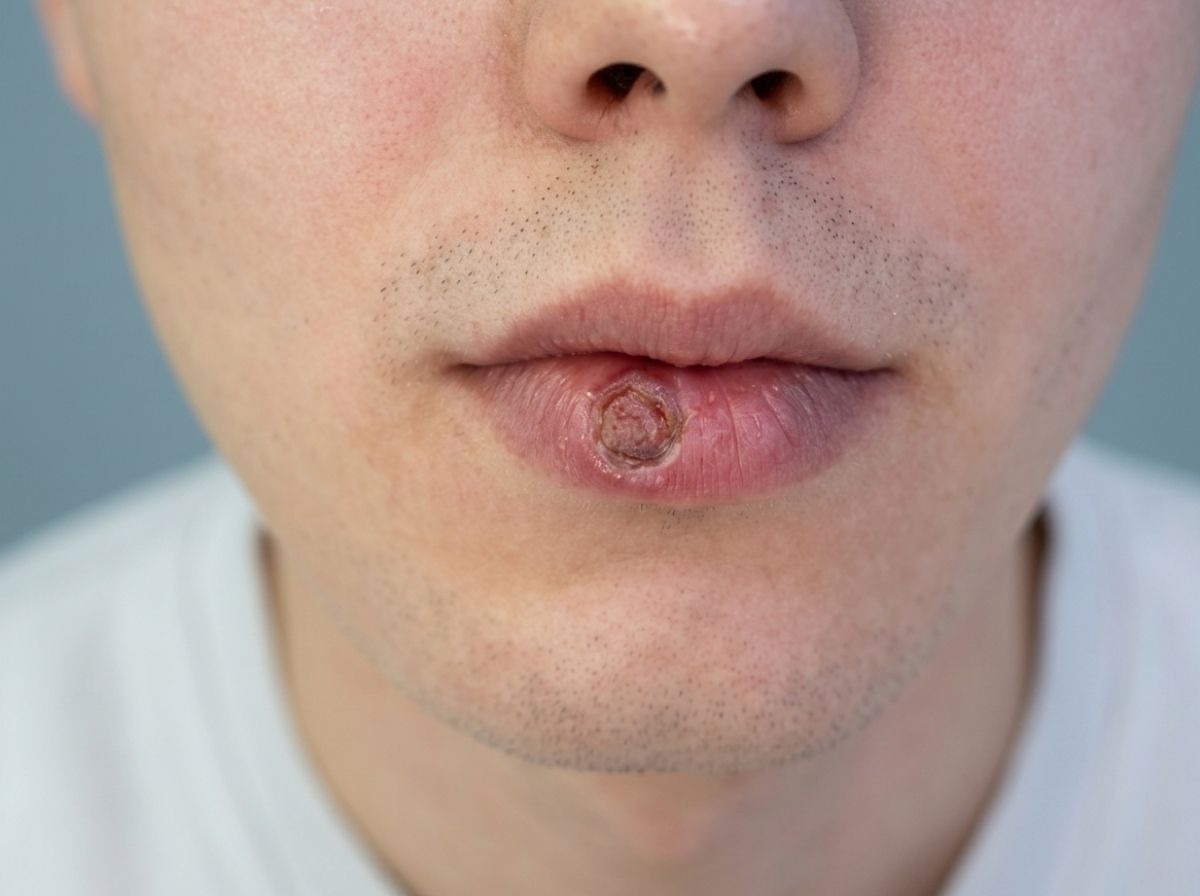
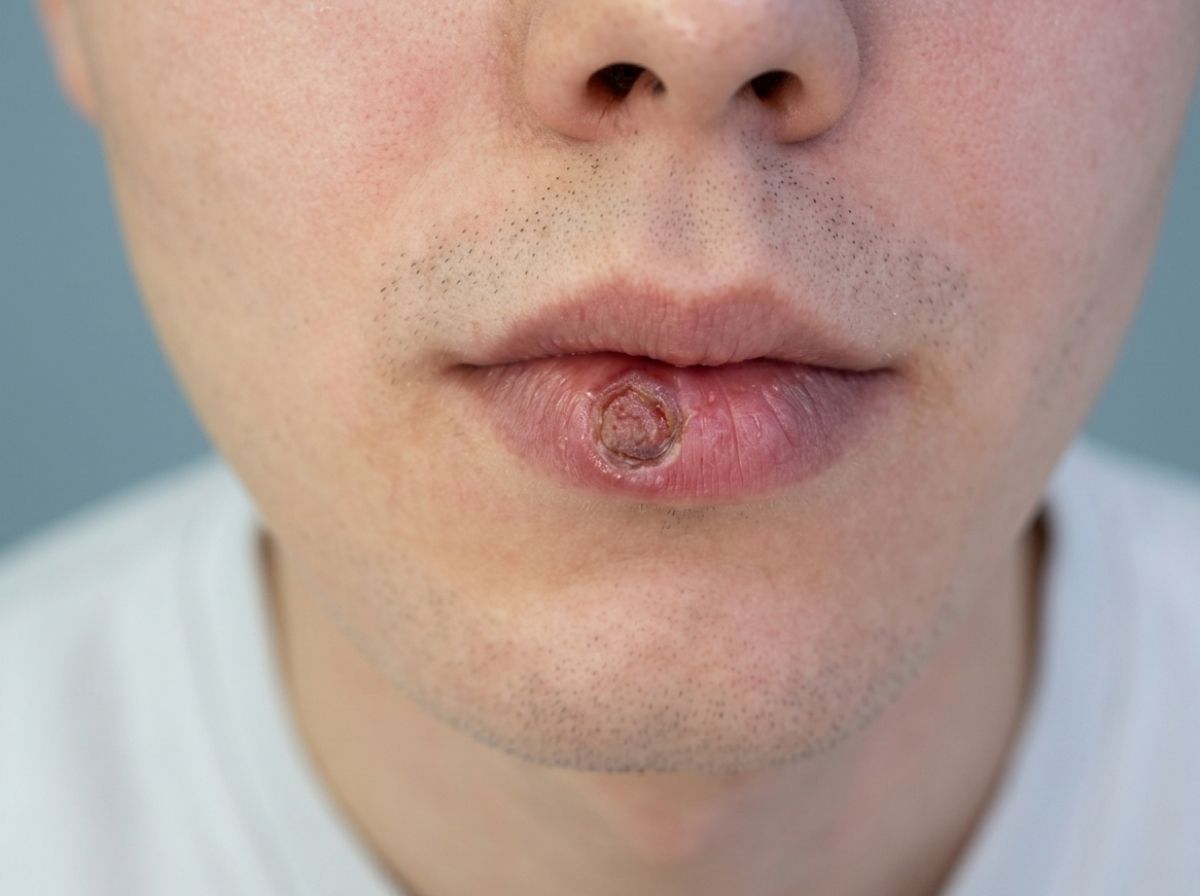
The concept of a “low-risk” population for syphilis has always been more about perception than biology. Treponema pallidum, the bacterium that causes syphilis, does not assess your identity, your relationship structure, your sexual orientation, or your self-image before deciding whether to infect you. It transmits through direct contact with a syphilis sore during sexual activity. Sores appear at the exact point where the bacteria entered the body, on the genitals, in the mouth, on the lips, or around the anus, and any sexual contact involving an active sore carries transmission risk, regardless of the type of sex.
A practical problem with “low risk” as a category is that it breeds a false sense of immunity that prevents testing. Someone who identifies as straight, is in a monogamous relationship, doesn't use drugs, and has never had an STI has every reason, by the old framework, to assume syphilis simply isn't something they need to think about. But that person's sexual history includes their partners' histories, and those histories include other partners, other risks, and other exposure windows they may know nothing about. A single undetected infection in one link of a sexual network can travel silently through multiple people before anyone gets a diagnosis.
Stigma makes this worse. Because the disease has historically been associated with specific communities and behaviors, a diagnosis can feel like an accusation rather than a straightforward health event. That association discourages testing even when someone has reason to suspect an exposure, and it discourages honest disclosure between partners.
A single undetected infection in one link of a sexual network can travel silently through several people before anyone gets a diagnosis. The bacterium has no concept of risk profile; it only needs an opportunity and a gap in testing.
What Syphilis Actually Looks Like, and Why It Gets Missed
You're in the shower a few weeks after a sexual encounter, and you notice a sore, small, firm, painless. Not angry-looking, not oozing, not particularly alarming. Easy to write off as a razor bump, an ingrown hair, a friction irritation. You wait a few days. It disappears on its own. You move on. That is the most common first experience of primary syphilis, and the reason it gets missed so consistently is that it doesn't look or feel like most people's idea of an STI. The painlessness is the tell, and it's also the reason people don't act on it.
Syphilis progresses through four distinct stages, each with different characteristics and different levels of transmission risk. Primary syphilis presents as one or more painless sores called chancres, appearing at the exact site where the bacteria entered the body. Because they're painless and often located where they're not visible, inside the vagina, on the cervix, in the mouth, or in the anorectal area, they go unnoticed entirely in a significant proportion of cases. The CDC notes the chancre typically appears between 10 and 90 days after exposure and resolves without treatment within 3 to 6 weeks. That apparent recovery is the body resolving the visible sore; the bacteria stay in the body and begin the next stage silently.
If untreated, syphilis moves into the secondary stage, typically 2 to 8 weeks after the initial sore appears. This stage is characterized by a rash, often described as rough, reddish-brown spots on the palms of the hands or soles of the feet, though it can appear anywhere on the body. The secondary stage can also produce flu-like symptoms, swollen lymph nodes, and sores in the mouth or genitals. It is the most infectious stage of the disease. At this point, Treponema pallidum has disseminated through the bloodstream and is present in the mucous membrane lesions and skin rashes themselves, so skin-to-skin or mucous membrane contact with those lesions during sex is a direct transmission route. After secondary syphilis, the infection enters a latent stage where no symptoms are present, but the bacteria remain in the body. Untreated latent syphilis can persist for years before progressing to tertiary syphilis, where the infection begins damaging the heart, brain, eyes, and nervous system in ways that can be permanent.
Symptoms are most visible at the stages when they are easiest to dismiss, and absent at the stage when the infection is doing the most invisible damage. Routine testing closes the gap that a symptom-triggered approach cannot.
| Stage | Timing | Key Signs | Transmission Risk |
|---|---|---|---|
| Primary | 10–90 days after exposure | Painless sore (chancre) at site of infection; heals within 3–6 weeks without treatment | High, direct contact with sore |
| Secondary | 2–8 weeks after the primary sore appears | Rash on palms/soles, flu-like symptoms, mouth or genital sores | Highest, most infectious stage |
| Latent | After secondary; can last years | No symptoms, infection is silent but present | Lower but not zero |
| Tertiary | Years after untreated latent infection | Damage to heart, brain, eyes, nervous system; can cause blindness, paralysis, death | Not directly transmissible at this stage |
Testing: The Only Way Out of the Guessing Game
Routine testing is the work behind the decline among high-risk groups. People on PrEP get tested for STIs every 3 months as a condition of their care. That regular cadence catches infections early, before they progress and before they spread further. The low-burden populations now seeing rising rates do not have that built-in testing cadence. They test when they have a symptom. With syphilis, the primary sore is painless and self-resolving, so a symptom-triggered approach means testing happens in the latent stage at the earliest, or not at all.
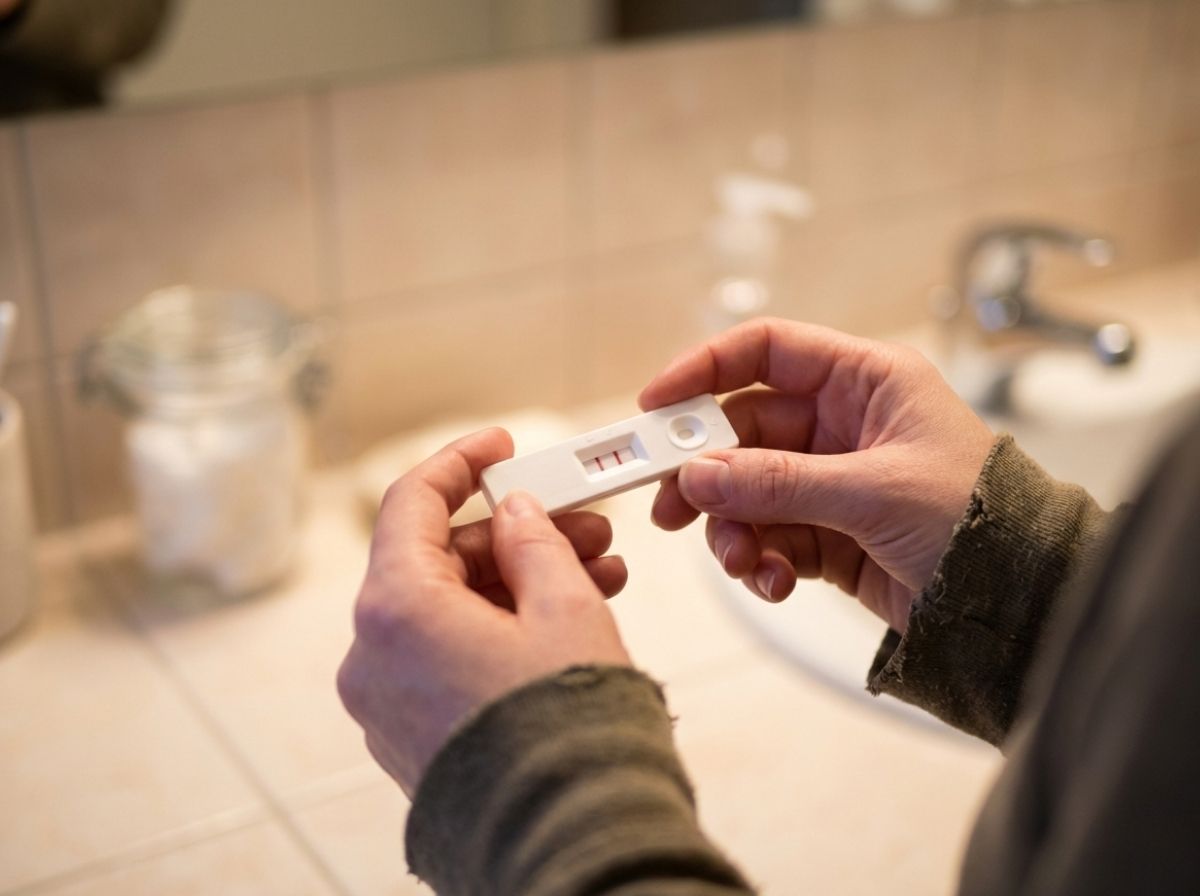
If you've had unprotected sexual contact, oral, vaginal, or anal, with a new partner in the past year and you haven't had a syphilis test, that is a gap worth closing. Testing for syphilis works by detecting antibodies your immune system produces in response to Treponema pallidum. The key timing point: test from 6 weeks after potential exposure. Testing before 6 weeks risks a false negative because your immune system has not yet produced detectable antibody levels, so the test has nothing to measure. The infection may be present; the antibody response simply has not peaked. A negative result at 6 weeks is meaningful, and a follow-up test at 12 weeks provides additional certainty when there is ongoing concern about a specific exposure.
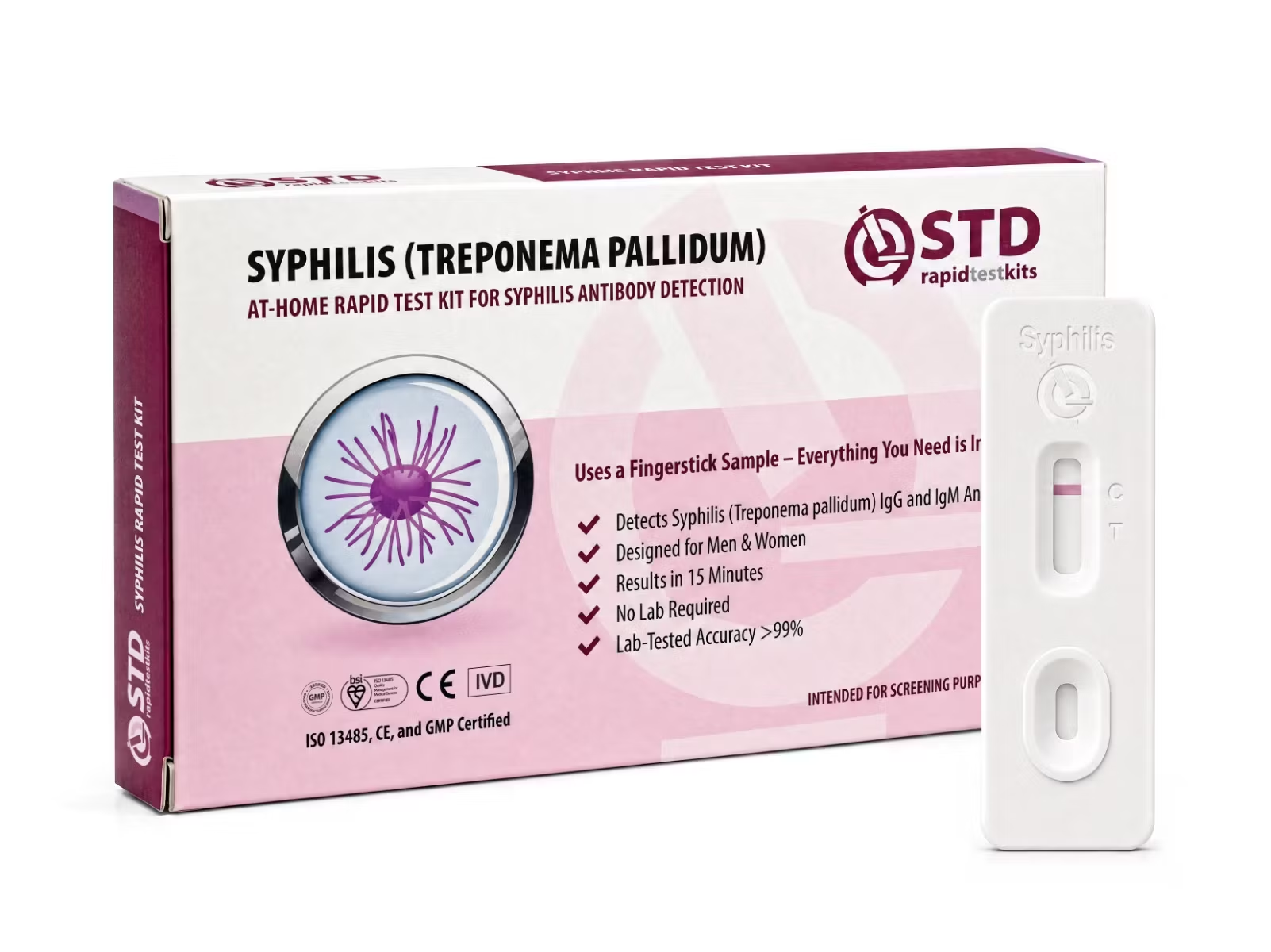
A positive syphilis test result does not mean a health crisis; it means a curable infection that has been caught. Syphilis remains one of the most treatable STIs that exists, provided it's found before it reaches the tertiary stage. A positive result is the beginning of a straightforward medical conversation, not a verdict. The Syphilis At-Home Rapid Test Kit from STD Rapid Test Kits gives you a result in about 20 minutes using a simple fingerstick blood sample, with no clinic visit, no waiting room, and no audience.
Reported cases of congenital syphilis in the United States have risen for more than a decade, with provisional 2024 data showing nearly 4,000 cases nationwide.
The Congenital Syphilis Crisis, and What It Reveals About the Testing Gap
The most devastating consequence of the shift in syphilis transmission is playing out in newborns. Congenital syphilis, an infection transmitted from a pregnant person to their baby during pregnancy or childbirth, has risen for 12 consecutive years in the United States. Provisional CDC data from September 2025 reported nearly 4,000 cases in 2024, a roughly 700% increase since 2015, when just 495 cases were on record. These are babies born with a bacterial infection that causes bone damage, neurological problems, blindness, deafness, and death. Every one of those cases is preventable with a timely test and appropriate treatment.
The reason congenital syphilis keeps rising even as adult cases begin to plateau is the testing gap among heterosexual women, precisely the low-burden population that the current shift is now affecting most acutely. A pregnant person who doesn't know they have syphilis can't be treated for it. A person who doesn't think syphilis is something they need to test for doesn't get screened during prenatal care as thoroughly as they should. Untested infections in pregnancy are what produce newborn cases, so the same testing gap driving the rise in low-burden adults is also the gap producing the congenital syphilis figures.
Several state health departments have issued public advisories in response. New York State's Department of Health flagged infant deaths from congenital syphilis in counties outside New York City. Mississippi and South Dakota have reported some of the steepest state-level rises in congenital syphilis rates in the country.
Why the Old Risk Profile No Longer Protects You
The factors driving syphilis into low-burden populations are not mysterious. Dating apps and digital platforms have created new sexual networks that operate faster and with fewer points of contact than previous generations of sexual behavior. Someone can have a sexual encounter with a person whose full sexual history is unknown, in a context that doesn't trigger any of the traditional mental flags for STI risk, and walk away with an infection that will take 6 weeks or more to appear on a test and potentially years to produce symptoms. The network dynamics of how infections spread don't require high-frequency sexual activity or multiple concurrent partners. They require opportunity and a gap in testing.
Structural factors are doing the rest. Research published in 2025 in the Annals of Medicine and Surgery links the U.S. resurgence to eroding public health infrastructure, healthcare access disparities, and social determinants including poverty and stigma: the factors that make testing and treatment harder to reach for exactly the populations now seeing rising rates. The same review notes that consistent and correct condom use remains the most reliable behavioural prevention tool, while screening, prompt treatment, and partner notification are the system-level levers.
States have lost STI prevention funding in recent years, health departments have faced staffing cuts, and the public health systems designed to catch and interrupt syphilis transmission have operated under increasing strain. The 2025 research on congenital syphilis noted an ongoing shortage of the primary treatment used for pregnant individuals and infants, creating additional complications for cases that are caught.
Expanded digital dating networks that operate faster than testing cadences can keep up with. Eroding public health infrastructure and healthcare access disparities, per the 2025 Annals of Medicine and Surgery review. Near-zero baseline testing in populations who do not perceive themselves as at risk. Any one of these on its own would be manageable. Together they produce exactly the conditions the 2025 data is documenting.
What Routine Testing Actually Looks Like, and Why It's Easier Than You Think
The gap between knowing you should probably test and actually testing is almost always logistical and emotional rather than informational. People know, abstractly, that sexual health testing is a responsible habit. What stops them is the friction: making an appointment, sitting in a waiting room, having a conversation with a provider that feels uncomfortable, waiting days for results, and doing all of that on a calendar that already feels full. At-home rapid testing removes most of that friction.
A practical routine for someone who is sexually active with new or multiple partners looks like this: test for syphilis and other bacterial STIs at the 6-week mark after any new sexual contact with an untested partner. The Syphilis At-Home Rapid Test Kit takes about 20 minutes from finger prick to result, ships discreetly, and doesn't require anyone to know you've tested except you.
For anyone who is pregnant or planning to become pregnant, a syphilis test is not optional; it is essential, regardless of perceived risk level. The congenital syphilis data make clear that the old assumption that someone like me doesn't need to worry about syphilis is exactly how nearly 4,000 babies a year are being born with a preventable infection. CDC treatment guidance for syphilis during pregnancy covers screening, retesting, and treatment of pregnant patients and their infants; routine screening at the first prenatal visit and again later in pregnancy is the standard schedule supported by U.S. guidance.
| Infection | Test From | Negative Result Means | Positive Result Means |
|---|---|---|---|
| Syphilis | 6 weeks after exposure | No syphilis detected from that exposure; retest at 12 weeks if ongoing concern | Infection is present, curable with prompt treatment |
| Chlamydia | 14 days after exposure | No chlamydia detected; retest if new exposure occurs | Bacterial infection present, treatable with antibiotics |
| Gonorrhea | 3 weeks after exposure | No gonorrhea detected from that exposure | Infection present, requires prompt treatment |
| HIV | 6 weeks (first indicator); retest at 12 weeks for certainty | Negative at 12 weeks indicates HIV was not contracted from that exposure | Virus is present; connect with a healthcare provider immediately |
| Herpes HSV-1 & HSV-2 | 6 weeks after exposure | No herpes antibodies detected from that exposure; HSV-1 is extremely common and a negative result does not rule out pre-existing oral herpes | Antibodies detected; indicates current or past infection; connect with a healthcare provider to discuss management |
| Hepatitis B | 6 weeks after exposure | No infection detected; reliable given shorter incubation period | Active infection; requires medical follow-up |
| Hepatitis C | 8–11 weeks after exposure | Conclusive after 11 weeks | Infection present; now curable in most cases |
The Test Is Simpler Than the Diagnosis You're Avoiding
The data is clear, and it points in one direction: syphilis is no longer a disease that belongs to someone else's risk profile. It is spreading into populations that have spent years, reasonably, based on outdated information, assuming they didn't need to think about it. That assumption is now the primary driver of undetected infections, rising congenital syphilis cases, and a transmission chain that continues precisely because the people in it aren't testing. The answer is a single test, taken at 6 weeks post-exposure, at home, in about 20 minutes.
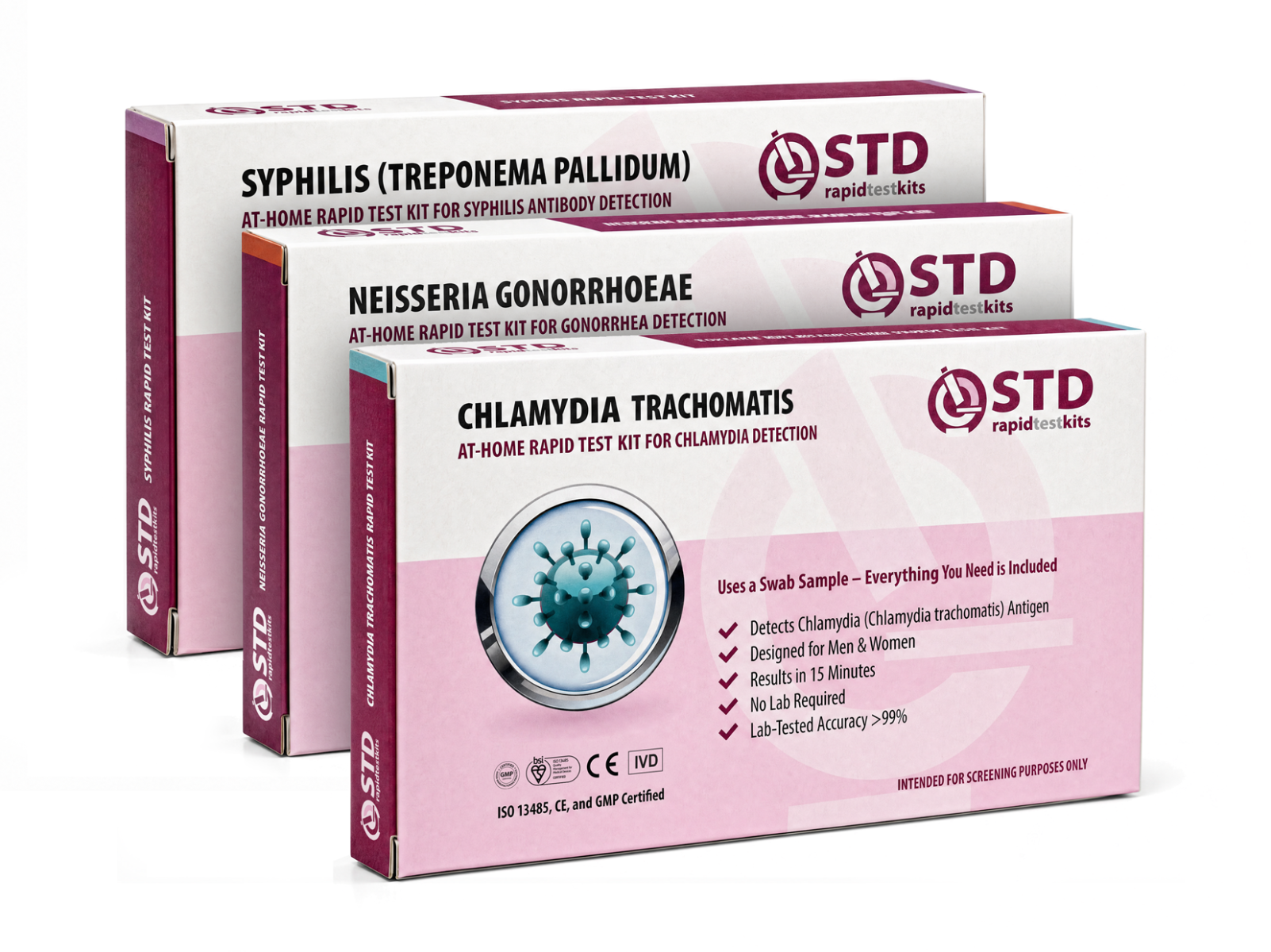
If you have been sexually active with a new partner in the past year and haven't tested, the Syphilis At-Home Rapid Test Kit gives you an answer at the 6-week mark, privately, in about 20 minutes. For broader coverage in a single session, the Chlamydia, Gonorrhea & Syphilis 3-in-1 At-Home Rapid Test Kit screens for the three most common curable bacterial STIs at once. Time your test at 6 weeks post-exposure and all three are covered accurately. For women who want the most comprehensive panel available, the Women's 10-in-1 At-Home STD Test Kit covers syphilis alongside nine other infections, including HPV and Trichomoniasis. You can browse the full range at STD Rapid Test Kits.
FAQs
- I'm not in a high-risk group. Do I really need to think about syphilis?
- Yes. The 2025 American Journal of Preventive Medicine study of nearly 57 million US adults found that syphilis rates are going up in groups without traditional risk factors and going down in groups with them. The old risk profile no longer reliably predicts who is getting infected.
- How does syphilis spread?
- Syphilis spreads through direct contact with a syphilis sore during sexual activity, whether oral, vaginal, or anal sex. Sores can appear on the genitals, in the mouth, on the lips, around the anus, or on the fingers. It does not spread through casual contact, shared surfaces, or the air.
- What does a syphilis sore actually look like?
- Look for a sore that does not hurt; that is the most useful signal. It will usually be small and firm, can appear anywhere a sexual contact happened (genitals, lips, mouth, anus, or fingers), and it disappears within a few weeks even without treatment. That disappearance is not the same as the infection being gone.
- Can you have syphilis without any symptoms?
- Yes. After the primary and secondary stages, syphilis goes into a latent phase with no symptoms at all. The bacteria stay in the body and can keep damaging it from the inside. Latent syphilis can persist for years without any visible signs. At that point, testing is the only way to find it.
- When should I get tested for syphilis after a possible exposure?
- Six weeks is the earliest reliable date for a syphilis antibody test. Before that, your immune system likely hasn't produced enough antibodies for the test to detect, even if the infection is there. Mark six weeks from the exposure on your calendar and test then. If you're still uncertain about that specific event, a second test at 12 weeks closes the loop.
- Is syphilis curable?
- Yes, completely, as long as it is caught before it reaches the tertiary stage. There is effective treatment that works at all earlier stages, including primary, secondary, and latent. A positive result is not a health crisis; it identifies a treatable infection. The sooner it is found, the easier it is to treat and the less damage it does.
- What happens if syphilis is not treated?
- Untreated syphilis progresses from the painless primary stage to an infectious secondary stage with a rash and flu-like symptoms, and then to a silent latent phase. Tertiary syphilis can occur years after the first infection and can damage the heart, brain, eyes, and nervous system. It can cause blindness, deafness, paralysis, and death. Timely testing and treatment prevents all of these outcomes.
- Can syphilis affect a pregnancy?
- Yes. Congenital syphilis, when a pregnant person passes the infection to their baby during pregnancy or childbirth, causes bone damage, neurological problems, blindness, deafness, stillbirth, and infant death. Cases of congenital syphilis have risen for 12 consecutive years in the US, with nearly 4,000 cases reported in 2024. Testing during pregnancy is important regardless of perceived risk level.
Our article was constructed based on current advice from the most prominent public health and medical organizations, and then molded into simple language based on the situations that people actually experience, such as testing, exposure with no symptoms, reinfection by a partner, and the uncomfortable question of whether an old infection “came back.” Our research pool included broader public health, clinical, and medical references; the sources below are the most pertinent and useful for readers who want to verify our claims directly.
- U.S. Centers for Disease Control and Prevention. Sexually Transmitted Infections Surveillance, annual data. Primary source for 2023 syphilis case totals and multi-year U.S. trend data.
- U.S. Centers for Disease Control and Prevention. National data release on syphilis, congenital syphilis, and other STIs (September 2025). Primary source for the provisional 2024 congenital syphilis figures and 2024 STI trend reporting.
- American Journal of Preventive Medicine. Trends in Incidence of Syphilis Among US Adults, January 2017 to October 2024 (2025). The 57-million-adult electronic health record study documenting the shift toward low-burden populations.
- Annals of Medicine and Surgery. Unraveling the Resurgence of Syphilis: A Deep Dive into the Epidemic Sweeping the United States (2025). Background on healthcare access, public health infrastructure, social determinants, and prevention tools driving the U.S. resurgence.
- U.S. Centers for Disease Control and Prevention. STI Treatment Guidelines: Syphilis during Pregnancy. Used for screening, retesting, and treatment guidance referenced in the prenatal section.
- U.S. Centers for Disease Control and Prevention. Syphilis Fact Sheet. Used for symptom timing (chancre at 10–90 days, secondary at 2–8 weeks) and the four-stage clinical progression.
- Mayo Clinic. Syphilis: symptoms, causes, complications, diagnosis. Reference on clinical staging and complications of untreated infection.
