
Published: November 2025 | Last updated: May 2026 | Editorial review and quality control: Martina N.
Discomfort after oral sex is common, and most of the time it doesn't mean an infection. Friction, dryness, prolonged contact, and exposure to another person's oral or genital bacteria can leave you with a sore throat, slight irritation, or a vague feeling that something is off. That sensation usually settles inside a few days.
The harder question is when discomfort points to something your body can't shake off on its own. This guide is the calm version of that decision: what to watch, what to ignore, and when testing actually helps. It also flags one limit honestly upfront: at-home rapid kits, including the ones sold on this site, do not test throat samples. If a pharyngeal infection is your specific concern, a clinic visit is the right route. For the genital and blood-based infections that travel through the same exposure, at-home rapid testing is a practical screen.
Key Takeaways
- Mild soreness, dryness, or irritation after oral sex typically clears within 24 to 72 hours; symptoms that persist past three to five days deserve attention.
- Many oral STIs, especially throat gonorrhea and chlamydia, cause no obvious symptoms at all, so testing matters more than waiting for clear signs.
What “Normal” Soreness Can Feel Like
Not all discomfort signals infection. Oral sex involves friction, pressure, and an exchange of oral and genital flora that briefly disrupts both partners' microbiomes. Your throat may feel raw or dry the next morning. The skin around the genitals may feel sensitive, especially after prolonged contact. The vulva or penis may show short-lived redness in places that were pressed against rougher tissue.
These sensations usually peak within the first day and fade steadily after that. A common pattern documented by sexual-health services like the NHS is that mechanical irritation resolves on its own within 24 to 72 hours. If your symptoms stay mild, improve steadily, and don't change in character, your body is likely recalibrating, not fighting an infection.
| Cause | What It Feels Like | Typical Duration |
|---|---|---|
| Friction irritation | Mild burning or sensitivity at points of contact | 1 to 2 days |
| Dryness | Tightness, slight rawness in the throat or genital skin | 1 to 3 days |
| Bacterial flora exchange | Temporary imbalance or low-grade irritation | 2 to 3 days |
| Minor tissue sensitivity | Soreness after prolonged or repeated contact | Up to 72 hours |
When Symptoms Suggest Something More
STI-related symptoms tend to behave differently from simple irritation. Instead of fading on a predictable timeline, they linger, intensify, or change in shape. A vague soreness becomes a sharp pain. A patch of mild irritation develops into clustered bumps or blisters. New symptoms appear that weren't there at the start, like swollen lymph nodes, painless ulcers, or discharge with an unfamiliar smell.
One pattern is especially worth knowing: pharyngeal gonorrhea and chlamydia often produce only a faint sore throat, or no symptoms at all. The CDC's STI overview notes that throat infections are commonly silent, which is why routine testing matters for people with regular oral sex exposure. After an uncertain exposure, a structured test result is more reliable than reading symptoms alone.
| Symptom | Why It Matters |
|---|---|
| Sore throat that lasts beyond 5 days | Possible pharyngeal gonorrhea or chlamydia, often without other signs |
| White spots, patches, or persistent redness in the throat | Possible bacterial infection rather than viral irritation |
| Genital burning that intensifies over days | Possible bacterial STI or urethritis |
| Sores, blisters, or clustered bumps on lips or genitals | Common early signs of HSV-1 or HSV-2 |
| Unusual discharge, odor, or itching | Possible STI or disrupted vaginal/penile flora |
STIs That Can Transmit Through Oral Sex
Oral sex carries lower transmission risk than penetrative sex for several infections, though the risk is not zero. The infections worth knowing about, based on guidance from the CDC and the WHO STI fact sheet, are:
- Gonorrhea and chlamydia (throat): can colonize the pharynx after oral contact with an infected partner. Often asymptomatic; sometimes mild persistent soreness.
- Herpes (HSV-1 and HSV-2): oral herpes can transmit to genital tissue and vice versa. Typical sign is clustered painful blisters or ulcers 2 to 12 days after exposure.
- Syphilis: the primary chancre can appear on the lips, mouth, or genitals as a single painless ulcer about 3 weeks after exposure.
- HPV: can transmit through oral contact. Most infections clear on their own; persistent oral HPV is a risk factor for oropharyngeal cancer over the long term.
- HIV: oral transmission is documented but low-risk. Risk rises with cuts, sores, or recent dental work in the mouth, or with high viral load in the partner.
Other irritations sometimes follow oral sex without being classed as STIs. Vaginal flora can shift after oral contact, occasionally producing yeast-infection-like itching or bacterial vaginosis-style discharge. Yeast imbalances and BV-style discharge fall outside the strict definition of an STI and still cause real discomfort that may need treatment.
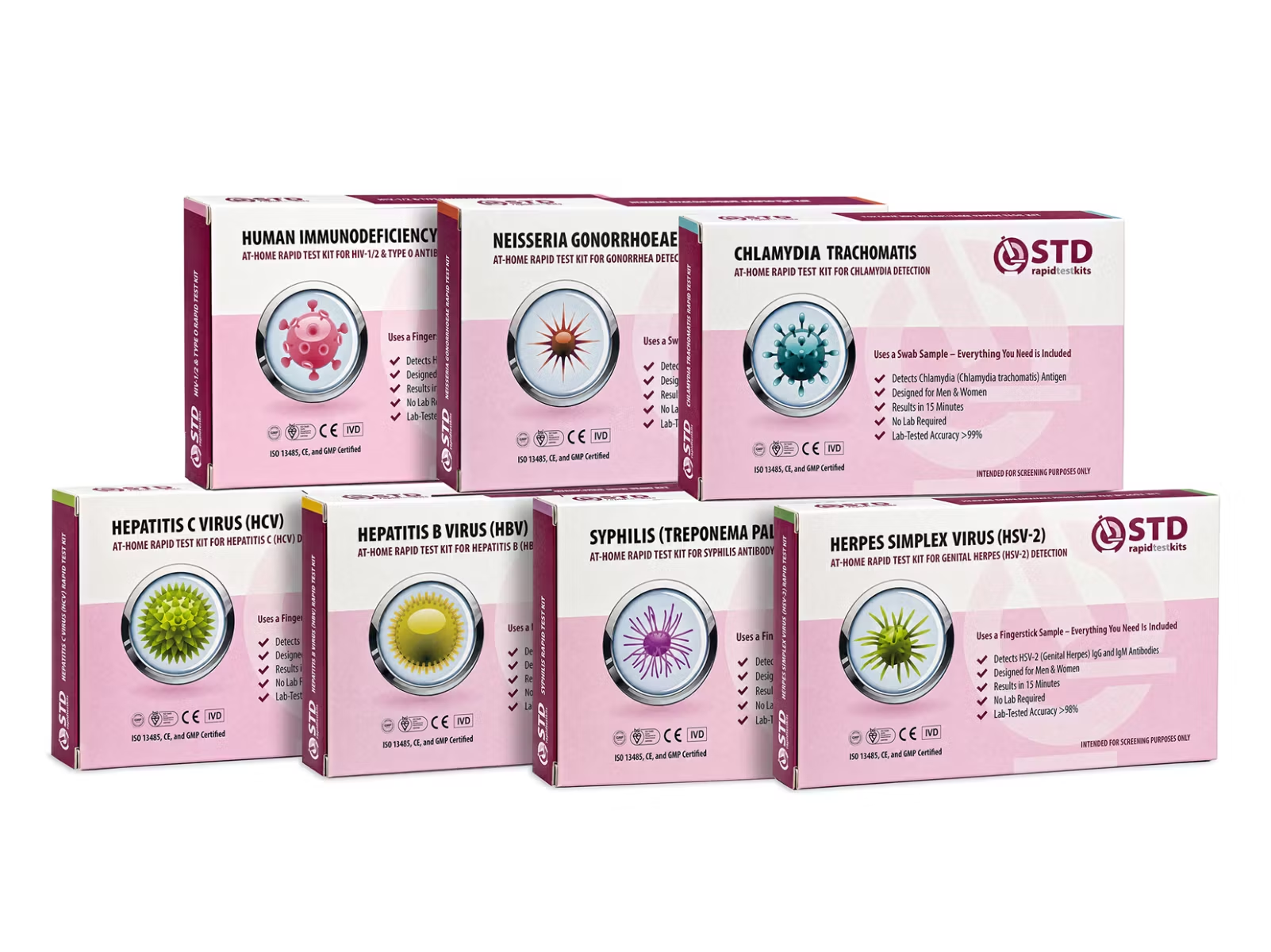
Pharyngeal gonorrhea and chlamydia are diagnosed with a throat swab analyzed by NAAT (nucleic acid amplification testing) in a laboratory. This site does not sell a pharyngeal swab test, so a sexual health clinic or primary care visit is the right route when the throat itself is the worry. Home rapid kits sold here cover the genital-swab and blood-based infections from the same encounter (chlamydia and gonorrhea by genital swab, plus HIV, syphilis, hepatitis, and herpes by fingerstick blood).
How Long Before Symptoms Show Up
One reason people misread their own bodies after oral sex is timing. Symptoms rarely arrive the moment they would be most informative. Some show up within a couple of days. Others take weeks. Some never produce noticeable signs, even when an infection is present.
The gap between exposure and detectable symptoms is the incubation period. It is also, separately, the window during which a test may not yet reliably detect the infection (the window period). Both matter when you're trying to make sense of what's happening, or when to test.

Typical Timing Windows by Infection
The chart below summarizes what current CDC guidance suggests for common oral-exposure infections. Treat these as rough guides, not promises: individual bodies vary, and some infections may never produce symptoms even when present.
| Infection | When Symptoms May Appear | Common Signs |
|---|---|---|
| Gonorrhea (throat or genital) | 2 to 7 days, or none | Mild sore throat, redness, low-grade discomfort |
| Chlamydia (throat or genital) | 1 to 3 weeks, or none | Often silent; mild irritation if present |
| Herpes (HSV-1 or HSV-2) | 2 to 12 days | Tingling, then clustered painful blisters or ulcers |
| Syphilis (primary stage) | About 3 weeks (range 10 to 90 days) | Single painless ulcer on lip, mouth, or genitals |
| Flora shift, yeast, or BV | 1 to 5 days | Itching, change in discharge, mild irritation |
When Testing Becomes the Right Move
Three signals usually tip the decision from "wait and watch" to "test now." First, symptoms that don't resolve within three to five days of onset. Second, symptoms that change shape, like a sore throat that develops white patches, or skin irritation that turns into clustered blisters. Third, a recent exposure where your partner's status is unknown, even if symptoms are mild or absent.
If any of those apply, the smart move is to test for the infections that the exposure could plausibly transmit. For oral sex, that typically means herpes, gonorrhea, chlamydia, syphilis, and HIV, with HPV in the background as a longer-term consideration. A blood-and-swab home panel covers the bulk of that risk surface in a single sitting; a clinic visit is the right add-on when the throat itself is symptomatic.
The “Wait and See” Trap
There's a strong human instinct to stretch "wait and watch" into "wait and hope." Mild discomfort really does fade most of the time, which makes it easy to keep waiting one more day, then one more. The trap is plateau symptoms: nothing gets worse, but nothing fully resolves either. That gray zone tends to feel survivable, so action gets postponed.
The signal worth acting on is persistence, not severity. If something is still there a week after exposure without clear improvement, the right next step is testing, regardless of how mild it feels. Bacterial STIs in particular respond well to early treatment, and untreated chlamydia or gonorrhea can move from a barely-noticeable infection to one with longer-term consequences for fertility or pelvic health.
When the Anxiety Is the Symptom
Sometimes the discomfort that pulls people into Google searches isn't really physical. The throat tickle is mild. The skin irritation is barely there. What's louder is the mental loop: what if it's something serious, what if I just didn't notice before, what if testing comes back positive. That loop tends to amplify every sensation in the body, which then feeds the loop further.
This is not the same as saying the symptoms aren't real. It is the brain doing what brains do after a perceived risk event: scanning for danger signals. Interrupting the loop usually means acting on it. Confirm everything is fine through testing, or test and start treatment if something does turn up. Both paths move faster than weeks of circular searching.

Clarity, Not Guesswork
Testing isn't an admission that something is wrong. It is the only tool that can replace a moving target (your thoughts, your symptoms, your search history) with a concrete answer. Most tests come back negative, and the relief is the actual goal. When a test does come back positive, catching it early almost always makes treatment simpler, especially for bacterial STIs that respond fully to antibiotics.
A grounded framework: if your symptoms are mild and improving inside three days, give your body a little more time. If anything lingers, evolves, or feels distinctly off, test. If the encounter was new or your partner's recent status is unknown, test even without symptoms. Testing converts weeks of open-ended worry into a concrete answer, whether that answer calls for treatment or lets you move on.
Most pharyngeal gonorrhea and chlamydia infections cause no symptoms, which is one reason routine screening matters for people who have oral sex.
Frequently Asked Questions
- Can you actually get an STI from oral sex?
- Yes. Herpes, gonorrhea, chlamydia, syphilis, HPV, and (rarely) HIV can all transmit through oral sex. The risk is lower than for penetrative sex, but it is not zero, and some infections (especially throat gonorrhea and chlamydia) often produce no symptoms at all.
- I have a sore throat the morning after oral sex. Should I be worried?
- A sore throat 12 to 24 hours after oral sex is usually mechanical irritation and clears within a couple of days. The marker to watch for is persistence: if it lasts beyond three to five days, gets worse, or develops white patches, that's the point to test or see a clinician.
- What does an STI symptom feel like versus normal irritation?
- Irritation tends to fade steadily and stay roughly the same in character. STI symptoms more often evolve: a vague soreness becomes sharper, a patch of redness develops into blisters or ulcers, or new symptoms appear (discharge, swollen lymph nodes, a single painless sore). Trajectory matters more than intensity.
- How fast do symptoms appear if I did catch something?
- It varies by infection. Gonorrhea and yeast-style irritation often show within a few days. Herpes typically appears in 2 to 12 days. Chlamydia can take one to three weeks. Syphilis averages around 3 weeks but can range from 10 to 90 days. Many infections show no symptoms at all even when present.
- If nothing looks wrong, am I in the clear?
- Not necessarily. Many oral STIs, especially in the throat, are silent. No sores, no pain, nothing visible. Routine testing is the only reliable way to confirm status after an exposure with unknown-status partners.
- Can oral sex throw off vaginal pH or trigger a yeast infection?
- Yes, this is more common than people expect. Oral bacteria can disrupt vaginal flora, producing itching, discharge, or symptoms that mimic a yeast infection or bacterial vaginosis. Yeast imbalances and BV-type discharge fall outside the STI category and still cause real discomfort worth treating with over-the-counter or prescription options.
- Do I need to get tested, or am I overreacting?
- Testing isn't overreacting. It's the cheapest way to convert weeks of background worry into a concrete answer. Most tests come back negative, and when they don't, catching an infection early almost always makes treatment simpler. An at-home rapid kit is a low-friction first screen; clinic testing is the right add-on for throat-specific concerns.
How we sourced this article: Our article was constructed based on current advice from the most prominent public health and medical organizations, including the CDC, WHO, NHS, and Mayo Clinic, and then molded into simple language based on the situations that people actually experience after oral sex exposure. We focused on telling the difference between mechanical irritation and infection, the timing windows of common oral-route STIs, and a grounded framework for deciding when to test versus when to wait.
- U.S. Centers for Disease Control and Prevention. About sexually transmitted infections: overview, transmission routes, and screening guidance.
- U.S. Centers for Disease Control and Prevention. About HIV: transmission routes, prevention, and testing guidance.
- World Health Organization. Sexually transmitted infections (STIs) fact sheet: incidence, transmission, and management guidance.
- UK National Health Service. Sexually transmitted infections (STIs): symptoms, when to seek help, and testing pathways.
- Mayo Clinic. Sexually transmitted diseases (STDs): symptoms and causes category page.
- U.S. Centers for Disease Control and Prevention. Genital herpes (HSV-1 and HSV-2): transmission, symptoms, and incubation timing.
