

Published: September 2025 | Last updated: April 2026 | Editorial review and quality control: Martina N.
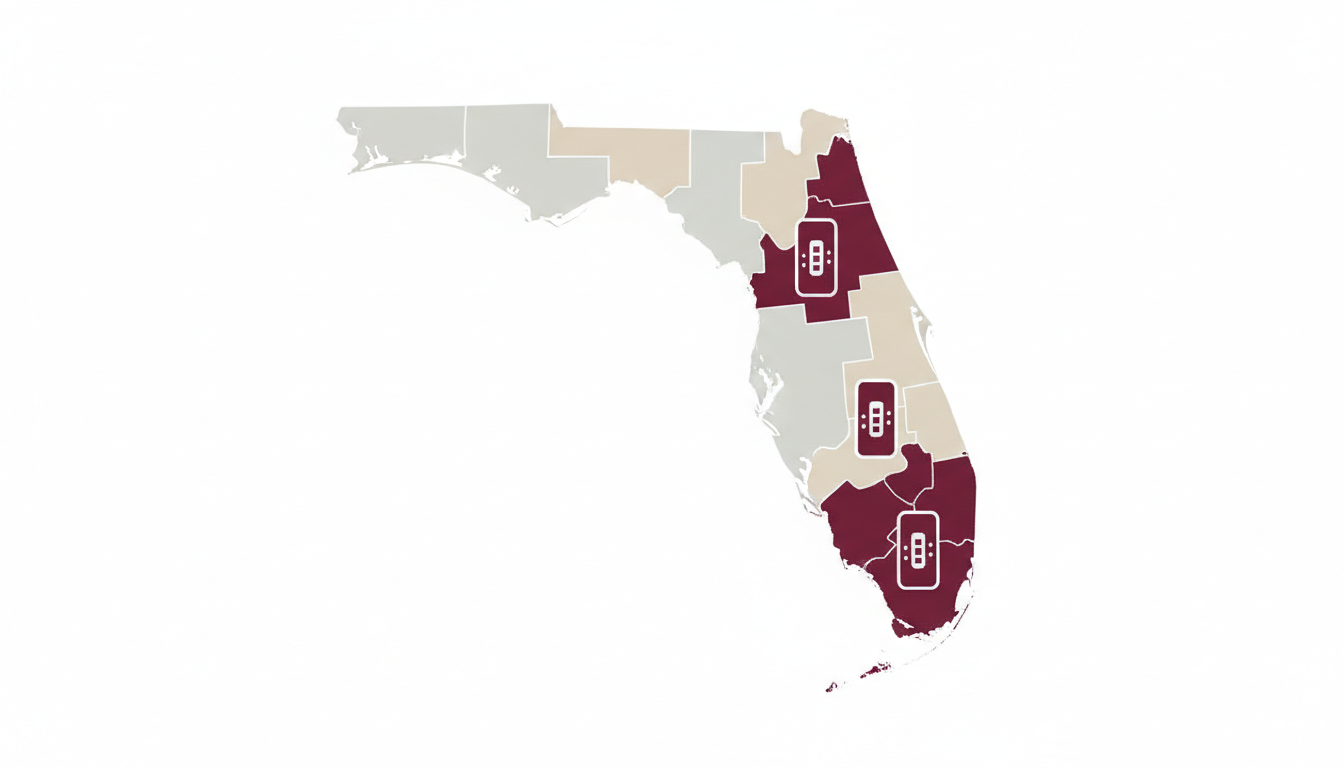
Florida's beaches refill every March, and so do its STD clinics by April. State and county clinics track a post-spring-break bump every year: chlamydia, gonorrhea, and syphilis cases climb in the weeks after high-volume tourism, particularly in Miami-Dade, Broward, and Bay counties. What drives that bump is behavior on vacation. Condoms get used inconsistently, oral sex usually skips barriers entirely, and a stranger's last test date rarely comes up at 2 a.m.
If you came home from a trip with a subtle itch, a burning sensation, or just a worry that will not quiet down, this guide is the calm version of what your search history wants. It covers when each common STD becomes detectable, what symptoms (and absence of symptoms) usually mean, and how to pick a test that fits the timeline you actually have.
Did spring break leave you wondering if you caught something?
Most post-vacation itching or burning has a benign cause (sunburn, chlorine irritation, yeast infection, or shaving rash) and clears on its own within a week. STD rates in Florida do rise predictably after spring break, though, and more than half of chlamydia and gonorrhea infections cause no symptoms at all, so testing is the only reliable way to know. At-home rapid swab tests work well from about 14 days after exposure for chlamydia and gonorrhea; HIV and syphilis blood tests need a longer window of 6 to 12 weeks to show up reliably. If symptoms (burning, itching, sores, unusual discharge) appear earlier, test sooner.
Key Takeaways
- More than half of chlamydia and gonorrhea infections cause no symptoms, per CDC surveillance. Feeling fine does not mean being clear.
- Plan a two-stage test schedule: 14 days post-exposure for swab-detected infections like chlamydia and gonorrhea, then again at 6 to 12 weeks for HIV and syphilis blood markers.
Why Florida's Spring Break Drives an STD Spike
The pattern is not anecdotal. Florida Department of Health surveillance records track STD case counts by county, and clinics in coastal-tourism areas typically see a spike in the weeks following each spring break wave (Florida Department of Health). The underlying baseline is already high: Florida consistently ranks among the top five U.S. states for new chlamydia, gonorrhea, and syphilis cases (CDC sexually transmitted infections).
Researchers describe what happens as a seasonal shift in sexual decision-making. On vacation, people sleep with new partners more often, drink before sex more often, use condoms less consistently, and almost never bring up testing history. The same pattern repeats at music festivals, summer travel, and pride weekends; spring break is just the loudest version of it.
What carries the actual risk is the gap between the hookup and the test. People go home, life resumes, the week-long itch gets blamed on saltwater, and weeks pass before anyone gets tested. By the time someone walks into a clinic, an asymptomatic infection has often had time to pass to a regular partner back home.
This applies to any travel context. The World Health Organization estimates that more than one million sexually transmitted infections are acquired every day worldwide, and a large fraction are silent in the early weeks (WHO STI fact sheet). Whether the trip was Miami, Mexico City, or a hostel in Greece, the same factors apply.
Burning, Itching, or Nothing: What Post-Vacation Symptoms Mean
The symptoms people notice first after a travel hookup are usually nonspecific. They overlap with sunburn irritation, shaving rash, yeast infections, urinary tract infections, and reactions to pool chemicals. That overlap is exactly what makes self-diagnosis unreliable. The patterns most commonly reported in the days and weeks after vacation sex include:
- A burning or stinging sensation during urination, usually three to seven days after exposure
- Itching around the genitals or anus that does not resolve within a few days
- A rash that resembles razor burn but lasts longer than a week
- Unusual discharge (color, smell, or volume different from baseline)
- A sore throat or swollen neck lymph nodes after unprotected oral sex
- A small, firm, painless sore at the exposure site, the hallmark of primary syphilis (CDC syphilis information)
Most early-stage STDs cause no symptoms at all. CDC and WHO data both note that the majority of chlamydia and gonorrhea infections are silent in the first weeks, particularly in women and at non-genital sites such as the throat or rectum. Symptom absence does not rule out infection; it only means that, if one is present, it has not progressed to a stage that produces visible symptoms.
The practical implication: do not wait for symptoms to decide whether to test. Plan testing on the calendar timeline that matches the exposure date.
Most people with chlamydia have no symptoms. Without symptoms, people can be unaware they have an infection and may not seek health care. When left untreated, chlamydia can cause serious health problems.
How Soon to Test, and Which Window Each Infection Needs
Every STD has an incubation window, the gap between exposure and the point at which a test can reliably detect it. Test before that window closes and you can get a falsely reassuring negative. The most useful approach is staged: an early test at the two-week mark to catch the fast-appearing bacterial infections, then a follow-up at six to twelve weeks for the longer-window viral and treponemal infections.
The table below summarizes typical detection windows used by major public-health bodies (CDC sexually transmitted infections; WHO STI fact sheet). Specific numbers depend on the test technology used; ranges below cover the common at-home and lab options.
| STD | Earliest detectable | Best test window | Typical early symptoms |
|---|---|---|---|
| Chlamydia | 5 to 7 days | 14 days or later | Often none; sometimes mild burning |
| Gonorrhea | 3 to 5 days | 7 to 14 days | Discharge, painful urination; often none in throat |
| Syphilis | 3 weeks | 6 to 12 weeks | Painless sore at exposure site, then rash |
| HIV (rapid antibody) | 23 to 90 days | 6 to 12 weeks | Flu-like symptoms or none |
| Herpes (HSV-2 blood antibody) | 4 to 6 weeks | 12 to 16 weeks | Tingling, blisters, or none |
| HPV | Weeks to months | Visible warts or Pap smear | Usually silent |
Putting the Window Periods Into a Plan
If the exposure was less than three days ago, almost every test will give an unreliable result; treat that timeline as too early rather than as reassurance. If symptoms appear before the window closes, test immediately anyway. A positive result is meaningful at any point; a negative result simply means a follow-up at the proper window is still needed.
The simplest way to handle this for a vacation hookup is to set two calendar reminders: one for 14 days post-exposure (chlamydia and gonorrhea), and one for 6 to 12 weeks (HIV and syphilis blood markers). If a regular partner is in the picture, hold off on unprotected sex with them until both windows have closed.
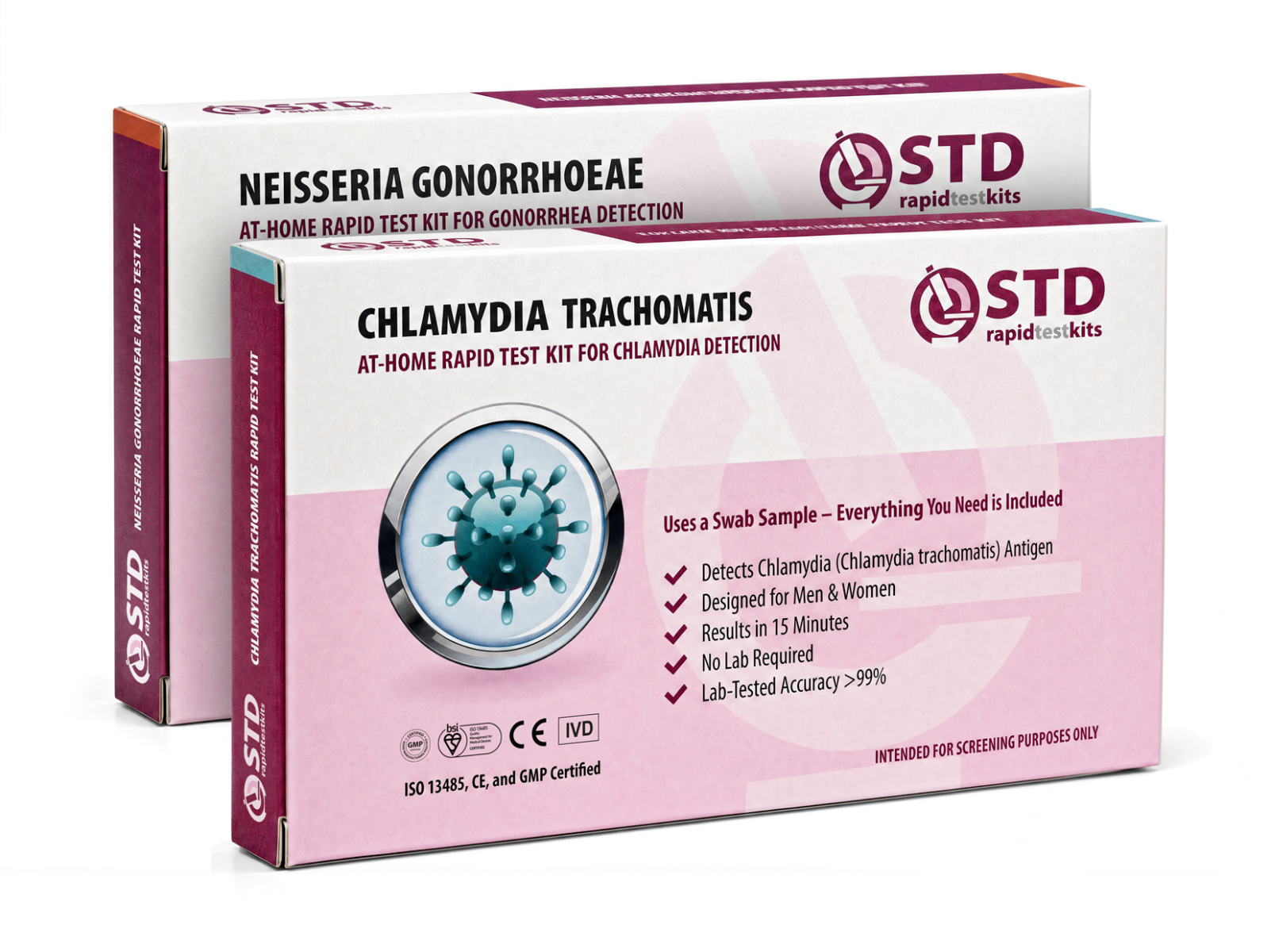
This site sells at-home rapid STD test kits. The products linked below are from our own catalog; we recommend kits based on fit-for-purpose for the reader's exposure timeline, and we say so plainly when a clinic visit is the better choice.
Condoms Help. They Don't Cover Everything.
The most common phrase clinicians hear after a post-vacation positive result is "but we used a condom." Used correctly and consistently, condoms reduce the transmission risk of fluid-borne STDs by a large margin (CDC condom effectiveness guidance). "Correctly and consistently" is the part that fails on vacation, for three reasons summarized just below.
The hot tub myth is worth retiring while we are here. Hot water does not clean the genital area after sex; the heat irritates skin and can make small abrasions more permeable to a pathogen that is already there. Showering or rinsing afterward also does not stop an infection that has already entered the mucosa.
Condoms remain one of the most useful tools available. They are simply not equivalent to immunity.
Three gaps where condoms fall short
- Skin-to-skin spread: genital herpes (HSV-2) and HPV transmit through direct contact in the genital area, including sites a condom does not cover.
- Oral sex: most people skip barriers for oral, which can transmit gonorrhea, chlamydia, syphilis, and herpes. Pharyngeal gonorrhea is usually symptomless and only detected on a clinic-administered throat swab.
- Use failures: condoms slip, break, get put on partway through, or come off entirely with vigorous sex or substance use. Half-time protection is half protection.
Picking the Right Test: At-Home, Mail-In, or Clinic
Three broad options exist for post-vacation testing, each with a different tradeoff between speed, privacy, and analytical sensitivity. The right pick depends on your symptoms, your timeline, and how much privacy matters in your living situation.
| Test type | Speed | Privacy | Best fit |
|---|---|---|---|
| At-home rapid lateral-flow | 15 to 20 minutes | Very high | Asymptomatic, 14+ days post-exposure, want a fast first answer |
| Mail-in lab kit (NAAT) | 2 to 5 days after sample arrives | High | Want lab-grade sensitivity without a clinic visit |
| Clinic visit (NAAT or blood draw) | Same day to one week | Moderate | Active symptoms, sores, or recent high-risk exposure |
How the Test Technologies Differ
At-home rapid kits use lateral-flow chemistry, the same format as a pregnancy test or a COVID rapid antigen test. Laboratories use nucleic acid amplification tests (NAATs) for chlamydia and gonorrhea, which detect bacterial DNA at very low concentrations. The two are complementary. A positive at-home result is worth confirming with a lab NAAT; a negative at-home result during the proper window is reassuring but does not fully rule out very early-stage or low-load infection (CDC screening recommendations).
For someone asymptomatic who wants a fast answer in privacy, the at-home rapid kit is usually the right starting point at the 14-day mark. For someone with active symptoms (especially sores, severe pain, or visible discharge), a clinic visit is the better first stop because the clinician can swab the actual lesion, run a NAAT, and prescribe treatment in one appointment.
At-home lateral-flow kits give a fast, private answer at the 14-day mark and are the right starting point for most asymptomatic travelers. A clinic NAAT is the follow-up step if the at-home result is positive, or the first step if active symptoms (sores, severe pain, visible discharge) are already present.
If Your Result Comes Back Positive
A positive test is alarming the first time it happens. It is also extremely common and almost always treatable. The CDC reports millions of new STD diagnoses in the United States each year; among the most common (chlamydia, gonorrhea, syphilis, trichomoniasis), all are curable with antibiotics, and incurable infections like HIV and herpes are now manageable with reliable medication regimens (CDC STI overview).
The immediate practical steps:
- Confirm the result. A positive at-home rapid test should be confirmed with a clinic-based NAAT or blood test, depending on the infection. Most at-home test brands include guidance on confirmation.
- Get treated. Bacterial STDs (chlamydia, gonorrhea, syphilis, trichomoniasis) clear with a short course of antibiotics. A telehealth appointment can usually issue the prescription within the same day, with the medication picked up at a pharmacy or shipped to a home address. For HIV, herpes, or hepatitis, treatment plans are longer-term and managed by an infectious-disease or primary-care clinician.
- Pause sexual contact. Until antibiotic treatment is complete and the clinician confirms the all-clear, sex with a regular partner risks reinfection or transmission to them. For HIV, the relevant practice is sustained undetectable viral load on treatment, which dramatically reduces transmission risk.
- Tell recent partners. Anyone you had sex with during the relevant window needs to know. They can get tested and treated before the infection passes onward.
One positive result does not change your worth, your dating prospects, or your future relationships. Most people who test positive for a curable STD are clear within a couple of weeks of starting treatment.
Telling a Partner Without Making It a Crisis
Partner notification is the part of post-positive logistics that gets delayed the most, often for months. The shame is understandable; the math is also clear. A partner who does not know cannot get tested, can pass the infection to their next partner, and can pass it back to you after your treatment finishes.
If the partner was a stranger or a casual contact you no longer have direct lines to, anonymous notification services can do the work for you. Tools like Tell Your Partner and the public-health-supported InspotMe service let you send an anonymous text or email that says nothing more than "someone you were recently in contact with tested positive for X; please get tested." Local health departments will also do partner notification on request, free of charge, with full anonymity preserved.
For a known partner you can reach directly, the script does not need to be elaborate. The sample message in the callout below works as a starting point.
Hey, I got tested recently and a result came back positive for [infection]. I'm getting treated, and I wanted to give you a heads up so you can get tested too. Happy to talk about it if useful, no pressure either way.
Smart Prevention Before Your Next Trip
None of the above means abstinence is the answer. Most readers of this article will have a vacation hookup again at some point. A few low-effort moves measurably shift the risk:
- Pack condoms. Even if you do not plan on using them. Plans change; the only condoms that work are the ones present at the moment.
- Consider PrEP if HIV exposure risk is meaningful. The HIV transmission risk per single vaginal or anal encounter without a condom is low (well under 1% for most exposure types per CDC modeling) but not zero; the precise figure depends on the receptive vs insertive role, the partner's viral load, and whether other STIs are present. Daily oral PrEP (or the bimonthly injection) reduces HIV acquisition risk by about 99% when taken as directed, and a telehealth provider can prescribe it before a trip if appropriate (CDC HIV prevention).
- Use lubricant. Both anal and vaginal sex with adequate lubrication produce fewer micro-tears, which reduces both pain and transmission probability.
- Get a baseline test before the trip. Knowing your starting status makes the post-trip test interpretable. A positive on day 14 after a trip is much more clearly attributable to that trip if a negative test sits on file from two weeks before departure.
- Schedule a post-trip test as part of unpacking. Set the calendar reminder before leaving so it is not a decision point you have to make in the middle of post-vacation life resumption.
Carrying a discreet at-home test kit in a luggage pouch alongside basic first-aid follows the same logic that gets people to bring sunscreen and a copy of their passport.

FAQs
- Can I really catch an STD from one hookup?
- Yes. A single unprotected encounter is sufficient to transmit any of the common STDs, including chlamydia, gonorrhea, syphilis, HIV, herpes, and HPV. Skin-to-skin transmission (herpes and HPV) does not even require penetrative sex; close genital contact is enough. The transmission probability per encounter varies by infection and by the partner's infectious load, but it is never zero.
- How soon after spring break should I get tested?
- About two weeks after the exposure for chlamydia and gonorrhea (the fast-window bacterial infections), and again at six to twelve weeks for HIV and syphilis. If symptoms appear earlier, test immediately and follow up at the longer window if the early test is negative. Testing in the first three days post-exposure is generally too early to be reliable.
- I have no symptoms. Should I still test?
- Yes. The majority of chlamydia and gonorrhea infections cause no symptoms in the early weeks, and HIV is often silent for months. Asymptomatic people can still carry and transmit chlamydia or gonorrhea; CDC guidance recommends routine testing after any new partner.
- We used a condom. Do I still need to test?
- Yes, with caveats. Condoms substantially reduce transmission of fluid-borne STDs when used correctly the entire time. They do not cover skin-to-skin areas (relevant for herpes and HPV), they are usually skipped for oral sex, and use failures (slipping, breaking, late application) are common. A test is the only way to confirm the condom did the job in your specific case.
- Can I get an STD from oral sex?
- Yes. Gonorrhea, chlamydia, syphilis, and herpes all transmit through unprotected oral sex. Pharyngeal gonorrhea (in the throat) is often symptomless and only detected by a throat swab, which is a clinic-based test rather than an at-home kit. If oral exposure is part of the picture, mention it to the testing clinician so the throat site is included.
- Is this itching from shaving or an STD?
- Razor irritation typically resolves within a few days with no further symptoms. Itching that persists past a week, that comes with discharge, sores, or a rash, or that escalates over time, is more likely to be infectious. Trichomoniasis and herpes both produce itching as a primary symptom. A test is the only way to tell the difference reliably.
- Do hot tubs prevent STDs after sex?
- No. Hot water does not decontaminate the genital area; the heat can actually irritate skin and increase permeability. Showering or rinsing also does not stop an infection that has already entered the mucosa. Hot tubs are not a substitute for barriers, testing, or treatment.
- What happens if my at-home test is positive?
- Confirm the result with a clinic-based NAAT or blood test, then start treatment. Bacterial STDs clear with antibiotics, often issued via telehealth. Notify any recent partners so they can test and treat as well. Anonymous notification services exist if direct conversations are not feasible. A positive result is a starting point for treatment, not a verdict on your worth.
- U.S. Centers for Disease Control and Prevention. Sexually transmitted infections: facts, screening recommendations, treatment guidelines, and asymptomatic-infection guidance.
- World Health Organization. Fact sheet on sexually transmitted infections, including global incidence and asymptomatic-case statistics.
- U.K. National Health Service. Sexually transmitted infections overview, symptom recognition, and testing pathways.
- Mayo Clinic. Plain-language overviews of sexually transmitted diseases, symptoms, diagnosis, and treatment.
- Florida Department of Health. Public-facing sexually transmitted disease information and county-level surveillance summaries.
- U.S. Centers for Disease Control and Prevention. HIV basics: testing windows, prevention with PrEP, and post-exposure prophylaxis.
