Published: November 2025 | Last updated: May 2026 | Editorial review and quality control: Martina N.
Three things separate them: pain at rest, how fast the bump changes, and timing after sex. Herpes hurts even untouched and opens from blister to sore within a day or two, crusting by day 4 to 7 of a first outbreak. A pimple or ingrown hair is tender only when pressed and clears within a week. A genital wart is painless and slow to appear.
Finding a new bump in your genital area triggers a specific kind of dread. The brain runs straight to worst-case answers before the eyes have even taken a clear look. Most of the time, the cause is ordinary: an irritated hair follicle, a clogged pore, friction from underwear, or a shave that went too aggressively. Sometimes the cause is viral. A single lesion can be the first sign of genital herpes or a genital wart, and telling the difference is mostly a matter of recognizing patterns rather than reacting in fear.
This guide walks through what each kind of bump tends to look like, how it behaves over the first three days, what the timing after sex tells you, what to do if you have already popped it, and when an at-home STI test is the right next step. The goal is informed calm rather than a hunt for certainty in the bathroom mirror at 2 a.m.
Key Takeaways
- Most single genital bumps are pimples, ingrown hairs, or skin irritation, not infections; herpes can begin as one lesion but evolves rapidly, with a blister typically breaking open into an ulcer within 24 to 48 hours and crusting by day 3 to 7 of a first outbreak.
- Pain at rest, a tingling or zinging sensation that came before the bump, and rapid daily evolution all point toward herpes; a flesh-colored, painless, slow-growing bump points toward an HPV wart; tenderness only when pressed in a recently shaved area points toward a pimple or ingrown hair.
Pimple, Ingrown Hair, Herpes, or Wart: The Most Common Possibilities
When a single genital bump appears, four culprits account for most of the cases people search for. Each has a distinct fingerprint: a pattern of appearance, a typical sensation, a predictable timeline, and a predictable evolution over days. None of these is a substitute for a clinician's exam or a lab test, but together they are usually enough to point you toward the right next step.
One more differential worth knowing about: molluscum contagiosum, a poxvirus skin infection that produces small pearly dome-shaped bumps with a tiny central dimple. It can show up as a single lesion in the genital area in adults, is painless, and usually clears on its own in healthy adults over months. The differences sound subtle until you compare them side by side.
| Feature | Ingrown Hair or Pimple | Herpes (HSV-1 or HSV-2) | Genital Wart (HPV) | Molluscum |
|---|---|---|---|---|
| Typical appearance | Red papule, often with a visible curled hair or a small white-yellow center | Small fluid-filled blister that breaks open into a shallow ulcer | Flesh-colored or slightly darker raised bump | Pearly dome-shaped bump with a tiny central dimple |
| Pain level | Mild tenderness only when pressed | Often painful or burning even at rest; tingling or zinging may come first | Usually painless | Painless |
| Surface texture | Smooth, inflamed, sometimes with a small white center | Fragile blister that ruptures into an open sore, then crusts | Rough, sometimes cauliflower-like under magnification | Smooth and waxy with a central pit |
| Number of bumps | Usually single | Often multiple in a tight cluster, but can begin as one | Can be single or grouped | Often several scattered, can begin as one |
| Timing after exposure | Within 1 to 2 days of shaving or friction | Variable; may take weeks or even years to appear | Can be months or years after exposure | Two weeks to several months |
| Evolution over 72 hours | Stable or shrinking; may drain a small whitehead | Rapid: blister to ulcer to crust | Largely unchanged | Largely unchanged |
What Each One Looks Like in a Reference Photo
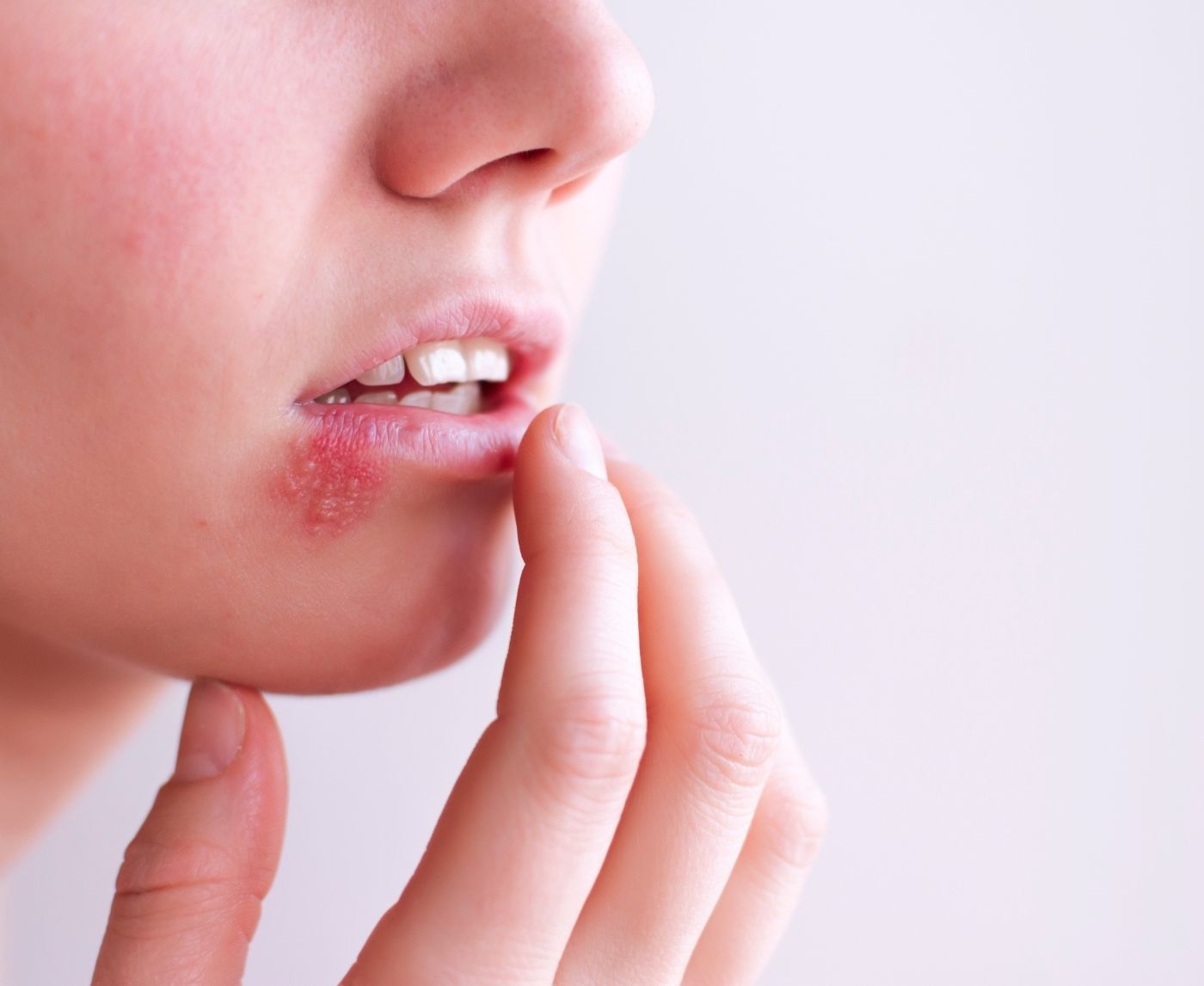
Words can only carry so much weight. The reference images below show the visual pattern of an ingrown hair, a herpes vesicle (using the same blister type that appears around a cold sore on the lip), a common wart, and inflamed folliculitis (a pimple-like bump that often gets confused with both). The same morphology shows up in genital skin; the visual cues do not change because of location.
Does Herpes Start as One Bump? Reading the Prodrome
Yes, sometimes. The very first sign of a genital herpes outbreak can be a single small blister or a tiny ulcer. That fact alone is what keeps people up at night and drives most of the searches for a lone genital bump. Starting as one is different from staying as one, though, and a first herpes outbreak rarely looks the same on day one and day three.
The NHS genital herpes overview describes a typical first outbreak that begins with tingling, itching, or burning in the area before any visible lesion shows up. That sensation phase has a name: prodrome. Some people describe it as a zinging or zapping feeling along the skin, a deep itch in the underwear line, or a raw sting an hour before the bump appears. That nerve-level discomfort is the virus traveling along sensory nerves toward the skin surface, which a regular pimple or ingrown hair does not do.
Then the visible part starts. A small fluid-filled blister forms. Within 24 to 48 hours, it usually breaks open into a shallow ulcer that feels raw or scraped. Other blisters can appear nearby in a tight cluster. The whole arc, from blister to ulcer to crust to healed skin, takes roughly a week or more during a first outbreak, per the CDC's About Genital Herpes page. People who have had herpes before tend to have milder, shorter recurrences, sometimes limited to a single lesion in a familiar spot.
- Day 0: Tingling, itching, burning, or a zinging sensation in the area (the prodrome) before anything is visible.
- Day 1 to 2: One or more small fluid-filled blisters appear.
- Day 2 to 4: The blister ruptures into a shallow open ulcer that can feel raw.
- Day 4 to 7: The ulcer crusts over.
- Day 7 to 14 or more: The crust falls away and the skin heals.
A first outbreak is usually the most intense; later recurrences are often shorter and milder.
Pain, Tingling, or Nothing: Reading What the Bump Feels Like
A stubborn myth online says that if a bump does not hurt, it cannot be herpes. Pain matters and is one of the most useful clues, but the rule is more textured than that. First herpes outbreaks usually hurt. Recurrences sometimes barely register. A wart may be entirely numb, and an ingrown hair often feels tender only when you press on it.
A more reliable read is whether the bump bothers you when you are not touching it. Sitting still at a desk, walking around, putting on jeans: those moments separate an inflamed follicle from a viral lesion. A pimple stings on the surface where clothing rubs. A herpes lesion produces a deeper, nerve-driven burn or zing felt beneath the skin, sometimes with a raw sting when you urinate if the sore sits near the urethra. Sensation gives you a clue, though it is not a diagnosis on its own. Anyone who has been gently pressing the bump every five minutes for the last hour is partly feeling the inflammation of their own poking, not the lesion itself. Leave it alone for a day and notice what changes.
| Sensation | Most Likely With | Why |
|---|---|---|
| Sharp pain or burning at rest | Herpes | Viral activity in skin nerve endings causes irritation even without contact |
| Mild tenderness only when pressed | Ingrown hair or pimple | Localized inflammation around a trapped or clogged follicle |
| No pain, slow growth | Genital wart (HPV) | HPV changes skin cells without acute inflammation |
| Tingling, itching, or zinging before any visible bump | Herpes prodrome | Nerve-pathway activity precedes the lesion |
Why Timing After Sex Narrows the Possibilities
Most single bumps get noticed after sexual contact. That timing fuels the fear, but the biology of incubation does most of the work for you. Each condition has a typical window between exposure and visible symptoms, and matching the bump to a calendar often rules things out quickly.
Genital herpes can take days to weeks before any symptoms show, and some people do not notice a first outbreak for much longer. The NHS genital herpes page notes that symptoms may not appear for weeks or even years after infection. A bump that shows up the morning after a new partner is too early to be herpes from that encounter; the virus needs time to replicate and reach the skin.
Genital warts run on a much slower clock. The NHS genital warts page describes onset weeks or months after exposure, and the CDC's HPV guidance notes that warts can appear years after exposure to HPV. Sometimes they show up sooner, sometimes much later, but a bump 48 hours after sex is not a wart from that night.
Pimples and ingrown hairs, by contrast, can show up within 24 to 48 hours of shaving, sweating, or friction. Anyone who shaved before a date may find that the bump that arrived two days later belongs to the razor, not the partner.
- Pimple, ingrown hair, or shaving irritation: 24 to 48 hours after the shave or friction event.
- Genital herpes (first outbreak): the NHS notes symptoms may not appear for weeks or even years after infection; many people who do develop early symptoms see them within days of exposure.
- Genital wart (HPV): the NHS describes onset weeks or months after exposure, and per CDC guidance, sometimes years after.
A bump the morning after sex almost never matches the herpes or HPV window for that encounter.
How the Bump Looks Different on Days One, Two, and Three
Watching the bump over 48 to 72 hours is the single highest-yield thing most people can do. Not photographing it every hour or scrutinizing it under a phone flashlight; just calmly noting what changes and what does not.
A pimple or ingrown hair tends to stay put or gradually shrink. By day three it may have a small white center, drained, or simply receded. It does not multiply.
A herpes lesion typically transforms. What was a clear-fluid dome on Monday is often an open shallow sore by Tuesday and a thin crust by Wednesday or Thursday. The NIH's MedlinePlus genital herpes overview describes the same pattern, where the blisters break, become painful sores, and then heal. Other lesions may have appeared next to the original.
A genital wart usually looks identical on day one and day three, possibly on day fourteen too. It does not blister, does not weep fluid, does not crust.
72-hour evolution at a glance
- Pimple or ingrown hair: stable or shrinking; may form a small whitehead and drain by day three.
- Herpes lesion: rapid arc from fluid-filled blister to open ulcer typically within 24 to 48 hours; crusting follows by day 4 to 7 of a first outbreak, with skin healed by day 7 to 14 or more.
- Genital wart: largely unchanged from day one to day three (and often to day fourteen); no blistering, no weeping, no crusting.
When and How to Test a Single Genital Bump
Testing is most useful when matched to the right window. Testing the wrong way at the wrong time is one of the fastest routes to false reassurance and lingering anxiety.
For an active sore that looks like it could be herpes, the most accurate test is a viral swab (PCR) taken from the lesion while it is still fresh and open. The CDC's treatment guidelines identify nucleic acid amplification testing of a swab as the preferred diagnostic method during an active outbreak, ideally taken within the first few days of symptoms before the lesion crusts. Once the sore has crusted over, swab sensitivity drops sharply. This is a clinic-administered test; we do not sell an at-home swab for herpes because the sample needs to reach a lab quickly to stay viable.
For past exposure where no lesion is currently visible, a blood antibody test is the right tool. CDC and clinical assay labels generally recommend waiting at least 12 weeks after the suspected exposure before drawing blood, because the body needs time to produce detectable antibodies. Testing earlier than that risks a false negative, so an early negative is best treated as a result that needs a repeat later, not an all-clear.
For a suspected wart, there is no convenient home swab; diagnosis is mostly visual, made by a clinician who recognizes the pattern. In people with a cervix, HPV testing is part of routine cervical screening and uses a different sample type entirely.
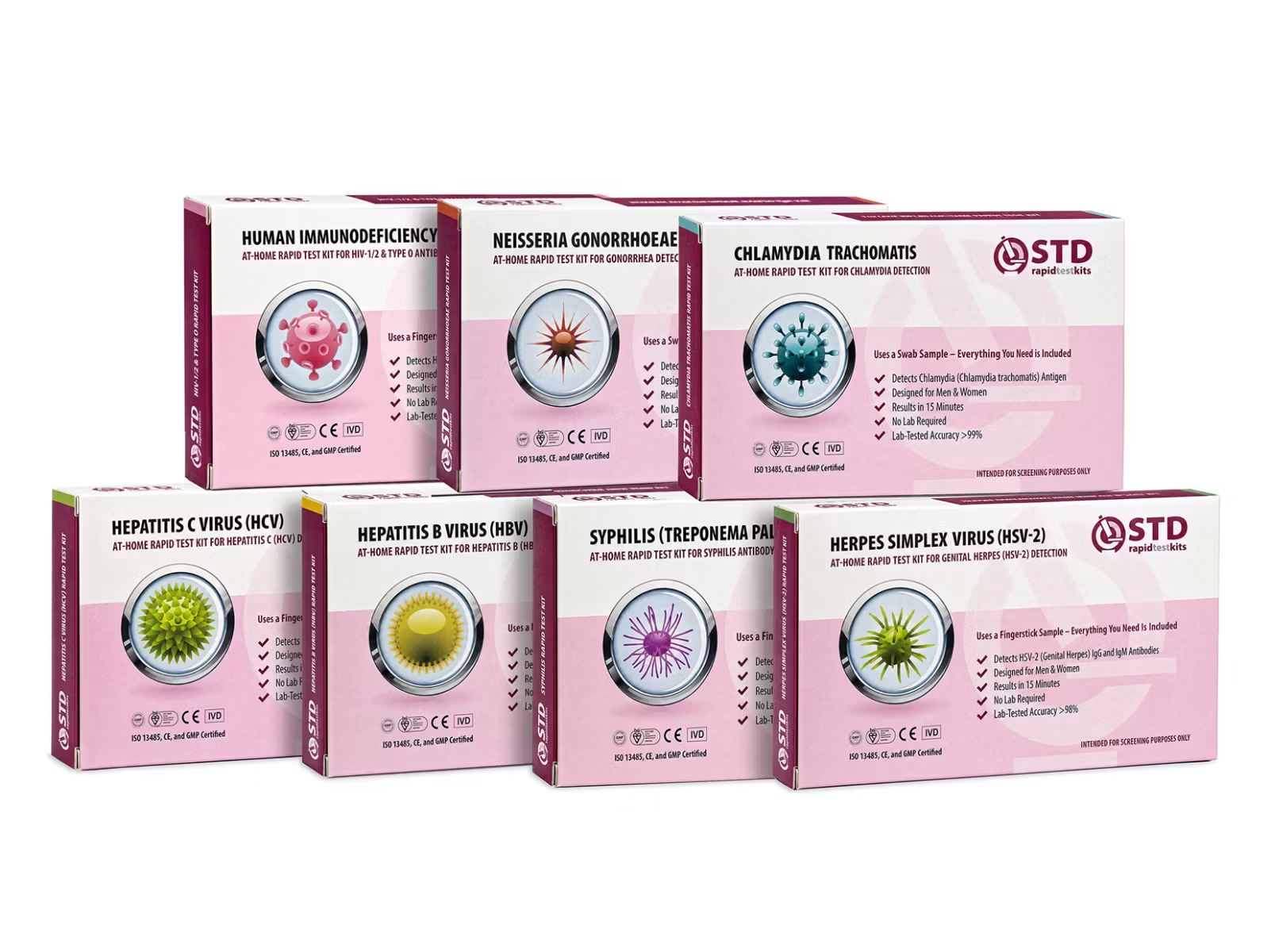
Anxiety about one bump often turns out to be anxiety about a broader exposure event. A multi-infection home rapid panel covers herpes plus several other common STIs in one screening, which is often what people actually want when the worry is general rather than specific to one symptom. (Disclosure: stdrapidtestkits.com sells the at-home rapid panels referenced below; products are recommended where they fit the reader's situation, not as a replacement for clinical care.)
| Concern | Best Test Type | When to Test | What It Tells You |
|---|---|---|---|
| Active herpes-like lesion | Viral swab (PCR) from the open sore | While the lesion is fresh, before it crusts | Confirms presence of HSV DNA |
| Past possible herpes exposure, no current lesion | Blood antibody (HSV-2) | 12 weeks or more after exposure | Detects immune response to HSV |
| Suspected genital wart | Clinical visual exam by a provider | When the bump persists more than a week | Determines if the lesion matches an HPV wart pattern |
| General STI concern after sex, not symptom-specific | Multi-infection panel | Match to longest window in the panel (typically 12 weeks) | Screens for several infections at once |
What If You Already Popped the Bump?
This is one of the most-searched questions on this topic, and the answer is reassuring: you have not ruined anything, but you may have made things harder for a few days. If you squeezed or drained what turned out to be a herpes sore, the act itself did not cause the virus. It was already there. What popping can do is delay healing, raise the risk of a secondary bacterial infection, and spread infectious fluid to nearby skin.
HSV can also infect the eye (a condition called ocular herpes) if you touch your eye after touching the lesion, so handwashing after any contact with the bump is more than a precaution. It is the single most important thing to do in the hour after you popped something you are unsure about.
The good news for testing: a popped sore is still testable. Swab accuracy is highest while the lesion is fresh and weeping, so if you have not seen a clinician yet and the sore is still visible, that is the window to go. Do not pop again to try to get more fluid. The original break is enough.
Emotionally, the moment of realization can feel like a crash. Embarrassment, fear, anger at yourself for guessing wrong. Those feelings are normal and they pass. Herpes is one of the most common viral infections in the world; most people who receive a diagnosis manage it with antivirals and go on to have full relationships and an unchanged quality of life.
- Wash the area gently with mild soap and warm water.
- Pat dry with a clean towel and stop touching the bump.
- Wash your hands thoroughly afterward, especially before touching your face or eyes; HSV can spread to the eye through contact.
- Get a clinic swab while the lesion is still fresh, even if it has been popped. Swab accuracy is highest in this window.
What a Clinician Notices That You Might Miss
When a clinician evaluates a single genital bump, the work is mostly pattern recognition built from training and repetition. They look at the border of the lesion, whether the surface is intact or open, whether there is fluid inside, what the surrounding skin looks like, and whether nearby lymph nodes are tender or enlarged. They ask about timing, recent shaving, partners, contraception, and whether you have noticed similar bumps before.
The biggest tell, more than appearance alone, is evolution speed. Viral lesions move fast. Pimples and ingrown hairs move slowly. HPV warts barely move at all over the course of days. The shape of the change over time often matters more than the snapshot of one moment. In people with a vulva, first-outbreak lesions can also sit on the cervix or vaginal walls where they are not visible at all, which is one reason a first episode sometimes goes weeks before it is recognized.
Texture and surrounding skin add weight. Warts often have a slightly rough or uneven surface, sometimes resembling a tiny cauliflower under magnification. An ingrown hair sits centered on a follicle and is mostly inflamed. A herpes blister is fluid-based and fragile, often collapsing into a shallow ulcer with a faint red halo. A painless, firm-bordered ulcer that does not evolve the way a herpes lesion does can also point toward primary syphilis (a chancre); a syphilis blood test or clinic visit can rule it out.
Most people with genital herpes have no symptoms or have very mild symptoms. Mild symptoms may go unnoticed or be mistaken for other skin conditions like a pimple or ingrown hair.
When the Stigma Outsizes the Virus
Herpes carries cultural weight far heavier than its medical reality. The World Health Organization fact sheet on herpes simplex virus reports that several billion people globally carry HSV-1 and several hundred million carry HSV-2. Most who carry the virus never know it, or mistake mild outbreaks for razor burn for years. Antiviral medication suppresses recurrences and, taken daily, meaningfully reduces transmission risk; disclosure conversations grow easier with practice, and long-term relationships continue normally.
The same is true of HPV. Most sexually active people will carry the virus at some point, and most clear it without ever knowing. The strains that cause visible warts are not the strains linked to cervical or other cancers. HPV vaccination, recommended routinely through age 26 and through age 45 with shared clinical decision-making per ACIP guidance, reduces risk substantially.
The WHO estimates that about 3.8 billion people under age 50 globally are living with HSV-1, and roughly 520 million people aged 15 to 49 are living with HSV-2. Most carriers never have a noticeable outbreak, and many who do mistake mild symptoms for irritation or razor burn for years. Both viruses are extremely common; neither defines health, desirability, or a relationship's future.
Asymptomatic Shedding and Long-Term Life With HSV
If a bump does turn out to be herpes, one fact worth knowing early is that the virus can become active on the skin and transmissible even when no sore is visible, a pattern clinicians call asymptomatic shedding. A meaningful share of transmission happens during these silent shedding windows, not during obvious outbreaks. Partners can be exposed even when the carrier had no symptoms.
That is why suppressive medication matters more than just shortening visible outbreaks. Per the CDC's STI treatment guidelines, daily antiviral suppression reduces both outbreak frequency and the chance of transmitting HSV to a partner, although it does not eliminate that chance. Combined with consistent condom use and avoiding sex during prodrome or active outbreaks, the layered risk reduction is substantial.
Practically, life with HSV looks a lot like life without HSV. You learn to recognize prodrome signs, you have honest conversations earlier in relationships, you use protection consistently, and if you take daily antivirals you take them like any other prescription. Many people go months or years between recurrences. Some never have a second outbreak after the first.
Three outcomes, three different next steps
- Herpes: a short antiviral course during the initial outbreak, daily suppressive therapy if recurrences are frequent or to lower transmission risk, and practical disclosure and prevention work; many people have only one or two outbreaks total.
- HPV wart: topical at-home treatment, in-office cryotherapy or removal, or watchful waiting if small and not bothersome; some clear without treatment, and a new wart often reflects a much older exposure rather than recent infection.
- Pimple or ingrown hair: warm compresses, a temporary pause on shaving in that area, and roughly a week of patience; no testing or treatment needed.
Telling a Partner After a Surprise Diagnosis
If a bump turns out to be herpes and you were sexually active in the weeks or months before it appeared, a partner may have been exposed too. This is often the heaviest part of a new diagnosis, and many people delay the conversation because they fear rejection. Silence does not protect anyone, though, and a short, honest message usually lands better than people expect.
The script below is one example. Notice that it carries no blame and no apology. Genital herpes is so common and so often silent that pinpointing who passed it to whom is usually impossible. Cold-sore HSV-1 and genital HSV-2 are both transmissible, and HSV-1 increasingly causes new genital infections through oral sex with someone who has cold sores. A partner learning they may have been exposed is rarely happy news, but the person sharing it is not the cause of the virus.
If a partner wants to check, an at-home screening kit covering the major STIs is a reasonable private starting point. A clinic remains the place to confirm a reactive result or to swab an active sore.
"Hey, I recently got tested and found out I have genital herpes. I did not know before, and I am still learning what it means. You may want to get tested too. Happy to share what I have learned if it helps, and no pressure to reply right away."
When to Skip the Wait and See a Clinician Now
Most single bumps are not emergencies. A small handful of patterns are. Severe pain, a high fever, spreading redness, difficulty urinating, or multiple rapidly expanding lesions all warrant same-day care rather than three days of observation. An untreated severe outbreak is worth treating early, both for symptom relief and to reduce the chance of complications.
If a lesion looks ulcerated and you feel systemically unwell (fever, body aches, swollen lymph nodes, fatigue), early antiviral treatment for suspected herpes can shorten and soften the outbreak. The CDC's treatment guidelines describe a first episode as a 7 to 10 day course of an oral antiviral such as valacyclovir or acyclovir, with the greatest benefit when treatment starts within the first day or two of symptoms. Effectiveness drops the longer treatment is delayed past symptom onset. The difference between anxiety and a physical warning sign is direction: anxiety stays steady or fades, while warning signs escalate over hours.
- Severe pain at rest, not just when touched.
- High fever (38.5 C / 101 F or higher).
- Difficulty urinating or significant vulvar or penile swelling.
- Spreading redness, warmth, or pus around the lesion (possible bacterial infection).
- Multiple lesions appearing and expanding within hours.
- Systemic symptoms: pronounced fatigue, body aches, or visibly swollen groin lymph nodes.
If a lesion is ulcerated and you feel systemically unwell, ask specifically about antiviral treatment for suspected herpes; it works best when started early.
A Simple Decision Framework
After 48 to 72 hours of calm observation, most people land in one of four buckets.
If the bump appeared within 1 to 2 days of shaving, sits in a hair-bearing area, and is tender only when pressed, watching it through the rest of the week is reasonable. Warm compresses help. Avoid shaving over it.
If the bump hurts at rest, is evolving day to day, or comes with tingling, fever, or swollen lymph nodes, testing or a clinical visit is the right call. A swab while the lesion is fresh gives the cleanest answer.
If the bump is painless, flesh-colored, and unchanged after a week or more, a clinician evaluation for an HPV wart makes sense. Visual diagnosis is usually enough, and treatment is straightforward.
If you simply want certainty for your own peace of mind, that alone is reason to test.
Decision framework at a glance
- Bump after shaving, tender only when pressed, no change over 48 hours: watch through the rest of the week with warm compresses.
- Pain at rest, daily evolution, tingling, fever, or swollen lymph nodes: test or see a clinician now; swab a fresh open lesion for the cleanest answer.
- Painless, flesh-colored, unchanged after a week or more: book a clinician evaluation for a possible HPV wart.
- Want certainty for your own peace of mind: that alone is reason enough to test.
What a Single Bump Usually Means
A single bump on genital skin is usually just information, and most of the time it reflects irritated skin doing what skin does. Sometimes it is the first sign of herpes or HPV, both common, both manageable, and both far less catastrophic than a 2 a.m. inner monologue makes them sound.
If the bump is rapidly evolving, painful at rest, or simply will not stop occupying your mental real estate, testing is straightforward. A 7-in-1 home rapid panel covers the most common questions, and an HSV-2 antibody test answers the specific herpes question after the 12-week window. Use the steps below, give your skin 72 hours, and act on what you see.
What Should I Do About This Bump?
Did the bump appear within a day or two of shaving, sit in a hair-bearing area, and feel tender only when you press on it?
Yes: It is most likely a pimple or ingrown hair. Use warm compresses, pause shaving in that area, and give it about a week. No testing needed.
Does the bump hurt at rest, change day to day, or come with tingling, fever, or swollen groin lymph nodes?
Yes: See a clinician now and ask for a swab while the lesion is still fresh and open; that gives the cleanest herpes answer.
Is the bump painless, flesh-colored, and unchanged after a week or more?
Yes: Book a clinician evaluation for a possible HPV wart. Visual diagnosis is usually enough and treatment is straightforward.
No: If you just want certainty after a possible exposure, an at-home HSV-2 blood test is most reliable 12 weeks or later, and a 7-in-1 panel screens for several infections at once.
Guidance only; a clinician can advise based on your specific situation.
FAQs
- Can a single bump really be herpes?
- Yes. The first herpes blister can appear alone, but what happens in the next 48 hours is the tell: most outbreaks progress from a single blister into an open ulcer, and additional lesions often join the original within a day or two. A bump that sits unchanged for five days rarely turns out to be herpes.
- What does herpes feel like compared to a pimple?
- The key signal is unprompted discomfort. A pimple mainly hurts when clothing rubs it or when you press on it directly. With herpes, burning or a zinging sensation often begins before any bump is visible and continues without contact, sometimes with a raw sting during urination if the sore sits near the urethra. That nerve-driven quality, present even at rest, is what separates it from follicle-level irritation.
- I noticed it the morning after sex. Is that a new STI from last night?
- Almost certainly not from that encounter. The NHS notes that herpes symptoms may not appear for weeks or even years after infection. Genital warts can take months or years. A pimple, ingrown hair, friction blister, or shaving irritation can show up within hours, which is why morning-after bumps usually have an irritation-based explanation rather than an STI one.
- I popped the bump. Did I ruin my chance to test?
- No. A popped sore is still testable; open, weeping lesions yield the clearest swab results because more viral material is present on the surface. Go now, before the lesion crusts. There is no need to break it again to retrieve more fluid. What is already exposed provides enough sample for the test.
- Should I squeeze it to see what comes out?
- No. Squeezing can drive bacteria deeper, blur the visual pattern that helps a clinician diagnose, and break a herpes blister in a way that can spread the virus to nearby skin or even to the eye if you touch your face afterward. Observation is more useful than force.
- How long should I wait before testing?
- Two different clocks apply. Active open sore: swab it now, before it crusts (sensitivity drops sharply once the lesion seals). No active sore but a possible past exposure: a blood antibody test is most reliable at 12 weeks or later. A test at 6 weeks gives a result, but a negative at that stage is not conclusive.
- Can stress alone cause a new bump?
- Stress does not invent skin lesions out of nothing, but in someone who already carries herpes it can trigger a recurrence. Stress also makes people hyper-aware of normal skin changes. Sometimes the bump has been there quietly for days or weeks, unnoticed until anxiety prompted a closer look.
- Can a wart appear out of nowhere in a long-term relationship?
- Yes. HPV can stay dormant for months or even years before producing visible warts. A new wart in a stable relationship is far more likely to reflect an older exposure than a recent one, and assuming otherwise often does relationship damage that is not warranted by the biology.
- Can I test myself at home for herpes?
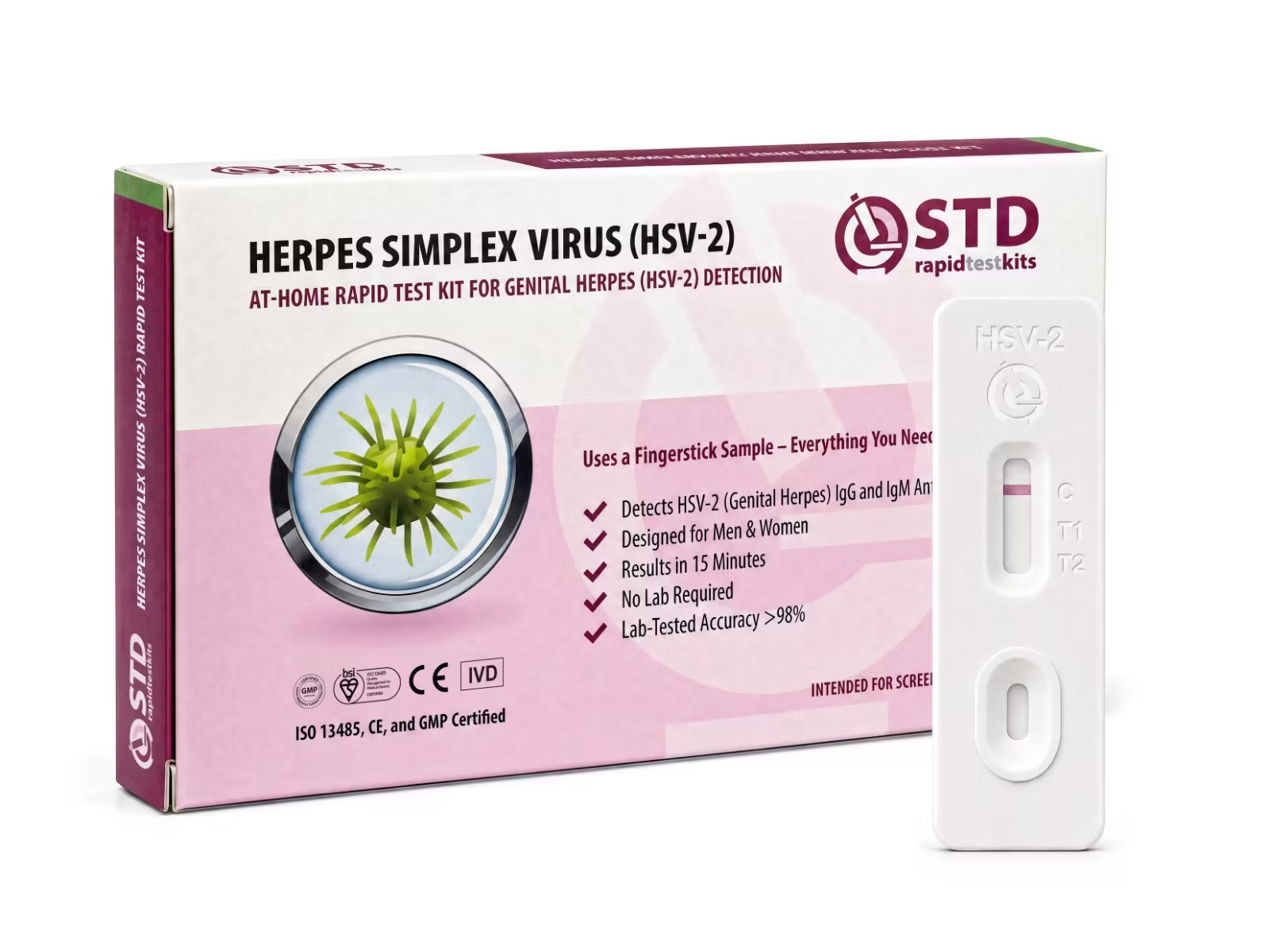
- Yes, with a fingerstick blood antibody test for HSV-2, the type behind most genital herpes. It tells you whether your immune system has produced antibodies to the virus, but not where an infection lives or whether a specific bump is herpes. For an active sore, a clinic swab is more accurate. The home blood test is most reliable about 12 weeks or more after a possible exposure.
- Does everyone with herpes get outbreaks?
- No. Many people carry HSV without ever developing a visible sore, yet they can still pass the virus on through asymptomatic shedding. Others have one outbreak and then nothing for years. The virus behaves differently from person to person, which is part of why testing matters more than waiting for a textbook outbreak.
How We Sourced This Article: This article synthesizes current guidance from the U.S. Centers for Disease Control and Prevention, the World Health Organization, the U.K. National Health Service, and the NIH's MedlinePlus on the appearance, incubation timing, prodrome, asymptomatic shedding, treatment, and testing approach for genital herpes, HPV genital warts, and benign skin causes such as pimples, ingrown hairs, and folliculitis. Where specific incubation windows, treatment protocols, or testing recommendations are quoted, the source is linked inline.
- U.S. Centers for Disease Control and Prevention. About Genital Herpes: clinical presentation, prevalence of asymptomatic infection, and the duration of the sore-to-healed-skin arc referenced in the herpes sections.
- U.S. Centers for Disease Control and Prevention. STI Treatment Guidelines, Genital Herpes section: NAAT diagnostic methods, the 7 to 10 day first-episode antiviral course, suppressive therapy, and transmission-reduction guidance referenced in the testing, treatment, and shedding sections.
- U.S. Centers for Disease Control and Prevention. About Genital HPV Infection: wart presentation and the long, variable interval between exposure and visible warts cited here.
- World Health Organization. Herpes Simplex Virus fact sheet: global HSV-1 and HSV-2 prevalence and clinical presentation referenced in the stigma section.
- U.K. National Health Service. Genital Herpes: prodrome description and the 'weeks or even years after infection' incubation framing referenced in the herpes timing section.
- U.K. National Health Service. Genital Warts: clinical appearance, weeks-to-months onset language, and treatment options referenced in the wart sections.
- U.S. National Library of Medicine, MedlinePlus. Genital Herpes: the blisters-break-into-sores-then-heal lesion progression and patient-level overview referenced in the day-by-day evolution section.
