Published: September 2025 | Last updated: May 2026 | Editorial review and quality control: Martina N.
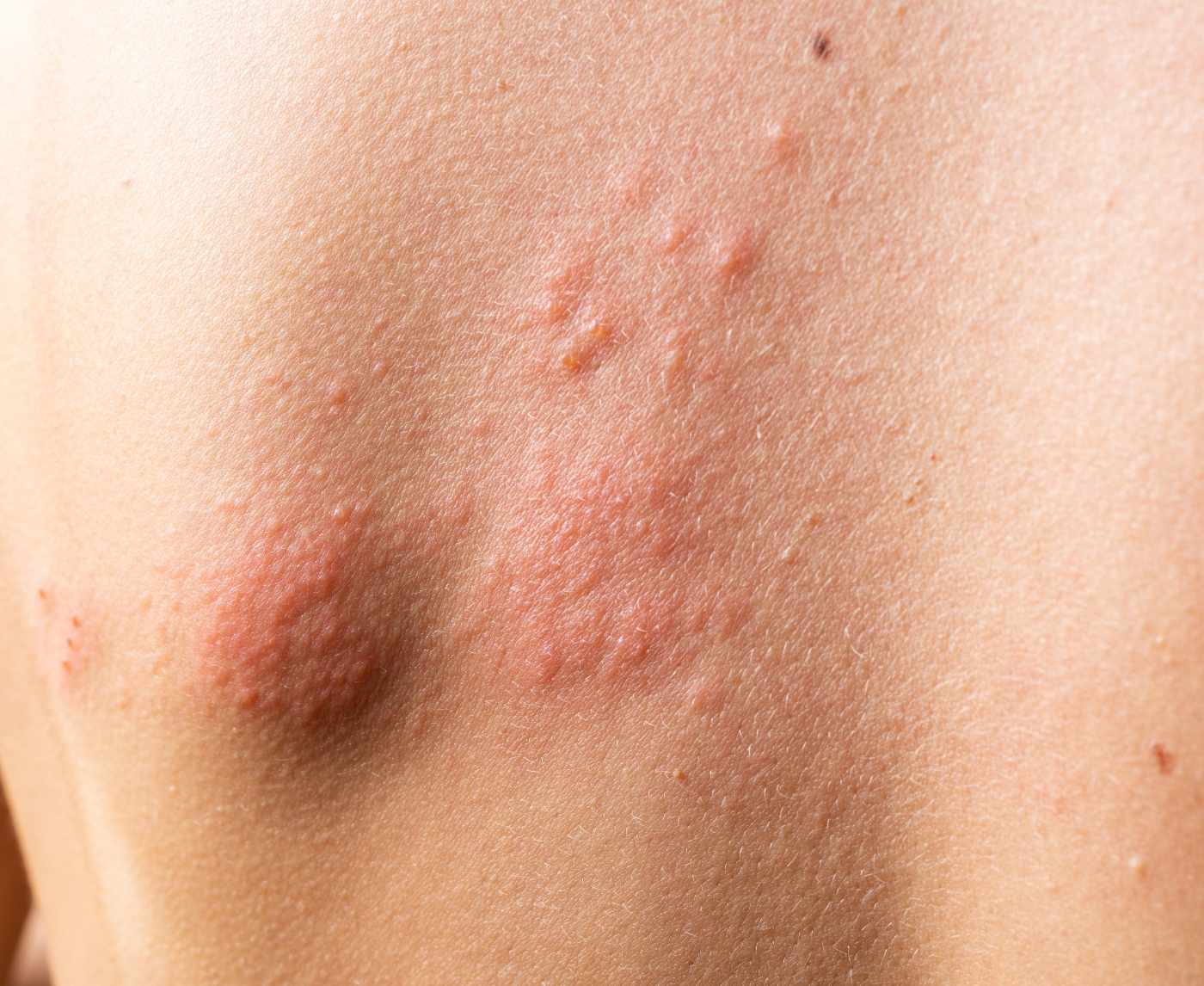
A third-trimester rash that won't quit usually has a boring explanation. Stretching skin. Hormonal shifts. PUPPP, the most common skin condition of late pregnancy. But occasionally a rash that everyone is calling "PUPPP" turns out to be something the body needs treated quickly: secondary syphilis. Congenital syphilis cases in the United States rose sharply through the late 2010s and early 2020s, and missed maternal diagnoses are part of why (CDC About Congenital Syphilis).
This guide covers what separates PUPPP from a syphilitic rash, why providers sometimes mistake one for the other, and how to ask for a test without making it awkward. The goal is not alarm. Most pregnancy rashes are PUPPP, and most readers can stop here feeling reassured. The smaller group whose rash does not behave like textbook PUPPP can use this article to advocate for a screen that protects them and their baby.
Key takeaways
- PUPPP almost always stays on the belly and stretch-mark zones. A secondary syphilis rash often spreads to the palms, soles, and trunk, and frequently does not itch.
- A single intramuscular injection of penicillin G benzathine, given to the pregnant parent before delivery, prevents most cases of congenital syphilis when treatment starts early enough.
Why a Pregnancy Rash Deserves a Second Look
PUPPP, short for pruritic urticarial papules and plaques of pregnancy, is the most common pregnancy-specific dermatosis, and most cases show up in the third trimester of a first pregnancy. The rash hugs stretch marks, starts on the belly, and itches intensely. Topical steroids and time after delivery resolve nearly all of it.
The challenge is that PUPPP is what doctors call a diagnosis of exclusion. There is no blood test that confirms PUPPP. Clinicians make the call by ruling out other rash-producing conditions, then labeling whatever is left. When a prenatal panel was drawn early in pregnancy and came back negative, a rash that turns up later on the belly often gets the PUPPP label by default.
That default has a cost. CDC surveillance data shows congenital syphilis cases have more than tripled in recent years, and the agency links a significant share of those missed maternal diagnoses to gaps in prenatal screening (CDC About Syphilis). When a syphilitic rash fits the PUPPP pattern closely enough, the screening conversation can fall away too easily.
How PUPPP and Syphilis Rashes Actually Differ
The two rashes can look superficially alike for the first day or so of any flare, especially on the abdomen. The differences emerge when you watch the rash for two or three days and ask three specific questions about it.
Where is it spreading? PUPPP almost always stays on the belly and then sometimes migrates onto the thighs, buttocks, and arms. It does not appear on the palms or soles. Secondary syphilis is famous for the opposite pattern: a copper-colored rash that lands on the palms, soles, and trunk in a symmetric distribution. If your rash crosses onto your palms, your soles, or the center of your back, that is not PUPPP behavior.
Is the umbilicus involved? Classic PUPPP spares the skin around the navel, a small but useful clinical clue. A rash that runs across the periumbilical area is more likely to be a different process.
How does the rash feel? PUPPP itches, often intensely, and the lesions are raised, urticarial, and hive-like to the touch. Secondary syphilis is often non-itchy or only mildly itchy, with flatter macules and faintly raised papules. Some patients also report feeling generally unwell during a syphilis flare, with low-grade fever, fatigue, sore throat, or swollen lymph nodes around the neck and groin.
None of these clues are perfect on their own. PUPPP can occasionally itch less; syphilis rashes can occasionally itch.
| Feature | PUPPP | Secondary syphilis rash |
|---|---|---|
| Typical onset | Late third trimester (around week 35), often a first pregnancy | Anytime in pregnancy, most often weeks after a recent infection |
| Where it starts | On or beside abdominal stretch marks | Trunk, often spreading to palms and soles |
| Palms and soles | Spared | Often involved with copper-colored macules |
| Periumbilical skin | Spared (a hallmark) | May be involved like the rest of the trunk |
| Itch | Intense, hive-like | Often mild or absent |
| Body symptoms | None | Fatigue, low-grade fever, swollen lymph nodes possible |
| What confirms it | Diagnosis of exclusion (no blood test) | Reactive RPR or VDRL plus a treponemal test |
| Treatment | Topical steroids; resolves after delivery | Penicillin G benzathine injection |
Why Doctors Sometimes Miss the Difference
Three pressures push providers toward the PUPPP label even when the rash does not quite fit. The first is base-rate thinking. PUPPP is far more common in the third trimester than syphilis, so a busy obstetrician pattern-matches to the most likely diagnosis and moves on. That is usually correct, and usually safe. The exceptions are the cases readers come here looking up.
The second is risk-perception bias. Pregnancy panels at the first prenatal visit screen for syphilis, and a negative result there can make later testing feel unnecessary. But syphilis acquired after the first panel, or syphilis that was incubating during the panel, will not show up on that early test. The U.S. Centers for Disease Control and Prevention recommends repeating a syphilis test at 28 weeks of pregnancy and again at delivery for all pregnancies in jurisdictions with elevated rates, and earlier or more often for individuals with new symptoms or a new partner (CDC STI Treatment Guidelines, 2021).
The third is conversation friction. Asking a pregnant patient about new partners or recent exposures is uncomfortable for many providers, especially in short visits, and patients sometimes feel pressured to answer in a way that ends the topic quickly. The result is a screening conversation that does not actually happen, and a rash that gets a label by default.
Most cases of congenital syphilis can be prevented if pregnant individuals receive routine prenatal care and screening for syphilis at the recommended times.
What to Say at Your Next Prenatal Visit
The conversation that protects you takes about thirty seconds. You do not need to explain immunology, you do not need to disclose anything you are not ready to disclose, and you do not need to apologize for asking.
Bring up the rash with three specifics: when it started, where it is now, and whether it itches. Then ask the question directly: "Can we run a syphilis screen as part of this visit, just to be safe?" If your provider says it is not necessary, ask why, and ask what else the rash could be if it is not PUPPP. Those two follow-ups usually resolve the conversation in your favor because they shift the burden from you to a clinical justification.
If a third-trimester re-screen has not happened and the rash is on your palms, soles, or upper back, you are within current CDC-recommended practice to request the test. The screen is a single blood draw, often added to existing prenatal lab orders without a separate appointment.
Photograph your rash daily for two or three days before the visit. Note where it started, whether it has spread to your palms or soles, and whether you have noticed fatigue, fever, or swollen lymph nodes alongside it. Hand the photos to your provider; visible progression is more persuasive than verbal description, and it gives them a baseline if the rash changes again.
How Syphilis Is Treated in Pregnancy
If a screen comes back reactive, the next step is a confirmatory treponemal test, then treatment. For pregnant patients, the treatment of choice is a single intramuscular injection of penicillin G benzathine, the only antibiotic regimen that reliably crosses the placenta and clears the infection in both the parent and the fetus (CDC STI Treatment Guidelines).
The shot stings briefly. Within days the bacterial load drops, and within weeks blood titers begin to fall. Patients who started syphilis later in pregnancy or whose stage of infection is unclear may need three weekly injections rather than one. None of this is dangerous to the pregnancy when properly dosed and monitored.
One thing worth knowing in advance: some patients have a brief immune reaction to the injection called a Jarisch-Herxheimer response. It can include fever, chills, and short-lived contractions in the second half of pregnancy. Providers monitor for this and treat it supportively; it is not a sign that the medication is harmful, only that the body is clearing the infection quickly.
If you have a documented penicillin allergy, do not skip treatment. Pregnant patients are typically referred for desensitization, after which they can safely receive penicillin. There is no equally effective alternative regimen during pregnancy, which is why desensitization is the standard.
| When | What happens | Why it matters |
|---|---|---|
| First prenatal visit | Initial syphilis screen on routine bloodwork | Detects existing or recent infection at the start of pregnancy |
| 28 weeks (high-incidence area) | Repeat syphilis screen | Catches infections acquired after the first panel |
| At delivery (high-incidence area) | Final syphilis screen on admission | Last opportunity to treat before birth and prevent congenital infection |
| Within 24 hours of a reactive result | Penicillin G benzathine injection (single or three-dose) | Earlier treatment means fewer fetal complications |
| 1, 3, and 6 months postpartum | Repeat blood titers | Confirms treatment success and detects reinfection |
How to Talk to a Partner
Telling a partner that a syphilis screen came back reactive is harder than the medical part. The infection can stay dormant for years, sometimes from a partner that predates the current relationship, sometimes asymptomatic on both sides for so long that no one suspected anything. A reactive result is not a verdict on the relationship.
The shortest version that works in most relationships sounds like this: "My OB ran extra tests because of the rash, and one of them came back reactive for syphilis. It can stay dormant for a long time, so it does not tell us when or how. I am being treated with one injection, and you need to be tested too." Saying the medical facts plainly takes most of the heat out of the conversation.
If telling them yourself feels unsafe or impossible, anonymous partner-notification services can do it for you. Many state and county health departments offer this for free; the partner gets a message that someone they have been intimate with has tested positive and that they should be tested, with no name attached. Ask your provider, or contact your local public health department directly.
If the Rash Really Is PUPPP
Most third-trimester rashes are PUPPP. After a clean syphilis screen, your provider will usually treat PUPPP with mid-potency topical corticosteroids, frequent emollients, antihistamines that are safe in pregnancy, and reassurance that the rash resolves within a week or two of delivery in nearly every case. Future pregnancies are usually unaffected.
If your screen is clean and the rash still feels unbearable, that is also worth flagging at the next visit. Severe PUPPP that interferes with sleep can be treated with stronger topical regimens or, rarely, oral steroids. PUPPP is harmless to the baby, but you do not need to suffer through it because of that. Sleep matters, especially in the last weeks of pregnancy.
FAQs
- Can a syphilis rash really look like PUPPP at first?
- Yes. The early presentation can be on the abdomen with red papules that itch, and that overlap is the whole reason the misdiagnosis happens. The differentiating signs usually take 24-72 hours to appear: spread to the palms or soles, involvement of the periumbilical area, or a feeling of being unwell with low-grade fever or swollen lymph nodes. If your rash crosses any of those lines, ask for a screen.
- I tested negative for syphilis at my first prenatal visit. Can I still have it now?
- Yes. The first-visit panel only catches infections that were already established and detectable then. Syphilis acquired after that visit, or incubating during it, will not show up on the early screen. The CDC recommends a repeat test at 28 weeks and at delivery in jurisdictions with elevated rates, and earlier if new symptoms appear.
- I've only had one partner. How could syphilis still be a possibility?
- Syphilis can stay dormant for years. A current partner could have acquired it from a prior partner without symptoms. You could also have acquired it before this relationship and remained asymptomatic until pregnancy-related immune changes triggered a flare. None of this requires recent exposure or any breach of the relationship.
- What if my OB doesn't think the rash needs testing?
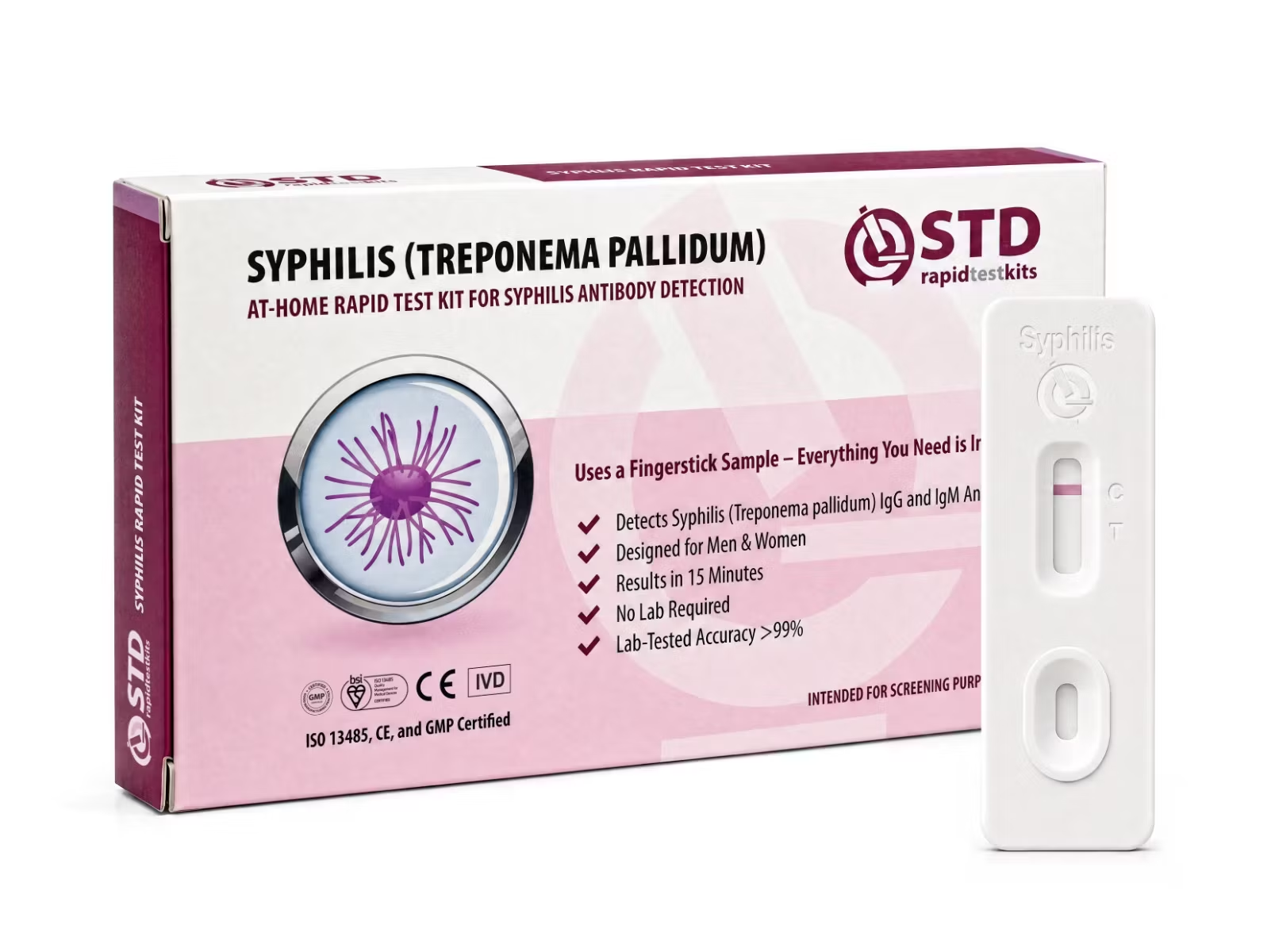
- Ask why, and ask what else it could be if it is not PUPPP. If you are in or near a high-incidence area, mention that the CDC recommends third-trimester re-screening regardless of self-reported risk. If your provider still declines and the rash is on your palms, soles, or central back, you can ask for a referral, see another provider, visit a sexual health clinic, or use a reputable at-home blood test as an interim screen.
- How fast does syphilis treatment work in pregnancy?
- Penicillin G benzathine begins clearing the infection within days of the injection. Patients diagnosed and treated early in pregnancy have the best outcomes for the baby; those treated later still benefit substantially, though the baby may need closer monitoring after birth.
- Will my baby be okay if I'm treated mid-pregnancy?
- Very likely yes. The single biggest factor is how early the treatment is given. The earlier in pregnancy, the lower the risk of fetal complications. Babies born to treated parents are typically examined and tested at birth, and treated with antibiotics if any signs of congenital infection are present. Most do well with prompt care.
- Does PUPPP itch on the palms or soles like syphilis does?
- No. PUPPP almost never appears on the palms or soles. If your rash crosses onto either of those surfaces, it is not behaving like PUPPP and warrants a syphilis screen even if a previous panel was clean.
- Can I use an at-home test instead of going to a clinic?
- An at-home rapid test can be useful as a private interim screen, particularly if you want a result before your next prenatal appointment or if your provider has not yet re-tested. A reactive result on any rapid test should be confirmed by a clinic-administered treponemal test before treatment is started, and treatment in pregnancy must be done in a clinical setting because of the small risk of a Jarisch-Herxheimer reaction.
How we sourced this article: We combined current guidance from the U.S. Centers for Disease Control and Prevention with peer-reviewed dermatology and obstetric clinical references, then translated the technical material into language that respects the reader's time and intelligence. Below are the most useful and reader-friendly sources we relied on. Every external link in this article was checked to confirm it leads to the cited organization's actual page.
- U.S. Centers for Disease Control and Prevention. About Syphilis: signs, symptoms, stages, and transmission overview.
- U.S. Centers for Disease Control and Prevention. About Congenital Syphilis: prevention through prenatal screening and timely treatment.
- U.S. Centers for Disease Control and Prevention. Sexually Transmitted Infections Treatment Guidelines, 2021. Sections on syphilis screening and management in pregnancy.
- U.S. Centers for Disease Control and Prevention. STI surveillance data and trends in congenital syphilis.
- Mayo Clinic. Pregnancy skin conditions and pruritic urticarial papules and plaques of pregnancy (PUPPP) overview.
