
Published: July 2025 | Last updated: May 2026 | Editorial review and quality control: Martina N.
One dose of antibiotics, one quick test, one short conversation with a clinician: that has been the cultural shorthand for chlamydia care for two decades. The clinical reality is messier. In 2021 the U.S. Centers for Disease Control and Prevention moved its first-line treatment recommendation off the single-dose option because that regimen was underperforming at certain infection sites (CDC chlamydia treatment guidelines, 2021). Most chlamydia infections produce no symptoms at all (CDC chlamydia overview), and reinfection from an untreated partner is common enough that the CDC recommends every treated person retest about 3 months later. This article walks through what one pill actually accomplishes, what it leaves behind, and what a real follow-up plan looks like.
Key Takeaways
- The CDC moved first-line chlamydia therapy from single-dose azithromycin to a 7-day, 100mg twice-daily course of doxycycline in 2021. The change was driven by rectal infections, where a randomized trial found 100% microbiologic cure with doxycycline and 74% with single-dose azithromycin.
- Retesting at about 3 months after treatment is the standard CDC recommendation. Antibiotic failure is rare; reinfection from an untreated partner is the common reason chlamydia returns.
The Comfort of “One and Done” Hides a Real Problem
Somewhere along the way, chlamydia became the STI version of the common cold in popular imagination. A positive test, one dose of antibiotics, back to normal. The story is appealing because it makes a stigmatized topic feel quick and low-stakes. The story is also incomplete.
There are four points in the chlamydia care path where a one-and-done approach breaks down. First, misdiagnosis: clinicians sometimes prescribe antibiotics for symptoms that look like chlamydia without confirming with a nucleic acid amplification test (NAAT, the laboratory standard for detecting chlamydial DNA). The pill might clear something else, or nothing at all. Second, reinfection: if a sexual partner is not treated at the same time, that partner can pass the same infection back within days of treatment ending. Third, site-of-infection mismatch: some labs do not test the throat or rectum unless asked. Someone with a rectal chlamydia infection treated as if it were a genital infection often does not fully clear, because doxycycline outperforms azithromycin specifically at rectal sites. Fourth, treatment failure proper: clinically meaningful antibiotic resistance is still rare for chlamydia, but it does exist, particularly in people with recurring infections (CDC chlamydia treatment guidelines).
One pill, on its own, guarantees nothing. The follow-up does: knowing what was tested, what was prescribed, what your partners did, and whether retesting confirmed clearance.
stdrapidtestkits.com publishes this article and sells at-home STI testing kits. Product recommendations in this piece are based on fit for the reader's specific concern (chlamydia testing or post-treatment retesting), not commercial benefit. Where the right tool is a clinic visit rather than an at-home kit, we say so plainly.
Most Chlamydia Carries No Symptoms at All
The CDC's chlamydia overview states plainly that chlamydia often has no symptoms (CDC chlamydia overview); the UK NHS uses the same framing, noting that most people who have chlamydia do not have any symptoms (NHS chlamydia). An active infection can pass between partners without an itch, a burn, or any visible discharge.
When symptoms do appear, they are often subtle or get attributed to something else:
- Burning during urination, frequently confused with a urinary tract infection.
- Unusual vaginal discharge, often dismissed as a yeast infection or normal cycle variation.
- Light bleeding after sex.
- Rectal pain, discharge, or bleeding, which usually goes untested unless someone specifically asks.
- In people with penises, mild urethral discharge or a low-grade burning sensation that can be mistaken for dehydration or irritation.
This is why testing decisions cannot rely on symptoms. Feeling fine does not mean the test is negative.
A clinical-grade test is the only way to confirm chlamydia status. If you have had a new sexual partner in the last few months, schedule a test on that basis alone. CDC guidance recommends annual screening for sexually active women 24 and younger; for everyone else, screening is opt-in and should be requested explicitly at the next clinical visit.
The Quick-Fix Pill: What Changed and Why
For roughly two decades, the dominant chlamydia treatment in U.S. clinics was a single 1-gram oral dose of azithromycin. It was easy: one pill, one clinic visit, no follow-up scheduling. The convenience drove the recommendation. The clinical evidence, accumulating slowly through randomized trials and meta-analyses, said something different.
In 2021, the CDC formally updated its STI Treatment Guidelines. The new first-line therapy for chlamydia is doxycycline 100mg taken orally twice a day for 7 days. Single-dose azithromycin remains an alternative in specific situations (pregnancy, allergy, adherence concerns), but doxycycline is now the default (CDC chlamydia treatment guidelines). The CDC guidelines page cites a randomized trial in which microbiologic cure at rectal infection sites was 100% with doxycycline and 74% with single-dose azithromycin. Pharyngeal chlamydia is less common but follows a similar pattern. Even for uncomplicated genital infection, doxycycline edges out azithromycin in some studies, though the gap there is smaller.
This change matters for anyone who was diagnosed before 2021, or who was prescribed the older regimen without a discussion of which body sites were exposed. If a clinician handed over one pill without asking about oral or anal exposure, the treatment may have only partially addressed the infection. Incomplete site coverage is a structural gap the 2021 guideline update was written to close.
If you are unsure what you were given, the next step is a phone call to the prescribing clinic, a copy of the prescription record, and a retest about three to four weeks after the course finished (the period needed for residual non-viable bacterial DNA to clear, so that a NAAT result reflects current infection rather than residual signal).
Is one dose of azithromycin still enough to cure chlamydia?
For most uncomplicated genital infections it can be, but the CDC's 2021 STI Treatment Guidelines now prefer a 7-day course of doxycycline as first-line therapy. The shorter single-dose regimen underperforms specifically at rectal sites: the CDC cites a randomized trial in which microbiologic cure was 74% for single-dose azithromycin and 100% for doxycycline. If you only received single-dose treatment and the exposure could have involved the throat or rectum, ask your clinician about a doxycycline course and a retest at the 3-month mark.
Protection Lowers Risk. It Does Not Eliminate It.
Condoms substantially reduce chlamydia transmission. They are not perfect protection, and the gaps matter more than most people realize. Chlamydia can still spread through several routes that a condom does not fully cover:
- Unprotected oral sex, which can transmit chlamydia to the throat.
- Shared sex toys that are not washed or barrier-covered between partners.
- Genital-to-genital skin contact during foreplay that precedes condom use.
- Anal sex, where condom slippage and breakage rates are higher than for vaginal sex.
The second gap is testing scope. Many clinics test only the genital site by default. Throat (pharyngeal) and rectal swabs are usually opt-in, requested when the patient mentions oral or anal exposure. Someone who answers the routine screening checklist with “I've been sexually active” but without disclosing specific practices may walk out with a negative genital test while still carrying an undetected infection at another anatomic site.
The mechanism is structural rather than personal: a screening default that requires the patient to proactively request additional swabs will miss infections at sites that were never sampled. When discussing testing with a clinician, mention every site that has been involved in sexual activity, and request swabs from each site (CDC STI screening recommendations).
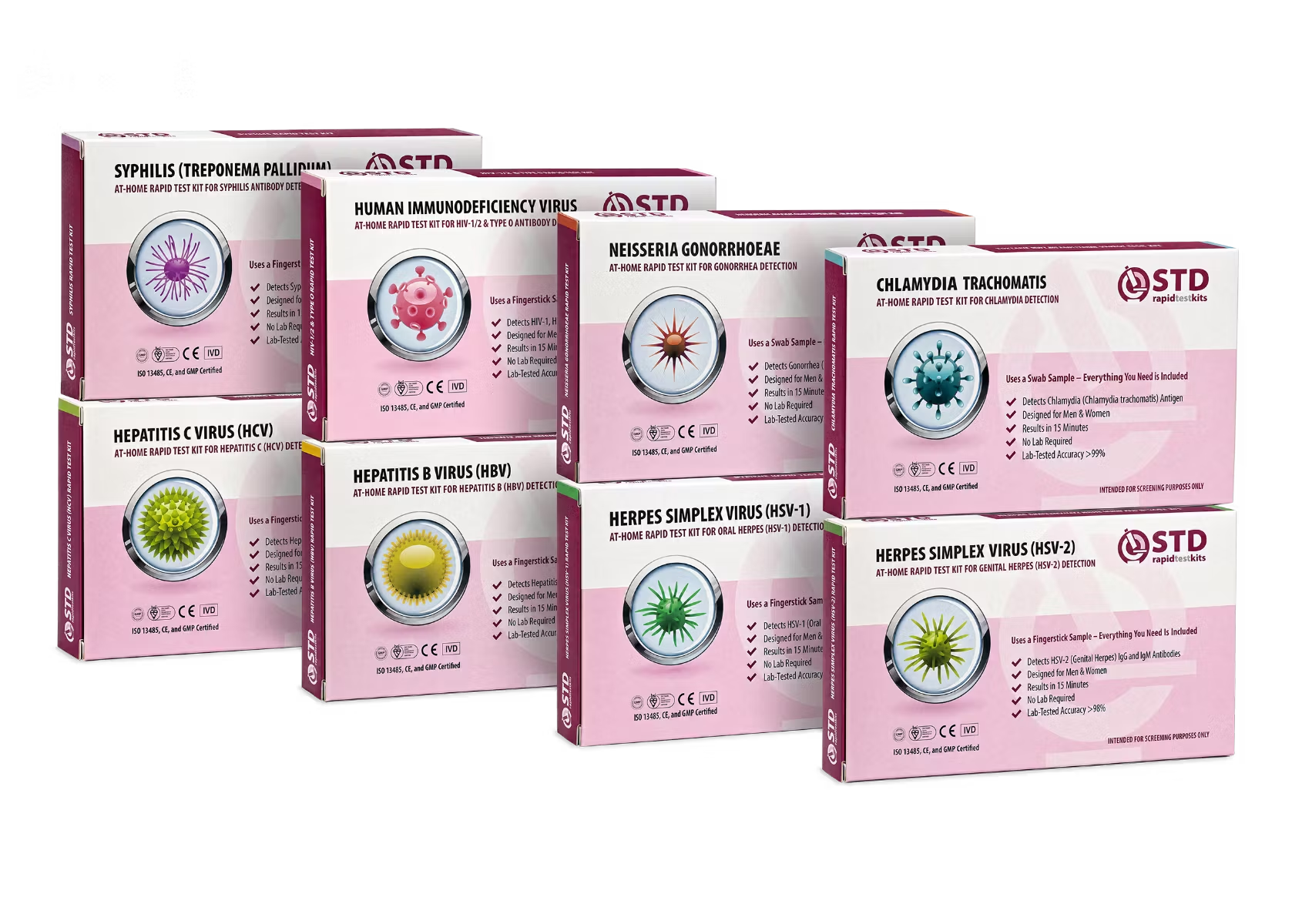
Our at-home chlamydia and combination kits are validated for self-collected vaginal or penile swabs. They do not cover pharyngeal (throat) or rectal sampling. If the exposure you are worried about happened at one of those sites, a clinic visit with site-specific swabs is the right tool. The at-home kit is a useful adjacent screen, not a substitute for site-specific clinical sampling.
Reinfection Is the Most Common Reason Chlamydia “Comes Back”
When chlamydia returns after a documented negative test, the cause is usually reinfection rather than treatment failure. The CDC's 2021 STI Treatment Guidelines describe “a high prevalence of C. trachomatis infection” in people who were treated in the preceding months, with sex with an untreated partner as the leading identifiable cause (CDC chlamydia treatment guidelines).
Reinfection can happen within days. Doxycycline takes a full 7 days to complete, and CDC guidance is to abstain from sexual contact for 7 days after the course ends. If both partners are treated, both partners abstain, and both are retested at 3 months, the reinfection loop usually breaks. If either partner skips one of those steps, the loop continues.
People who get reinfected often interpret the positive test as a personal failure, when the underlying issue is a breakdown in the testing-and-treatment coordination between partners. Practical steps that prevent recurrence:
- Both partners get tested at the same time, before treatment starts.
- Both partners complete the full course of antibiotics, not just until symptoms ease.
- Both partners abstain from sexual contact for the full 7 days after the course ends.
- Both partners retest about 3 months after treatment, regardless of how confident they are that the partner was treated.
- Expedited partner therapy (the practice of a clinician prescribing for a partner who has not been seen) is available in most U.S. states for chlamydia and is worth asking about if a partner faces barriers to clinic access.
Most reinfection happens in people under 25, though the dynamic is not age-specific.
Men and women who have been treated for chlamydia should be retested approximately 3 months after treatment, regardless of whether they believe their sex partners were treated.
Why “Clean” Is the Wrong Frame
The vocabulary around STIs shapes how people think about testing. When someone says “I'm clean” to describe a recent negative test, the implied counterpart is that people who test positive are dirty. That framing is medically inaccurate and it directly discourages testing. The CDC's 2024 provisional surveillance data show more than 1.5 million chlamydia cases reported in the United States, with the true incidence likely higher because of asymptomatic carriage (CDC STI annual surveillance). A bacterial infection at that prevalence is a routine public-health reality, not a marker of carelessness.
The replacement vocabulary that helps a partner conversation is specific rather than moral. Instead of “are you clean,” the questions worth asking are concrete and answerable:
Better questions for a partner conversation
- When was your last full-panel STI test?
- Which body sites were tested: genital, oral, rectal, or only one?
- Have you had a new sexual partner since that test?
- If you have been treated for anything in the past, did you have a follow-up retest afterwards?
Adults Over 30 Are Often the Most Under-Tested Group
Routine sexual-health screening protocols in the U.S. focus heavily on people under 25. The CDC's annual chlamydia screening recommendation is most explicit for sexually active women aged 24 and younger. After 25, screening becomes opt-in, driven by patient request or specific risk factors (CDC STI screening recommendations).
The downstream pattern: adults in their 30s, 40s, and 50s, especially those re-entering the dating world after a long-term relationship ends, often have not had an STI test in years. Several factors compound the gap:
- Primary-care visits at this age range focus on cardiovascular and metabolic screening, not sexual-health screening.
- Long-term partners often assume monogamy equals safety, even when pre-relationship exposures were never tested for.
- Embarrassment about asking for an STI test at a clinic where the patient has been seen for years is a real and underreported barrier.
The practical correction is small: a once-yearly request for a basic STI panel during an annual physical, or an at-home test scheduled to match life events such as starting a new relationship.
The CDC's annual chlamydia screening recommendation targets sexually active women 24 and under. After 25, testing is opt-in. Request it explicitly at your next annual physical, or order an at-home swab kit and run it on your own schedule.
What Persistent or Returning Symptoms After Treatment Mean
A small but important slice of post-treatment cases involves symptoms that never fully resolve, or that return weeks later. Signals that warrant a follow-up clinical evaluation:
- Burning during urination that persists beyond 10 days after completing the antibiotic course.
- Unusual discharge that does not return to baseline.
- Pelvic pain or testicular pain without another clear cause.
- Light intermenstrual bleeding or post-coital bleeding that started during or after the infection.
Possible explanations include: reinfection from an untreated partner; a co-infection with gonorrhea, trichomoniasis, or mycoplasma that the original test did not cover; site-of-infection mismatch (the original test sampled a site that was not the actual location of the infection); or a separate non-STI cause that overlaps with the symptom pattern.
The clinical response in all four cases is similar: a follow-up test, ideally a NAAT-based panel that covers multiple infections and samples the relevant anatomic sites, plus a clinician conversation about pelvic inflammatory disease (PID) risk for people with uteruses. PID is the most consequential complication of inadequately treated chlamydia. The CDC notes that untreated chlamydia in women can cause scarring of the fallopian tubes, ectopic pregnancy, and infertility (CDC chlamydia overview).
Four Myths That Keep People Stuck in the Loop
The “quick fix” frame is held up by a handful of persistent beliefs. Each one feels reasonable in isolation; together they keep people from retesting and contribute to the reinfection epidemiology.
Myth: One pill always cures chlamydia. What the evidence shows: the single-dose option underperforms for rectal infections and is no longer the first-line CDC recommendation. Even when it works for genital infection, it does nothing for an unrecognized site of infection or an untreated partner.
Myth: If a partner has no symptoms, they probably do not have the infection. What the evidence shows: most chlamydia is asymptomatic. Partner-of-positive contacts should be treated and retested, regardless of how they feel. The CDC's expedited partner therapy guidance is built around exactly this fact.
Myth: No symptoms after treatment means the infection is gone. What the evidence shows: chlamydia is usually silent. The way to confirm clearance is a retest, typically at 3 months for reinfection screening, and at 3 to 4 weeks if a test-of-cure is clinically indicated (pregnancy, persistent symptoms, suspected non-adherence).
Myth: Once treated, the body has some immunity. What the evidence shows: there is no protective immunity after a chlamydia infection. The same person can be infected, treated, and reinfected within the same year if exposure happens again.
Of the four, the immunity myth drives the largest share of preventable reinfection. After clearance, the body does not retain protection against a new exposure to Chlamydia trachomatis. A person can be infected this year, treated, and infected again next month if a new (or untreated) partner is positive. Routine retesting at 3 months catches the second infection before it has time to cause complications.
FAQs
- Can I get chlamydia again after being treated?
- Yes. There is no protective immunity after a chlamydia infection. If a partner was not treated at the same time, or if a new exposure happens after treatment, you can become infected again within days. CDC guidance is to retest about 3 months after treatment, regardless of how confident you are that partners were treated.
- Is it true you can have chlamydia without knowing?
- Yes. Most chlamydia infections produce no symptoms at all, especially in people with vaginas. Test on a schedule based on your sexual activity, not based on how you feel.
- Does the single-pill cure still work?
- Sometimes. The single 1-gram dose of azithromycin still clears many uncomplicated genital infections, but the CDC moved it off the first-line list in 2021 because a 7-day course of doxycycline outperforms it, particularly for rectal infections. If you got the single-dose option and your exposure could have involved the throat or rectum, a follow-up conversation with the prescriber is worthwhile.
- How soon after sex can I test?
- A nucleic acid amplification test (NAAT) typically detects chlamydia 1 to 3 weeks after exposure. Testing earlier than that can produce a false negative because there is not yet enough bacterial DNA at the sample site. If exposure was recent and symptoms develop, test now and consider a repeat test 2 to 3 weeks later.
- I used a condom. How could I still have chlamydia?
- Condoms reduce chlamydia transmission substantially but leave residual risk through oral sex, shared sex toys, genital-to-genital contact before the condom is applied, and slippage. Condoms and routine testing work together; one is not a substitute for the other.
- Can chlamydia affect fertility?
- Yes, particularly when untreated. In people with uteruses, untreated chlamydia can ascend to the upper reproductive tract and cause pelvic inflammatory disease (PID), which is associated with chronic pelvic pain, ectopic pregnancy, and infertility. In people with testes, untreated chlamydia can cause epididymitis. Treatment and a follow-up retest substantially reduce that risk.
- Do I really need to tell my partner?
- Yes. Untreated partners are the leading cause of post-treatment reinfection. If a partner does not get tested and treated, the same infection can come back to you within days of finishing antibiotics. Most U.S. states also allow expedited partner therapy, where a clinician can prescribe for a named partner without seeing them, which lowers the friction of partner notification.
- Does testing mean something is wrong with me?
- No. Routine STI testing is part of standard preventive care, the same way a cholesterol panel or a blood-pressure check is. The CDC's 2024 provisional surveillance reported more than 1.5 million chlamydia cases in the United States, and many are caught precisely because asymptomatic people chose to test on a normal cadence. Testing is a maintenance habit, not a verdict.

Don't Trust the Pill. Trust the Follow-Up.
The single pill, when it works, is a useful first step. It is not the whole treatment. The full treatment is the sequence below, and anything shorter leaves room for a recurring infection that wears down both the body and the trust in the testing process. For anyone treated in the past year who has not yet retested, scheduling that retest is the next concrete action.
Five-step post-treatment protocol
- Confirm the infection with a NAAT-based test that samples every anatomic site involved in the exposure (genital, throat, rectum as relevant).
- Complete the full prescribed antibiotic course, typically doxycycline 100mg twice daily for 7 days.
- Abstain from sexual contact for 7 full days after the course ends.
- Ensure every sexual partner from the relevant window is tested and treated at the same time. Ask about expedited partner therapy if access is a barrier.
- Retest about 3 months after treatment to confirm no reinfection, regardless of whether symptoms have returned.
- U.S. Centers for Disease Control and Prevention. Chlamydia overview: transmission, asymptomatic course, and complications (PID, ectopic pregnancy, infertility).
- U.S. Centers for Disease Control and Prevention. STI Treatment Guidelines, 2021 (chlamydia section): doxycycline as first-line, rectal cure-rate trial (100% doxycycline vs 74% single-dose azithromycin), and the 3-month retest recommendation.
- U.S. Centers for Disease Control and Prevention. STI annual surveillance summary (2024 provisional data): more than 1.5 million reported chlamydia cases in the United States.
- U.S. Centers for Disease Control and Prevention. STI screening recommendations: annual screening for sexually active women 24 and younger; opt-in screening above 25 by risk factor; site-specific testing for oral and rectal exposures.
- National Health Service (UK). Chlamydia overview: “Most people who have chlamydia do not have any symptoms.” Symptoms, treatment, partner notification, and follow-up.
