
Published: September 2025 | Last updated: April 2026 | Editorial review and quality control: Martina N.
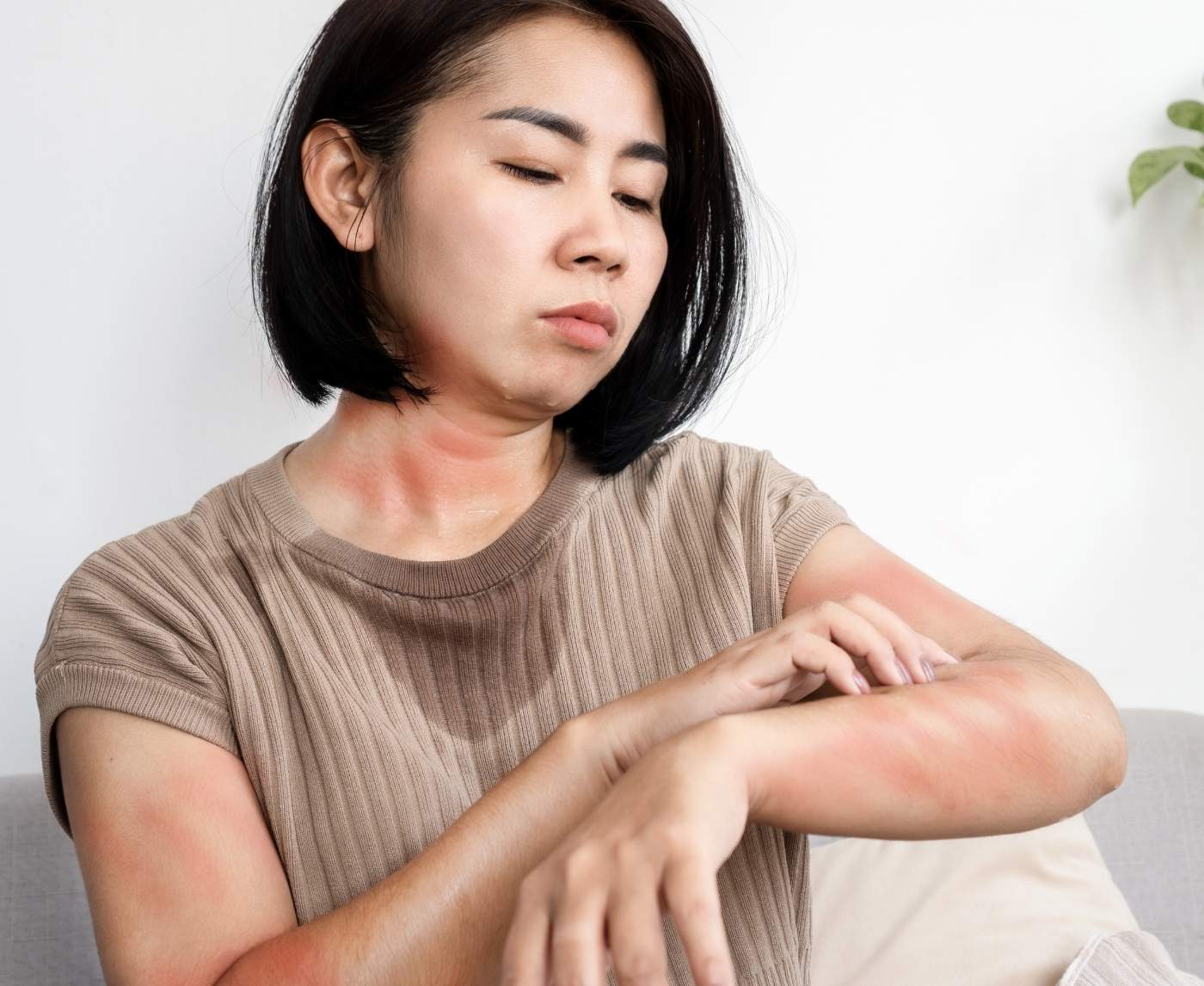
A rash on or near the genitals tends to set off the same loop in everyone's head. You spot something in the shower, scroll for matching photos, and start grading every twinge like a clue. The honest reality is that most rashes that show up after sex are not infections at all. Genital skin is thinner, more easily irritated, and more reactive than skin elsewhere, so friction, lubricants, latex, fragrances, sweat, and shaving all show up there fast. The handful of sexually transmitted infections that do produce visible skin changes follow predictable timelines and patterns, and those patterns rarely look like ordinary irritation when you slow down to read them carefully.
The right signals are timing, change over time, location, and what happened in the days before. Those four pieces of information do most of the diagnostic work, and they're also the easiest things to track. The rest of this guide walks through the clinical patterns clinicians and dermatology references actually use, the most common non-infectious culprits, and the point where testing replaces guessing.
Is this an STD rash or just irritation?
The two cleanest clues are timing and progression. Skin irritation typically appears within hours of friction, shaving, or contact with a new product, stays in the area you'd expect, and improves within 2 to 5 days when you stop the trigger. STD-related rashes usually appear days to weeks after exposure: per the <a href="https://www.nhs.uk/conditions/syphilis/" target="_blank" rel="noopener">NHS</a>, primary syphilis sores can take 3 weeks or more to appear, and per the <a href="https://www.nhs.uk/conditions/genital-herpes/" target="_blank" rel="noopener">NHS genital herpes overview</a>, herpes symptoms may not appear for weeks or even years after infection. STD-related rashes often produce distinct sores, blisters, or ulcers and don't fade on their own. If your rash matches the second pattern, or you simply can't tell, an at-home rapid test is the fastest way to swap uncertainty for a clear result.
Key Takeaways
- Timing tells the story: rashes that appear within hours of friction, shaving, or a new product are almost always skin reactions, while STD-related rashes typically take days to weeks to show up.
- Distinct sores, blisters, or ulcers that develop after a sexual encounter, especially ones that worsen or spread over several days, are the strongest signal that testing is the right next step.
How STD rashes actually look and feel
Not every STD causes a rash, and the ones that do tend to behave in specific ways your body repeats fairly reliably. Recognizing the pattern matters more than matching a single photo, because lighting, skin tone, and the stage of the lesion all change what you see in the mirror.
Genital herpes (HSV-1 or HSV-2) usually starts as a tingling, itching, or burning sensation in a small patch of skin, followed by a cluster of small fluid-filled blisters that eventually break into shallow painful sores and then crust over. According to the NHS genital herpes overview, symptoms may not appear for weeks or even years after infection, and many people have outbreaks so mild they barely register. That variability is part of why visual diagnosis is unreliable even for clinicians.
Primary syphilis is the opposite of dramatic. The first sign is usually a single, firm, painless ulcer called a chancre. The NHS notes that it can take 3 weeks or more for the first symptoms of syphilis to appear after infection, with later symptoms sometimes emerging months later. Because the chancre doesn't hurt and doesn't itch, people miss it constantly. Weeks to months later, untreated syphilis can move into a secondary stage with a non-itchy rash that often involves the palms of the hands and soles of the feet. That palm-and-sole pattern is a real clinical red flag because almost no everyday skin condition behaves that way.
HIV doesn't usually cause a localized genital rash. Some people develop a widespread, pink, slightly raised body rash about 2 to 4 weeks after exposure, alongside flu-like symptoms (fever, sore throat, swollen lymph nodes). Per the HIV.gov symptoms page, about two-thirds of people develop these flu-like symptoms within that window, with rash among the listed signs. This is part of acute retroviral syndrome (the body's initial flu-like immune response to a brand-new HIV infection) rather than a rash you'd confuse with a contact reaction. HPV, when it produces visible signs, shows up as flat or cauliflower-textured warts, not a rash.
The common thread across these is that infection-driven skin changes have structure. Vesicles, ulcers, defined sores, or wart-like growths involve the immune system actively damaging or building tissue at a specific site.
Why irritation often mimics an infection at first glance
These conditions overlap in meaningful ways. Early herpes can start as small red bumps before vesicles form. Mild syphilis ulcers can be tucked into folds where you barely see them. Folliculitis from shaving can look alarming on freshly groomed skin. Contact dermatitis from a new condom brand or detergent can spread across the same areas a friction reaction would. Photo searches make this worse, not better, because they show end-stage textbook images instead of the messier early-stage versions most people are actually staring at.
The way to cut through the overlap is to compare timing, sensation, appearance, and progression side by side. A simple table makes the differences clearer than any single photo.
| Feature | Skin irritation | STD-related rash |
|---|---|---|
| Timing after exposure | Within hours, same day | Several days to several weeks later |
| Most common cause | Friction, latex, lube, shaving, fragrance | Viral or bacterial infection |
| Appearance | Diffuse pink redness, small bumps | Distinct vesicles, sores, ulcers, or wart-like growths |
| Sensation | Itchy, burning, surface-level | Painful and localized, or notably painless (syphilis) |
| Distribution | Where the friction or product touched skin | At the exposure site; syphilis can also reach palms and soles |
| Trajectory | Improves within 2 to 5 days | Persists, worsens, or evolves into new lesions |
Timing is the strongest clue most people miss
People remember the symptom but rarely the sequence, and the sequence is where the answer hides. Skin irritation has almost no incubation period because it's a barrier-disruption response. You shave, you sweat, you switch detergents, and within a few hours your skin throws up redness, mild swelling, or surface bumps. The cells weren't fighting an invader, they were just inflamed.
Infections don't move that fast. The pathogen has to enter, travel through tissue, replicate, and trigger an immune response strong enough to produce visible damage. The NHS notes that testing too early can produce unreliable results because the body needs time to respond, and the WHO emphasizes that many STIs are often asymptomatic and, when symptoms do occur, can be non-specific. Both points are consistent with the practical reality: infection-driven skin changes don't show up the same day as exposure.
Walk your own timeline back. If something appeared the same evening as sex, especially after intense friction, low lubrication, or a new condom or lubricant, that pattern fits irritation. If nothing showed up for several days and then a sore, blister, or persistent rash appeared, that pattern fits an infection profile and deserves testing rather than more waiting. The harder cases sit in between, and that's where the next two sections matter.
Same-evening onset after sex almost always points to irritation. Onset two or more days later, especially with distinct sores, blisters, or a rash that keeps changing, points toward testing.
Common non-STD causes of a rash after sex
The majority of post-sex rashes are skin doing exactly what it does under stress. Genital and inner-thigh skin is thinner, more hydrated, and more prone to micro-tears than other areas, so it reacts quickly to physical or chemical disruption. Per dermatology references like DermNet NZ, the usual suspects are:
- Friction and micro-abrasion. Repeated motion creates tiny abrasions you don't feel during sex but notice afterward as redness, soreness, or small bumps. More common with insufficient lubrication or longer sessions.
- Contact dermatitis. Latex, spermicides, scented lubricants, body washes, fabric dyes, or detergent residue can produce mild redness, itching, or a patchy rash within hours. Latex sensitivity in particular often presents as low-grade redness and itch rather than a dramatic allergic reaction.
- Folliculitis. Shaving leaves hair follicles inflamed and the skin barrier compromised. Friction from sex makes it worse, producing small follicle-centered bumps that get mistaken for early herpes.
- Yeast or pH disruption. Sex can shift the local microbiome by introducing new bacteria or changing pH, particularly in warm, moist environments. This often shows up as itching, redness, or a fine rash 24 to 72 hours later.
- Heat rash and intertrigo. Tight clothing, prolonged sweating, and skin-on-skin friction in hot weather can produce a fine red rash, especially in the bikini line and inner thighs.
What ties these together is that they appear quickly, stay localized to where the trigger touched skin, and tend to fade within a few days when the trigger is removed.
Keep the area clean and dry, switch to plain unscented soap, wear loose breathable clothing, skip new products, and pause shaving for a few days. Avoid pre-treating with antifungal or steroid creams before you have a sense of what you're dealing with, since those can mask or distort signs that would otherwise be diagnostic.
Where the rash sits changes the meaning
Location is one of the most useful filters and one of the most underused. Friction-driven rashes follow physics: they show up where fabric rubbed, where a partner's body contacted yours, where you shaved, or where sweat pooled. They don't suddenly appear on parts of the body unconnected to those mechanics.
Infections don't always respect that logic. Genital herpes usually stays at the site of exposure, but secondary syphilis can show up in places that surprise people, particularly the palms of the hands and soles of the feet. A non-itchy rash in those locations is unusual enough that the CDC syphilis fact sheet describes palm-and-sole involvement as a recognized sign of secondary syphilis. If you're seeing a rash in multiple unrelated areas, especially places that didn't have direct exposure to friction or products, that distribution alone is enough to move from monitoring to testing.
HIV-related acute retroviral rash is also distributed rather than localized, often covering the trunk along with flu-like symptoms. A genital-only rash with no other body involvement and no fever is much more likely to be local irritation than a systemic infection signal.
A non-itchy rash on the palms of the hands or soles of the feet, especially when those areas had no friction or product contact, is one of the clearest signals to test for syphilis rather than wait. Almost no everyday skin condition produces that distribution.
Patterns clinicians actually watch for
Clinicians don't diagnose rashes from a single photo, and there's a reason. The pattern over time, the distribution across the body, and the way the lesion behaves are what point to a diagnosis. A few of the questions that quietly drive a clinical assessment:
- Is the rash recurring in the same place? Repeat outbreaks in the same general area are a classic herpes signature.
- Is it painless or painful? Painless ulcers on or near the genitals raise syphilis suspicion. Sharply painful clustered vesicles raise herpes suspicion.
- Is it changing texture? Bumps that turn into vesicles, then into ulcers, then crust over, follow a herpes-like progression. Diffuse redness that just fades is irritation.
- Are there background symptoms? Fever, fatigue, swollen lymph nodes, sore throat, or a body-wide rash point toward systemic infection rather than skin-level irritation.
- Did it appear after the exposure window for an STI? Same-day onset rules most STIs out. Onset 2 days to several weeks later keeps them in.
Two or more answers leaning toward infection is enough to move from another night of comparing photos to a real test.
It can take 3 weeks or more for the first symptoms of syphilis to appear after you're infected.
When testing turns guessing into facts
There's a point where more analysis stops adding clarity. If your rash includes any of the following, you've reached it:
- Distinct fluid-filled blisters or open sores, especially in clusters
- A single firm painless ulcer that wasn't there a few days ago
- A rash that hasn't improved or has spread over more than 5 to 7 days
- Any rash that appears on the palms or soles, particularly without itch
- A rash combined with fever, fatigue, swollen lymph nodes, or sore throat
- Recent unprotected sex or a new partner with unknown status
You don't need certainty before testing. Uncertainty alone is a reasonable reason. Most people who eventually test say the waiting felt worse than the result. An at-home rapid test removes the clinic-visit friction entirely, which matters when the question itself is the source of the stress.
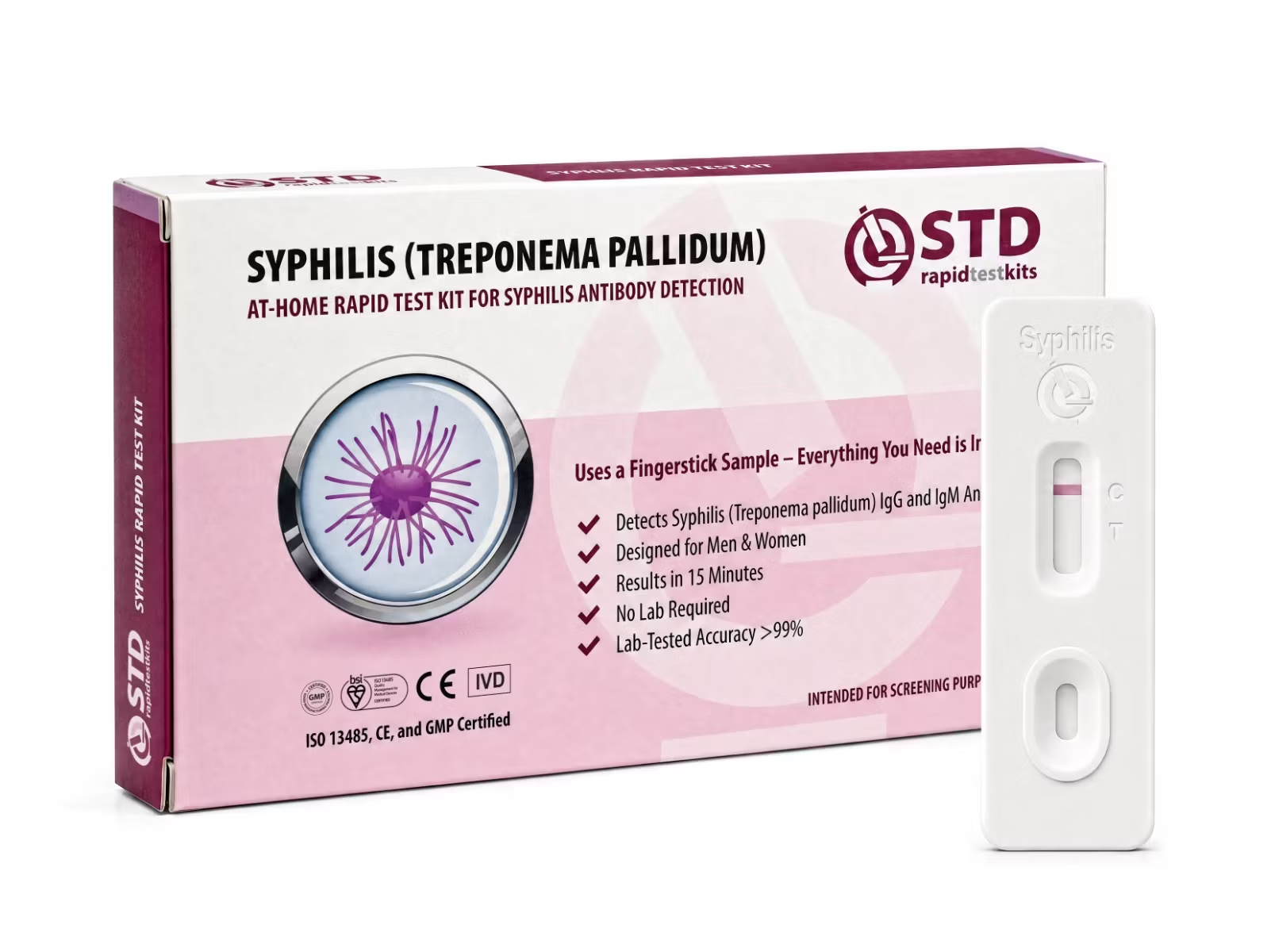
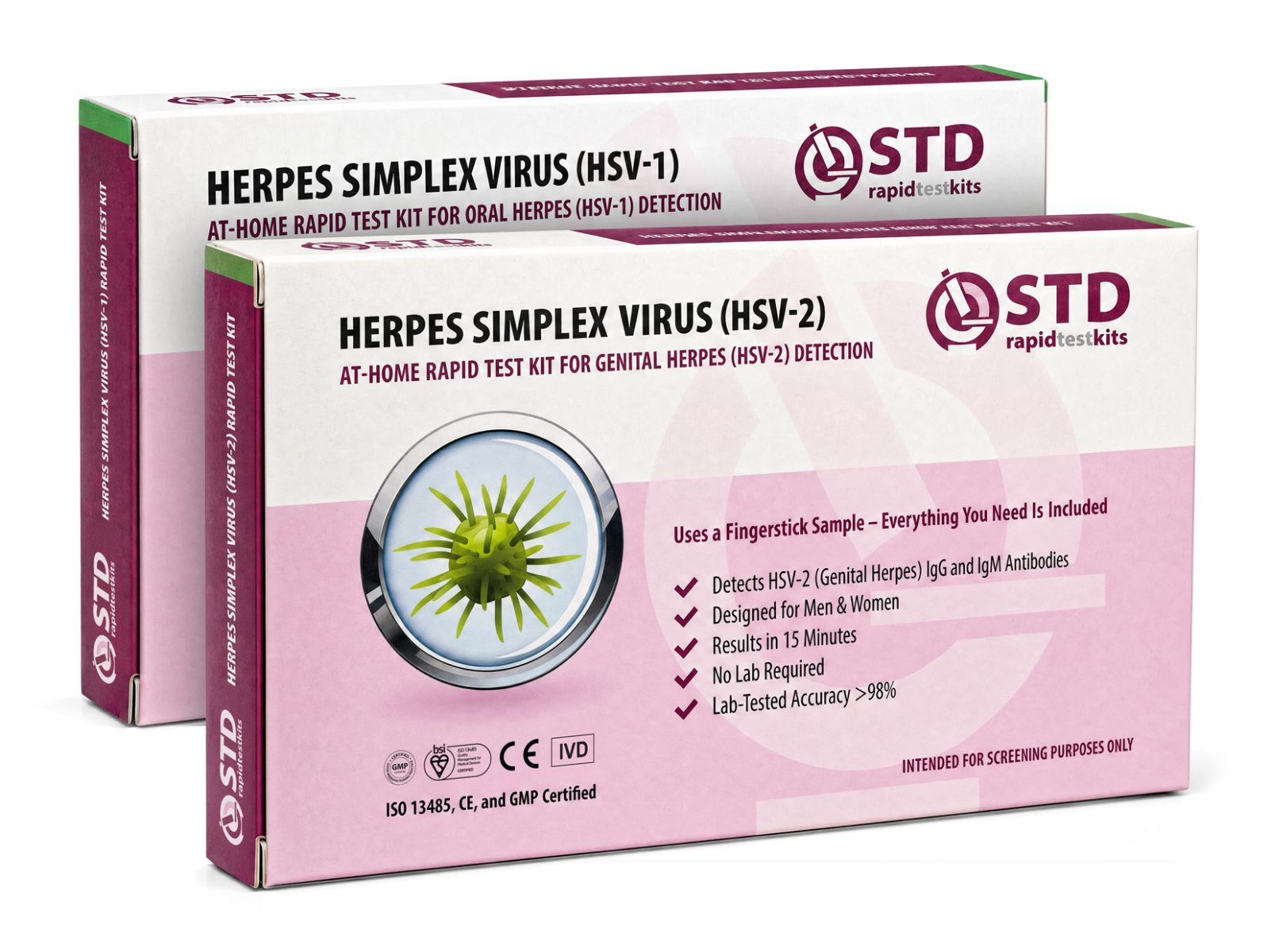
STD Rapid Test Kits sells the at-home lateral-flow screening tests described below. We recommend products based on fit-for-purpose for the reader's concern, not commercial benefit.
Window periods: when each test becomes accurate
Testing too early is one of the easier mistakes to make, because a negative result before the window closes can feel reassuring while still being wrong. Each infection has its own incubation and seroconversion timeline, and rapid tests need enough viral load or antibody response to detect the infection reliably. The general windows below combine guidance from the NHS STI overview, NHS pages on individual infections, and the HIV.gov testing overview:
- Chlamydia: from about 2 weeks after exposure (per the NHS chlamydia page, symptoms can take 1 week to several months; lab NAAT is the gold standard, while at-home rapid swabs use lateral-flow chemistry on the same sample type)
- Gonorrhea: from about 2 weeks after exposure (per the NHS gonorrhea page, symptoms usually start around 2 weeks)
- Syphilis: from about 6 weeks after exposure (antibody-based rapid blood test)
- HIV: per HIV.gov, antigen/antibody lab tests detect HIV roughly 18 to 45 days after exposure, and antibody-only tests roughly 23 to 90 days. A practical home-testing rule is an initial test at 6 weeks and a confirmatory retest at 12 weeks.
- Genital herpes (HSV-1, HSV-2): antibody-based blood tests are most reliable from about 6 to 12 weeks after exposure. If you have an active visible lesion, a clinic swab PCR during the outbreak is more accurate than antibody testing.
- Hepatitis B and Hepatitis C: testing windows are longer because the body needs time to develop detectable antibodies. The NHS hepatitis B and NHS hepatitis C pages outline the testing pathway, including a follow-up retest at six months for hepatitis C if an initial test was negative; speak with a clinician for the specific timing relevant to your exposure.
If you're testing inside the window, treat a negative result as preliminary and plan a retest after the window closes. A positive result on a rapid lateral-flow test is meaningful but should be confirmed with a clinic-grade lab test before starting treatment, since lateral-flow technology is excellent for screening but labs use higher-sensitivity assays (NAAT, PCR) to confirm.
Our at-home tests use lateral-flow immunoassay chemistry: a strip with antibodies or antigens that change color when they detect the target. They're fast, private, and well-suited to home screening. They are not the same technology as lab NAAT or PCR tests, which amplify genetic material and offer higher analytical sensitivity, especially for asymptomatic infections. The two are complementary. A positive rapid result is worth confirming with a lab test; a negative result inside the correct window is reassuring but not absolute proof until you've cleared the full window period.
The painless rash trap (and why "it doesn't hurt" isn't reassurance)
One of the worst assumptions people make is that an infection has to hurt. The primary syphilis chancre is famously painless. Some early herpes outbreaks are so mild they're written off as a friction patch. HPV warts are usually painless. Even the acute HIV rash is more itchy than painful for most people who notice it.
The flip side is also true: irritation can hurt quite a bit, especially folliculitis, contact dermatitis with broken skin, or yeast overgrowth on raw skin. Pain is not a reliable filter on its own.
What's much more useful is the combination of timing, distribution, and progression you've now read about three times. If those three pieces all point one way, trust the pattern. If they're mixed, test.
What helps your skin while you wait, watch, or test
Whether you decide to monitor, test, or both, a few low-impact moves protect your skin without distorting what you'll see later:
- Keep the area clean and dry; pat rather than rub after showering
- Switch to fragrance-free, dye-free body wash and laundry detergent for a few days
- Pause shaving and waxing in the affected area until the skin settles
- Wear loose cotton underwear and avoid tight synthetic fabrics
- Skip new products: lubricants, condoms with novel ingredients, scented intimate washes
- Don't pre-treat aggressively with antifungal, steroid, or antibiotic creams unless a clinician recommends it; those can blur the picture
- If you're testing, do it at the right window; if it's still inside the window, plan a retest date now so you don't have to make the decision twice
Most rashes that are going to clear on their own start visibly improving within 48 to 72 hours of removing the trigger. If yours hasn't, that's the signal to move from observation to action.
If 5 to 7 days of gentle handling haven't visibly improved the rash, or if it has changed character (new sores, spreading, palm-and-sole involvement, or fever and swollen lymph nodes alongside it), stop monitoring and test. Continued waiting at that point doesn't add information.
Frequently asked questions
- I noticed a rash the same day as sex. Could it already be an STD?
- Almost certainly not. Same-day rashes are skin-level reactions to friction, lubricants, latex, or new products. STIs need days to weeks of replication and immune response before they produce visible skin changes. If the rash showed up within hours and starts improving over the next 2 to 5 days, you're looking at irritation.
- What does a herpes outbreak actually feel like in the early stages?
- It often starts as a tingling, burning, or itching sensation in a small patch of skin before anything is visible. Small fluid-filled blisters then appear in a cluster, break into shallow painful sores, and crust over and heal in 7 to 14 days. Some people get such mild outbreaks they barely notice them, which is part of why blood antibody testing exists.
- If the rash doesn't itch or hurt, does that mean I'm fine?
- Not on its own. Painless presentations are actually a feature of primary syphilis, where the chancre is famously easy to miss precisely because it doesn't hurt. A non-itchy rash on the palms or soles is also a classic secondary syphilis pattern. Pain alone isn't a reliable filter; pair it with timing, progression, and distribution.
- Could shaving really cause something this dramatic?
- Yes. Shaved skin has compromised follicles, and friction from sex on top of that can produce folliculitis (inflamed hair follicles) that looks alarmingly like early herpes. The tell is distribution: folliculitis is scattered small bumps, each one centered on a hair follicle, while herpes forms tight clusters of vesicles.
- How long should I wait before stopping the watching and starting the testing?
- If a rash isn't visibly improving by day 5 to 7, or if it's evolving into sores, blisters, or ulcers, that's the signal. Add a recent new partner or unprotected exposure and the threshold drops further. Testing during the correct window is faster and lower-stress than continuing to monitor a rash that's actively changing.
- Can I test right after sex if I'm worried?
- You can, but no test is reliable immediately after exposure. Each infection has its own window before a screening test can detect it; check the window-period section above for the specific infection you're worried about. A negative result before that window closes is preliminary, so plan a retest at the correct window rather than treating early reassurance as final.
- What's the difference between the at-home rapid test and a lab test?
- At-home rapid tests screen quickly and privately, so they're a good first answer once the window has closed. Lab NAAT and PCR tests amplify genetic material and offer higher sensitivity, especially for asymptomatic infections. Use the rapid test to screen; if it's positive, confirm with a lab test before starting treatment. The two are complementary, not competing.
- Honestly, can a clinician just look and tell me what it is?
- Sometimes, but more often than people expect, even experienced clinicians can't reliably distinguish an early herpes lesion from folliculitis or a syphilis chancre from a friction abrasion just by looking. That's why testing exists. Visual diagnosis is a starting point, not a confirmation.
The shortest version of all of this
Most rashes that show up after sex turn out to be skin reactions rather than infections. The ones caused by infection follow predictable patterns: delayed onset (days to weeks), distinct lesions instead of diffuse redness, persistence or progression rather than fading, and sometimes distribution that doesn't match where friction or products touched skin. If your rash matches the irritation pattern and is improving, give it a few days. If it matches the infection pattern, or if you genuinely can't tell, testing at the correct window replaces guessing with a result you can act on.

- UK National Health Service. Genital herpes overview, used for symptom-onset variability ('weeks or even years') and outbreak progression.
- UK National Health Service. Syphilis overview, used for the '3 weeks or more' primary chancre timing and later-stage symptom timing.
- U.S. Centers for Disease Control and Prevention. About Syphilis fact sheet, used for the secondary-syphilis palm-and-sole rash framing.
- HIV.gov. Symptoms of HIV, used for the 'within 2 to 4 weeks' acute retroviral syndrome window and rash among the listed flu-like symptoms.
- HIV.gov. HIV testing overview, used for the specific HIV test detection windows (NAT 10 to 33 days, antigen/antibody 18 to 45 days, antibody 23 to 90 days).
- UK National Health Service. Sexually transmitted infections overview, used for general STI testing pathways and the 'wait several weeks' framing.
- UK National Health Service. Chlamydia overview, used for typical symptom-onset timing.
- UK National Health Service. Gonorrhea overview, used for typical symptom-onset timing.
- UK National Health Service. Hepatitis B overview, used as the authoritative reference for hepatitis B clinical course and testing pathway.
- UK National Health Service. Hepatitis C overview, used as the authoritative reference for the hepatitis C testing pathway and the six-month retest guidance.
- World Health Organization. Sexually Transmitted Infections (STIs) fact sheet, used for the framing that many STIs are often asymptomatic and non-specific.
- DermNet NZ. Genital skin problems reference, used for non-infectious dermatology framing of contact dermatitis, folliculitis, and intertrigo.
