

Published: August 2025 | Last updated: April 2026 | Editorial review and quality control: Martina N.
The positive result lands in your inbox, on a kit window, or in a clinic chair. The hour after is rarely about the infection itself. It is about the avalanche of thoughts that come right behind it. Who can I tell. Who will still want me. Why did I let this happen. You are not weak for thinking that way. You were trained to.
STD shame is real, and it is teachable, which means it can be unlearned. It comes from the way most of us were taught about sex, the language we use about bodies, and the silence we keep around testing. The infection itself, in most cases, is treatable. The shame can outlast it by months or years if no one names it. This article names it, and shows what to do with it.
Does shame about an STD really cause health harm?
Yes, and the harm is measurable. Internalized stigma after an STI diagnosis is linked to higher rates of depression and anxiety, longer delays before testing or treatment, lower partner-disclosure rates, and worse follow-up care. Most STIs are treatable; the shame is harder to clear, but it can be unlearned with accurate information, supportive language, and the option to test on your own terms.
Key takeaways
- STIs are common and most are treatable; the bigger health risk is often the shame that keeps people from testing or telling a partner.
- Stigma after a diagnosis behaves like a known mental-health pattern, not a personal failure, which means the shape of recovery is shared too.
When the test says positive and your brain says punishment
If you have just been diagnosed with an STI, you probably do not remember much about the moment itself. The heat in your ears. The flicker of what now. The small voice that says this is what I get. Maybe you are still in that loop, scrolling search results at midnight, looking for someone who can explain why your body feels foreign even though your symptoms are fading.
Here is what no one tells you when they hand you the result: the infection might be temporary, the shame can linger like smoke in your chest. And the shame carries a measurable health risk. Research summarized by the Johns Hopkins Bloomberg School of Public Health (publichealth.jhu.edu) links internalized stigma after an STI diagnosis to higher rates of depression, sexual dysfunction, relationship breakdown, and delays in seeking follow-up care.
Much of this is about systems. Systems that taught you sex was risky in a moral sense, not just a clinical one. Systems where the same body that flinches at a discharge symptom is supposed to enjoy intimacy again next month. The diagnosis is the easy part to treat. Untangling the meaning is the work, and most clinics are not set up to do that part with you.
If you are reading this within the first weeks of finding out, give yourself a few hours before deciding what the result means about you.
A test result describes a state in your body. It carries no verdict on who you are.
How shame spirals into real mental-health harm
The pattern after a diagnosis is recognizable enough that mental-health practitioners can sketch its phases. Not everyone moves through every phase, and not in order. Seeing the spiral mapped out can help you recognize that what you are feeling is a known shape, not personal failure.
None of the reactions in the table below come from the virus or bacteria itself. They come from the meaning we have learned to attach to it, and that is where the damage lives. Studies on HSV and mental health repeatedly find that the year after diagnosis is the riskiest window for depressive symptoms, especially for people who are otherwise unsupported. The clinical part is often manageable in days or weeks. The story you are telling yourself takes longer.
If you can see your reaction in any row of the table, you are responding to a stigma poured into you by classrooms, dating apps, jokes, and headlines.
| Stage | Mental-health impact | What you might be telling yourself |
|---|---|---|
| Shock | Fight-or-flight, panic, detachment | This cannot be happening. I am disgusting. |
| Isolation | Withdrawing from friends and partners | No one will want me again. |
| Self-blame | Rumination, low self-esteem, guilt loops | It is my fault. I was reckless. |
| Depression | Loss of motivation, appetite, joy | I do not even care anymore. |
| Anxiety | Hypervigilance, racing thoughts, insomnia | What if everyone finds out? |
Why silence makes the health risk worse
Shame isolates, and isolation is where the second wave of harm lives. One of the most common downstream effects of STI-related stigma is withdrawal: from relationships, from intimacy, from clinics, from the body itself.
People living with HIV, especially in high-stigma communities, often delay treatment by months because the appointment itself feels like a confession. Even less life-threatening infections like chlamydia and gonorrhea set off emotional spirals. (A few of the links in this article go to products sold on this site; they appear where the test is directly relevant to the section.) Public-health surveys consistently find that the pain rarely stops younger adults from seeking care; the real deterrent is the fear of being seen as someone who has had sex.
This silence is not neutral. When people do not test, they cannot treat. When they do not treat, infections progress, transmit to partners, and in some cases cause complications like pelvic inflammatory disease or untreated syphilis. According to the U.S. Centers for Disease Control and Prevention, most reported STIs in the country are curable with antibiotics or manageable with antivirals. Yet diagnosis rates trail actual prevalence because so many infections never get tested.
The reframe that helps most people: a test reveals what your body has been carrying anyway, often longer than the diagnosis date suggests.
More than 1 million curable sexually transmitted infections (STIs) are acquired every day worldwide in people 15–49 years old, the majority of which are asymptomatic.
When shame becomes a body symptom too
Shame does not only live in your head. It leaves fingerprints on your nervous system. The flush in your face when you imagine telling a partner. The way your shoulders tighten when someone jokes about being “clean.” The pit-of-the-stomach dread when you check a healed sore one more time. After an STI diagnosis, many people report headaches, digestive flare-ups, chest tightness, and insomnia that no clinic visit explains. The body is registering threat. Stress hormones do not care that the threat is social.
This shows up in another, sneakier way. Post-diagnosis anxiety mimics STI symptoms. A twinge becomes a burn. A pimple becomes a sore. You search “STD symptoms that come and go” at 3 a.m., when what you are actually feeling is grief, not infection. Disconnecting from the body is common after a diagnosis, and it makes everything harder: trusting pleasure, engaging with care, speaking up when something genuinely is wrong, because the line between anxiety and awareness blurs fast.
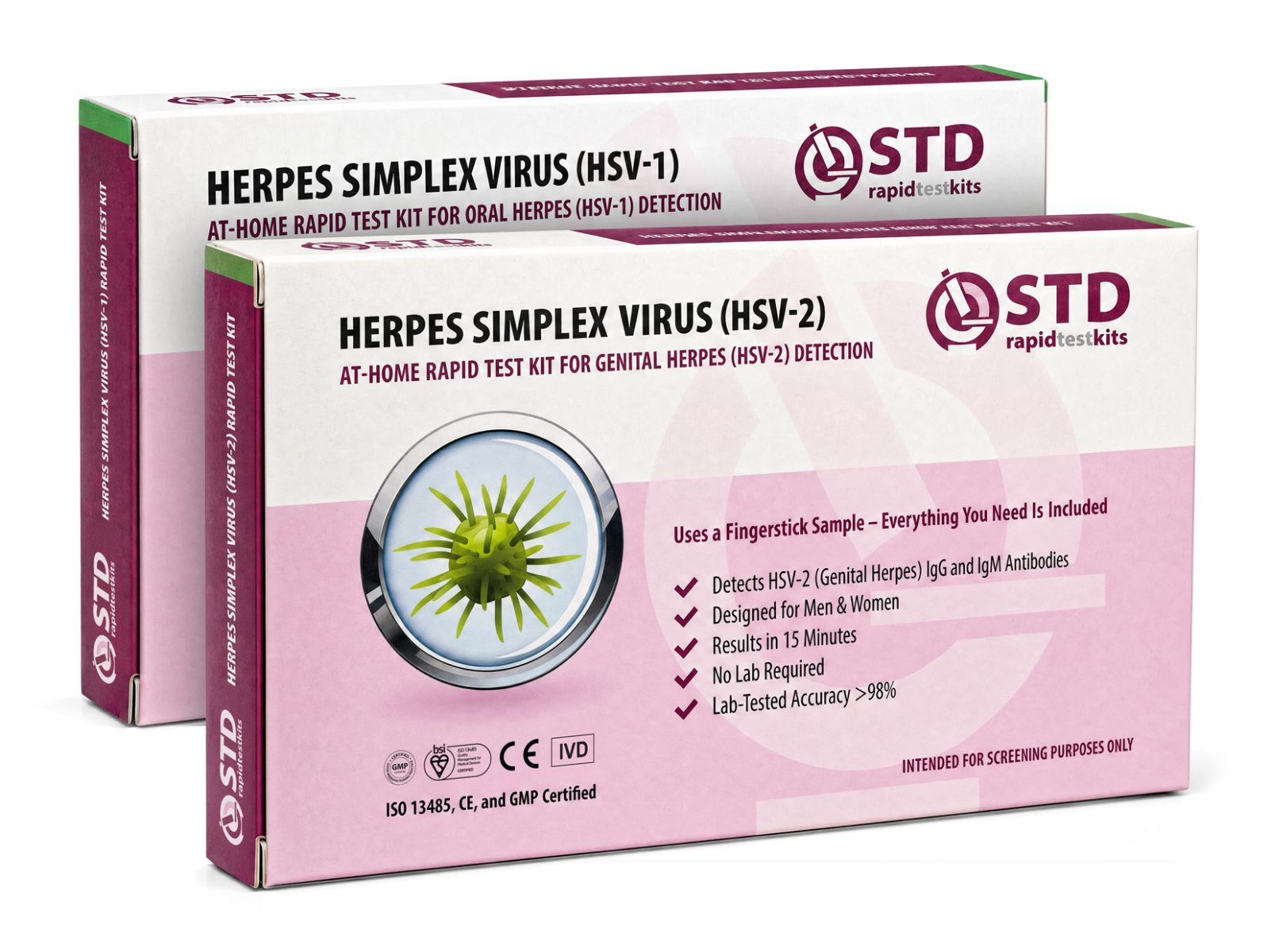
For people diagnosed with herpes, this loop is especially common. The infection itself is usually a managed, low-level visitor in the body. The shame can become a daily roommate. According to the World Health Organization’s herpes simplex virus fact sheet, recurrent HSV-2 episodes are usually shorter and less severe than the first outbreak. Yet anxiety about a future outbreak, or about telling a partner, can reshape sex, sleep, and self-image in ways the virus itself never would.
What helps in the moment: notice when a body sensation triggers an instant story (“that is an outbreak, I am ruined”), and give the story a few seconds to settle before you act on it.
Where the shame actually comes from (it was never just you)
Shame does not live in your bloodstream. It is poured into your head, drip by drip, from sources most people never get to question. Most of us were taught to associate STIs with failure, with recklessness, with being “used up.” We were not just taught to fear infection. We were taught to fear what it means about us.
Those messages come from a few specific places, and once you can see them named, they stop being self-evident truths. The table below is not exhaustive, but it covers the four channels most adults absorbed before they ever sat in a clinic chair.
Working together, all four take a treatable infection like chlamydia and load it with meanings most readers never asked for.
| Source of shame | What it sounds like | What it does to you |
|---|---|---|
| Sex education | Abstinence-only programs, scare-tactic slides, no LGBTQ+ inclusion | Wires STI = punishment and STI = moral failure into adolescence |
| Media and dating apps | Herpes punchlines, “clean” language, fear-mongering headlines | Reinforces stigma; trivializes lived experience |
| Clinical encounters | Judgmental clinicians, no trauma-informed framing | Discourages testing and follow-up; deepens internalized guilt |
| Family and religious culture | Sex equated with sin, infection equated with impurity | Creates deep internal shame that lingers long after the visit |
The lie of “clean” and the language that quietly keeps it alive
STI shame steals sexual confidence. People report avoiding intimacy, refusing to date, or quietly resigning themselves to being “damaged goods.” These are not rare stories. They are common, especially for women, queer people, and survivors of sexual trauma. And much of the damage hides inside one tiny word.
Clean. As in “Are you clean?” or “I’m clean, don’t worry.” It sounds harmless. It draws a line between clean and dirty, between worthy and unworthy. It does not just hurt the person who tested positive. It quietly trains everyone in the conversation to treat a normal feature of human health as a moral status.
The repair starts with the words. Try “tested,” “negative,” “positive,” “treated,” or “managed.” Save “clean” for laundry. Policing language for its own sake is not the goal; what matters is that what you call something shapes how you feel about it, and feelings drive whether you test, whether you tell, and whether you take care of yourself when something turns up.
You are not dirty. A positive result does not revoke your right to pleasure, partnership, or self-respect. Having an STI does not make you less deserving of love. That belief is a lie, and lies can be unlearned, especially the ones you absorbed before you were old enough to push back.

What healing looks like (it is not linear)
Healing rarely looks like waking up one day and forgetting it ever happened. It is closer to deciding to test again without flinching, telling someone new and finding they do not run, and blocking someone who shames you and letting that be closure.
People who come out the other side of an STI diagnosis feeling whole again tend to do a few specific things, in any order. None of these require a perfect support system. All of them are small repeatable moves.
- Education rewrites the script. Learn how the infection works, how common it is, and what your treatment options are. Reading the CDC’s STI overview or the NHS pages on STIs can dismantle the fear that comes from not knowing.
- Community shrinks the shame. Find people who have been through it. Subreddits, private support groups, friends who quietly disclose once you do. The first time someone says “same” is often the first time you breathe properly in weeks.
- Language changes how you feel. Drop “clean” and “dirty.” Use “tested,” “treated,” “negative,” “positive.” The script change comes first; the feeling change follows.
- Therapy helps, when you can access it. Especially if a diagnosis has stirred up older trauma, body-image patterns, or relationship wounds. A therapist who works with sexual health can help separate your identity from your status.
- Testing becomes empowerment. Once you reclaim testing as a tool for care rather than punishment, the meaning of a future test shifts. You can test discreetly at home, on your own timing, and retest when you need to without telling anyone.
There is no clock on emotional recovery. Some people stabilize in weeks. Others take many months.
You do not need a five-step plan today. Pick one thing: drink water, message one trusted person, and avoid making any major decisions about your relationships, your body, or your future for at least 48 hours. The clarity you need will come back.
Telling a partner without breaking down
Disclosure is the part most people dread, and it is also the part that frees them. Done well, it is short, kind, and clear. Treat it as one piece of information about your body that another person needs in order to make their own choices.
A few scripts that have helped real people:
- For a new partner: “Before we go further, I want to tell you something about my sexual health. I have HSV-2. It is well-managed and I am happy to answer any questions.”
- For an existing partner: “Something came up on a recent test. I want to share it because I respect you, and I want us to make decisions together about what comes next.”
- For a friend you need to tell first: “Can I talk to you about something health-related? I do not need advice. I just need to say it out loud.”
Practice the sentence. Out loud, in the mirror, while walking. The more you rehearse it, the less power the silence has. Most disclosures go better than the catastrophic version your brain rehearsed at 3 a.m. The right person reads it as honesty, not a dealbreaker. The wrong person was going to flinch at something else anyway.
If a positive result is recent and your status is not yet confirmed, retesting on your own timing can be part of the same self-respect. Many STIs run asymptomatic for long stretches per clinical references like the Mayo Clinic (mayoclinic.org), so a later home test often catches what the first one missed.
FAQs
- Why do I feel so dirty after testing positive?
- Because almost every cultural channel you grew up with framed STIs as proof of being “dirty” or careless. That feeling is not yours. It is the residue of the language and lessons around you. A positive test is information about your body, not a verdict on your character. Millions of people carry the same infections quietly; you have just become aware of yours.
- Can a diagnosis really cause depression and anxiety?
- Yes. Studies repeatedly show higher rates of depressive symptoms and anxiety in the first year after an STI diagnosis, especially for people without supportive language or community around them. The infection itself is rarely the whole driver. Shame, silence, and the fear of being judged usually do most of the heavy lifting. If symptoms last more than a few weeks or affect your daily life, a clinician or therapist can help separate the medical layer from the emotional one.
- Will I ever date again with herpes or HPV?
- Yes, and many people do. Genital herpes and HPV are both extremely common: most sexually active adults will encounter HPV at some point in their lives, and routine HPV vaccination through age 26 (with shared clinical decision-making through age 45) has further changed the landscape for younger generations of partners. The right partners hear a disclosure as honesty, not a dealbreaker. Disclosure gets easier with practice; the first conversation is almost always the heaviest, and they get lighter from there.
- The infection cleared but I still feel terrible. Why?
- Shame outlasts symptoms. Antibiotics treat bacteria; they do not treat the story you have been telling yourself about what the infection meant. That residue is closer to a stress response than a recurrence. Therapy, journaling, peer support, and giving yourself time are the relevant tools. If your distress is severe or persistent, please reach out to a clinician or a crisis line; you do not have to push through this part alone.
- Do I have to tell my partner?
- Legal disclosure rules vary by jurisdiction, so check your local laws if that matters in your situation. Ethically, if there is risk of transmission, telling a partner is part of caring. You do not owe them your full sexual history; you owe them enough information to make an informed choice. A short, kind sentence is usually enough.
- Why is the word “clean” a problem?
- Because it implies that anyone who has tested positive is its opposite. That binary trains people to feel disposable when a routine, often-treatable result comes back positive. Replacing “clean” with “tested,” “negative,” or “treated” keeps the information without the shame. It is a small change with a real effect on how the conversation lands.
- How do I tell someone I have herpes without panicking?
- Choose a calm moment before sexual contact, keep it to one or two sentences, and frame it as information rather than a confession. Most partners respond better than the version your anxiety rehearses. Say the words out loud to yourself, or to a trusted friend, until they feel neutral in your mouth before you need them in the room. Practice strips most of the panic out of the moment.
- How do I retest at home without anyone knowing?
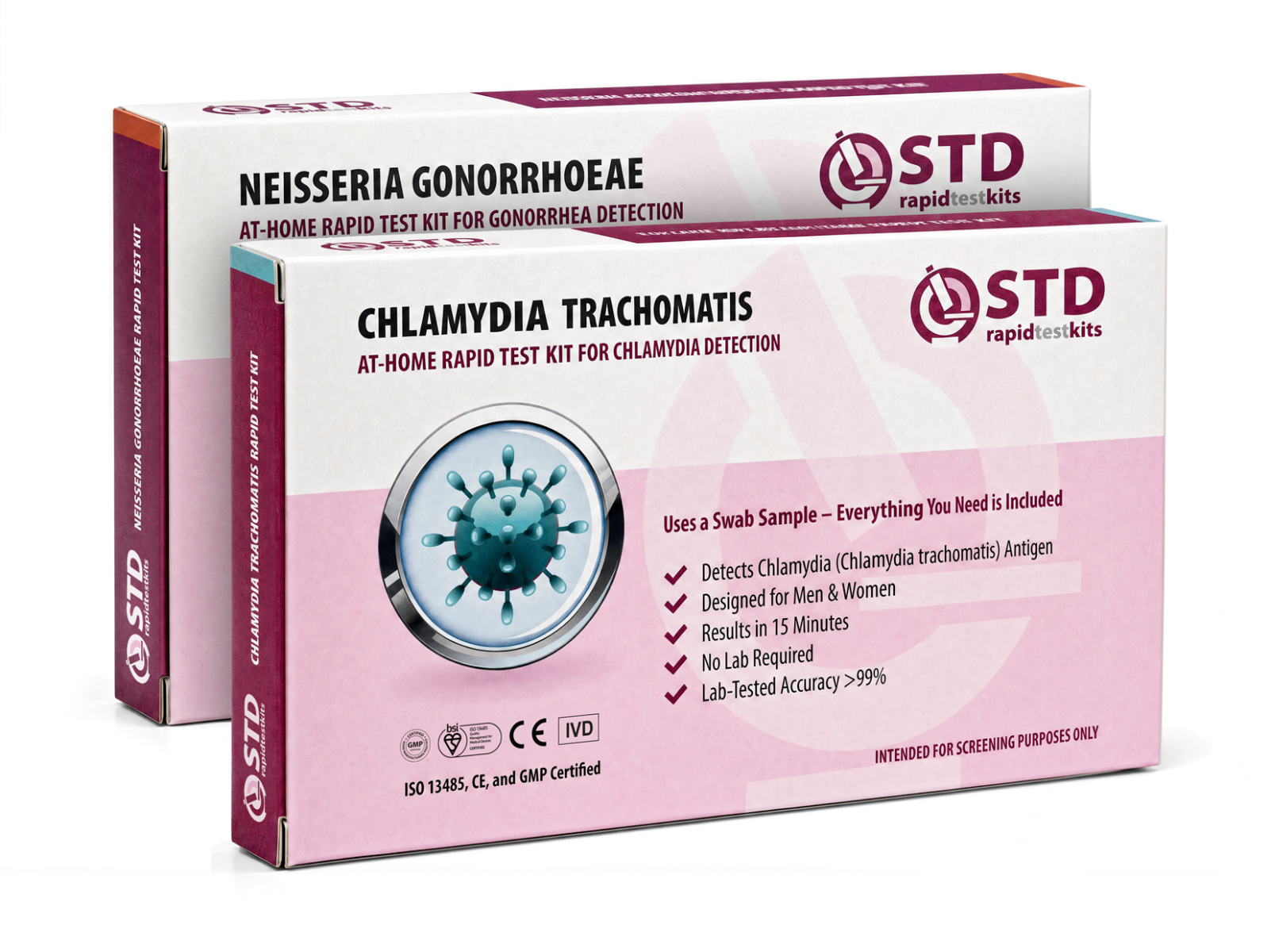
- Discreet at-home testing kits ship in unmarked packaging, and you can run them in your bathroom in about 15 minutes. The kits in this article are lateral-flow rapid screens, not lab NAAT, so a positive result is worth confirming with a clinician. For emotional hygiene, for getting an answer without an awkward visit, they do the job. Testing on your own timing is part of taking care of yourself.
- U.S. Centers for Disease Control and Prevention. STI overview, prevalence, and treatment guidance for the U.S. population.
- World Health Organization. Sexually transmitted infections (STIs) fact sheet, source for the daily-acquisition figure quoted in the pull quote.
- World Health Organization. Herpes simplex virus fact sheet, source for the description of recurrent HSV-2 episodes as shorter and less severe than the first outbreak.
- U.K. National Health Service. Sexually transmitted infections (STIs) overview, used for general framing of common infections and clinical pathways.
- Mayo Clinic. Patient-facing reference site, used for the framing that many STIs run asymptomatic for long stretches.
- Johns Hopkins Bloomberg School of Public Health. Reporting and research on stigma's effect on sexual and reproductive health-care seeking, used for the stigma-as-health-risk framing.
