How Herpes Spreads Through Kissing (Even Without Symptoms)
Why a kiss can pass HSV-1 with no cold sore in sight.
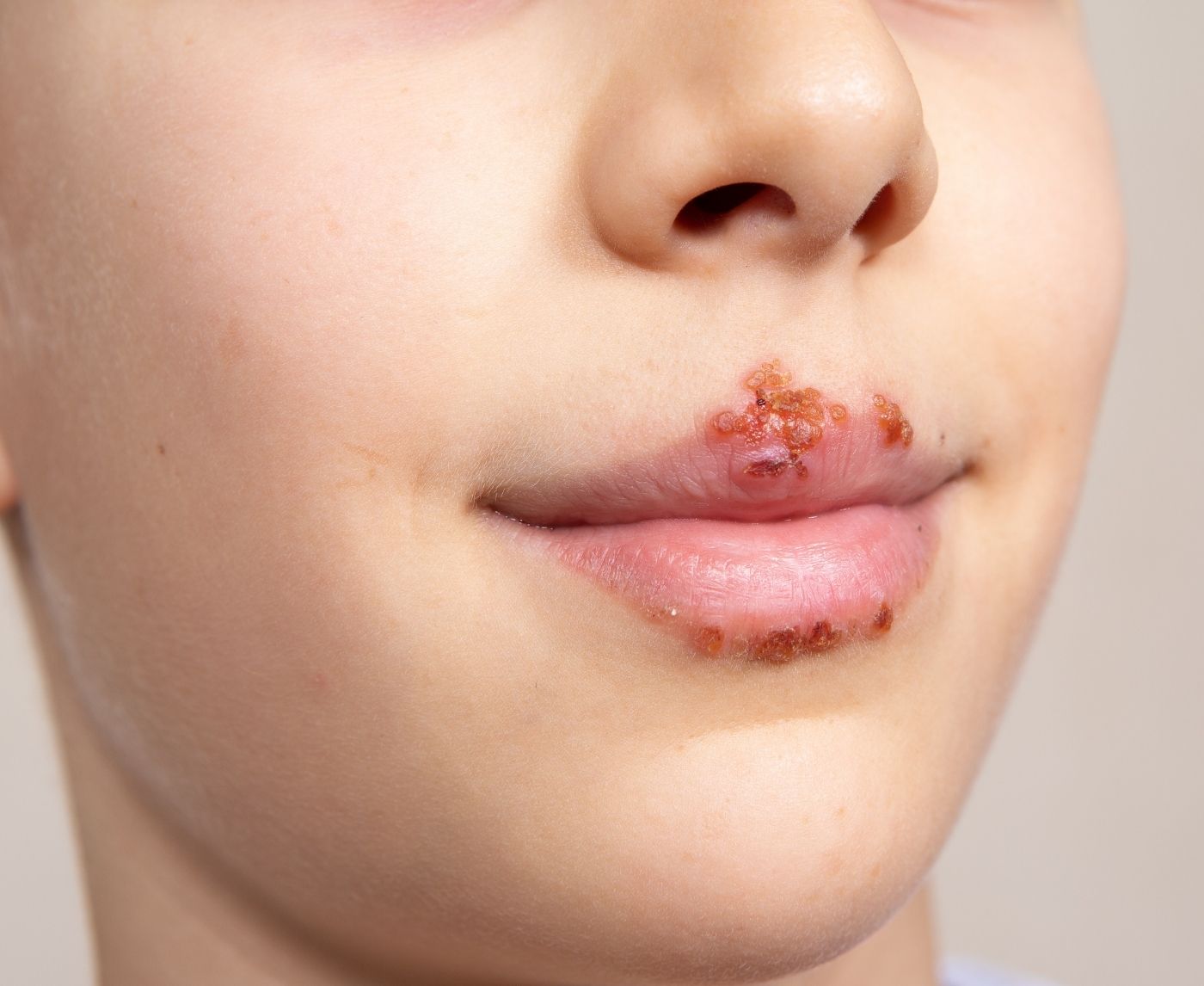



- HSV-1 spreads through kissing even with no visible cold sore, because the virus sheds intermittently from healthy-looking skin and saliva.
- Most people who carry HSV-1 do not know they have it, which is why a partner saying they have no symptoms is not the same as no risk.
Published: October 2025 | Last updated: May 2026 | Editorial review and quality control: Martina N.
A kiss seems like the safest thing two people can do together. The conventional script treats it as a risk-free moment of intimacy, distinct from anything that counts as sex. That is the assumption most adults grew up with, and it is the assumption that quietly helps herpes simplex virus type 1 keep moving through the population.
HSV-1, the virus most people associate with cold sores, can pass through kissing even when neither person has a visible sore. The reason is something called asymptomatic viral shedding: HSV-1 periodically becomes active in the lining of the mouth and lips without producing a symptom anyone would notice. The skin looks normal. The person feels fine. The virus is still on the surface, ready to transfer in saliva or through direct lip contact.
This article explains how that mechanism works, how kissing now contributes to a meaningful share of new genital herpes infections through oral sex, what an HSV-1 outbreak can actually look like (often nothing like the dramatic photos online), and what testing options make sense if you have recently kissed someone who turned out to have HSV-1.
Key Takeaways
- HSV-1 spreads through kissing even with no visible cold sore, because the virus sheds intermittently from healthy-looking skin and saliva.
- Most people who carry HSV-1 do not know they have it, which is why a partner saying they have no symptoms is not the same as no risk.
Why Asymptomatic Shedding Makes Kissing a Real Transmission Route
HSV-1 does not disappear between cold sores. After someone is first infected, the virus retreats into the trigeminal ganglion, a cluster of nerve cells near the base of the brain that supplies sensation to the face. From that hiding place, it travels back down to the lip and surrounding skin in episodes. Sometimes those episodes produce a visible cold sore. Sometimes they produce nothing you would notice.
When no sore appears, the virus can still be present in saliva and on the lining of the lip. This is asymptomatic viral shedding. According to the World Health Organization, most HSV-1 transmission happens during these symptom-free periods, in part because most carriers do not know they are infected and there is no visible cue to avoid kissing or oral contact.
Decades of research using daily oral swabs has consistently shown that adults with established HSV-1 shed virus from the mouth on a meaningful share of days, even when they feel completely healthy. The exact rate varies between individuals and between studies, but oral shedding is not rare and it is not predictable. The takeaway for everyday life: someone with HSV-1, which is most adults, is intermittently contagious through saliva, and there is no reliable signal you can watch for.
That is why a single kiss with someone who has never had a noticeable cold sore can still transmit the virus. The transmission is not driven by visible blisters; it is driven by whether virus happens to be on the lip surface at the moment of contact.
After a first infection, HSV-1 retreats into facial nerve cells and resurfaces periodically on the lip surface. Most resurfacing episodes produce no visible sore but still place virus in saliva and on the skin, which is why kissing can transmit HSV-1 when neither person sees a symptom.
HSV-1 Does Not Stay in the Mouth Anymore
The phrase oral herpes makes HSV-1 sound like a separate, harmless cousin of the virus that causes genital infections. That used to be roughly true. It is not anymore. Both HSV-1 and HSV-2 can establish infection at either site, and HSV-1 in particular has crossed over from being a mostly-mouth virus to a meaningful cause of first-episode genital herpes, especially among younger adults who acquired oral HSV-1 later in childhood or adolescence.
The route is straightforward. Someone with oral HSV-1, often without knowing it, performs oral sex on a partner during a period of asymptomatic shedding. The virus transfers from their mouth to the partner's genital skin and establishes a new HSV-1 infection in that location. The receiving partner can then experience a primary genital outbreak weeks later and have no idea where the infection came from, because no one had a cold sore at the time.
Because oral sex is widely considered safer than penetrative sex, condoms and dental dams are uncommon during it. That gap is one of the reasons HSV-1 is now showing up genitally far more often than it used to. It also means a kiss with no sex involved still matters: an HSV-1 infection acquired from kissing today can be transmitted to a future partner's genitals through oral sex months or years later.
| Scenario | Transmission Risk | Notes |
|---|---|---|
| Kissing during a visible cold sore outbreak | Highest | Active blister contains a high HSV-1 viral load. |
| Kissing with no visible symptoms | Lower but real | Asymptomatic oral shedding can still transfer virus. |
| Receiving oral sex from a partner with oral HSV-1 | Meaningful | Can cause genital HSV-1 infection in the receiving partner. |
| Sharing a drink, fork, or lip balm briefly | Low | HSV-1 does not survive long on dry surfaces away from the body. |
How Common Is HSV-1, Really?
HSV-1 is one of the most common chronic infections in the world. The WHO estimates that roughly 3.8 billion people under the age of 50, about 64 percent of that age group globally, carry HSV-1. The vast majority acquired it in childhood, often from a relative kissing them on the lips or cheek, long before any sexual exposure.
That detail matters for two reasons. The first is that HSV-1 is not a marker of someone's sexual behavior; most carriers were infected in childhood through entirely innocent contact. The second is that the dating pool is full of people who carry HSV-1 without knowing it. According to the U.S. Centers for Disease Control and Prevention, most people with herpes infection have no symptoms or symptoms so mild they go unrecognized. Because most carriers are never tested, the standard clinical encounter rarely flags HSV-1 unless a patient raises it directly.
The combination of a very common virus and rarely-ordered testing is why so many transmissions happen between two people who both believed they were uninfected. None of them were lying or reckless, and none had been told by a clinician that HSV testing was a routine thing to ask for.
An estimated 3.8 billion people under the age of 50, or 64% of the global population, have herpes simplex virus type 1 (HSV-1) infection.
What an HSV-1 Outbreak Actually Looks Like
Search for herpes outbreak photos and the top results show the worst cases: clusters of yellowed blisters, dramatic swelling, raw open sores. Real outbreaks are usually nothing like that. Many people who carry HSV-1 have only mild, easy-to-dismiss flares, and a meaningful share never recognize their first outbreak as herpes at all.
What an oral HSV-1 episode often looks like in practice: a single small blister at the corner of the lip mistaken for a chap or a paper cut, a tingling sensation on the lip border that fades within a day or two, a tiny crusted spot inside the nostril, or a sore patch on the gum or hard palate that gets blamed on hot food. Some people get a single bump near the lip line that looks like a pimple. Others get a vague, diffuse soreness with no obvious lesion at all. Per the CDC's STI treatment guidelines, herpes symptoms are highly variable, and many infections are missed because they look nothing like the textbook description.
Genital HSV (whether type 1 or type 2) follows the same pattern. The first episode is usually the most noticeable, with painful sores or ulcers, possible flu-like symptoms, and tender lymph nodes. Recurrent episodes tend to be milder. They can feel like razor burn, a yeast infection, a urinary tract infection, an ingrown hair, or just a bit of unexplained itching. The CDC's treatment guidance notes that many people with genital herpes never realize they have it because their symptoms are too mild or atypical to bring them in for testing.

Mouth Versus Genitals: Same Virus, Different Stigma
There is a cultural script that says cold sores are fine and genital herpes is shameful. Medically, that distinction makes very little sense: the same herpes simplex virus causes both, and an infection at either site can be painful when symptomatic, invisible most of the time, and transmissible during periods when nothing looks wrong. The only real difference is where the virus established first, and even that line is fading.
The location of the infection mostly reflects how the virus got in, not how serious it is. HSV-1 in the mouth and HSV-1 in the genitals are the same virus and behave similarly inside the body, although genital HSV-1 tends to recur less often than genital HSV-2. The historical split between HSV-1 (oral) and HSV-2 (genital) has eroded as oral sex has become more common in younger generations, and clinicians now see HSV-1 routinely in both locations.
The table below summarizes how the same virus presents at each site and the kinds of conditions it is most often confused with.
| Infection Site | Common Symptoms | Often Misdiagnosed As | How It Spreads |
|---|---|---|---|
| Mouth and lips (oral HSV-1) | Tingling, cracked lip, small cluster of blisters, tender spot inside the mouth | Chapped lips, canker sore, acne, allergic reaction | Kissing or oral sex; intermittent shedding even when no sore is present |
| Genitals (HSV-1 or HSV-2) | Itching, burning, small painful sores, mild flu-like symptoms during the first episode | Razor burn, ingrown hair, UTI, yeast infection | Skin-to-skin contact in the genital area, including oral-to-genital contact |
Should You Test for Herpes After Kissing?
Not every kiss warrants a test. A single kiss with someone whose HSV-1 status is unknown, with no symptoms developing on either side, is a common life event rather than an emergency. But there are situations where testing genuinely helps you make decisions, and knowing the timing rules avoids wasted tests and false reassurance.
Two test types are relevant. Antibody blood tests, usually IgG, look for the immune response your body produces after exposure. They do not detect the virus directly. Per CDC's herpes treatment guidance, antibody seroconversion typically takes a few weeks to a few months, with most people becoming detectable by 12 weeks after exposure. Test before that window and a negative result does not rule out a recent infection.
Swab tests, including PCR and viral culture, look for the virus itself in fluid taken directly from a sore. These are the most accurate way to confirm an active outbreak, but they require a visible lesion and they are most reliable within roughly 48 hours of the lesion appearing. After that, viral load drops and the test may miss the infection.
If you kissed someone, no symptoms have appeared, and you simply want to know your status, the right move is usually to wait and test at the antibody window. If a sore appears on the lip, in the mouth, or on the genitals within a few weeks of a possible exposure, the right move is to seek a clinical swab quickly, ideally within two days of the lesion appearing.
| Time Since Possible Exposure | Best Testing Option | Accuracy Notes |
|---|---|---|
| 1-7 days, no symptoms | Watch for symptoms; do not test yet | Too early for antibody test to detect a new infection |
| A sore appears at any point | Clinical swab (PCR or viral culture) | Most accurate when the lesion is fresh, ideally within 48 hours |
| 6-12 weeks, no symptoms | Blood antibody (IgG) test | Most reliable for confirming exposure; does not tell you the body site of infection |
| More than 12 weeks | Blood antibody (IgG) test | Highest accuracy window; a clear negative is meaningful at this point |
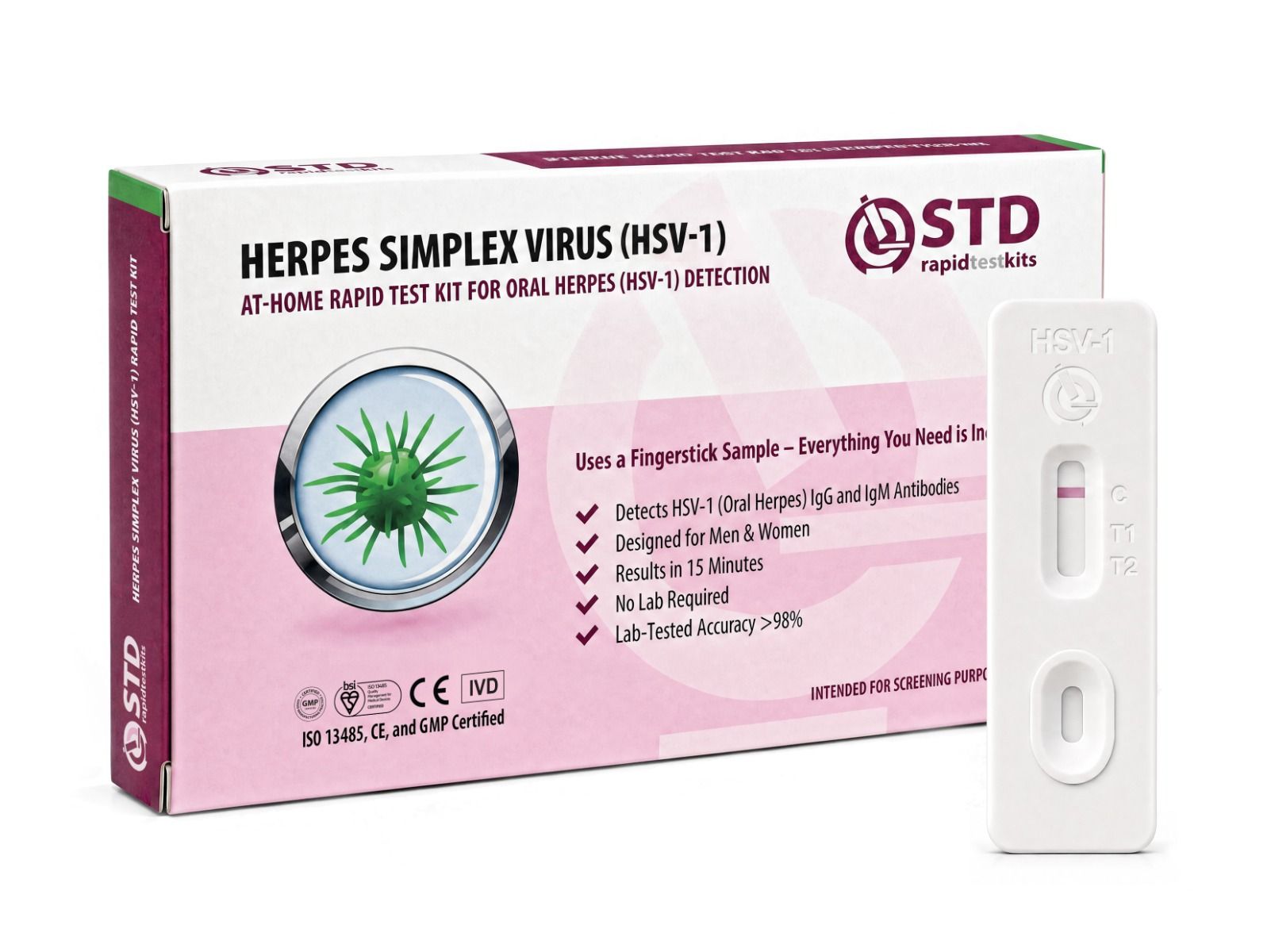
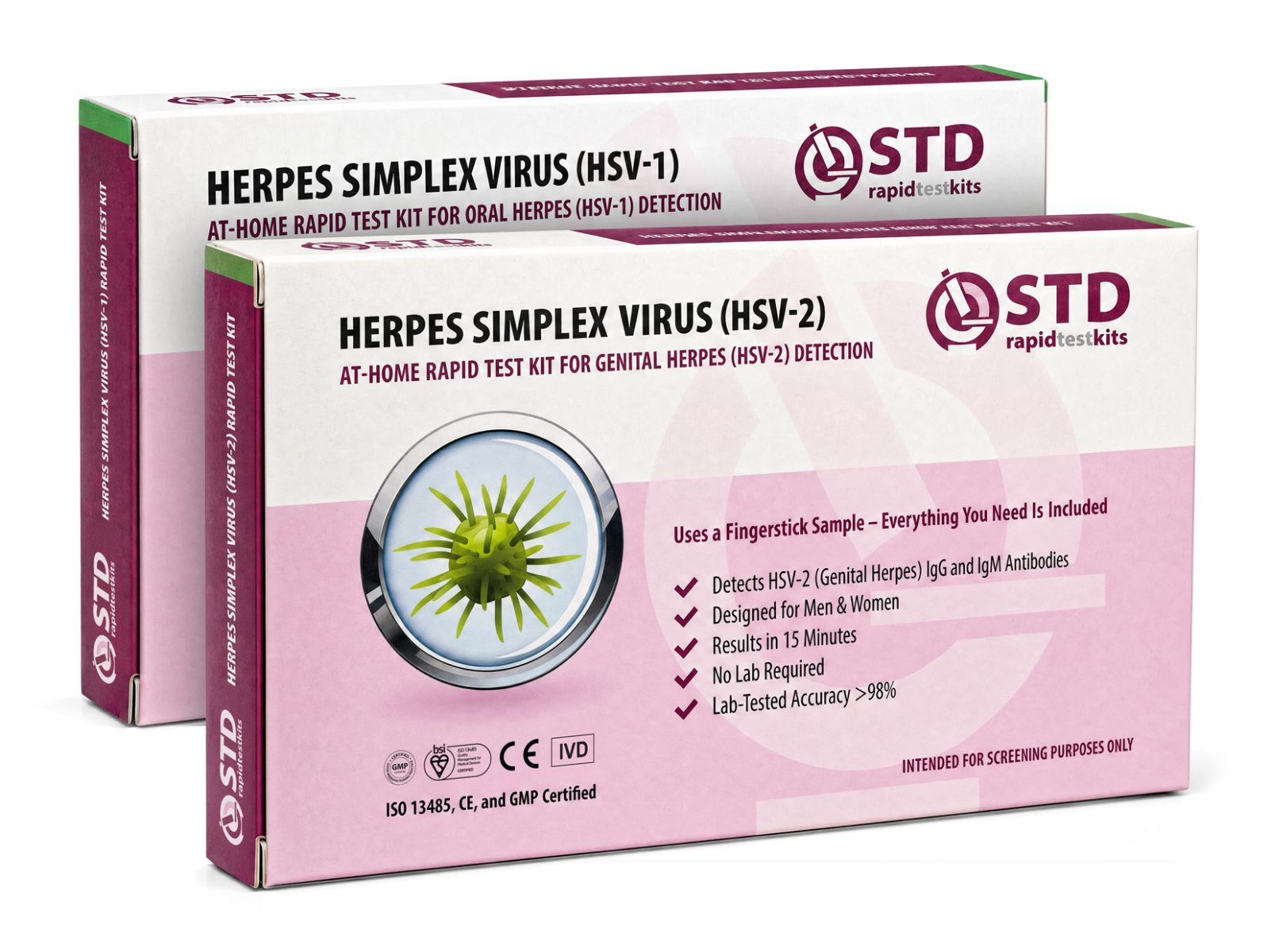
This site sells at-home rapid herpes tests; the kit recommended below is one of our own products. We highlight it because the test type matches what the section above describes (fingerstick blood antibody, useful 6-12 weeks after exposure), not because of commercial benefit.
How At-Home Herpes Testing Actually Works
At-home herpes testing fills a specific gap. Many people delay clinic visits because of stigma, scheduling, or simply not wanting to explain a vague concern to a primary care provider who is already running short on time. A test that arrives in a discreet package and takes a few drops of blood from a finger can be the difference between knowing and not knowing.
The home tests offered for herpes are lateral-flow antibody tests. A small fingerstick blood sample is applied to a test strip, and a result line appears within roughly 15 minutes. These are the same chemistry as rapid HIV antibody tests; they are screening tools, not gold-standard laboratory NAATs, and a positive result is worth confirming with a clinician for next steps and antiviral options.
Antibody tests detect your immune response rather than the virus itself, which means they cannot locate whether the infection sits in your mouth, your genitals, or both. They tell you only that your immune system has seen HSV-1, HSV-2, or both. They also need time to work. A blood test taken in the first week or two after exposure can return a false negative even when the infection has already established, and the CDC recommends waiting until at least the 12-week mark to retest when a recent exposure is the reason for testing.
If you test positive and have never had a noticeable outbreak, that is a common finding rather than a contradiction. It usually means you carry the virus but your immune system has been keeping it largely suppressed. A clinician can talk through whether daily antiviral therapy makes sense based on your symptoms and your transmission concerns.

If You Test Positive, You Are in Common Company
A positive HSV-1 result is medically routine. About two thirds of adults under 50 carry the virus globally, and many of them learn it during a casual test rather than during a dramatic outbreak. The result does not change who you are, what you can do romantically, or how long you will live. It changes the conversations you have with partners.
Three pieces of information are worth keeping handy after a positive result. First, antiviral medications such as acyclovir and valacyclovir reduce the frequency of outbreaks and the rate of asymptomatic shedding. The CDC's STI treatment guidelines note that daily suppressive therapy can meaningfully lower transmission risk, especially in serodiscordant couples (one partner has the virus, one does not). The exact reduction depends on the regimen, but it is a real and well-studied effect.
Second, condoms and dental dams reduce, but do not eliminate, the chance of passing HSV through sexual contact. Skin not covered by a condom can still shed virus. Combining barrier methods with antivirals and avoiding sex during prodromal symptoms (the tingling or itching that can precede an outbreak) is the layered approach most clinicians recommend.
Third, disclosure is the part most people dread, and it is also the part most people overestimate. Telling a new partner you carry HSV-1 is awkward in the abstract and surprisingly straightforward in practice; many people you tell already know they have it themselves. The CDC recommends discussing herpes status with sexual partners before sex so they can make informed decisions.
You Deserve Clarity, Not Confusion
Kissing is one of the most ordinary things people do, and it is also one of the most underappreciated routes for HSV-1 to move from one person to the next. The virus is too common, too often symptom-free, and too rarely tested for the standard advice (avoid kissing people who have a cold sore) to be the whole answer. Most transmissions happen when nobody saw a sore.
The honest version of safer kissing is closer to: most adults carry HSV-1, most do not know it, testing closes the uncertainty gap, and antivirals plus barrier methods reduce onward risk if you do test positive. None of that requires panic. It does require treating HSV-1 as a normal piece of adult sexual health rather than a moral failing or a relationship-ending diagnosis.
If a recent kiss or hookup has you wondering, give the antibody test the time it needs (six to twelve weeks for the most reliable result), watch for symptoms in the meantime, and seek a clinical swab quickly if a sore appears.
Next steps after a possible HSV-1 exposure
- Wait six to twelve weeks before taking a blood antibody test, since earlier negatives are not reliable.
- If a sore appears on the lip, mouth, or genitals at any point, seek a clinical swab within 48 hours of the lesion showing up.
- If you test positive, ask a clinician whether daily suppressive antiviral therapy makes sense given your outbreak frequency and partner situation.
Frequently asked questions
- Can I really get HSV-1 from a kiss with no visible cold sore?
- Yes. HSV-1 sheds intermittently from the lip and oral lining even when no sore is present, a pattern called asymptomatic viral shedding. Most HSV-1 transmissions happen this way, not during obvious outbreaks. A partner saying they have no symptoms is not the same as no risk.
- How long after a kiss should I wait to test?
- For an antibody blood test, the most reliable window is 6 to 12 weeks after the possible exposure, since the immune system needs time to build detectable antibodies. If a sore appears at any point, a clinical swab is more accurate than waiting; ideally take the swab within 48 hours of the lesion appearing.
- Is HSV-1 (oral herpes) really considered an STI?
- It depends on how it was acquired. Most HSV-1 is picked up in childhood from non-sexual contact. When it is passed between adults through kissing or oral sex, it functions as a sexually transmitted infection, and HSV-1 is now a meaningful cause of new genital herpes infections through oral sex.
- What does an HSV-1 outbreak actually look like?
- Often nothing dramatic. A single small blister at the corner of the lip, a tingling spot that fades within a day, a tender patch on the gum, or a barely noticeable bump near the lip line are all typical. Many people never recognize their first outbreak as herpes.
- If I have cold sores, can I pass herpes to a partner's genitals?
- Yes. Performing oral sex while shedding HSV-1, even without a visible cold sore, can transmit the virus to a partner's genital skin and cause genital HSV-1. Avoiding oral sex during a visible outbreak helps but does not eliminate the risk, since shedding can occur between outbreaks.
- Do I need to disclose HSV-1 to new partners?
- The CDC recommends discussing herpes status with sexual partners before sex so they can make informed decisions. The conversation is most relevant if you plan to perform oral sex. Most adults you tell already carry HSV-1 themselves, even if they have not been tested for it.
- Can antiviral medication reduce my chance of passing HSV-1?
- Daily suppressive therapy with antivirals such as valacyclovir or acyclovir reduces both the frequency of outbreaks and the rate of asymptomatic shedding. Combined with barrier methods and avoiding sex during prodromal symptoms, it meaningfully lowers transmission risk in serodiscordant couples.
- Should I test if I have had cold sores my whole life but no genital symptoms?
- A positive HSV-1 status is already implied by recurrent cold sores. A blood test can confirm and (with a type-specific test) clarify whether HSV-2 is also present. The bigger question is usually whether to start antiviral therapy or change disclosure habits, both of which are worth discussing with a clinician.
How we sourced this article: We summarized current public-health and clinical guidance from the CDC and WHO, the two authorities whose specific figures and window-period recommendations are referenced in the body. This article is editorial summary, not personal medical advice; for symptoms or testing decisions, see a licensed clinician.
- World Health Organization. Herpes simplex virus fact sheet (HSV-1 and HSV-2 prevalence, transmission, and asymptomatic shedding).
- U.S. Centers for Disease Control and Prevention. Herpes overview and detailed fact sheet on symptoms, testing, and transmission.
- U.S. Centers for Disease Control and Prevention. Sexually Transmitted Infections Treatment Guidelines: Genital Herpes (window periods, swab testing, antivirals, suppressive therapy and transmission).
- U.S. Centers for Disease Control and Prevention. Sexually Transmitted Infections Treatment Guidelines, full guideline index.
- World Health Organization. Sexually transmitted infections (STIs) overview.