Living With HIV: What Sex, Dating, and Daily Life Really Look Like
Why HIV in 2026 is a manageable condition, not a life sentence.




- On consistent antiretroviral therapy, an undetectable viral load means effectively zero risk of sexual HIV transmission. Public health bodies call this U=U (Undetectable equals Untransmittable).
- People who start HIV treatment early and stay on it can expect a life expectancy close to the general population, according to current CDC and WHO guidance.
Published: November 2025 | Last updated: May 2026 | Editorial review and quality control: Martina N.
The version of HIV most people picture still belongs to a different decade. Crisis-era headlines, wasting illness, funerals before age 40. That memory shaped how a generation thinks about four letters, and it has not kept up with the medicine.
In 2026, HIV is a chronic condition. Most people manage it with a single daily pill. With consistent treatment, someone diagnosed today can expect a lifespan close to anyone else's, can date and marry, can have children who do not inherit the virus, and can build a normal career. The documented outcome of three decades of treatment science is summarized in current guidance from the CDC, WHO, and NHS.
This article walks through the practical reality: the science behind U=U, what daily life on treatment looks like, how dating and disclosure work, and where testing fits in.
Key Takeaways
- On consistent antiretroviral therapy, an undetectable viral load means effectively zero risk of sexual HIV transmission. Public health bodies call this U=U (Undetectable equals Untransmittable).
- People who start HIV treatment early and stay on it can expect a life expectancy close to the general population, according to current CDC and WHO guidance.
Why HIV Today Doesn't Match What You Heard Growing Up
The 1980s and early 1990s shaped public memory of HIV. Without effective treatment, infection often progressed to AIDS within a decade and was frequently fatal. Headlines, public health campaigns, and lived experience built a singular image: HIV as a death sentence.
The story changed in 1996 with the introduction of combination antiretroviral therapy. The change was sharp and measurable. Mortality rates dropped year over year through the late 1990s and early 2000s. Treatment regimens that originally required handfuls of pills with strict timing eventually consolidated into single-tablet daily formulations.
Today's standard of care is one combination pill taken once a day, often with no food restrictions and with mild side effects that usually fade after a short adjustment period. The pill blocks the virus from replicating. Within months for most people who take it consistently, the virus becomes undetectable in standard blood tests. The infection is still present in the body but suppressed to a level that does not damage the immune system and does not transmit during sex.
The WHO summarizes the current position plainly: with access to effective treatment and care, HIV has become a manageable chronic health condition.
What this means in practical terms: an HIV diagnosis in 2026 does not end dating, sex, career planning, parenting, or aging. It adds a daily pill, regular lab work, and a layer of self-care to those things. The mental and social adjustment can take longer than the medical one, and the medical picture is stable for the great majority of people on treatment.
A person with HIV who takes HIV medicine as prescribed and gets and stays virally suppressed or undetectable can stay healthy and will not transmit HIV to their sex partners.
U=U: The Concept That Changed the Conversation
U=U stands for Undetectable equals Untransmittable. It is the single most important shift in modern HIV science for people thinking about sex, dating, and relationships.
The science behind U=U comes from three landmark studies: HPTN 052, PARTNER, and PARTNER2. Each tracked serodifferent couples (one partner HIV-positive, the other HIV-negative) where the positive partner maintained an undetectable viral load through antiretroviral therapy. Across thousands of couples and tens of thousands of condomless sex acts, the combined studies recorded zero linked HIV transmissions from a virally suppressed partner to a negative partner.
The CDC formally endorsed treatment as prevention on this basis and continues to affirm the U=U position. The WHO, NIH, and HIV research bodies internationally have adopted the same conclusion.
What "undetectable" means specifically: HIV viral load testing measures the number of viral RNA copies per milliliter of blood. Standard laboratory assays detect down to roughly 20 to 50 copies per mL. "Undetectable" means the count falls below that detection threshold. Most people who start ART and take it consistently reach undetectable status within three to six months of treatment.
The practical implications:
- Sex, including condomless sex, does not transmit HIV from a virally suppressed partner to an HIV-negative partner.
- Condoms remain useful for preventing other sexually transmitted infections and unwanted pregnancy.
- PrEP (pre-exposure prophylaxis) for an HIV-negative partner adds an extra layer of protection. It is not medically required when the positive partner is reliably undetectable, but many couples use both for peace of mind.
U=U depends on consistent treatment. Skipped doses allow the virus to rebound. People who stop ART, or whose adherence falls below the threshold needed for suppression, return to detectable viral loads and the associated transmission risk.
| Viral Load Status | Sexual Transmission Risk | What This Means Practically |
|---|---|---|
| Undetectable on consistent ART | Effectively zero | Cannot transmit HIV through sex (U=U) |
| Detectable, untreated or non-adherent | Variable, can be substantial | Transmission to partners is possible |
| Acute infection, first weeks after exposure | Highest of any phase | Often occurs before diagnosis and treatment begin |
What Daily Life on Treatment Looks Like
The daily routine is small. For most people, ART is one combination pill taken once a day. Side effects are usually mild after a brief adjustment window of a few weeks. Some regimens have no dietary restrictions; others should be taken with food. The specifics depend on the prescription and are something to discuss with an HIV care provider.
Regular monitoring includes blood work every three to six months, depending on how stable the viral suppression is. Two key numbers get tracked: viral load (the level of HIV in the blood) and CD4 cell count (a marker of immune function). On stable treatment, both stay in target ranges without further intervention.
Outside the pill and the lab visits, life continues without HIV-specific interruptions. Work, travel, exercise, sleep, and diet do not require special accommodation. People on stable ART do not feel HIV symptoms day to day. There is no medication-related fatigue or visible sign that would identify someone as HIV-positive to a casual observer.
The longer-term health concerns that people on ART monitor are largely the same as anyone else's: cardiovascular health, bone density, kidney function. HIV care providers often pay extra attention to these because some older ART regimens had subtle effects on these systems. Modern first-line regimens are well tolerated and have minimal long-term metabolic impact.
Can you live a normal life with HIV in 2026?
Yes. With consistent antiretroviral therapy, people living with HIV today can expect a near-normal lifespan, can have sex without transmitting the virus (U=U), and can date, marry, and have children who are HIV-negative. The daily reality is one combination pill plus routine lab check-ups every three to six months. The medical picture is stable; the social and psychological adjustment is usually the bigger story.
Dating, Disclosure, and What Conversations Actually Look Like
Disclosure is the part most people dread, and it is usually less catastrophic than the anxiety leading up to it. There is no universal script, and a few principles hold up across most situations.
Disclose before sexual contact begins. This is both an ethical baseline and, in many jurisdictions, a legal requirement related to informed consent. The exact laws vary by state and country, and several U.S. states are reforming older criminal-exposure statutes to reflect modern science, but the practical advice is consistent: a partner should know before sex.
Disclose to people who genuinely need the information. Casual acquaintances, employers, and most family members do not. Sexual partners do. Healthcare providers do. Beyond that, disclosure is a personal choice driven by trust, not obligation.
The conversation itself can be short. Most people respond well to clarity. A short, direct opener gives a partner enough to react and ask questions without dragging the moment out.
Responses vary. Some people walk away, often because they have not encountered U=U science before and need time to learn. Others ask informed questions and continue dating. A meaningful number respond well immediately, especially in younger demographics who have grown up with the U=U framing as established fact.
The pattern across long-term HIV disclosure experience: anticipation is harder than the conversation itself. People rehearse for hours, deliver in two minutes, and discover that the version in their head was worse than the real one. Relationships that continue after disclosure tend to be stronger for the honesty. Relationships that end were often heading that way regardless, and the disclosure conversation made the timing clearer.
One version that has worked for many: "I want to tell you something before we go further. I have HIV. I am on treatment and my viral load is undetectable, which means I cannot transmit it to you. I wanted you to hear it directly. Ask me anything." Short, clear, and it puts U=U in front before the partner has time to fill the gap with older assumptions.
Marriage, Children, and Long-Term Plans
Couples where one partner has HIV (serodifferent couples) now routinely have biological children with very low transmission risk to the partner or baby. The combination of U=U-level viral suppression in the positive partner, PrEP for the negative partner where appropriate, and modern prenatal care has turned what was once a high-risk pathway into standard medical practice.
Mother-to-child transmission during pregnancy or birth has dropped dramatically with the introduction of antenatal ART, monitoring, and (where indicated) cesarean delivery and infant prophylaxis. Current CDC guidance describes perinatal transmission as preventable in nearly all cases when the parent is on consistent treatment from early in pregnancy.
For couples planning a pregnancy, three pieces typically go together:
- The HIV-positive partner is on consistent ART with a documented undetectable viral load before attempting conception.
- The HIV-negative partner can take PrEP through the conception window as an extra layer of protection. This is optional when U=U is reliably maintained.
- Routine prenatal care plus HIV-specialist input handles the rest.
Marriage, long-term partnership, career planning, and retirement are not altered by HIV in practical terms beyond the daily medication and lab schedule. International travel can require some planning around medication supply and entry rules in the small number of countries that still restrict HIV-positive travelers, though those restrictions have narrowed substantially over the past 15 years.
The financial picture varies by country. In the U.S., the Ryan White HIV/AIDS Program and Medicaid cover ART for many people without other insurance options; private insurance generally treats HIV as a chronic condition with standard medication coverage. The NHS and most other public health systems cover HIV care without out-of-pocket cost.
Mental Health and the Stigma Reality
HIV treatment in 2026 is medically stable. The psychological adjustment tends to take longer. Healthcare research often underestimates how much weight internalized stigma carries day to day.
Newly diagnosed people often describe a particular pattern: a few weeks of acute distress, a year of gradual adjustment, then a settling into something close to baseline. The CDC and WHO both flag depression and anxiety as more common in people living with HIV than in the general population, even controlling for other factors. The drivers are usually social rather than biological: disclosure stress, anticipated rejection, the cumulative weight of explaining the same medical facts repeatedly.
What helps, based on the published literature and HIV care best practice:
- Peer support, in person or online. Hearing from someone who has lived with HIV for ten or twenty years and is fine often shifts the internal narrative faster than reading statistics.
- Mental health support from a provider familiar with HIV. Most major cities have therapists, social workers, and counselors with specific HIV experience.
- Routine medical care with an HIV-experienced provider, with continuity over time, rather than a generalist who treats HIV as a one-off referral.
- Time. The intensity of the first months is not the steady state.
External stigma still exists, particularly in dating apps, some casual social contexts, and (less commonly than it used to be) some healthcare settings. It has narrowed across the past two decades, especially in younger demographics raised with U=U as established fact. Stigma is still real, and it is also more manageable than most people expect before they encounter it.
For partners, family members, or friends supporting someone with HIV, the most helpful baseline is to read the U=U science directly from CDC or WHO sources, ask questions instead of assuming, and treat the person the way you would treat anyone with a manageable chronic condition.
Peer support, in person or online, often shifts the internal narrative faster than statistics do. And most major cities have therapists, social workers, and counselors with specific HIV experience, so you do not have to settle for a generalist who treats your diagnosis as a one-off referral.
Knowing Your Status: Why Testing Is the Door
Every benefit described above depends on diagnosis. Treatment cannot start until status is known, and the U=U benefit is unreachable for someone who is unknowingly HIV-positive. CDC testing recommendations include at least one HIV test for everyone aged 13 to 64 as part of routine healthcare, with more frequent testing (every three to six months) for people with ongoing exposure risk.
The main HIV testing options in 2026:
- Lab-based fourth-generation antigen-antibody test: detects HIV at roughly 18 to 45 days post-exposure. Performed at a clinic, doctor's office, or public health site.
- Rapid antibody test at a clinic: detects HIV at roughly 23 to 90 days post-exposure. Done at a clinic or pharmacy walk-in.
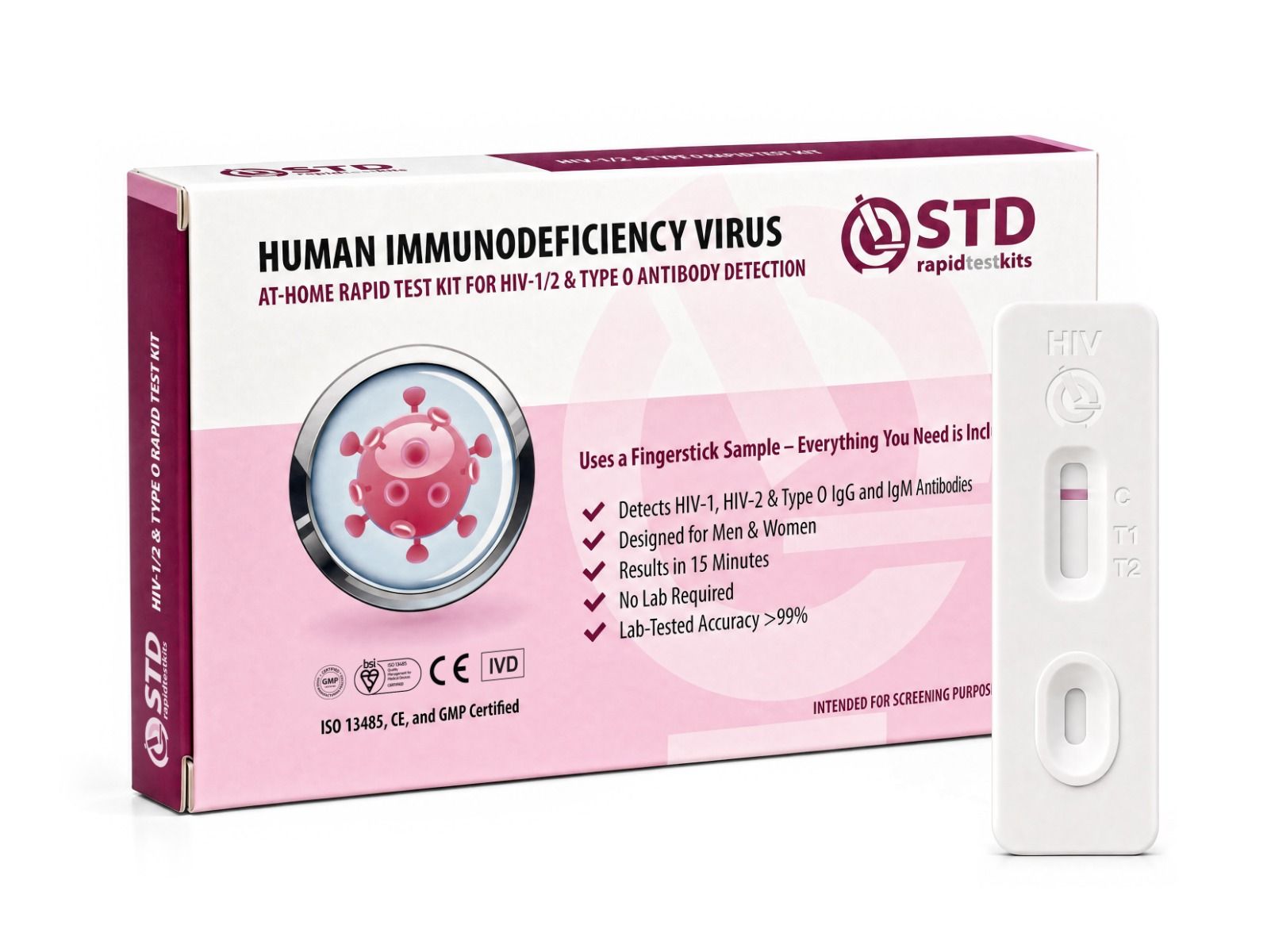
- Home-collected rapid antibody test: detects HIV at roughly 23 to 90 days post-exposure. Mail order or retail pharmacy, results in about 15 minutes from a fingerstick blood sample.
The "window period" is the time between exposure and when the test can reliably detect infection. A test taken too early can return a false negative. The standard approach when an exposure was recent is to test at the earliest reliable point for the test type, then again at the end of the window to confirm.
Home rapid tests are appropriate for routine screening, peace of mind between clinic visits, and situations where privacy or convenience matter. A clearly negative result from a properly-timed home rapid test is reliable. A positive result on a home test should always be confirmed with a clinic-administered fourth-generation test because the confirmation determines the treatment pathway and the screening test alone does not give the full picture (subtype, drug resistance, baseline labs).
Many people with ongoing exposure risk benefit from a combination panel that covers HIV alongside other common STIs (chlamydia, gonorrhea, syphilis, hepatitis B, hepatitis C, herpes). Testing for multiple infections in one go shortens the time to diagnosis for the ones most often missed: asymptomatic chlamydia and gonorrhea, for example, are usually discovered through routine screening rather than through symptoms.
Disclosure: this site sells rapid lateral-flow home tests for HIV and other STIs. The kit linked below is one of the products we sell; the editorial guidance above applies whether you order from us or pick up a kit elsewhere.
FAQs
- Can I have sex with my HIV-positive partner without a condom?
- Yes, when your partner has been on consistent antiretroviral therapy with a documented undetectable viral load. The CDC, WHO, and other major health bodies confirm that U=U (Undetectable equals Untransmittable) means effectively zero risk of sexual HIV transmission. Condoms still help prevent other STIs and unwanted pregnancy.
- How long does someone diagnosed with HIV today live?
- With early diagnosis and consistent treatment, near a normal lifespan. Current CDC and WHO surveillance data describe HIV on treatment as a manageable chronic condition compatible with a long and healthy life. Late diagnosis or interrupted treatment shortens that estimate.
- When does a partner need to know I have HIV?
- Laws vary by state and country, but the practical threshold is consistent: tell a sexual partner before any sexual contact begins. Most people find the actual conversation goes faster than the rehearsal, especially when you lead with what U=U means for their specific risk.
- Can people with HIV have biological children?
- Yes. Serodifferent couples now routinely conceive with very low transmission risk when the HIV-positive partner is virally suppressed on ART. Perinatal transmission from parent to baby is preventable in nearly all cases with proper prenatal HIV care, per current CDC guidance.
- Is kissing or sharing food a transmission risk?
- No. HIV is not transmitted through saliva, casual contact, sharing food or drinks, hugging, or living in the same household. The transmission routes are sexual fluids, blood-to-blood contact, and from parent to child during pregnancy or breastfeeding. Modern treatment further reduces those risks substantially.
- What does “undetectable” mean on a lab report?
- Most assays set their detection limit at 20 to 50 copies per mL of blood. Below that threshold, the lab returns an undetectable result. For U=U purposes, that means the viral level is too low to transmit sexually. The virus is suppressed, not eliminated from the body.
- How often should I get tested for HIV?
- At minimum, once in your lifetime: the CDC recommends everyone aged 13 to 64 test at least once. Annually if you are sexually active with new or occasional partners. Every three to six months if you have multiple partners, a partner of unknown status, or use injection drugs. Your HIV care provider can calibrate based on your specific exposure patterns.
- Can I rely on an at-home rapid HIV test on its own?
- Home rapid tests are appropriate for routine screening when used inside their window period. A clearly negative result from a properly-timed home test is reliable. A positive result on a home test always needs clinic confirmation with a fourth-generation test before starting treatment, because confirmation determines the full treatment pathway.
Product: STD-7KIT-ATH-2024
How we sourced this article: This guide is built from current public-health guidance from the CDC, WHO, and NHS, alongside the peer-reviewed evidence underpinning the U=U position (HPTN 052, PARTNER, and PARTNER2 studies). Statements about treatment cadence, viral load thresholds, and testing windows are drawn from the current versions of those agencies' published recommendations. Where guidance varies between sources, we deferred to the most recent CDC or WHO position. This article is editorial, not clinical advice; for individual diagnosis or treatment decisions, see a licensed provider.
- U.S. Centers for Disease Control and Prevention. Main HIV information portal, including treatment, testing, and prevention resources.
- U.S. Centers for Disease Control and Prevention. HIV treatment as prevention guidance, formal endorsement of viral suppression as preventing sexual transmission (the U=U position).
- U.S. Centers for Disease Control and Prevention. HIV testing recommendations, including routine testing for adults aged 13 to 64 and more frequent testing for ongoing exposure risk.
- World Health Organization. HIV/AIDS fact sheet describing HIV as a manageable chronic condition with effective treatment and global epidemiology.
- National Health Service (UK). HIV and AIDS condition overview, describing treatment goals, viral suppression timelines, and life on antiretroviral therapy.