HIV in the Bible Belt: Why the South Is Losing the Sexual Health Fight
Why the South sees more than half of new U.S. HIV diagnoses




- The U.S. South accounts for over half of new HIV diagnoses, and eight of the top ten state-level diagnosis rates are in Southern states, per KFF 2024 data.
- At-home rapid HIV tests use a fingerstick blood drop or oral fluid swab and return a result in about 20 minutes; the antibody window period runs roughly 23 to 90 days post-exposure (CDC HIV testing).
Published: August 2025 | Last updated: May 2026 | Editorial review and quality control: Martina N.
The American South now accounts for more than half of all new HIV diagnoses in the United States, even though it holds roughly 38% of the country's population. That gap is widest in places like Georgia, where rural counties along the I-20 corridor and parts of metro Atlanta together drive a state-level diagnosis rate that sits among the top five in the nation. Behind the numbers is a layered problem: stigma rooted in faith communities, a healthcare system that never expanded to reach low-income adults, and a testing infrastructure that asks people to walk into a clinic where the receptionist may know their family.
For many readers, the most useful question is the simplest one. Can you find out your status without that walk into the clinic? Yes, and the testing-window math is more forgiving than most people assume. This piece walks through what the surveillance data actually says, why the South's HIV trajectory diverged from the rest of the country, and where at-home rapid testing fits in for people who have been putting it off. The goal isn't to scare anyone into testing. It is to give readers enough specific information to make a calm decision about when to test, what kind of test to use, and what to do with the result.
Why HIV still has a stronghold in the U.S. South
The South wasn't always the epicenter. Through the 1980s and most of the 1990s, the HIV story in the United States was concentrated in coastal urban hubs such as San Francisco, New York, and Los Angeles, where activist networks pushed access to testing and early antiretrovirals into wider use. The South lagged that wave on every front: less harm-reduction infrastructure, fewer specialized clinics, less openness about sex and sexuality, and far less local funding for prevention. By the time effective antiretroviral therapy turned HIV into a manageable chronic condition for people with access to care, the South had already accumulated a structural deficit that it has never closed.
The numbers reflect that history. The Kaiser Family Foundation's 2024 fact sheet notes that the Southern region accounted for over half of new HIV diagnoses, and that eight of the top ten states for diagnosis rates were Southern. Georgia, Mississippi, Florida, Louisiana, and Alabama appear repeatedly at the top of that list. Within Georgia, metro Atlanta carries a disproportionate share of new cases, but several rural counties show some of the highest per-capita rates anywhere in the country.
Geography only explains part of it. The harder driver is the way structural barriers stack. A state that didn't expand Medicaid leaves roughly half a million low-income adults without coverage, including many of the people who would most benefit from preventive screening. Rural hospital closures (Georgia has lost more than a dozen rural facilities since 2010) thin out the network of providers who can do confidential testing. Public-health departments operate on shoestring budgets in counties where everyone knows everyone, and a visit to the local health department can itself feel like a public event. Each of these barriers compounds the others.
The disparity also runs sharply along racial lines. KFF reports that Black Americans make up roughly 12% of the U.S. population but account for about 40% of people living with HIV and approximately 43% of HIV-related deaths in 2022. Black women alone made up about half of new HIV diagnoses among women that year. Those figures don't reflect anything about behavior; they reflect who has access to healthcare, who has been historically excluded from clinical trials and outreach, and where the prevention dollars have been spent over the last four decades.

What is actually behind the numbers
It is tempting to read "the South has a higher HIV rate" as a behavioral story. The evidence doesn't support that reading. Rates of unprotected sex, partner numbers, and other behavioral metrics don't differ dramatically between Southern and Northeastern populations. What differs is the prevention infrastructure that sits behind those behaviors.
Three concrete examples make the gap visible. First, PrEP (pre-exposure prophylaxis), the daily pill or quarterly injection that reduces HIV acquisition risk substantially when taken as prescribed, reaches only a fraction of the people who could benefit from it, with uptake in many Southern states sitting well below the national average per CDC surveillance data. The medication is the same everywhere; the prescribers who counsel and follow patients on it are far thinner on the ground in the South.
Second, routine opt-out HIV testing (the practice of including an HIV test in standard primary care unless the patient declines) is unevenly implemented. CDC has recommended this approach for everyone aged 13 to 64 since 2006, but Southern primary-care networks have been slower to fold it into their workflow. Many patients leave a routine annual checkup without ever being offered a test.
Third, the social cost of being seen at a testing site is far higher in places where social networks are tight and church-based. In a county where the public health clinic occupies the same building as the courthouse, walking through that door can tell the rest of the county exactly why you are there. Patient-navigator programs across the Southeast consistently report that fear of being recognized is among the top three reasons people give for skipping a test they otherwise want to take.
None of this is unique to HIV. The same access gaps drive higher rates of syphilis, gonorrhea, and chlamydia across the South. HIV gets more public attention because the lifetime cost of late diagnosis is so much higher, both clinically and emotionally, for the person diagnosed.
Why does the U.S. South still see so much HIV?
The Southern region accounts for over half of new HIV diagnoses while holding about 38% of the U.S. population. The gap is driven by structural factors: lower Medicaid expansion (Georgia is one of ten non-expansion states), thinner PrEP prescriber networks, rural hospital closures, and high social cost of being seen at a public testing site. Behavior rates don't differ meaningfully from other regions; access does. At-home testing and tele-PrEP are two practical workarounds available to individual readers right now.
How at-home HIV testing reaches people the clinic system misses
The biggest single barrier to testing in the South is not cost. It is the social act of walking through the door. For people whose Sunday morning church functions as the center of their social life, the chance that the receptionist might be a fellow congregant is enough to keep a test in the maybe pile for months or years. Rural patient-navigator programs across the Southeast routinely document this pattern. People will drive 60 to 90 minutes to test outside their home county, and many simply give up rather than take the trip.
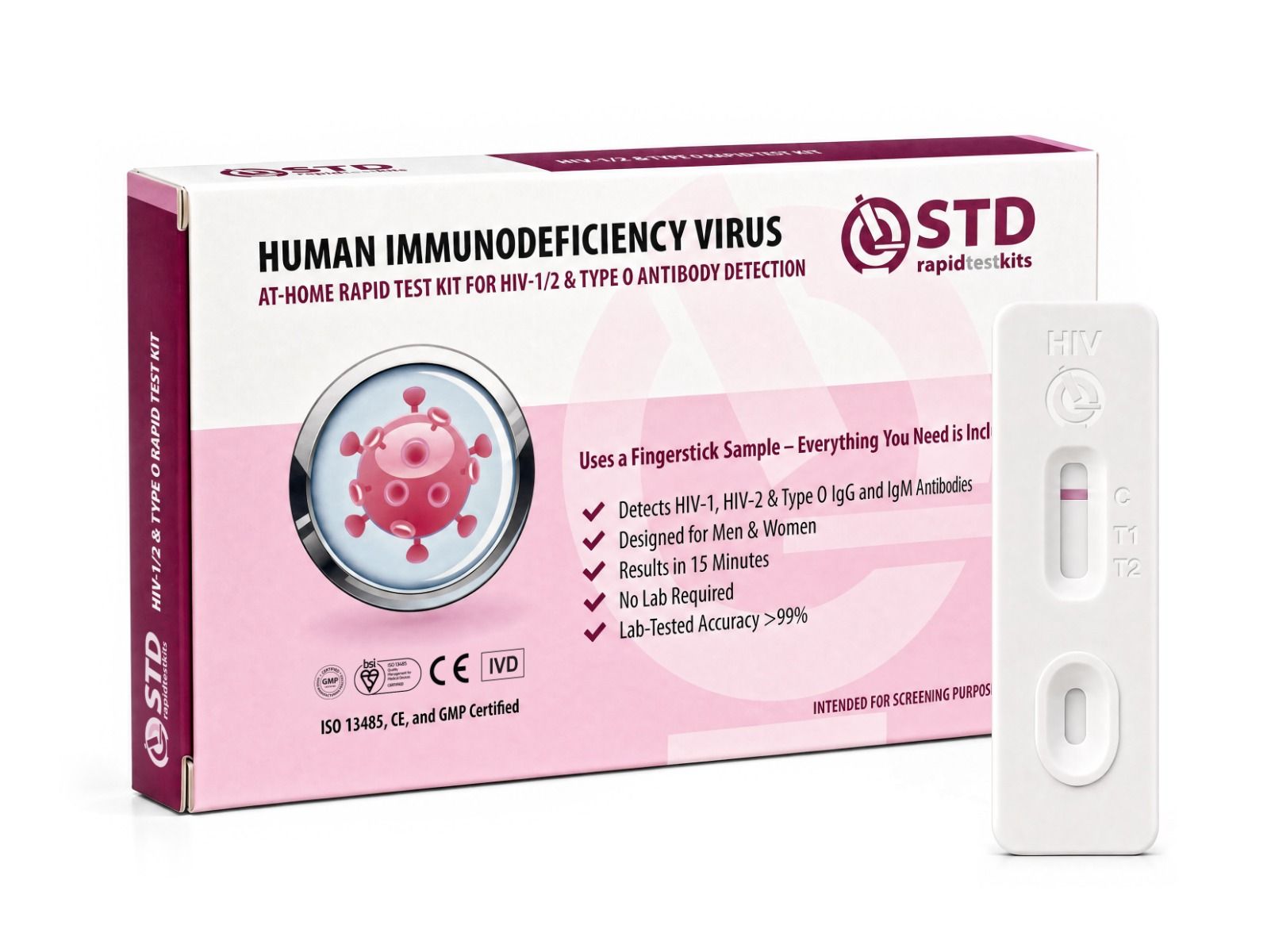
That is the gap at-home testing was designed to close. A rapid lateral-flow HIV test arrives in unmarked packaging, takes a fingerstick blood sample (or an oral fluid swab, depending on the kit type), and returns a result in roughly 15 to 20 minutes. There is no receptionist, no waiting room, and no chart entry that ends up in a regional health record. For someone who has been quietly worried for months, the privacy is what makes testing finally happen.
What at-home testing is good at: routine screening, periodic recheck after a known exposure that sits outside the early window, and breaking the inertia of the very first test for someone who has avoided clinical settings. What it isn't designed to do: replace lab-grade NAAT (nucleic acid testing) for early-window confirmation, replace a clinic visit after a positive result, or substitute for the linkage-to-care that a positive result actually requires.
Used inside that scope, a home rapid test is a legitimate first-line screen. FDA-cleared at-home antibody-based rapid HIV tests typically report sensitivity and specificity in the high 90s when used after the appropriate window period, in line with the figures published on the HIV rapid test product page. A positive result on an at-home test is always confirmed in a lab, and that confirmation is essentially universal in the workflow that follows. A negative result inside the window period gets a follow-up test once the window has closed.
When a rapid HIV test gives a reliable result
The single most common cause of false reassurance with HIV testing is testing too early after a possible exposure. HIV antibodies, the thing most rapid tests detect, take time to develop after infection. The CDC's testing guidance puts the antibody-test window at roughly 23 to 90 days, with rapid antigen/antibody tests detecting most infections within 18 to 90 days. Lab-based nucleic acid testing (NAAT) can detect HIV as early as 10 to 33 days after exposure but is not a home-test format.
What this means in practice: if you are testing more than 12 weeks (about 90 days) after a possible exposure, an antibody-based rapid test (the kind sold for home use) will detect HIV in almost all cases. If you are testing inside that window, a negative result needs a follow-up test once 90 days has passed. CDC's guidance specifically advises retesting after the applicable window for anyone whose first test was inside the detection window.
The other reliability variable is user error. Home tests are designed to be straightforward, but the most common preventable errors are these: too small a blood drop on a fingerstick test, reading the result before or well after the timing window printed on the instructions, and skipping the buffer-solution step on tests that require it. Following the instructions step-by-step (and checking the kit's expiration date before opening) is what holds the published accuracy figures.
For people testing in the South where lab access is patchy, a home rapid test followed by a confirmatory lab test (after a positive home result) is a workable two-step pathway. Most state public health departments and community-based organizations will help with the confirmation step at no cost. The point of the first test is to start the conversation, not to be the final word.
CDC recommends that everyone ages 13 to 64 get tested for HIV at least once as part of routine health care. People with higher-risk exposures may benefit from testing every 3 to 6 months.
Faith, silence, and the cost of stigma
It is reductive to blame Southern Baptist culture for the region's HIV trajectory, and that framing ignores the role of Black churches in some of the most effective HIV outreach in the country. Faith communities can be either the most effective HIV-prevention channel in a community or the most effective barrier, depending on how they choose to engage with the topic.
Where faith communities have leaned in, the results are striking. Black churches in metro Atlanta, in coordination with CDC's national HIV initiatives and several Atlanta-based community organizations, have hosted testing events, trained pastoral staff on stigma-reducing language, and integrated HIV messaging into routine wellness programming. The community-organizing literature has documented measurable testing-rate gains in congregations that took this approach.
Where faith communities have stayed silent, the cost falls disproportionately on people who never feel safe naming their concerns. Public-health researchers studying religion and HIV in the South consistently document that congregants describe a culture in which abstinence and sin are discussed openly but HIV, sex outside marriage, and same-sex behavior are not. Staying silent about these topics doesn't protect congregants; it leaves them without the information they need to make testing feel like a baseline health choice rather than an admission of failure.
For an individual reader navigating this, the practical takeaway is twofold. First, your church or congregation is not your medical record. Whatever a community organization or local clinic learns about you stays in that workflow, governed by health-privacy law. Second, the existence of at-home testing means the social cost of getting a baseline result no longer requires you to make a public decision. You can know your status quietly and decide later whom (if anyone) to tell.

The policy backdrop in Georgia and the wider South
The state-level policy environment matters more than most readers realize. Georgia is one of ten U.S. states that has declined to expand Medicaid under the Affordable Care Act, leaving roughly 400,000 to 500,000 low-income adults without insurance. A substantial share of those uninsured adults overlap with the populations most at risk for HIV: low-wage workers in service industries, people experiencing housing instability, and young adults aging off parental insurance.
Beyond Medicaid, the state's HIV criminalization laws are unusually broad. Georgia is one of roughly 30 states with statutes that explicitly criminalize non-disclosure of HIV status in certain sexual encounters. Public-health experts have consistently noted that these laws discourage rather than encourage testing. Someone who doesn't know their status cannot be prosecuted under these statutes, so the law inadvertently makes ignorance a legal defense. CDC, the National Academies, and the Department of Justice's civil rights division have all recommended modernizing or repealing these statutes for that reason.
Funding for prevention is the third pillar. The federal Ending the HIV Epidemic in the U.S. initiative, launched in 2019, prioritized funding for the highest-burden counties and several Southern states, per CDC's HIV program. That funding has been meaningful in some metro counties but has often struggled to reach rural areas where need per capita is highest and provider capacity is lowest.
None of these policy levers are in an individual reader's control. The reason to understand them is that they explain why personal-level prevention (PrEP, condoms, regular testing) matters so much more in the South than in regions with denser public-health infrastructure.
A positive result on a home test requires lab confirmation, but it is not a medical emergency. Same-day priorities: contact a community-based organization or your state health department for a free confirmatory test, and ask about linkage-to-care services. Modern antiretroviral therapy, started early, brings most people to an undetectable viral load within a few months. Undetectable status means HIV cannot be transmitted sexually, the principle known as U=U (Undetectable = Untransmittable). Treatment today is a daily pill regimen with minimal side effects for most patients.
What to do if you have been putting off testing
For most readers, the most useful next step is the simplest one: order a test, take it in private, and find out where you stand. The mental load of "I should probably test someday" is heavier than the test itself.
A reasonable starting point depends on what you are worried about. If a specific exposure happened more than 12 weeks ago, a single antibody-based rapid HIV test gives a near-definitive answer. If the exposure was inside the window, plan for a baseline test now (which rules out older exposures) and a follow-up test once 90 days have passed. If the exposure involved a partner whose status is unknown and you are worried about a wider exposure profile, a multi-test panel that covers HIV alongside syphilis, hepatitis B, hepatitis C, chlamydia, and gonorrhea will give you a fuller picture in one session.
If a result comes back positive, the same-day priorities are practical and finite. Don't panic, get a lab confirmation test through a community-based organization or your state health department (often free), and ask about linkage-to-care services. Modern antiretroviral therapy, started early after diagnosis, brings most people to an undetectable viral load within a few months. Today, an HIV-positive diagnosis is a manageable chronic condition for people who stay connected to care.
If a result comes back negative, the most useful follow-up depends on your risk profile. CDC recommends annual HIV testing for sexually active gay and bisexual men and people with other ongoing risk factors, with retesting every three to six months for people in higher-risk situations. For everyone else with occasional risk, annual testing is enough. The combination of one at-home rapid HIV test plus an annual broader STI screen covers most adult readers' baseline needs without requiring any in-person clinic visit at all.
FAQs
- Is HIV still common in Georgia and the wider U.S. South?
- Yes. The Southern region carries a disproportionate HIV burden: roughly 38% of the U.S. population, but more than half of new diagnoses in 2022. Georgia ranks in the top five states by diagnosis rate, with both Atlanta metro and several rural counties driving that figure per KFF's 2024 surveillance data.
- Are at-home HIV rapid tests as accurate as a clinic test?
- For screening after the 90-day window period, yes. At-home lateral-flow antibody tests meet FDA clearance standards, with published sensitivity and specificity in the high 90s. The meaningful difference from a clinic test is technology, not reliability at the same time point: labs use NAAT (higher early-window sensitivity); home kits use lateral-flow strips (reliable after 90 days). Confirm any positive with a lab test.
- How long after exposure should I wait before testing?
- The safe answer for an at-home antibody test is 90 days (about 12 weeks). Testing from day 23 onward is possible, but a negative result inside the window needs a follow-up test once day 90 has passed. If you need a result sooner, a lab NAAT can detect HIV as early as 10 to 33 days, though that requires a clinic or lab visit.
- What is the difference between an antibody test and a NAAT?
- Antibody tests look for the immune response to HIV and are what most rapid and at-home tests use. NAAT (nucleic acid testing) looks directly for the virus and can detect HIV as early as 10 to 33 days after exposure, but it is a lab procedure, not a home-test format.
- Will my insurance or pharmacy benefits be billed if I order an at-home HIV test?
- Most direct-to-consumer at-home HIV test purchases are not billed to insurance. They are paid out of pocket and shipped in unmarked packaging. Insurance is involved only if you choose to use it for a clinic confirmation or for ongoing care.
- Does PrEP make HIV testing unnecessary?
- No. PrEP significantly reduces HIV acquisition risk but does not eliminate it, and prescribers require HIV testing at PrEP initiation and roughly every three months to confirm the user remains HIV-negative. PrEP and routine testing work together.
- Can I test for other STIs from home too?
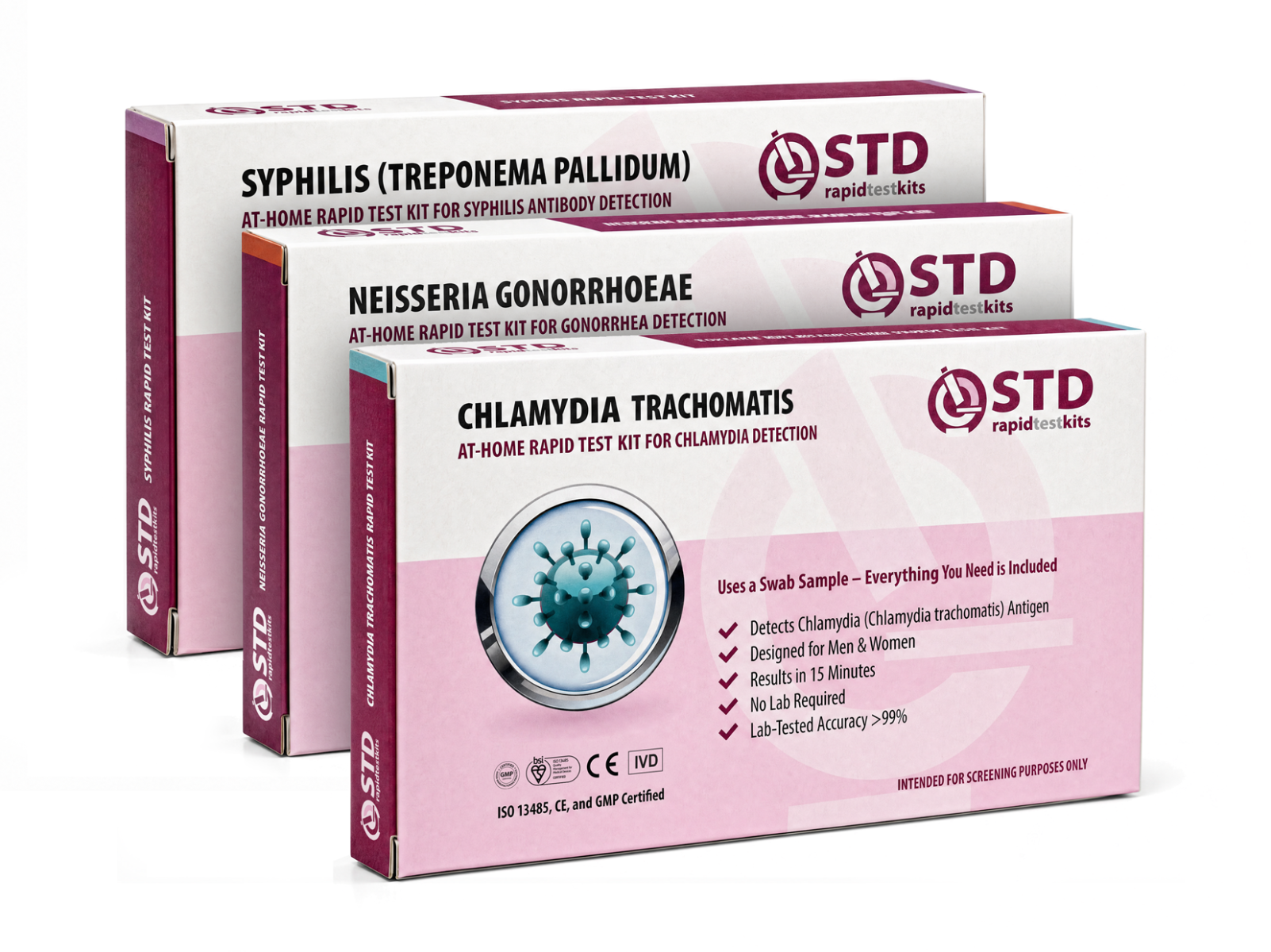
- Yes. Self-collected swab tests for chlamydia and gonorrhea, fingerstick blood tests for syphilis and hepatitis, and combination kits that cover multiple infections in one session are all widely available. A combination panel is often more useful than an HIV-only test if your exposure history is broader.
- Is HIV still a death sentence in 2026?
- No. With early diagnosis and consistent antiretroviral therapy, most people with HIV reach undetectable viral load within a few months and live a full lifespan. Undetectable status means the virus cannot be transmitted sexually (U=U). The clinical picture today is very different from the early epidemic.
- Kaiser Family Foundation. The HIV/AIDS Epidemic in the United States: The Basics. Fact sheet covering U.S. demographics, regional breakdown, and 2022 surveillance data (over half of new diagnoses in the South; eight of top ten state diagnosis rates in Southern states; Black Americans roughly 12% of population, 40% of those living with HIV).
- U.S. Centers for Disease Control and Prevention. HIV Testing. Source for testing-window periods (antibody 23 to 90 days, rapid antigen/antibody 18 to 90 days, NAAT 10 to 33 days) and frequency recommendations (everyone 13 to 64 once; annual or 3 to 6 months for higher-risk groups).
- U.S. Centers for Disease Control and Prevention. Pre-Exposure Prophylaxis (PrEP). Source for PrEP definition, eligibility, and prescriber-side context referenced in the prevention-infrastructure section.
- U.S. Centers for Disease Control and Prevention. HIV (program landing). Topic hub covering transmission, prevention, treatment, and the Ending the HIV Epidemic initiative referenced in the policy section.
- AIDSVu. National and state-level HIV surveillance data and interactive maps maintained by Emory University's Rollins School of Public Health in partnership with Gilead Sciences. Referenced for state-level rate comparisons within the South.