
Published: November 2025 | Last updated: May 2026 | Editorial review and quality control: Martina N.
The moment a clinic call confirms an STD diagnosis is hard enough on its own. The moment you realize a partner already knew, that's a different kind of shock. You're handling a treatable infection and a broken trust at the same time, and the second one tends to outlast the first.
This guide walks through the parts that actually matter when you find out a partner hid an STD: how to get the right testing for what you were actually exposed to, the legal picture in plain English, the conversation (or no-conversation) options if you decide to confront them, and the recovery roadmap that includes your nervous system, not just your bloodstream. You don't have to do everything in this article, and you don't have to do it in any particular order. Pick the section that maps to where you are right now.
Key Takeaways
- If you suspect a partner hid an STD, your first move is a complete screen for the specific infections you may have been exposed to. Window periods vary by infection, so a single test moment rarely covers everything.
- Legal options exist in many jurisdictions but are narrower than people expect and depend heavily on what your partner knew, when they knew it, and what you can document. Talk to a lawyer who handles sexual-health law before deciding.
When “He Knew” Stops Being Just a Heartbreak
Most relationship pain is private. This isn't. When a partner knew about an STD and chose not to tell you, you're now in three overlapping situations at once: a medical situation that needs testing and treatment, a relational situation that needs decisions, and, depending on where you live and what was hidden, a potential legal situation as well.
The medical part is the most solvable. Almost every common sexually transmitted infection is either curable with antibiotics (chlamydia, gonorrhea, syphilis, trichomoniasis) or manageable with antivirals or monitoring (herpes, HIV, hepatitis B, hepatitis C, HPV). The CDC's STI overview notes that most STIs respond well to treatment when caught early; the harder problem is detection, because many STIs don't cause obvious symptoms in their early stages.
The relational and legal parts are slower. They often outlast the infection itself, and the rest of this article spends most of its time there because the medical side is largely a matter of getting tested and following the treatment plan.
Per the CDC, chlamydia, gonorrhea, syphilis, and trichomoniasis are curable with antibiotics. Herpes, HIV, hepatitis B, hepatitis C, and HPV are manageable with antivirals, monitoring, or in some cases immune-mediated clearance. The medical side of this is solvable; the harder work is detection (window periods) and the rest of life around it.
What “Knowingly Transmitting” Actually Means
A useful distinction up front: there's a difference between a partner who didn't know they had an STD and a partner who knew and didn't tell you. The first is unfortunate but extremely common, because many STIs are asymptomatic. The second is the situation this article is about.
The CDC and NHS both note that a large share of chlamydia and gonorrhea cases produce no symptoms, especially in their early weeks. Many people genuinely don't know they're carrying something. That's why partner notification, where a clinic helps newly diagnosed people contact past partners, exists as a public-health program; the assumption is that disclosure won't happen on its own without support.
Knowing means more than "a vague feeling something was off." Concretely, it means one of:
- A positive test result they received but didn't tell you about.
- A previous diagnosis (especially for incurable infections like herpes, HIV, or HPV) that they hid before sex.
- Active symptoms (a visible sore, a rash, dysuria) that they ignored or concealed.
- A recent exposure event they had reason to think put them at risk and didn't disclose.
The infections that come up most often in this scenario are:
- Chlamydia and gonorrhea: very high asymptomatic rates, treatable with antibiotics.
- Herpes (HSV-1 and HSV-2): lifelong infection with outbreak-free periods, often hidden because of stigma.
- Syphilis: rising rapidly in the U.S. and treatable, but with a confusing multi-stage presentation that can make denial easier.
- HIV: the most legally fraught, because many jurisdictions have specific laws about nondisclosure.
- HPV: extremely common, often cleared by the immune system, but high-risk strains have cancer implications that justify disclosure.

The Emotional Aftermath Is a Health Issue Too
Discovering that a partner hid an STD diagnosis produces a specific kind of distress that doesn't map neatly onto either grief or anger alone. Researchers studying disclosure and trust in sexual relationships consistently describe it as a compound injury: the physical infection, plus the violation of consent, plus the loss of the relationship you thought you were in.
Common patterns clinicians and counselors describe include:
- Shock and disbelief. The familiar partner you knew now sits next to a version of them who chose to put you at risk. Both feel real at once.
- Misplaced shame. Even though you didn't cause this, the stigma of an STD can land hard. Stigma is not the same as fault.
- Anger that doesn't fully discharge. Anger at the partner, sometimes at yourself for not seeing the signs, sometimes at the broader silence around STDs that made it possible.
- Hypervigilance about future intimacy. Trust gets recalibrated globally, not just for this person.
- Mood and sleep changes. If those persist beyond a few weeks, a therapist who works with sexual trauma is the right call, not a self-managed problem.
If any of these patterns are running your day, please treat them as a health issue, not a character flaw. A short course of therapy with someone trained in betrayal trauma or sexual-health counseling can address the parts antibiotics and antivirals can't.
If the situation involves any form of intimate-partner violence or coercion, call the U.S. National Domestic Violence Hotline at 1-800-799-7233 (or your country's equivalent service) before initiating contact with the partner. For acute mood or self-harm thoughts, the U.S. 988 Suicide and Crisis Lifeline is available 24/7.
Why Some People Hide an STD Diagnosis
Understanding the patterns isn't the same as excusing them. The point is to take the question "why didn't they tell me?" out of the 2 AM loop it tends to live in. People who hide STD status tend to fit a few overlapping patterns, none of which justify it:
- Stigma-driven fear. They expect rejection or judgment and choose silence over the harder conversation. This is the single most common driver and the one disclosure counselors hear most often.
- Denial. Especially with intermittent conditions like herpes, some people convince themselves a long outbreak-free stretch means they're "basically negative." Asymptomatic shedding doesn't agree.
- Misinformation. A surprising number of people believe (incorrectly) that with no current symptoms there's no transmission risk. This is wrong for HSV, HPV, HIV, and several others.
- Manipulation. A smaller but real subset use silence as a form of control: not disclosing in order to keep a partner from leaving or to deny that the relationship involves sexual risk at all.
Stigma and misinformation are the patterns that public-health programs try to chip away at by normalising routine STI screening. Manipulation and denial are about the individual person, and there's not much you can do to engineer either of those away in someone else.
Get Tested Properly: What to Screen For and When
If you've been with a partner who hid an STD, you don't actually know what they hid. So the testing strategy isn't just "the one they admitted to," it's a full panel matched to the kind of sex you had and how long ago.
A few principles from CDC STI Treatment Guidelines and NHS sexual-health services:
- Don't rely on a single test moment. Different STDs have different window periods (the time between exposure and when a test reliably picks them up). Chlamydia and gonorrhea are testable within a week or two. HIV antibody tests are usually reliable by 3 months. Syphilis can take 3 to 6 weeks for a reactive RPR.
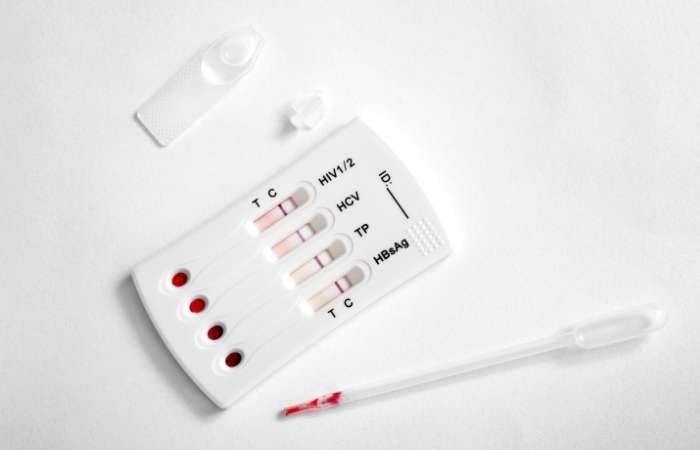
- Screen the full panel matched to the exposure. Vaginal/penile sex calls for a chlamydia and gonorrhea swab plus a syphilis, HIV, hepatitis B, hepatitis C, and herpes blood panel. Receptive oral or anal sex calls for additional throat or rectal swabs from a clinic, since our at-home kits don't cover throat or rectal samples.
- Re-test at the right milestones. If your first test was inside any infection's window, repeat at the post-window mark. CDC and NHS both publish window-period charts for each infection.
- Document everything. If there's any chance of legal action later, dated lab results are part of the record. Keep your clinic paperwork, screenshots of test confirmations, and the timeline of your symptoms in one place.
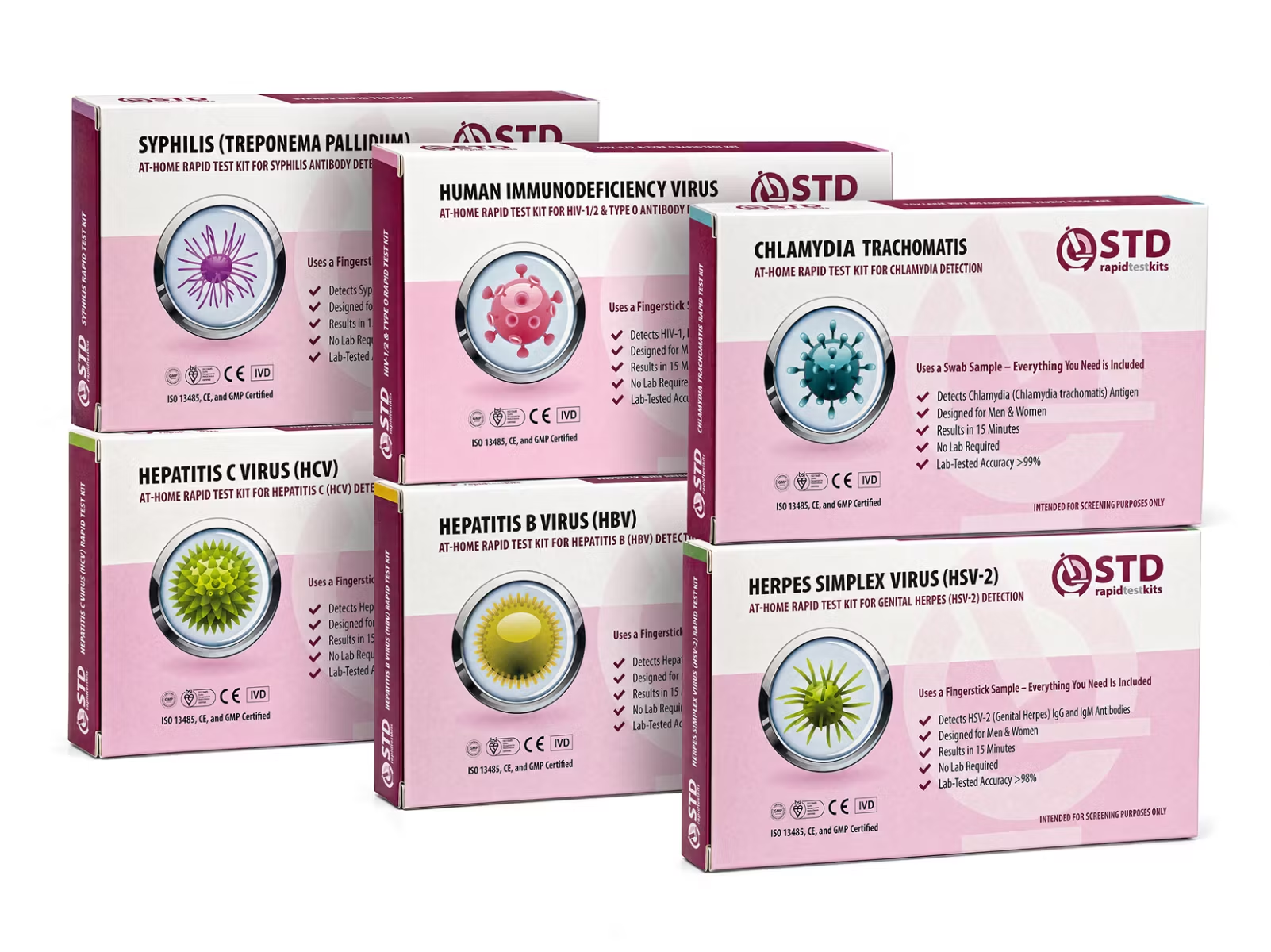
For the at-home portion of the screen, our Chlamydia, Gonorrhea, Syphilis combo kit covers the three most common bacterial infections in one package. For broader coverage, the 6-in-1 or 8-in-1 multi-STD kits sweep across the bacterial plus blood-borne panel in a single discreet shipment. Throat and rectal swabs, urine NAATs, and lab confirmatory testing all happen at a clinic and complement at-home screening rather than competing with it.
A practical phrasing for the clinic call: "I had unprotected vaginal sex about three weeks ago. I just found out my partner had a positive result and didn't tell me. I'd like a full STI panel." That short script gets you the right test set without a long explanation.

Can You Sue Someone Who Gave You an STD? The Legal Reality
The short answer: sometimes yes, often it's more complicated than a movie would suggest, and the answer depends entirely on where you live and what you can prove. The information below is general background, not legal advice; if you're seriously considering action, talk to a lawyer who works in sexual-health or personal-injury law in your jurisdiction.
Across U.S. states and many other countries, legal exposure for knowingly transmitting an STD generally lives in one of three lanes:
- Criminal transmission laws. Many U.S. states have specific HIV nondisclosure laws on the books, and a growing number cover other STIs as well, often as misdemeanors. Laws vary widely between states, and several have been revised in recent years to better reflect current science about transmission risk; a local attorney can tell you exactly what applies in your jurisdiction.
- Civil negligence or recklessness. Even where no specific criminal statute applies, civil court is sometimes an option. The general theory is that someone who knew they had an infectious disease and failed to disclose breached a duty of care. Damages can include medical costs, lost wages, and emotional distress.
- Intentional infliction of emotional distress. A separate civil claim that focuses on the psychological harm of the deception itself. Harder to win, but it exists.
What plaintiffs generally need to show, in plain terms:
- The defendant knew (or should have known) they were infected at the time of the relevant sexual contact.
- They didn't disclose, and you didn't consent to the risk.
- You contracted the infection from them (often the trickiest part to prove, especially if you've had multiple partners).
- You suffered measurable harm.
Documentation makes or breaks these cases. Lab results with dates, text messages or emails where they reference their status, medical records, and a clear sexual-history timeline all matter. If they discussed their diagnosis with a friend (or, as in some cases, in messaging apps a partner later saw), that record matters too.
The HIV criminalization debate is worth knowing about even if your situation isn't HIV. Many public-health organizations argue that broad criminal-transmission laws can discourage testing, because knowing your status creates legal exposure that not knowing doesn't, which is one reason some states have been narrowing those laws. Civil remedies tend to be more flexible and more focused on the specific harm done to you.
Practical starting points if you want to explore legal options: a free consultation with a personal-injury or sexual-health attorney, the state bar association's lawyer referral service, or a sexual-violence legal-aid organization in your region.
How to Approach the Conversation (Safely)
If you decide to confront the person who hid the diagnosis, structure matters as much as content. Some ground rules:
- Safety first. If there's any history of physical violence, control, or threats, do not do this alone or in person. Use written communication and consider involving a domestic-violence advocate.
- Be clear about your goal. Are you seeking an explanation? An apology? Information for partner notification? Setting up a legal case? Each goal benefits from a different conversation.
- Stick to facts. "I tested positive for X on this date. I have reason to believe you knew. I need to understand what happened." Short, specific, leaves room for the other person to respond.
- Document the conversation. Where local law allows, recording a phone call or saving the text/email thread can matter later. Even a contemporaneous written note about what was said and when has evidentiary value.
- Use a buffer. A therapist, a clinic counselor, or a trusted friend in the room can change the dynamics. So can a written letter you write but don't send, if what you actually need is to put words on the experience.
If you decide not to confront them, that's a complete answer too. You don't owe anyone the conversation, especially someone who already withheld a conversation they owed you.
This site sells at-home STD testing kits. The product recommendations in this article are placed where they actually fit the reader's situation, not as a general pitch. The legal and emotional sections are independent of any product mention.
Rebuilding Your Physical and Emotional Health
Recovery from this kind of betrayal isn't a clean three-step process. It tends to move in layers: physical first, then practical, then emotional, then relational. A rough roadmap that works for most people:
- Physical (weeks 1 to 6). Finish any antibiotic course, complete confirmatory testing at the appropriate window-period marks, and re-test if your first round was inside the window. If you're on antiviral therapy for HSV or HIV, talk to your provider about ongoing management.
- Practical (weeks 2 to 8). Address the relational and logistical fallout: do you stay, leave, separate finances, notify other potentially exposed partners. Partner notification is a service many clinics offer; your name is not disclosed to the contacted person.
- Emotional (months 1 to 6+). Therapy is the underrated answer here. Search specifically for clinicians who list sexual-health, betrayal trauma, or relationship trauma in their bios. Many work on a sliding-scale fee.
- Relational (months 3+). Re-engaging with intimacy, dating, or trust takes longer than the physical recovery, and the timeline is yours. Many people find that asking direct STD-status questions early in any future relationship, including a willingness to test together, becomes a non-negotiable filter.
One concrete habit worth keeping: schedule routine STD screening as a yearly anchor, or quarterly if you're in a higher-frequency dating phase.
Moving Forward Without Shame
A blunt fact: getting an STD doesn't say anything about you. Hundreds of millions of people worldwide acquire a curable STI every year, according to the WHO's STI fact sheet, and the count of people living with treatable chronic STIs is larger still. You're in a very large company.
Being lied to by a partner about their status also doesn't say anything about you. Stigma tends to push the responsibility for someone else's nondisclosure onto the person who was deceived, which is exactly backward. The person who decided not to disclose owns that decision. You didn't fail to ask the right question; they failed to give an honest answer.
What you do get to keep is the new clarity: future partners get asked, testing becomes part of the script, and your trust gets rebuilt on actions over time rather than on what someone says about themselves on date one. That isn't paranoia. That's just a more honest setup for the kind of relationships you want.
Partner services help people exposed to STDs get tested, treated, and counseled. The goal is to interrupt transmission while protecting the privacy of the person who provided the names.
Frequently Asked Questions
- Can I sue someone for giving me an STD?
- In many U.S. states and other countries, yes. Knowingly transmitting an STD without disclosure can support a civil lawsuit (for negligence, recklessness, or intentional infliction of emotional distress) and, depending on the infection and jurisdiction, can trigger criminal charges. Talk to a local attorney for specifics.
- What if my partner says they didn't know they had an STD?
- It's possible: many STIs (especially chlamydia and gonorrhea) are asymptomatic for long stretches, so genuine ignorance is common. The legal and ethical calculus changes only if you can show they actually knew, through a prior test result, prior diagnosis, or contemporaneous symptoms they hid.
- How soon after exposure can I get tested?
- Window periods vary. Chlamydia and gonorrhea are usually detectable within 1 to 2 weeks. Syphilis blood tests turn positive over 3 to 6 weeks. HIV antibody tests are typically reliable by 3 months (sooner with combination antigen-antibody lab tests). HSV antibody tests typically reach reliable detection at 6 to 12 weeks for seroconversion, though some labs and assays extend the outer edge further. Plan to test at the appropriate window mark and retest if the first attempt is too early.
- Can I test at home after a possible exposure?
- Yes, for the at-home panel of infections. Our rapid lateral-flow kits cover chlamydia, gonorrhea, syphilis, HIV, hepatitis B, hepatitis C, herpes, and HPV (note: the HPV and trichomoniasis kits are validated for vaginal self-swab and are women-only). For throat or rectal exposure, you'll need a clinic for the swab sample type.
- Do I have to tell new partners about my STD?
- Yes for chronic or incurable infections (herpes, HIV, hepatitis B, HPV), where disclosure before sex is both ethically expected and, in many jurisdictions, legally required. For fully treated curable infections after a confirmed negative retest, ongoing disclosure isn't required, though candor about testing history is healthy.
- What if I had no symptoms? Could I still have been infected?
- Yes. Asymptomatic infection is the rule rather than the exception for many STDs. Testing is the only reliable way to know your status, which is why partner-notification programs exist: they assume that without prompting, exposed contacts won't seek testing on their own.
- Is it normal to feel depressed or anxious after a positive STD result?
- Yes, and especially so when betrayal is involved. The combination of stigma, broken trust, and a real health concern is genuinely heavy. If your mood, sleep, or function are affected for more than a few weeks, please reach out to a therapist familiar with sexual-health or betrayal-trauma work.
- Is it ever appropriate to warn mutual friends or other partners?
- Other partners they may have exposed do deserve to know, but the right channel is usually clinic-based partner notification, which protects your identity. Telling mutual friends outside of safety reasons rarely helps and may complicate any legal action you decide to take later.
- U.S. Centers for Disease Control and Prevention. Sexually Transmitted Infections (STIs) overview: asymptomatic infection patterns, transmission, and testing recommendations.
- U.S. Centers for Disease Control and Prevention. Sexually Transmitted Infections Treatment Guidelines, 2021: clinical guidance, window periods, panel composition, and screening recommendations.
- U.S. Centers for Disease Control and Prevention. HIV basics: transmission, testing, prevention, and treatment.
- U.K. National Health Service. Sexually transmitted infections (STIs): symptoms, testing, and clinic referrals.
- World Health Organization. Sexually transmitted infections (STIs) fact sheet: global prevalence and prevention.
- Mayo Clinic. Sexually transmitted diseases (STDs): symptoms, causes, and clinical evaluation. Search the Mayo Clinic site for the current page if the deep link has moved.
