Published: July 2025 | Last updated: May 2026 | Editorial review and quality control: Martina N.
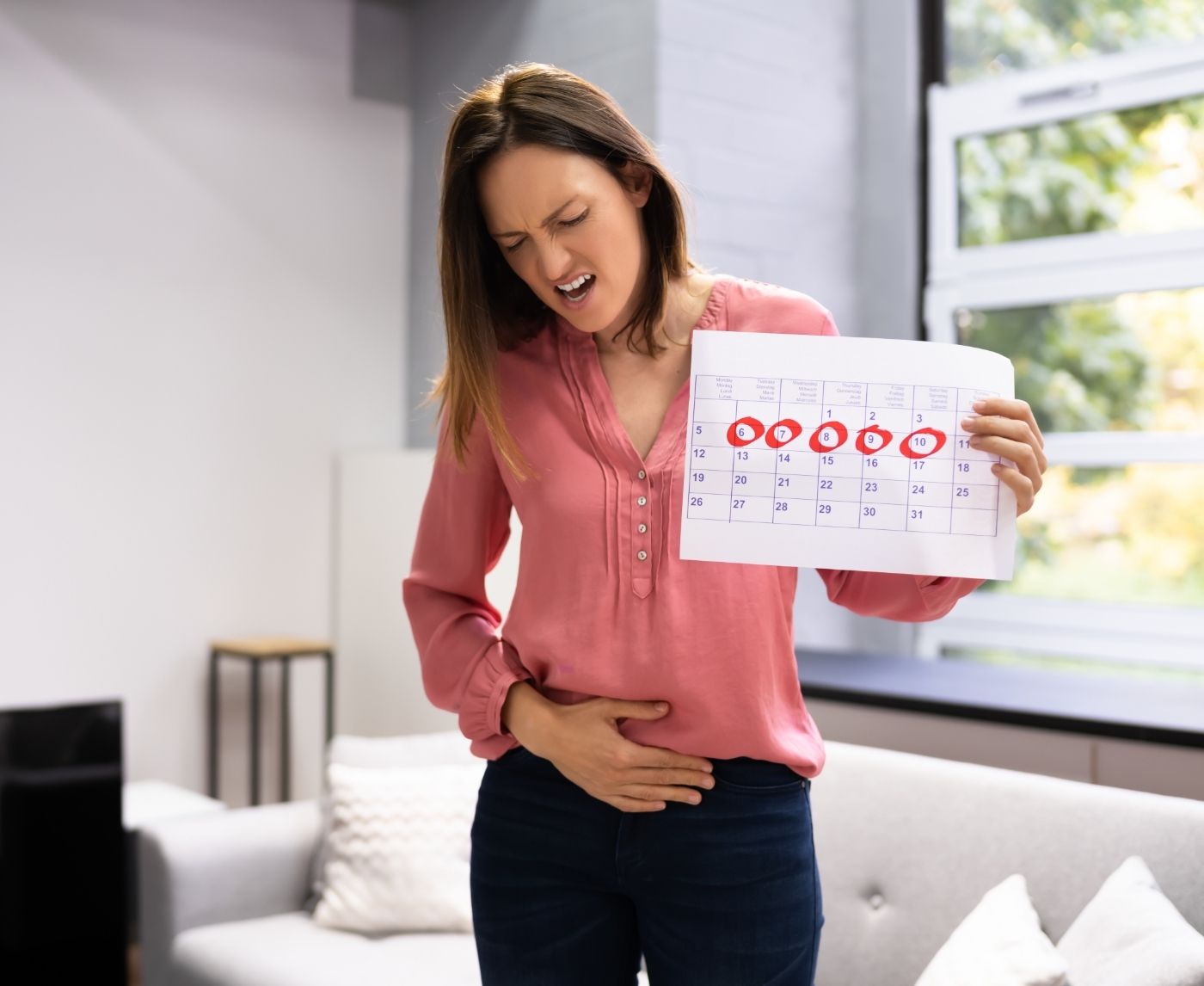
Periods are noisy. Cramps, a low backache, fatigue, light spotting near ovulation, days that just feel off. So when something new shows up, the first instinct is to chalk it up to hormones and move on. That instinct is usually right. But not always.
Chlamydia is the most commonly reported bacterial sexually transmitted infection in the United States, with more than 1.5 million cases counted in recent CDC annual surveillance data. The CDC also notes that chlamydia often has no symptoms, which is part of why it spreads so quietly. When symptoms do appear, they overlap with so many cycle-normal things that it is easy to miss them.
Hormones do not cause chlamydia. But the menstrual cycle does change how the body reacts to an infection that is already there. Estrogen and progesterone swing in opposite directions over a 28-day window. Vaginal pH shifts. Cervical mucus thickens and thins. Local immune defenses ramp up and down. All of that can amplify chlamydia symptoms during certain weeks and quiet them during others.
If your period feels different than usual, your cramps are sharper than your baseline, or you are spotting on days that are not your period, the sections below explain why your cycle could be making an infection louder, and what to do about it.
Key Takeaways
- Chlamydia symptoms can feel worse around your period because hormonal changes shift vaginal pH, cervical sensitivity, and local immune response, but the infection itself is present all month.
- Spotting between periods, pain that does not match your usual cycle, or bleeding after sex are red flags worth a chlamydia test, even if you are on hormonal birth control.
How your cycle changes the way chlamydia feels
The cervix and vagina are not static tissue. They are a mucosal surface that reorganizes itself every two weeks under hormonal direction, and that reorganization affects how easily Chlamydia trachomatis bacteria can take hold, multiply, and trigger inflammation.
Three changes matter most:
- Vaginal pH. A healthy vaginal pH sits between 3.8 and 4.5, kept acidic by lactobacilli that thrive on the glycogen estrogen feeds them. When estrogen drops at the start of your period, glycogen drops, lactobacilli weaken, and pH rises. A less acidic environment is friendlier to bacterial overgrowth and to the inflammation an existing infection already drives.
- Cervical mucus. Mucus is a physical barrier to bacterial movement. Around ovulation it thins to let sperm through, which also makes it easier for chlamydia to migrate upward from the cervix toward the uterus and fallopian tubes. During the luteal phase the mucus thickens again, but inflammation from an active infection can disrupt that defense.
- Mucosal immunity. The cervix and vagina have their own local immune system: antibodies in the mucus, antimicrobial peptides, immune cells in the lining. These defenses fluctuate across the cycle. Progesterone tends to soften the inflammatory response, while estrogen tends to strengthen mucosal antibody activity.
None of these shifts are abnormal. They are how your body balances fertility, allowing sperm in, with protection, keeping most pathogens out. The trade-off is that the same softening that allows pregnancy also gives bacterial STIs a slightly wider window to flare. If chlamydia is already present, you may feel that flare as heavier cramps, more discharge, new pain, or breakthrough bleeding on days that used to be unremarkable.
Cycle-driven changes in vaginal pH and mucosal immunity do not create new infections. What they do is change how loudly an existing infection is heard. Two women with the same chlamydia infection can have meaningfully different symptom severity depending on where they are in their cycle.
Why the luteal phase often feels worse
The two weeks between ovulation and the start of your next period are the luteal phase. Progesterone rises during this window, peaks roughly seven to ten days after ovulation, and falls sharply right before bleeding starts. That falling progesterone is what triggers the breakdown of the uterine lining, which is what your period actually is.
The luteal phase tends to be when chlamydia symptoms get louder for a few overlapping reasons:
- Progesterone-driven immune softening. Progesterone reduces certain inflammatory responses in the uterine lining. The biological purpose is to make the uterus hospitable to a possible pregnancy, but the side effect is that an active infection meets less aggressive immune resistance.
- Increased pelvic blood flow. Engorged tissue in the days before your period makes any existing inflammation more noticeable. A cervix already irritated by chlamydia feels rawer when there is more blood pooling around it.
- Endometrial sensitivity. Prostaglandins, the chemicals that trigger cramping, are elevated in the luteal phase. If your uterus is already inflamed, prostaglandins amplify the cramping rather than just producing the usual period dull ache.
That is why so many women describe a chlamydia infection as feeling like a worse-than-usual PMS week followed by a period that lasts longer or hurts more. The pattern is not random; it is hormones and an untreated infection acting on the same tissue at the same time.
Cervicitis and the bleeding between periods nobody warns you about
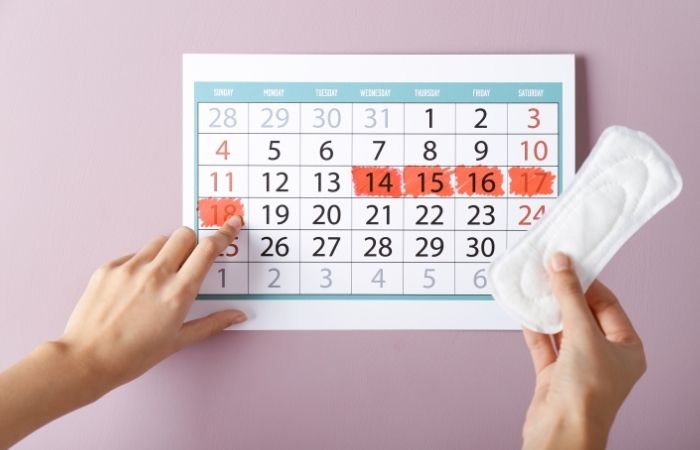
One of the most common physical signs of chlamydia in women is cervicitis, which is inflammation of the cervix. Mayo Clinic lists chlamydia among the leading infectious causes. Cervicitis is what produces a lot of the symptoms women blame on hormones:
- Spotting after sex, even gentle sex, because an inflamed cervix bleeds more easily on contact.
- Spotting between periods, often appearing one to two weeks before your expected bleed.
- Increased vaginal discharge that may look yellow, green, or have an unusual smell.
- A heavier or longer period than your baseline, sometimes with clots that are new for you.
- Pelvic pressure or a dull ache that does not match your usual cramping pattern.
Cervicitis from chlamydia is often painless on its own, which is why so many women only notice the bleeding pattern. If you bleed every time you have sex, especially with a new partner, that is a signal worth taking seriously regardless of how mild the rest of your symptoms feel. Cervical bleeding on contact is a clinical sign clinicians actively look for during pelvic exams in chlamydia workups.
The reverse is also true: untreated cervicitis can mask itself as a slightly off cycle for months. Some women only realize anything was wrong when a routine screening flags chlamydia, the antibiotics work, and their next few cycles return to a familiar rhythm.
If you bleed during or after sex on more than one occasion, do not wait for a third cycle to test. Contact bleeding is one of the clinical signs providers look for when they suspect cervicitis from chlamydia, and a test takes far less time than another month of guessing.
Ovulation flares and one-sided pelvic pain
Around day 14 of a typical cycle the cervix softens and cervical mucus thins to let sperm through. This is also when chlamydia bacteria have the easiest path upward into the upper reproductive tract. If the infection has already moved beyond the cervix toward the uterus or fallopian tubes, ovulation can be when you feel it.
Watch for these mid-cycle signals:
- Sharp, one-sided lower abdominal pain that is more intense than your usual mittelschmerz (the mild twinge some women feel at ovulation).
- Pain that lasts more than 24 hours rather than fading within an afternoon.
- Watery or thinner-than-usual discharge with an off odor.
- Burning during urination that is not a urinary tract infection on testing.
- Low-grade fever, fatigue, or a general unwell feeling tied to that one or two day window.
One-sided pelvic pain combined with any fever is a clinical signal to be evaluated quickly, because that combination can point toward early pelvic inflammatory disease (PID), the complication that develops when chlamydia spreads from the cervix to the uterus and fallopian tubes. The CDC notes that about 1 in 8 women with a history of PID experience difficulties getting pregnant. PID is also a leading cause of chronic pelvic pain and ectopic pregnancy in women with prior chlamydia infections.
Telling chlamydia cramps apart from PMS
This is the question most women searching for this article actually want answered. There is no test you can do at home with your symptoms alone, but there are useful patterns. The table below is not a diagnosis. It is a way to notice when your body is doing something outside its baseline, which is the trigger to test.
| What you notice | More likely just hormones | Worth ruling out chlamydia |
|---|---|---|
| Cramping | Matches your usual pattern in timing, location, severity | Sharper, longer, in a new location, or one-sided |
| Bleeding | Predictable start, length, and flow for you | Spotting between periods, after sex, or new clots |
| Discharge | Clear or white, no strong odor, changes texture across cycle | Yellow, green, or with a noticeable smell |
| Urination | Normal frequency and sensation | Burning that is not a urinary tract infection on testing |
| Pelvic ache | Distributed, mostly during your bleed | Persistent or one-sided, lingers past your period |
| Timing | Tracks your cycle predictably | Shows up after a new partner or unprotected sex |
Birth control prevents pregnancy, not chlamydia
This one trips up a lot of women, including women who are otherwise careful about their reproductive health. The pill, the patch, the ring, the implant, the IUD: all of them work on hormones (or, in the case of the copper IUD, on sperm motility). None of them are barriers to bacteria or viruses. Chlamydia, gonorrhea, syphilis, HIV, herpes, and HPV all transmit independently of whether you can get pregnant.
A few specific points worth being clear about:
- Hormonal birth control can change the vaginal microbiome. Some formulations alter cervical mucus and lactobacilli populations in ways that can subtly shift STI risk one direction or the other. The research is mixed and the effect sizes are small, but it is not protective against chlamydia.
- An IUD does not increase chlamydia risk by itself. The IUD-and-PID concern was raised by older devices and has largely been resolved by modern ones. If chlamydia is acquired with an IUD in place, however, the risk of the infection ascending to cause PID is somewhat higher in the first few weeks after insertion, which is why clinicians screen before placement.
- Condoms are the only contraceptive that meaningfully reduces chlamydia transmission. Correctly used latex or polyurethane condoms reduce, though do not eliminate, the risk.
The US Preventive Services Task Force recommends annual chlamydia screening for all sexually active women under 25, and for older women with new or multiple partners. Being on the pill does not change that recommendation.

Testing windows: when you can actually get a reliable result
One of the more useful things to know about chlamydia is that it does not need months to show up on a test. The infection establishes itself in cervical and urethral cells within days, and the bacterial DNA that lab tests look for is detectable shortly after.
Practical timing:
- Earliest reliable test: about 1 to 2 weeks after a possible exposure. Testing earlier than that can miss an infection that has not yet replicated enough to detect. If you test within the first few days of exposure and the result is negative, that does not rule out an infection; retest at the two-week mark.
- Best window: 2 to 3 weeks after exposure. At this point detection is reliable for almost everyone. Both lab nucleic-acid amplification tests (NAATs, the lab gold standard) and at-home rapid tests work well within this window.
- If you have symptoms: test now. Symptoms mean the infection has been present long enough to be detected. Do not wait for a calendar milestone.
- Post-treatment retest: 3 months after finishing antibiotics. The CDC treatment guidelines recommend a follow-up test at three months, not because antibiotics fail (they usually do not) but because reinfection from an untreated partner is common.
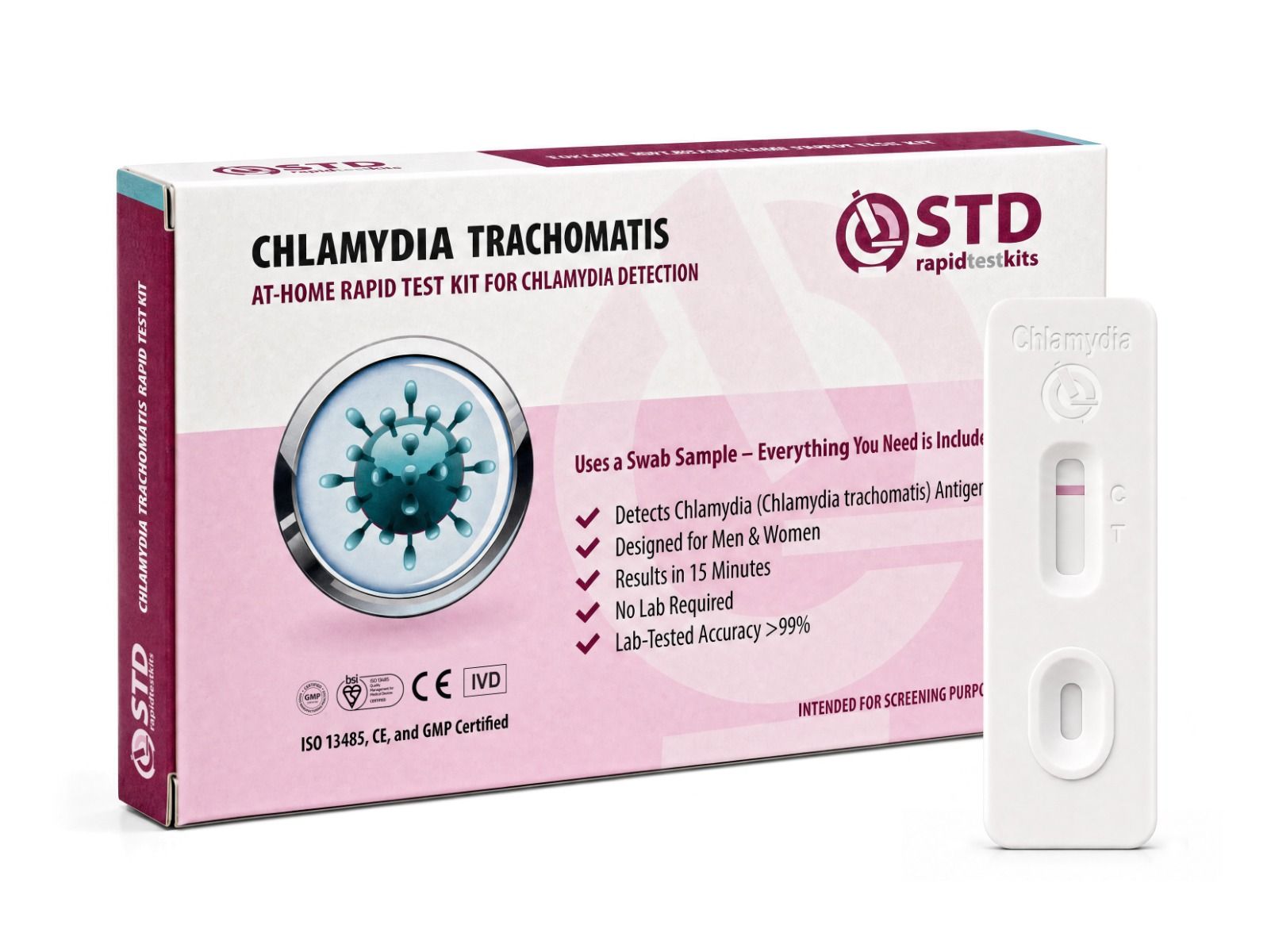
Worth knowing about the technology: lab NAATs and our at-home tests look at different sample types and use different chemistry. Lab NAATs amplify chlamydia DNA from a vaginal swab or urine and remain the analytical gold standard. At-home rapid tests are lateral-flow immunoassays that detect chlamydia antigens from a self-collected vaginal swab. A positive at-home result is a strong signal to start treatment and is worth confirming with a clinic NAAT when feasible. A negative at-home result outside the right testing window does not rule out an infection.
If you have symptoms, test today; the infection has already replicated enough to detect. If you do not have symptoms but had a possible exposure, the 14-to-21-day window after exposure is the sweet spot for reliable detection on either a clinic NAAT or an at-home rapid test.
When period changes mean it is time to test
A useful rule of thumb: if you can name three things about your last cycle that were different from your baseline, and you have had unprotected sex in the past three months, test. You are not overreacting. You are gathering information.
Specific patterns that warrant a chlamydia test rather than waiting another cycle:
- Bleeding after sex on more than one occasion, regardless of how light.
- Spotting between periods that is new for you.
- A period that is heavier, longer, or more painful than your baseline for two cycles in a row.
- Cramping that does not respond to your usual approach (heat, ibuprofen, rest).
- Yellow, green, or unusually heavy discharge at any point in your cycle.
- Burning urination that comes back negative for a urinary tract infection.
- Any pelvic pain combined with low-grade fever or feeling unwell.
- A new sexual partner in the past three months, even without symptoms.
None of these alone confirm chlamydia. Together they are the signal pattern most clinicians look for. We sell the at-home chlamydia rapid test linked below, so we have a commercial interest in this recommendation; the screening guidance itself comes from the CDC and USPSTF cited above.
Cycle-tracking your symptoms (before you see a clinician)
Whether you test at home or in a clinic, a short symptom log makes the conversation with a provider faster and more accurate. You do not need an app. A note on your phone or a paper calendar works.
What is worth logging across two cycles:
- Day of your cycle when each symptom appeared, using day 1 as the first day of your period.
- Severity of cramps, discharge, or bleeding on a simple 1 to 5 scale.
- Anything unusual about the discharge: color, smell, consistency.
- Sexual activity, including condom use, in the same window.
- Anything that helped (heat, ibuprofen) or made symptoms worse.
Two cycles of data turns a vague description (my period was bad) into a useful pattern (my cramps spike on cycle days 12 to 14 and I bleed after sex on cycle day 20). A provider can use those notes to decide whether to test for chlamydia, check for other infections, or evaluate for endometriosis or fibroids.
Bottom line
Your cycle is not background noise. It can amplify symptoms of an infection that has been present quietly for weeks or months, and it can also disguise an infection as a rougher-than-usual month. Chlamydia is common, easily treated with a short course of antibiotics, and one of the most undertested infections in women under 30 because the symptoms are exactly the things women are taught to live with. A 15-minute at-home test removes the uncertainty.
Most people who have chlamydia have no symptoms. If you do have symptoms, they may not appear until several weeks after you have sex with an infected partner.
FAQs
- Why does chlamydia feel worse during my period?
- Hormonal changes around your period raise vaginal pH, soften local immune defenses in the cervix, and increase pelvic blood flow. If you already have chlamydia, all three changes amplify the inflammation it causes, so cramps, discharge, and bleeding can feel more intense.
- Can hormonal birth control mask chlamydia symptoms?
- Birth control can smooth out cycle-related symptoms like cramping, which may make chlamydia signs blend into your baseline. The infection itself is still present and progressing, which is why the US Preventive Services Task Force recommends annual chlamydia screening for women under 25 regardless of contraception.
- Is bleeding between periods always a sign of chlamydia?
- No. Spotting can come from hormonal birth control, fibroids, polyps, perimenopause, ovulation, stress, or a number of other causes. But unexplained spotting between periods, especially with a new sexual partner or after sex, is one of the clearest signals to get a chlamydia test.
- How soon after sex can I test for chlamydia?
- Two weeks is the earliest you can rely on a result. If you have symptoms now, test immediately, because symptoms confirm the infection has already replicated enough to detect. The best window for asymptomatic testing is 14 to 21 days after exposure.
- Can chlamydia affect ovulation or delay my period?
- Chlamydia does not directly suppress ovulation. It can, however, inflame pelvic tissue, cause cramping that disrupts your usual pattern, and in advanced cases damage the fallopian tubes (pelvic inflammatory disease), which can affect long-term fertility. A delayed period from chlamydia alone is uncommon.
- Can I have chlamydia with a totally regular period?
- Yes. Many women with chlamydia have no clear symptoms, and a regular period does not rule it out. Screening is based on sexual history (new partner, unprotected sex, age under 25), not on whether your cycle feels normal.
- Will chlamydia go away on its own after a few cycles?
- No. Chlamydia does not clear without antibiotics. Untreated infections can persist for months or years and increase the risk of pelvic inflammatory disease, chronic pelvic pain, ectopic pregnancy, and infertility. The CDC recommends a single short course of antibiotics, with a retest at three months.
- How accurate is an at-home chlamydia test?
- At-home rapid tests are lateral-flow immunoassays using a self-collected vaginal swab. They are reliable inside the testing window and a positive result is a strong signal to start treatment. Lab nucleic-acid amplification tests (NAATs) remain the most sensitive option, so a positive at-home result is worth confirming with a clinic NAAT and a negative result with persistent symptoms is worth retesting.
- U.S. Centers for Disease Control and Prevention. About Chlamydia. Clinical overview noting that chlamydia often has no symptoms and can cause reproductive damage even when silent.
- U.S. Centers for Disease Control and Prevention. Annual STI Surveillance Data. Source for the more-than-1.5-million annual chlamydia case count cited in the introduction.
- U.S. Centers for Disease Control and Prevention. About Pelvic Inflammatory Disease (PID). Source for the statistic that about 1 in 8 women with a history of PID experience difficulties getting pregnant.
- U.S. Centers for Disease Control and Prevention. STI Treatment Guidelines: Chlamydial Infections. Recommended antibiotic course and the three-month follow-up retest interval.
- US Preventive Services Task Force. Recommendation: Chlamydia and Gonorrhea Screening. Annual screening guidance for sexually active women under 25 and for older women with new or multiple partners.
- Mayo Clinic. Cervicitis: Symptoms & Causes. Clinical description of cervicitis, including chlamydia as a leading infectious cause and the contact-bleeding sign on pelvic exam.
- National Health Service (UK). Chlamydia. Patient-facing overview of symptoms, testing windows, and treatment course.
