
Published: September 2025 | Last updated: May 2026 | Editorial review and quality control: Martina N.
The honest version of the dating-apps-cause-STIs story is more boring and more useful than the headline. Sexually transmitted infection rates in the United States have climbed for most of the last decade, and the rise overlaps with the same period that dating apps became the default way people meet. But meeting people on an app is not the thing that transmits chlamydia, gonorrhea, or herpes. Specific behaviors do. Fewer partners cuts risk. Condoms used correctly cut risk. Routine testing catches infections before they pass to the next person.
That is the frame of this article: what the data actually shows, what protection works, and when to test after meeting someone new, whether that was last weekend or six months ago. It is written for the reader who has been on Hinge, Bumble, Tinder, or Grindr for the past year, has met one new partner or several, and is now trying to decide whether to test, when to test, and what to do if a test result is not what they hoped for.
Key takeaways
- Dating apps do not transmit STIs; specific behaviors do. Lower partner count, condoms used correctly, vaccines for HPV and hepatitis B, and routine testing change individual risk far more than the platform you met on.
- Testing window matters. Bacterial infections show up within two weeks, but HIV antibody rapid tests need about three months for full reliability. Test once at the right window for what worries you, then build a routine.
The honest math behind the dating-app and STI link
The CDC tracks national sexually transmitted infection surveillance, and reported cases of chlamydia, gonorrhea, and syphilis have all risen substantially over the past decade per its STI program pages. The rise is real. So is the parallel rise in dating-app usage; Pew Research and academic survey work both show that meeting partners online overtook meeting through friends, work, or school sometime in the mid-2010s for younger adults.
What the data does not show is that swiping right is the mechanism. The mechanism is downstream behavior: more partners over a given window of time, lower condom-use rates with new partners, and a marked drop in routine clinic visits during and after the pandemic that delayed testing for many. Public health researchers usually frame it this way. Apps make meeting people frictionless. Meeting more people without a corresponding rise in testing or protection raises the population-level rate, but the per-encounter risk for an individual depends entirely on what the encounter looks like.
The practical version matters for the reader who is here right now. You cannot remove dating apps from the equation; they are how people meet. You can change the parts you control: how you talk to a new partner before sex, what protection you use, and how often you test.
Three downstream behaviors do most of the work in individual STI risk: partner count over a given window, condom use with new partners, and how often you test. Each can be adjusted independently of how you met someone.
Bacterial STIs after a new partner: chlamydia, gonorrhea, syphilis
Three bacterial infections account for most of the new diagnoses reported each year among sexually active adults under 40. All three are curable with antibiotics when caught early.
Chlamydia is the most common reportable STI in the U.S. and is usually silent. The CDC's chlamydia overview notes that most people with chlamydia have no symptoms, which is exactly why screening matters. Untreated chlamydia in people with a uterus can scar the fallopian tubes and reduce future fertility. The good news: a course of antibiotics clears it.
Gonorrhea looks similar to chlamydia in many ways, frequently asymptomatic, but it is moving in a more worrying direction in terms of antibiotic resistance. It can infect the genitals, pharyngeal (throat) tissue, and rectum. Throat gonorrhea after oral sex is more common than most readers expect and rarely causes symptoms.
Syphilis rates have climbed sharply, including congenital syphilis (passed from a pregnant person to a baby). The classic first sign is a painless sore at the contact site, but plenty of people miss that stage. Untreated syphilis becomes systemic and damaging over years; caught early, a single penicillin injection cures it.
Most chlamydia, gonorrhea, and syphilis infections produce no noticeable symptoms in the carrier. “I feel fine” is not informative about STI status. Routine screening, not symptom-watching, is how these get caught and treated before they pass on.
Viral STIs after a new partner: herpes, HIV, HPV
Three viral infections round out the picture. None of these are curable in the way bacterial STIs are, but all three are well managed in 2026 with modern treatment or prevention.
Herpes (HSV-1 and HSV-2) is more common than the rapid-rising syndromes because it cannot be cured, only managed. Most adults carry one or the other; most do not know. HSV transmits through skin-to-skin contact, including during asymptomatic shedding, which is why disclosure and using condoms or suppressive antivirals matters for ongoing partners.
HIV has lower per-act transmission risk than the bacterial STIs above, but it is the one infection on this list that is permanent. Routine testing, PrEP for higher-risk individuals, and modern antiretroviral treatment, which makes the virus undetectable and untransmittable when adhered to, reshape what an HIV diagnosis means in 2026.
HPV is the most common STI overall. The CDC's HPV pages note that most sexually active adults will encounter at least one strain at some point. The HPV vaccine substantially reduces the risk of the high-risk strains that drive cervical and oropharyngeal cancers.
Before the date: the conversation that actually helps
Sexual-health conversations with someone you met two weeks ago feel awkward in the abstract and almost never go as poorly as people fear. Two phrasings work better than any other version.
“When was your last STI test, and what did it cover?” The question is specific. It asks for information instead of a verdict. It surfaces whether the other person tests routinely without making them defend themselves, and it surfaces what they actually tested for, since standard panels at many clinics still miss herpes serology and pharyngeal swabs.
“Here is mine.” Lead by sharing your own answer. The pattern of asking before sharing is what makes the question feel like an interrogation. Sharing first, even briefly (“I tested clear two months ago for the standard panel and HIV, and have not had any new partners since”), changes the tenor of the exchange.
Avoid “Are you clean?”. The framing treats an STI status as dirty and pushes the other person toward a defensive non-answer. Most STIs do not produce symptoms in carriers, so “I feel fine” carries no real information. Ask about testing dates, panel coverage, and whether they use protection with new partners.
Try this before things get physical: “Hey, before this goes further, where are you with testing? I last got tested in [month], full panel, all negative. You?” It is short, leads with your own answer, and asks for specifics instead of a verdict.
Protection that actually works
Protection in 2026 means more than condoms, though condoms remain the single most cost-effective layer.
External and internal condoms reduce transmission of every fluid-borne STI substantially when used consistently and correctly per the CDC's STI prevention guidance. They are less protective against skin-contact infections like herpes and HPV because those can transmit from areas a condom does not cover, but they still help. Use latex or polyurethane, check the expiration date, and do not pair latex with oil-based lubricants.
PrEP (pre-exposure prophylaxis) is a daily or on-demand pill, or a bi-monthly injection, that substantially reduces HIV acquisition for HIV-negative people at higher risk. The CDC's HIV resources outline who benefits most: people with multiple partners, condomless sex with partners of unknown status, or partners who are HIV-positive. PrEP does not protect against bacterial STIs, so it is one layer in a stack, not a replacement for condoms or testing.
Vaccines close the loop for two STIs. The HPV vaccine is routinely recommended through age 26 with shared clinical decision-making through age 45 per current ACIP guidance. The hepatitis B vaccine series is part of standard childhood immunization and is available as a catch-up for adults who never received it.
Lowering partner count is the unromantic but real lever. Half as many partners over a year is, roughly, half the exposure. This does not mean monogamy is the only safe path; it means that each new partner adds risk, and stacking protection above (condoms, PrEP if applicable, testing between partners) is how non-monogamous arrangements stay sustainable.
The protection stack
- Condoms (external or internal) used correctly with every new partner.
- PrEP if your situation matches the CDC's higher-risk criteria for HIV.
- HPV vaccine through age 26, with shared clinical decision-making through age 45; hepatitis B catch-up if you never completed the series.
- Routine testing between partners and a tighter cadence when partners stack quickly.
When and what to test after a new partner
Window periods are the single most under-explained part of STI testing. A test taken too early can come back negative even when the person is infected, because the body has not yet produced detectable antibodies or the bacterial load has not yet reached the test's threshold. The right time depends on the infection.
The general pattern: bacterial infections (chlamydia, gonorrhea, syphilis) show up earlier; viral infections that rely on antibody detection (HIV, herpes) take longer. The table below summarizes typical windows. Individual product-package inserts will give exact figures for each specific test.
| Infection | Typical window before testing is reliable | Notes |
|---|---|---|
| Chlamydia | Around 14 days | If symptoms appear, test then; otherwise wait at least two weeks |
| Gonorrhea | Around 5 to 14 days | Sites matter: genital, throat, and rectal each need their own swab |
| Syphilis | About 3 to 6 weeks (antibody) | Earlier if a chancre is present and a swab is available at a clinic |
| HIV (4th-gen lab) | About 18 to 45 days | Lab antigen/antibody tests detect earlier than antibody-only rapids |
| HIV (antibody-only rapid) | Around 3 months | Use this window for at-home antibody lateral-flow rapids |
| Herpes (HSV-2 antibody) | 6 to 12 weeks, occasionally longer | Rapid antibody tests; lesion PCR at a clinic is best when a sore is active |
| Hepatitis B | Around 3 to 6 weeks | Vaccinated individuals will test positive for surface antibody |
| Hepatitis C | About 8 to 11 weeks | Antibody tests; testing earlier risks a false negative |

At-home rapid tests: what they solve, what they do not
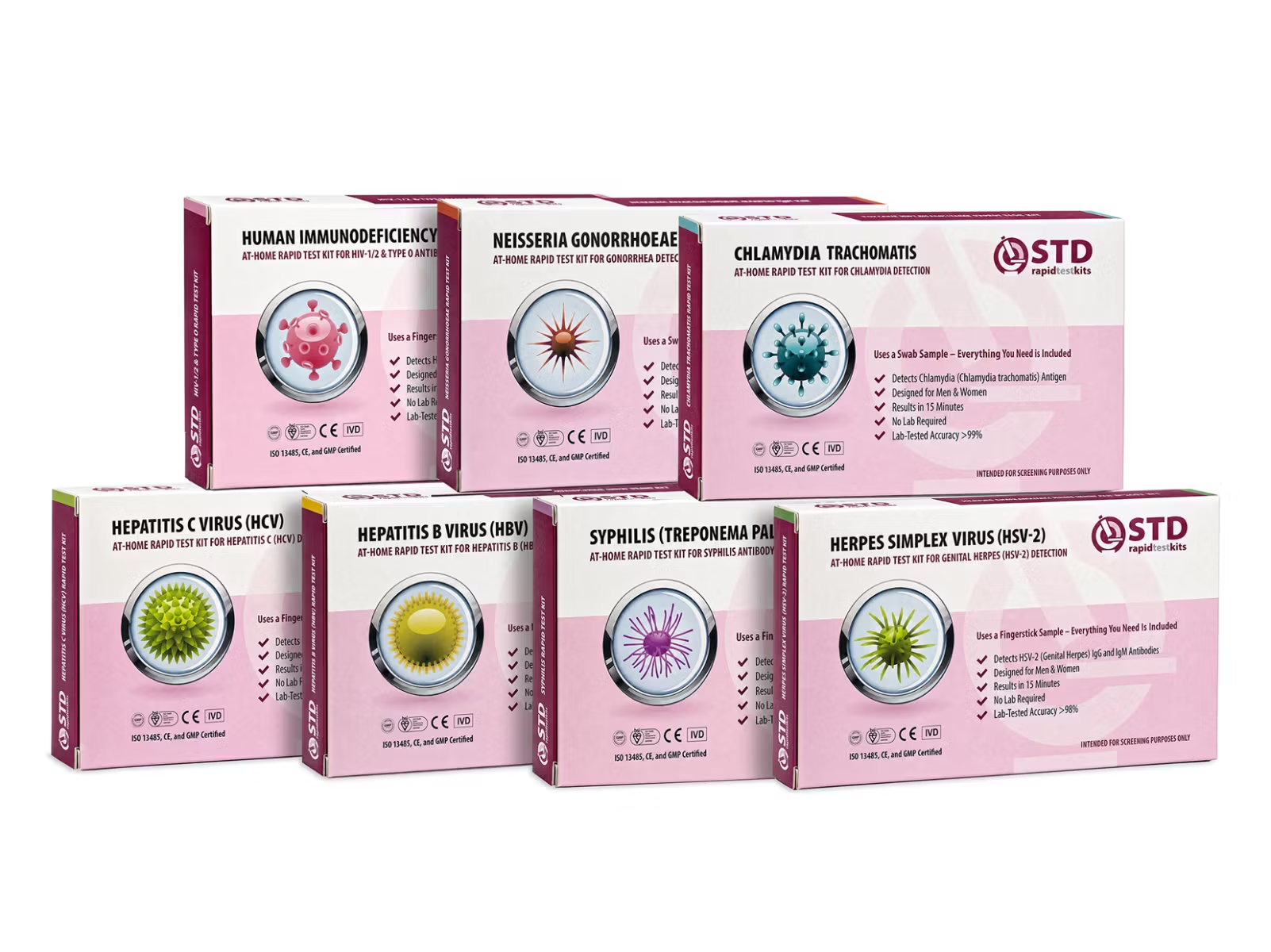
This site sells the rapid lateral-flow tests described below; we describe them alongside their limits so you can decide whether home screening or a clinic visit is the right next step for your situation.
Rapid lateral-flow tests at home are most useful for one specific job: screening after the relevant window has passed, on your own time, without a clinic visit. They are not laboratory NAAT or PCR. The underlying chemistry is antibody or antigen detection on a paper strip, applied to STI markers. That makes them effective at flagging a likely infection when used after the right window. It does not make them lab-grade for the earliest part of an infection, where laboratory molecular tests (the standard for chlamydia and gonorrhea in particular) detect bacterial DNA before antibodies form.
The way home rapid tests fit into a real life:
- You had a new partner four weeks ago. A rapid panel run now will catch the bacterial infections reliably and is informative but not definitive for HIV. If you want full HIV clarity, retest at three months with a rapid antibody test, or sooner with a lab 4th-generation test at a clinic.
- You are between partners and want a routine clear. A combo rapid panel run after the right window for each marker gives you a private, low-friction screen.
- You have an active visible symptom. Go to a clinic. Visible lesions are diagnosed best by direct swab or PCR, not antibody chemistry.
Home tests are screens. A positive on any STI rapid test should be followed by clinician confirmation, whether the test was at home, at a pharmacy, or at a community testing site. Treat them as a fast, private first answer, not the final word.
If you test before the relevant window has passed, a negative result does not mean you are clear. The body needs days to weeks to produce detectable antibodies or reach the bacterial load a rapid test can flag. Match the test date to the timing table above for the infections that worry you.
If a test comes back positive
A positive at-home result is not a final diagnosis. It is a signal to confirm with a clinician, who will run the laboratory-grade version of the same test and start treatment if confirmed. Treatment looks very different by infection.
Chlamydia, gonorrhea, trichomoniasis: a short course of antibiotics clears the infection. For uncomplicated chlamydia the regimen is typically doxycycline for a week. Gonorrhea increasingly requires a specific intramuscular antibiotic because of resistance. The CDC's STI treatment guidelines are the reference clinicians use.
Syphilis: a penicillin injection in the early stages. Multiple injections if the infection has been present longer. Caught early, fully curable.
HIV: not curable, but modern antiretroviral therapy reduces viral load to undetectable within months for most people. Undetectable means untransmittable in sexual contexts. Life expectancy for someone diagnosed early and on consistent treatment is comparable to someone without HIV.
Herpes: not curable, manageable with episodic or daily suppressive antivirals (valacyclovir, acyclovir). Most people have far fewer outbreaks after the first year. Suppressive therapy also reduces transmission risk to partners.
Hepatitis B: most adult acute infections resolve on their own; chronic infection (more common in those infected at birth) is managed with antivirals. Vaccination prevents future infection.
Hepatitis C: direct-acting antivirals cure most cases in 8 to 12 weeks. This is the largest treatment shift in any STI category over the past decade.
Partner notification is the other piece. Most jurisdictions offer anonymous partner-notification services that let you alert recent partners without revealing your identity if you prefer. Your clinician can connect you.
Many STIs cause no symptoms, but they can still be passed to others and can lead to serious health problems if not treated.
Special situations dating apps surface
Three patterns from app-based dating need specific handling because the standard genital-swab-plus-blood-panel does not cover them well.
Throat exposure after oral sex. Pharyngeal gonorrhea and chlamydia infections are common and rarely cause symptoms. A blood antibody test will not detect them, and an at-home genital swab will not detect them either. The only reliable test is a clinic-collected throat swab. If you had condomless oral sex with a new partner, a sexual-health clinic visit is the right move, not a home swab.
Rectal exposure. Same point applies. Rectal chlamydia and gonorrhea need a rectal swab, which is a clinic procedure. Home test kits in this category are validated for genital and bloodwork samples only.
Travel hookups and chemsex contexts. When new partners stack quickly, when alcohol or recreational drugs reduce decision-making, and when condom use drops accordingly, the testing rhythm needs to be tighter. People in these contexts often benefit from quarterly testing and ongoing PrEP if HIV-negative. Talk to a clinic that runs sexual-health services for an honest plan; harm-reduction-aware providers exist in every major city and online.
This site sells at-home rapid lateral-flow tests for self-collected genital swabs and fingerstick blood samples. We do not sell pharyngeal or rectal swab kits. If your exposure was oral or anal, the right move is a clinic visit, and any reassurance our home kits provide is for the adjacent blood markers (HIV, syphilis, hepatitis) and genital infections, not the site of exposure.
A home swab kit will not detect pharyngeal or rectal infections; those need site-specific swabs that a clinician collects. After condomless oral or anal sex with a new partner, book a sexual-health clinic visit rather than relying on a home kit.
Building a sustainable testing rhythm
The reader who comes to this article in panic usually wants to know what to do this week. The reader who has been on apps for years needs a routine, not a one-off.
Routine testing also makes the conversation easier with future partners. “I tested in [month], full panel, all negative” is a complete answer. People in routine testing rhythms are not the people transmitting the bulk of STIs; they catch infections early and treat before passing them on.
The other piece of sustainability is not letting one positive result become an identity crisis. A chlamydia diagnosis at 24 and a herpes-positive serology are both common, manageable medical findings; neither defines your character or limits your future relationships. Both are conditions you and your partners will work with, not verdicts on who you are.
A sustainable testing cadence
- Every 3 to 6 months: a standard panel if you have multiple partners in that window, or are in any non-monogamous arrangement.
- Annually: if you are in a long-term arrangement with a tested, known partner.
- After every new partner: a single rapid panel about 4 to 6 weeks later, then a re-test for HIV at three months if the partner's status was unknown.
- If a partner discloses a recent positive: test immediately, then again at the appropriate window for that specific infection.
Frequently asked questions
- How risky is it really to meet someone from a dating app?
- App-based meeting does not transmit infections; specific behaviors do. The per-encounter risk depends on the partner's testing status, what protection you use, and whether either of you has an active untreated infection. A first encounter with a partner who tests routinely and uses condoms carries a very different risk profile from a condomless encounter with someone whose testing history is unknown.
- What is the best STI test to take after a new partner?
- A combination panel covering chlamydia, gonorrhea, syphilis, and HIV is the standard for most adults. Add herpes serology if you have a specific concern. Run the test after the right window has passed; testing the day after is too early for most infections, including HIV.
- How long should I wait after sex to get tested?
- For bacterial infections (chlamydia, gonorrhea), around 14 days. For syphilis, 3 to 6 weeks. For HIV with a lab 4th-generation test, around 18 to 45 days; with an at-home antibody rapid, about three months. See the timing table above for each infection.
- Are at-home STI tests as accurate as a clinic test?
- At-home rapid tests are lateral-flow antibody and antigen screens. They are not laboratory NAAT or PCR. After the right window, they perform well as a screen and are useful for routine testing. They are not a substitute for clinic testing when you have visible symptoms, when timing falls inside the window period, or when the exposure was to a site (throat, rectum) we do not sell tests for.
- Should I disclose my STI status before meeting up?
- For active infections that can transmit through skin or fluid contact, yes. For chronic but managed conditions (herpes, HIV-undetectable), disclosure ahead of physical intimacy is the standard ethical position; some jurisdictions also require it legally. Disclosing in writing on the app before meeting is one approach; bringing it up in person before sex is another. Both are valid.
- What does PrEP actually do, and do I need it?
- PrEP is pre-exposure prophylaxis for HIV: a daily pill, on-demand pill, or bi-monthly injection that substantially reduces the chance of acquiring HIV when adherence is consistent. The CDC recommends discussing PrEP with a clinician if you have multiple partners, condomless sex with partners of unknown status, or a partner who is HIV-positive. It does not protect against bacterial STIs.
- Can I get an STI from kissing or oral sex?
- Kissing can transmit oral HSV-1 (cold sores) and, rarely, syphilis from an active oral chancre. Oral sex can transmit gonorrhea, chlamydia, syphilis, HSV-1 to genitals, HSV-2 to the mouth, and HPV. The risk is lower than penetrative sex but not zero. Pharyngeal infections after oral sex are common and frequently silent.
- U.S. Centers for Disease Control and Prevention. STI program pages with national surveillance and trend reporting for chlamydia, gonorrhea, and syphilis.
- U.S. Centers for Disease Control and Prevention. STI prevention guidance including condom correct-use information.
- U.S. Centers for Disease Control and Prevention. HIV hub covering testing, treatment, and PrEP options.
- U.S. Centers for Disease Control and Prevention. HPV vaccine information for adults and parents.
- U.S. Centers for Disease Control and Prevention. STI treatment guidelines reference for clinicians.
- World Health Organization. Fact sheet on sexually transmitted infections, including global epidemiology and prevention.
