Does Swallowing Semen Give STIs?
Which STIs pass through swallowed semen, and when to test.




- Swallowing semen carries real but variable STI risk. The infections most commonly transmitted through unprotected oral sex are gonorrhea, herpes (HSV-1 and HSV-2), syphilis, HPV, and chlamydia. HIV transmission through this route is documented but much lower than from anal or vaginal sex.
- Whether you spit or swallow makes little measurable difference to STI risk because pathogen exposure happens during the oral contact itself. Testing windows differ by infection, so timing matters when you decide what to check for.
Published: August 2025 | Last updated: May 2026 | Editorial review and quality control: Martina N.
Yes, swallowing semen can transmit some sexually transmitted infections, but the real risk depends on which infection, the source partner's STI status, and what is going on in your mouth and throat at the time. For most everyday encounters with a partner whose status is unknown, the practical chance of HIV from swallowed semen is very low. The chance of picking up gonorrhea, herpes, HPV, or syphilis is meaningfully higher, especially when there are cuts, bleeding gums, or active infections present.
This article walks through which specific STIs can transmit this way, what changes the risk, when to test, and what at-home or clinic-based tests actually pick up. The goal is reassurance where it is warranted and concrete next steps where it is not.
Key Takeaways
- Swallowing semen carries real but variable STI risk. The infections most commonly transmitted through unprotected oral sex are gonorrhea, herpes (HSV-1 and HSV-2), syphilis, HPV, and chlamydia. HIV transmission through this route is documented but much lower than from anal or vaginal sex.
- Whether you spit or swallow makes little measurable difference to STI risk because pathogen exposure happens during the oral contact itself. Testing windows differ by infection, so timing matters when you decide what to check for.
How Oral STI Transmission Actually Works
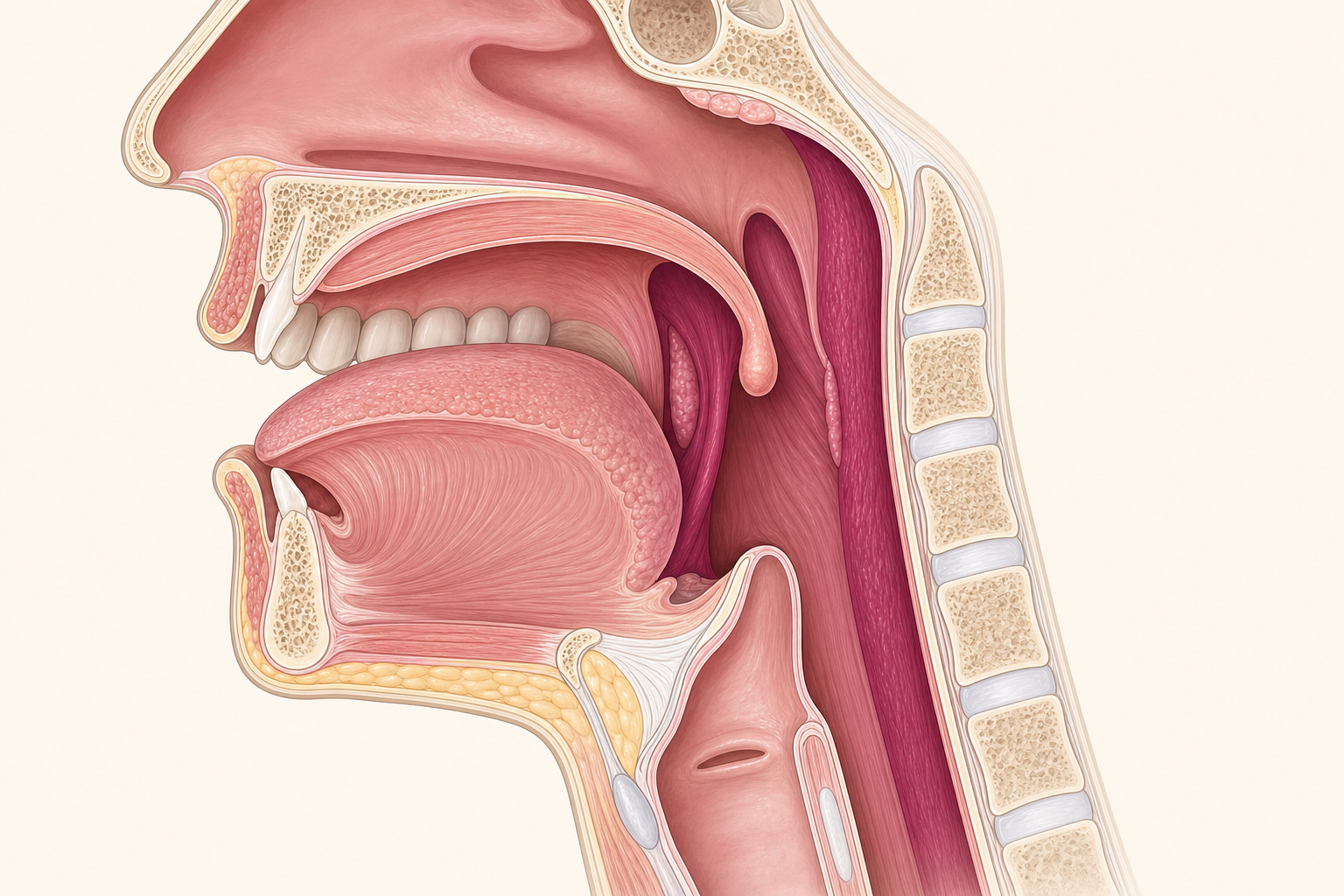
The lining of your mouth, throat, tonsils, and esophagus is mucous membrane tissue, similar in important ways to genital and rectal mucosa. Certain pathogens that thrive on mucosal surfaces can establish infection there if they make contact with infected fluid. Semen and pre-ejaculate are two such fluids. So are vaginal secretions, blood, and the lesions of active herpes or syphilis.
Three biological factors shape the risk of oral STI transmission. First, some pathogens prefer specific tissue types: gonorrhea and chlamydia can colonize the pharynx (the throat) but rarely cause noticeable symptoms there. Second, the oral cavity has natural defenses, including saliva, that reduce viral concentration and partially inactivate some pathogens, which is why HIV transmission via oral sex is much lower than via anal or vaginal sex. Third, anything that breaks the mucosal barrier (bleeding gums, recent dental work, mouth ulcers, oral thrush, untreated tooth abscess) widens the entry point for pathogens.
The U.S. Centers for Disease Control and Prevention lists chlamydia, gonorrhea, syphilis, herpes (HSV-1 and HSV-2), HPV, and HIV as STIs that can be transmitted through oral sex. The relative risk varies sharply by pathogen.
Spit Versus Swallow: Does It Matter for STI Risk?
Practically speaking, no. Transmission happens during the oral contact itself, when pathogen-bearing fluid touches mucosal tissue. By the time semen reaches the back of the mouth, exposure has already occurred. Swallowing adds a theoretical esophageal exposure for some pathogens, but stomach acid neutralizes most relevant viruses and bacteria once they reach the gut. The choice about spitting or swallowing comes down to personal preference, with no measurable impact on clinical risk.
The right test depends on what you were exposed to and how long ago. Most blood-based STI tests have a window of 2 to 12 weeks before they reliably detect infection. Pharyngeal (throat) gonorrhea and chlamydia require an in-clinic throat swab, not a urine sample and not our at-home kits. We cover testing timelines in detail below.
Which STIs Can Be Transmitted by Swallowing Semen?
Here is the working list, ordered roughly from most to least likely in everyday exposures. The likelihoods below reflect single-act transmission probabilities under typical conditions, not certainties. Concrete figures come from the cited public-health sources.
Gonorrhea (Including Pharyngeal Gonorrhea)
Oral-genital contact transmits gonorrhea readily in both directions. A receptive oral partner can develop pharyngeal gonorrhea (a throat infection) from infected semen. The majority of pharyngeal gonococcal infections are asymptomatic, per the CDC STI treatment guidelines for gonococcal infections in adults. When symptoms do appear, they include a persistent sore throat, swollen cervical lymph nodes, and sometimes white or yellow patches on the tonsils. Pharyngeal gonorrhea is also harder to treat than urogenital infection, which is one reason antibiotic stewardship matters at this anatomical site.
Chlamydia (Oral Chlamydia)
Oral chlamydia is documented but less common than pharyngeal gonorrhea. Most cases produce no symptoms and are usually identified incidentally during broader STI screening rather than because the throat itself is bothering anyone. The CDC lists oral sex as a chlamydia transmission route on its oral-sex STI overview. Routine screening of asymptomatic oral chlamydia is not standard outside of high-risk populations, partly because natural clearance rates are high.
Syphilis
Primary syphilis can appear as a chancre (a usually painless firm round ulcer) on the lip, tongue, gums, or tonsillar area after oral sex with an infectious partner. The CDC syphilis overview notes that primary syphilis sores can occur in or around the mouth and that a primary sore typically lasts 3 to 6 weeks and heals regardless of whether you receive treatment. Because the chancre is often painless and self-resolving, many people miss it entirely, and the infection then progresses to secondary syphilis. Syphilis remains a significant public-health concern in the U.S.; CDC STI surveillance data tracks current case figures.
Herpes (HSV-1 and HSV-2)
Both herpes simplex types transmit through oral sex. HSV-1, historically the cause of cold sores, increasingly causes genital herpes through oral-to-genital transmission. HSV-2, historically the genital strain, can establish oral infection though it does so less efficiently. Either virus can shed even without visible lesions. The CDC herpes overview notes that the skin can release the virus from areas that do not have a visible herpes sore, which means a partner with no obvious cold sore can still transmit.
HPV (Oral HPV)
Oral HPV is acquired through oral sex. The CDC list of cancers caused by HPV includes cancer of the back of the throat (oropharynx), including the base of the tongue and tonsils, in both men and women. Most oral HPV infections clear within 1 to 2 years without symptoms. A small fraction persist and can progress to cancer over decades. Vaccination is the most effective prevention. Per CDC HPV vaccination guidance, the vaccine can be given starting at age 9, and children ages 11 to 12 are the routine vaccination target. Adults aged 27 through 45 who are not already vaccinated may decide to get the HPV vaccine after speaking with their clinician about their risk for new HPV infections.
HIV
HIV transmission through receptive oral sex with an infected male partner is low but not zero. Per the CDC oral-sex STI overview, studies show the risk of getting HIV from oral sex with a partner who has the infection is much lower than the risk of getting HIV from anal or vaginal sex. Risk rises when the source partner has acute HIV infection (very high viral load), or when the receptive partner has bleeding gums, oral ulcers, recent dental work, or co-existing oral STIs. Risk falls essentially to zero when the source partner is on antiretroviral therapy with sustained viral suppression. The CDC HIV treatment page states plainly that if you have an undetectable viral load, you will not transmit HIV through sex (the Undetectable equals Untransmittable principle).
Hepatitis B
Hepatitis B virus is present in semen and can transmit through oral sex, though this is a relatively uncommon route compared with sexual penetration or shared needles. Vaccination is the single most reliable prevention. Most U.S. adults vaccinated in childhood are protected; anyone unvaccinated should consider the three-dose series.
Hepatitis C and Trichomoniasis
Hepatitis C transmission via oral sex is considered very rare in the absence of co-existing HIV or significant oral bleeding. Trichomoniasis via oral sex is essentially anecdotal in the published literature; the parasite does not survive well outside genital mucosa.
| Infection | Risk via swallowed semen | Window before testing | Where to test |
|---|---|---|---|
| Gonorrhea (pharyngeal) | Meaningful; often asymptomatic | Throat swab from day 7 to 14 | Clinic (throat swab only) |
| Chlamydia (oral) | Low to moderate; usually asymptomatic | Throat swab around day 14 | Clinic (throat swab only) |
| Syphilis | Real; primary chancre can appear in mouth | Blood test from 14 days, definitive by 90 | Clinic or at-home blood test |
| HSV-1 or HSV-2 | Real if active shedding; not always symptomatic | Antibody test reliable around 12 to 16 weeks | Clinic or at-home blood test |
| HPV | Real; usually self-clears | No FDA-approved oral HPV screening test | Not routinely tested in healthy adults |
| HIV | Much lower than anal or vaginal sex, but not zero | 4th-gen test from day 18 to 45; rapid antibody from 23 to 90 days | Clinic or at-home blood test |
| Hepatitis B | Low; near zero if vaccinated | Blood test from 4 to 12 weeks | Clinic or at-home blood test |
Can swallowing semen give you an STI?
Yes. Several STIs (gonorrhea, chlamydia, syphilis, herpes simplex, HPV, and rarely HIV or hepatitis B) can transmit through unprotected oral sex involving exposure to semen. Risk varies sharply by infection. The CDC states the risk of HIV from oral sex is much lower than from anal or vaginal sex. Gonorrhea and herpes are more meaningful concerns in everyday exposures. Testing windows range from about 2 weeks (syphilis) to 12 to 16 weeks (HSV antibodies). HIV rapid antibody tests are reliable from about 3 to 13 weeks post-exposure, with a 12-week result giving the most confident negative reassurance. If you are worried after a specific exposure, a comprehensive blood panel plus an in-clinic throat swab is the most reliable approach.
What Changes the Real-World Risk
Two acts of oral sex, identical from the outside, can carry very different transmission probabilities. The variables below explain most of the gap.
The Source Partner's STI Status and Viral Load
The single biggest factor is whether the source partner actually has an active STI. For HIV specifically, transmission risk is closely tied to the source partner's viral load. The CDC HIV treatment page states that if you have an undetectable viral load, you will not transmit HIV through sex. Someone in acute (recently acquired) HIV infection, by contrast, may have very high viral loads, making them substantially more infectious than someone with chronic treated infection.
Your Oral Health
Bleeding gums, mouth ulcers (canker sores, oral herpes lesions, traumatic ulcers), recent dental work (cleanings within the prior 48 hours, extractions, deep scaling), oral thrush, and pierced lips or tongue all create breaks in the mucosal barrier. These breaks let pathogens reach blood vessels more directly. Brushing or flossing immediately before oral sex is therefore not the protective measure it might intuitively seem; it can create microscopic bleeding that raises rather than lowers risk.
Co-Existing Infections
Pre-existing oral conditions (untreated dental abscess, oral HSV, severe gum disease) raise transmission risk for unrelated pathogens by maintaining low-grade inflammation in oral tissues. Inflammation brings immune cells (including the CD4 cells that HIV infects) to the mucosal surface, increasing the target-cell density at the point of contact.
Timing in the Source Partner's Infection
Acute infections (the first weeks after acquisition) tend to be more transmissible because viral or bacterial loads peak before the immune system controls them. This is the practical reason that contact tracing focuses on recent partners; the highest-shedding period is often when the source partner does not yet know they are infected.
HIV After Oral Exposure: Addressing the Top Fear
For most people landing on this article, HIV is the worst-case scenario they want to rule out. The reassuring side: per the CDC oral-sex STI overview, studies show the risk of HIV from oral sex with an infected partner is much lower than the risk from anal or vaginal sex. The realistic side: it is not zero, and the conditions that raise it (bleeding gums, oral ulcers, partner with acute infection) are exactly the conditions someone worried after an exposure tends to have.
How the CDC Describes the Risk
The CDC HIV transmission information page notes that ejaculation in the mouth, or the presence of oral ulcers, bleeding gums, genital sores, or other STIs, can increase the chances of HIV transmission. In short: the baseline risk is small, and a handful of co-factors can push it upward, though it remains lower than the risk from anal or vaginal sex.
What Raises It
Bleeding gums or oral wounds, recent invasive dental work, oral thrush or active herpes lesions, a high source viral load (acute infection or untreated chronic infection), ejaculation in the mouth versus brief contact, and concurrent oral STIs all increase the per-act probability. None of these is a deal-breaker on its own; combinations multiply.
Window Periods and What to Test
Fourth-generation antigen-antibody HIV tests detect most infections within 18 to 45 days of exposure. Rapid antibody tests reliably detect infection by about 23 to 90 days post-exposure, depending on the specific assay. For most at-home rapid antibody kits, a confirmatory test at 12 weeks gives the most reliable negative reassurance. The CDC currently recommends testing at the 4-week mark for an initial check and again at 12 weeks to confirm.
If you have a reasonable concern about recent HIV exposure (a known-positive partner with unsuppressed viral load, a sexual assault scenario, a needle exposure), post-exposure prophylaxis (PEP) is most effective when started within 72 hours and ideally within 24 hours. PEP is the right tool for known higher-risk scenarios, not for ordinary low-risk oral exposure. Speak with an urgent care clinician or an STI clinic if PEP is on the table.
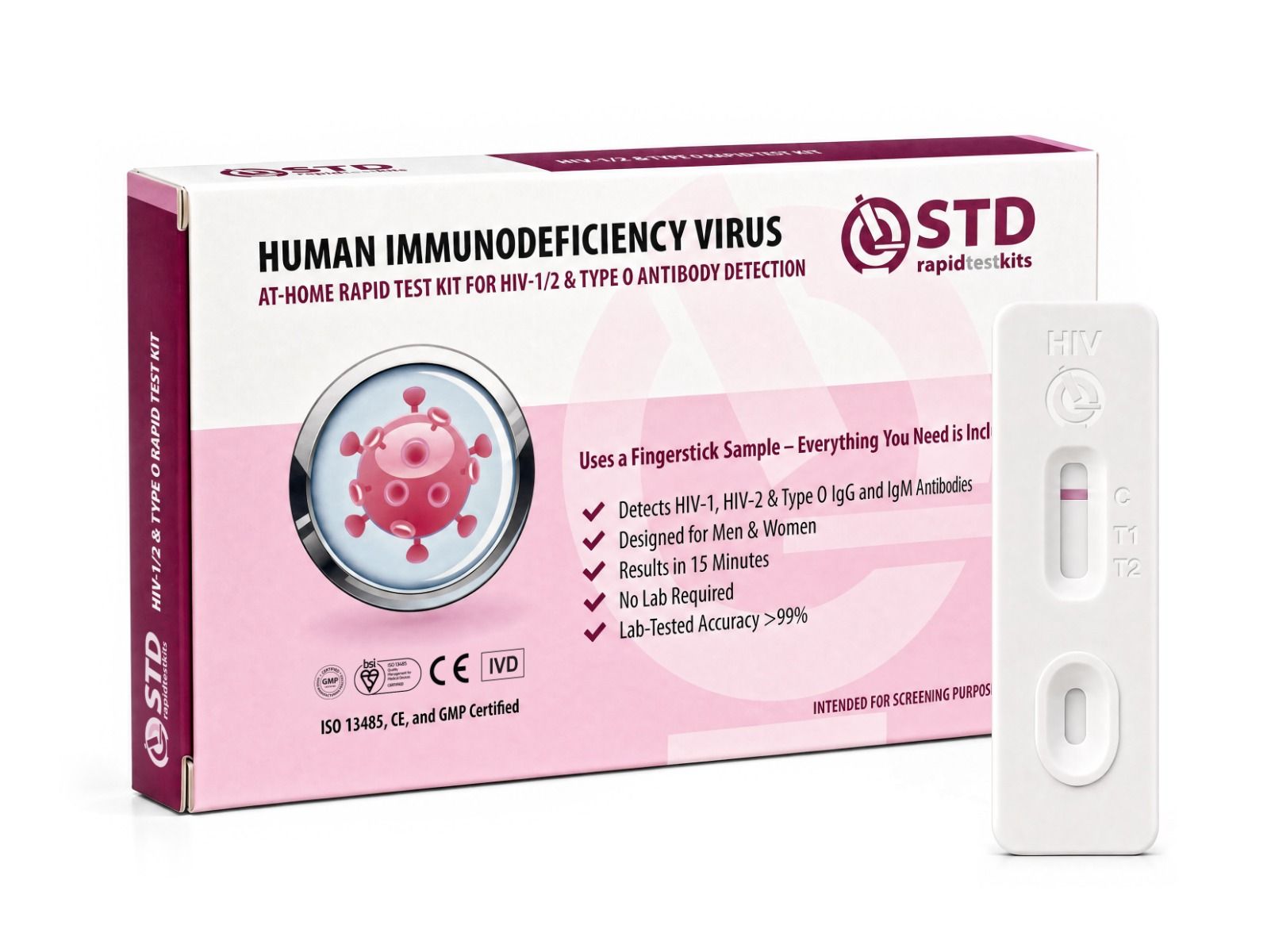
This article is published by stdrapidtestkits.com, which sells at-home STI testing kits. We recommend products based on fit-for-purpose for the reader's concern, not commercial benefit. The HIV rapid antibody kit below uses lateral-flow technology and applies from the windows described above.
Testing After a Risky Oral Exposure
If you have had unprotected oral sex with someone whose status you do not know, and you want to test, the practical question is: which infections, when, and where? The answer differs for each pathogen because window periods (the gap between exposure and reliable detectability) vary widely.
Throat-Based Infections: Clinic Only
Pharyngeal gonorrhea and oral chlamydia are diagnosed by a clinician-collected throat swab tested via NAAT (nucleic acid amplification testing) in a laboratory. Standard urine-based STI tests do not reliably detect pharyngeal infection; the swab samples the actual site. We do not sell a home throat-swab test. For these specific infections, an STI clinic, urgent care, or your primary care provider is the right path. Many U.S. public health clinics offer free or low-cost throat swabs for sexually active adults.
Blood-Borne Infections: At-Home or Clinic
HIV, syphilis, hepatitis B, hepatitis C, and HSV-1 or HSV-2 antibodies are all detectable from a small blood sample. Approximate window periods:
- Syphilis: blood test from 14 days post-exposure, definitive by 90 days.
- HIV: 4th-generation test from day 18 to 45; rapid antibody from 23 to 90 days.
- Hepatitis B surface antigen: 4 to 12 weeks.
- Hepatitis C antibody: reliable around 8 to 11 weeks.
- HSV-1 and HSV-2 IgG antibodies: typically reliable by 12 to 16 weeks post-exposure, though some assay labels suggest up to 6 months for absolute negative confirmation.
Oral HPV: Generally Not Tested in Healthy Adults
There is no FDA-approved oral HPV screening test for asymptomatic adults. Persistent throat symptoms that do not resolve within 2 to 3 weeks (especially in someone with significant oral-sex history) warrant an ENT referral for direct examination. HPV vaccination remains the primary prevention.
If You Are Going to Test, Cover the Right Set
For most people testing after an oral exposure of unknown source, a comprehensive multi-STI blood panel plus a clinic throat swab covers the realistic spectrum. Our at-home kits handle the blood side and the genital-swab side. The throat swab requires an in-clinic visit. Approaching it as two pieces (clinic for throat, home for bloodwork) is faster, cheaper, and less awkward than waiting for one all-in-one option that does not really exist for asymptomatic adults.

Allergic Reactions and Other Non-STI Concerns
STIs are the dominant concern here, but a few non-infectious issues come up in the same context. Briefly:
Seminal Plasma Hypersensitivity
A rare allergic reaction to proteins in seminal fluid. Symptoms range from local (itching, redness, swelling at the contact site) to systemic (hives, difficulty breathing, anaphylaxis in severe cases). It usually presents minutes to hours after exposure, which is distinct from STI symptoms that tend to develop days to weeks later. Diagnosis is by an allergist; barrier protection eliminates the trigger.
Concerns That Are Not Real
Swallowing semen does not cause pregnancy. It does not provide meaningful nutrition or immune benefits despite occasional online claims. It does not accumulate in the body. Stomach acid breaks down seminal components within hours, similar to any other ingested protein. Anyone selling a product or coaching program around the supposed health benefits of semen ingestion is selling a story, not a clinically supported intervention.
Studies show the risk of getting HIV from oral sex (giving or receiving) with a partner who has the infection is much lower than the risk of getting HIV from anal or vaginal sex.
How to Reduce Real-World Risk
The protective strategies below are listed roughly in order of impact. None is perfect; combined, they reduce most realistic risk to very low levels.
Use Barrier Protection During Oral Sex
Condoms during oral sex on a male partner, and dental dams during oral sex on a female partner, meaningfully lower transmission risk for every pathogen discussed above. The same correct-and-consistent-use principle that applies to penetrative sex applies here. Flavored condoms are designed specifically for this purpose; non-lubricated versions avoid the taste of spermicidal additives.
Vaccinate
HPV vaccination remains the highest-impact intervention for oral HPV and oropharyngeal cancer risk. Per CDC HPV vaccination guidance, the HPV vaccine can be given starting at age 9, and children ages 11 to 12 are the routine target. Adults aged 27 through 45 who are not already vaccinated may decide to get the vaccine after speaking with their clinician. Hepatitis B vaccination is part of routine childhood immunization in the U.S. and provides essentially complete protection against the sexually transmitted route as well.
Mutual Testing Before Unprotected Contact
Sharing recent (within 3 months) STI results before unprotected oral or penetrative sex is the most concrete way for monogamous partners to remove most STI risk. The honest version of this conversation is shorter than people expect: "I tested negative for X, Y, and Z on this date. What about you?" If one partner has an untreated infection, treatment (typically a single dose or short course of antibiotics for most curable bacterial STIs) resolves the issue.
Skip Aggressive Oral Hygiene Right Before Oral Sex
Counterintuitively, brushing or flossing immediately before oral sex is a small but real risk amplifier because of microscopic gum bleeding. A 30-minute gap between vigorous oral hygiene and oral sex is sufficient. Mouthwash use is fine and probably mildly beneficial.
Treat Concurrent Oral Conditions
Active oral herpes lesions, severe gum disease, untreated dental abscesses, and oral thrush all amplify STI transmission risk in both directions. Addressing them is good for general health and improves the risk picture for oral sex specifically.
Frequently Asked Questions
- Can swallowing semen make me pregnant?
- No. Sperm cells require contact with vaginal mucosa to fertilize an egg. Swallowed semen reaches the stomach, where it is digested like any other protein. Pregnancy from oral sex, including swallowing, is not biologically possible.
- Is spitting safer than swallowing for STI prevention?
- No. Exposure to pathogens happens during oral contact, before any swallowing decision is made. By the time semen is at the back of the mouth, potential transmission has already occurred. Base that decision on preference, not on perceived risk reduction.
- How long after oral sex should I wait to test for STIs?
- Window periods differ by infection. Syphilis blood tests are reliable from 14 days, definitive by 90. HIV 4th-generation tests are reliable from 18 to 45 days; rapid antibody tests from 23 to 90 days. Herpes antibody tests are most reliable at 12 to 16 weeks. Pharyngeal gonorrhea and chlamydia can be swabbed at a clinic from about 1 to 2 weeks post-exposure.
- Can I get herpes from oral sex if my partner has no visible cold sore?
- Yes. Both HSV-1 and HSV-2 shed from intact-looking skin and mucous membranes between outbreaks. Asymptomatic shedding is how most herpes transmission occurs; the absence of a cold sore or visible lesion does not mean the partner is non-infectious. Barrier protection reduces but does not eliminate this risk.
- What if I had bleeding gums when I performed oral sex?
- Bleeding gums raise transmission risk for bloodborne and mucosal pathogens, with HIV the most-discussed example. The increase is meaningful but does not turn a low-risk exposure into a high-risk one on its own. If you are worried, a comprehensive STI panel at the appropriate window is the right next step. For a known high-risk HIV exposure, see a clinician about post-exposure prophylaxis within 72 hours.
- Are there any genuine health benefits to swallowing semen?
- No reproducible clinical evidence supports the claimed nutritional, mood, or immune benefits of semen ingestion. The proteins and other components are present in tiny amounts and are digested before any systemic absorption could occur. Reported benefits in popular media are not supported by controlled studies.
- Do home STI test kits detect throat infections?
- Not for pharyngeal gonorrhea or oral chlamydia. Those throat infections require an in-clinic throat swab tested by NAAT. Home STI kits, including ours, sample from blood (for HIV, syphilis, hepatitis, and herpes antibodies) or from a self-collected genital swab. The most reliable post-oral-exposure approach is an in-clinic throat swab plus an at-home blood panel.
- U.S. Centers for Disease Control and Prevention. About STI Risk and Oral Sex: lists pathogens transmissible through oral sex and states HIV risk from oral sex is much lower than from anal or vaginal sex.
- U.S. Centers for Disease Control and Prevention. HIV Transmission: factors that raise risk include oral ulcers, bleeding gums, genital sores, and presence of other STIs.
- U.S. Centers for Disease Control and Prevention. HIV treatment and the Undetectable equals Untransmittable principle: if you have an undetectable viral load, you will not transmit HIV through sex.
- U.S. Centers for Disease Control and Prevention. STI Treatment Guidelines for Gonococcal Infections in Adults: the majority of gonococcal infections of the pharynx are asymptomatic.
- U.S. Centers for Disease Control and Prevention. HPV Vaccination and cancers caused by HPV: routine vaccination ages 11-12 with catch-up through age 26; oropharyngeal cancers including base of tongue and tonsils are HPV-associated.
- U.S. Centers for Disease Control and Prevention. About Genital Herpes: skin can release the virus from areas that do not have a visible herpes sore (asymptomatic shedding).