Published: September 2025 | Last updated: May 2026 | Editorial review and quality control: Martina N.
Burning when you pee, burning during sex, or an irritated raw feeling around the genitals after unprotected sex pushes most people straight to the worst-case search bar. The reassuring part of the answer first: a burning sensation is not how syphilis usually announces itself. Syphilis classically starts with a painless sore at the exact spot the bacteria entered the body. If your main complaint is pain or burning, the cause is far more often a urinary tract infection, chlamydia, gonorrhea, herpes, or trichomoniasis.
That does not mean syphilis can be ignored. Syphilis quietly shares risk factors with the infections that DO cause burning, so a careful workup after a real exposure usually means testing for several things at once. The point of this article is to give you the calm version of that workup. We cover what burning actually signals, what syphilis really looks and feels like in its early stage, when blood testing for syphilis becomes reliable, and which at-home tests can answer the most realistic questions on your list.
If you are reading this within the first day or two after the exposure, do not panic-test yet. Most STI tests, syphilis included, need a window period to become accurate. Knowing the right time to test is more useful than testing immediately and getting a false-negative reassurance.
One quick note about this site: we sell at-home rapid STI test kits. Products mentioned further down are from our own catalog, and we suggest them only when they fit the testing question the article is actually answering.
Key Takeaways
- Primary syphilis classically appears as a painless ulcer (chancre) at the site of entry, not as burning. Burning urination or burning during sex is far more often chlamydia, gonorrhea, herpes, trichomoniasis, or a urinary tract infection.
- Syphilis blood-test antibodies usually become detectable about 3 to 6 weeks after exposure, with most cases reliably detected by week 6. Clinicians commonly retest at 90 days when the early result was negative but the exposure risk was real.
Why burning after unprotected sex is rarely the first sign of syphilis
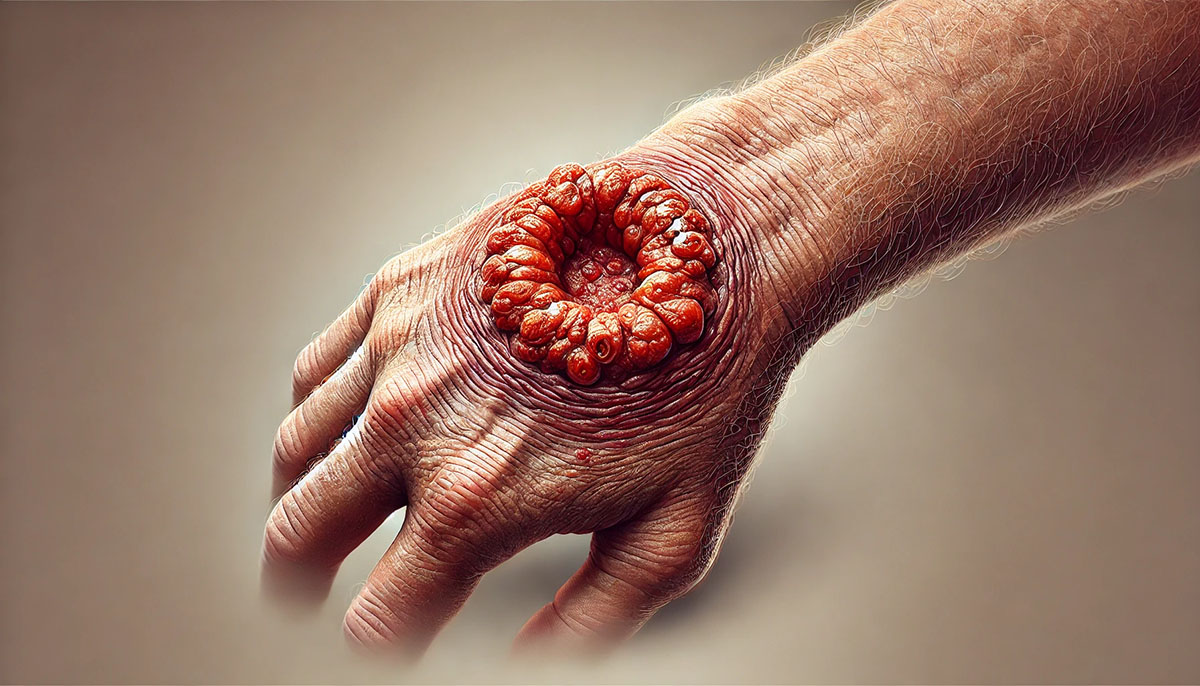
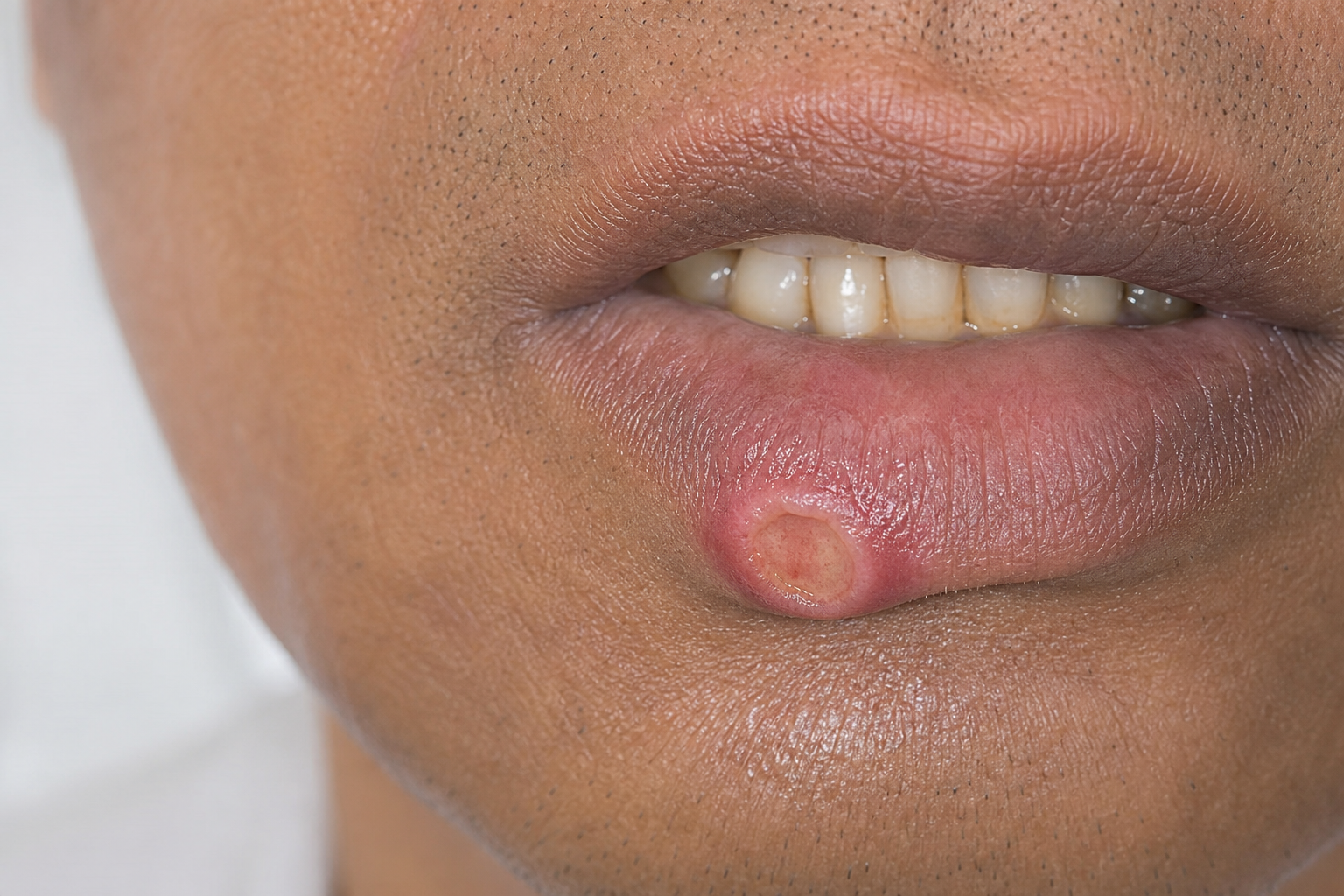
Primary syphilis is a quiet infection. The textbook first sign is a chancre: a single round, firm, painless ulcer that appears at the site where the bacterium Treponema pallidum entered the body. The CDC's About Syphilis page describes the sore as usually firm, round, and painless, which is exactly why so many people miss it. There is no burn, no itch, and often no warning beyond a sore that the person assumes is a small skin injury.
Burning, by contrast, is a symptom of inflammation in tissues that respond loudly to irritation. The lining of the urethra (the tube urine flows through) is one of those tissues. When chlamydia or gonorrhea bacteria attach to the urethral wall, the body mounts a local immune response and the result is the classic dysuria (the medical term for painful urination) that brings most people to a clinic. Herpes simplex causes burning a different way: the virus replicates in nerve endings near the surface of the skin, producing a tingle or burn a day or two before any visible blister.
None of those mechanisms describe syphilis. Treponema pallidum moves through the body by entering broken or thinned mucous membrane tissue, multiplying slowly at the entry site, and then dispersing into the bloodstream. The local inflammation it causes is mild enough that the chancre is genuinely painless in most people, and the bacterium prefers to spread quietly rather than provoke a sharp local reaction.
So if your main complaint is "it burns when I pee" or "it burned during sex," the most productive first step is to run tests for the infections that actually cause burning, and add a syphilis blood test once you reach the right window after exposure.
Chlamydia and gonorrhea inflame the urethral wall, and that local inflammation produces the burn. Treponema pallidum, the syphilis bacterium, enters thinned skin quietly, triggers minimal local reaction, and spreads through the bloodstream without producing pain at the entry site. The same exposure event can give you one, the other, or both. Testing decisions follow the mechanism, not the worst-case fear.
Can burning during urination or after sex be syphilis?
Almost never as a primary symptom. Primary syphilis presents as a painless sore (chancre) at the site of bacterial entry, not as burning or pain. Burning is far more often chlamydia, gonorrhea, herpes, trichomoniasis, or a urinary tract infection. The right move after a real unprotected exposure is to test for the infections more likely to cause your symptom AND for syphilis once you reach the 6-week post-exposure window.
What syphilis actually looks and feels like in its early stages
Syphilis moves through four stages, each with a recognisable pattern. The first three matter most for anyone evaluating a recent exposure.
Primary stage (about 21 days after exposure, range 10 to 90 days). A chancre develops at the entry point. It starts as a small bump, then opens into a round ulcer with a clean base and a raised firm border. It is typically 5 to 15 mm across. The CDC's About Syphilis page states that the sore usually lasts 3 to 6 weeks and heals regardless of whether you receive treatment. That self-healing is the most dangerous part of primary syphilis: people interpret the disappearance as the body fighting off the infection, when actually the bacteria are still present and dividing in deeper tissues.
Secondary stage (typically 4 to 10 weeks after the chancre appears). Once the bacteria reach the bloodstream, the body's response becomes systemic. The classic finding is a non-itchy reddish-brown rash, often most visible on the palms of the hands and soles of the feet. Other secondary signs include fever, swollen lymph nodes, sore throat, patchy hair loss, weight loss, fatigue, headaches, and muscle aches. Some people develop wart-like lesions called condyloma lata in warm moist areas of the body. As with the chancre, secondary symptoms resolve without treatment, which again misleads people into thinking they are clear.
Latent stage. No outward symptoms, but blood tests are still positive. Latent syphilis can last for years. The CDC subdivides this into early latent (within the first year of infection, when relapse of secondary symptoms is possible) and late latent (after the first year).
Tertiary stage. Without treatment, a meaningful share of cases eventually progress to tertiary syphilis 10 to 30 years later, with damage to the heart, blood vessels, brain, nerves, eyes, and other organs. Modern testing and treatment make this stage uncommon in countries with reliable healthcare access, but it remains the reason untreated syphilis is taken seriously.
What is missing from every one of those stages: burning when you pee, burning during sex, and sharp local pain. Clinical descriptions of primary and secondary syphilis simply do not list dysuria as a hallmark feature.
Where syphilis chancres show up (and why you might miss them)
The chancre develops wherever the bacterium first contacted thinned skin or mucous membrane. That includes:
- External genital skin. The penile shaft, the glans, the foreskin, the labia, and the skin around the vaginal opening. These are the most easily noticed locations.
- Hidden internal locations. The cervix, the inside of the vagina, the inside of the anus and the rectum, and the urethra. Chancres in these spots are typically unseen and unfelt because the painless ulcer sits on tissue you do not regularly inspect.
- Mouth and throat. The lip, tongue, gum line, soft palate, or tonsils, usually after oral contact with an infected partner's genital chancre or rash.
- Other skin sites with broken surface. Less commonly, fingers (after handling an infected partner's lesion), nipples, or other areas where direct skin contact occurred.
Multiple chancres are possible, especially in people living with HIV. The standard mental shortcut of "I would have seen one sore" therefore misses two scenarios at once: the chancre might be hiding inside the cervix or rectum, and there might be more than one to begin with.
Because blood tests stay positive long after a visible chancre heals, a careful syphilis evaluation usually goes straight to bloodwork rather than waiting for a swab opportunity on a lesion that may already be gone.
What is more likely behind the burning
If burning is what brought you to this article, the realistic differential (the medical term for the list of conditions a symptom could come from) looks like this:
Urinary tract infection (UTI). The most common cause of burning urination, especially in women. UTIs do not require sexual exposure, but sexual activity can introduce bacteria from the perineum into the urethra. Symptoms typically include frequent urge to urinate, cloudy urine, pelvic pressure, and burning that builds over a day or two.
Chlamydia. The most common bacterial STI in the United States. The infection causes urethritis (urethral inflammation) in many men but is often silent in women. The CDC's About Chlamydia page notes that asymptomatic infection is common in both women and men, which is why screening is recommended even without symptoms. When symptoms appear, they include burning urination, mild discharge, and (in women) bleeding between periods. Symptoms typically appear 1 to 3 weeks after exposure.
Gonorrhea. Often overlapping with chlamydia. Gonorrhea tends to produce a thicker yellow or green discharge along with the burning. The symptom-onset window is similar at 1 to 14 days after exposure.
Genital herpes. Herpes burning is distinctive: it usually starts as a tingling or burning a day or two before visible blisters, then a cluster of small painful vesicles appears, then they break open into shallow ulcers that crust and heal over 1 to 2 weeks. Recurrent outbreaks can be milder.
Trichomoniasis. A protozoal infection that causes itching, burning, and frothy discharge in women. Most infected men have no symptoms but can still transmit the infection. Note that our at-home trichomoniasis kit is validated for vaginal self-swab only; men needing a trich test should see a clinic.
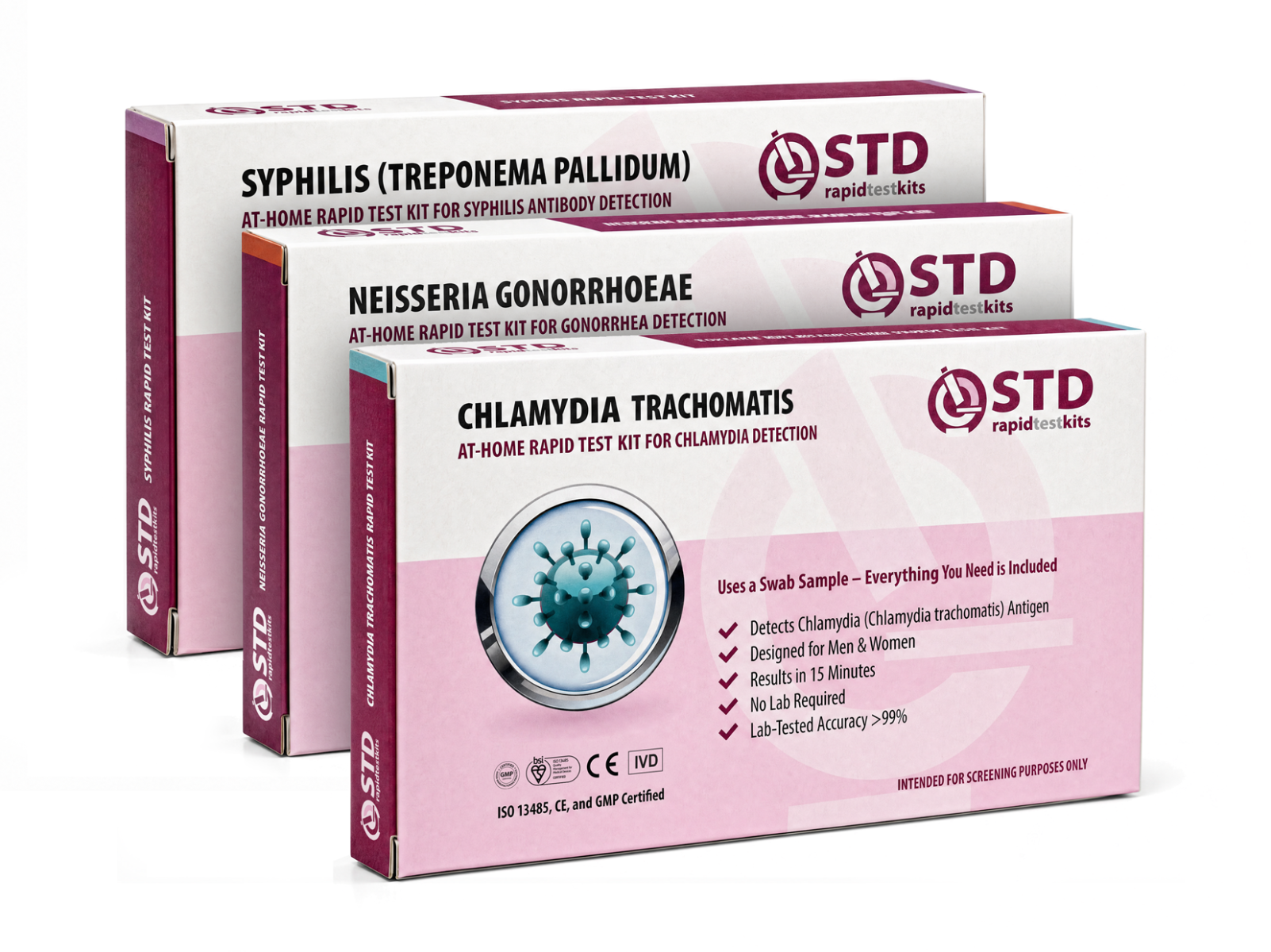
The honest rule of thumb after unprotected sex: if you have burning, test for the infections that actually cause burning first, and add a syphilis blood test once you are in the right window. A combo home test that covers chlamydia and gonorrhea by swab plus syphilis by fingerstick blood is one efficient way to do that in a single kit.
| Condition | Onset after exposure | Distinguishing feature | Test type |
|---|---|---|---|
| UTI | 1 to 2 days | Frequent urge, cloudy urine, pelvic pressure | Urine test at a clinic |
| Chlamydia | 1 to 3 weeks | Burning with mild discharge, often silent in women | Self-collected swab |
| Gonorrhea | 1 to 14 days | Thicker yellow or green discharge with burning | Self-collected swab |
| Genital herpes | 2 to 14 days | Tingle, then a cluster of small painful blisters | Clinic swab during outbreak; blood antibody after 12 weeks |
| Trichomoniasis | 5 to 28 days | Itching with frothy discharge (women) | Self-collected swab (women only) |
| Primary syphilis | 10 to 90 days (avg 21) | Painless sore (chancre), no burning | Fingerstick blood antibody from about 6 weeks |
When and how to test for syphilis
Syphilis testing is a blood test, not a swab or a urine sample. The diagnostic chain has two layers: a non-treponemal screen (RPR or VDRL) that detects the body's response to infection, and a treponemal confirmatory test (FTA-ABS, TP-PA, or EIA) that confirms exposure to Treponema pallidum specifically. Lab-run syphilis testing is highly accurate when performed at the correct time after exposure.
The catch is the window period. Antibodies do not appear immediately. The CDC's 2024 Laboratory Recommendations for Syphilis Testing note that antibodies reactive with non-treponemal and treponemal tests can take up to two weeks to develop after the primary chancre appears, which itself averages around three weeks after exposure. In practical terms, that means a test taken too early can return a negative result even when the infection is present.
Practical timing for a real exposure:
- Day 0 to 3 weeks after exposure. Too early for antibody testing. If you have a visible sore, a clinician can perform direct testing of fluid from the lesion (darkfield microscopy or PCR), but home testing in this window will not be reliable.
- Week 3 to 6. Antibodies are starting to appear in many people. A negative result still warrants a repeat test.
- Week 6 to 12. Reliable window for both lab and at-home rapid blood tests. Most positive infections will be detected in this range.
- Around 90 days post-exposure. Clinicians commonly recommend a follow-up blood test at this point when the exposure risk was real but the earlier result was negative, since a small share of infections seroconvert later than the average window.
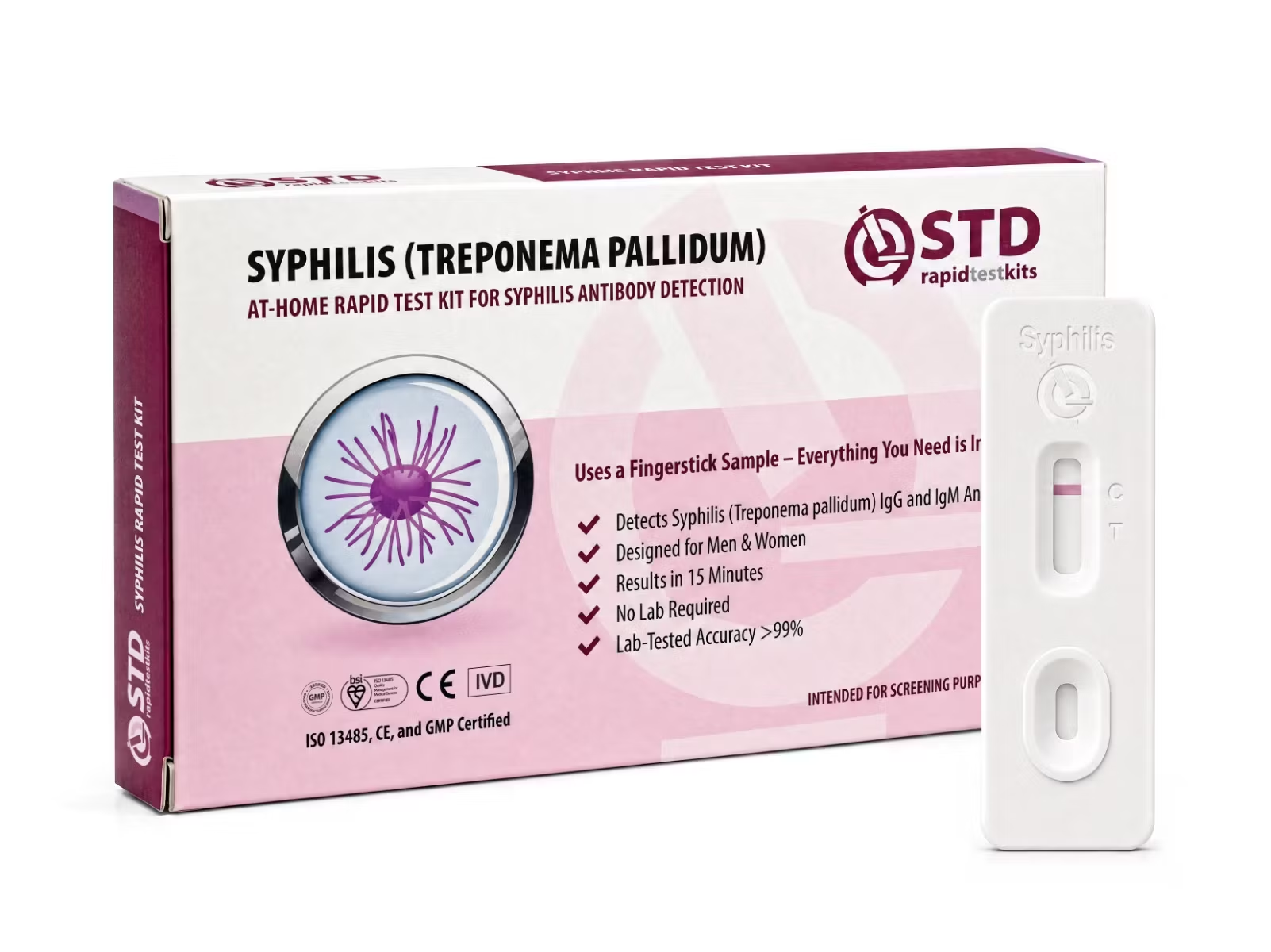
At-home rapid syphilis tests use the same fingerstick blood sample as lab serology. They are lateral-flow immunoassays that detect treponemal antibodies. The World Health Organization's STI fact sheet notes that inexpensive rapid syphilis tests are used widely as screening tools, particularly in settings where lab access is limited. They are useful for screening at home with privacy and a 15-minute turnaround. A positive at-home result should always be confirmed with a lab non-treponemal test (RPR) to stage the infection and guide treatment.
Sores are usually (but not always) firm, round, and painless. Because the sore is painless, you may not notice it.
Treatment for syphilis is straightforward when caught early
Syphilis is one of the few STIs with a definitive curative treatment, and the regimen has not changed in decades because it still works.
Early syphilis (primary, secondary, and early latent). A single intramuscular injection of long-acting penicillin G benzathine (Bicillin LA), 2.4 million units, is curative. This is administered at a clinic. For people with a true penicillin allergy, the CDC's Primary and Secondary Syphilis treatment page lists doxycycline (100 mg orally twice daily for 14 days) and tetracycline (500 mg orally four times daily for 14 days) as alternatives that have been used for years and can be effective, with doxycycline preferred for compliance reasons. Pregnant patients with a penicillin allergy should be desensitized and treated with penicillin per the same guideline.
Late latent syphilis or syphilis of unknown duration. Three weekly injections of penicillin G benzathine, 2.4 million units each.
Neurosyphilis or ocular syphilis. Intravenous aqueous crystalline penicillin G for 10 to 14 days. This requires inpatient or intensive outpatient management.
Within hours of the first dose, some people experience a Jarisch-Herxheimer reaction: fever, chills, headache, and muscle aches as the immune system responds to the rapid die-off of bacteria. The reaction is uncomfortable but self-limited and not an allergic response.
Two follow-up actions matter as much as the injection itself. First, partner notification: anyone the person had sexual contact with in the prior 90 days for primary syphilis (longer windows for later stages) should be informed and tested. Second, follow-up RPR titers at 6 and 12 months to confirm the infection cleared. A four-fold drop in titer is the marker of successful treatment.
Reducing your risk going forward
Beyond the immediate question of testing after one exposure, the most useful long-term moves are the boring ones that public-health organizations have repeated for decades.
Condoms or dental dams during all sexual contact. Latex or polyurethane barriers reduce syphilis transmission substantially when they cover the chancre or the rash. They do not eliminate transmission risk, because chancres can occur on areas a condom does not cover, but they shift the math meaningfully in your favor. The same barriers reduce chlamydia, gonorrhea, herpes, HIV, hepatitis B, and trichomoniasis transmission.
Regular STI screening if you are sexually active. The CDC's STI screening recommendations call for at least annual syphilis screening for sexually active gay, bisexual, and other men who have sex with men, with more frequent screening (every 3 to 6 months) for those with multiple partners or HIV. All pregnant women should be screened at the first prenatal visit, with rescreening at 28 weeks and at delivery for those at higher risk. Other groups should be screened based on individual risk factors.
Talk to partners about testing history. Direct, calm conversations before sex about when each of you was last tested and what you were tested for is the most underused harm-reduction tool. It does not require certainty, only honesty.
Treat any STI promptly. Active untreated chlamydia, gonorrhea, or herpes can increase your susceptibility to other infections by inflaming and breaking the mucosal barrier, which is the same barrier syphilis would have to cross. Treating one infection reduces the risk window for the next.
- Use latex or polyurethane barriers (condoms, dental dams) for all sexual contact.
- Screen on the cadence that matches your risk profile (annual for sexually active MSM; every 3 to 6 months with multiple partners or HIV; first prenatal visit for pregnancy).
- Have a direct testing-history conversation with new partners before sex.
- Treat any active STI promptly to reduce the entry-point risk for the next one.
FAQs
- Does syphilis cause burning when you pee?
- Burning urination points first to UTI, chlamydia, gonorrhea, or trichomoniasis. Those infections attack the urethral lining directly and produce the pain you are feeling. Syphilis produces local inflammation at the bacterial entry point only mildly, and that entry point is usually a painless sore rather than a burn. The pragmatic order of operations: run swab-based tests for the burning-causing infections first, then add a syphilis fingerstick blood test once you reach the 6-week post-exposure mark.
- How long after exposure can a blood test detect syphilis?
- Most people develop detectable antibodies between 3 and 6 weeks after exposure, with reliable detection by week 6 in the majority of cases. Clinicians commonly recommend a follow-up test at 90 days when the early test was negative but the exposure risk was meaningful, since a small share of infections seroconvert later than the average window.
- Can a syphilis chancre be inside my body where I cannot see it?
- Yes. Chancres can develop on the cervix, inside the vagina, inside the anus or rectum, or in the urethra. They can also appear in the mouth or throat after oral contact. Because the chancre is painless, internal chancres are often completely unnoticed and only show up later as positive blood-test results.
- Is syphilis curable?
- Yes. A single intramuscular injection of long-acting penicillin G benzathine cures early syphilis (primary, secondary, and early latent stages). Later-stage syphilis takes a longer treatment course but remains curable in most cases. Curing the active infection does not reverse damage already done in tertiary-stage cases, which is why early testing matters.
- What happens if the chancre healed before I got tested?
- The infection stays active in the bloodstream and tissues even after the visible sore heals. A blood test taken weeks after the chancre has resolved will still detect the infection, and standard penicillin treatment still works at that point. The point of testing is to find the bacteria, not the sore.
- Can I be reinfected with syphilis after treatment?
- Yes. Treatment cures the current infection only. Future exposures still carry full risk, so anyone with a prior history of syphilis who has new partners or fresh risk factors should follow the standard screening cadence and use barrier methods, exactly as someone without prior infection would.
- Do at-home rapid syphilis tests actually work?
- Yes, when used inside the right window. Rapid lateral-flow blood tests detect treponemal antibodies from a fingerstick sample once antibodies have appeared (around week 6 after exposure). They are useful as a private screening step at home. A positive at-home result should be confirmed with a clinic-run non-treponemal test (RPR) to stage the infection and guide treatment, and a negative result close to the window edge should be repeated at 90 days if the exposure risk was real.
- U.S. Centers for Disease Control and Prevention. About Syphilis. Plain-language description of the primary chancre as firm, round, and painless; chancre duration of 3 to 6 weeks; and the four-stage progression of the disease.
- U.S. Centers for Disease Control and Prevention. Primary and Secondary Syphilis, STI Treatment Guidelines. Penicillin G benzathine as preferred treatment; doxycycline and tetracycline as alternatives for penicillin-allergic patients.
- U.S. Centers for Disease Control and Prevention. 2024 Laboratory Recommendations for Syphilis Testing (MMWR). Window-period guidance for treponemal and non-treponemal antibody detection.
- U.S. Centers for Disease Control and Prevention. About Chlamydia. Plain-language note that asymptomatic chlamydia is common in both women and men, which is why screening is recommended even without symptoms.
- U.S. Centers for Disease Control and Prevention. STI Screening Recommendations. Annual syphilis screening for sexually active MSM, first-prenatal-visit screening for all pregnant women, and risk-based cadence for other groups.
- World Health Organization. Sexually transmitted infections (STIs) fact sheet. Global prevalence context and the role of inexpensive rapid syphilis tests as widely used screening tools.
- NHS. Syphilis condition page. Plain-language UK reference for symptoms, transmission, and treatment.
