

Published: November 2025 | Last updated: April 2026 | Editorial review and quality control: Martina N.
If you have just been diagnosed with chlamydia and you are wondering whether solo sex is off the table, the short answer is no, it is not. Solo masturbation cannot transmit chlamydia to anyone else, and the act itself does not slow your body's response to antibiotic treatment. The longer answer involves a handful of specific scenarios where hygiene matters, and one or two situations where pausing makes practical sense.
This guide walks through what the CDC and NHS actually recommend, the auto-inoculation risk that often gets exaggerated online, and the practical steps that keep you from re-infecting yourself or stretching out your recovery. Editorial note: this site sells the at-home STI test kits referenced below. We recommend products by fit-for-purpose, not commercial benefit.
Can I masturbate if I have chlamydia?
Yes. Solo masturbation is medically safe during chlamydia treatment because there is no partner to transmit the infection to, and the act itself does not interfere with antibiotics. Wash your hands before and after, do not use saliva as lubricant, clean any sex toys between uses, and stop if it hurts. The infection clears with a standard 7-day antibiotic course; partner sex should wait until that course is complete and symptoms have resolved.
Key Takeaways
- Solo masturbation cannot transmit chlamydia to anyone else and does not slow antibiotic treatment, so it is generally safe to continue during recovery.
- The real hazards during recovery are auto-inoculation (hands to eyes via genital fluid), saliva-based lubricants, and unwashed sex toys, all easily avoided with basic hygiene.
What chlamydia does inside the body
Chlamydia is a bacterial infection caused by Chlamydia trachomatis. It infects mucous membranes, which is why it shows up most often in the cervix, urethra, rectum, throat, and (less commonly) the eye. Per the CDC, most people with chlamydia have no symptoms at all, which is why routine screening matters.
When symptoms do appear, they tend to be:
- Pain or burning when you urinate
- Unusual vaginal, rectal, or penile discharge
- Pelvic or lower-abdominal pain (more common in women)
- Testicular pain or swelling (men)
- Bleeding between periods or after sex
Untreated chlamydia matters because of what it can become later. In women it can ascend into the uterus and fallopian tubes and cause pelvic inflammatory disease (PID), which is the main pathway to chlamydia-related infertility and ectopic pregnancy. In men it can cause epididymitis, an inflammation of the tube behind the testicle. The World Health Organization classifies chlamydia among the most common curable bacterial STIs worldwide.
The reassuring part: it is curable. A standard antibiotic course clears the infection in nearly all cases when taken as prescribed.
The WHO classifies chlamydia among the most common curable bacterial STIs worldwide, with millions of new infections each year clearing routinely on a 7-day antibiotic course. The questions in the rest of this article are about the in-between days, not the cure itself.
Why solo masturbation is medically fine during treatment
Two myths fuel most of the worry here. The first is that any sexual activity will somehow feed the infection or slow antibiotics. The second is that arousal itself spreads bacteria. Both are wrong.
Antibiotics work systemically. Doxycycline, the current first-line CDC regimen for genital chlamydia, reaches infected tissue through your bloodstream regardless of whether you are sexually active. Solo masturbation does not change drug absorption, drug levels in tissue, or the rate at which bacteria die off.
Transmission also requires a path from one body to another. Solo activity has no second body. The bacteria are already inside you; touching yourself does not change the pre-existing infection load.
What solo activity can do, in a small set of circumstances, is move bacteria from one part of your body to another part of your body. Auto-inoculation is the genuine risk here, small enough to prevent with ordinary hand-washing.
Three real risks during solo sex with chlamydia
The clinical literature describes a handful of plausible self-transmission scenarios. None of them are common. All of them are easy to avoid with simple hygiene habits.
1. Hands to eyes (chlamydial conjunctivitis)
Chlamydia can infect the conjunctiva, the thin membrane lining your eyelid and the white of your eye. Adult inclusion conjunctivitis from Chlamydia trachomatis typically follows direct contact between infected genital fluid and the eye, usually via fingers. It is a recognized if uncommon complication documented in the clinical literature.
Symptoms include redness, irritation, and a sticky discharge in the affected eye, sometimes only on one side. The fix is straightforward: wash your hands with soap and water after any contact with genital fluid, and avoid rubbing your eyes if you have not done so.
2. Saliva as lubricant
Pharyngeal (throat) chlamydia is a real, if less common, presentation. Using saliva to wet a hand or a toy creates a direct fluid bridge between the throat and the genital area. For someone already infected, this can move bacteria from genitals to mouth or vice versa. Throat infections often have no symptoms, so the carrier may not know.
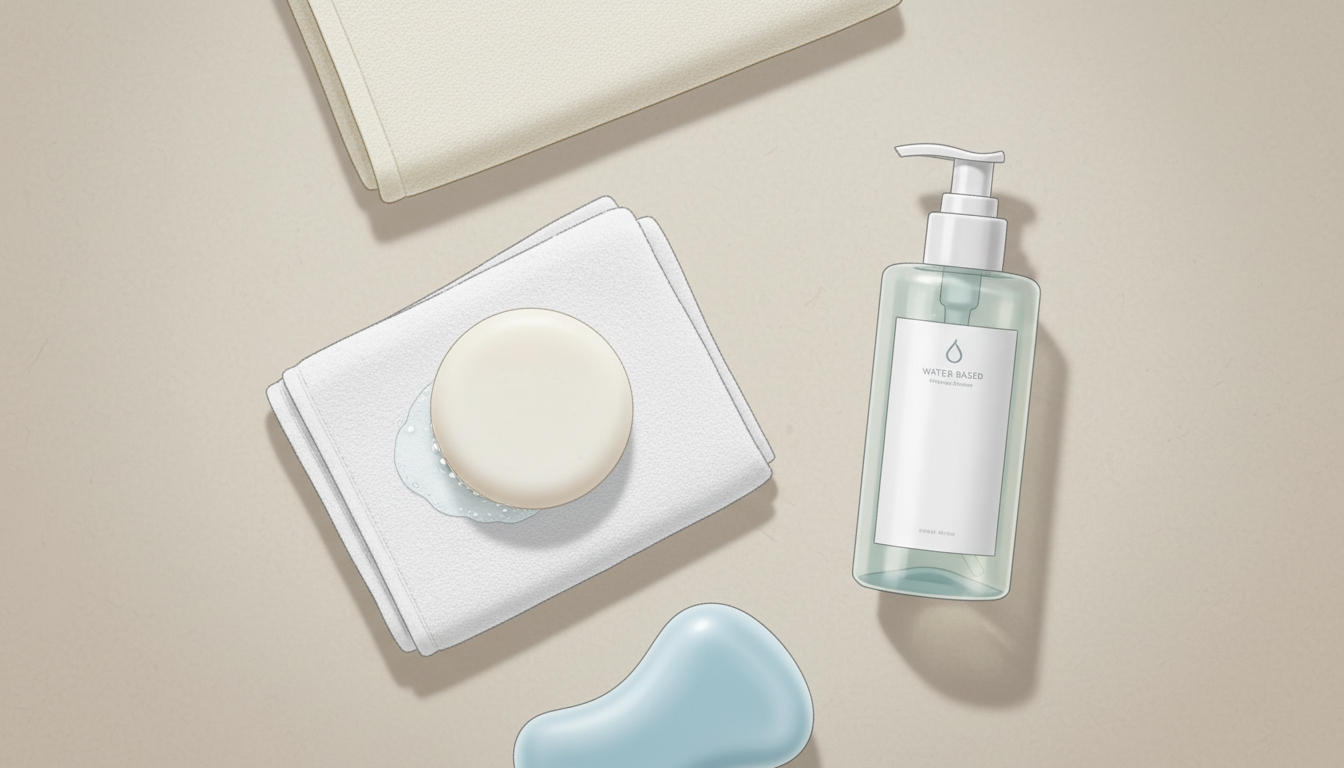
Water-based or silicone-based lubricants do not carry this risk. They are the right choice during treatment and afterwards.
3. Sex toys that carry bacteria between sessions
Bacteria can survive briefly on toy surfaces, especially porous materials. A toy used vaginally and then anally, or used on day one of treatment and again on day three without washing, can re-deposit bacteria onto recovering tissue.
Wash any toy with warm soapy water after each use. Silicone, glass, and stainless-steel toys can be sanitized more thoroughly with boiling water or a 10% bleach solution rinsed off afterwards. Porous materials such as jelly or cyberskin are harder to clean and are best avoided during an active infection.
Antibiotics work systemically; arousal does not affect drug levels or how fast bacteria die off. The only solo-activity risks are mechanical (moving bacteria with fingers, saliva, or unwashed toys), and each of those is solved with soap and water.
A practical safe-practice checklist
Each item below closes one of the three risk paths above.
- Wash hands with soap before and after. Use warm water for at least twenty seconds. The same protocol that prevents most clinical infections.
- Use water-based or silicone-based lubricant. Skip saliva for the duration of treatment.
- Clean toys after every single use. Soap and water at minimum; full sanitization between vaginal and anal use.
- Keep things gentle. Inflamed tissue heals slower under heavy friction. If burning or discharge is part of your symptom picture, harder stimulation can extend irritation.
- Stop if it hurts. Pain during masturbation while you have chlamydia is a sign to wait a few days. It is not a sign you have damaged something permanently.
- Avoid touching the eyes after touching the genitals. Hand-to-eye contamination is the most reported auto-inoculation route.
- Do not share toys. Even with cleaning, the safest move during active infection is solo use of solo toys.
When you do need to wait (and what for)
The CDC's 2021 STI Treatment Guidelines are clear about partner sex during chlamydia treatment, and the rule has nothing to do with masturbation.
First-line treatment for genital chlamydia is doxycycline, 100 mg orally twice a day for 7 days. Azithromycin 1 g as a single dose is an alternative regimen. Patients are advised to abstain from sexual activity with partners until they have completed the 7-day course (or for 7 days after the single dose), and until any symptoms have resolved.
Notice what that rule targets: partner-to-partner transmission. The reason for waiting is to avoid passing live bacteria to someone else while antibiotics are still clearing the infection. Solo masturbation has no partner, so the abstinence guidance does not apply to it in the same way.
That said, two situations still warrant pausing solo activity:
- Active visible irritation, sores, or significant pain. Inflamed tissue benefits from rest. A few days off does not affect cure rates and reduces discomfort meaningfully.
- The first 24 to 48 hours of antibiotics. Some people experience nausea or fatigue from doxycycline or azithromycin. Wait until you feel reasonably normal again.
All sexual partners from the previous 60 days should be told and offered testing. The CDC recommends expedited partner therapy in jurisdictions where it is permitted, so that partners can be treated without a separate clinic visit.
The CDC's 7-day rule targets partner transmission, not solo activity. Solo masturbation has no abstinence requirement during treatment; the hygiene rules above apply instead. The waiting clock is only relevant for the moment you resume sex with a partner.
Myths to retire
A handful of incorrect ideas circulate online about chlamydia and self-pleasure. The clinical reality is more reassuring.
“Masturbation slows antibiotic recovery.”
It does not, in any meaningful clinical sense. Antibiotics work in your bloodstream and tissues, independent of whether you are sexually active. The only mechanism by which solo activity can extend recovery is by causing physical irritation in already inflamed tissue, which is a comfort issue rather than a cure issue.
“You can give yourself chlamydia by masturbating.”
If you are already infected, you cannot newly catch the same infection. You can move bacteria to a different anatomical site (eye, throat, occasionally other mucous membranes) through fluid contact. This is called auto-inoculation, and it is why the hand-washing rule exists, not a reason to abstain entirely.
“Chlamydia bacteria die immediately outside the body.”
Not quite. Chlamydia trachomatis is fragile compared with most viruses, but laboratory studies have shown the elementary body (the infectious form) can remain viable on surfaces for hours, especially under cool, moist conditions. This is the basis for the toy-cleaning rule.
“If I am the only person using my toys, I do not need to clean them.”
You do, while infected. A used toy can hold bacteria long enough to re-deposit them at the next session, which is one mechanism by which an apparently treated person can later test positive again.
“Once antibiotics start, the infection is gone.”
It is on its way out, but not gone. Cure for chlamydia is the full course plus the recommended waiting window. Stopping antibiotics early or treating “I feel better” as “I am cured” is the most common reason people relapse before they should.
“If my partner tested negative, I do not need to retest.”
Test results have window-period limits. A partner testing negative right after exposure does not rule out infection if the test was done before the bacteria became detectable, generally one to three weeks. Retesting later is a separate question from your own treatment outcome.
Persons with chlamydial infection should abstain from sexual activity for 7 days after single-dose therapy or until completion of a 7-day regimen, and until all sex partners are adequately treated.
Testing, retesting, and what comes next
If you are reading this without a confirmed diagnosis, the first step is a test. Chlamydia is among the most common bacterial STIs in adults under 25 according to CDC surveillance, and most cases are silent. A quick screening test is the only way to know.
For people who already have a confirmed diagnosis and are partway through treatment, two follow-up moments matter:
- Three months after treatment: retest. The CDC recommends a retest at about three months because reinfection (usually from an untreated partner or a new exposure) is common, not because the original treatment is in doubt.
- Sooner if symptoms persist past the seven-day course. Persistent burning, discharge, or pelvic pain after treatment ends warrants a clinic visit, not a self-managed second course.
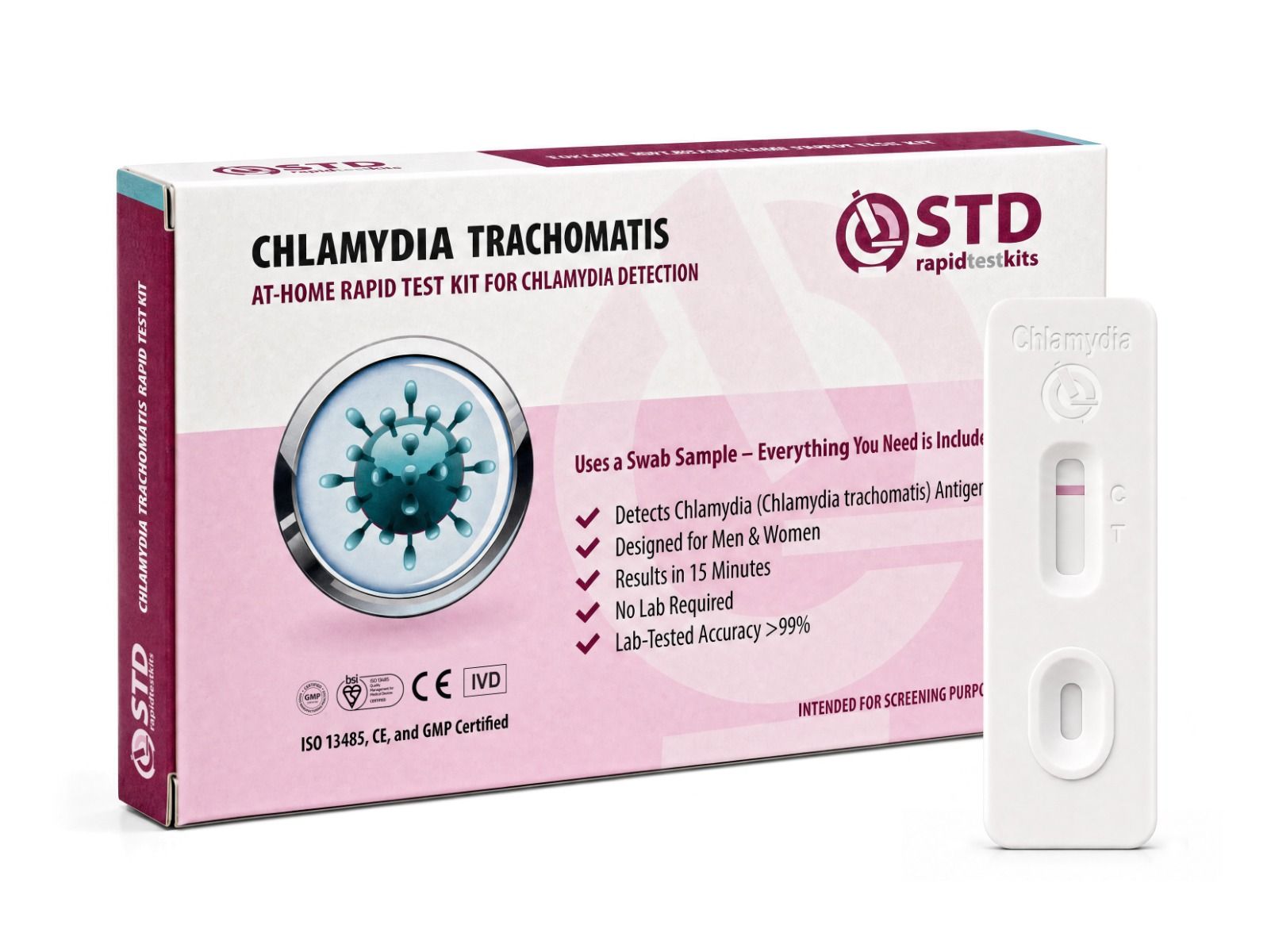
An at-home rapid test is a private, fast way to handle either checkpoint. The result does not depend on whether you have been masturbating during recovery.
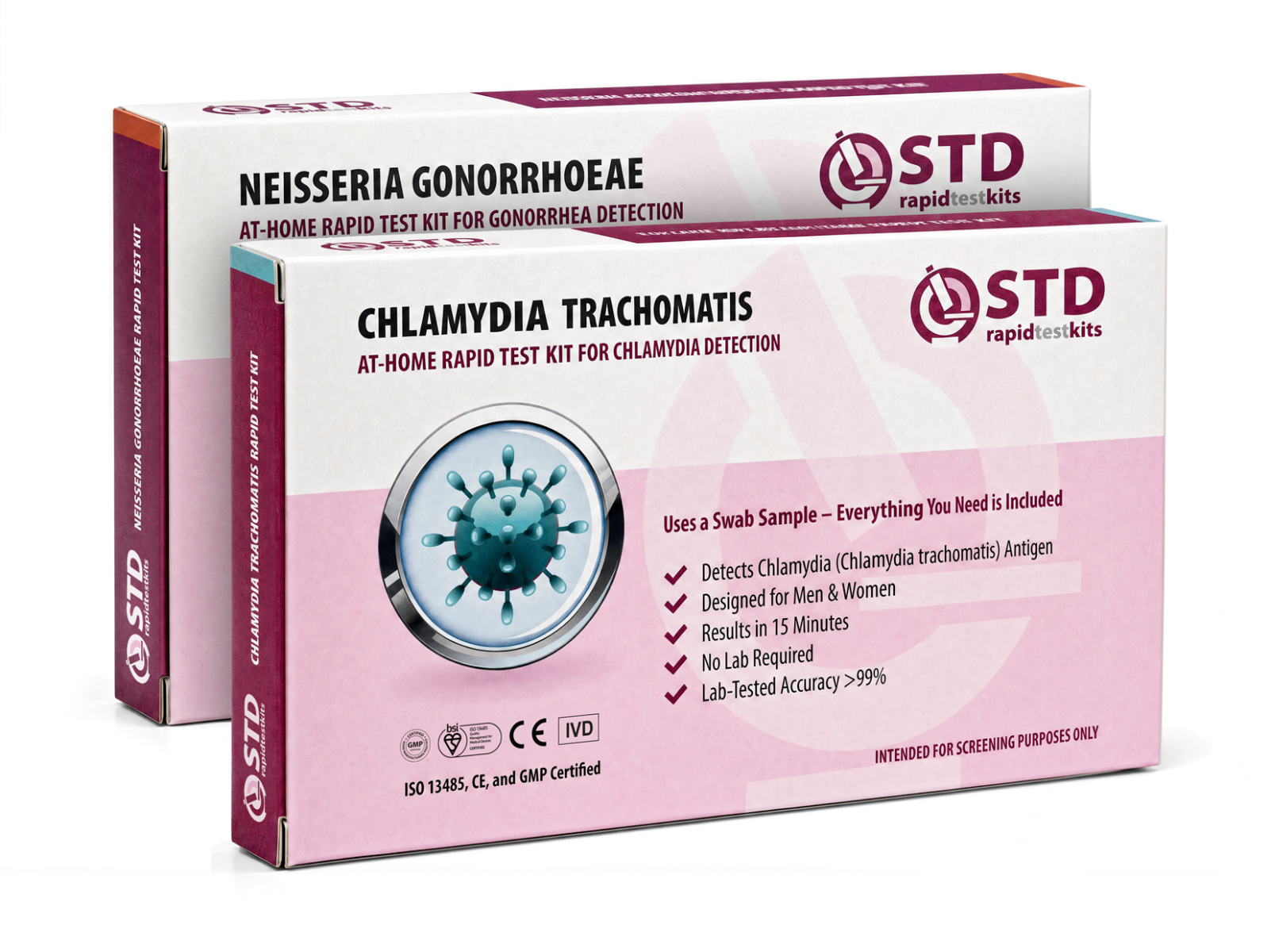
If your original exposure was unclear, a multi-infection panel that screens for chlamydia alongside the bacterial STIs that travel with it (gonorrhea, syphilis) often makes more sense than a single-infection retest.
The bottom line
Solo masturbation during chlamydia treatment is medically fine, with predictable caveats. The infection clears with a 7-day antibiotic course, partner sex waits until that course is complete and symptoms have resolved, and the in-between period is governed by ordinary hygiene: clean hands, clean toys, real lubricant.
If you are still unsure whether you have chlamydia in the first place, or whether a previous infection has cleared, an at-home rapid test gives you an answer in about 15 minutes without a clinic visit. The result is the same whether or not you have been sexually active, with yourself or anyone else, in the days before the test.
FAQs
- Can solo masturbation reinfect me with chlamydia?
- Reinfection in the strict sense (catching it again from outside) is not possible from solo activity, since there is no partner. What can happen is moving existing bacteria to a new site (eye, throat, occasionally rectum) through fluid contact. Hand-washing and avoiding saliva-as-lubricant prevent this almost entirely.
- How long after starting antibiotics should I wait before partner sex?
- Per CDC guidance, wait until you have completed the full 7-day doxycycline course (or 7 days after a single 1 g dose of azithromycin), and until any symptoms have fully resolved. Your partners from the past 60 days should also have been tested and, where appropriate, treated.
- Can I use saliva as lubricant during treatment?
- Skip it. Saliva creates a direct path between the genital area and the throat, both of which can host chlamydia. Use water-based or silicone-based lubricant instead. Saliva is also a poor lubricant from a comfort standpoint, drying out quickly and increasing friction.
- Do I have to clean a sex toy if only I use it?
- Yes, while you have an active infection. Bacteria can persist on toy surfaces long enough to re-deposit them at the next session. Wash with soap and warm water after every use; silicone or glass toys can be more thoroughly sanitized by boiling. Porous toy materials are harder to clean and best avoided during treatment.
- Can chlamydia transfer to my eyes through self-touch?
- Wash your hands before touching your face after genital contact and this route is effectively closed. The mechanism is direct fluid transfer to the conjunctiva, which presents as one-sided pink eye with sticky discharge. It is uncommon, and standard soap-and-water hand hygiene prevents it almost entirely.
- Does masturbation make antibiotics work less well?
- No. The antibiotics work whether or not you are sexually active. They circulate systemically and are not affected by arousal or physical activity. The one indirect effect is friction on inflamed tissue, which can extend discomfort but does not change the infection timeline.
- When should I retest after finishing treatment?
- The CDC recommends a retest about three months after treatment. The reason is reinfection from an untreated or newly exposed partner, which is more common than initial-treatment failure. If symptoms persist past the 7-day course, see a clinician sooner rather than waiting for the three-month checkpoint.
- Is it safe to masturbate if I have visible discharge or pain?
- Comfort beats schedule here. Pause for a few days if there is significant pain, raw irritation, or heavy discharge; the antibiotics will continue to work either way. Resume gently once symptoms ease, with the hygiene rules above. There is no fixed waiting period required.
- U.S. Centers for Disease Control and Prevention. 2021 Sexually Transmitted Infections Treatment Guidelines. Source for first-line chlamydia treatment regimen (doxycycline 100 mg twice daily for 7 days; azithromycin 1 g single-dose alternative) and post-treatment partner-abstinence guidance.
- U.S. Centers for Disease Control and Prevention. Chlamydia: Basic Information and STD Surveillance. Source for chlamydia symptom list, asymptomatic prevalence, complications including PID and epididymitis, and the three-month retest recommendation.
- UK National Health Service. Chlamydia overview: symptoms, treatment, and complications. Source for plain-language partner-treatment guidance and general symptom presentation.
- World Health Organization. Chlamydia fact sheet. Source for global epidemiology and the classification of chlamydia among the most common curable bacterial STIs worldwide.
- Mayo Clinic. Chlamydia trachomatis: symptoms and causes. General-reader source for symptom presentation and the case for routine screening in younger adults.
