
Published: December 2025 | Last updated: May 2026 | Editorial review and quality control: Martina N.
Yes, you can get an STD from shower sex. Hot water does not kill most sexually transmitted infections, and the skin-to-skin contact, oral sex, and genital rubbing that happen in a steamy bathroom are exactly how infections like herpes, HPV, syphilis, chlamydia, and gonorrhea move between bodies. The shower environment may even raise the risk in subtle ways: soap and oil-based products weaken latex condoms, water makes them more prone to slipping, and the perception of cleanliness leads some people to skip protection or testing altogether.
If you are reading this because something feels off, or because you are trying to figure out whether what happened counts as a real exposure, the practical answer is to test rather than guess. Most common STIs are treatable when caught early, and at-home rapid panels remove the wait, the drive, and the awkward intake forms. This guide walks through which acts transmit which infections, why hot water is not a sterilizer, when to test for each one, and how to talk to a partner if you do test positive.
Key Takeaways
- Hot water does not kill bacteria or viruses that cause STIs. Showers run at roughly 100 to 110°F, well below sterilization temperatures and right at the conditions most pathogens thrive in.
- Skin-to-skin contact alone can transmit herpes, HPV, and syphilis. Penetration and ejaculation are not required for exposure, which is why shower sex deserves the same testing approach as any other sex.
Why Shower Sex Falls Into a Risky Grey Zone
For many people, shower sex feels casual. Often no penetration, no ejaculation, maybe no condom. It can feel less like "real sex" and more like fooling around. But sexually transmitted infections do not care about location, water temperature, or how the act is mentally categorized. They are opportunistic, and the shower environment creates several conditions that favor transmission instead of blocking it.
Water itself is not a barrier. Soap can irritate the thin tissue around the genitals and create microtears that let pathogens enter more easily. Body washes and shampoos often contain oils or surfactants that degrade latex condoms within minutes. Hot water raises skin temperature slightly, which has no effect on pathogens but does increase blood flow and makes mucous membranes more permeable. And steam masks small details, like a sore that would be visible in dry light, or a condom that has slipped halfway off.
In sexual health practice, a common post-exposure reconstruction goes like this: a person tests positive weeks after a hookup, retraces their steps, and the only physical encounter they can identify is "fooling around in the shower." No penetration, no ejaculation, just contact. For viruses like herpes simplex (HSV), that is enough. The CDC notes that herpes transmits through skin-to-skin contact and can spread even when no sores are present (CDC: Genital Herpes).
Standard shower water runs at roughly 100 to 110°F, well below the 250°F required to kill pathogens in a clinical setting. The shower does not sterilize. It just obscures the visual cues (a small lesion, a condom about to slip) you would otherwise notice in dry conditions.
How Infections Actually Spread in the Shower
Many STIs pass through skin-to-skin contact, not just through ejaculation or vaginal fluids. When two bodies press together in a wet, warm space, friction and warmth do not just heighten arousal. They amplify exposure across three common routes.
Genital rubbing, sometimes called outercourse or grinding, is the route most people underestimate. HPV, herpes, and syphilis can all transfer through direct contact between infected and uninfected skin. The pathogen does not need to travel through fluid; the contact itself transmits. A small herpes sore on a partner's thigh or genital area, even one they have not noticed, can shed virus during this contact (CDC herpes fact sheet).
Oral sex in the shower is another common path. Gonorrhea, chlamydia, and syphilis can infect the throat, and they can also be passed between mouth and genitals in either direction. Steam does not sterilize, and a partner's fluids remain present even when diluted by water. The CDC notes that pharyngeal (throat) infections often go unnoticed because they cause mild or no symptoms, so a partner can pass an infection forward without knowing they carry it (CDC: Sexually Transmitted Infections).
Hands and fingers matter too. If hands have touched infected genitals and then enter or touch a partner, that is digital penetration in clinical terms. Trichomoniasis, herpes, and HPV have all been documented transmitting through hand-to-genital and finger-to-genital contact, especially when the active infection is undiagnosed.
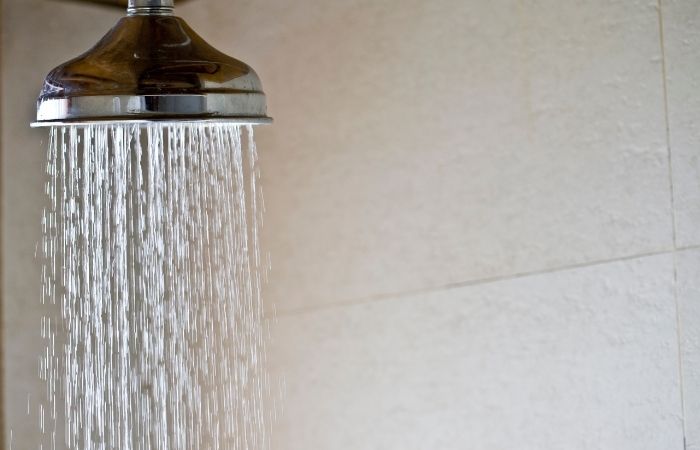
Myth: Hot Water Kills Bacteria and Viruses
The biggest assumption people make about shower sex is that hot water somehow neutralizes pathogens. It does not. Hospital sterilization requires sustained temperatures of about 250°F (121°C) under pressure (a medical autoclave), or chemical agents like bleach. Home shower water typically runs at roughly 100 to 110°F (38 to 43°C). That is below the temperature inside the human body, which sits around 98.6°F (37°C) and is the exact environment most STIs evolved to thrive in.
Some pathogens actually prefer warm, moist conditions. Herpes simplex virus is most active in damp environments. HPV can persist in human tissue indefinitely once it establishes infection. Chlamydia and gonorrhea live inside mucous membranes that the water never reaches. Showering does not interrupt this. It only obscures the visual signals (a small lesion, a condom about to slip) that you might otherwise notice in dry conditions.
There is also a behavioral risk that compounds the biological one. Research on perceived risk and STI testing shows that people who classify non-penetrative or "alternative" sex acts as low-risk are less likely to test on a regular cadence, even when they later develop symptoms. CDC prevention guidance is explicit on this: any act involving genital contact, oral-genital contact, or shared mucous membrane exposure carries some level of STI risk, and the only reliable way to know your status is testing on the right window (CDC STI prevention).
| Activity in the Shower | Relative STI Risk | Common Infections Involved |
|---|---|---|
| Skin-to-skin genital contact (no penetration) | Moderate to High | Herpes (HSV-1, HSV-2), HPV, syphilis |
| Oral-to-genital contact | Moderate | Gonorrhea, chlamydia, syphilis, herpes |
| Hand or finger-to-genital contact | Low to Moderate | Trichomoniasis, herpes, HPV |
| Shared toys without cleaning between use | Low to Moderate | HPV, trichomoniasis, hepatitis B |
| Penetrative vaginal or anal sex with intact condom | Lowered (not zero) | All STIs possible if condom fails or skin contact extends beyond condom |
Why Condoms Underperform in Wet Conditions
The fallback many people mention is "we used a condom." Condoms remain the best single barrier method available for preventing many STIs, and CDC condom-use guidance documents that consistent and correct use substantially reduces transmission of most STIs. But that effectiveness depends on the condom staying intact and in place, and the shower environment makes that harder (CDC sexually transmitted infections).
Latex breaks down on contact with oil-based products. Most body washes, shampoos, conditioners, and shower oils contain oils or surfactants that degrade latex within minutes of exposure. A condom that started intact can develop microscopic weak spots without any visible change. Heat compounds this: at sustained shower temperatures, latex loses elasticity faster than at room temperature.
Slippage is the more common failure mode. The combination of water, soap, and friction makes condoms more likely to slip off mid-act, and the sensory environment of warm water and steam makes it easier to miss the exact moment it happens. By the time someone notices, contact has already occurred. Slippage is also the failure mode most under-reported in self-report condom-use studies, because people often only realize after the fact.
Polyurethane and polyisoprene condoms are oil-resistant alternatives, and they are a better choice in wet environments than latex. They remain vulnerable to the slippage problem, however. CDC condom-use guidance recommends keeping condoms in cool, dry storage and applying them at a single point of intercourse, neither of which fits well with a shower scenario where reapplication mid-act is awkward and slippage often goes unnoticed.
| Environment | Typical Condom Effectiveness | Most Common Failure Mode |
|---|---|---|
| Dry bedroom setting (perfect use) | About 98% per CDC | Improper sizing, delayed application |
| Shower or bath | Reduced (no fixed percentage) | Slippage, oil degradation, heat stress |
| Pool or hot tub | Variable, often compromised | Chlorine degradation, friction, slippage |
What to Watch For After Shower Sex
Many STIs are quiet at first. Chlamydia, gonorrhea, and HPV can all stay symptomless for days, weeks, or longer, especially in people with vaginas where infections often live higher in the reproductive tract. The absence of burning, discharge, or visible sores is not the same as the absence of infection.
When symptoms do appear, they are often subtle and easy to misread. A faint itch that gets blamed on soap. A small sore that looks like a razor bump or pimple. Mild discharge that gets dismissed as a cycle change. Skin reactions to shower products and early STI symptoms can overlap, which is why the typical "wait and see" approach often delays diagnosis by weeks.
Symptoms that warrant a test or a clinic visit include: unusual discharge from the vagina, penis, or rectum; burning or pain during urination; bumps, sores, ulcers, or blisters in the genital area, mouth, or surrounding skin; an unexplained rash, especially on the palms or soles (which can signal secondary syphilis); pelvic or testicular pain; and any flu-like illness following a high-risk exposure. Mayo Clinic's overview of STI symptoms documents the same general pattern across most common infections.
If a partner tests positive, do not wait for your own symptoms before testing. Many people transmit infections during periods when they feel completely well.
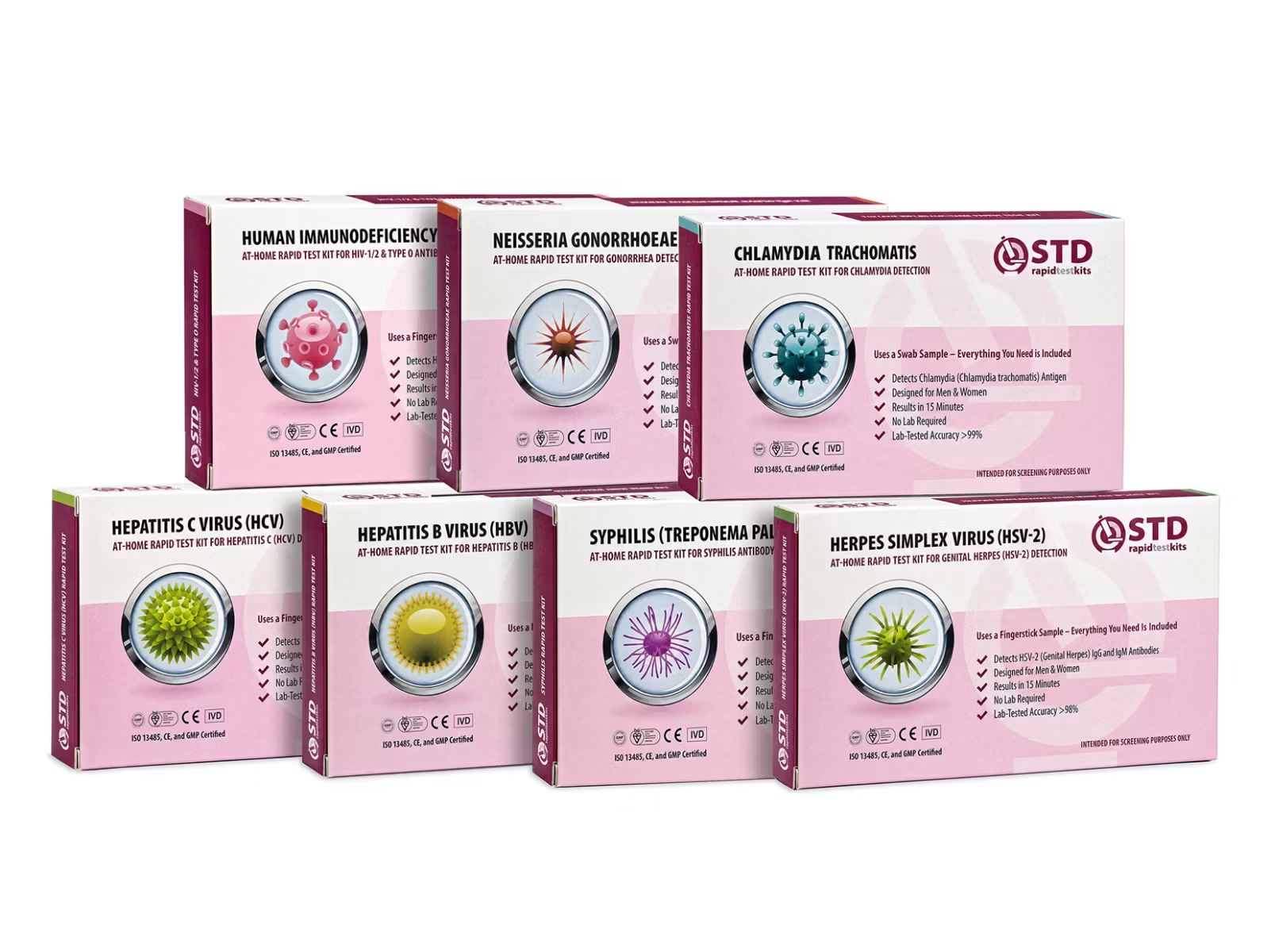
When to Test, and Which Test
Timing matters. Every STI has a "window period," which is the gap between exposure and when a test can reliably detect infection. Test too early and you may get a false negative. Test too late and you may pass the infection forward in the meantime. The right strategy depends on which infection you are concerned about (CDC sexually transmitted infections).
For chlamydia and gonorrhea, lab NAAT testing becomes reliable around 7 to 14 days after exposure. Most rapid antigen tests are validated within a similar window. For syphilis, antibody-based blood tests are most accurate at 3 to 6 weeks post-exposure, though a primary chancre (a painless sore at the exposure site) can appear earlier and warrants direct evaluation. HIV detection depends on test generation: fourth-generation antibody-antigen lab tests detect most infections by about 45 days; rapid antibody tests at home detect most infections by about 90 days (CDC HIV testing). HSV-2 antibody tests typically require 12 to 16 weeks to reach reliable antibody levels. Trichomoniasis can be detected within 7 to 14 days.
A practical pattern that works for most "did I just expose myself?" situations: test once at around the 2-week mark for chlamydia and gonorrhea, then again at the 6 to 12 week mark for syphilis and HIV, with a final HSV-2 antibody check at 12 to 16 weeks if relevant. If symptoms appear at any point, test immediately rather than waiting for the formal window.
| Infection | Best Window to Test | Why Timing Matters |
|---|---|---|
| Chlamydia | 7 to 14 days post-exposure | NAAT and rapid antigen tests reach validated sensitivity |
| Gonorrhea | 7 to 14 days post-exposure | Same window as chlamydia for most assay platforms |
| Syphilis | 3 to 6 weeks post-exposure | Serology requires antibody response to develop |
| HIV (4th-generation lab test) | About 18 to 45 days | Antigen-antibody combo test detects most infections |
| HIV (rapid antibody home test) | About 90 days | Antibody-only platforms need longer seroconversion |
| HSV-2 antibody | 12 to 16 weeks | IgG antibody levels need time to rise after infection |
| Trichomoniasis | 7 to 14 days | Rapid antigen or NAAT detects active infection |
Why Shower Sex Feels "Cleaner" but Is Not Safer
There is a psychology behind the safety illusion. The shower environment reads as sanitized to most people: hot water, soap, tile, steam. The visual and sensory cues match what we associate with hygiene. But the body itself does not change. Mucous membranes still secrete, skin still sweats, and genitals interact the same way they do anywhere else. Water masks the visuals; it does not change the biology.
The same illusion drives a related belief: that rinsing or showering immediately after sex "flushes out" pathogens. It does not. Once exposure occurs, whether through skin contact, oral-genital contact, or fluid exchange, the infection process begins at the cellular level. No amount of soap reaches inside mucous membranes. Post-coital rinsing is fine for general comfort; it should not be treated as a prevention strategy.
If you are reading this and feeling embarrassed about the situation that led you here, set that aside. Shower sex happens because it is intimate, convenient, and sometimes the only private option people have. The goal of this guide is not to shame the act. It is to give you the information you need to test, treat if necessary, and make informed choices going forward.
Genital herpes can be spread through skin-to-skin contact with the area where the virus is present. People with herpes can spread the virus even when they have no symptoms.
Beyond Condoms: Real Prevention That Works
Condoms are essential but not sufficient on their own, especially when water complicates correct use. Several other tools improve the layered safety net most public-health bodies recommend.
Routine screening is the most underused tool. If you are sexually active, regular screening protects you and your partners regardless of whether you use barriers consistently. The CDC recommends annual chlamydia and gonorrhea screening for sexually active women under 25, and risk-based screening for syphilis, HIV, and herpes for everyone else (CDC STI screening recommendations). At-home rapid panels make this easier than it used to be.
Vaccines do work, and their effect lasts. HPV vaccination is routinely recommended for people through age 26 per current ACIP guidance, with shared clinical decision-making for adults aged 27 to 45 who have not completed the series (CDC HPV vaccination guidance). The vaccine reduces risk of cervical, anal, and oropharyngeal cancers caused by high-risk HPV strains. Hepatitis B vaccination is also widely available and routinely recommended.
PrEP (pre-exposure prophylaxis) is a daily or injectable medication that, per the CDC, reduces HIV acquisition risk from sex by about 99% when taken as prescribed. If you have ongoing exposure risk, ask a clinician about PrEP. PEP (post-exposure prophylaxis) is a 28-day course of HIV medication that must be started within 72 hours of a known high-risk exposure; it is used as an emergency option, not a planned strategy (CDC HIV prevention).
Partner communication closes the gap. A single short question, "When did you last test?", changes the risk math for both people involved. It does not have to be a long conversation. Honesty about status and recent testing creates the context for both people to make informed decisions.

How to Talk About Possible Exposure
If you test positive after shower sex, the hardest part is often the next step: telling the other person. Many people get stuck on "but we did not even have real sex" and delay the conversation, which delays the partner's own testing and treatment. Brief, direct, and non-apologetic tends to work best.
A workable script: "Hey, I tested positive for [infection]. I know we did not have full sex, but there was contact, and I wanted to give you a heads-up so you can get tested." That is the entire conversation. No long explanation needed. No relationship analysis. Just the information that helps the other person care for themselves.
If a direct conversation feels impossible, anonymous partner notification services exist. Many state and county public health departments offer this through their STI programs, and online tools (some CDC-affiliated) send anonymous notification texts on your behalf. Partner notification is not about exposing yourself socially; it is about breaking the chain of transmission and reducing harm to the next person down the line.
Some partners respond well; others do not. Either way, you have given them what they need to test on their end, which is the practical goal of the conversation.
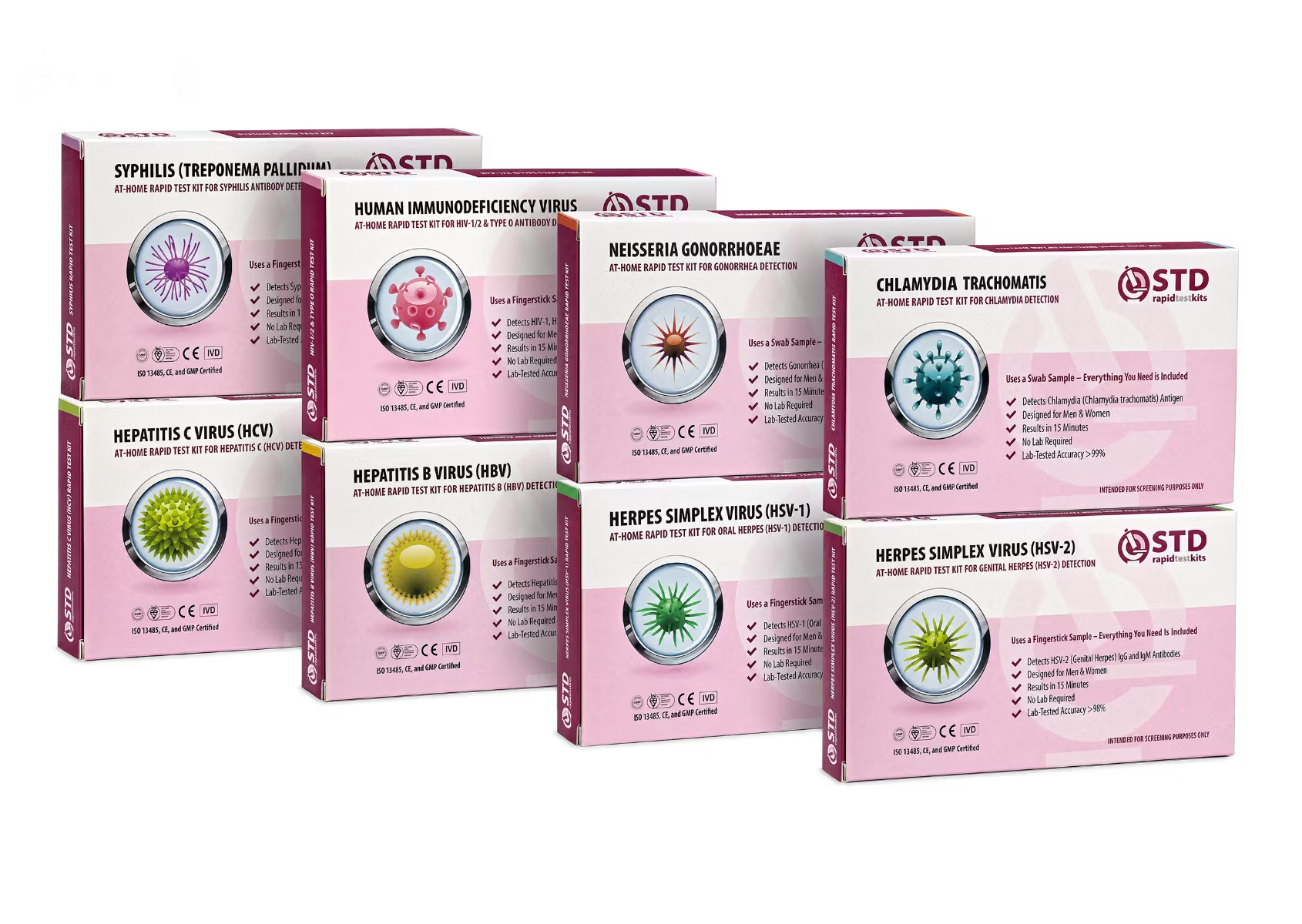
Closing: Test, Don't Guess
Sex in the shower does not make you reckless. It happens for the usual reasons sex happens anywhere: intimacy, convenience, spontaneity. None of those cancel out the underlying transmission risk, but none of them require shame either. STIs follow biology, not moral categories. They spread on contact and are treatable when caught.
Asking the question already puts you ahead of most people who skip it entirely. Next step: test on the right window for the infections you may have been exposed to. Most common STIs are treatable, and many are fully curable when caught early. A result in hand is more useful than a guess.
FAQs
- Can you really get an STI from shower sex without penetration?
- Yes. Several STIs spread through direct skin-to-skin contact rather than only through ejaculation or vaginal fluids. Herpes (HSV-1 and HSV-2), HPV, and syphilis can all transmit when an infected area of skin touches an uninfected area of skin or mucous membrane. The CDC notes that herpes specifically can spread through skin-to-skin contact even when no sores are present. Penetration is not required for exposure.
- Does hot water kill bacteria and viruses that cause STIs?
- No. Home shower water runs at roughly 100 to 110°F (38 to 43°C), which is below the temperature inside the human body where most STI pathogens already live and thrive. Killing pathogens reliably requires sustained temperatures of about 250°F (121°C) under pressure (a medical autoclave) or chemical agents like bleach. A hot shower may feel sanitizing, but it does not interrupt STI transmission.
- We used a condom in the shower. Are we safe?
- Lower risk, but not zero. Water and soapy water both make condoms more prone to slipping, and oil-based body washes degrade latex within minutes. Condoms also do not cover every area where some infections (especially herpes and HPV) can be present, so contact with skin outside the condom's coverage zone is still possible. A condom in the shower is better than no condom, but the protection level is meaningfully lower than in a dry environment. Polyurethane or polyisoprene condoms hold up better against oil-based shower products if latex is the only barrier you have.
- Is oral sex in the shower lower risk than vaginal or anal sex?
- Lower for HIV, but not zero risk for gonorrhea, chlamydia, syphilis, or herpes. Pharyngeal (throat) infections often cause mild or no symptoms, so an infected partner may not realize they are infectious. Cuts in the mouth, gum irritation, or recent dental work raise risk further. Steam and warm water do not change the underlying biology.
- I have no symptoms. Does that mean I am fine?
- Not necessarily. Chlamydia, gonorrhea, HPV, and herpes can all stay symptomless for weeks or longer. Someone with an asymptomatic infection can still transmit to a partner and can still develop complications later if untreated. Testing on the right window after a possible exposure is the only reliable way to know your status, regardless of how you feel.
- When should I test after a possible shower-sex exposure?
- The first useful test window opens at 7 to 14 days post-exposure for chlamydia and gonorrhea. Syphilis becomes reliably detectable at 3 to 6 weeks via blood antibody testing. HIV detection depends on the test: about 18 to 45 days for fourth-generation lab tests, around 90 days for at-home antibody rapid tests. HSV-2 antibody tests require 12 to 16 weeks. If symptoms appear before any of those windows close, test immediately and retest at the formal window if that early result is negative.
- Will showering after sex reduce my STI risk?
- Not in any meaningful way. Once exposure has occurred at the cellular level, no amount of soap or rinsing reaches the mucous membranes where the infection is taking hold. Post-sex showering is fine for general comfort and hygiene; it is not a prevention method and should not be used as one.
- I am embarrassed to tell a doctor what happened. What do I do?
- At-home rapid test kits remove the need for any intake conversation and let you check privately. If a test returns positive, the follow-up conversation with a clinician is about treatment, not about reconstructing the exposure event in detail. Clinicians who screen for STIs see situations like this regularly and are not surprised by them. If your provider responds judgmentally, find another one; that is on them, not on you.
How we sourced this article: This piece summarizes current guidance from the U.S. Centers for Disease Control and Prevention, the World Health Organization, Mayo Clinic, and peer-reviewed literature on STI transmission, testing windows, and prevention. We rely on public-health and clinical sources rather than personal clinical anecdotes. For questions about your specific situation, see a licensed clinician.
- U.S. Centers for Disease Control and Prevention. Genital Herpes: transmission via skin-to-skin contact, asymptomatic shedding, and clinical presentation.
- U.S. Centers for Disease Control and Prevention. Sexually Transmitted Infections: prevention strategies, screening recommendations, and risk-based testing guidance.
- U.S. Centers for Disease Control and Prevention. STD topic hub: condom-use guidance, partner notification, and screening cadence by infection.
- U.S. Centers for Disease Control and Prevention. HIV testing and prevention: window periods by test generation, PrEP effectiveness, and PEP indications.
- U.S. Centers for Disease Control and Prevention. HPV: transmission, vaccination recommendations, and ACIP age-based guidance.
- Mayo Clinic. Sexually transmitted diseases (STDs): overview of symptoms, causes, and when to seek care. Referenced as prose attribution; no deep link.
- World Health Organization. Sexually transmitted infections topic page: global incidence, prevention, and screening guidance.
