Published: October 2025 | Last updated: May 2026 | Editorial review and quality control: Martina N.
Sharing a razor or towel and then worrying about an STI is a common, valid concern. The short answer: most sexually transmitted infections need direct sexual contact and cannot spread through a wet towel or a used disposable razor. The exceptions matter though. Hepatitis B can stay infectious on a razor blade for up to seven days, and parasites like pubic lice can ride on damp fabric long enough to find a new host.
This article walks through what the science shows for each common infection: which ones survive on surfaces, which ones don't, and what hygiene habits make a meaningful difference. If you have already had a possible exposure, the testing-window section near the end will tell you exactly when a test result is reliable.
The goal is calm, specific answers rather than a list of vague warnings. Most readers will leave reassured. The minority who do need to test will have a clear next step.
Key Takeaways
- Razors are the only commonly shared personal item with a real bloodborne-STI risk. Hepatitis B and C are the genuine concerns; HIV transmission this way is rare but possible.
- Towels carry low risk for most STIs. Pubic lice, scabies, and trichomonas can occasionally transfer through damp shared fabric. Toilet seats do not spread STIs at all.
How transmission works
Whether an infection can spread through a shared item depends on two things: how long the pathogen survives outside the human body, and whether the item moves enough infectious material (blood, fluids, parasites) from one person to another.
Bloodborne viruses like hepatitis B, hepatitis C, and HIV transmit when fresh blood from one person enters another person's bloodstream. Tiny shaving nicks make that possible in theory. The difference between these three viruses comes down to how hardy they are once outside a vein.
The U.S. Centers for Disease Control and Prevention (CDC) reports that hepatitis B virus can remain infectious on dry surfaces for at least seven days (CDC hepatitis B). Hepatitis C survives a shorter window, usually a few hours up to a few days depending on temperature and humidity. HIV is the fragile one; it loses infectivity within minutes to hours of contact with air, light, or dried surfaces (CDC HIV).
For STIs caused by bacteria (gonorrhea, chlamydia, syphilis), the picture is different. These organisms need direct mucous-membrane contact and the warm, moist environment of human tissue to survive. They die quickly on dry surfaces and have never been documented to spread through razors or towels in real-world transmission studies.
Parasites are the third category. Pubic lice, scabies mites, and trichomonas can persist briefly on fabric or moist surfaces, which is why they have non-sexual transmission routes the others don't.
HBV can survive outside the body for at least 7 days and still be capable of causing infection.
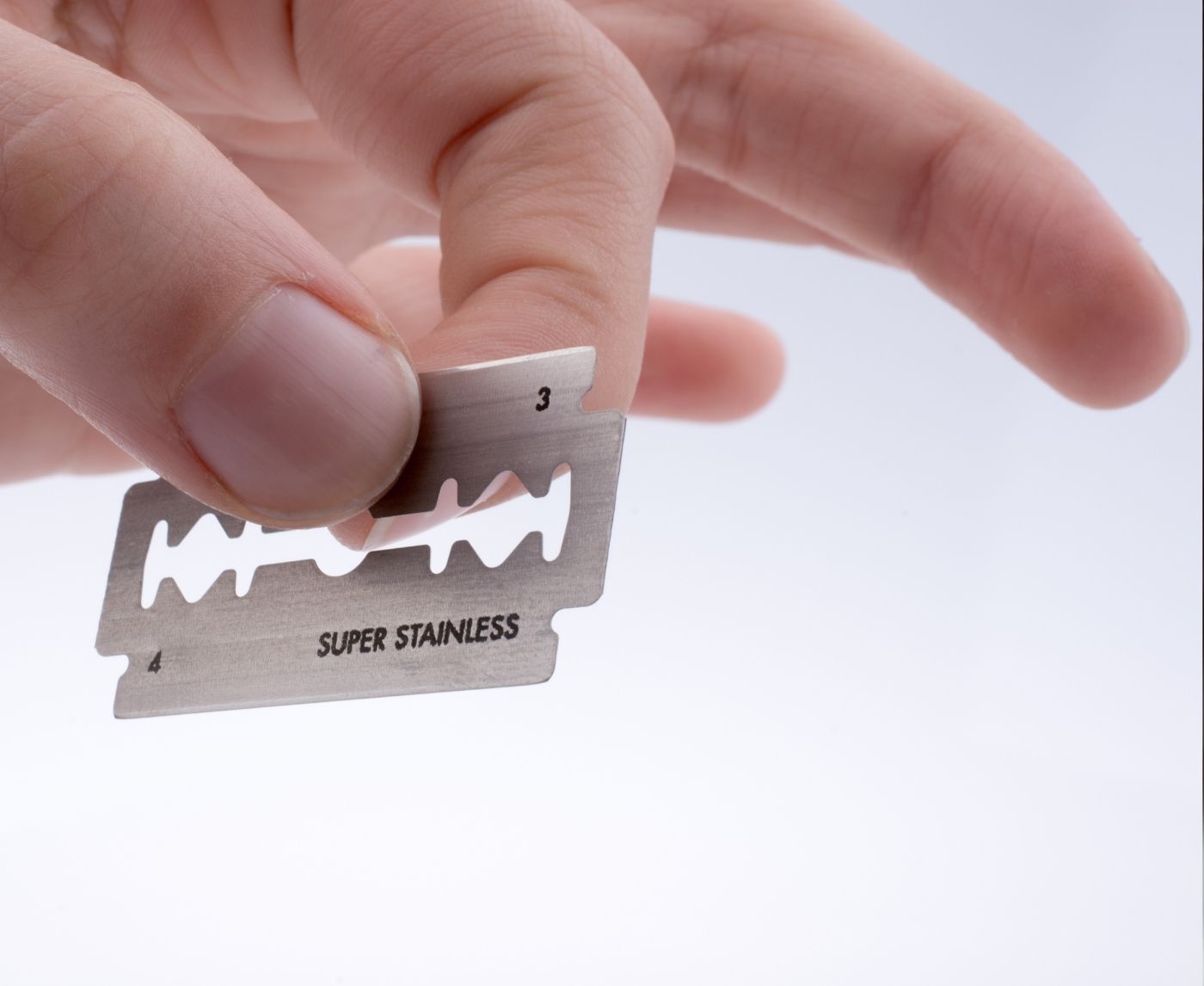
Razors carry the highest non-sexual STI risk
Shaving leaves microscopic cuts. If those cuts contact infected blood left on a blade, transmission is biologically possible. The viruses to worry about are hepatitis B and hepatitis C.
Hepatitis B. The CDC describes hepatitis B as the most environmentally stable of the major bloodborne viruses. It can survive on a razor blade or other dry surface for at least a week and still cause infection if it enters another person's bloodstream. Hepatitis B is also roughly 50 to 100 times more infectious than HIV per exposure (CDC hepatitis B). Vaccination is the most effective protection and is routine for U.S. children; adults without prior vaccination can receive the series at any age.
Hepatitis C. Hepatitis C survives for shorter windows on surfaces, but real-world transmission through shared razors has been documented in case reports and household-contact studies (CDC hepatitis C). There is no hepatitis C vaccine, but modern antiviral treatment cures the infection in over 95% of cases when detected early.
HIV. HIV transmission through a shared razor has been hypothesized in clinical case reports but rarely confirmed. The virus's poor environmental stability is the main reason; by the time a second person reaches for the blade, the small amount of HIV-infectious blood has typically dried out and lost infectivity. CDC guidance notes that razor-mediated HIV transmission appears only in scattered clinical case reports, not as a documented systematic transmission route (CDC HIV).
The practical takeaway: never share a razor, even within the same household. Disposable razors are inexpensive and a small drugstore investment compared with a hepatitis B or C exposure workup.

Towels: lower risk, but not zero
Towels almost never transmit the headline bacterial STIs (gonorrhea, chlamydia, syphilis) because those organisms cannot survive on dry fabric for any meaningful length of time. The viral STIs are nearly as safe; HIV and the hepatitis viruses do not transfer well through casual towel contact.
Where towels do matter is parasites and a small handful of specific cases.
- Pubic lice (Pthirus pubis). Adult lice can survive away from a human host for roughly 24 to 48 hours, and eggs (nits) can persist longer. Shared towels, bedding, or clothing used soon after an infested person are documented (though uncommon) transmission routes (CDC lice). Hot-water washing and machine drying on high heat kill both lice and nits.
- Scabies. The Sarcoptes scabiei mite can live off-host for 2 to 3 days at room temperature. Towels and bedding shared with someone who has active scabies, especially crusted scabies, can transmit the infestation.
- Trichomoniasis. Trichomonas vaginalis is a protozoan parasite that needs moisture to survive. CDC guidance describes occasional non-sexual transmission through damp washcloths or shared damp towels as theoretically possible, while emphasizing that nearly all real-world trichomoniasis cases come from sexual contact (CDC STI).
- Herpes (HSV-1 and HSV-2). The herpes simplex virus dies within minutes once exposed to dry air. The CDC notes that environmental transmission is exceptionally rare. The most-cited (and disputed) scenario involves sharing a moist towel that an actively shedding person used moments before; even there, documented case reports are vanishingly thin.
For most readers, the towel-risk math works out like this: regular washing in hot water plus drying kills every relevant pathogen. The realistic worry is shared damp gym towels left for hours, hotel pool towels recently used by someone with active scabies, or family bath towels reused over many days without laundering.
Bacterial STIs (chlamydia, gonorrhea, syphilis) and HIV: essentially zero risk from towels. Parasites (pubic lice, scabies) and trichomoniasis: low but documented risk if a damp towel is reused within 24-48 hours. Hot-water washing plus a dryer cycle neutralises every relevant pathogen.
Five common myths, fact-checked
STI transmission myths persist partly because the truth is genuinely counterintuitive: some pathogens spread shockingly easily, others die in seconds. Here are the five most common mistaken beliefs.
Myth 1: You can catch an STI from a toilet seat. Almost universally false. STIs need warm, moist mucous-membrane contact or direct fluid exchange. A hard, cold plastic toilet seat is a hostile environment for every common pathogen. There are no documented cases of toilet-seat STI transmission in the medical literature.
Myth 2: Sharing a razor will give you HIV. HIV does not survive long on dry surfaces, and razor-mediated HIV transmission, while theoretically possible if fresh blood-to-bloodstream contact occurred within minutes, has only been documented in a handful of clinical case reports worldwide. Hepatitis B and C are the realistic razor-related concerns, not HIV.
Myth 3: All STIs spread easily through household contact. Most do not. Chlamydia, gonorrhea, syphilis, and HIV require direct genital, anal, or oral contact, or bloodstream exposure. Routine cohabitation with someone who has any of these infections, sharing dishes, washing clothes together, hugging, casual skin contact, carries essentially zero risk.
Myth 4: A negative STI test means you can't infect someone. Window periods matter. Early in an infection, before antibody or antigen levels rise above the test's detection threshold, a person can test negative and still be infectious. This is one reason why repeat testing after a window period is part of post-exposure protocols.
Myth 5: If you can't see symptoms, there's no infection. Most STIs are commonly asymptomatic. Up to 80% of chlamydia cases in women cause no obvious symptoms; HIV may produce only mild flu-like signs in the first few weeks. Asymptomatic transmission is one of the main reasons screening exists.
What you should and shouldn't worry about
Pulling the pieces together, here is the realistic risk landscape for non-sexual STI transmission through shared personal items.
Worth worrying about
- A razor shared with someone whose bloodborne-infection status is unknown. Hepatitis B and C are the genuine concerns. The risk per single exposure is small, but it is not zero, and it is the single highest non-sexual exposure pathway in this category.
- Damp shared towels in close-contact settings. Pubic lice, scabies, and (rarely) trichomonas can transfer through fabric that stays moist and is reused within 24 to 48 hours. Camp dorms, shared bathrooms, and gym facilities are the realistic settings.
- Shared injection or piercing equipment. Outside the scope of this article, but worth flagging: needles, piercing guns, and tattoo equipment carry the highest bloodborne-STI risk per exposure of any non-sexual route. Hepatitis B, hepatitis C, and HIV are all genuine concerns.
Not worth worrying about
- Toilet seats in any setting, including public restrooms.
- Gym equipment surfaces, doorknobs, ATM keypads, shopping carts.
- Casual skin contact with someone who has an STI (kissing on the cheek, hugging, sharing a phone).
- Washing laundry from someone with an STI in standard-temperature water; routine washing cycles, especially with detergent and warm water, kill every relevant pathogen.
- Sharing food, drinks, or eating utensils. Even oral herpes, which transmits through saliva contact in some scenarios, dies quickly on dry utensils and is not a documented food-sharing route.
| Infection | Survives on surfaces | Real-world transmission route |
|---|---|---|
| Hepatitis B | Up to 7 days (dry) | Razors: documented; injection equipment: high |
| Hepatitis C | Hours to days | Razors: documented; injection equipment: high |
| HIV | Minutes to hours | Razors: theoretical; injection equipment: documented |
| Herpes (HSV) | Minutes on damp fabric | Direct skin contact; towels: very rare |
| Trichomoniasis | Minutes on moist surfaces | Sexual contact; damp towels: rare |
| Pubic lice / Scabies | 24 to 48 hours off body | Direct contact; shared bedding or towels: documented |
| Chlamydia / Gonorrhea / Syphilis | Seconds; needs mucous-membrane contact | Sexual contact only; surfaces: no documented cases |
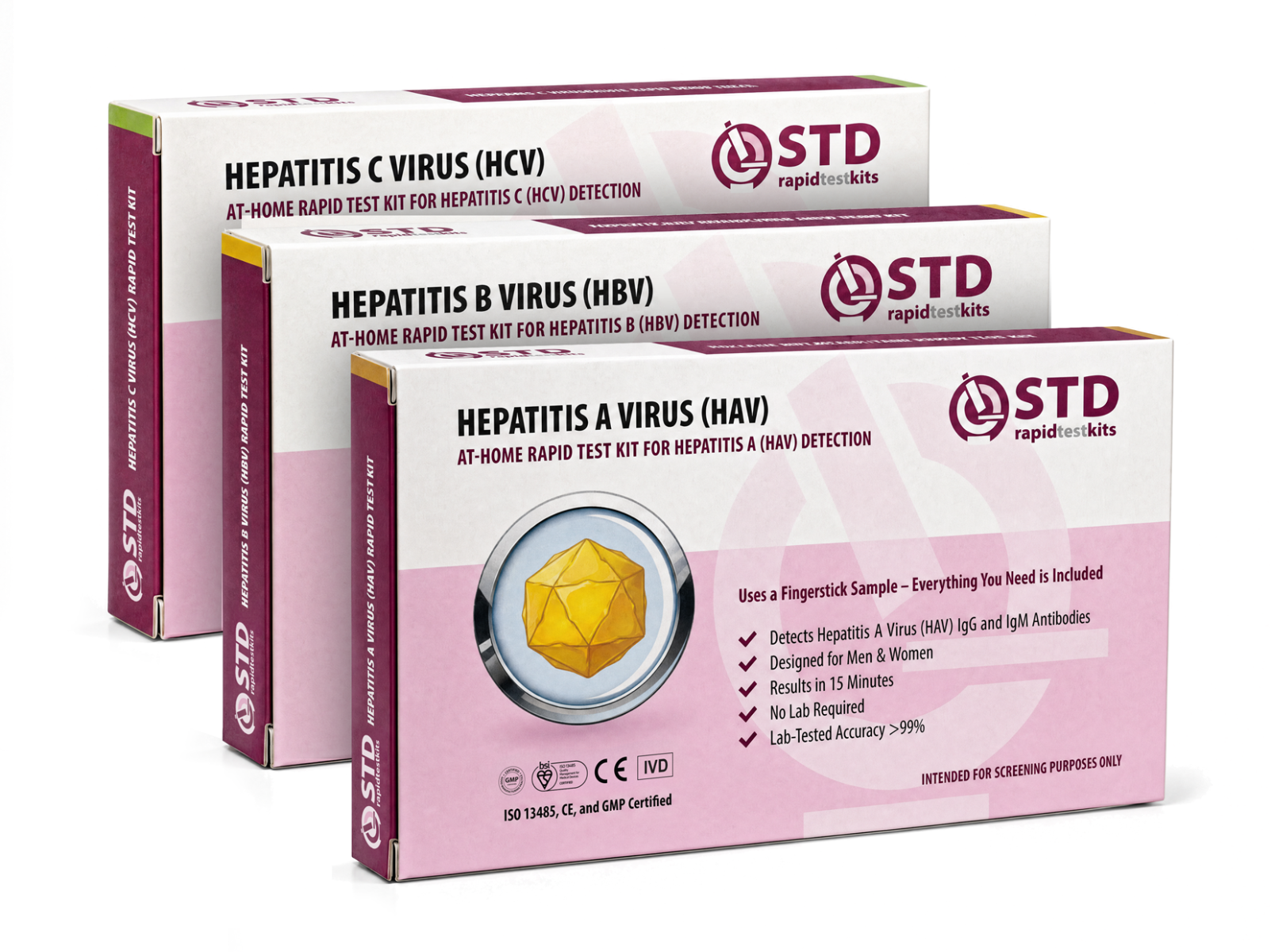
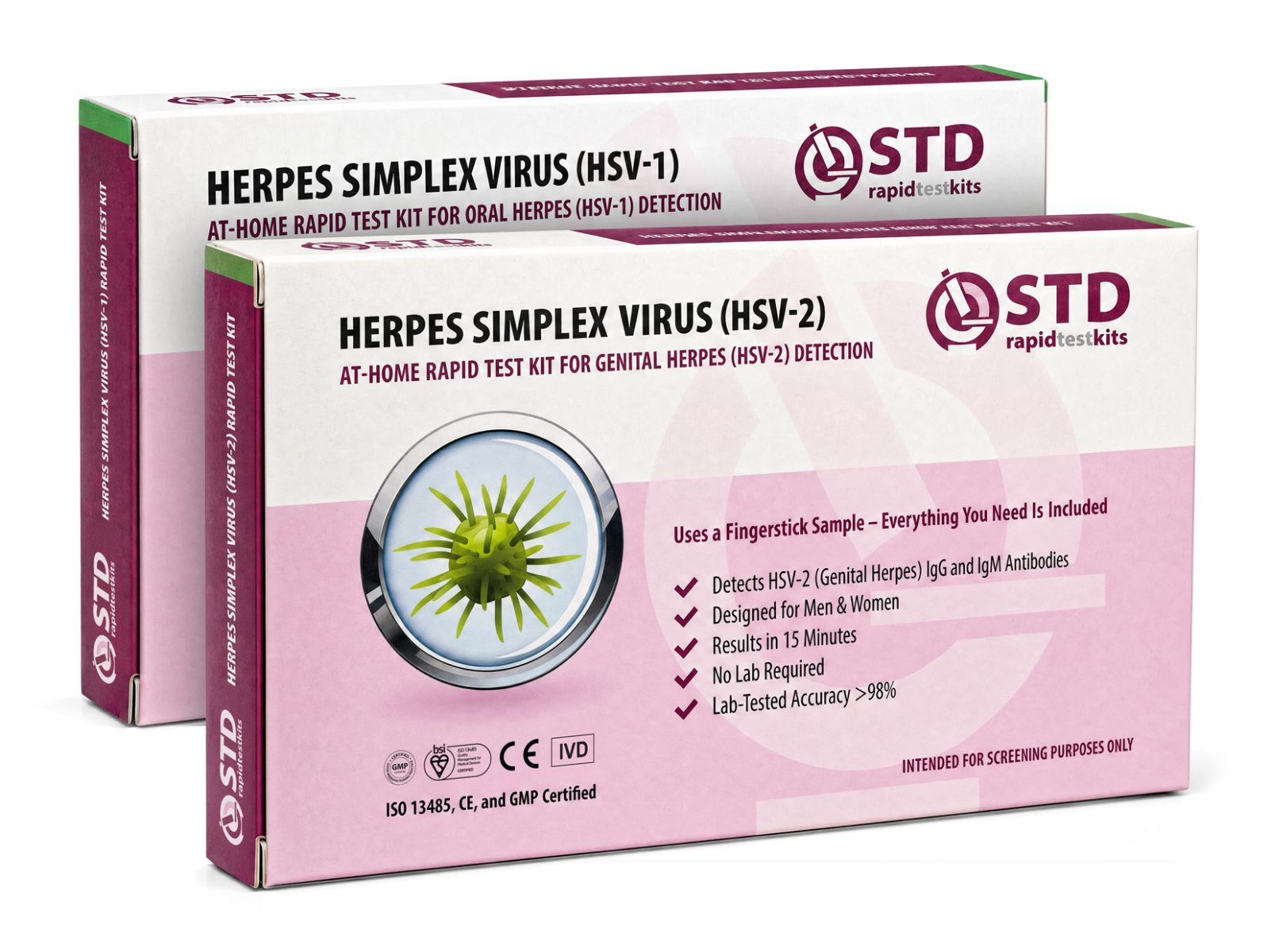
stdrapidtestkits.com sells the at-home rapid tests mentioned below. Recommendations reflect test fit for the reader's concern, not commercial priority. We do not provide clinical diagnosis; for symptoms that concern you, see a licensed healthcare provider.
Hygiene practices that reduce risk
Most non-sexual STI transmission risk goes to zero with a handful of simple habits. These are the ones that move the needle in real-world studies and public-health guidance.
- Never share a razor. Disposable razors cost a few dollars per multi-pack. If you forgot yours, buy a disposable rather than borrowing. This single habit eliminates almost all the bloodborne risk discussed above.
- Get vaccinated against hepatitis B. The CDC recommends routine hepatitis B vaccination for all infants and unvaccinated adults. The vaccine is highly effective and provides decades of protection (CDC hepatitis B).
- Wash towels in hot water at least weekly. Hot-water washing plus a regular dryer cycle kills lice, scabies mites, trichomonas, and every relevant virus. After gym, pool, or public-facility use, wash after every single use rather than weekly.
- Don't share other personal items either. Toothbrushes, nail clippers, tweezers, and waxing strips all break the skin in small ways. The hepatitis B and C concerns extend to these, though the per-exposure risk is lower than razors.
- Store wet items so they dry. A damp towel hung in a humid bathroom for days is a parasite-friendly environment. A towel hung in moving air dries quickly and becomes much less hospitable.
- For shared spaces, bring your own. Gym, sauna, hotel, dorm: a personal towel and a personal razor (if you shave) eliminate the risk almost entirely.
- Never share a razor, even with family.
- Get the hepatitis B vaccine series if you have not already.
- Wash towels in hot water weekly, and after every gym or pool use.
- Hang wet towels in moving air so they dry quickly rather than staying damp.
When and how to test after a suspected exposure
If you used someone else's razor and you don't know their status, or if you shared a towel with someone who has a known infestation or infection, the right time to test depends on the infection in question. Testing too early produces false negatives; testing at the right window confirms or rules out infection reliably.
Immediate steps after a possible razor exposure: wash the affected skin with soap and water, then apply an antiseptic. There is no benefit to scrubbing aggressively (you risk creating more skin breaks). If the razor user is known to be hepatitis B positive and you are unvaccinated, see a clinician within 24 hours for post-exposure prophylaxis evaluation; both hepatitis B immune globulin and the vaccine can be given to dramatically reduce infection risk if started early.
Hepatitis B testing window: Hepatitis B surface antigen (HBsAg) becomes detectable 1 to 9 weeks after exposure, with most acute infections detectable by 6 weeks. A negative test at 12 weeks is highly reliable for ruling out infection (CDC hepatitis B).
Hepatitis C testing window: Hepatitis C antibody tests typically detect infection by 4 to 10 weeks post-exposure, with most infections detectable by 12 weeks. The CDC recommends repeat testing at 6 months for high-confidence exclusion (CDC hepatitis C).
HIV testing window: Fourth-generation antigen-antibody combination tests detect HIV 18 to 45 days after exposure for most people. Rapid antibody-only tests typically reach reliable detection by 23 to 90 days. A negative test at 90 days post-exposure is highly conclusive (CDC HIV testing).
Herpes testing window: HSV antibody seroconversion typically occurs within 2 to 12 weeks post-exposure, with most reliable detection by 12 weeks; rare cases require up to 16 weeks for seroconversion. Antibody tests cannot distinguish a recent exposure from one years in the past, so they answer 'do I have it' rather than 'did I just get it'.
At-home rapid tests offer screening privacy and speed for several of these infections. They use lateral-flow immunoassay chemistry, not lab-grade NAAT or PCR, so a positive screen result should be confirmed with a clinical lab test. For high-stakes exposures (known infection in the source, occupational exposures), see a clinician for definitive testing and full post-exposure protocols.
FAQs
- Can sharing a razor really give you an STI?
- Yes, in specific scenarios. Hepatitis B and hepatitis C are the realistic concerns; both can survive on a blade long enough to be transmitted through a fresh shaving nick. HIV transmission this way is theoretically possible but rarely documented. Bacterial STIs (gonorrhea, chlamydia, syphilis) do not spread through razors. Don't share razors, even with family.
- How long does hepatitis B survive on a razor?
- The CDC reports that hepatitis B virus can remain infectious on dry surfaces for at least seven days. Trace amounts of dried blood that look long-gone can still transmit infection. This is why razors and other skin-piercing personal items should be strictly personal.
- Can you really get HIV from a shared razor?
- Transmission is theoretically possible if fresh blood from an infected person enters a small cut on the next user, but HIV's poor environmental stability makes this an uncommon route in practice. Most documented HIV transmission outside sexual contact involves shared injection equipment or healthcare-related blood exposure, not razors.
- Can towels spread herpes?
- Almost never. Herpes simplex virus dies within minutes once exposed to dry air. Documented case reports of towel-mediated HSV transmission are very rare and typically involve sharing a still-wet towel within minutes of an actively shedding person using it. For everyday towel sharing in dry conditions, the risk is essentially zero.
- Can you get an STI from a public toilet seat?
- No. STIs need warm, moist mucous-membrane contact, fluid exchange, or bloodstream exposure. A cold hard plastic seat is a hostile environment for every common STI pathogen. There are no documented cases of toilet-seat STI transmission in the medical literature.
- I think I accidentally used someone else's razor. What should I do?
- First, wash the area with soap and water and apply an antiseptic. If the previous user has known hepatitis B and you are unvaccinated, see a clinician within 24 hours; post-exposure prophylaxis can prevent infection. Otherwise, plan to test at the right windows: hepatitis B at 12 weeks, hepatitis C at 12 weeks (and again at 6 months for high-confidence exclusion), HIV at 12 weeks.
- Are hotel and gym towels risky?
- Properly laundered commercial towels carry essentially no risk because commercial hot-water washing kills all relevant pathogens. The realistic concern is shared towels that have been reused without washing, particularly in dorms, gym lockers, or pool decks where damp fabric sits for hours. Bring your own when convenient; otherwise, look for visibly fresh, clean towels.
- How can I prevent non-sexual STI transmission?
- Don't share razors, toothbrushes, nail clippers, or tweezers. Wash towels weekly in hot water (more often after gym or pool use). Get vaccinated against hepatitis B if you haven't already. For close-quarters settings (dorms, hostels, gyms), bring your own personal items. These habits reduce the practical risk to near zero.
- U.S. Centers for Disease Control and Prevention. Hepatitis B information, including the seven-day environmental stability of HBV on dry surfaces and recommended vaccination schedule.
- U.S. Centers for Disease Control and Prevention. Hepatitis C information, including testing windows and post-exposure follow-up at 6 months.
- U.S. Centers for Disease Control and Prevention. HIV transmission and testing windows, including the relative environmental fragility of HIV outside the body.
- U.S. Centers for Disease Control and Prevention. Sexually transmitted infections information, including trichomoniasis and herpes simplex virus transmission routes.
- U.S. Centers for Disease Control and Prevention. Pubic lice biology, including off-host survival times and transmission via shared bedding or towels.
- World Health Organization. Hepatitis B fact sheet, including global epidemiology, transmission routes, and prevention.
