Published: June 2025 | Last updated: May 2026 | Editorial review and quality control: Martina N.
The conversation usually goes the same way. Burning urination shows up out of nowhere. You think, “it’s probably chlamydia, I’ll just get tested for that.” Then your doctor checks the chlamydia box, the gonorrhea box, and starts asking about HIV, syphilis, and trichomoniasis. Suddenly you’re getting tested for everything, and your brain interprets it as suspicion or alarm.
The reasoning behind that broader panel is simpler than it feels. Doctors order broad sexually transmitted infection screens because the clinical reality is wider than any single symptom suggests. Symptoms overlap. Co-infections happen more often than most patients realize. And many of the most common infections cause no symptoms at all in the first weeks or months. Testing narrowly assumes a clean one-symptom, one-pathogen world that doesn’t match how these infections actually spread.
This article walks through what the CDC’s screening recommendations, the WHO fact sheet on STIs, and the NHS overview actually advise, why one positive result often triggers more tests, what a negative panel really tells you, and how the same logic translates to at-home testing if you’d rather skip the waiting room.
Key Takeaways
- Most common bacterial STIs share transmission routes and tissues, so finding one statistically raises the odds another is present; the CDC's chlamydia treatment guidelines recommend testing for gonorrhea whenever chlamydia is suspected, and vice versa.
- Many common STIs produce no early symptoms, which is why CDC screening guidelines recommend testing based on exposure and risk rather than on how you feel.
One Symptom Doesn’t Equal One Infection
Here’s the assumption most people walk in with: one exposure leads to one infection, one symptom names one disease. That’s how colds work. That’s how strep throat works. Sexually transmitted infections don’t play by that logic.
Chlamydia and gonorrhea often look nearly identical inside the body. Both can cause burning urination, discharge, pelvic pain, or absolutely nothing at all. Trichomoniasis can mimic a yeast infection. Early syphilis can look like a harmless pimple or paper cut. Acute HIV can resemble the flu and disappear before testing crosses anyone’s mind. The visible part of an STI is rarely a reliable label for what’s underneath.
You can also carry more than one infection at the same time. Per the CDC’s chlamydia treatment guidelines, chlamydia and gonorrhea co-occur frequently enough that providers routinely test for both whenever one is suspected.
- Burning urination: chlamydia, gonorrhea, trichomoniasis, or a non-STI urinary tract infection.
- Unusual discharge: chlamydia, gonorrhea, trichomoniasis, bacterial vaginosis, or a yeast infection.
- Genital sore or bump: herpes (HSV-1 or HSV-2), early syphilis, an ingrown follicle, or simple friction irritation.
- Flu-like symptoms after recent exposure: acute HIV seroconversion or an unrelated viral illness.
Yes, You Can Have More Than One STD at Once
A common reaction in the exam room is something like, “I tested positive for gonorrhea, and they said I also had chlamydia. I thought that was impossible.” It is entirely possible, and well-documented. Studies cited by the CDC consistently show overlapping infection rates for these two organisms because they spread the same way, infect the same tissues, and often travel together through sexual networks. Exposure rarely arrives labeled with a single pathogen.
The pattern goes beyond bacterial pairs. Someone with genital herpes can carry chlamydia. A person with untreated syphilis may also have HIV. Inflammation from one infection can biologically increase vulnerability to another, which is why the WHO STI fact sheet highlights syphilis and herpes simplex virus type 2 as risk-amplifiers for HIV transmission.
Why Doctors Order a Panel Instead of a Single Test
When you ask for “just a chlamydia test,” your provider is thinking bigger than the appointment in front of them. They’re thinking about missed diagnoses, untreated infections, silent transmission, and the cost of you coming back in two weeks because the burning didn’t go away.
Single-pathogen thinking creates blind spots. Burning urination could be chlamydia, gonorrhea, trichomoniasis, or a non-STI urinary tract infection. A genital sore could be herpes, early syphilis, or simple irritation from friction. “I feel fine” could mean genuinely uninfected, or it could mean carrying an asymptomatic infection that the textbook never mentions. A panel addresses all those possibilities in one workup.
| Scenario | What the patient often thinks | What the panel checks for | What broader testing prevents |
|---|---|---|---|
| Burning urination | "Must be chlamydia." | Chlamydia, gonorrhea, trichomoniasis, UTI workup | Missed co-infection and incomplete treatment |
| Genital sore or bump | "Probably just irritation." | Herpes (HSV-1, HSV-2), syphilis, secondary checks | Delayed diagnosis and onward transmission |
| No symptoms, new partner | "I feel fine, I'm fine." | Chlamydia, gonorrhea, HIV, syphilis baseline | Silent spread inside a relationship or network |
| One positive result | "That explains everything." | Co-infection screen, hepatitis, HIV add-on | Treating one infection while another stays active |
The Overlap Problem: Symptoms Don’t Stay in Their Lane
Most STI symptoms overlap. Discharge doesn’t come color-coded by pathogen. Burning doesn’t identify itself. A rash doesn’t announce whether it’s viral, bacterial, or unrelated to anything sexually transmitted at all.
People often search “symptoms of multiple STDs” precisely because their lived experience doesn’t fit a clean textbook description. That confusion is valid. Overlapping symptoms are the rule, not the exception. And sometimes there are no symptoms at all to compare against. Per the CDC’s chlamydia treatment guidelines, most chlamydia infections produce no noticeable symptoms, which means many cases are detected only because someone agreed to screening.
Gonorrhea can be similarly quiet, especially in people with cervixes. Early HIV can present as a brief flu-like illness in the first few weeks after exposure and then go silent for years. Clinicians who test broadly are responding to that real-world uncertainty.
Co-Infections Are More Common Than People Realize
Strip away the fear for a second and look at the biology. Sexual contact exposes the body to ecosystems, not single organisms. If a partner carries one infection, the conditions that allowed that infection to spread can allow others to spread too.
Chlamydia and gonorrhea infect overlapping tissues, share transmission routes, and travel together frequently enough that empiric dual treatment used to be the U.S. standard of care; the 2021 CDC gonorrhea guidelines now treat them as separate decisions because antibiotic stewardship has shifted, though the underlying co-occurrence pattern hasn’t.
Inflammation from one STI can also make another easier to acquire. Open sores from primary syphilis or active genital herpes disrupt the mucosal barrier, which is one of the mechanisms by which they raise HIV transmission risk. Providers think in panels instead of silos because that pattern keeps showing up.
When Narrow Testing Backfires
Imagine this scenario. You test positive for gonorrhea, take antibiotics, and the burning settles. You assume it’s handled. Two weeks later you still feel off, retest, and discover untreated chlamydia was there the entire time. Extended inflammation, extended anxiety, an unnecessary second course of treatment, and possibly extended transmission risk to anyone in the interim.
This is the pattern providers see often enough that it shapes how they order labs. A comprehensive panel up front prevents the awful follow-up call that starts with “we missed something.”
| Approach | Detection scope | Risk of missed co-infection | Likelihood of re-testing later | Practical clarity |
|---|---|---|---|---|
| Single-pathogen test | One organism only | Moderate to high | Higher | Conditional reassurance |
| Comprehensive STI panel | 4 to 8 common infections | Significantly lower | Lower | Broader baseline clarity |
The Silent Factor: Asymptomatic STIs Change Everything
You can feel completely normal and still carry an infection. Asymptomatic screening exists because so many infections give no early warning. A person can carry chlamydia without discharge, gonorrhea without burning, HIV without symptoms for years after seroconversion, HPV without visible warts, and hepatitis B or C without jaundice.
If clinicians only tested when symptoms showed up, a large share of infections would go undetected until complications appeared. That’s the reasoning behind the CDC’s broad screening recommendations: annual chlamydia and gonorrhea screening for sexually active women under 25 and for older women with new or multiple partners, at least once-in-a-lifetime HIV testing for everyone aged 13 to 64, and risk-based screening for syphilis, hepatitis B, and hepatitis C. The decision rule is exposure history, regardless of how you feel today.

When One Positive Result Triggers More Testing
Another moment that feels alarming: you test positive for one infection and your provider immediately orders additional tests. It can feel like escalation. The clinical reality is protocol.
If someone tests positive for gonorrhea, chlamydia testing follows almost automatically. A positive syphilis test typically prompts HIV testing, since the two are biologically and behaviorally linked. A positive hepatitis B result may trigger hepatitis C and HIV add-ons. This layered approach closes loops while you’re already in the system, before complications like pelvic inflammatory disease, infertility, neurological syphilis, or untreated HIV progression have a chance to develop.
CDC recommends yearly chlamydia and gonorrhea screening for all sexually active women younger than 25 years, as well as older women with risk factors such as new or multiple sex partners, or a sex partner who has a sexually transmitted infection.
The Public Health Angle: It’s Not Just About You
When doctors test for multiple STIs, they’re also thinking about transmission networks. Untreated infections don’t stay contained to one person. They move quietly through partners, casual contacts, and future relationships, often before anyone has a reason to suspect anything.
Comprehensive testing shortens that chain. Untreated chlamydia is a leading cause of pelvic inflammatory disease, which raises long-term infertility risk. Untreated syphilis can progress to cardiovascular and neurological complications years later. Untreated HIV weakens the immune system over time, though identified early and treated, life expectancy is close to the general population’s. Early detection protects individual health, and it also reduces community spread, which is why public health guidance leans toward broad screening for anyone sexually active with new or multiple partners.
- Chlamydia and gonorrhea: can ascend to the upper reproductive tract and cause pelvic inflammatory disease, with downstream effects on fertility and ectopic pregnancy risk.
- Syphilis: untreated late-stage disease can affect the heart, blood vessels, and nervous system years after the initial chancre healed.
- Hepatitis B and C: chronic infection can progress to cirrhosis or hepatocellular carcinoma over decades, often without warning symptoms.
- HIV: early antiretroviral therapy preserves immune function and approaches normal life expectancy; late diagnosis narrows treatment options.
What If Your Tests All Come Back Negative?
This is a question people don’t ask enough. If you tested for multiple STIs and everything came back negative, the testing wasn’t wasted. It ruled out the most common infections, and that clarity has value. It tells you and your provider where to look next if symptoms persist: bacterial vaginosis, yeast infection, urinary tract infection, dermatologic conditions, hormonal causes, or non-infectious irritation. Negative results narrow the differential.
One caveat worth knowing: window periods vary by infection. If you tested very early after an exposure and the result is negative, retesting at the right window is the responsible follow-up.
Approximate window periods to keep in mind
- HIV: antibody tests reach reliable detection around 12 weeks post-exposure; fourth-generation antibody/antigen tests shorten that to roughly 45 days
- Syphilis: blood tests are typically reliable from 3 to 6 weeks after exposure
- Chlamydia and gonorrhea: laboratory NAATs are reliable within about 1 to 2 weeks of exposure
- Hepatitis B: surface antigen is detectable from about 4 weeks; full antibody panels mature over months
Choosing At-Home Panel Testing Without Guesswork
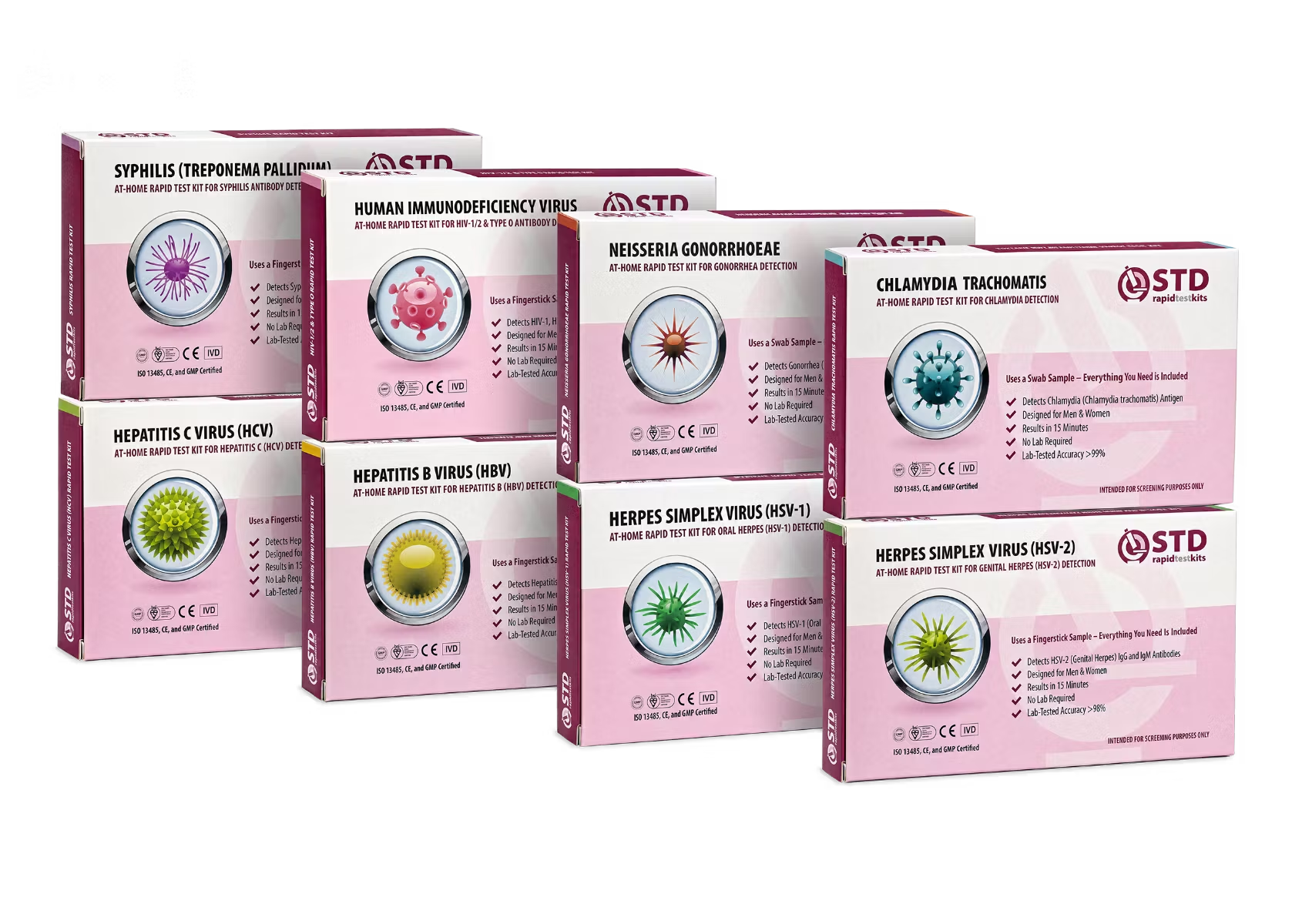
Some people avoid clinics because of time, geography, privacy, or anxiety. Not everyone has easy access to in-person care, and not everyone wants to discuss sexual history face-to-face. At-home rapid lateral-flow tests offer the same broad-screen logic, with results read at home in roughly 15 minutes per test.
A combo kit lets you screen for several common infections in one go rather than guessing which single test to order. The trade-off is technology: home rapid tests are lateral-flow immunoassays, which is meaningfully different from the lab NAATs the CDC considers gold standard. They’re excellent screening tools, especially for ruling things out and prompting earlier care, but any positive result is worth confirming with a laboratory test through a provider. Used that way, a home panel mirrors the clinic strategy: test broadly, treat accurately, follow up promptly.
What Doctors See That Patients Don’t
Clinicians respond to patterns they’ve seen hundreds of times before: the patient who tested for one infection and came back two weeks later still uncomfortable; the person who treated gonorrhea and only later discovered untreated chlamydia was still there; the quiet asymptomatic case uncovered only because someone agreed to a full panel instead of “just the one test.” That experience shapes how they order labs.
When a patient asks, “can’t we just test for one thing?” the provider isn’t dismissing them. They’re remembering every case where narrow testing delayed an answer. Medicine is probability layered over pattern recognition. If infections commonly overlap, testing reflects that reality.
Panel testing is strategy: reduce blind spots so that whatever the result, you walk away with a complete answer instead of a partial one. If everything comes back clear, the panel earned its keep by giving you certainty.
FAQs
- Can you really have two STIs at the same time?
- Chlamydia and gonorrhea share transmission routes and infect the same tissues, so the CDC's chlamydia treatment guidelines flag them as a paired check whenever one is suspected. Co-infection is biology, not bad luck, and it can extend to viral pairs like HIV alongside syphilis or HSV-2.
- If I only have one symptom, doesn't that mean it's only one infection?
- Symptoms aren't pathogen-specific. Burning urination, discharge, sores, and rashes all show up across multiple STIs and several non-STI conditions like urinary tract infection, bacterial vaginosis, or simple friction irritation. Labs, not symptoms, drive the diagnosis.
- Why does it feel like my doctor is testing me for everything?
- Your provider is closing loops to avoid a follow-up appointment two weeks from now where symptoms haven't cleared because something was missed. Broad screening is standard preventive care, not a comment on your behavior.
- Is asking for a full STI panel overkill?
- It saves you a second trip. If a single test comes back negative but symptoms continue, you'd be back for additional swabs and bloodwork anyway. A panel front-loads the decision and gives you a complete answer in one visit.
- What if I test positive for one STI, should I expect more?
- Not by default. A positive result opens up reflex screening for infections that statistically travel with the one you have: chlamydia after gonorrhea, HIV after syphilis. Most of those reflex tests come back negative; they're closing loops, not predicting outcomes.
- Can I just treat the infection I tested positive for?
- Treat what's confirmed, but get the screening loop closed. Untreated co-infections can keep symptoms going even after the first one clears, and they can quietly progress to pelvic inflammatory disease, neurological syphilis, or chronic hepatitis if missed.
- If I feel completely fine, do I really need testing?
- The CDC recommends annual chlamydia and gonorrhea screening for sexually active women under 25 and routine HIV testing for everyone aged 13 to 64, regardless of symptoms. If you have new or multiple partners, test on that schedule rather than waiting for something to feel wrong.
- What's the right move if I'm unsure where to start?
- Test broadly. A clinic panel or an at-home combo kit answers more questions in one step than picking a single test on a guess. Use a home test as a screening tool and confirm any positive result with a laboratory test through a provider.
- U.S. Centers for Disease Control and Prevention. Screening recommendations referenced in the 2021 STI Treatment Guidelines, including annual chlamydia and gonorrhea screening, HIV testing recommendations, and risk-based syphilis and hepatitis screening.
- U.S. Centers for Disease Control and Prevention. Chlamydia treatment guidelines, including discussion of asymptomatic infection and co-occurrence with gonorrhea.
- U.S. Centers for Disease Control and Prevention. Gonococcal infections treatment guidelines, including current dual-screening guidance and antibiotic stewardship rationale.
- World Health Organization. Sexually transmitted infections fact sheet, including biological links between syphilis, HSV-2, and HIV transmission risk.
- U.K. National Health Service. Overview of sexually transmitted infections, symptoms, testing, and treatment.
