
Published: November 2025 | Last updated: May 2026 | Editorial review and quality control: Martina N.
The truth about oral gonorrhea in teens is more nuanced than the alarming headlines suggest. The bacterium Neisseria gonorrhoeae can settle in the throat after oral sex, and a small share of cases trace back to deep mouth-to-mouth kissing. Most teens carrying a pharyngeal infection feel completely fine, which is why public-health agencies emphasize routine screening for sexually active adolescents rather than waiting for symptoms to appear. This guide walks through how the infection spreads, what a sore throat does and does not mean, where at-home testing helps, and where a clinic visit is the only reliable option.
How do teens get oral gonorrhea, and what should they do about it?
Oral gonorrhea spreads when Neisseria gonorrhoeae bacteria from an infected partner contact the throat during oral sex. Recent research also documents kissing as a smaller but real transmission route when one partner already has a throat infection. Most pharyngeal cases cause no symptoms at all, so the only reliable way to confirm a throat infection is a clinic-administered throat swab tested by NAAT. The current CDC regimen is a single 500 mg ceftriaxone intramuscular injection, with a test of cure 7 to 14 days later because pharyngeal infections are harder to clear than genital ones.
Key Takeaways
- Most pharyngeal gonorrhea cases in teens cause no clear symptoms, which is why the CDC recommends regular STI screening for sexually active adolescents rather than testing only when something feels wrong.
- Our at-home rapid kit screens genital chlamydia and gonorrhea via self-swab; for a confirmed throat infection diagnosis, a clinic-administered pharyngeal swab tested by NAAT is still required.
Why oral gonorrhea is rising among teens
Gonorrhea rates climbed sharply across the United States during the 2010s before plateauing in recent reports. Adolescents and young adults aged 15 to 24 carry a disproportionate share of new cases, according to the CDC's annual STI surveillance summary. Three forces overlap to push the numbers in this age bracket higher than the general population.
First, sexual networks among teenagers tend to be densely connected. A single untreated infection can move through a friend group, a sports team, or a social circle in weeks rather than months, because partners change more frequently and casual contact is more common than long-term monogamy at this age. Public-health epidemiologists describe this as a network-density effect, and it shows up in modeling of bacterial STI spread.
Second, asymptomatic carriage is the rule rather than the exception with pharyngeal gonorrhea. Studies cited by the CDC's STI Treatment Guidelines for Gonococcal Infections consistently report that the majority of throat infections produce no recognizable symptoms. Without a sore throat, a fever, or visible inflammation, an infected teen has no obvious reason to seek testing.
Third, screening rates among adolescents lag well behind clinical recommendations. Many teens never receive a routine STI screen even when they meet CDC criteria for annual testing. Privacy concerns, awkwardness with primary care providers, and the assumption that oral contact is risk-free all reduce the likelihood that a sexually active teen will get tested before a partner becomes symptomatic.
Three forces overlap to skew the age bracket: dense sexual networks accelerate transmission, asymptomatic throat carriage removes the natural warning signal that prompts testing, and routine STI screening gets skipped for many teens who otherwise meet CDC criteria. Each one is manageable on its own; the three together explain the age-stratified incidence.
How the throat infection spreads
The mechanics of pharyngeal gonorrhea transmission are simpler than they sound. Neisseria gonorrhoeae colonizes mucous membranes, and the lining of the throat behaves enough like genital mucosa that the bacteria can attach, multiply, and persist there. The most common transmission routes, in rough order of documented frequency, are:
- Oral contact with an infected genital surface. Performing oral sex on a partner with urethral, vaginal, or rectal gonorrhea is the dominant transmission path for pharyngeal infection. The receptive partner's throat is exposed to bacteria-rich secretions.
- Oral contact with an infected throat. Receptive oral sex on a partner who already has pharyngeal gonorrhea can pass the infection from throat to genital surface or, less commonly, throat to throat through deep kissing.
- Deep mouth-to-mouth kissing. A 2019 Australian study published in Sexually Transmitted Infections reported an association between tongue-kissing and pharyngeal gonorrhea among men who have sex with men, which prompted public-health agencies to acknowledge kissing as a possible route. Research continues, but the World Health Organization treats it as a credible secondary route worth disclosing in patient education.
The risk per exposure is not precisely quantified for adolescents, but the relative risk is well-established: condomless oral sex carries a meaningfully higher transmission probability than condom-protected oral sex, and asymptomatic partners can transmit just as effectively as symptomatic ones.
Shared cups, food, drinking fountains, toilet seats, and swimming pools do not transmit Neisseria gonorrhoeae. The bacterium does not survive long outside warm mucosal tissue, so transmission requires direct, prolonged contact between two mucous membranes. Casual contact with a partner who carries the infection is not a risk pathway.
What pharyngeal gonorrhea feels like (usually, nothing)
This is the section that surprises most readers. The vast majority of pharyngeal gonorrhea infections are asymptomatic, and even when symptoms appear, they are usually mild and indistinguishable from a viral sore throat. The CDC's gonorrhea overview emphasizes that throat infections frequently go unrecognized for this exact reason.
When symptoms do show up, the most common signs are:
- A mild, persistent sore throat that does not match the timing of a recent cold
- Slight redness or inflammation of the tonsils or posterior pharyngeal wall
- Tender lymph nodes under the jaw or in the neck
- A scratchy or raw sensation when swallowing
- Occasional white or yellowish patches on the tonsils, similar in appearance to streptococcal pharyngitis
Notice what is missing: there is no specific symptom that distinguishes gonococcal pharyngitis from a viral sore throat or strep throat on visual exam alone. A primary care provider looking at an inflamed throat cannot tell the difference without a swab and a lab test.
For the 80 percent of teens whose sore throat turns out to be a common viral infection, this is reassuring news. A persistent sore throat after a recent oral exposure is not automatic evidence of an STI. For the smaller group whose sore throat does come from gonorrhea, the absence of dramatic symptoms is the central public-health problem: the infection feels too mild to investigate, so it goes untreated and continues to spread.

When throat gonorrhea becomes a real medical problem
The realistic risk profile of pharyngeal gonorrhea is worth a careful read, because the worst-case scenarios are real but uncommon. Treating the infection seriously does not require treating it as inevitably catastrophic.
Disseminated gonococcal infection
In a small percentage of untreated cases, the bacterium can enter the bloodstream and produce disseminated gonococcal infection, also called DGI. The CDC's STI treatment guidelines for gonorrhea in adults and adolescents describe DGI as presenting with fever, rash, joint pain, and tendon inflammation, sometimes progressing to septic arthritis. DGI requires hospitalization and a longer course of intravenous antibiotics. It is a serious complication, but the underlying pharyngeal or genital infection is curable, and the systemic complication is uncommon when the original infection is caught and treated early.
Co-infection with HIV and other STIs
Mucosal inflammation from any active STI raises the per-exposure risk of acquiring HIV during a future exposure. The CDC and WHO both note this co-factor effect in their public-facing STI fact sheets. The practical implication is straightforward: a teen who has untreated pharyngeal gonorrhea and continues sexual activity without protection is more vulnerable to HIV than a teen with no active STI.
Local complications
Untreated infection can spread locally within the head and neck region, occasionally producing peritonsillar abscesses or persistent lymphadenopathy. These are treatable but require clinical attention, and they are entirely preventable with timely antibiotic therapy.
Catastrophic outcomes such as endocarditis or meningitis from gonococcal infection are documented but exceptionally rare. The realistic concern for a sexually active teen is far more often the silent transmission of an untreated infection to other partners than a personal medical emergency.
If a recent gonorrhea exposure is followed by fever, joint pain or swelling, a rash on the trunk or limbs, or tendon inflammation, see a clinician promptly. These are warning signs of disseminated gonococcal infection, which requires hospital-level intravenous antibiotics. Caught early, DGI is treatable; left to progress, it can lead to septic arthritis or, in rare cases, endocarditis.
Antibiotic resistance is changing throat treatment
Pharyngeal gonorrhea is the hardest body site to clear with antibiotics. The throat's anatomy and the local immune environment both make it harder for an oral antibiotic to maintain bactericidal levels, and the throat is also where antibiotic-resistant strains of Neisseria gonorrhoeae are believed to develop most readily, possibly through genetic exchange with related Neisseria species that normally live in the throat.
Current CDC guidance for gonorrhea in adolescents and adults is a single 500 mg intramuscular injection of ceftriaxone, with the dose increased to 1 gram for individuals weighing 150 kg or more. Oral azithromycin, which was previously combined with ceftriaxone, is no longer routinely recommended due to rising resistance. The full regimen and weight-based dosing are detailed in the CDC STI Treatment Guidelines.
For pharyngeal infections specifically, the CDC recommends a test of cure 7 to 14 days after treatment, because cure rates are lower than for genital infections. The teen taking treatment is not done after the injection; a follow-up swab confirms the infection cleared.
Resistance trends matter for a practical reason. The last decade has seen rare but documented cases of strains resistant to ceftriaxone reported by the WHO's global antimicrobial resistance surveillance program. Public health depends on catching infections early, treating them correctly the first time, and breaking transmission chains before resistant strains get established.
Most gonococcal infections in the pharynx are asymptomatic; routine screening of pharyngeal sites is recommended for persons at increased risk because untreated infection contributes to ongoing transmission.
How testing works for throat infections
Pharyngeal gonorrhea diagnosis requires a swab of the back of the throat tested by nucleic acid amplification testing, or NAAT, in a clinical laboratory. NAAT is the gold-standard method because it directly detects bacterial genetic material and is sensitive enough to catch low-level pharyngeal infections that older culture-based methods missed.
To get this test, a teen needs to visit a clinic, an urgent care center, a school-based health center if available, or a community sexual health service. Many state and county health departments offer confidential adolescent STI services without parental notification. The clinician swabs the tonsillar pillars and posterior pharynx, sends the sample to a lab, and returns results within a few days.
What our at-home rapid kit can and cannot do
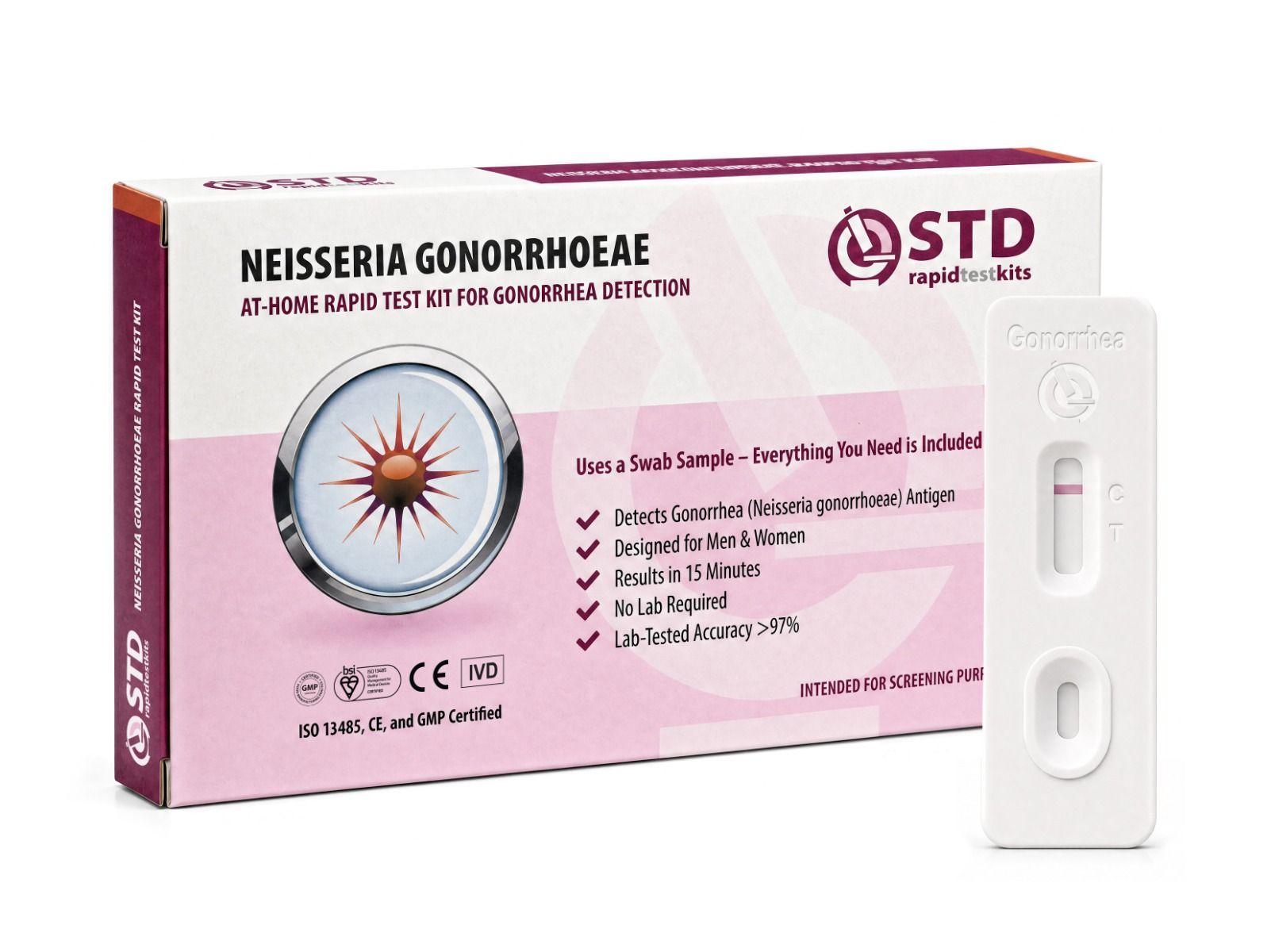
stdrapidtestkits.com sells the rapid gonorrhea kit described here; a positive at-home result warrants confirmation by a clinic NAAT. Our rapid gonorrhea test kit is a self-collected genital swab, not a pharyngeal swab. It uses lateral-flow chemistry to screen for Neisseria gonorrhoeae antigens on the genital sample at home, with a result in about 15 minutes. It is a useful screening option for the genital site, particularly when a clinic visit is inconvenient.
For a confirmed throat infection diagnosis, the at-home kit is not the right tool. What it can answer is the adjacent question that often comes up after the same exposure event: did the genital site also pick up the infection? Many teens with a pharyngeal exposure also had genital exposure during the same encounter, and the at-home kit screens that risk on its own timeline. A positive at-home result is worth confirming with a clinic NAAT, which would also typically include a pharyngeal swab if oral exposure occurred.
Use the at-home rapid kit when you want a quick screen of the genital site after a recent exposure, when scheduling a clinic visit is difficult, or when you want a baseline before a partner conversation. See a clinic for a pharyngeal swab when you specifically need to confirm or rule out a throat infection, when you have persistent throat symptoms, or when a partner has tested positive for pharyngeal gonorrhea.
Prevention strategies that work
Prevention guidance for oral gonorrhea is less moralistic and more practical than school-based sex education usually presents it. The methods with documented effectiveness, ranked by how well they reduce risk, are:
- Consistent condom or dental dam use during oral sex. The NHS gonorrhoea overview and CDC both list barrier methods during oral sex as the most effective single intervention against pharyngeal STI transmission. A flavored condom is acceptable for fellatio; a dental dam, or an unrolled condom cut lengthwise, works for cunnilingus and anilingus.
- Routine STI screening for sexually active teens. The CDC recommends at least annual screening for sexually active people under 25 and more frequent screening with new partners. Screening interrupts transmission chains by catching asymptomatic infections before they spread. For someone with multiple partners or known higher-risk exposure, screening every 3 to 6 months is reasonable.
- Open partner communication about testing history. A simple conversation about when each partner was last tested and what they were tested for is more protective than visual inspection. Healthy-looking partners can carry asymptomatic infections.
- Avoiding new partners while symptomatic. Even mild throat symptoms during an exposure window are a reason to pause new sexual contact until tested. The personal cost of waiting a week is small; the public-health cost of continuing to transmit is larger.
What does not prevent transmission: visual inspection of a partner's genitals or mouth, asking a partner if they feel okay, restricting oral contact to monogamous partners without verifying testing history, or using mouthwash before or after oral contact. None of these have evidence of meaningful protective effect.

What to do if you think you have been exposed
The decision tree after a suspected exposure is shorter than most people expect. Each step has a specific purpose, and skipping ahead almost always makes the situation harder, not easier.
Step one, decide whether you need testing now or after a window
Gonorrhea can usually be detected by NAAT within about 7 to 14 days of exposure, with most cases positive by day 14. Testing too early after a single exposure can produce a false-negative result. If you are testing because of a specific recent encounter, waiting 2 weeks before a clinic NAAT generally gives a more reliable result. If you are screening as routine, you can test any time.
Step two, choose the right test for the right site
For a confirmed throat diagnosis, get a pharyngeal swab at a clinic, urgent care center, or sexual health clinic. For a genital exposure or for a quick screening at home, the at-home rapid kit handles that site. Many clinics will swab multiple sites in one visit, which is the simplest path if there is any uncertainty about which sites were exposed.
Step three, treat fully and confirm
If a test is positive, complete the full ceftriaxone regimen and return for the test of cure for any pharyngeal infection. Do not skip this confirmation step; pharyngeal cure rates are lower than genital cure rates, and an incomplete cure means continued transmission risk.
Step four, notify partners
Partner notification breaks the transmission chain. Most clinics will help anonymously notify partners through expedited partner therapy programs in states where that is allowed, or through anonymous online tools where it is not. Notification is not punishment; it is the step that breaks the transmission chain in ways no other action can.
Most U.S. states allow minors to consent to their own STI testing and treatment without parental notification, though specifics vary by state. School-based health centers, county health departments, and Planned Parenthood clinics generally offer confidential adolescent services. If a clinic visit feels too exposed, an at-home kit for the genital site keeps the screening private; for a throat swab, calling ahead to ask about adolescent confidentiality policies is usually all it takes.
FAQs
- Can I really get oral gonorrhea from kissing?
- Yes, but the risk is smaller than from oral sex. A 2019 Australian study published in Sexually Transmitted Infections documented an association between deep tongue-kissing and pharyngeal gonorrhea among men who have sex with men, and public-health agencies now treat kissing as a credible secondary transmission route when one partner has a throat infection. Most documented cases still trace back to oral-genital contact rather than kissing alone.
- How long after exposure do symptoms appear?
- If symptoms appear at all, they typically show up between 1 and 14 days after exposure, with most appearing within 1 week. The more important point is that most pharyngeal infections produce no recognizable symptoms ever. Waiting for a sore throat as a warning signal is unreliable; routine screening is the only way to catch asymptomatic cases.
- What does pharyngeal gonorrhea feel like, if anything?
- Most infections produce no symptoms at all. When something does show up, expect a mild, persistent sore throat, possibly with tender lymph nodes under the jaw or slight redness on the tonsils. None of these signs reliably distinguish gonococcal pharyngitis from a viral sore throat or strep on visual exam, so a clinic swab tested by NAAT is the only way to confirm or rule out infection.
- Is oral gonorrhea curable?
- Yes, with one injection in most cases, but throat infections need a follow-up swab. The current CDC regimen is a single intramuscular dose of ceftriaxone (500 mg, or 1 gram for people weighing 150 kg or more), and pharyngeal cases require a test of cure 7 to 14 days later because the throat clears the infection less reliably than the genital sites. Skipping the test of cure is the most common reason an apparently treated infection continues to transmit.
- How dangerous can untreated throat gonorrhea become?
- Severe complications are uncommon but real. In a small percentage of untreated cases, the bacterium can enter the bloodstream and cause disseminated gonococcal infection, with fever, rash, joint pain, and septic arthritis serving as warning signs that justify a same-day clinical visit. Endocarditis and meningitis are documented but exceptionally rare. The far more common harm is silent ongoing transmission to other partners.
- How often should sexually active teens test for STIs?
- The CDC recommends at least annual STI screening for sexually active people under 25, including a chlamydia and gonorrhea screen. Teens with multiple partners, new partners in the last few months, or known higher-risk exposure should screen every 3 to 6 months. Routine screening catches asymptomatic infections before they spread, which matters more than testing only after symptoms appear.
- Does your at-home kit test for throat gonorrhea?
- No. Our rapid gonorrhea test kit is a self-collected genital swab using lateral-flow chemistry. It does not test pharyngeal samples. For a confirmed throat infection diagnosis, you need a clinic-administered pharyngeal swab tested by NAAT. The at-home kit is useful for screening the adjacent genital site after the same exposure event, and for routine screening when a clinic visit is inconvenient.
- Do condoms or dental dams reduce the risk of oral gonorrhea?
- Yes, substantially. Consistent barrier use during oral sex is the single most effective behavioral intervention against pharyngeal STI transmission, per CDC and NHS guidance. A flavored condom works for fellatio; a dental dam or an unrolled condom cut lengthwise works for cunnilingus and anilingus. Barriers do not eliminate risk entirely but reduce it meaningfully compared to unprotected oral contact.
- U.S. Centers for Disease Control and Prevention. Gonorrhea overview, transmission routes, and clinical presentation in adolescents and adults; also the surveillance source for ongoing antibiotic-resistance trends in U.S. gonococcal isolates.
- U.S. Centers for Disease Control and Prevention. Sexually Transmitted Infections Treatment Guidelines, gonococcal infections in adolescents and adults, including ceftriaxone dosing and the recommended pharyngeal test of cure.
- U.S. Centers for Disease Control and Prevention. STI surveillance statistics, including age-stratified incidence among adolescents and young adults.
- World Health Organization. Sexually transmitted infections fact sheet covering global transmission patterns and antimicrobial resistance trends including drug-resistant gonorrhoea.
- U.K. National Health Service. Gonorrhoea overview, including symptoms, transmission, and barrier-method prevention guidance.
