
Published: October 2025 | Last updated: May 2026 | Editorial review and quality control: Martina N.
There is a particular kind of pause that happens between deciding to test and actually doing it. Opening a clinic page. Hovering over Book Appointment. Closing the tab. Rehearsing what to say in the mirror, then cancelling at the last minute. For people whose relationship with their body is shaped by gender dysphoria, that pause can stretch into weeks. Sometimes months. Sometimes longer.
This article is for trans, nonbinary, intersex, and gender-diverse readers who have been stuck in that pause, and for anyone whose body feels harder to look at than the test result itself. It covers what avoidance actually costs, why language and intake forms keep getting in the way, and where at-home rapid testing genuinely helps. It also says, plainly, what our home kits can and cannot do, so you can decide whether a kit is the right next step or whether you need a different kind of care.
Key Takeaways
- Gender dysphoria pushes many trans and gender-diverse people to delay or skip STI testing, which can let infections progress quietly and raise the risk of pelvic inflammatory disease, infertility, and onward transmission.
- At-home rapid lateral-flow tests let you collect a swab or fingerstick blood sample privately, on your own time, with no intake form, ID check, or pelvic exam. They are screening tools, so a positive result still calls for confirmatory testing at a clinic.
Why Dysphoria Turns a Routine Test Into a Crisis
Gender dysphoria is not generic discomfort. The American Psychiatric Association defines it as clinically significant distress that comes from incongruence between gender identity and assigned sex. In a healthcare setting, that distress has plenty of triggers: intake forms with only male/female checkboxes, providers using a legal name that does not match presentation, questions phrased around organs the patient may not call by those names, and gowns or exams that force a moment of public attention on the body itself.
Picture the sequence. Someone has noticed a sore that has been there for a week. They have spent days deciding to test. They walk into a community clinic. The front desk asks for ID. The legal marker on the card does not match how they look or sound. The chart opens. A nurse says, "So, you are female, correct?" The visit was already going to be hard. The body shutdown often starts before the swab is even discussed.
These moments are not rare. According to the 2022 U.S. Transgender Survey, a study of 92,329 respondents across all 50 states, large proportions reported negative healthcare experiences related to being transgender, and a meaningful share said they had postponed seeking medical care because of how they expected to be treated. The pattern shows up across age, region, and identity, and it shows up especially for sexual-health visits, where the questions and the exams are concentrated in the parts of the body dysphoria centers on.
- Gendered intake forms. Male/female checkboxes with no third option, organ inventories that assume anatomy from gender marker.
- ID and legal-name mismatch. A driver's license name that differs from current name, which clinic staff may use on charts or call out in waiting rooms.
- Pronoun and name misuse. Repeated misgendering during intake, vitals, or the exam itself.
- Anatomy-based questions phrased without flexibility. Direct questions about "your vagina" or "your penis" rather than open prompts that let the patient supply their own language.
- Gowned physical exams. Pelvic, breast/chest, or genital exams that force prolonged focus on the body part most likely to be dysphoria-triggering.
What Avoidance Actually Costs
Some infections wait politely. Most do not.
Chlamydia and gonorrhea can persist asymptomatically for weeks or months while quietly inflaming the reproductive tract. Per the CDC's STI Treatment Guidelines, untreated chlamydia can progress to pelvic inflammatory disease (PID), which is the leading preventable cause of infertility in people with a uterus. Untreated gonorrhea can do the same, and both raise the risk of acquiring or transmitting HIV.
Herpes can produce subtle, atypical lesions that get attributed to other things. A pink spot that looks like an ingrown hair. A tender patch that gets blamed on shaving, on binding friction, on tucking irritation. Syphilis presents as a painless ulcer at the site of exposure, easily missed by anyone who is actively avoiding looking at the area. HPV can produce small soft growths that get read as skin tags by a frightened eye.
Even when trans and gender-diverse people reach care, anatomy-based assumptions can route the wrong tests. A transmasc patient with vaginal bleeding may be told it is hormone-related and never screened for trichomoniasis. A nonbinary patient who has receptive anal sex may not be screened for rectal gonorrhea because the provider asked about gender identity rather than the specific sexual acts that determine exposure. CDC's guidance for transgender and gender diverse persons is explicit on this point: screening should follow current anatomy and sexual behaviors, not the patient's gender marker.
| Missed risk | Why it happens | Potential consequences |
|---|---|---|
| Rectal gonorrhea or chlamydia | Provider screens by gender marker, not by sexual practice; receptive anal sex never gets asked about | Untreated infection, rectal pain or discharge, ongoing transmission to partners |
| Pharyngeal gonorrhea | Oral sex history not taken; throat swab never offered | Symptomless reservoir; transmission via further oral contact |
| Herpes lesions | Lesion misattributed to binding, shaving, friction, or razor irritation | Delayed diagnosis, missed antiviral suppression options |
| Trichomoniasis | Discharge dismissed as hormone effect of testosterone or estrogen | Chronic inflammation; increased HIV acquisition risk |
| Asymptomatic chlamydia | No symptoms to prompt a visit; screening skipped because of body avoidance | PID, fallopian-tube scarring, infertility, ectopic pregnancy |
Can dysphoria really stop someone from getting an STD test?
Yes, and it is one of the more common reasons trans and gender-diverse people delay or skip screening. The triggers (intake forms, gendered questions, pelvic exams, ID checks) cluster exactly where sexual-health visits happen. At-home rapid lateral-flow kits remove most of those triggers because you self-collect privately and read the result yourself. They are screening tools, so any positive result should be confirmed at a clinic before treatment, and tests still need to be taken inside the relevant window period to be reliable.

When the Words Themselves Hurt
For someone with dysphoria, naming body parts can feel like betrayal. Saying "vagina" out loud might trigger a freeze response. Hearing a provider use clinical terms for a body the patient calls something else entirely can end a visit before it starts.
Trans communities have built their own vocabulary in response: "front hole," "bonus hole," "T-dick," "chest tissue," "strapless." Some patients want providers to use those words. Others prefer clinical terms in a clinical setting because that distance is what makes the exam tolerable. Others prefer no word at all and would rather describe sensation: internal burning, discharge with a specific color, itching at the front, soreness deep inside, tenderness at the back.
Standardized intake forms rarely accommodate any of this. The result is a communication gap where the patient cannot describe what is wrong in words that feel safe, and the provider cannot map what the patient is saying to the test they need. Misdiagnosis or no diagnosis follows. UCSF's TransCare program publishes specific guidance for clinicians on inclusive language and anatomy-based screening. Asking a referring clinic whether they follow this kind of guidance is a fair pre-visit screening question of your own.
If you are stuck on language, two practical workarounds tend to help. The first is to write the symptom down rather than say it out loud, on the form, in a message portal, or on a note you hand the provider. The second is to describe location and sensation without naming the organ: "internal pain," "irritation at the opening," "a sore on the skin between the legs." Most providers can map that to the right test if they are willing to listen.
- Write it, do not say it. Use the intake form, the patient portal, or a handwritten note. Many clinics will accept a written symptom summary in place of a spoken history, especially if you ask the front desk before the appointment. The provider reads it in the room and asks follow-up questions from there.
- Describe location and sensation, not the organ. "Internal pain," "irritation at the opening," "a sore on the skin between the legs," "discharge with a smell that is different from my normal," "itching at the front," or "tenderness deep inside." Most providers can map descriptive language to the right test and the right swab site without forcing you to name the part.
Why At-Home Rapid Testing Lowers the Threshold
At-home rapid lateral-flow tests do not solve dysphoria. What they do is remove most of the parts of testing that interact with it: the waiting room, the ID check, the gendered intake form, the gowned exam, the back-and-forth with a stranger about your anatomy. You collect a sample (a self-swab if the test is swab-based, a fingerstick blood drop if the test is blood-based), apply it to the cassette, and read the result lines after a defined wait time. Most kits give a visual result in around 15 minutes.
The control matters. You decide:
- When. Any hour, any room. No appointment.
- How. With music. In dim light. With breaks. Without looking at the area until the swab is done. With a friend in the next room or completely alone.
- Whether to share. No one has to know unless you tell them. The kit arrives in plain packaging.
- What to do with a result. If it is negative, you move on. If it is positive, you have time to decide your next step before you walk into anyone's office.
The trade-off worth understanding: at-home rapid tests are screening tools, not laboratory diagnostics. They use lateral-flow chemistry, which is fast and good enough for a screening decision but less analytically sensitive than the NAAT (nucleic acid amplification) tests used in clinical labs. The 2021 CDC STI Treatment Guidelines (MMWR Recommendations and Reports) identify NAAT as the recommended laboratory method for diagnosing chlamydia and gonorrhea. A positive home result is a reason to seek confirmatory testing before starting treatment. A negative home result is only meaningful if the test was taken inside the right window period for the infection (for HIV antibody tests, that window can extend up to 90 days after exposure).
| Testing path | Dysphoria load | Sample type | Privacy | Best for |
|---|---|---|---|---|
| Clinic visit | High: gendered forms, ID, exam, repeated questions | Swab, urine, blood | Low to moderate | Confirmatory testing, treatment, full-panel screening, pharyngeal or rectal swabs |
| Telehealth + at-home rapid kit | Low: you self-collect; the clinician contact is brief and remote | Self-swab and fingerstick blood | High | People who want clinician oversight without an in-person visit |
| At-home rapid kit alone | Very low: no clinician contact required | Self-swab and fingerstick blood | Very high | Routine screening on your own schedule between confirmatory clinic checks |
What Our Kits Actually Test, and What They Don't
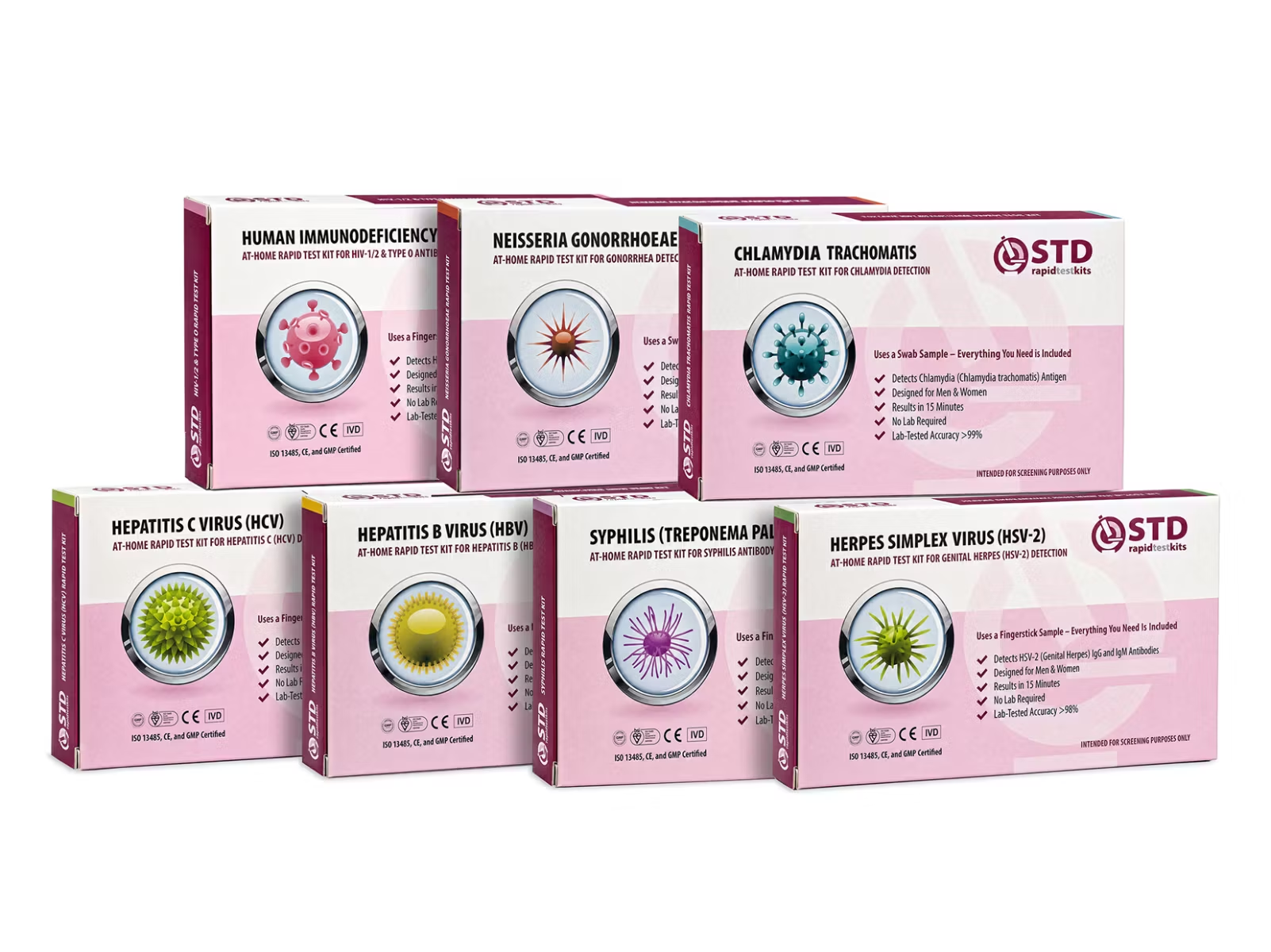
The rapid kits sold at stdrapidtestkits.com are lateral-flow tests in two formats.
- Self-collected swab. Chlamydia and gonorrhea cassettes are validated for self-collected vaginal or penile swab depending on anatomy. Trichomoniasis and HPV cassettes are validated for vaginal self-swab only. That means our trich and HPV home kits work for any reader with vaginal anatomy regardless of gender identity, and we do not have a male-anatomy-validated version of either.
- Fingerstick blood. HIV, syphilis, hepatitis B, hepatitis C, HSV-1, and HSV-2 are all rapid blood antibody (or antigen-antibody, for HIV) tests run from a fingerstick drop applied to the cassette.
What we do not sell, and what you should plan around if you need it:
- Pharyngeal (throat) swab kits. If you had oral exposure and are concerned about throat gonorrhea or chlamydia, a clinic visit is the correct path. CDC screening guidance recommends site-specific testing for site-specific exposure, and our home cassettes are not validated for pharyngeal samples.
- Rectal swab kits. Same logic. Rectal screening belongs in a clinical setting.
- Urine-collected tests. Labs offer them; our at-home cassettes use swab or blood instead.
- Mail-in lab panels. Our results are visual at home in about 15 minutes, not sent to a lab.
A practical hybrid for trans and nonbinary readers worried about a specific exposure event: run the at-home blood panel (HIV, syphilis) on the day you are worried, run the at-home swab for chlamydia or gonorrhea after the window period, and book a clinic visit for the pharyngeal or rectal swab you cannot do at home. That covers most of the risk surface without forcing every part of it through a single in-person visit.

If a Result Comes Back Positive
First, breathe. A positive on a screening test is information, not a verdict. It points you toward the next step, which is confirmatory testing and, in most cases, straightforward treatment.
Most bacterial STIs are curable with antibiotics. Per the 2021 CDC STI Treatment Guidelines:
- Chlamydia. First-line treatment is doxycycline twice daily for 7 days, with azithromycin as an alternative for specific situations.
- Gonorrhea. A single intramuscular dose of ceftriaxone, with site-specific dosing for pharyngeal infection.
- Syphilis. Penicillin G by injection, with the schedule depending on disease stage.
- Trichomoniasis. Oral metronidazole, often a 7-day course for people with vaginal anatomy.
Viral STIs are manageable with current medications, even if not curable:
- HIV. Daily antiretroviral therapy suppresses the virus to undetectable levels. Per CDC's HIV Treatment page, undetectable equals untransmittable: people with sustained undetectable viral load do not transmit HIV sexually.
- HSV-1 and HSV-2. Antivirals (acyclovir, valacyclovir) reduce outbreak frequency and severity and can be taken daily as suppressive therapy.
- Hepatitis B. Chronic infection is managed with antiviral therapy; many adult-acquired infections clear on their own.
- Hepatitis C. Now curable in most patients with 8 to 12 weeks of direct-acting antiviral medication.
The piece that can complicate treatment for trans and gender-diverse patients is the prescribing visit. If your local primary care is not safe, LGBTQ+ telehealth services can prescribe remotely after confirmatory testing. Planned Parenthood, Howard Brown Health, Callen-Lorde Community Health Center, and Whitman-Walker Health all run telehealth programs serving multiple states, and several state STI hotlines route to clinicians trained in trans-inclusive care.
| Infection | Standard treatment | Note for gender-diverse patients |
|---|---|---|
| Chlamydia | Doxycycline 100 mg twice daily for 7 days | Treatment is the same regardless of anatomy; multi-site testing may be needed if you have oral or receptive anal sex |
| Gonorrhea | Intramuscular ceftriaxone, single dose | Throat and rectal sites may need separate swabs at a clinic |
| Herpes (HSV-1 or HSV-2) | Antiviral pills, episodic or daily suppressive | Outbreaks can occur on any genital, perigenital, or oral skin surface |
| Syphilis | Penicillin G injection, schedule by stage | Primary chancre is painless; the rash of secondary syphilis may be on palms or soles |
| HIV | Daily antiretroviral therapy | U = U: sustained undetectable viral load means no sexual transmission |
| Hepatitis C | 8 to 12 weeks of direct-acting antivirals | Cure rate exceeds 95 percent; some regimens are once daily oral |
Screening recommendations for sexually transmitted infections should be based on a person's current anatomy and sexual behaviors.
Care, on Your Own Terms
Health does not have to wait for the world to accommodate you. A swab in your own bedroom with music on is care. A fingerstick cassette read while a TV show runs counts too, and so does sealing the tube without ever pointing a mirror at the area. Whatever rhythm you can sustain is the rhythm worth keeping.
If the result is negative, you have confirmation. If it is positive, telehealth services that specialize in LGBTQ+ care can manage confirmatory testing and prescriptions without forcing you back into a gendered waiting room.
FAQs
- Is it really common to delay STD testing because of gender dysphoria?
- Yes. Surveys of trans and nonbinary people consistently find that a meaningful share of respondents have postponed sexual-health care after past negative experiences with providers. The 2022 U.S. Transgender Survey found high rates of healthcare-related discrimination and avoidance. The reasons cluster around exactly the parts of an STI visit (forms, exams, anatomy-based questions) that interact with dysphoria most directly.
- What if I cannot say the words for the body parts that need to be tested?
- You do not have to. Try describing sensation and location instead: "internal burning," "itching at the front," "a sore on the skin between the legs," "discharge after sex." Write it on the form or in a message portal if speaking it out loud is the part that does not work. For at-home testing, you skip this step entirely; the cassette does not ask you to name anything.
- Can I do a self-swab even if touching my genitals triggers panic?
- If touching the area triggers a freeze or panic response, switch to tests that use blood instead of swabs. Our HIV, syphilis, hepatitis B, hepatitis C, HSV-1, and HSV-2 rapid kits use a fingerstick drop, no genital contact. For chlamydia and gonorrhea, the swab is brief and shallow and you control every part of it; some people manage it with a mirror and music, others do it eyes closed in one motion. If you end up with an invalid result that you cannot bear to repeat, spacing the retake out as far as you need or switching to a blood-only panel are both valid responses; you are not obligated to get through a particular protocol on a particular timeline.
- If I test positive at home, do I still have to see a clinic in person?
- You will need confirmatory testing before starting treatment for most positive results, but the confirmatory step does not have to be the same kind of visit you were avoiding. LGBTQ+ telehealth services (Planned Parenthood, Howard Brown Health, Callen-Lorde, Whitman-Walker, and others) can order confirmatory labs and prescribe treatment remotely in many states. Phlebotomy can be done at a draw site without a full primary-care visit.
- Does being on testosterone or estrogen change how STD symptoms show up?
- It can. Testosterone can cause vaginal dryness or atrophic changes that can mask or mimic irritation from an infection. Estrogen and anti-androgens can change tissue sensitivity and discharge patterns. Knowing your baseline on your current regimen helps; anything that feels different from your normal is worth investigating regardless of hormone status.
- Can I transmit an STD if I have no symptoms?
- Yes. Chlamydia, gonorrhea, HSV, HPV, and HIV can all transmit during asymptomatic periods. This is the reason routine screening exists rather than symptom-driven testing alone. CDC recommends at least annual STI screening for sexually active adults under 25 and for people with new or multiple partners at any age, with more frequent screening (every 3 to 6 months) for higher-exposure situations.
- How often should I test if I am sexually active with multiple partners and dysphoria makes testing hard?
- The guideline is every 3 to 6 months for higher-exposure situations. If that cadence is emotionally too much, settle on a rhythm you can sustain (every 6 months, after each new partner, before each new partner) rather than aiming for the maximum and skipping entirely. At-home kits help here because they remove the part of the cadence that requires booking and traveling.
- What does our home kit cover for someone on hormones with non-typical anatomy?
- The kit tests for the infections it is validated for, regardless of who is collecting the sample. The chlamydia and gonorrhea swabs work for self-collected vaginal or penile sampling. The trichomoniasis and HPV swabs are validated for vaginal self-collection only and are appropriate for any reader with vaginal anatomy. The HIV, syphilis, hepatitis B, hepatitis C, and herpes blood tests are anatomy-independent. For pharyngeal or rectal screening, you will still need a clinic, because home cassettes are not validated for those sites.
How we sourced this article: We summarized current guidance from the CDC's STI Treatment Guidelines (including the section on transgender and gender diverse persons), UCSF's TransCare program, and the 2022 U.S. Transgender Survey, then mapped that guidance onto the practical experience of avoiding care and the limits of what at-home rapid lateral-flow tests can do. This article is editorial summary, not clinical advice for any specific person; talk to a clinician you trust about your situation.
- U.S. Centers for Disease Control and Prevention. Sexually Transmitted Infections Treatment Guidelines, 2021 (MMWR Recommendations and Reports). NAAT recommendations, treatment regimens, and screening recommendations.
- U.S. Centers for Disease Control and Prevention. STI Treatment Guidelines, Transgender and Gender Diverse Persons. Screening recommendations driven by current anatomy and sexual practices.
- U.S. Centers for Disease Control and Prevention. Getting Tested for STIs. Sample types, window periods, and screening intervals.
- U.S. Centers for Disease Control and Prevention. HIV Treatment. Antiretroviral therapy and the Undetectable equals Untransmittable (U=U) principle.
- UCSF Gender Affirming Health Program (TransCare). Guidelines for STI screening in transgender and nonbinary patients.
- U.S. Transgender Survey (USTS), 2022. Largest national survey of transgender and nonbinary adults in the United States; healthcare experiences and care delay findings.
