How Soon After Sex Can You Test for Herpes? (Timing by Type)
How long to wait before a herpes test gives a reliable answer.
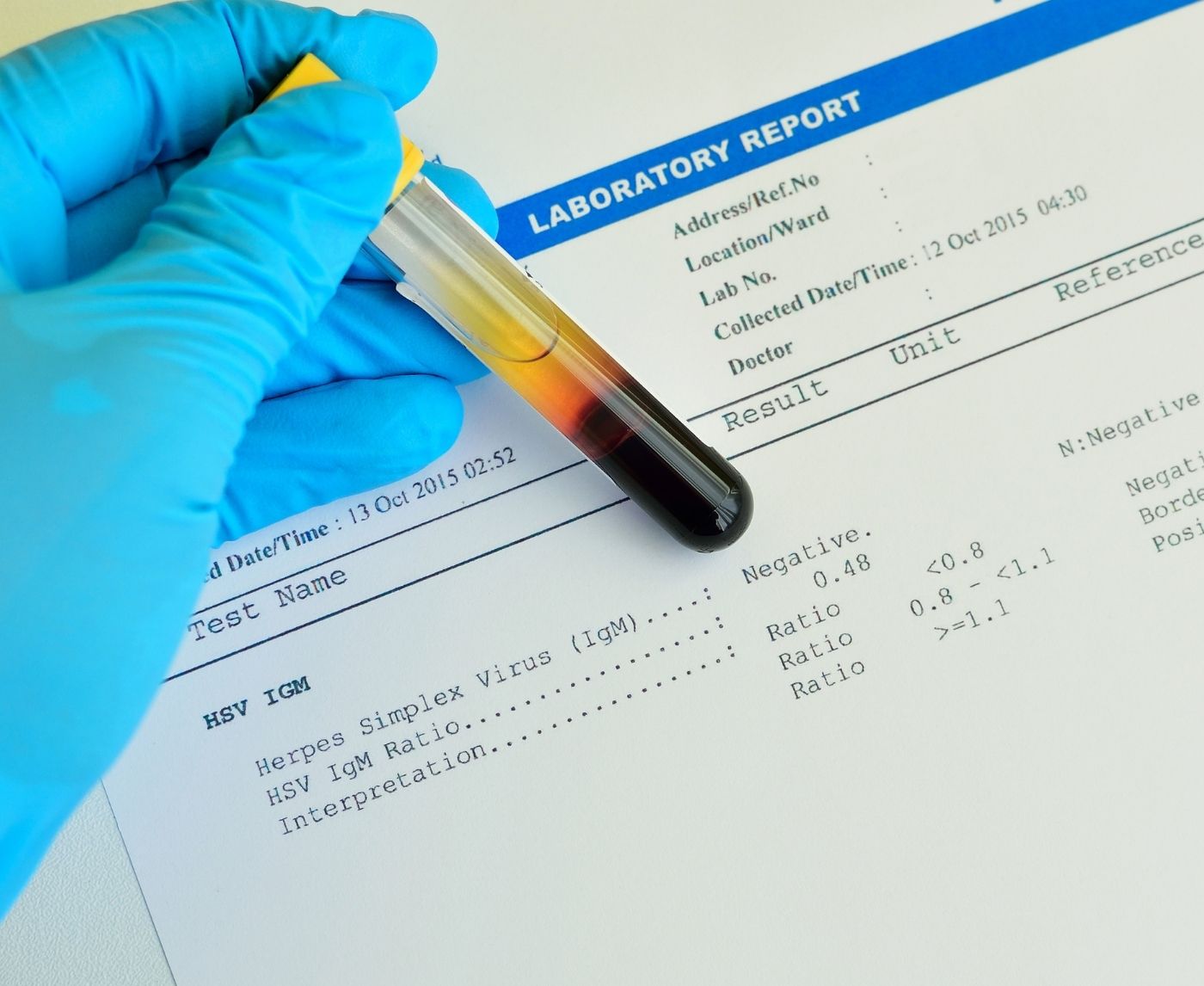



- Swab tests work only on visible sores and the yield is highest in the first few days of an outbreak. Type-specific IgG blood tests reach reliable detection at about 12 weeks after exposure, with some people taking longer.
- Most people with HSV-2 never realize they have it. Standard STI panels often skip herpes unless you ask, and many at-home kits screen for HSV-2 only, missing genital HSV-1.
Published: October 2025 | Last updated: May 2026 | Editorial review and quality control: Martina N.
Herpes testing has a timing problem that pregnancy tests do not have. With a pregnancy test, you wait two weeks and the answer is reliable. With herpes, the answer depends on which test you take, whether you have a visible sore, and how long it has been since your immune system started building antibodies. Test too early and a negative result can be wrong. Test during an outbreak with the right method and you can have an answer in a few days.
This guide walks through the actual timing windows for each herpes test, what each one detects, when retesting makes sense, and how to handle the wait without panic. The short version: most people without symptoms should plan for a type-specific IgG blood test about 12 weeks after exposure, and a swab is only useful if you already have a visible sore to swab.
Key Takeaways
- Swab tests work only on visible sores and the yield is highest in the first few days of an outbreak. Type-specific IgG blood tests reach reliable detection at about 12 weeks after exposure, with some people taking longer.
- Most people with HSV-2 never realize they have it. Standard STI panels often skip herpes unless you ask, and many at-home kits screen for HSV-2 only, missing genital HSV-1.
Incubation Period vs Window Period: They Are Not the Same
The incubation period is how long after exposure symptoms (if any) might appear. For genital herpes, that is typically 2 to 12 days, though many people never develop classic symptoms at all (NHS genital herpes overview). The window period is something else: it is how long after exposure a test can reliably detect the infection. These two timelines do not line up, especially with herpes.
Most blood tests look for IgG antibodies, which the immune system needs time to make. Per CDC herpes testing guidance, it can take up to 16 weeks or more for current tests to detect infection. For most commonly used type-specific IgG assays, 12 weeks is the practical threshold; a small share of people seroconvert later still. If you test before your body has produced enough antibodies, the result can be falsely negative even when the virus is present.
Swab tests skip the antibody question entirely. They look for viral DNA in fluid taken directly from a sore. No sore, no swab. The yield is highest in the first few days of an active outbreak; once the lesion starts healing, the swab is more likely to miss viral DNA.
| Test Type | When It Works | What It Detects | Best For |
|---|---|---|---|
| Swab (PCR or culture) | First few days after a sore appears | Viral DNA in lesion fluid | Visible blisters, active outbreak |
| Type-specific IgG blood test | Most reliable at 12 weeks post-exposure | Antibodies to HSV-1 and HSV-2 | No symptoms, asymptomatic screening |
| IgM blood test | Not recommended | Early antibody response | Discouraged due to high false-positive rate |
The Short Answer on Timing
If you only remember one thing from this article, it is the difference between the swab window and the antibody window. People panic-test too early and walk away with a falsely reassuring negative. The right move depends on whether you can see anything.
How long after exposure should I test for herpes?
For asymptomatic exposure, test at 12 weeks with a type-specific IgG blood test for the most reliable result; some people need up to 16 weeks or longer to seroconvert. If you develop a visible sore, get a swab within the first few days of the blister appearing, when viral DNA yield is highest. Avoid IgM blood tests; the CDC explicitly does not recommend IgM for herpes diagnosis because the tests are not type specific and can be positive during recurrent episodes.
HSV-1 vs HSV-2: Why Type Matters for Testing
When most people say herpes, they think HSV-2 in the genitals. But HSV-1, traditionally the cold-sore virus, now causes a substantial share of new genital herpes infections. The CDC STI Treatment Guidelines note that an increasing proportion of anogenital herpes infections have been attributed to HSV-1, especially among young women, and that genital HSV-1 acquisition can be asymptomatic.
Knowing which type you have matters for three reasons:
- Recurrence patterns. Genital HSV-1 typically recurs less often than genital HSV-2. Many people with genital HSV-1 have one outbreak and very few after.
- Transmission risk. HSV-2 sheds asymptomatically more frequently in the genital region than HSV-1, which means it can pass between partners even with no visible sores.
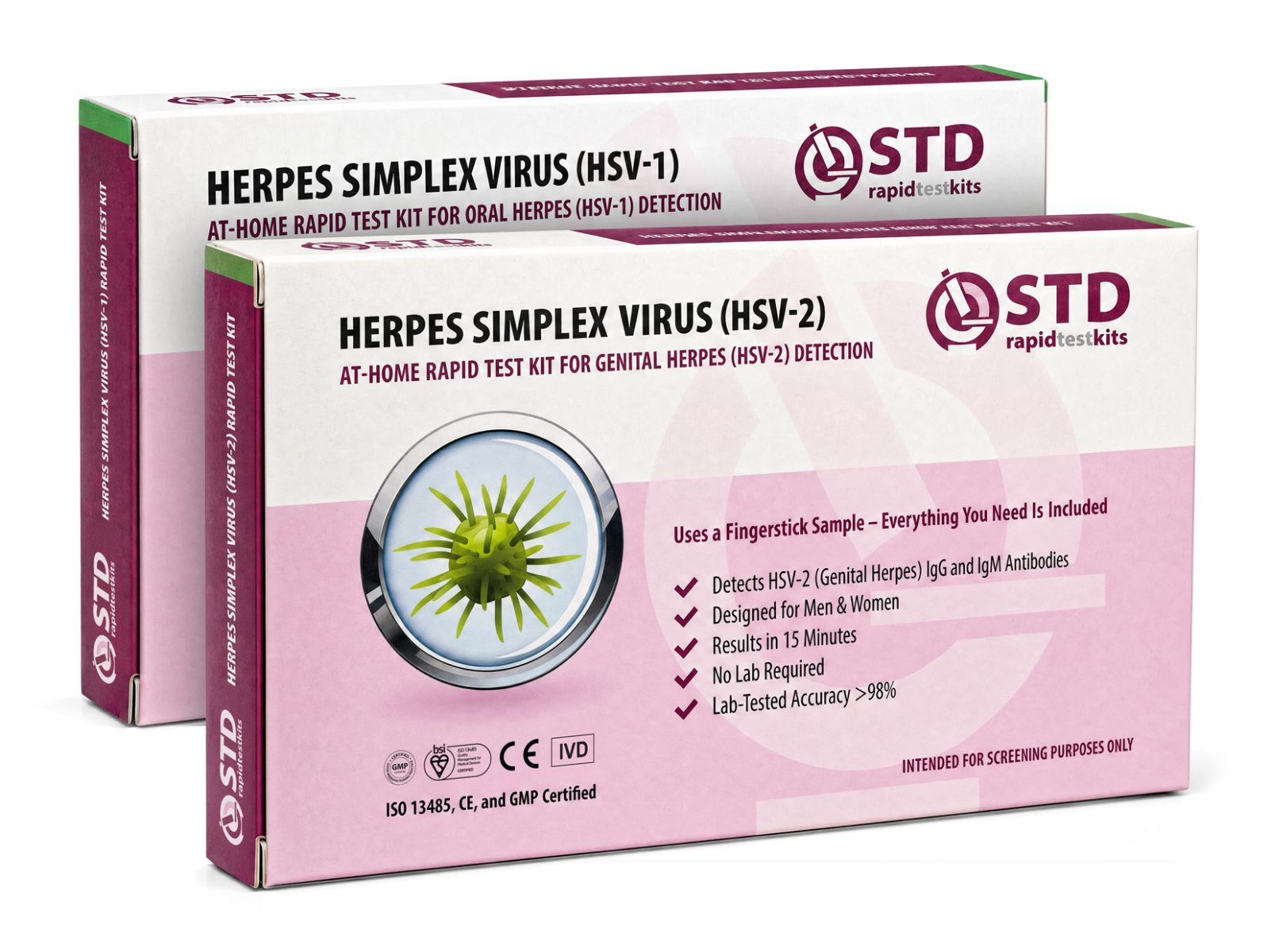
- Test selection. Some at-home rapid kits screen for HSV-2 antibodies only and will miss genital HSV-1 entirely. If you want full coverage, look for a panel that explicitly tests both HSV-1 and HSV-2.
| Virus Type | Typical Location | Recurrence Rate | Detected By |
|---|---|---|---|
| HSV-1 | Mouth most often, increasingly genital | Low when genital, higher when oral | Type-specific IgG blood test, swab with typing |
| HSV-2 | Genital almost always | Higher, with more asymptomatic shedding | Type-specific IgG blood test, swab with typing |

At-Home, Clinic, or Mail-In: Choosing the Right Method
There is no single right test. The best one is the one you will actually take. Here is how the three main options stack up.
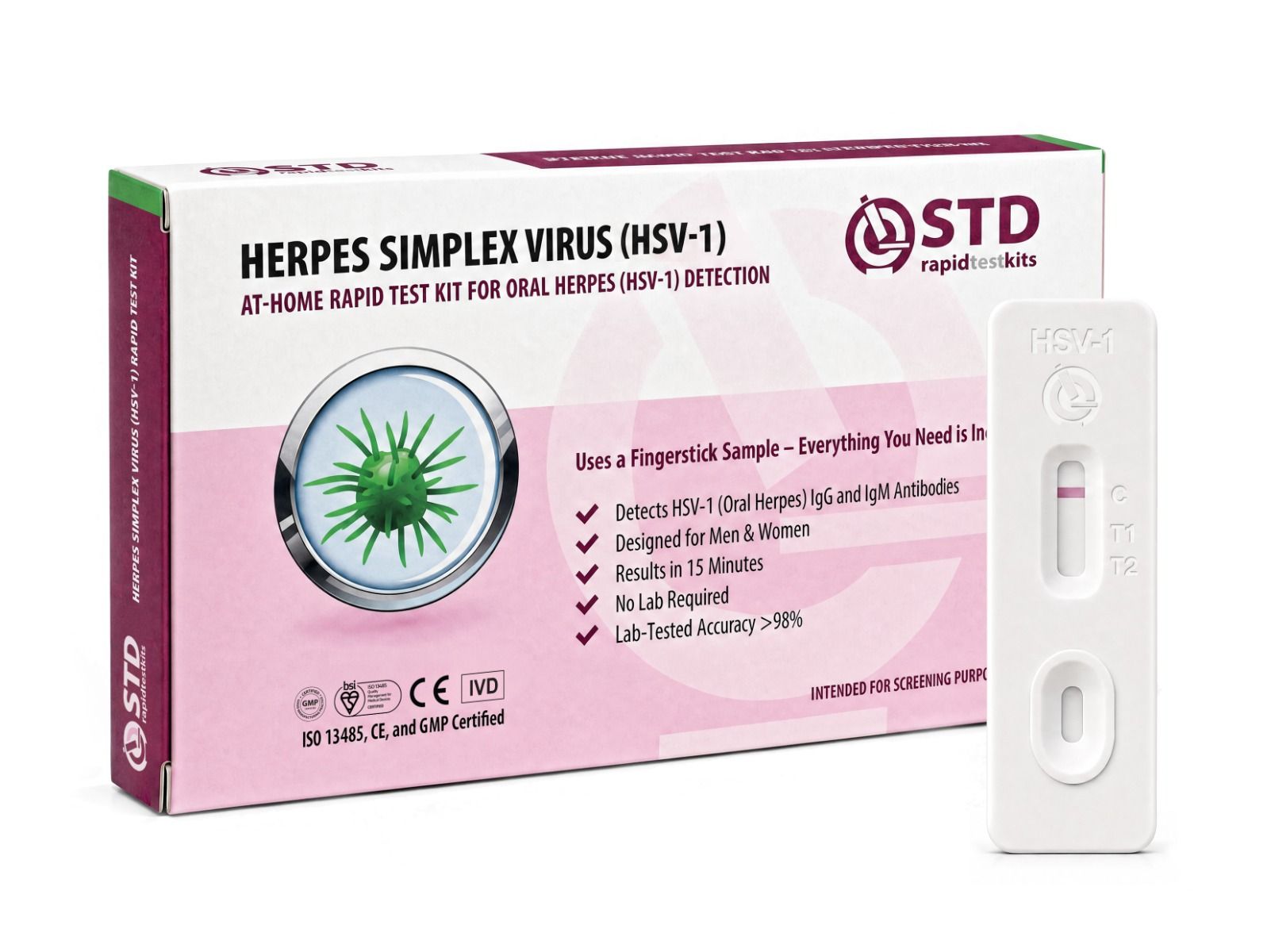
At-home rapid kits use a fingerstick blood drop to detect IgG antibodies. They are private, fast, and accessible, but they share the limitation of all blood tests: timing matters. Use them at 12 weeks or later for the most reliable result. Confirm that the kit specifically covers both HSV-1 and HSV-2 if you want full type coverage; some screen for HSV-2 only.
Clinic visits are best when you have an active sore. Providers can swab the lesion for nucleic acid amplification (NAAT/PCR) testing, which the CDC describes as the most sensitive method for detecting HSV from genital ulcers and other mucocutaneous lesions. Walk-in urgent care does not always run NAAT/PCR, so it is worth asking what test the clinic uses before you go.
Mail-in lab kits sit between the two. You collect a sample at home, mail it to a lab, and get results within a few days. They are useful as a follow-up when an early at-home rapid test was borderline, especially in the 4-to-12-week post-exposure window.
Whatever method you pick, ask one question first: does this test cover both HSV-1 and HSV-2, and is it type-specific IgG (not IgM)? If the answer to either is no, the result will not give you the clarity you came for.
Disclosure: stdrapidtestkits.com publishes this article and sells the at-home rapid HSV blood tests referenced below. Product recommendations are based on fit-for-purpose, not commercial benefit.
Recurrences and subclinical shedding are much more frequent for HSV-2 genital herpes infection than for HSV-1 genital herpes.
Reducing the Risk of a False Negative
False negatives in herpes testing usually come from one of two timing problems: testing too early for antibodies to develop, or swabbing a sore that has already started healing. Per the CDC herpes testing page, it can take up to 16 weeks or more for a blood test to detect infection. For most commonly used type-specific IgG assays, 12 weeks is the practical threshold, with a small share of people seroconverting later still.
To lower the chance of missing a real infection:
- Wait at least 12 weeks for IgG testing if you have no symptoms.
- Swab only during an active outbreak, ideally in the first few days after a sore appears.
- Avoid IgM antibody testing. The CDC STI Treatment Guidelines state that HSV IgM testing is not recommended because the tests are not type specific and can be positive during recurrent oral or genital episodes.
- Consider retesting at 12 weeks if your first negative result came earlier than that, especially after a higher-risk exposure.
Too-early blood test: IgG antibodies can take up to 16 weeks or more to develop. A blood test before that window can come back negative even when the virus is present. Most labs reach reliable detection at 12 weeks.
Late-stage swab: Swab tests look for viral DNA in lesion fluid. Once a sore starts healing, the swab is more likely to miss the virus. The first few days of an outbreak give the highest yield.
When (and Why) to Retest
Retesting is not an admission that you did something wrong. It is how the immune system actually works. If you tested in the first three weeks after exposure and had no symptoms, plan to retest between weeks 8 and 12 to catch delayed antibody development. The CDC STI Treatment Guidelines support type-specific IgG testing for evaluating partners and for clarifying status after a too-early initial test.
Retesting matters most when:
- The exposure was higher risk: unprotected contact, a partner with active sores, or a partner with known HSV.
- The first test was before week 6.
- Symptoms (tingling, burning, blisters) appear after a negative test.
- You are starting a new relationship and want a definitive baseline before changing your safer-sex practices.
- You have a condition or medication that delays immune response, such as immunosuppression after a transplant or active chemotherapy.
Testing again does not mean you were careless. It means you care enough to be sure, both for yourself and for current and future partners.
If the Result Is Positive: What Comes Next
If the test comes back positive, the steps are practical and short.
- Take a breath. Herpes is common. The WHO herpes simplex virus fact sheet estimates that approximately 3.8 billion people under 50 have HSV-1 globally and around 520 million people aged 15 to 49 have HSV-2. A positive result is information, not a moral failing.
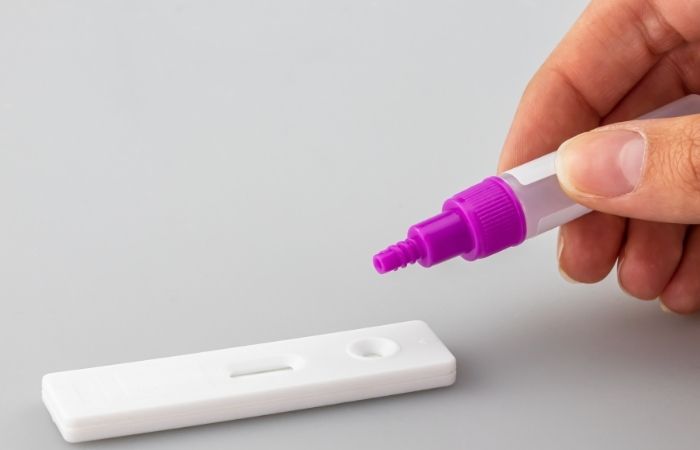
- Confirm if needed. If your result was from an at-home rapid kit, especially an early or borderline reading, a clinic-based confirmatory test (often a Western blot or repeat type-specific IgG) gives a definitive answer.
- Talk to a provider about suppressive antiviral therapy. Daily acyclovir, valacyclovir, or famciclovir can reduce both outbreak frequency and transmission risk. The CDC STI Treatment Guidelines have the current dosing.
- Have the disclosure conversation with current and recent partners. Concrete templates exist for how to do this in a way that protects your privacy and gives partners the information they need; a clinician or local sexual-health clinic can help you draft the conversation.
- Build the long view. Herpes is a manageable condition. Most people with HSV-2 lead full sexual and romantic lives, with or without suppressive medication.
A positive result is not the end of intimacy, dating, or sexual health. It is a piece of information that lets you make better decisions going forward.
FAQs
- Can I get tested for herpes the day after sex?
- You can, but the result will not tell you much. Herpes blood tests detect antibodies, which take weeks to develop. Swab tests detect viral DNA in fluid from a sore, so they only work if you already have a visible blister. A test the day after exposure will almost certainly come back negative regardless of whether you were infected.
- I have no symptoms. Should I still test for herpes?
- Yes, especially if you have a specific concern: a new partner, a recent unprotected exposure, or a partner who has disclosed cold sores or genital herpes. Most people with HSV-2 never develop classic symptoms, which is part of why it spreads so easily. A type-specific IgG blood test at 12 weeks gives you a reliable answer when you cannot rely on symptoms to tell you anything.
- What is the difference between HSV-1 and HSV-2 testing?
- A type-specific IgG blood test reports each virus separately. Some at-home rapid kits cover only HSV-2; if you want both, confirm the panel includes HSV-1. HSV-1 is most often oral but can be genital. HSV-2 is almost always genital. Knowing the type helps you understand recurrence likelihood and plan safer-sex conversations.
- My herpes test was negative but I still feel something off. What now?
- Two possibilities. The test may have been taken before antibodies fully developed, in which case retesting at 12 weeks is a good idea. Or the symptoms may not be herpes at all. Tingling, irritation, and bumps in the genital area can come from shaving, friction, yeast infections, bacterial vaginosis, or stress. If the feeling persists or you develop a clear sore, get a swab during the active phase.
- Is it true most people with herpes do not know they have it?
- Yes. Per CDC surveillance, the large majority of people with HSV-2 have not been diagnosed, often because they have no recognizable symptoms or attribute mild symptoms to something else. This is a major reason routine type-specific IgG testing is worth considering when you have a specific exposure concern, even without symptoms.
- Can someone pass herpes to me if they have no outbreak?
- Yes. This is called asymptomatic shedding, and it is a well-documented mode of transmission for both HSV-1 and HSV-2. Condoms reduce but do not eliminate the risk because shedding can occur on skin not covered by the condom. Daily suppressive antiviral therapy reduces transmission risk further. Honest disclosure between partners remains the most reliable protective factor.
- Can I get herpes from oral sex even if there is no visible cold sore?
- Yes. HSV-1 can shed from the mouth without a visible sore, which is why genital HSV-1 has been rising in younger adults. The risk is lower than during a visible outbreak but is not zero. If you are concerned about a specific oral-genital exposure, a type-specific IgG blood test at 12 weeks will tell you whether HSV-1 antibodies are present.
- Is herpes included in standard STI panels?
- Often not. Many clinics and at-home panels exclude herpes by default because of the test's limitations and the false-positive rate of older assays. If you want to include herpes, ask explicitly for a type-specific IgG test for both HSV-1 and HSV-2, or choose a kit that lists both viruses on the label.
How We Sourced This Article: We combined current guidance from the U.S. Centers for Disease Control and Prevention, the World Health Organization, and the U.K. National Health Service. Where the article gives a specific number (a window period, a prevalence figure, a recurrence pattern), the linked source contains that figure or the range that contains it. Editorial framing aims to translate clinical guidance into plain-English action items for general readers, not to replace personalized medical advice.
- U.S. Centers for Disease Control and Prevention. Herpes testing guidance, including window periods (up to 16 weeks or more) and antibody-based blood test limitations.
- U.S. Centers for Disease Control and Prevention. About Genital Herpes overview, including HSV-1 vs HSV-2 transmission and asymptomatic prevalence.
- U.S. Centers for Disease Control and Prevention. STI Treatment Guidelines, Genital Herpes section, including rising HSV-1 anogenital incidence, NAAT/PCR sensitivity, recurrence patterns, IgM non-recommendation, and suppressive antiviral therapy dosing.
- World Health Organization. Herpes simplex virus fact sheet, including global HSV-1 and HSV-2 prevalence estimates.
- U.K. National Health Service. Genital herpes overview, including symptom presentation, the 2-to-12-day incubation range, and clinical diagnosis.