Published: October 2025 | Last updated: May 2026 | Editorial review and quality control: Martina N.
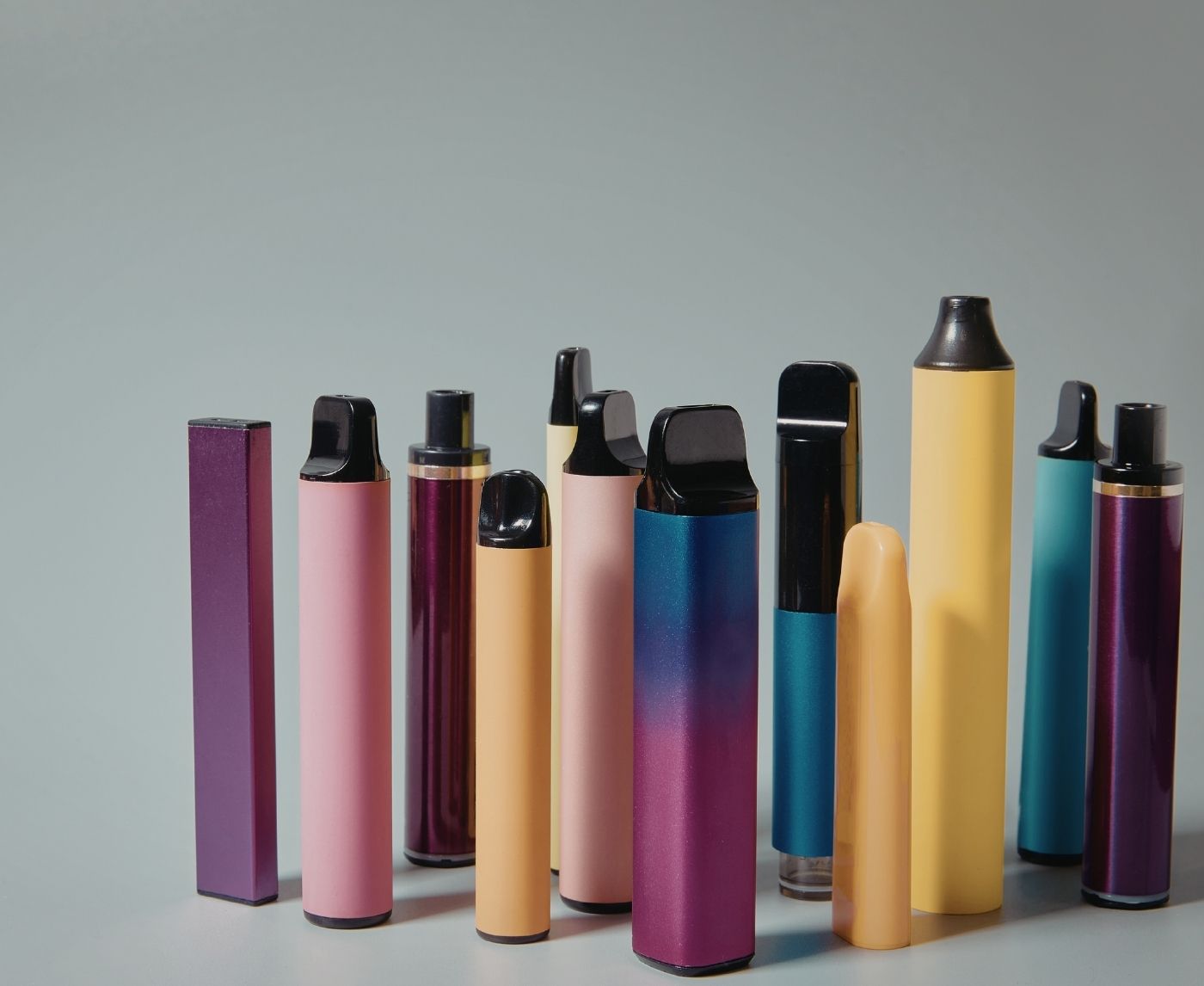
The thought hits hours after the party. You passed your vape to someone you barely knew, and now you are wondering whether you should be worried. Did they have a cold sore? Was there something on the mouthpiece? Did you just expose yourself to something you cannot take back?
This is a question your brain may keep asking until you have a clear answer. So here is one: most of the time, sharing a vape does not transmit any sexually transmitted infection. The single narrow exception is oral herpes, and only under conditions that almost never line up. What follows is the actual biology, the symptoms that would matter if they appeared, and where testing fits in without spiraling.
Key Takeaways
- Sharing a vape cannot transmit HIV, chlamydia, or gonorrhea. These infections need contact pathways a mouthpiece cannot recreate.
- Oral herpes (HSV-1) transmission via a shared vape is biologically possible but uncommon. It requires an active visible cold sore and almost no gap between users.
This Fear Is Not Random, It Comes From How STDs Are Talked About
Most sex education leaned heavily on warnings and stayed light on biology. Phrases like "be careful," "don't share things," and "you can catch something" stick with people years later, and they fill in whatever gaps your actual knowledge leaves. So when you share an object that touches someone else's mouth, the brain reaches for the scariest explanation it has stored.
Search results do not always help. They swing between dense clinical PDFs and forum posts that suggest panic over a sip of someone else's drink. Neither answers the real question: what is the realistic risk here, and which infections behave the way you fear they do?
What Counts as an STD Transmission Route?
Sexually transmitted infections do not move randomly. They follow biology. The CDC's overview of sexually transmitted infections notes that STIs spread mainly through vaginal, oral, and anal sex, and through close intimate physical contact like heavy petting. None of those pathways are present in a vape mouthpiece.
For the most common bacterial and viral STIs, transmission also depends on whether the organism can survive the trip. Chlamydia and gonorrhea bacteria require living mucous-membrane tissue. HIV requires fluid exchange with the bloodstream. HPV and herpes need direct skin-to-skin contact with infected tissue. A shared mouthpiece does not deliver any of those in a meaningful way. For chlamydia, gonorrhea, and HIV, the situation is not framed correctly as low risk. There is no transmission pathway present.
Chlamydia, gonorrhea, and HIV each require a specific transmission pathway: sexual fluid exchange or sustained mucous-membrane contact. A shared mouthpiece does not provide either, regardless of how many people used it.
So Why Does Herpes Keep Coming Up?
Herpes is the one infection where the honest answer is "very rarely" instead of "no." Oral herpes, caused mainly by herpes simplex virus type 1 (HSV-1), spreads through direct contact with infected skin or saliva. The World Health Organization fact sheet on herpes simplex virus describes HSV-1 as transmitted mainly through contact with the virus in sores, saliva, or surfaces in or around the mouth.
Here is the part most articles skip: HSV-1 does not survive well outside the body. It is a fragile virus that needs immediate transfer to stay infectious. For oral herpes to move through a vape, several things would need to line up at once:
- An active outbreak with a visible cold sore that is shedding virus.
- Immediate sharing, with almost no gap between users.
- Direct transfer from the mouthpiece to your lips before the virus degrades.
Even when all three conditions are present, transmission is not guaranteed. The biology allows it. Real-world conditions usually do not deliver it. HSV-1 does shed asymptomatically between outbreaks, but viral load is typically far lower than during an active sore, which makes fomite transfer via a shared mouthpiece even less plausible than it already is.
Can you actually get herpes from sharing a vape?
Most of the time, no. Oral herpes (HSV-1) can technically transfer through a shared vape only when the other person has an active visible cold sore and you use the device almost immediately afterward. Outside those specific conditions, the risk is near zero. Chlamydia, gonorrhea, and HIV have no transmission pathway through a shared mouthpiece. HPV is an extremely unlikely edge case because it requires direct skin-to-skin contact that a mouthpiece cannot replicate.
HSV-1 is mainly transmitted via contact with the virus in sores, saliva or skin surfaces in or around the mouth.
What Can Spread vs What Cannot
Pulling the common STIs into one view makes the picture clearer. The pattern is the same across infections: pathways that depend on fluid exchange or sustained tissue contact fail at the vape mouthpiece, and the only realistic question mark is HSV-1 under unusual conditions.
| Infection | Can It Spread via a Shared Vape? | Why or Why Not |
|---|---|---|
| Chlamydia | No | Requires sexual fluid exchange and mucous-membrane contact |
| Gonorrhea | No | Bacteria do not survive on dry surfaces like a vape mouthpiece |
| HIV | No | Not transmitted through saliva or shared objects |
| HPV | Extremely unlikely | Requires direct skin-to-skin contact, not saliva exposure |
| Oral Herpes (HSV-1) | Possible but rare | Only with an active sore and immediate sharing |
The Stuff You Are More Likely to Catch (That Is Not an STD)
If anything passes through a shared vape, it is almost always not a sexually transmitted infection. The realistic culprits are the same germs that travel through shared drinks, utensils, or cigarettes:
- Cold viruses: especially if the other person is congested or recovering from one.
- Influenza: spread through respiratory droplets that a mouthpiece can pick up.
- Mononucleosis: the so-called "kissing disease," caused by Epstein-Barr virus, and far more plausible in this scenario than oral herpes.
This is where a lot of post-share confusion starts. Someone notices a sore throat or a tingling lip the next day, remembers the vape from the night before, and jumps to "STD" when the realistic answer is the head cold that was already starting before they shared the device.
If you woke up with a sore throat or lip irritation the day after sharing a vape, the most common explanations are an ordinary cold, mild flu, or in some cases mononucleosis. None of these are sexually transmitted, and the next step is usually rest and fluids, not an STI panel.
What About Saliva, Can STDs Spread That Way?
Saliva sits in a gray area for a lot of people. It is not the same as sexual contact, but it is still an exchange of something that came out of another body. That ambiguity is exactly what keeps the question alive in search trends.
The biology is clearer than the anxiety suggests. Most STDs do not spread through saliva alone. The CDC's HIV transmission page states plainly that HIV is not transmitted through saliva. Even during oral sex, transmission usually requires mucous-membrane contact, not saliva on its own.
| STD | Spread Through Saliva Alone? |
|---|---|
| Oral Herpes (HSV-1) | Sometimes (only with active sores or shedding) |
| HIV | No |
| Chlamydia | No |
| Gonorrhea | No |
| Syphilis | Rare (requires contact with an active mouth lesion) |
When Should You Be Concerned?
If you shared a vape and now you are worried, the question worth asking is whether the specific conditions for transmission lined up that night. Pure theoretical possibility is the wrong filter; look at the conditions instead. Pay closer attention if all of these are true:
- You saw an active cold sore or scabbed lesion on the other person's lips before sharing.
- You used the vape immediately after them, with essentially no time gap.
- You are now noticing a localized tingling or burning in one specific spot on your lip.
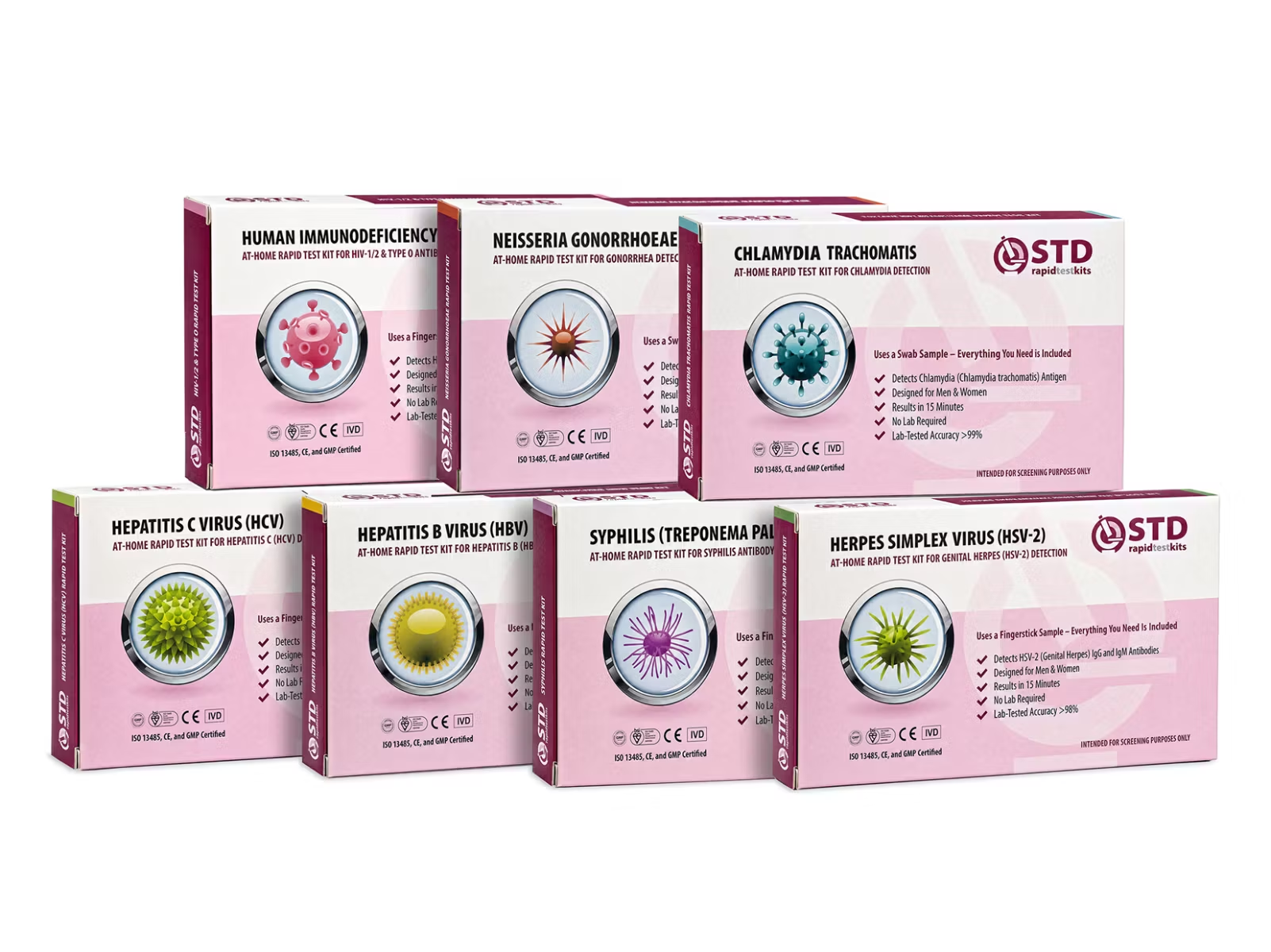
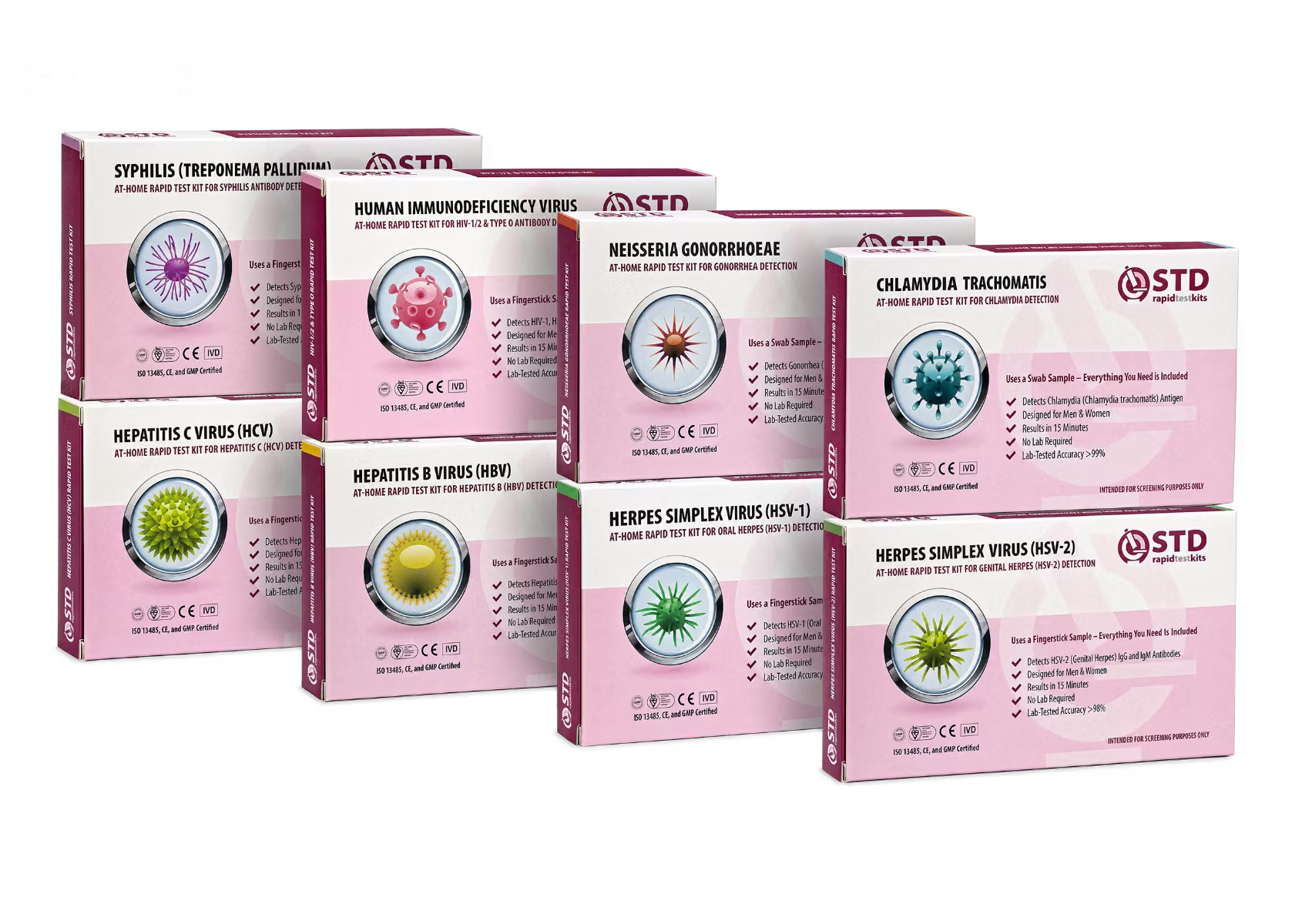
If none of those apply, your risk is not "probably fine." It is genuinely minimal. Testing for HIV, chlamydia, or gonorrhea after a shared vape is not medically necessary, because the pathway does not exist for those infections. If you are unsure or want a baseline anyway, private options like at-home STI testing kits are available and remove the clinic-visit friction.
The Anxiety Spiral That Follows One Small Moment
Late-night Googling has its own pattern. It starts with one passing thought, snowballs into mirror checks, and then begins assigning meaning to every ordinary sensation. A dry lip becomes a "tingle." A small irritation becomes "maybe a sore." The brain runs probability the way smoke alarms run sensitivity. It would rather false-alarm than miss something real.
That mode tends to outlast the actual exposure question by several days. The most useful thing you can do during that stretch is anchor on biology rather than sensation. By day 3 or 4 after exposure, if a primary cold sore is going to form, the localized tingling phase has typically started. By day 7 or so, you have a definitive answer one way or the other.
Anxiety-driven body scanning produces shifting, diffuse, hour-to-hour sensations: a dry patch, then a tingle, then nothing, then a different spot. A real primary cold sore follows a tight visible timeline: localized prodrome in one spot, blisters within a day or two, crust, healing. If what you feel keeps moving around and never produces a visible lesion, it is the scanner talking, not the virus.
What Early Oral Herpes Symptoms Look Like
According to NHS guidance on cold sores, the first sign of an oral HSV-1 outbreak is usually a tingling, itching, or burning feeling in one specific spot on the lip or around the mouth. It is localized and persistent, not a vague all-over discomfort. Within a day or two, small fluid-filled blisters may appear, often clustered together.
The blisters break, crust over, and typically clear up on their own within ten days. The process is visible and evolves. It does not quietly come and go in a few hours.
Things that get mistaken for early herpes often include:
- Chapped lips: dry, cracked skin from weather, dehydration, or sleeping with your mouth open.
- Pimples or perioral acne: single bumps that are not clustered or blister-like.
- Vape irritation: warmth or sensitivity from heat, flavoring chemicals, or repeated mouthpiece contact.

The Timeline People Get Wrong About Symptoms
One of the biggest drivers of post-exposure panic is timing. Someone shares a vape on a Friday night and notices a dry-feeling lip on Saturday morning. The two events feel connected, but the biology rules it out. Oral HSV-1 symptoms typically appear within a few days to about two weeks of a new exposure, not within hours.
If you feel something within minutes or hours of sharing, it is almost certainly not an STD. The realistic candidates are dryness, irritation, sudden awareness of your own lips for the first time in months, or a nervous system already scanning for evidence of a worry it has committed to.
What a primary HSV-1 outbreak looks like
- Localized tingling, burning, or itching in one specific spot is typically the first sign, not a vague all-over discomfort.
- Visible blisters usually appear within one to two days of that prodrome and are clustered together.
- Per NHS cold-sores guidance, the full course of tingle, blister, crust, and heal clears up on its own within ten days.
Where Testing Fits In, And Where It Does Not
Testing is most useful when there is a meaningful exposure question or a symptom that needs identification. Sharing a vape does not create a meaningful exposure for most STDs, so a panicked next-day screen is not the right call.
For herpes specifically, swab-based testing requires an active sore to be present, because the swab is collecting fluid from the lesion. Blood antibody tests for HSV exist, but they tell you whether you have been exposed at some point in life, not when or how. In clinical practice, cold sores are typically diagnosed by their visible appearance, with lab confirmation reserved for cases where the picture is unclear.
That said, if this moment made you realize it has been a while since your last full STI screen, that is a reasonable reason to test on its own. The vape itself is not what should prompt that test. Routine STI screening after any new sexual contact is a useful habit regardless of tonight.
How Long STD Viruses Survive Outside the Body
Most of the fear around shared objects starts here: how long can these viruses stay infectious on a mouthpiece, a cup rim, or a doorknob? Public-health research has answered this for the common STIs, and the answer is consistent. They need a living human host to stay viable, and they degrade quickly outside one.
The bacteria that cause chlamydia and gonorrhea cannot survive on dry inanimate objects long enough to infect someone new. A few seconds of air exposure, room-temperature surfaces, and shifts in pH start working against them. HIV is similarly fragile outside the bloodstream and is rapidly inactivated once exposed to air. Herpes simplex viruses are more resilient than HIV but still nothing close to "lurking on surfaces." They need near-immediate transfer to remain infectious.
| Pathogen | Approximate viability outside the body |
|---|---|
| HIV | Rapidly inactivated once exposed to air; not transmitted through environmental surfaces |
| Chlamydia trachomatis (chlamydia) | Does not survive on dry inanimate surfaces in any meaningfully infectious quantity |
| Neisseria gonorrhoeae (gonorrhea) | Fragile outside the body; does not survive on dry surfaces in an infectious form |
| HSV-1 (oral herpes) | Limited viability outside the body; requires near-immediate transfer from active lesion or saliva |
The Bigger Myth: You Can Catch STDs From Anything
This idea spreads more easily than any infection it warns about. Toilet seats, public bathrooms, towels, drinks, and now vapes have all been blamed at various points. The underlying belief is that pathogens are hardy enough to wait for new hosts on whatever surface they land on.
That is not how most STD-causing organisms work. The CDC describes the common bacterial STIs as requiring sexual or intimate physical contact, because the organisms do not survive outside the body in a usable form. HIV breaks down quickly once exposed to air. Even herpes, which is more resilient than some, still needs immediate transfer from active skin or saliva to another person's skin to stay infectious.
Most STI-causing organisms are biologically built for the body, not the bench. Once they leave warm, moist tissue, the clock starts. Surface transmission is a rare edge case in epidemiology, not an everyday route. Object-mediated spread is something epidemiologists discuss for a handful of unusual scenarios, not for the chlamydia, gonorrhea, HIV, or herpes cases the public worries about.
Why Post-Vape Sensations Get Mistaken for Symptoms
Vaping itself can cause real, ordinary irritation. The mouthpiece runs warm, the aerosol carries flavoring chemicals and propylene glycol or vegetable glycerin, and your lips react to all of it. Common post-vape sensations include:
- Dryness: lips feeling tight or chapped after extended use.
- Warmth or tingling: especially after repeated draws in a short window.
- Minor irritation: from stronger flavors or frequent mouthpiece contact.
When anxiety is already running, those normal reactions read as something worse. Your nervous system pattern-matches against the worst-case scenario it has been searching for. None of those sensations resemble the localized, persistent prodrome that precedes a real cold sore.
A cold sore prodrome is localized to one specific spot on or near the lip and usually produces a visible bump or blister within one to two days. Vape irritation tends to be diffuse, fades within hours, and does not produce blisters. If your sensation does not narrow to one spot or evolve into a visible lesion, it is almost certainly the latter.
When to Pay Closer Attention
Most of the time, sharing a vape leads to nothing at all. There are a few situations where staying alert is reasonable, not alarmed, just aware:
- You noticed a clear cold sore on the other person's lips before they handed the vape over.
- You develop a small cluster of blisters in one spot on your lip within five to ten days.
- The area becomes painful or distinctly raised, not just dry or briefly irritated.
Even then, the right response is observation, not panic. Herpes follows a recognizable course. If something is going to develop, it will become obvious within roughly a week. That is when a clinician visit or targeted testing makes sense, not the same night the vape passed around.
FAQs
- Can sharing a vape transmit herpes?
- Doctors do not consider shared objects a common HSV-1 transmission route. For transmission via a vape to happen, someone with an active visible cold sore would need to use the device, and you would need to use it almost immediately afterward before the virus loses viability on the mouthpiece. Without those conditions, the risk is essentially nil.
- My lip feels tingly after sharing a vape. Is that the start of herpes?
- Almost certainly not. The tingling that precedes a cold sore is highly localized to one specific spot and is followed within a day or two by a visible cluster of blisters. A vague tingle on the same night you shared a vape is far more likely to be dryness, flavor irritation, or your brain hyper-monitoring its own lip.
- Can you get chlamydia, gonorrhea, or HIV from a shared vape?
- No. These infections need sexual fluid exchange or sustained mucous-membrane contact. A vape mouthpiece does not deliver either. The pathway simply does not exist, regardless of how many people used the device.
- What is more likely to spread through a shared vape than an STD?
- Ordinary respiratory germs: colds, influenza, and mononucleosis if someone is actively shedding Epstein-Barr virus. It is the same realistic risk profile as sharing a drink at a party. Not glamorous, not stigmatized, just standard everyday germs.
- How long would it take for oral herpes symptoms to appear after exposure?
- Symptoms of a primary HSV-1 outbreak typically appear within a few days to about two weeks of a new exposure. If you are checking your lips for damage within hours of sharing a vape, you are running well ahead of any plausible biology.
- What does an oral herpes outbreak look like?
- The first visible sign is a small cluster of fluid-filled blisters, usually on the lip border, preceded by roughly 12 to 48 hours of localized tingling or burning in one specific spot. The blisters break, crust over, and clear up on their own within about ten days. It is visible and evolves over time, not a sensation that quietly comes and goes.
- Is sharing a vape essentially the same level of risk as kissing?
- No. Kissing involves direct, sustained mouth-to-mouth contact, which is exactly how HSV-1 prefers to spread. A vape is brief, indirect, and a far less efficient route. The WHO describes oral herpes as transmitted mainly through contact with the virus in sores, saliva, or surfaces around the mouth, with shared objects as a much smaller contributor.
- I have not tested in a while. Should I treat this as a reason to screen?
- If it nudges you toward an overdue baseline STI screen, that is a reasonable use of the moment. Just be clear with yourself about why you are testing. The vape did not change your STI risk in any meaningful way; routine sexual-health checkups are a separate, useful habit.
You Deserve Clarity, Not Spiral Googling
The vape did not change your STI risk in any meaningful way. What it did was create a moment of uncertainty in a system where most people were never given clear answers in the first place. That is the part worth fixing, and it does not require panic. It requires better information.
If recent sexual contact is what is on your mind, testing is a reasonable next step. For peace of mind without a clinic visit, you can look at private options like the combo home STI test kits. The answers come faster, the process stays private, and the trigger for testing should be your own sexual-health timeline, not one moment at a party.
How we sourced this article: This guide is built on current public-health guidance from the CDC, the World Health Organization, and the NHS on how herpes simplex viruses and other STI-causing pathogens transmit, including how long they remain viable outside the body and what specific contact conditions are required. We also looked at how anxiety-driven symptom misattribution shapes real reader behavior after low-risk exposures. The goal is clarity that is medically accurate and usable in real life, not a list of warnings without context.
- U.S. Centers for Disease Control and Prevention. Overview of genital herpes, including transmission, symptoms, and outbreak course.
- U.S. Centers for Disease Control and Prevention. About sexually transmitted infections, including the main routes of transmission for bacterial STIs.
- U.S. Centers for Disease Control and Prevention. HIV causes and transmission, including saliva and fluid-exchange specifics.
- World Health Organization. Herpes simplex virus fact sheet, covering HSV-1 and HSV-2 transmission through oral and genital contact.
- National Health Service (UK). Cold sores: symptoms, typical course, and self-care guidance for HSV-1 outbreaks.
