Published: July 2025 | Last updated: May 2026 | Editorial review and quality control: Martina N.
Home STD test packaging promises 99% accuracy, but accuracy is a slippery word in diagnostics. Two tests with the same '99%' claim can have different sensitivity, different specificity, and different reliability for the specific infection you are worried about. The honest answer to 'how accurate are home STD tests?' depends on the infection, on the technology inside the cassette, on whether the sample goes to a lab, and on how soon after exposure you tested.
This guide walks through what those numbers mean, breaks down typical accuracy by STI, explains the timing rules that determine whether your result is trustworthy, and walks through what to do with the result once you have it. The aim is to help you read a test box honestly and pick the right kit (or the right clinic visit) for your situation.
Key Takeaways
- Accuracy varies meaningfully by infection: HIV rapid blood tests run above 99% sensitivity after the correct window period, syphilis treponemal tests run 95 to 98%, chlamydia and gonorrhea rapid swabs run 90 to 95%, and HSV-2 IgG antibody tests sit closer to 92 to 95% with elevated false-positive risk at low index values.
- Timing beats brand. Testing before the infection-specific window period (up to 90 days for HIV rapid fingerstick antigen-antibody tests, 2 to 12 weeks for HSV-2 IgG with conservative re-testing at 16 weeks) produces false negatives even with a high-accuracy kit.
What 'Accuracy' Means on an STI Test Box
'99% accurate' is a marketing-friendly summary of three different numbers, and the difference matters when you are deciding whether to trust your result.
Sensitivity is the proportion of true positives the test correctly catches. A test with 95% sensitivity will miss 5 out of every 100 true infections (false negatives). For high-stakes infections like HIV, sensitivity matters most because a missed positive means an infection that goes untreated and can be passed on.
Specificity is the proportion of true negatives the test correctly identifies. A test with 99% specificity will produce a false positive for 1 of every 100 uninfected people who use it. For low-prevalence conditions, even a small specificity gap creates a lot of falsely-alarmed users.
Positive predictive value (PPV) is the probability that a positive result is genuinely positive, given how common the infection is in the population being tested. PPV is what most readers want when they ask 'is this result real?', but it is the number you almost never see on a box, because it depends on who is taking the test, not on the test itself.
When marketing copy says '99% accurate', the figure is usually overall agreement with a reference test, which blends sensitivity and specificity into one number. Reputable kits report both numbers separately because they tell you different things. Kits that quote only a single 'accuracy %' are giving you less information. The validation document, not the marketing summary, is what you want to see.
The U.S. Centers for Disease Control and Prevention publishes screening guidance that distinguishes between the laboratory NAAT (nucleic acid amplification test) reference standard and screening tools used in lower-resource or at-home settings.
Sensitivity is the test's protection against a missed infection. Specificity is the test's protection against a false alarm. PPV tells you what your specific positive result actually means, and it depends on infection prevalence in the population being tested. A test that is 99% specific still produces 1 false positive per 100 uninfected users; in a low-prevalence population that adds up.
The Two Kinds of Home STD Tests
'Home STD test' covers two technologies that work very differently, and conflating them is the single biggest source of confusion about accuracy claims.
Self-collect plus lab processing. You collect a urine, swab, or finger-prick blood sample at home, mail it in a prepaid temperature-safe pack, and a CLIA-certified (Clinical Laboratory Improvement Amendments) laboratory runs nucleic acid amplification testing (NAAT) or another lab assay. Results return digitally in 2 to 5 days. Sensitivity and specificity are essentially equivalent to in-clinic NAATs because the same lab method is applied, just with a sample you collected yourself. Studies of self-collected vaginal swabs for chlamydia and gonorrhea show NAAT sensitivity above 97% when the sample is properly collected.
At-home rapid lateral-flow tests. These look and work like pregnancy tests: collect a sample (swab or finger-prick), apply it to a cassette with a buffer, and read a control-line plus test-line result in 10 to 20 minutes. The chemistry is an immunoassay (antibodies for blood-based infections, antigen detection for some swab-based infections). Lateral-flow chemistry trades a few percentage points of analytical sensitivity for immediate results and full privacy at home; the technology is well-validated as a population-level screening tool.
Our STD Rapid Test Kits product line is the second category: at-home lateral-flow cassettes. We do not sell mail-in lab-processed panels. The accuracy ranges quoted on each product page reflect lateral-flow technology, not laboratory NAAT performance. We are not 'NAAT-equivalent' or 'PCR-grade'; any product page using those terms is overselling.
This article is published by stdrapidtestkits.com, which sells at-home rapid STI test kits. We recommend products based on fit-for-purpose for the reader's concern, not commercial benefit.
A reasonable workflow combines the two: use a lateral-flow rapid test for screening and reassurance at the appropriate post-exposure window, and confirm any reactive result at a clinic with NAAT.
| Feature | Mail-in lab kit (NAAT) | Rapid lateral-flow (at-home) |
|---|---|---|
| Result time | 2 to 5 days | 10 to 20 minutes |
| Where the analysis happens | CLIA-certified lab | On the cassette in your hand |
| Who reads the result | Lab technician | You |
| Typical sensitivity | 97% to 99%+ | 90% to 99%+ (HSV-2 IgG runs lower) |
| Typical specificity | 99%+ | 92% to 99%+ (HSV-2 IgG sits at the low end) |
| Cost per test | Generally higher | Generally lower |
| Privacy | Sample mailed; account-tied result | Fully self-contained |
| What this site sells | No | Yes |
Accuracy by Infection: The Honest Breakdown
Accuracy varies meaningfully across STIs because the underlying biology is different. A blood test for HIV (an antigen-antibody combination) is mature technology with decades of optimization. An IgG antibody test for HSV-2 is younger, has known cross-reactivity issues with HSV-1, and is harder to interpret. Below are the typical sensitivity and specificity ranges for at-home rapid lateral-flow tests, with brief notes on what affects them.
HIV (rapid blood antibody or antigen-antibody). Modern fourth-generation lateral-flow HIV tests detect both p24 antigen and HIV-1/2 antibodies. After the appropriate window period, sensitivity is typically reported above 99% and specificity above 99% on validated kits (see the HIV at-home kit page for kit-specific figures). The CDC's HIV testing overview explains the difference between antibody-only and antigen-antibody tests.
Syphilis (rapid blood treponemal antibody). Sensitivity around 95 to 98% and specificity above 98% for primary or secondary infection (see the syphilis at-home kit page). Antibody-based syphilis tests stay positive for life after a treated infection, which is a feature of the chemistry, but it means the test cannot tell you whether a current infection is active. A reactive home test should be confirmed at a clinic with an RPR or VDRL non-treponemal test.
Chlamydia and Gonorrhea (rapid antigen swab). Self-collected vaginal or penile swab on a lateral-flow cassette typically reports 90 to 95% sensitivity and 97%+ specificity (see the chlamydia-gonorrhea combo kit page). The lab NAAT remains the diagnostic gold standard per CDC STI treatment guidelines, but the rapid kit is a useful screening tool, especially for asymptomatic readers wanting a quick check before a clinic appointment.
Hepatitis B and Hepatitis C (rapid blood antibody/antigen). Hepatitis B surface antigen (HBsAg) lateral-flow tests run around 96 to 98% sensitivity (see the Hep B kit page). Hepatitis C antibody tests perform similarly (see the Hep C kit page). Both are screening tools; a positive result should be confirmed with viral load testing at a clinic.
Herpes (rapid blood IgG, HSV-2 specifically). This is the test most people overestimate. Type-specific HSV-2 IgG sensitivity sits around 92 to 95% with specificity around 92 to 96%, with a known false-positive rate when index values are in the 1.1 to 3.5 range (see the HSV-2 kit page). The CDC does not recommend routine HSV serology in asymptomatic people for this reason. Use it for targeted questions (a known partner exposure, recurrent symptoms in someone never tested) rather than as a generic screen.
HPV. Self-collected vaginal HPV swabs are validated for people with a cervix and detect high-risk HPV types (see the HPV kit page). They are a screening tool, not a substitute for clinical Pap and HPV co-testing. Our at-home HPV kit is validated for vaginal self-swab only; male readers needing an HPV test should see a clinic.
Trichomoniasis. Self-collected vaginal swab rapid antigen tests run 80 to 95% sensitivity (see the trich kit page). Like HPV, our kit is validated for female anatomy only.
How accurate are home STD tests, really?
For most common STIs, modern home tests run between 90% and 99%+ for both sensitivity and specificity when used after the correct window period. Lab-processed mail-in kits (using NAAT or PCR) sit at the high end (97 to 99%+ for chlamydia, gonorrhea, and HIV). At-home rapid lateral-flow tests, the kind that give a result in 15 to 20 minutes, typically run in the mid-90s, with HSV-2 IgG antibody testing as the lower-accuracy exception. Timing and proper sample collection matter more than test brand for whether your result is trustworthy.
Window Periods: Why Timing Beats Test Brand
The window period is the time between exposure to an infection and the moment the body's immune response (or the pathogen itself) is detectable on a test. Test before the window closes and a high-accuracy kit will still give a false negative, because there is nothing yet to detect. This is the single most common reason a home result is wrong, by a wide margin.
HIV. Per CDC HIV testing guidance, lab-based venous antigen-antibody tests (the kind run on blood drawn from a vein at a clinic or lab) detect most infections within 18 to 45 days. Rapid fingerstick antigen-antibody tests, the format used in at-home rapid kits, can take 18 to 90 days because lateral-flow p24 detection is less analytically sensitive than the lab assay. Antibody-only rapid tests can also take up to 90 days. If a partner exposure happened two weeks ago, even a 99%+ accurate antibody test will likely miss it: the antibodies have not formed yet. Re-test at the appropriate window for definitive results.
Syphilis. Treponemal antibodies typically appear 3 to 6 weeks after exposure, sometimes up to 12 weeks. Testing earlier than 3 weeks risks a false negative; re-test at 12 weeks if the exposure is recent.
Chlamydia and Gonorrhea. Detectable from about 5 to 7 days, with conservative testing at 14 days. These are bacterial infections, so detection is faster than antibody-based viral screening.
Hepatitis B and C. Hepatitis B surface antigen typically appears 3 to 12 weeks after exposure. Hepatitis C antibodies usually appear at 6 to 9 weeks but can take up to 6 months. Hep C windows are wider than most other STIs because some infections clear spontaneously and antibody response varies.
Herpes. HSV-2 IgG antibodies typically develop within 2 to 12 weeks; some individuals take up to 16 weeks, and a small subset longer still. Testing within the first month of a suspected exposure will likely miss seroconversion, so the safer pattern is an initial test at 12 weeks with a re-test at 16 weeks if the earlier result was negative and exposure is a real concern (see CDC STI Treatment Guidelines). For an active genital lesion, a clinic PCR swab of the lesion is faster and more useful than a blood antibody test.
Trichomoniasis. Detectable within 1 to 2 weeks on antigen testing.
A negative home test result this early is not a clean bill of health. The infection may not yet be detectable. Plan a follow-up test at 90 days for HIV (rapid fingerstick antigen-antibody or antibody-only) and 16 weeks for HSV-2 IgG (most people seroconvert within 2 to 12 weeks, but the conservative re-test window stretches to 16 weeks). For chlamydia and gonorrhea, a 2 to 3 week post-exposure test is usually adequate. Also note: if your exposure was within the past 72 hours and is high-risk for HIV, see a clinic now about post-exposure prophylaxis (PEP) rather than waiting on a test.
Using a Rapid Test Correctly
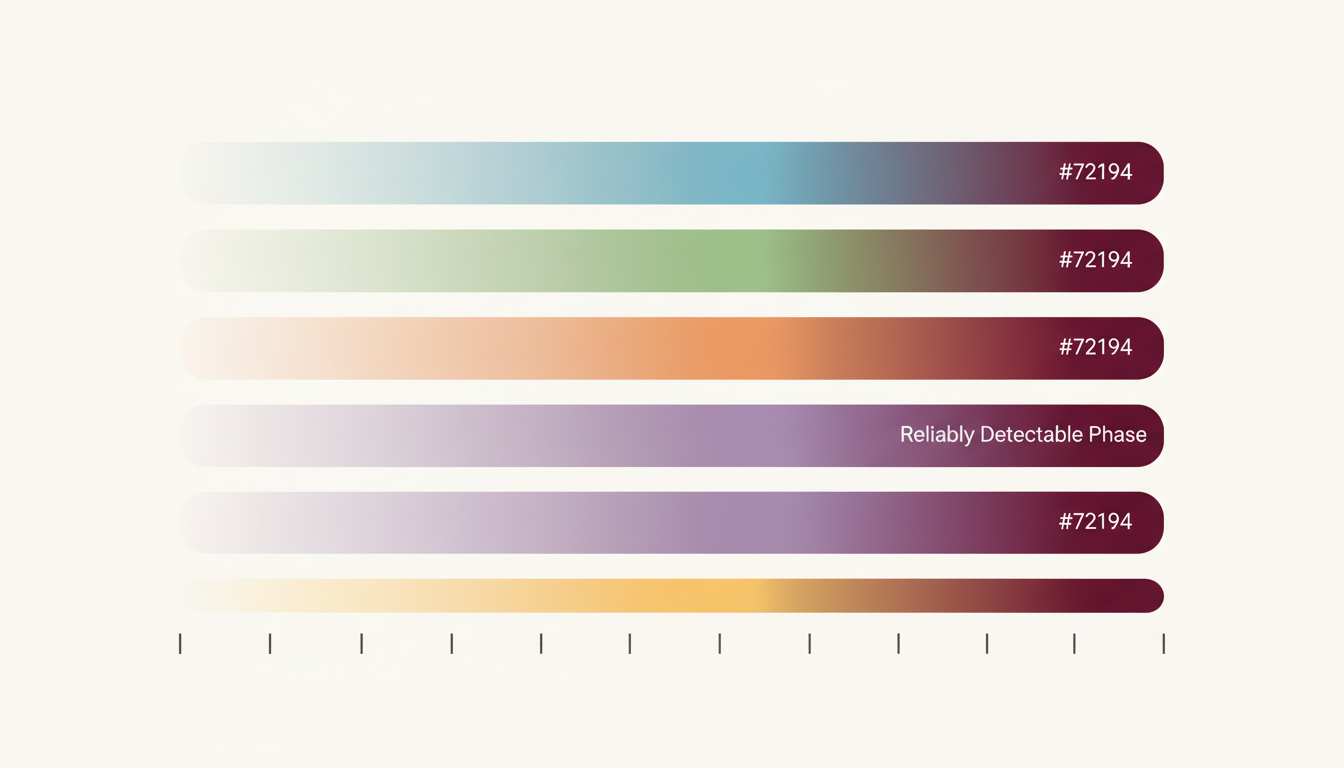
Every kit ships with infection-specific instructions, and the most useful thing you can do is read them in full before you start. The general flow looks similar across products.
- Bring the kit to room temperature. Refrigerated or cold strips can give invalid results. Most kits need 15 to 30 minutes on a counter before use.
- Confirm the expiry date and the kit components. A typical pack contains a sealed cassette, a sample collection device (swab or lancet), a buffer dropper, and the instruction sheet. Missing or damaged components mean the test is unreliable; contact the supplier rather than improvising.
- Collect the sample as instructed. For swab tests, the swab depth and contact time matter. For fingerstick blood, the drop volume matters. Skipping or shortening either step is the most common cause of an inconclusive result.
- Apply the sample to the cassette and start the timer. Most rapid tests develop in 10 to 20 minutes. Reading the result before the minimum time can show a false negative; reading well after the maximum time can show invalid colored bands that are not real (evaporation artifacts).
- Read in good light. A faint test line still counts as positive, even if it is paler than the control line.
If no control line appears at all, the test is invalid, not negative. It means the test did not run correctly and the cassette cannot tell you anything about your status. Common causes: not enough sample applied, sample applied to the wrong port, kit stored outside the recommended temperature range, or expired chemistry. Repeat with a fresh cassette before drawing any conclusion, and do not record an invalid as a clear result.
What Causes False Positives and False Negatives
Even a high-accuracy test produces wrong results sometimes. Knowing which way a given test tends to fail helps you interpret results sensibly.
Causes of false negatives:
- Testing inside the window period. The most common reason, by a wide margin. The infection is present but not yet detectable.
- Sample collection error. A swab that did not make firm contact with the tissue, a finger-prick that did not draw enough blood, a urine sample collected mid-stream instead of first-catch. Each cuts the analyte concentration below the test's threshold.
- Storage and shipping issues. Lateral-flow cassettes degrade with extreme heat or humidity. A kit stored in a hot car for weeks may not perform to spec.
- Wrong test for the infection. A blood antibody test cannot detect an active genital lesion's local viral shedding; that requires a swab PCR. Picking the wrong technology for your concern is a soft kind of false negative. A genital swab also will not catch a throat or rectal infection from oral or anal exposure.
Causes of false positives:
- Cross-reactivity. Some antibodies look similar to the immune system. HSV-2 IgG tests can cross-react with HSV-1 antibodies, especially at low index values. Syphilis treponemal tests stay reactive for life after a treated infection, which looks like a current positive but is not.
- Recent vaccination or autoimmune conditions. Rare but documented for some lateral-flow assays.
- Reading the test too late. Lateral-flow strips have a defined read window (usually 15 to 20 minutes). Lines that appear after that window are often evaporation artifacts, not real positives.
- Low population prevalence. When prevalence is low, a small specificity gap multiplies into many false positives in absolute terms. This is the math behind why home HSV-2 IgG screening of asymptomatic low-risk readers is discouraged: even a 96% specific test produces a substantial number of false positives in that population.
Type-specific HSV-2 IgG home tests carry the highest false-positive rate of any infection in the rapid-test catalog, with the risk concentrated when the lab index value sits in the 1.1 to 3.5 range. A reactive HSV-2 home result in an asymptomatic person with no known partner exposure should be confirmed by a clinic before any treatment, partner-notification, or relationship decisions. The CDC explicitly discourages routine HSV serology in asymptomatic people for exactly this reason.
If Your Result Is Positive: What Actually Happens Next
A positive on a home test is not the end of anything. It is the start of a manageable process, and most STIs are either curable or controllable with current treatment. Three steps in order.
Step one: do not panic. Chlamydia, gonorrhea, syphilis, and trichomoniasis are cured with a course of antibiotics. HIV is managed with daily antiretroviral therapy that, when started early, restores a near-normal life expectancy and brings viral load to undetectable levels (which means untransmissible to partners). Hepatitis B is manageable; hepatitis C is curable in most cases with current direct-acting antivirals.
Step two: confirm the result before you start treatment. A reactive home test means 'go get this confirmed,' not 'start medication.' Your primary care provider, a sexual-health clinic, urgent care, or a federally-qualified health center can run confirmatory NAAT or treponemal/non-treponemal panels (often at low or no cost). For HIV, the CDC recommends a confirmatory laboratory test using a different methodology than the screening test (a fourth-generation Ag/Ab assay or NAAT) before any treatment decisions. Bring the home kit result and the test date with you; the clinician benefits from knowing what was screened and when.
Step three: partner notification. This is the part most people dread, and it is essential to break the chain of transmission. Many U.S. states offer anonymous partner-notification services that contact recent partners without naming you. The CDC's gettested.cdc.gov locator helps you find testing and partner-notification resources by zip code. Most home-test brands also include a telehealth consult option that walks you through the conversation.
1. Pause before acting. A reactive home test is a screening flag, not a diagnosis. Do not start any prescription treatment on the home reading alone.
2. Book a confirmatory visit. Primary care, sexual-health clinic, urgent care, or a federally-qualified health center can run the lab confirmation, usually at low or no cost. Bring the kit result and the test date.
3. Plan partner notification. Use your state's anonymous partner-notification service, or the telehealth-consult option that ships with most home-test brands. Notification is what breaks the transmission chain.
How Often Should You Screen?
Frequency depends on your risk profile, not a calendar entry. The figures below come from CDC STI screening guidance.
- Adults in long-term mutual monogamy with both partners previously untested: at least once at the start of the relationship, then per public-health guidance for any new circumstances.
- Sexually active adults with new or multiple partners in the last year: annual screening at minimum; more often when the partner mix changes.
- Men who have sex with men (MSM): every 3 to 6 months per CDC recommendation, more often with multiple concurrent partners.
- People on PrEP: every 3 months. Quarterly STI screening is built into the standard PrEP follow-up protocol, and a home HIV test alone is not the basis for starting or stopping PrEP. That decision belongs with a prescribing clinician who also screens kidney function and other labs.
- After any high-risk exposure: at the appropriate window-period mark for each infection (see the window section above), with a re-test at the longest applicable window for the infection of highest concern.
- Pregnant people: as part of routine prenatal screening, with re-testing in the third trimester for those at higher risk.
Quarterly STI screening is built into the standard PrEP follow-up protocol per CDC guidance. Home kits make that cadence far easier to keep than scheduling four clinic visits a year, but they do not replace the kidney-function and other labs that the prescribing clinician runs alongside HIV screening.
When a Home Test Is Enough (and When You Need a Clinic)
Home rapid tests work well for some situations and badly for others. Matching the tool to the question is the most important accuracy decision you will make.
Home testing fits well when:
- You are doing routine asymptomatic screening. Sexually active people without symptoms benefit from periodic testing per CDC screening intervals. A home rapid kit lowers the friction of those checks.
- You want post-exposure peace of mind after the window has closed. A negative result on a properly-timed test from a reputable kit is meaningful reassurance.
- Privacy or stigma is a barrier to clinic care. A test you will take beats a clinic appointment you will never schedule. The WHO's HIV/AIDS fact sheet notes that people can use HIV self-tests, with confirmatory testing by a qualified health worker recommended for any positive result.
- You are checking before a new partnership. A documented recent home test is a fair starting point for that conversation, with the understanding that no test is 100%.
The reverse situation, where a clinic visit serves you better, is summarized in the warning box below.
- You have visible symptoms. Genital lesions, painful urination, unusual discharge, or pelvic pain need clinical evaluation, sample-of-the-lesion testing, and treatment that home kits cannot provide. Home antibody tests do not detect active local infections; an antibody blood test cannot tell you whether a specific current lesion is herpes, syphilis, or something else.
- You are pregnant. Pregnancy STI screening has specific protocols and treatment implications that need clinician oversight.
- The exposure is within the past 72 hours and high-risk. Post-exposure prophylaxis (PEP) for HIV must be started inside that window to be effective. See a clinic now; a home test cannot help you here.
- You need treatment. Home test kits screen for infection; a confirmed positive needs prescription antibiotics or antivirals from a clinician, which requires a clinic visit.
- You need pharyngeal (throat) or rectal swab testing after oral or anal exposure. We do not sell pharyngeal or rectal swab kits. The clinical NAAT performed at a sexual health clinic is the right tool for those exposure routes. Our genital-swab and blood-test kits address adjacent risks from the same exposure event but do not substitute for site-specific testing.
How to Pick a Reliable Home STD Test Kit
The home-test market is a mix of well-validated medical devices and unregulated knockoffs. Counterfeit kits show up regularly on third-party marketplaces, so buy directly from the manufacturer or a vetted retailer.
FDA clearance (US) or CE marking (EU). The U.S. Food and Drug Administration regulates at-home in-vitro diagnostic devices through a clearance pathway specific to the test's claimed sensitivity, specificity, and intended-use population. CE marking is the European equivalent. The FDA maintains a public 510(k) database of cleared rapid tests; if a kit makes a clearance claim and you cannot find it in that database, treat that as a red flag. A vague 'FDA-approved' phrase with no document linked is the same kind of red flag.
Sensitivity and specificity published separately. 'Accuracy' alone is imprecise. Reputable manufacturers report both numbers, ideally with reference to the test population and validation conditions. If a kit only quotes a single 'accuracy %', dig deeper before relying on the result. Be especially cautious of any kit that compares itself only to 'self-reported clinical history' instead of an established reference assay; that is a much weaker validation.
Kit type matched to the specific concern. A blood antibody test is the right tool for HIV, syphilis, hepatitis B/C, and post-window herpes serology. A swab antigen test is the right tool for chlamydia, gonorrhea, trichomoniasis, and HPV. Buying a blood test when you actually need a lesion swab (or the reverse) wastes money and time.
Window-period guidance clearly stated. A reputable manufacturer tells you exactly how soon after exposure the test becomes reliable. Vague claims of 'detect early' without specific timing are a yellow flag. So is any claim of accurate results 'any time after exposure'.
Real customer-support and follow-up resources. A positive result needs follow-up. A reputable kit company provides clinical follow-up information, instructions for confirming a positive at a clinic, and (where applicable) telehealth referral. A vendor that disappears after the sale is not a partner you want for a YMYL product.
Practical pattern: pick the test type that matches the exposure (blood for systemic infections, swab for local infections), buy from a manufacturer with FDA or CE marking, and follow the window-period guidance literally.
People can also use HIV self-tests to test themselves. However, no single test can provide a full HIV positive diagnosis; confirmatory testing is required, conducted by a qualified and trained health worker or community worker.
FAQs
- Are home STD tests as accurate as clinic tests?
- It depends on the technology. Self-collect mail-in lab kits using NAAT match clinic accuracy because the same lab method runs the sample. At-home rapid lateral-flow tests run a few percentage points lower in sensitivity (typically 90 to 98%) in exchange for speed and privacy. Both are validated screening tools when used per the manufacturer's window-period guidance. The rapid kit answers 'do I likely have an infection that needs a clinic follow-up?' The lab NAAT answers 'do I definitely have this specific infection right now?'
- Can I get a false negative from a home STD test?
- Yes, especially if you test inside the window period (the time between exposure and detectability). HIV rapid fingerstick antigen-antibody tests can take up to 90 days to turn reactive. HSV-2 IgG typically develops within 2 to 12 weeks, with a small subset of people taking up to 16 weeks or longer. Sample collection errors and degraded kits also produce false negatives, as does testing the wrong anatomical site (a genital swab will not catch a throat or rectal infection). Re-test at the appropriate window if a recent exposure is the question.
- What is the difference between sensitivity and specificity?
- Sensitivity is your protection against a missed infection: at 95% sensitivity, 1 in 20 real infections is missed. Specificity is your protection against a false alarm: at 99% specificity, 1 in 100 uninfected users still gets a false positive. 'Accuracy' alone is a vague summary; reputable manufacturers report both numbers separately.
- How soon after exposure should I take a home test?
- It varies by infection. Chlamydia and gonorrhea swabs are reliable at 2 to 3 weeks. HIV rapid fingerstick antigen-antibody tests can take up to 90 days; lab-based venous antigen-antibody tests close their window at 18 to 45 days. Syphilis sits at 3 to 12 weeks. HSV-2 IgG seroconverts within 2 to 12 weeks for most people; the conservative re-test window stretches to 16 weeks for slow seroconverters. Hepatitis C at 6 to 9 weeks (sometimes longer). Earlier testing can catch some infections, but a definitive negative requires waiting through the window.
- What should I do if my home test result is positive?
- Treat it as a 'confirm at a clinic' result rather than a final diagnosis, especially for infections like HSV-2 IgG where false positives are more common at low index values. A clinic NAAT or treponemal/non-treponemal panel will confirm an active infection. Once confirmed, the clinician can prescribe the appropriate treatment and help with partner notification. Do not start prescription treatment based solely on a positive home reading.
- Can I trust a home test if I have no symptoms?
- Yes. Many STIs are asymptomatic, and routine screening is exactly what home tests are designed for. Asymptomatic screening is the highest-value use case for at-home rapid kits. The accuracy figures published by manufacturers are validated against population samples that include asymptomatic users.
- Are home STD test kits FDA-approved?
- Some are FDA-cleared (the regulatory term for screening devices) for specific infections in specific sample types. Several home HIV tests have FDA clearance for over-the-counter use. Other rapid kits are sold under different regulatory pathways. Outside the U.S., look for CE marking. Look the kit up in the FDA's public 510(k) database if you want certainty; a vague 'FDA-approved' claim with no document linked is a red flag.
- Do I need a prescription to buy an at-home STD test?
- No. Rapid test kits sold directly to consumers do not require a prescription. They are regulated as in-vitro diagnostic devices. Look for an FDA clearance number or CE mark on the product page; reputable suppliers list both. Treatment for a confirmed positive does require a clinician prescription, but the screening kit itself does not.
- Are home STD tests covered by insurance?
- Coverage varies by plan. Some U.S. insurers reimburse FDA-cleared at-home test kits, particularly HIV self-tests; others do not. Check directly with your insurer. Most users pay out of pocket for rapid at-home kits in exchange for privacy, speed, and avoiding a clinic visit. Some federally-qualified health centers and state health departments offer free or low-cost confirmatory testing after a reactive home result.
- How often should I screen for STIs at home?
- Frequency follows your partner mix, not the calendar. Every 3 months if you use PrEP, every 3 to 6 months for MSM with multiple partners, and annually at minimum for other sexually active adults. After any known exposure, test at the window-period mark for the specific infection of concern.
- U.S. Centers for Disease Control and Prevention. STI screening recommendations and clinical guidance, including the laboratory NAAT reference standard versus screening tools used in at-home settings, plus annual and quarterly screening cadence for high-risk populations.
- U.S. Centers for Disease Control and Prevention. HIV testing methods, including the distinct window periods for rapid fingerstick antigen-antibody tests (18 to 90 days) and lab-based venous antigen-antibody tests (18 to 45 days), HIV self-test guidance, and confirmation pathway after a reactive screening test.
- U.S. Centers for Disease Control and Prevention. STI Treatment Guidelines landing page; the full guidelines PDF linked from this page covers NAAT as the diagnostic reference standard for chlamydia and gonorrhea, HSV-2 IgG seroconversion timing (typically within 2 to 12 weeks with re-test recommended at 16 weeks), and confirmation requirements after a positive home screen.
- U.S. Centers for Disease Control and Prevention. About Syphilis overview, covering blood-based syphilis testing and the role of clinical follow-up after a reactive screening result.
- World Health Organization. HIV/AIDS fact sheet, including the verbatim statement on HIV self-testing and the requirement for confirmatory testing by a qualified health worker for any positive result. Source for the pull-quote on HIV self-testing in this article.
- National Health Service (UK). Sexually transmitted infections overview, symptoms, and screening pathways including clinic-based home testing kits.
